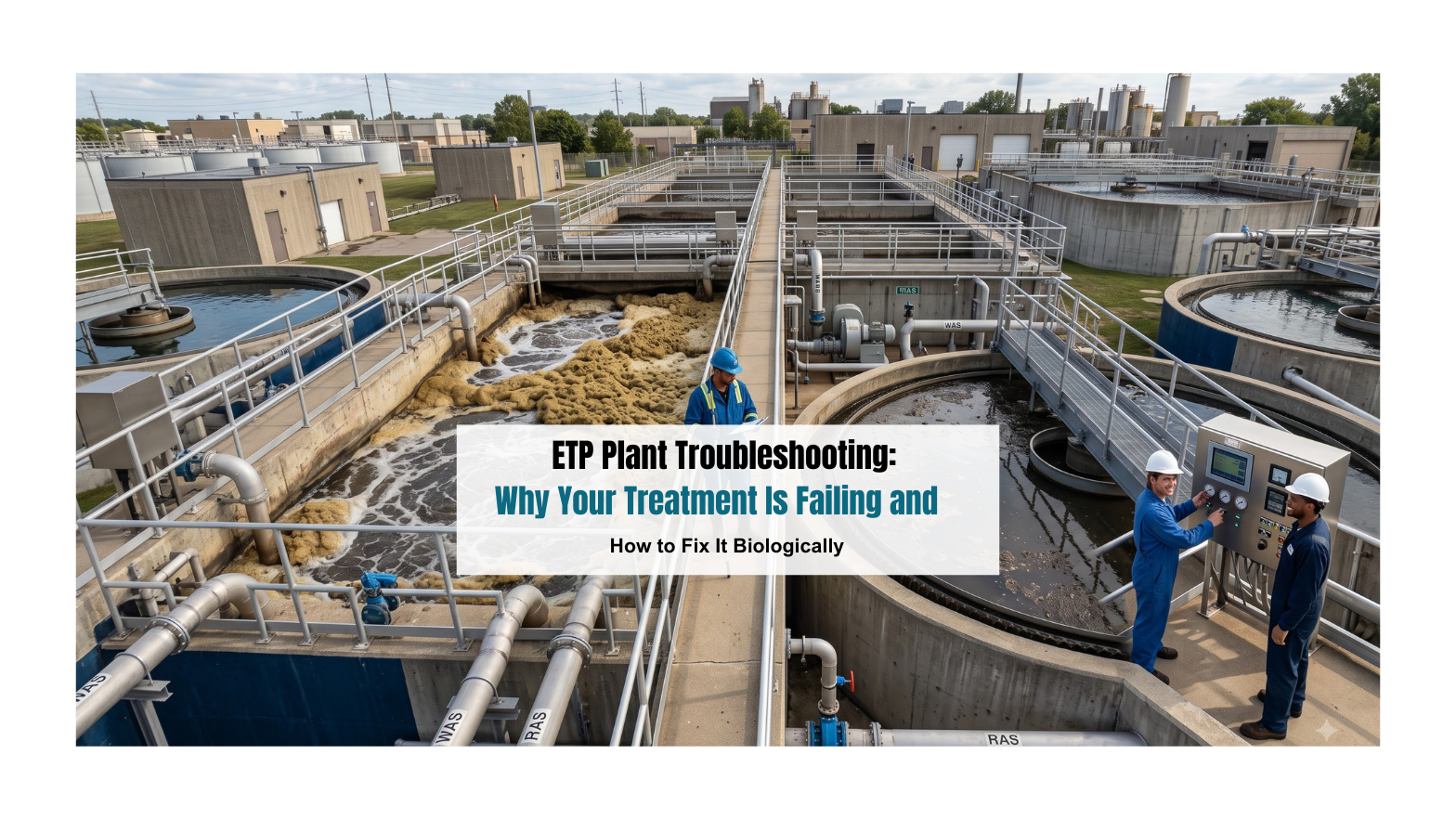
ETP Plant Troubleshooting: Why Your Treatment Is Failing and How to Fix It Biologically

There’s a particular kind of dread that sets in when the lab hands you an outlet report that doesn’t match what your gut was telling you all week. Maybe it’s a COD number that’s crept past your comfort zone for the third day running. Maybe it’s sludge that just won’t settle, no matter how much coagulant you throw at the clarifier. Or maybe it’s worse, an SPCB inspection is already on the calendar, and you’re standing next to an aeration tank at some odd hour trying to figure out what changed.

If any of that sounds familiar, you’re not alone, and you’re not doing anything obviously wrong. Most ETP failures aren’t mysterious once you know where to look. They’re also rarely permanent, provided you’re willing to treat the actual disease instead of dosing your way through the symptoms.

Quick definition for anyone who landed here searching “ETP full form” or “what is ETP”: an effluent treatment plant (ETP) is the system that treats industrial wastewater before it’s discharged or reused, typically combining physical, chemical, and biological stages to bring parameters like BOD, COD, and TSS within regulatory limits. If you’re already running one and it’s misbehaving, you probably don’t need that definition, you need answers. So let’s get into those.

Most ETP breakdowns trace back to a small handful of root causes, and the encouraging part is that most of them can be corrected biologically rather than papered over with another drum of chemical dosing. This piece walks through what failure actually looks like, the three root causes we see most often in the field, and a practical recovery sequence you can start applying this week.

Before we go further, one important note: every range, threshold, or figure mentioned anywhere in this article is a general industry indicator only. Actual acceptable values depend entirely on your plant’s design, influent characteristics, hydraulic load, and the specific CPCB and SPCB norms that apply to your state and industry category. Nothing here should replace your plant’s own baseline data or your consulting engineer’s site-specific recommendations.

What “ETP Failure” Actually Looks Like
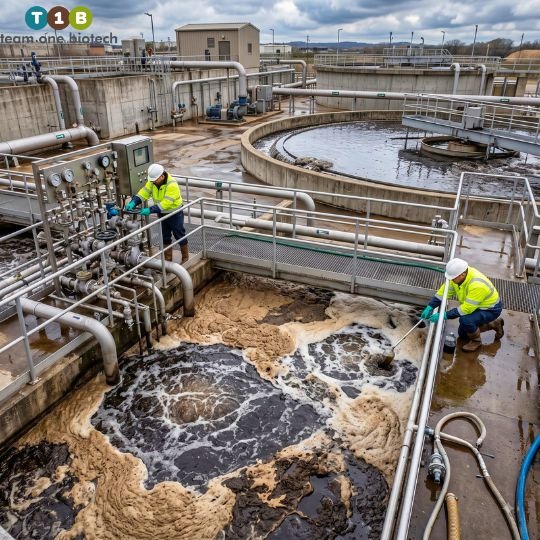
What "ETP Failure" Actually Looks Like

Before diagnosing anything, it helps to separate the symptoms from the disease. Operators often chase the symptom, dosing more coagulant, adjusting pH again, running the blower harder, without asking what’s actually breaking down underneath.

The usual suspects show up like this:

  • Rising or erratic COD even though aeration looks completely normal on paper, DO is fine, blowers are running, nothing seems obviously wrong.
  • BOD creeping upward over days or weeks, even while the plant “looks fine” on a walkthrough.
  • Poor sludge settling, bulking sludge, foul odor near the aeration basin, or unexpected foaming on the surface.
  • TSS spikes at the outlet that seem to appear out of nowhere, sometimes only during certain shifts or after certain production batches.

None of these are the actual problem. They’re symptoms of a biological system under stress. Your activated sludge process is, at its core, a living population of microorganisms doing a job, and like any living population, it responds to what you feed it, how much you feed it, and how badly you shock it. Once you start reading these symptoms as biology telling you something, the diagnostic path gets a lot clearer.

The Three Root Causes Behind Most ETP Breakdowns
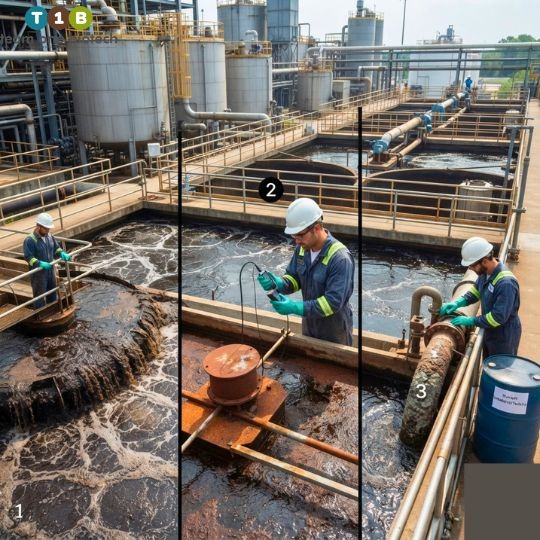
The Three Root Causes Behind Most ETP Breakdowns

In our experience walking plants back from failure, across textile dyeing units, pharma and API manufacturing, food and beverage facilities, tanneries, and distilleries, nearly every ETP breakdown traces back to one of three root causes, sometimes two working together at once.

Toxic Shock Load

This is the one that scares people, and rightly so. A toxic shock happens when something enters the biological system that the microbial population simply can’t handle, a sudden discharge of disinfectants or cleaning agents, a solvent slug from a batch process, a spike in heavy metals, or an unplanned dump from production that bypasses equalization entirely.

Textile units dealing with dye-bath discharges know this pattern well, and so do pharma and API plants where a solvent recovery miss or an off-spec batch gets routed straight to the ETP instead of being held back.

How it presents is usually unmistakable once you know what you’re looking at: biomass die-off, sludge that goes from healthy brown floc to dark, dead, or sluggish material within hours, and a COD or BOD spike that seems to come from nowhere because the bugs that were supposed to be breaking it down simply aren’t functioning anymore.

The biological fix here isn’t a single dose, it’s a sequence. Reseeding the system with resilient, acclimatized bacterial consortia gives you a microbial population that’s better suited to handle the specific effluent characteristics of your stream. Pairing that with load buffering through equalization tanks means shock loads get diluted and evened out before they ever reach your biology unbuffered. And reintroducing flow in stages, rather than all at once, gives the recovering population room to stabilize instead of getting hit again mid-recovery.

Nutrient Deficiency

This one is quieter and easier to miss because nothing “dramatic” happens, there’s no obvious spill, no foaming crisis, just a slow decline in performance that operators often chalk up to “the plant just isn’t as efficient as it used to be.”

Biology needs a workable balance of organic carbon, nitrogen, and phosphorus to build healthy cell mass and floc structure. Without going into exact ratios, because the right balance genuinely does shift by effluent type and plant design, the short version is that carbon-rich, nutrient-poor streams (distillery effluent and some food and beverage waste streams are classic examples) can starve the microbial population of the nitrogen and phosphorus it needs to grow properly.

The tell-tale signs are weak floc formation that won’t bind together, poor settling in the clarifier even when everything upstream looks chemically normal, and filamentous bulking, those long, thread-like organisms that outcompete the floc-formers when nutrients are out of balance.

The biological fix is targeted nutrient dosing paired with bioaugmentation, so you’re not just adding nitrogen and phosphorus into a system with a depleted microbial population, you’re rebuilding the population itself alongside the nutrient correction. One without the other tends to produce short-lived improvement.

Hydraulic Overload

This is the root cause most likely to get blamed on “the chemistry” when it’s actually a physical problem wearing a chemistry costume. Flow exceeding your plant’s design capacity, whether from a production ramp-up, seasonal demand, or simply more effluent than the ETP was ever sized for, causes short-circuiting through your tanks and cuts your actual retention time well below what your biology needs to do its job.

It presents in a particularly frustrating way: incomplete treatment and TSS carryover at the outlet, even when upstream chemistry, pH, DO, general appearance, looks entirely normal. Operators often spend hours chasing a chemical explanation for a problem that’s fundamentally about time. The water simply isn’t staying in the system long enough for the biology to finish its work.

Fixing this biologically starts with flow equalization and staged loading, so peak flows get smoothed out before they hit your biological reactors. Alongside that, building a more robust and resilient biomass, one that can tolerate variable flow conditions without collapsing every time volumes spike, gives you a system that bends instead of breaking when the next high-flow day arrives.

Why Chemical Fixes Don’t Solve the Real Problem
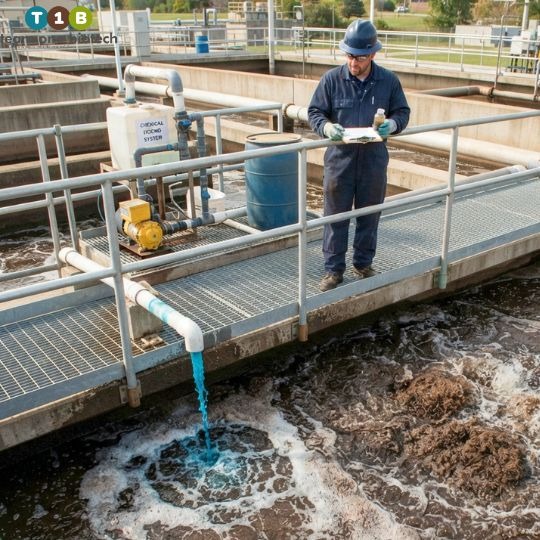
Why Chemical Fixes Don't Solve the Real Problem

To be clear, chemical treatment has a place. Coagulants, oxidants, and pH correctors are sometimes genuinely necessary, during an active toxic shock, or when you need to hit an outlet number today because an inspection is tomorrow, chemical dosing buys you real, useful time.

But it’s a patch, not a repair. Chemical dosing treats the water sitting in front of you right now. It doesn’t restore the biological population that’s supposed to be breaking down organic load day after day, batch after batch. Once the chemical wears off, or once the next shock load hits, you’re back where you started, because the underlying system that does the actual pollutant breakdown never recovered.

There’s a cost angle here too. Repeated chemical dosing, batch after batch, month after month, tends to be more expensive over the long run than investing in biological recovery once. And critically, it doesn’t build any resilience. A plant running on chemical dosing alone is just as vulnerable to the next shock load as it was before the last one. A plant with a healthy, diverse, acclimatized biological population can absorb some punishment and keep functioning.

Think of it this way: chemistry treats today’s water. Biology treats the system, so tomorrow’s water doesn’t fail too.

A Practical Biological Recovery Plan
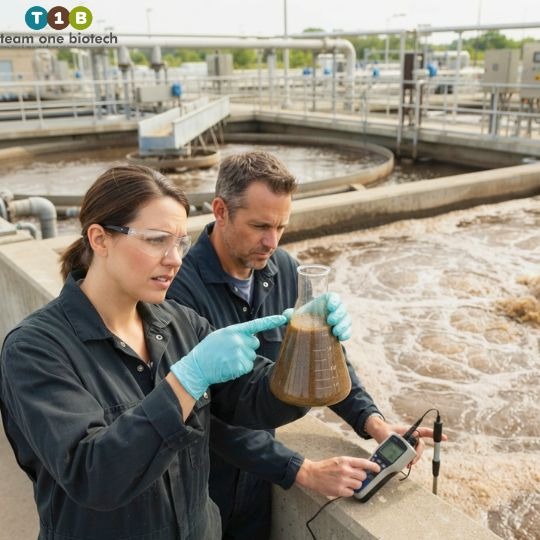
A Practical Biological Recovery Plan

If you’re standing in front of a failing plant right now, here’s the sequence we’d walk through with a client, step by step.

Step 1: Isolate and confirm the root cause. 

Sample upstream and downstream of key process points, and check your DO, pH, and sludge volume index against your plant’s historical baseline, remembering again that acceptable ranges here are general indicators and will differ based on your specific design and effluent type. Don’t skip this step to save time; treating the wrong root cause wastes far more time than diagnosing it properly upfront.

Step 2: Stabilize hydraulics before touching biology. 

If flow equalization isn’t in place or isn’t working, fix that first. There’s little point reseeding a bacterial population into a tank that’s still short-circuiting flow, you’ll just shock it again.

Step 3: Reintroduce or boost the bacterial population with targeted bioaugmentation 

Suited specifically to your effluent type, textile dye-bath residues need a different consortia profile than distillery spent wash or pharma solvent-laden streams. Generic, one-size-fits-all cultures tend to underperform against effluent-specific ones for exactly this reason.

Step 4: Monitor and adjust. 

Biological recovery is not instant, and anyone who tells you otherwise is selling you something. Expect a gradual return to stable BOD, COD, and TSS over days to weeks, not hours. Track trends, not single readings, and be prepared to fine-tune nutrient dosing or bioaugmentation rates as the population re-establishes itself.

Preventing the Next Breakdown

Getting the plant stable again is only half the job. The other half is making sure you’re not back here in three months.

A few habits make the biggest difference:

  • Build a routine monitoring cadence. Daily checks on the basics, DO, sludge appearance, settling behavior, and weekly deeper checks on sludge volume index and effluent trends, catch problems while they’re still small.
  • Watch the early warning signs. Sludge color and texture changes, unusual odor near the aeration basin, and a settling time that’s slowly drifting in the wrong direction are all things biology tells you before the outlet report does.
  • Build real buffer and equalization capacity, so shock loads and flow spikes get absorbed before they ever reach your biological reactors unbuffered.
  • Maintain a resilient, diverse bacterial population rather than relying on a single-strain or minimally maintained system. Diversity in your microbial community is what lets the plant absorb the next unexpected load without collapsing.

None of this is complicated. It’s mostly discipline, the kind that’s easy to let slide when things are running fine and hard to rebuild once they’re not.

Frequently Asked Questions

What is ETP and what does ETP stand for?

ETP stands for effluent treatment plant, a system industrial facilities use to treat wastewater before discharge or reuse, typically combining physical, chemical, and biological treatment stages to meet CPCB and SPCB discharge norms.

What is ETP sludge and why does it stop settling?

ETP sludge is the biomass, the living microbial population, that develops in the biological treatment stage and does the actual work of breaking down organic pollutants. It stops settling well when that population is stressed, typically from toxic shock, nutrient imbalance, or filamentous bulking, and needs biological correction rather than just a coagulant dose to recover.

How can I reduce COD in an ETP plant without over-relying on chemicals?

Sustainable COD reduction generally comes from restoring the biological population’s health, through targeted bioaugmentation, nutrient balancing, and proper hydraulic retention time, rather than from oxidant dosing alone, which addresses the water in the tank today but not the underlying system.

Why does my ETP meet BOD limits but still fail on COD?

This pattern often points to non-biodegradable or slowly biodegradable organic load, common in pharma, textile dye, and certain industrial chemical streams, where standard biological treatment breaks down the readily biodegradable fraction (reflected in BOD) but struggles with the harder-to-degrade fraction that still shows up in COD. It can also point to an under-acclimatized microbial population that needs a more suited bacterial consortia.

How long does biological recovery take after a toxic shock load?

Recovery timelines vary considerably by plant and severity of the shock, but as a general indicator, expect a gradual improvement over days to a few weeks rather than an overnight fix, and remember that actual recovery time depends heavily on your specific plant design, effluent characteristics, and how quickly the root cause was addressed.

Stop Firefighting, Start Fixing the Biology

Most ETP breakdowns come down to one of three things: a toxic shock load hitting your biomass unbuffered, a nutrient imbalance quietly starving your microbial population, or a hydraulic overload cutting your retention time short. Once you know which one you’re dealing with, the fix isn’t mysterious, it’s methodical, and it’s biological.

Chemical dosing has its place, particularly when you need to hit a number before tomorrow’s inspection. But it’s a stopgap, not a solution. The plants that stop cycling through repeated failures are the ones that invest in restoring and protecting their biology, through targeted bioaugmentation, proper equalization, and routine monitoring, so the next shock load doesn’t send them right back to where they started.

The compliance stakes are real. CPCB and SPCB limits aren’t going to loosen, and neither is the pressure that comes with an outlet report that doesn’t pass. But a stable, resilient biological system is what actually keeps you within those limits, not a drum of coagulant you’re refilling every week.

If your ETP is fighting you right now, get a free effluent diagnostic from Team One Biotech’s bioremediation team before your next inspection. Better to know what’s actually broken today than to find out the hard way when the SPCB does.

Looking to improve your ETP/STP efficiency with the right bioculture?
Talk to our experts at Team One Biotech for customised microbial solutions.

Contact+91 8855050575

Email:  sales@teamonebiotech.com

Visit: www.teamonebiotech.com

Discover More on YouTube – Watch our latest insights & innovations!-

Connect with Us on LinkedIn – Stay updated with expert content & trends!
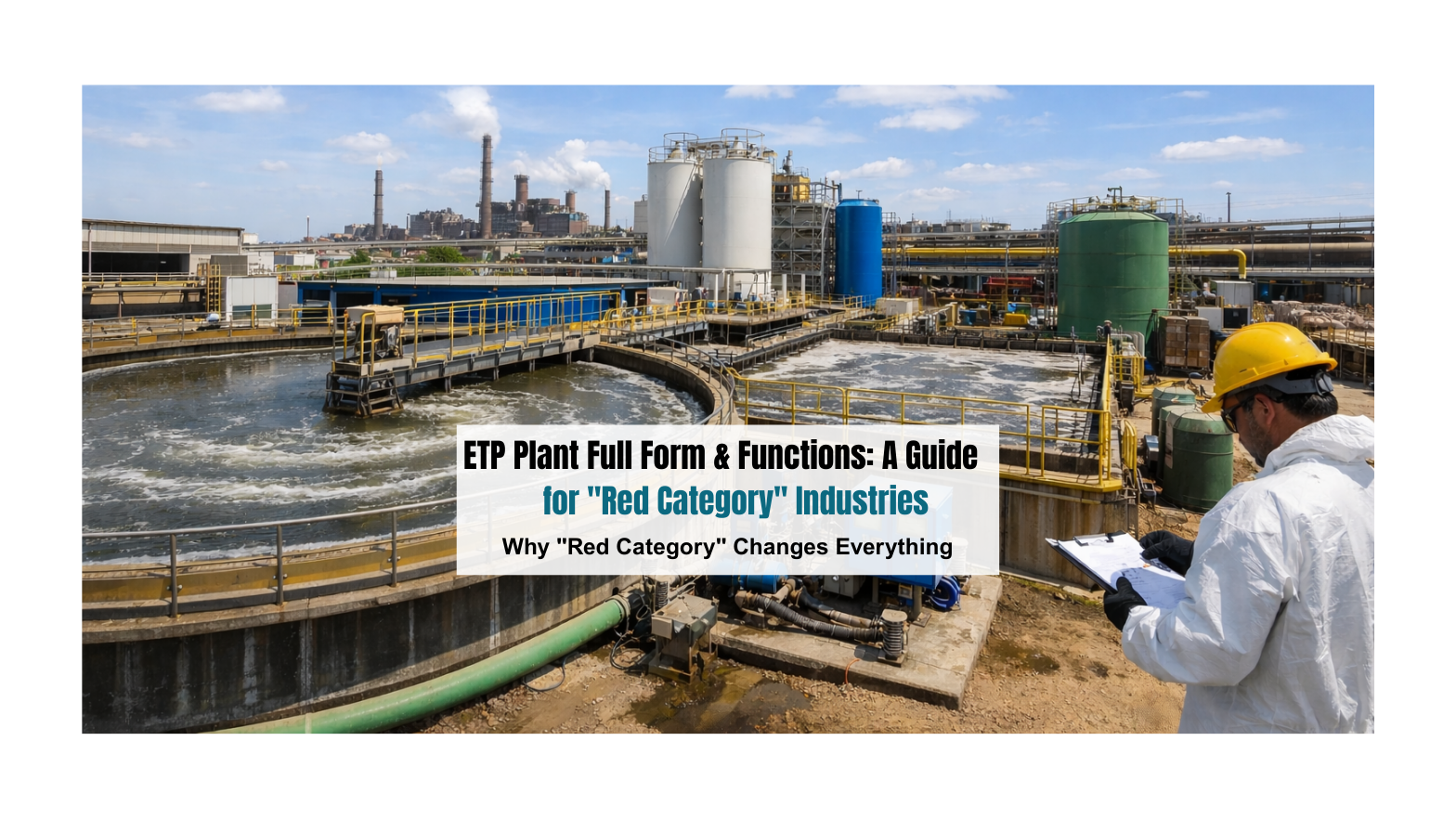
ETP Plant Full Form & Functions: A Guide for "Red Category" Industries
ETP Plant Full Form & Functions: A Guide for “Red Category” Industries

Let’s be direct about something most plant managers already know but rarely say out loud: running a Red Category industry in India right now feels like walking a tightrope over a compliance minefield. One failed effluent test. One surprise inspection from the State Pollution Control Board. One local news story about a nearby river turning colors, and suddenly you’re not just facing a fine. You’re facing a closure notice, a reputational crisis, and the kind of legal liability that follows a business for years.

This isn’t fearmongering. The Central Pollution Control Board (CPCB) has been systematically tightening discharge standards since 2016, and enforcement has become significantly more aggressive in states like Maharashtra, Gujarat, Tamil Nadu, and Uttar Pradesh. The industries feeling this pressure the hardest are exactly the ones doing the heaviest industrial lifting for India’s economy, textiles, dyes, pharmaceuticals, tanneries, paper mills, and chemical manufacturers.

Also Read: The Comprehensive Guide to ETP & STP Design, Process, and Efficiency in India

If you’re in this space, your Effluent Treatment Plant isn’t just infrastructure. It’s survival equipment.

What ETP Stands For, And Why the Full Form Doesn’t Tell the Whole Story

What ETP Stands For, And Why the Full Form Doesn't Tell the Whole Story

ETP stands for Effluent Treatment Plant. The name is simple enough. The reality it represents is anything but.

An effluent treatment plant is a system specifically engineered to treat industrial wastewater, the contaminated water produced during manufacturing processes, before it’s discharged into municipal drains, water bodies, or the ground. Unlike domestic sewage, industrial effluent carries a toxic cocktail of heavy metals, synthetic dyes, suspended solids, oils, acids, and biological oxygen demand (BOD) loads that can devastate aquatic ecosystems within hours of improper discharge.

Here’s what the full form doesn’t tell you: a well-designed ETP is the difference between a factory that runs for decades and one that gets served a closure notice in its tenth year. For Red Category industries, it’s also the single largest variable in your environmental compliance score.

Why “Red Category” Changes Everything

India’s industries are classified into four pollution potential categories by the CPCB, Red, Orange, Green, and White, based on a Pollution Index (PI) score derived from air, water, land, and hazardous waste parameters.

Red Category industries carry a Pollution Index of 60 or above. These include:

  • Textile dyeing and bleaching units
  • Pharmaceutical and bulk drug manufacturers
  • Pesticide and agrochemical plants
  • Tanneries and leather processing units
  • Paper and pulp mills
  • Chemical manufacturers and dye intermediates

What makes Red Category wastewater genuinely difficult to treat is its chemical complexity. You’re not dealing with one pollutant, you’re dealing with hundreds simultaneously. COD (Chemical Oxygen Demand) levels in textile effluent can exceed 3,000 mg/L. Pharmaceutical wastewater often carries recalcitrant organic compounds that resist conventional biological breakdown. Tannery effluent contains chromium concentrations that are acutely toxic to both microbial communities and human health.

Standard treatment approaches frequently fall short here. That’s the core problem Team One Biotech was built to solve.

The Core Functions of an Effluent Treatment Plant

The Core Functions of an Effluent Treatment Plant

A properly functioning ETP works through a staged sequence of treatment processes. Each stage targets a different category of contaminants. Skipping or underperforming at any stage compromises the entire system.

Stage 1: Collection and Equalization

Effluent from different process lines rarely flows at uniform rates or concentrations. The equalization tank buffers this variability, holding incoming wastewater and homogenizing it before treatment begins. This step protects downstream processes from hydraulic shocks and concentration spikes that would otherwise destabilize biological treatment.

Stage 2: Screening and Primary Treatment

Bar screens remove coarse solids. Primary clarifiers allow suspended particles to settle under gravity. The sludge collected here is removed for further processing. This stage significantly reduces suspended solids load before biological treatment begins.

Stage 3: Neutralization

Industrial effluents are frequently highly acidic or alkaline, pH values outside the 6–9 range are common in chemical and pharmaceutical plants. Neutralization brings pH to a range where biological treatment can function effectively. Getting this wrong doesn’t just affect compliance, it kills the microbial communities your secondary treatment depends on.

Stage 4: Coagulation and Flocculation

Chemicals like alum, ferric chloride, or polyelectrolytes are dosed to destabilize colloidal particles and cause them to aggregate into larger flocs that can be physically removed. This step is critical for reducing color, turbidity, and residual suspended solids. However, heavy reliance on synthetic coagulants increases sludge generation and chemical costs, one of the key pain points that bioremediation-based approaches address.

Stage 5: Secondary (Biological) Treatment

This is where the real heavy lifting happens, and where the quality of your approach determines whether you genuinely treat your effluent or merely appear to.

The ETP-STP Plant Process: Where Bioremediation Redefines What’s Possible

The ETP-STP Plant Process: Where Bioremediation Redefines What's Possible

The biological treatment stage of the etp-stp plant process is built around one central mechanism: using microorganisms to break down dissolved organic matter. The most widely deployed method is the activated sludge process.

Understanding the Activated Sludge Process

In the activated sludge process, wastewater enters an aeration tank where it’s mixed with a recirculated mass of microorganisms, the “activated sludge.” Air or oxygen is continuously introduced to support aerobic microbial metabolism. The microorganisms consume dissolved organics (measured as BOD and COD), converting them into carbon dioxide, water, and new cell mass.

The treated water then flows to a secondary clarifier, where the microbial biomass settles out. A portion of this settled sludge is returned to the aeration tank to maintain the active microbial population (return activated sludge). The remainder is wasted (waste activated sludge) for further processing.

In theory, it’s elegant. In practice, for Red Category industries, it frequently underperforms, because generic microbial communities aren’t equipped to handle the specific, often toxic, organic load of pharmaceutical, textile, or chemical wastewater.

Where Traditional Chemical Treatment Falls Short

Many plants default to increasing chemical dosing when biological treatment underperforms. This approach has a ceiling. More coagulants mean more sludge. More sludge means higher disposal costs and stricter hazardous waste compliance requirements. The operational cost curve bends upward fast, and you still don’t consistently hit discharge standards.

How to Retrofit Existing ETPs to meet 2026 Discharge Standards

With the 2026 regulatory shift to Retrofit Existing ETPs, the Central Pollution Control Board (CPCB) and State Boards have moved from “periodic checks” to real-time, performance-based compliance. If your existing ETP was designed for 2016 norms, it likely lacks the precision required for today’s tighter BOD, COD, and nutrient limits.

Retrofitting doesn’t always mean a total teardown. Most Red Category plants can be brought up to 2026 standards through strategic engineering upgrades:

  • Integrating Real-Time Monitoring: 2026 mandates require IoT-connected sensors (RS-485/Modbus) that transmit pH, TSS, and COD data directly to regulatory servers. Retrofitting your outlet with automated monitoring is now the first step in legal “survival.”
  • Upgrading Aeration Efficiency: Many older plants suffer from “dead zones” in aeration tanks. Replacing aging surface aerators with fine-bubble diffused aeration systems can improve oxygen transfer efficiency by up to 30-40%, crucial for handling the higher organic loads seen in pharmaceutical and textile sectors.
  • Adding Tertiary Polishing Units: To meet the new “Mandatory Treated Water Reuse” policies, adding a modular Membrane Bio-Reactor (MBR) or Ultrafiltration (UF) stage to your existing secondary clarifier output can turn discharge-grade water into process-grade water.

By focusing on process correction rather than just equipment replacement, industries can achieve 2026 compliance with minimal downtime and significantly lower capital expenditure.

How Team One Biotech’s Bioremediation Approach Changes the Equation

Team One Biotech’s bioremediation solutions are engineered around specific microbial consortia, selected and cultivated strains of bacteria, fungi, and enzyme-producing organisms that are matched to the actual contaminant profile of your effluent.

Rather than a generic activated sludge population struggling against recalcitrant dyes or pharmaceutical intermediates, you’re deploying organisms that have been specifically developed to metabolize those compounds. The results are measurable:

  • Faster COD/BOD reduction rates compared to conventional activated sludge alone
  • Significantly lower chemical consumption across coagulation and disinfection stages
  • Reduced sludge generation, which directly reduces your hazardous waste disposal burden
  • More stable biological performance during hydraulic and organic load fluctuations
  • Longer intervals between system interventions

This isn’t an additive that temporarily masks compliance numbers. It’s a fundamental upgrade to the biological core of your treatment process.

Ready to see what a bioremediation-optimized ETP looks like for your specific industrial category? Contact Team One Biotech’s technical team for a process consultation, no generic proposals, no guesswork.

STP vs. ETP: Why Industrial Facilities Need to Think About Both

STP vs. ETP: Why Industrial Facilities Need to Think About Both

A sewage treatment plant (STP) is designed to treat domestic wastewater, the water generated from toilets, canteens, washrooms, and general facility use. An effluent treatment plant handles process wastewater from manufacturing operations. They treat fundamentally different waste streams, and mixing them without proper management creates compliance complications.

Here’s why this matters for large industrial facilities:

ParameterSewage Treatment Plant (STP)Effluent Treatment Plant (ETP)
Wastewater SourceDomestic/sanitary useIndustrial process water
Primary ContaminantsBOD, pathogens, nutrientsCOD, heavy metals, dyes, chemicals
Regulatory StandardIS:2490, domestic normsCPCB category-specific norms
Treatment CoreBiological (ASP, MBR)Multi-stage chemical + biological
Sludge ClassificationGeneral wasteOften hazardous waste

Many large manufacturing campuses in India, particularly in pharmaceutical and textile clusters, now operate combined STP-ETP systems or segregated parallel systems. The etp-stp plant process integration requires careful hydraulic design to ensure that the toxicity of process effluent doesn’t overwhelm the biological system designed for domestic sewage.

Team One Biotech’s expertise spans both systems. Whether you’re managing a standalone ETP, a standalone STP, or a combined treatment facility, the bioremediation strategy must be designed around the actual influent chemistry, not generic assumptions.

The Indian Regulatory Reality You Can’t Ignore

The CPCB’s General Standards for Discharge of Environmental Pollutants (under the Environment Protection Act, 1986) set baseline discharge standards. But State Pollution Control Boards frequently impose standards that are stricter than CPCB minimums, and this varies significantly by state, industry cluster, and proximity to sensitive water bodies.

Industries in the Ganga basin face mandatory Zero Liquid Discharge (ZLD) compliance under the National Mission for Clean Ganga. Textile clusters in Surat, Ludhiana, and Tirupur operate under cluster-specific discharge protocols. Pharmaceutical units near ecologically sensitive zones are increasingly being asked to demonstrate advanced treatment capability beyond standard compliance testing.

This regulatory landscape is not getting simpler. Investment in genuinely effective treatment technology, not minimum-compliance infrastructure, is the only position that offers long-term operational certainty.

India’s water stress context adds an ethical dimension to this that goes beyond compliance. With 18% of the world’s population sharing 4% of its freshwater resources, every liter of adequately treated and recycled industrial water is a direct contribution to a problem that affects communities far beyond your fence line.

What an Underperforming ETP Actually Costs You

The compliance fine is the visible cost. The real cost structure looks like this:

  • Repeated third-party effluent testing to chase passing results
  • Increased chemical consumption without proportional treatment improvement
  • Higher sludge disposal frequency and associated hazardous waste costs
  • Downtime risk from regulatory notices requiring system upgrades
  • Reputational exposure in ESG-sensitive supply chains
  • Management bandwidth spent on regulatory responses instead of operations

A properly designed, bioremediation-enhanced ETP converts most of these costs into a single, predictable operational line. That’s the business case, separate from the environmental one.

Is your current ETP delivering consistent compliance, or are you managing the gap between test days and inspection days? Request a free process audit from Team One Biotech. We’ll map your current system against your discharge obligations and identify exactly where the gaps are.

Looking for specific bioremediation products formulated for your industry category? Explore Team One Biotech’s complete range of microbial consortia and enzyme solutions for textile, pharmaceutical, chemical, and tannery wastewater treatment.

Looking to improve your ETP/STP efficiency with the right bioculture?
Talk to our experts at Team One Biotech for customised microbial solutions.

Contact+91 8855050575

Email:  sales@teamonebiotech.com

Visit: www.teamonebiotech.com

Discover More on YouTube – Watch our latest insights & innovations!-

Connect with Us on LinkedIn – Stay updated with expert content & trends!
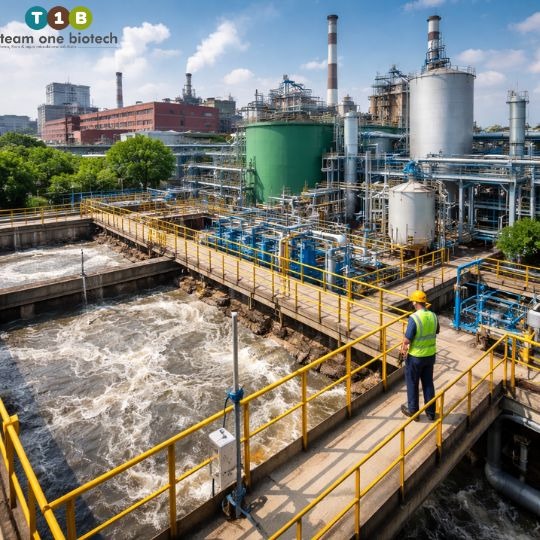
Seasonal Microbial Shifts Wastewater Treatment
Bioculture for ETP- How a Textile Unit Stabilized ETP Performance with T1B Aerobio
 
Background

A mid-sized textile dyeing and processing unit in Gujarat struggled with recurrent seasonal drift in ETP and it’s biological performance. Contact us today to learn how T1B Aerobio can revolutionize your ETP’s performance and help you overcome seasonal challenges effectively.

Despite having a decent system design, they were plagued by:

  • Winter ammonia spikes
  • Monsoon washouts
  • Summer bulking
  • Transitional season shock-loads

These issues led to frequent compliance failures and operational stress.

T1B Aerobio-One Stop solution to seasonal drift:

T1B Aerobio – a blend of robust microbes especially bacteria , is the ultimate Thor’s hammer for seasonal cahllenges in any ETP. With a bank of 76+ different strains , T1B Aerobio was customized according to the challenges face by ETP in every season. It also consist various elements and enzymes which make it more efficient and a single solution for various challenges which no ordinary bioculture/microbial culture can deliver.

ETP details:

The industry had primary treatment, biological treatment, and then a tertiary treatment.

Flow150 KLD
Type of processASP
No. of aeration tanks
Capacity of aeration tanks650 KL each
Total RT hours
Season-Wise Breakdown of Challenges & Solutions

????️ Winter Challenges (Dec–Feb)

Problems:

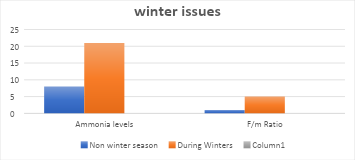
  • Nitrifier slowdown → High ammonia (>20 mg/L)
  • Low microbial activity → Increased F/M ratio
  • Reduced floc formation → Poor settling, turbid outlet
Solutions:
  • Pre-winter bioaugmentation with cold-active nitrifiers from T1B Aerobio Bioculture.
  • Increased MLVSS through controlled culture addition
  • Fine-tuned aeration to maintain DO around 3 mg/L
  • Reduced F/M by optimizing sludge wasting
Results:

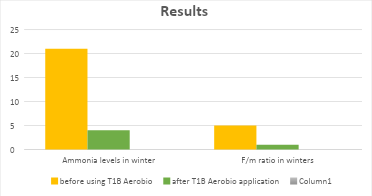
Ammonia was reduced to <5 mg/L within 10 days. Sludge quality improved, and the outlet was consistently clear.

☀️ Summer Challenges (Apr–Jun)
Problems:
  • High temperatures → Oxygen depletion
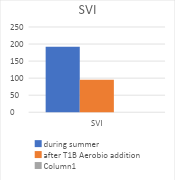
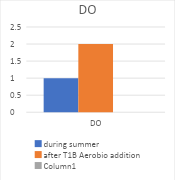
  • DO <1.5 mg/L → Filamentous bulking
  •  anti-filamentous dominant cultures through T1B Aerobio bioculture to suppress filaments
  • Boosted DO levels by adjusting blower run hours
  • Added foam control microbes to reduce surface scum and bulking
Results:

SVI normalized to 95–100 mL/g. Sludge settling and clarity improved; odor complaints dropped significantly.

????️ Monsoon Challenges (Jul–Sep)
Problems:
  • Heavy rainfall → Dilution & shock load
  • Surface runoff → Toxic load spikes
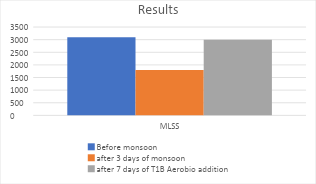
  • MLSS washed out → From 3500 to 1800 mg/L
  • Sudden pH shifts due to drainage ingress
Solutions:
  • Pre-monsoon culture buildup plan to fortify biomass using T1B Aerbio bioculture’s High-MLVSS variant
  • pH stabilization buffer introduced during heavy rains
  • Equalization tank aeration was increased to handle shock loads better
Results:

MLSS restored to 3100 mg/L within 7 days. COD removal stabilized at 90–92%. No emergency bypass required.

???? Transitional Season Challenges (Mar, Oct–Nov)
Problems:
  • Frequent influent variability due to batch changes
  • Occasional toxicity due to dyeing chemical overuse
  • Rapid shifts in temperature and pH → Microbial lag
Solutions:
  • Weekly parameter tracking and real-time microbial health checks
  • Targeted detoxifier blend dosing with Aerobio during chemical overload
  • Gradual culture build-up before full-load restart after holidays
Results:

The biological system became more resilient, absorbing fluctuations without crashing. No major deviations in any parameter

Parameter Snapshot Before vs After Aerbio Intervention
ParameterBeforeAfter T1B Aerobio
(Winter)>20 mg/L<5 mg/L
MLSS (Monsoon)~1800 mg/L~3100 mg/L
SVI (Summer)>160 mL/g90–100 mL/g
COD Removal~78%~92%
Outlet ClarityTurbid frequentlyClear, consistent
Odor ComplaintsFrequentAlmost Nil
Conclusion

Microbial performance doesn’t follow a flat line—it fluctuates with the weather. But with a season-wise microbial management plan, your ETP can remain compliant, efficient, and stress-free year-round.T1B’s Aerbio bioculture adapts where standard systems struggle—empowering your ETP to beat the seasonal drift, naturally.

Further Reading

To understand the science behind how microbial cultures enhance effluent treatment performance, explore our in-depth guide:
👉 What Are Biocultures for Wastewater Treatment — A Complete EHS Guide

This article explains the role of bioculture for ETP, the difference between aerobic and anaerobic bacteria, and how these biological solutions improve industrial wastewater treatment efficiency.

Contact us to implement a customized, season-wise microbial strategy with T1B Aerobio and keep your ETP biologically stable and compliant—year-round.

Email: sales@teamonebiotech.com

Visit: www.teamonebiotech.com

Discover More on YouTube – Watch our latest insights & innovations!-

Connect with Us on LinkedIn – Stay updated with expert content & trends!
Scan the code