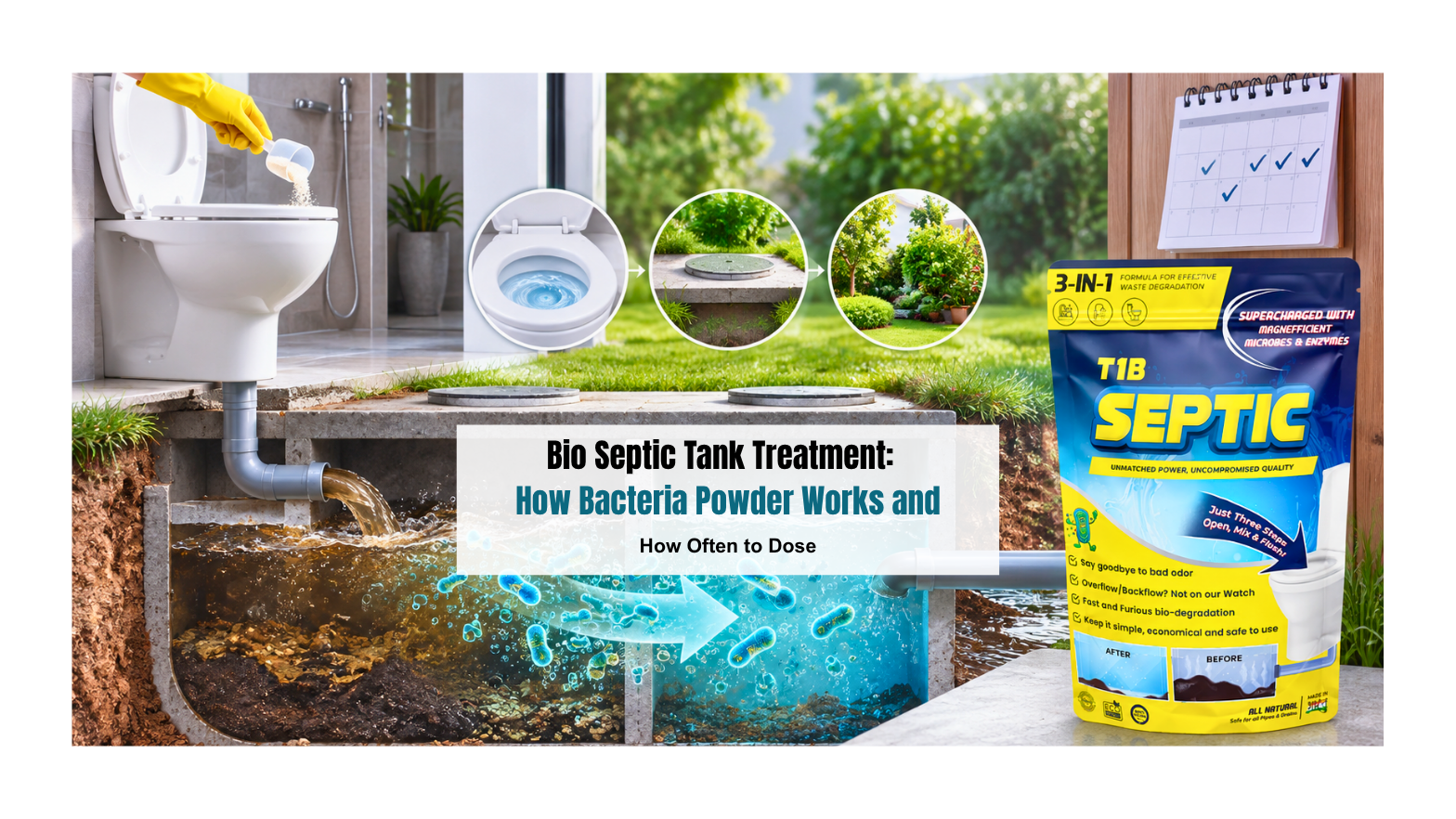
Bio Septic Tank Treatment: How Bacteria Powder Works and How Often to Dose

There is a particular kind of dread that comes with it. The smell arrives first, faint, then impossible to ignore. By the time guests have noticed, or the drain in the bathroom starts gurgling back at you, or you spot that suspicious wet patch spreading across the garden near the tank, the problem has already been building for weeks, possibly months. Suddenly, the phone is out and you are scrambling to find a desludging truck on a Sunday afternoon, hoping the situation does not get worse before help arrives.

This is how most homeowners and housing society managing committees experience their septic system, in moments of crisis, never in calm planning sessions. The tank sits underground, out of sight, and so it stays out of mind until it absolutely cannot be ignored anymore. It is one of the most common sanitation challenges across Indian homes, townships, and residential societies, and yet it remains one of the least discussed, because nobody wants to be the person raising the topic at the committee meeting.

The good news is that this entire cycle of neglect and emergency response is preventable. It starts with understanding what is actually happening inside that tank, and how the right septic tank treatment can turn a reactive headache into a routine, low-effort maintenance task. Bio septic tank cleaner products, specifically bacterial formulations in powder form, have changed the way homeowners and facility managers approach septic tank cleaning in India. This guide explains exactly how they work and what a sensible dosing schedule looks like.

What Is a Bio Septic Tank Cleaner and Why Does It Work Better Than Chemicals?
What Is a Bio Septic Tank Cleaner and Why Does It Work Better Than Chemicals?

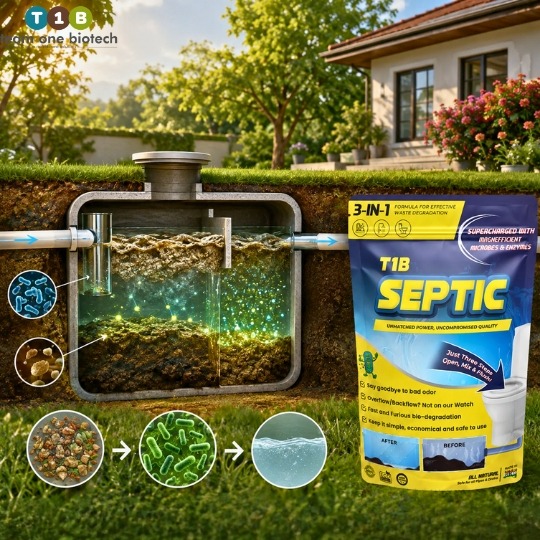
A bio septic tank cleaner is a formulation of carefully selected, naturally occurring bacterial strains, and in many cases, enzyme activators, that are introduced directly into the septic system to accelerate the biological breakdown of organic waste. Unlike chemical treatments, which may suppress odors temporarily by masking them, a biological cleaner addresses the actual root cause of the problem: the accumulation of undigested organic matter in the form of sludge at the tank base and a floating scum layer at the surface.

Chemical treatments do not digest waste. They interrupt it, and sometimes they make the situation harder to manage in the long run by disrupting the microbial environment inside the tank. Beneficial bacteria that were naturally present, however modest their population, get wiped out, and the tank is left biologically depleted. The sludge continues to accumulate. The smell returns, often within weeks.

Bio septic tank cleaner products work differently because they work with the tank’s biology, not against it. The bacterial strains in these formulations are selected specifically for their ability to thrive in the anaerobic and facultative conditions inside a septic tank and to produce the enzymes necessary to break down fats, proteins, cellulose, and human waste at a much faster rate than naturally occurring bacteria alone.

There is also a climatic advantage worth noting. India’s heat and humidity, conditions that many people associate with worsening sanitation problems, actually create highly favorable conditions for bacterial activity. The warm temperatures across most Indian states accelerate microbial metabolism, which means that properly seeded septic bacteria can establish and maintain an active colony more readily here than in colder climates. This makes bioremediation a particularly well-suited solution for septic system maintenance across India’s residential and institutional settings.

From a regulatory standpoint, the relevance is clear. Foul odors, overflow events, and untreated effluent seepage are not only a nuisance, they can constitute violations of local municipal sanitation bylaws and the National Faecal Sludge and Septage Management (FSSSM) guidelines. Bio septic tank cleaner products help homeowners, housing society managers, and facility heads maintain compliant systems without expensive infrastructure upgrades or frequent emergency interventions.

How Bacteria Powder Works Inside Your Septic Tank
Understanding this process does not require a microbiology degree. The mechanism is straightforward, and knowing it makes it much easier to appreciate why consistent treatment delivers results while irregular or absent treatment allows problems to compound.

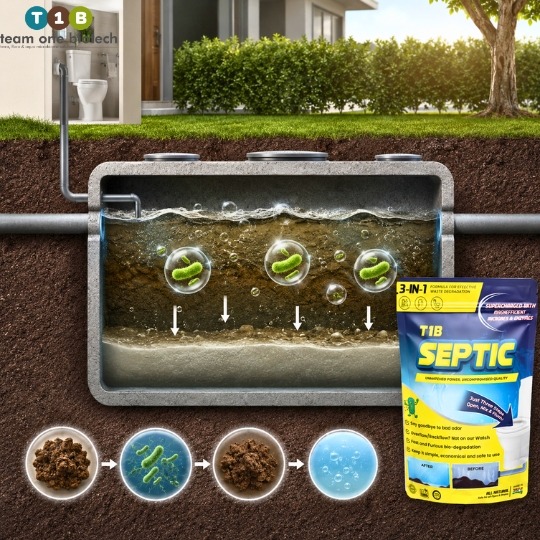
When bacteria powder is introduced into the septic tank, typically through a toilet flush or directly through the inspection port, the following sequence occurs:

  • Rehydration: The dormant bacterial strains in the powder rehydrate on contact with the liquid environment inside the tank and begin to revive within hours of introduction.
  • Activation: The bacteria begin multiplying rapidly in the warm, nutrient-rich environment, establishing an active colony calibrated to the waste load present.
  • Enzymatic breakdown: The active bacteria produce enzymes, lipases, proteases, cellulases, and amylases, that target and break down complex organic compounds: fats and greases, proteins, cellulose from paper and plant matter, and human waste.
  • Sludge digestion: As organic matter is broken down into simpler molecules, the accumulation of solid sludge at the base of the tank slows and, with consistent treatment, begins to reduce. The floating scum layer at the surface is similarly addressed.
  • Effluent clarification: The liquid effluent that eventually flows into the drain field or soak pit is significantly cleaner, with lower organic load and reduced harmful content, reducing the risk of soil clogging and groundwater contamination.

Two categories of bacteria handle different zones inside the tank. Anaerobic bacteria dominate the lower, oxygen-depleted layers where the heaviest organic load settles. Facultative bacteria operate in the mid-liquid zone, where oxygen availability is inconsistent. Together, they address the tank as a complete environment rather than a single-condition system.

One of the most immediate and noticeable effects of consistent bacterial treatment is odor reduction. The characteristic foul smell associated with septic tanks, the rotten egg odor, comes from hydrogen sulfide gas, a byproduct of undigested organic matter breaking down through the wrong biological pathways. When the right septic tank bacteria are present in sufficient numbers and actively digesting waste through the correct enzymatic processes, hydrogen sulfide production drops significantly. The smell that many people accept as an inevitable part of having a septic system is, in most cases, a sign that the biology inside the tank is out of balance, and it is a correctable condition.

Consistently maintaining a healthy bacterial colony through regular dosing of bacteria powder is what keeps the tank in this balanced state. It is the difference between a septic system that functions quietly in the background and one that demands emergency attention every few months.

How Often Should You Add Bacteria to Your Septic Tank?
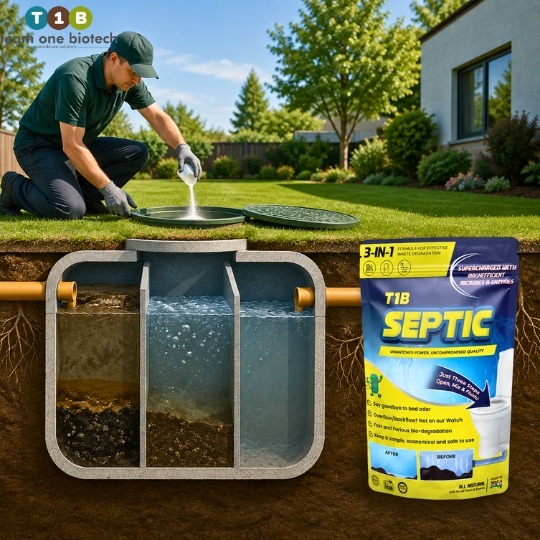
How Often Should You Add Bacteria to Your Septic Tank?

This is the question most homeowners and facility managers come to first, and it deserves a direct, structured answer. The honest response is that the ideal dosing frequency depends on tank size, the number of daily users, the type of waste load, and the specific bacterial product being used. That said, there are three scenarios that cover the vast majority of situations, and understanding them makes it straightforward to build a practical routine.

Disclaimer: The dosing scenarios described below are general guidance only. Actual recommended dosages vary based on tank capacity, usage patterns, the presence of household chemicals, and the specific bacterial formulation being used. Always refer to the product label or consult a bioremediation specialist for precise dosing instructions tailored to your system.

Scenario One: Initial or Shock Dose (First-Time Treatment or After Desludging)

When biological treatment is being introduced to a septic tank for the first time, or immediately after the tank has been professionally pumped out and desludged, a higher initial dose is required. Think of this as seeding, the goal is to rapidly establish a healthy, active bacterial colony in an environment that currently has little to no biological activity. A higher concentration of bacteria powder is introduced at the outset to give the colony the population density it needs to get to work quickly. Without this initial seeding dose, a standard maintenance quantity would take much longer to build up to an effective population, and the window during which the tank is biologically underperforming extends unnecessarily.

Scenario Two: Routine Monthly Maintenance Dose

Once a bacterial colony has been established, a regular monthly maintenance dose is what sustains it. This is not about fixing a problem, it is about preventing one from developing. The monthly dose replenishes any bacteria that have been lost to natural die-off, flushed out with effluent, or killed by incidental exposure to household cleaning products. For most residential systems, whether a single household or a medium-sized housing society, a monthly dosing schedule is the standard practice that experienced sanitation managers and bioremediation specialists recommend for ongoing septic tank maintenance.

The timing of dosing matters. Introducing bacteria powder at a period of lower water usage, overnight, for example, or at the start of a weekend when water flow through the system is reduced, gives the bacteria time to rehydrate, activate, and begin establishing themselves before the next surge of water usage flows through the tank. Dosing during peak usage hours means the bacterial inoculant may be flushed through the system before it has had time to colonize.

Scenario Three: Re-Seeding After Antibiotic Use or Harsh Cleaning Products

This is a scenario many households encounter without realizing its significance. Antibiotics prescribed for illness are passed through the body and into the septic system, where they can suppress or kill a substantial portion of the beneficial bacterial colony. Similarly, bleach-heavy drain cleaners, disinfectants, and some industrial cleaning products used in kitchens or bathrooms can reach the tank in concentrations sufficient to damage the microbial population. After any significant exposure of this kind, a re-seeding dose, equivalent to or approaching the initial shock dose, is advisable to restore biological activity before the tank’s organic load begins to accumulate unchecked.

For housing societies and facility managers overseeing multiple units, it is worth considering whether common-area cleaning contractors are using products compatible with the building’s septic infrastructure. The cumulative impact of bleach-heavy cleaning across multiple units can significantly disrupt septic tank bacteria, even when individual household usage would be manageable.

Signs Your Septic System Is Telling You It Needs Attention
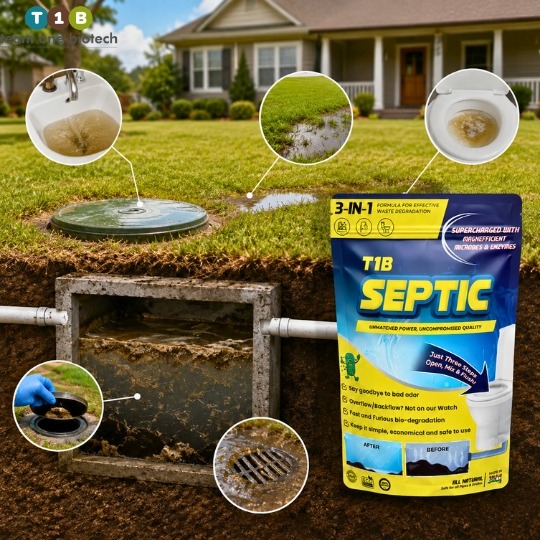
A well-maintained septic system is largely silent. When it begins signaling for attention, the signs are usually unmistakable to anyone who knows what to look for:

  • Persistent foul odors near the tank area, in the garden above the drain field, or inside the home near floor drains and bathroom fixtures
  • Slow-draining sinks, toilets, or floor drains that were previously functioning normally
  • Gurgling or bubbling sounds from plumbing fixtures when water drains elsewhere in the building
  • Waterlogged ground or unusually lush, dark green patches of grass above the drain field or soak pit area, a sign that effluent is surfacing into the soil layer
  • More frequent need for desludging or pump-out than the expected interval for the household size
  • Visible sewage or effluent surfacing near the tank inspection port, the soak pit perimeter, or garden areas

None of these are signs to note and revisit later. Each one indicates that the biological balance inside the tank has been compromised and organic accumulation is advancing. Catching these signs early and responding with an appropriately dosed bio septic tank cleaner treatment is substantially less disruptive and less expensive than waiting until structural remediation of the drain field is necessary, or until an overflow event creates a health hazard on the property.

If any of these warning signs are present, it is not too late to restore balance. Contact Team One Biotech to identify the right bacterial treatment for the specific system and usage load.

Best Practices for Maintaining a Septic Tank the Right Way

Biological treatment works best as part of a broader maintenance approach. These practices, taken together, give septic tank bacteria the conditions they need to perform effectively and extend the time between desludging cycles:

  • Avoid flushing non-biodegradable items into the system, wet wipes (including those labelled “flushable”), sanitary products, cooking grease, and thick paper products all contribute to blockages and scum layers that bacteria cannot break down efficiently
  • Space out high-volume water usage, running the washing machine, dishwasher, and multiple showers in close succession creates a hydraulic surge through the tank that can flush out bacteria and disturb the stratified layers of settled sludge
  • Use septic-safe, low-phosphate cleaning products wherever possible, particularly for bathroom and kitchen surfaces, to minimise chemical interference with the microbial environment
  • Schedule professional desludging inspections at intervals appropriate to tank capacity and household size, do not wait for an overflow event to prompt this; proactive scheduling is invariably less disruptive and less costly
  • Keep heavy vehicles, construction equipment, and compacted material away from the area above the tank and drain field, as ground pressure can damage tank walls and disrupt the percolation of the soak pit
  • Maintain a simple dosing log, particularly valuable for housing society managing committees and facility managers overseeing larger systems, so that treatment cycles are tracked and no monthly dose is missed inadvertently

Disclaimer: Recommended maintenance intervals and professional inspection schedules vary depending on tank size, number of users, local soil conditions, and applicable regulatory requirements. Consult the FSSSM guidelines applicable to your region or a certified sanitation professional for site-specific advice.

Why Bioremediation Is the Sustainable Choice for India’s Sanitation Challenges

India’s sanitation infrastructure relies heavily on decentralised septic systems, across urban housing societies, peri-urban townships, gated communities, schools, hospitals, and rural homes. The scale of this decentralised network is vast, and the pressure it places on municipal desludging services and sewage treatment infrastructure is significant. Bioremediation offers a sustainable path forward that reduces dependence on those services, protects groundwater and soil from untreated effluent seepage, and dramatically reduces the frequency with which mechanical intervention is needed.

This aligns directly with the goals of the FSSSM framework, to improve the quality of faecal sludge management at the point of generation, not just at the point of disposal. When homeowners and facility managers invest in regular bio septic tank cleaner treatment, they are not only solving a practical problem for their own property. They are contributing to a measurable reduction in the public health burden associated with poorly managed septic systems across the country.

Team One Biotech’s bacterial formulations are engineered specifically for Indian septic conditions, the waste loads, the tank designs, the climatic environment, and the regulatory context that facility managers and homeowners are working within. Reach out to the team to learn which product is right for your tank size and usage load.

Frequently Asked Questions

What is a bio septic tank cleaner?

A bio septic tank cleaner is a formulation of beneficial bacterial strains, most commonly delivered as a powder or liquid concentrate, that are introduced into a septic tank to accelerate the natural biological breakdown of organic waste, reduce sludge accumulation, and control foul odors.

How often should bacteria be added to a septic tank?

For most residential systems, a monthly maintenance dose is recommended once an initial seeding dose has established the bacterial colony. Exact frequency depends on tank size, number of users, and the specific product formulation. Always follow the manufacturer’s dosing guidance for the product being used.

Can bacteria powder damage a septic tank or pipes?

No. Bacteria powder contains naturally occurring microorganisms that are safe for tank walls, pipe materials, and the broader environment. They do not corrode or chemically degrade any component of a standard septic system.

Is bio septic treatment compliant with Indian sanitation regulations?

Yes. Bioremediation-based treatment supports compliance with FSSSM guidelines by reducing foul odors, controlling overflow risk, and improving the quality of effluent reaching the drain field, outcomes that align with municipal sanitation and environmental health standards.

What should be done after significant bleach or antibiotic exposure?

Harsh chemicals and antibiotics can reduce or eliminate the beneficial bacterial population inside a septic tank. After significant exposure, a re-seeding dose of bacteria powder is recommended to re-establish a healthy, active microbial colony before organic load begins to accumulate unchecked.

A Healthier Septic System Starts With the Right Biology

A septic system that is working as it should is one of the most unobtrusive parts of any home or facility. It operates quietly, handles its load efficiently, and asks very little of the people it serves, as long as it is given the biological conditions it needs to function. The problems that make septic systems a recurring source of stress and expense are, in the vast majority of cases, not structural failures. They are biological ones. They happen when the microbial environment inside the tank is depleted, disrupted, or never properly established to begin with.

Bio septic tank cleaner products, used consistently and at the right intervals, are what restore and maintain that biological balance. The bacteria powder works with the natural processes already designed into the system, accelerating them, sustaining them, and preventing the accumulation of organic matter that leads to odor, overflow, and expensive remediation. This is not a complicated intervention. It is a straightforward, sustainable form of septic tank treatment that costs far less than the alternatives and delivers results that are measurable in the absence of problems.

Team One Biotech has been developing bioremediation solutions trusted by homeowners, housing societies, and sanitation project managers across India. If the goal is to stop reacting to septic problems and start preventing them, the team is ready to help identify the right bio septic tank cleaner formulation and dosing schedule for any specific system, residential, institutional, or commercial. Get in touch today.

Looking to improve your ETP/STP efficiency with the right bioculture?
Talk to our experts at Team One Biotech for customised microbial solutions.

Contact: +91 8855050575

Email:  sales@teamonebiotech.com

Visit: www.teamonebiotech.com

Discover More on YouTube – Watch our latest insights & innovations!-

Connect with Us on LinkedIn – Stay updated with expert content & trends!
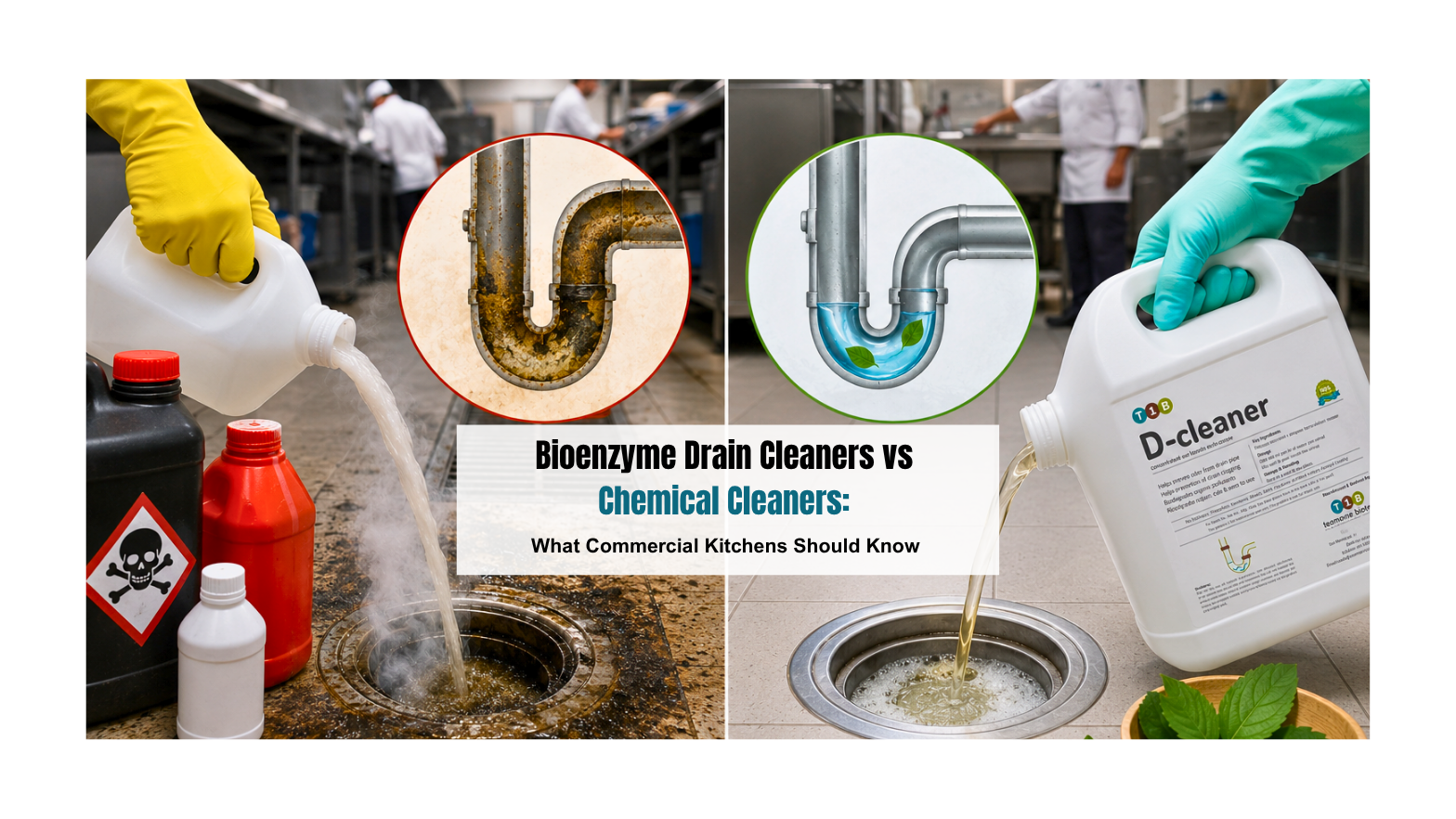
Bioenzyme Drain Cleaners vs Chemical Cleaners: What Commercial Kitchens Should Know

It is 10:45 in the morning. Your lunch service starts in an hour. And the drain at your main prep station is backing up.

Not slowly, backing up. Water pooling around the floor grate, a grease-thick smell rising from the trap, and your kitchen team already looking at you for answers. You reach for what you have always reached for: a bottle of chemical drain cleaner. Pour it in, wait, flush it through. Problem solved, for now.

But here is the question commercial kitchen operators across India are starting to ask more seriously: is it actually solved? Or has the chemical simply pushed the problem somewhere else, somewhere that shows up later as a blocked interceptor line, a failed compliance inspection, or an infrastructure repair bill that nobody budgeted for?

For years, chemical drain cleaners have been the default answer in commercial kitchens. They are fast, they are available at any hardware shop, and they feel decisive. But the evidence, operational, regulatory, and scientific, is increasingly pointing in a different direction. Bio enzyme cleaning solutions are changing how serious kitchen operators think about drain maintenance, grease trap management, and long-term compliance.

By the end of this article, you will understand exactly how these two approaches differ, why that difference matters for your kitchen’s infrastructure and regulatory obligations, and what to look for if you are ready to make a more informed decision.

The Problem with Chemical Drain Cleaners in Commercial Kitchens

The Problem with Chemical Drain Cleaners in Commercial Kitchens

Let us be honest about why chemical cleaners became so widespread. They work quickly. You pour them in, they cut through a blockage, and the drain flows again. For a kitchen operating under time pressure, that immediate result carries real appeal. The problem is not what chemical cleaners do in the short term, it is what they fail to do over time, and what they quietly cause along the way.

Corrosion Damage that Accumulates Slowly

Most commercial-grade chemical drain cleaners are either strongly caustic (sodium hydroxide-based) or strongly acidic. These formulations are aggressive enough to dissolve organic matter, but they do not stop there. Over repeated use, they degrade pipe walls, attack gaskets, and weaken the material integrity of drain fittings. PVC lines, older galvanised metal pipes, and cast iron drainage infrastructure are all vulnerable. The damage does not show up overnight. It builds over months and years until you are looking at a pipe replacement cost rather than a routine maintenance expense.

FOG displacement, Not Elimination

This is the most important thing to understand about chemical drain cleaners in a commercial kitchen context. They do not break down fats, oils, and grease at a molecular level. They emulsify or disperse it, temporarily. The FOG appears to clear from the immediate drain area, but it reforms further downstream. It re-deposits in grease trap chambers, accumulates in interceptor lines, and eventually pushes non-compliant FOG loads into the municipal sewer connection. You have not eliminated the grease. You have relocated it.

Compliance and Regulatory Exposure

CPCB and state SPCB wastewater discharge standards require that effluent leaving commercial premises meets defined thresholds for BOD (Biochemical Oxygen Demand), COD, and FOG content. When chemical dispersal sends high-FOG, high-BOD effluent downstream rather than digesting it at the source, your kitchen is at higher risk of discharging non-compliant wastewater. Penalties and corrective compliance costs can be significant and vary by municipal body and state regulation, and as urban sewage infrastructure faces increasing load across Indian cities, grease trap inspections and effluent testing are becoming more routine, not less.

Staff Safety and Handling Complexity

Concentrated caustic chemicals require PPE, proper ventilation, and careful handling protocols. In the environment of a commercial kitchen, where staff are moving fast, surfaces are wet, and attention is split, adding a chemical hazard to the routine creates real operational risk. Burns, fume exposure, and improper disposal are not theoretical concerns. They happen in working kitchens.

Environmental Persistence

Chemical residues that pass through drain systems do not biodegrade. They persist in water systems, disrupt biological treatment processes at downstream ETPs and STPs, and contribute to the broader wastewater quality problem that Indian environmental regulation is increasingly focused on addressing. For kitchen operators thinking about positioning their operation as responsible and sustainable, especially in the context of eco friendly drain cleaner India standards, chemical drain maintenance runs directly counter to that direction.

How Bio Enzyme Cleaners Work, and Why That Difference Matters

How Bio Enzyme Cleaners Work, and Why That Difference Matters

The distinction between chemical and biological drain treatment is not just a matter of ingredient preference. It is a fundamentally different mechanism of action, and understanding that mechanism is what makes the switch make sense.

A bio enzyme cleaner contains naturally occurring microbial cultures combined with specific enzyme blends. The key enzyme types are lipases (which target fats and oils), proteases (which break down proteins), and amylases (which address starch residues). These are not synthetic chemicals, they are biological agents cultivated specifically for their ability to digest the organic compounds that commercial kitchens produce in large quantities every day.

Where a chemical drain cleaner works by force, creating a temporary passage through a blockage, a bioenzyme cleaner works through biology. The microbial cultures introduced into the drain or grease trap identify FOG and organic matter as a food source. They begin enzymatic digestion, breaking down fats, proteins, and starches at a molecular level. The end products of this process are primarily water and carbon dioxide, no toxic residues, no chemical persistence, no downstream FOG surge.

The other critical difference is duration of effect. A chemical cleaner’s action ends when the product flushes through. A bioenzyme cleaner establishes a biological colony within the drain environment. With regular application, that colony sustains itself, continuously digesting incoming FOG rather than allowing it to accumulate. This is what makes enzyme drain cleaner for kitchen systems genuinely different, not just a cleaner, but a maintenance ecosystem.

For kitchen operators using grease trap cleaner biological solutions, this sustained biological activity means grease traps accumulate significantly less solid FOG between cleanouts. Pumping frequency reduction is indicative and will vary based on kitchen output, trap design, and municipal requirements, but the directional benefit is consistent: less FOG accumulation means lower maintenance frequency and lower servicing costs over time.

Bioenzyme cleaners are also pH-neutral or near-neutral, which makes them safe for the full range of pipe materials found in commercial kitchen infrastructure, including older galvanised systems, PVC, and cast iron. There is no corrosive action, no degradation of pipe walls or gaskets, no long-term infrastructure risk from repeated use. For a kitchen that has been relying on chemical cleaners for years, switching to bioenzyme cleaner for pipes is also a form of infrastructure protection.

How Bioenzyme Cleaners Break Down FOG, Step by Step

  • Microbial cultures in the bioenzyme solution are introduced into the drain channel, trap inlet, or grease interceptor as part of a regular maintenance schedule
  • The microbes recognise FOG and organic residues as a nutrient source and begin enzymatic activity, this process starts within hours of application
  • Lipase enzymes target fats and oils directly; protease enzymes address protein residues from food solids; amylase enzymes break down starch accumulations common in kitchen drainage
  • The biological digestion process converts FOG and organic matter into water and carbon dioxide, no toxic residue remains, and no downstream FOG displacement occurs
  • With consistent, scheduled application, the microbial colony sustains its activity between dosing cycles, providing continuous rather than single-use protection

Values and figures referenced are general industry estimates and will vary based on kitchen volume, drain system design, local regulatory standards, and ETP/STP configuration. Always consult a qualified bioremediation specialist or your local regulatory authority for site-specific guidance.

The Compliance Case, Why Indian Commercial Kitchens Cannot Ignore This

The Compliance Case, Why Indian Commercial Kitchens Cannot Ignore This

The regulatory environment for commercial kitchen wastewater in India is not getting looser. It is moving in the opposite direction, and kitchen operators who are still treating drain maintenance as a purely operational concern, rather than a compliance obligation, are taking on a risk they may not fully recognise.

CPCB and state SPCB discharge standards require that effluent from commercial premises meets defined BOD, COD, and FOG thresholds before it enters municipal drainage. Permissible BOD, COD, and FOG levels vary under state-specific SPCB guidelines and should be verified with your local regulatory authority or a certified ETP consultant, but the principle is consistent across jurisdictions: you are responsible for the quality of what leaves your premises.

The challenge with chemical drain maintenance is that it creates the appearance of compliance without the substance. The drain flows. The kitchen looks clean. But the FOG has been dispersed, not digested, and it is now accumulating in your grease trap, building in your interceptor line, and periodically surging into the municipal sewer network in concentrations that exceed permissible discharge standards. When an inspection happens or effluent testing is conducted, that is when the gap between appearance and reality becomes expensive.

Biological treatments, including bio enzyme cleaners used as part of a documented kitchen maintenance programme, align with the regulatory intent behind India’s wastewater standards. CPCB-approved bioremediation approaches are consistent with the direction Indian environmental regulation is moving. Using a natural drain cleaner commercial kitchen programme built on bioenzyme technology positions your operation ahead of tightening compliance requirements rather than scrambling to catch up with them.

There is also a documentation advantage. Commercial kitchens that maintain a structured bioenzyme dosing programme have a clearer, more demonstrable compliance trail. Records of regular biological treatment, product specifications, and application schedules provide evidence of proactive FOG management, evidence that carries weight in the event of an inspection or compliance inquiry.

Want to understand whether your current drain maintenance approach meets local CPCB/SPCB discharge norms? Talk to our bioremediation specialists at Team One Biotech, we work with commercial kitchens across India to build compliant, cost-effective FOG management programmes.

Chemical vs Bioenzyme Cleaners, Side-by-Side for Commercial Kitchens

Chemical vs Bioenzyme Cleaners, Side-by-Side for Commercial Kitchens

The comparison between these two approaches becomes very clear when you look at them across the dimensions that actually matter to a kitchen operator.

FOG Treatment: Chemical cleaners disperse and emulsify grease temporarily. Bioenzyme cleaners digest FOG at a molecular level, eliminating it rather than relocating it downstream.

Effect on Pipes: Chemical cleaners corrode pipe walls, gaskets, and fittings over repeated use, a long-term infrastructure risk that accumulates quietly. Bioenzyme cleaners are pH-neutral and pipe-safe, compatible with all common drain materials including older systems.

Grease Trap Impact: Chemical treatment pushes FOG further into the system, where it re-deposits in grease trap chambers and interceptor lines. Biological treatment reduces FOG accumulation in traps, supporting longer service intervals and lower pumping costs.

Compliance Support: Chemical dispersal does not reduce BOD or FOG load in effluent, it shifts it. Bioenzyme treatment directly reduces the organic load in outgoing effluent, supporting compliance with CPCB/SPCB discharge standards and grease interceptor regulations.

Residual Effect: Chemical cleaners provide single-use action with no ongoing benefit. Bioenzyme cleaners establish a microbial colony that sustains biological activity between dosing cycles, providing continuous FOG management rather than emergency response.

Staff Safety: Chemical drain cleaners require PPE, ventilation precautions, and careful handling in a high-risk kitchen environment. Bioenzyme cleaners are non-hazardous, safe for routine application, and require no special protective measures.

Environmental Profile: Chemical residues persist in water systems and disrupt downstream biological treatment. Bioenzyme products are fully biodegradable, producing no toxic byproducts, consistent with the direction eco friendly drain cleaner India standards and municipal environmental guidelines are moving.

What to Look for in a Bio Enzyme Cleaner for Commercial Use

Not all bioenzyme products are equivalent. If you are evaluating a switch from chemical to biological drain maintenance, here is what genuinely matters for commercial kitchen application.

Microbial strain diversity: A commercial kitchen drain environment contains fats, oils, proteins, and starches in combination. An effective enzyme drain cleaner for kitchen systems must contain multiple enzyme strains, lipase for fat digestion, protease for protein breakdown, amylase for starch residues. Single-enzyme or narrow-spectrum products will not perform adequately in the complex FOG environment of a working commercial kitchen.

Viable microbial count: The concentration of live, active microbial cultures, measured in CFU (Colony Forming Units) per gram or per millilitre, needs to be within a commercially effective range for the application. CFU specifications vary significantly by product formulation and application context, always verify with the manufacturer for your specific use case. Higher is not automatically better; the right concentration depends on your drain volume, FOG load, and dosing schedule.

Shelf stability and storage requirements: Biological products are living formulations. They require appropriate storage conditions to remain viable. When evaluating a product, confirm shelf life under realistic storage conditions and ensure your kitchen team understands the usage protocol, including temperature storage requirements and shelf life post-opening.

Compatibility with ETP or STP infrastructure: If your kitchen is connected to an Effluent Treatment Plant or Sewage Treatment Plant, verify that your chosen bioenzyme cleaner for pipes is compatible with the biological processes running in that downstream system. Quality manufacturers will be able to confirm compatibility and provide technical documentation.

Regulatory traceability: Prefer products from manufacturers who can provide clear documentation of product composition, microbial safety classification, and alignment with applicable Indian standards. This documentation matters both for your own compliance programme and for any regulatory inquiry.

Team One Biotech’s bio enzyme cleaner formulations are engineered specifically for high-FOG commercial environments, developed with the Indian regulatory landscape in mind. Get in touch to find the right solution for your kitchen’s drain and grease trap system.

Frequently Asked Questions

Can a bio enzyme cleaner fully replace chemical drain cleaners in a commercial kitchen?

For routine maintenance and ongoing FOG management, yes, bioenzyme cleaners are highly effective as a primary solution and a natural drain cleaner commercial kitchens can integrate into their regular maintenance schedule without operational disruption. For acute, severe blockages, mechanical intervention may still be required. Once the blockage is cleared, bioenzyme treatment can resume immediately as the maintenance baseline, rebuilding the biological colony and preventing recurrence.

How often should enzyme drain cleaner for kitchen drains be applied?

Application frequency depends on kitchen volume, menu type (a high-frying operation produces far more FOG than a predominantly vegetarian kitchen), and the complexity of your drain system. Most commercial kitchen programmes operate on a weekly scheduled dosing routine, though some high-volume operations benefit from more frequent application. Values and figures referenced are general industry estimates and will vary based on kitchen volume, drain system design, and ETP/STP configuration, recommended dosing intervals should be calibrated to your specific kitchen output and drain system design.

Are bioenzyme cleaners safe for septic tank systems connected to commercial kitchen drainage?

Yes, bioenzyme cleaners are generally compatible with and beneficial for septic tank environments. The microbial activity in the product supports the biological digestion processes already occurring within a well-functioning septic system, rather than disrupting them. Always verify compatibility with your septic system operator or ETP consultant for site-specific confirmation.

Does a bioenzyme cleaner for pipes work on older plumbing systems?

One of the significant practical advantages of bioenzyme drain cleaners is their material compatibility. Because they are pH-neutral and non-corrosive, they are safe for older galvanised pipe systems, PVC, cast iron, and mixed-material drainage infrastructure, precisely the kinds of systems found in many established commercial kitchen buildings where chemical cleaners have been causing slow degradation for years.

How does grease trap cleaner biological treatment help with compliance in India?

By digesting FOG rather than dispersing it, grease trap cleaner biological treatment reduces the BOD and FOG concentration in the effluent that exits your kitchen drainage system. This directly supports compliance with CPCB/SPCB discharge standards and reduces the risk of high-FOG surges entering the municipal sewer network, the scenario that triggers compliance notices and corrective action requirements.

Right Choice for Your Kitchen and Your Compliance

Come back to where we started: the backed-up drain, the approaching lunch rush, the reach for a chemical solution that clears the immediate problem while quietly building the next one.

Chemical drain cleaners have had their moment in commercial kitchens, and for emergency situations, mechanical tools and temporary interventions will always have a role. But as a maintenance strategy, chemical-first drain management creates a cycle that serves no one well: repeated applications that damage infrastructure, FOG displacement that builds compliance risk downstream, and single-use action that requires constant repetition without addressing the underlying accumulation.

Bioenzyme cleaners address FOG at the source. They digest it biologically, they reduce the organic load in your outgoing effluent, they protect your pipe and grease trap infrastructure, and they position your kitchen on the right side of India’s tightening environmental regulations, not through workarounds or dispersal, but through genuine elimination of the problem.

The switch from chemical to biological drain maintenance is not an operational disruption. It is a strategic upgrade. It pays for itself through reduced emergency maintenance calls, more predictable grease trap service intervals, lower long-term infrastructure replacement costs, and a stronger, more documentable compliance posture in an environment where inspections are becoming routine rather than exceptional.

For commercial kitchen managers, restaurant operators, and facilities directors who are accountable for both the operational performance and the regulatory standing of their kitchens, this is not a marginal decision. It is the kind of change that makes the next compliance inspection something you are prepared for, rather than something you are hoping to pass.

Team One Biotech manufactures bioremediation solutions purpose-built for the demands of commercial kitchens across India. If you are ready to move beyond chemical drain maintenance and build a grease management programme that is compliant, cost-effective, and built to last, speak to our team today. We will assess your kitchen’s drainage system, your current compliance obligations, and recommend the right bioenzyme programme for your operation.

Looking to improve your ETP/STP efficiency with the right bioculture?
Talk to our experts at Team One Biotech for customised microbial solutions.

Contact: +91 8855050575

Email:  sales@teamonebiotech.com

Visit: www.teamonebiotech.com

Discover More on YouTube – Watch our latest insights & innovations!-

Connect with Us on LinkedIn – Stay updated with expert content & trends!
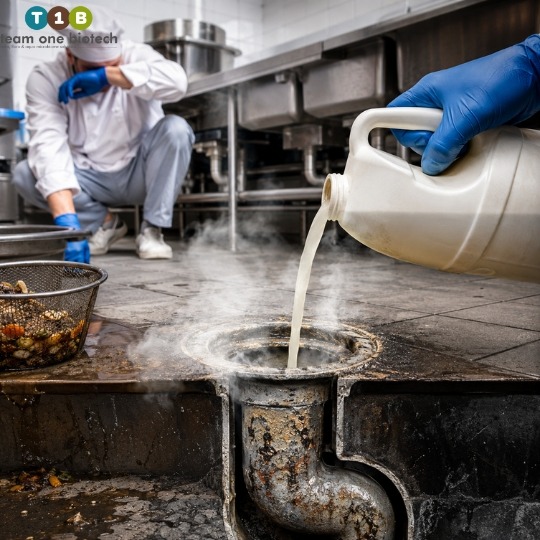
Fecal Sludge Management in India: Treatment Options and Biological Solutions

Every time a septic tank is desludged in an Indian city, the real question is not where the truck goes, it is what happens next. In too many municipalities, the answer remains the same: the sludge disappears into the nearest drain, open land, or water body. The public health consequences are invisible until they are not. A contaminated borewell. A cholera cluster. A river stretch that no longer supports aquatic life. These are not hypothetical outcomes. They are the documented cost of treating fecal sludge as a disposal problem rather than a management challenge.

India has made extraordinary strides in toilet construction and open defecation elimination under the Swachh Bharat Mission. But the infrastructure story does not end at the toilet. It extends all the way to what happens with the waste after it leaves the household, and for a vast proportion of India’s urban population, that waste is sitting in a septic tank, waiting to be emptied, transported, and treated. Fecal sludge management is the missing link in India’s sanitation chain, and the cities that get it right will lead the next phase of urban health outcomes.

What Is Faecal Sludge and Why Does It Demand Attention Right Now?

What Is Faecal Sludge and Why Does It Demand Attention Right Now?

Faecal sludge is the semi-solid material that accumulates in on-site sanitation systems, septic tanks, pit latrines, and containment chambers. It is not the same as sewage. Sewage is wastewater transported through a networked sewer system to a sewage treatment plant. Faecal sludge, by contrast, comes from non-sewered systems where waste sits, partially decomposes, and builds up over months and years until the containment system reaches capacity.

The distinction matters enormously in the Indian context. Despite significant investment in sewered sanitation infrastructure, a substantial portion of India’s urban and peri-urban households still rely on septic tanks or pit latrines. In many secondary cities, census towns, and rapidly growing urban agglomerations, sewage networks simply do not exist or reach only a fraction of households. This means that for millions of residents, the septic tank is the sanitation system, and fecal sludge management is not a peripheral concern, it is the central one.

The faecal sludge meaning, in policy terms, encompasses the entire service chain: what comes out of the tank, how it is emptied, where it goes, how it is treated, and how the end product is safely disposed of or reused. Swachh Bharat Mission Phase II and the National FSSM Policy have explicitly placed faecal sludge on the municipal agenda, recognizing that toilet access without downstream treatment is an incomplete sanitation solution. The urgency is real and the regulatory clock is running.

The Regulatory Landscape, FSSM Policy India and CPCB Standards

The Regulatory Landscape, FSSM Policy India and CPCB Standards

The National Faecal Sludge and Septage Management Policy, issued by the Ministry of Housing and Urban Affairs, established a comprehensive framework that shifts faecal sludge management from an informal, reactive practice to a regulated, planned municipal function. Under this framework, Urban Local Bodies (ULBs) carry clear responsibilities: they are expected to establish periodic desludging schedules for on-site sanitation systems in their jurisdiction, ensure that desludging operators are authorized and trained, mandate safe transport of septage to approved facilities, and either develop Faecal Sludge Treatment Plants (FSTPs) or enter into co-treatment arrangements with existing Sewage Treatment Plants.

The Central Pollution Control Board and State Pollution Control Boards have established discharge standards for treated effluents from faecal sludge treatment systems. These standards govern parameters such as biochemical oxygen demand, suspended solids, pathogen levels, and other indicators of treatment quality. It is important to note that compliance values differ by state and specific treatment infrastructure, municipalities must verify applicable standards with their respective SPCB or CPCB guidelines rather than relying on generalized national figures.

Non-compliance carries real consequences. Unauthorized dumping of septage into drains, water bodies, or open land is a CPCB/SPCB violation that can attract penalties and legal liability. More critically, it contributes to groundwater contamination, surface water pollution, and disease burden in surrounding communities. ULBs that have not yet formalized their septage management india systems are increasingly exposed to both regulatory risk and public health risk simultaneously.

If your municipality is working toward FSSM compliance, understanding your treatment options is the first step, and the sections that follow are designed to give you exactly that grounding.

The Core Challenge, Why Septage Management in India Remains Difficult

Understanding why faecal sludge management remains a challenge across so many Indian cities requires acknowledging the operational realities that ULB officials and sanitation planners live with every day. The barriers are not primarily technical, they are systemic, financial, and institutional.

  • Irregular and unregulated desludging: Most septic tanks in Indian cities are emptied reactively, when they overflow or block, rather than on a planned schedule. This means sludge builds up beyond safe capacity, increasing pathogen load and the risk of seepage into surrounding soil and groundwater.
  • Limited FSTP infrastructure: Dedicated faecal sludge treatment plants remain concentrated in larger cities. Smaller municipalities, census towns, and peri-urban areas frequently have no authorized treatment facility within practical reach, leaving desludging operators with no legal disposal option.
  • High pathogen load in raw fecal sludge: Untreated fecal sludge carries a range of pathogens, bacteria, helminths, protozoa, capable of contaminating groundwater and surface water if improperly managed. This creates acute public health risk wherever sludge is informally disposed.
  • Operator awareness and training gaps: Private desludging operators, who handle the bulk of septic tank emptying in most Indian cities, often lack formal training on safe containment, transport, and disposal protocols. The informal nature of the sector makes quality control difficult.
  • Co-treatment limitations at existing STPs: Sewage treatment plants were designed for sewage, not high-strength septage. Introducing large volumes of fecal sludge without proper pre-treatment or controlled blending can overload biological treatment units, compromise effluent quality, and risk plant performance.
  • Financial and institutional barriers: Cost recovery models for FSTP operation, tipping fees, service charges, or bundled municipal levies, remain underdeveloped in most cities. Without sustainable financing, treatment infrastructure cannot be maintained even where it exists.

These are the real-world constraints that any credible discussion of fecal sludge management must acknowledge. Solutions that ignore these friction points will not be implemented. Solutions that work within them might be.

Treatment Options for Fecal Sludge, A Practical Comparison

Treatment Options for Fecal Sludge, A Practical Comparison

There is no single treatment pathway that works for every city. The right approach depends on the scale of the on-site sanitation population, available land and capital, proximity to existing sewerage infrastructure, and the institutional capacity of the ULB. Three primary treatment pathways are available under the current policy and technical framework.

Faecal Sludge Treatment Plants (FSTPs)

An FSTP is a dedicated facility designed specifically to receive, treat, and safely manage septage from on-site sanitation systems. The treatment process typically combines settling and thickening of solids, dewatering, and drying, often through planted drying beds or mechanical presses, before the treated solids and liquid effluent can be safely disposed of or reused.

FSTPs are best suited for medium to large municipalities with dedicated land, capital investment capacity, and the institutional bandwidth to operate and maintain a treatment facility. Their key strength is that they are purpose-built for the high-strength, variable-composition nature of septage, unlike STPs, they are not easily destabilized by load fluctuations. Modular FSTP configurations are increasingly available, making it possible for smaller cities to start with a smaller footprint and scale up.

The limitations are also real: capital cost, land acquisition, and ongoing operation and maintenance capacity remain barriers for many ULBs. SBM-U funding mechanisms have been made available to support FSTP construction, and municipalities should actively explore these mechanisms before treating the capital barrier as insurmountable.

The values and ranges referenced in this section are general indicators based on industry practice and policy guidelines. Actual parameters vary significantly depending on specific treatment plant design, incoming sludge characteristics, state-level SPCB norms, and operational conditions. Always consult your respective regulatory authority and qualified environmental engineer before designing or modifying treatment systems.

Co-Treatment at Sewage Treatment Plants

For cities that already have functional STPs, co-treatment, the controlled blending of septage with municipal sewage for treatment at the STP, offers a cost-effective interim pathway. It avoids the capital cost of a new dedicated facility and makes use of existing biological treatment infrastructure.

Co-treatment works best when septage volumes are carefully managed, inlet characteristics are consistently monitored, and blending protocols are established to prevent shock loading of the STP’s biological units. When these conditions are met, co-treatment can serve as a practical bridge while dedicated FSTP infrastructure is developed.

The risk lies in under-controlled implementation. Introducing unregulated volumes of high-strength fecal sludge into an STP without adequate pre-treatment or blending controls can overwhelm the plant’s biological capacity, leading to treatment failures and non-compliant effluent discharge.

Acceptable co-treatment ratios vary significantly by STP design and current hydraulic and organic load. General ranges cited in technical literature are indicative only. Consult your plant operator and SPCB before initiating or scaling a co-treatment arrangement.

Decentralized and Community-Level Treatment

For small towns, peri-urban areas, and transitional zones where neither an FSTP nor a functional STP is within reach, decentralized treatment options offer a practical alternative. Biodigesters, planted drying beds, baffled reactors, and constructed wetland systems can be configured at community or neighbourhood scale, requiring lower capital outlay and simpler operation and maintenance.

These systems are not a permanent substitute for centralized treatment infrastructure, but they represent a viable operational solution for the significant portion of India’s urban population that sits outside the coverage of current FSTP or STP networks. Their success depends heavily on community engagement, operator training, and local institutional ownership.

Biological Solutions, The Role of Microbial Treatment in FSM

Biological Solutions, The Role of Microbial Treatment in FSM

Alongside the infrastructure pathways above, biological treatment has emerged as a practical, scalable complement to formal faecal sludge management systems. Understanding how it works, and where it fits, is increasingly important for any municipality or operator working to improve FSM outcomes.

Biological treatment works by introducing targeted microbial cultures into the sludge matrix to accelerate the breakdown of organic matter. These microbial communities consume the organic load within the tank or sludge, reducing biochemical oxygen demand, suppressing pathogen populations, and converting solid organic material into less harmful, more stable forms.

Biological septic tank treatment can serve two distinct functions in the FSM chain. The first is in-tank stabilization, applying microbial products directly into septic tanks to reduce the rate of sludge accumulation, control odor, and lower pathogen load before the tank is desludged. This extends the effective service life of the tank between emptying cycles and reduces the burden placed on treatment infrastructure when desludging does occur. The second function is post-collection support, using biological conditioning to pre-treat sludge before it enters an FSTP or co-treatment system, improving the quality and manageability of the incoming load.

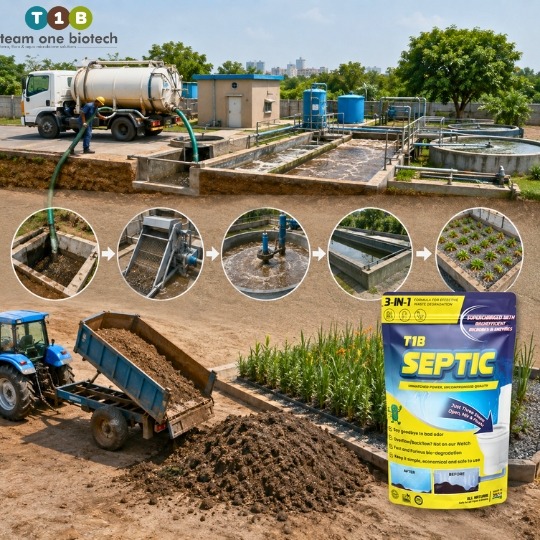
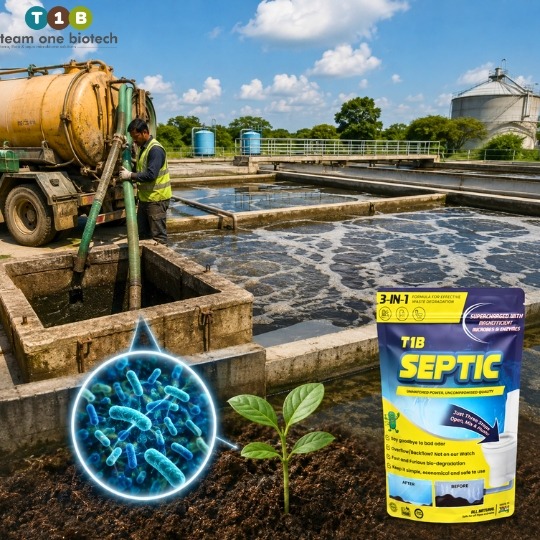
T1B Septic, Team One Biotech’s dedicated biological solution for septic tank and faecal sludge management, is formulated specifically for Indian field conditions. T1B Septic contains a carefully selected consortium of microbial strains proven to perform in the high-organic-load, variable-temperature, and high-salinity conditions typical of Indian septic systems. Its benefits across the FSM service chain include:

  • Reduction in sludge accumulation rate within the tank, decreasing desludging frequency requirements over time
  • Significant odor suppression during in-tank treatment, transport, and interim storage
  • Lowered pathogen load in sludge reaching treatment facilities, supporting better treatment outcomes at FSTPs and co-treatment STPs
  • Reduced organic load, lower BOD and COD, in sludge delivered to treatment plants, easing the burden on downstream treatment units
  • Improved effluent quality from septic systems during the intervals between desludging cycles

It is important to be clear about what biological solutions are and what they are not. T1B Septic and products like it are a complement to regulated treatment infrastructure, not a replacement for it. A municipality still needs a functional desludging programme, authorized operators, and treatment capacity. What biological treatment does is make the entire chain work better: cleaner sludge entering transport, lower load reaching treatment plants, and reduced operational stress on FSTPs and STPs.

For municipalities working toward FSSM compliance, introducing biological treatment protocols across community and institutional septic tanks can meaningfully reduce the organic and pathogen load that their treatment infrastructure must handle, buying time, reducing cost, and improving outcomes simultaneously.

Looking for a proven biological solution for septic tank treatment and faecal sludge stabilization? T1B Septic is designed to meet Indian field conditions across the full FSM service chain. Connect with the Team One Biotech team to discuss the right application protocol for your municipality or operation.

How Urban Local Bodies Can Strengthen Their FSM Systems, A Checklist

For ULB officials and municipal planners looking to move their FSM systems from reactive to regulated, the following action framework offers a practical starting point:

  • Conduct a baseline sanitation survey to map on-site sanitation assets across your jurisdiction, the number, type, age, and condition of septic tanks and pit latrines in each ward.
  • Establish or contract desludging services with authorized, trained operators. Informal desludging that ends in unauthorized disposal cannot be regulated without first formalizing the service.
  • Develop a co-treatment arrangement with the nearest functional STP as an interim measure while dedicated FSTP infrastructure is planned and funded.
  • Introduce biological treatment protocols using T1B Septic for community and institutional septic tanks to reduce the organic and pathogen load entering your transport and treatment system.
  • Train operators on safe fecal sludge handling and transport, including personal protective equipment, vehicle hygiene, and authorized disposal procedures.
  • Establish a cost recovery model, whether through tipping fees, desludging service charges, or integration with property tax billing, to ensure that FSM services are financially sustainable beyond initial project funding.
  • Report quarterly to your SPCB on FSM compliance status, desludging volumes, treatment facility performance, and operator authorizations.

Need support mapping biological treatment solutions for your municipality’s FSM system? Reach out to Team One Biotech, we work with ULBs and private operators across India to design and implement solutions that meet local conditions and regulatory requirements.

Frequently Asked Questions About Fecal Sludge Management in India

What is the difference between fecal sludge and sewage?

Fecal sludge originates from on-site sanitation systems such as septic tanks and pit latrines, where waste is contained and partially treated in place. Sewage is wastewater transported through a networked sewer system to a treatment plant. Faecal sludge management addresses the non-sewered population, a substantial and often underserved portion of India’s urban residents who rely entirely on on-site containment.

What does faecal sludge management mean in the Indian context?

In the Indian context, FSM refers to the full service chain covering the containment, emptying, transport, treatment, and safe end-use or disposal of fecal sludge from on-site sanitation systems. It is governed by the National FSSM Policy and operationalized through ULBs under the SBM-U framework.

Is desludging a septic tank in India regulated?

Yes. Under the FSSM Policy and SBM-U guidelines, ULBs are responsible for regulating desludging operators, mandating safe sludge transport, and ensuring that septage reaches authorized treatment or disposal facilities. Unregulated dumping into drains, land, or water bodies is a CPCB/SPCB violation with associated penalties.

How do biological treatments help in septic tank and FSM management?

Microbial-based products such as T1B Septic introduce targeted bacterial cultures into the sludge environment, accelerating organic matter breakdown, suppressing odor, reducing pathogen load, and lowering the BOD and COD of sludge entering the treatment system. This reduces operational burden across the FSM chain, from the tank to the treatment plant.

What is an FSTP and when does a city need one?

A Faecal Sludge Treatment Plant is a dedicated infrastructure facility designed to receive and treat septage from on-site sanitation systems. Any city with a significant on-site sanitation population and insufficient STP co-treatment capacity should prioritize FSTP development. SBM-U funding mechanisms are available to support both planning and construction.

Moving from Crisis Management to Systemic FSM

Fecal sludge management in India is no longer a niche technical subject. It is a public health imperative, a regulatory obligation, and, increasingly, a measure by which the quality of municipal governance will be assessed. The cities that act now will not be those with the largest infrastructure budgets. They will be the ones that understand the full service chain, engage their treatment options practically, and deploy every available tool, including biological solutions, to make the system work.

FSTPs, co-treatment arrangements, and decentralized systems form the structural backbone of effective FSM. Biological treatment, through solutions like T1B Septic, provides the operational layer that makes that backbone more efficient: reducing the load entering treatment systems, extending desludging intervals, controlling odor and pathogens in transit, and improving effluent quality at every stage of the chain.

The cities that lead on faecal sludge management will be the ones that start treating sludge as a resource management challenge, not just a disposal problem. Biological solutions are one important piece of that puzzle, and Team One Biotech is here to help you find the right fit for your infrastructure, your scale, and your regulatory context.

Explore Team One Biotech’s range of bioremediation and biological septic tank treatment solutions, including T1B Septic. Contact us today to discuss your FSM requirements.

Looking to improve your ETP/STP efficiency with the right bioculture?
Talk to our experts at Team One Biotech for customised microbial solutions.

Contact: +91 8855050575

Email:  sales@teamonebiotech.com

Visit: www.teamonebiotech.com

Discover More on YouTube – Watch our latest insights & innovations!-

Connect with Us on LinkedIn – Stay updated with expert content & trends!
Quorum Sensing in Bacteria: What It Means for Biofilm in Your Treatment Plant

If your secondary clarifier has been acting up, your membranes are clogging faster than usual, or your effluent quality keeps slipping despite doing everything right, the problem may not be in your dosing chart. It may be in how your bacteria are talking to each other.

Most operators spend their shift monitoring dissolved oxygen, MLSS, sludge volume index, and HRT. These are the right things to watch. But there is a layer of biological activity happening beneath all of those parameters that almost no one monitors, and it is directly responsible for some of the most stubborn operational problems in biological treatment systems.

Bacteria in your plant are not passive organisms waiting to be managed. They are active, communicating, and making collective decisions based on what they sense around them. They coordinate biofilm formation, regulate metabolic activity, and respond to environmental stress in ways that are far more sophisticated than most process models account for. Understanding quorum sensing in bacteria is the starting point for understanding why your plant behaves the way it does, and why some problems refuse to go away no matter how well you operate your conventional parameters.

This is not a laboratory concept. Quorum sensing is happening right now in your activated sludge tank, your clarifier, your membrane modules, and your return sludge lines. The operators who understand it will be better positioned to manage their plants proactively rather than reacting to the symptoms after the damage is done.

What Is Quorum Sensing? Definition and Core Concept

What Is Quorum Sensing? Definition and Core Concept

Quorum sensing is the mechanism by which bacteria monitor their own population density and coordinate group behavior in response to it. The term was coined to describe what researchers observed: bacteria behave differently alone than they do in a crowd, and they always seem to know which situation they are in.

The quorum sensing definition, stripped of academic language, is this: bacteria communicate with each other using chemical signal molecules, and when enough of those signals accumulate to cross a threshold, the entire population switches on a new set of behaviors simultaneously.

The chemical signals responsible for this are called autoinducers. Each bacterial cell continuously produces and releases small amounts of these molecules into its surrounding environment. As the bacterial population grows, the concentration of autoinducers in the local environment increases proportionally. Individual cells are constantly sampling that concentration. When it crosses a critical threshold, it tells each cell that the population has reached a sufficient density, a quorum, and that it is time to act collectively.

This is the quorum sensing meaning in operational terms: a population-level decision made through chemical consensus, not through any central coordination.

The three-stage process works as follows:

  • Signal release, Individual bacterial cells produce and secrete autoinducer molecules at low, continuous rates throughout their lifecycle
  • Signal accumulation, As population density increases, autoinducer concentration in the surrounding environment rises in proportion; each cell is simultaneously detecting and contributing to this signal
  • Collective gene expression, Once the autoinducer concentration crosses a threshold specific to that microbial community, bacteria collectively activate gene clusters that change their behavior, including the genes responsible for biofilm formation

One important note: these thresholds vary widely depending on microbial community composition, temperature, organic load, and environmental conditions, values in your plant may differ significantly from anything published in research literature.

How Quorum Sensing Drives Biofilm Formation in Bacteria

How Quorum Sensing Drives Biofilm Formation in Bacteria

This is where science connects directly to what you see on the plant floor.

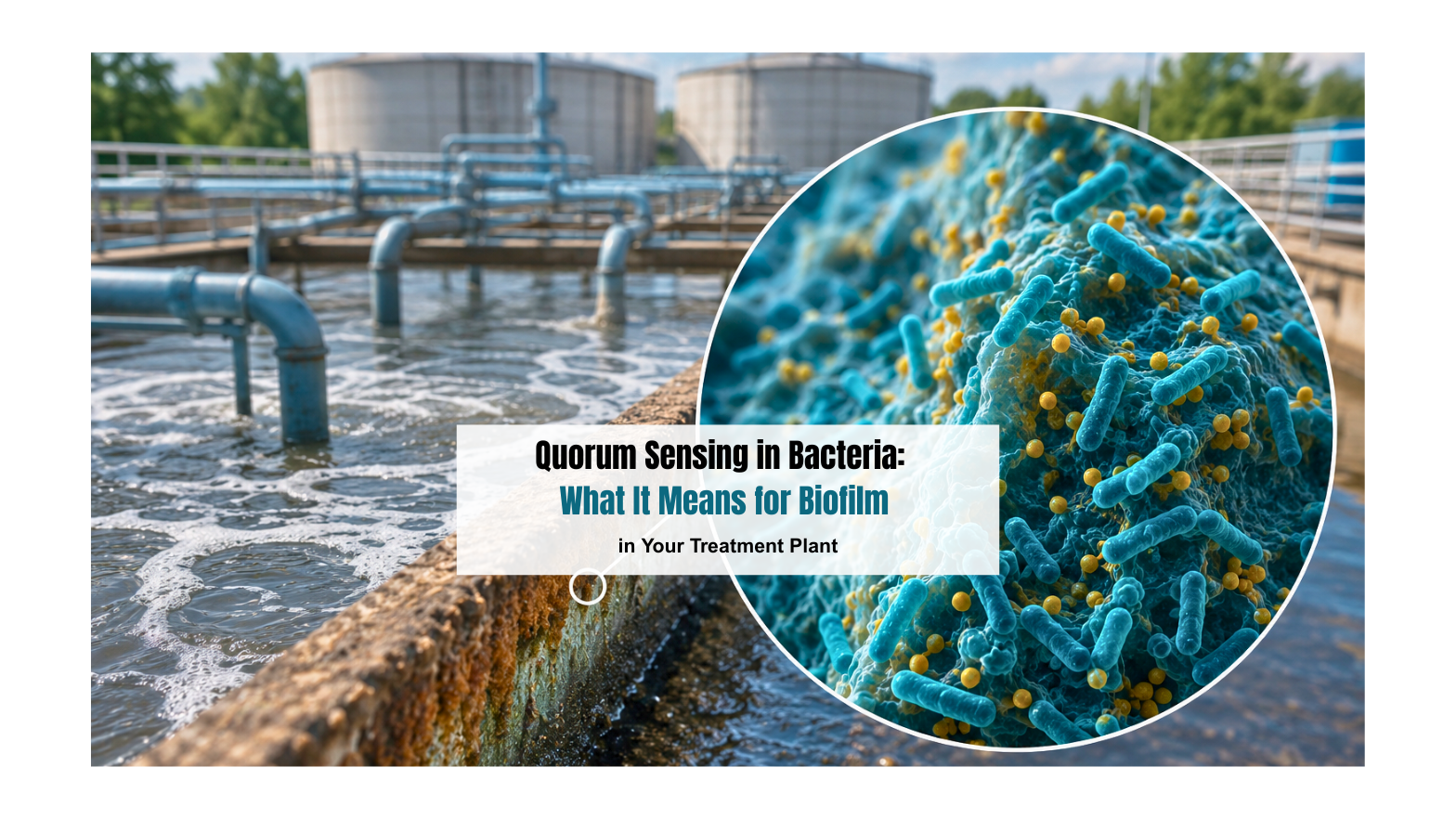
When quorum sensing signals reach their threshold, one of the most significant downstream consequences is the activation of genes that produce the EPS matrix, the exopolysaccharide matrix that forms the physical scaffold of a biofilm. This sticky, gel-like structure is what transforms a collection of free-swimming individual bacteria into an organized, surface-attached community that is structurally and functionally very different from what your aeration models and BOD calculations were designed around.

From Free-Swimming to Firmly Attached, The Transition That Changes Everything

Bacteria in biological treatment systems exist in two primary states: planktonic and sessile. Planktonic bacteria are free-swimming, dispersed throughout the bulk liquid, and are the form that most wastewater process models are built around. They respond to shear forces, are relatively accessible to dissolved oxygen and nutrients, and can be managed through conventional means like aeration, mixing, and chemical addition.

Sessile bacteria are the opposite. They are surface-attached, embedded in the EPS matrix, and operating under a fundamentally different set of conditions. The transition from planktonic to sessile is not random, it is triggered and coordinated by quorum sensing signals.

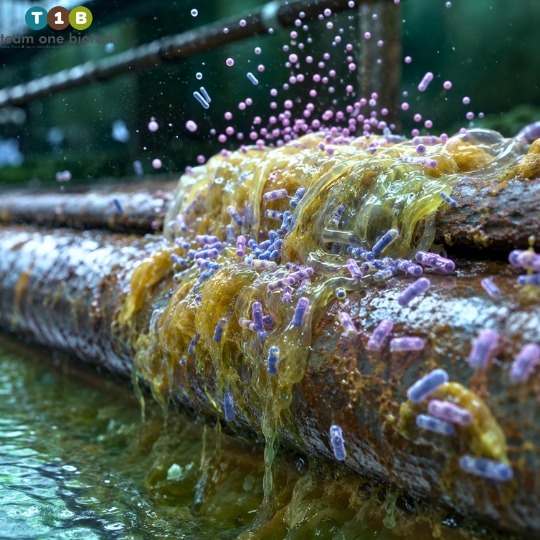
Once the autoinducer threshold is reached, QS signals switch on the genetic machinery for EPS production. The bacteria begin secreting the components of the matrix, attaching to available surfaces, membrane fibres, pipe walls, carrier media, clarifier internals, and recruiting additional cells into the growing structure. What begins as a thin conditioning layer on a surface progresses, over a range of hours to days depending on conditions, into a structured, multi-layered biofilm.

What a Mature Biofilm Looks Like Inside Your Treatment System

A mature biofilm is not simply a layer of bacteria stuck to a surface. It is a structured, differentiated community with a complex internal architecture that gives it properties very different from the same bacteria in planktonic form.

The outer layers of a mature biofilm remain metabolically active and in contact with the bulk liquid. Deeper layers experience steep diffusion gradients, dissolved oxygen, nutrients, and even chemical agents penetrate into the biofilm at progressively lower concentrations the further they travel from the surface. The innermost cells may be operating under near-anaerobic conditions even when bulk liquid DO readings appear adequate.

This architecture has two major consequences for your operation. First, the cells in the protected inner core are effectively shielded from both shear forces and conventional disinfectants. The EPS matrix blocks penetration, and even where penetration occurs, the outer cells are sacrificed while the inner community survives. Second, the metabolic activity of these sessile cells is fundamentally different from planktonic bacteria, their oxygen demand, nutrient uptake, and reaction rates do not match the assumptions built into standard BOD and COD models.

Periodically, sections of the mature biofilm will detach, a process also regulated, in part, by quorum sensing signals, and enter the bulk liquid as large aggregates. These detachment events are a key source of operational instability.

Beneficial vs. Problematic Biofilm, Two Sides of the Same Signal

Here is where the nuance matters, and where many discussions of biofilm get it wrong.

Biofilm is not inherently a problem. In fact, in a significant proportion of modern biological treatment systems, biofilm is the entire point. Fixed-film systems, moving bed biofilm reactors (MBBR), integrated fixed-film activated sludge (IFAS) systems, trickling filters, rotating biological contactors, are designed around the deliberate cultivation of biofilm on carrier media. In these systems, the dense, metabolically active biofilm community is what delivers the treatment performance. QS-driven biofilm formation is the mechanism that makes these systems work.

The problem is not biofilm itself. The problem is uncontrolled biofilm in locations where it does not belong, or biofilm that has overgrown to a point where it disrupts the process it is supposed to support.

In secondary clarifiers, biofilm growth on internal surfaces and weirs creates attachment points for sludge accumulation and introduces turbulence that disrupts settling. Detachment events from these surfaces cause sudden TSS spikes in clarifier effluent. In membrane bioreactor systems, biofilm formation on membrane fibres, driven by the same quorum sensing signals that are doing useful work in your MBBR, is the primary mechanism of biofouling. As the biofilm layer develops on membrane surfaces, it increases resistance to flow, driving up transmembrane pressure (TMP) and reducing filtration capacity. In return sludge and mixed liquor lines, unchecked biofilm can progressively restrict flow and alter the hydraulic behavior of the system in ways that are difficult to diagnose from surface-level monitoring.

The same bacterial communication mechanism that runs your biofilm reactor can, if left unmanaged, destroy your membrane integrity and destabilize your clarifier performance.

Understanding which biofilm you are cultivating, and which one is working against you, is the first step toward intelligent biofilm management. If you are unsure how your plant’s microbial community is behaving, our team at Team One Biotech can help you assess it.

Quorum Sensing in Wastewater Biofilm, What It Means for Compliance

Quorum Sensing in Wastewater Biofilm, What It Means for Compliance

The connection between quorum sensing in wastewater biofilm and regulatory compliance is direct, and it runs through several distinct pathways.

When biofilm grows unchecked on membrane surfaces in MBR systems, the result is a progressive increase in transmembrane pressure. As TMP rises, permeate flux drops, and the system requires more energy and more frequent chemical cleaning cycles to maintain output. Eventually, if the biofouling is severe enough, membrane integrity is compromised and effluent quality deteriorates. This is not a slow or theoretical risk, it is one of the most common causes of MBR underperformance in industrial and municipal applications.

In secondary clarifiers, biofilm detachment events introduce sudden, unpredictable loads of suspended solids into the effluent stream. These TSS spikes are among the most common causes of discharge compliance failures under CPCB and SPCB norms, and they are particularly frustrating because they occur without any obvious change in influent load or process parameters. The process looks stable right up until the clarifier effluent quality drops.

There is also a subtler compliance risk that receives less attention. Sessile bacteria in mature biofilm communities are metabolically different from the planktonic bacteria that BOD and COD process models are designed around. Their oxygen uptake rates, substrate utilization patterns, and response times differ from what standard models predict. When a significant portion of your active biomass is operating in sessile form, particularly in systems with uncontrolled biofilm growth on surfaces, your actual treatment performance may diverge from your process model in ways that are difficult to diagnose without understanding the microbial ecology involved.

Key compliance risks associated with uncontrolled QS-driven biofilm include:

  • Effluent TSS exceedances caused by biofilm detachment events in secondary clarifiers and pipe systems
  • Degraded effluent quality in MBR systems resulting from progressive membrane biofouling and increased TMP
  • Inconsistent BOD and COD removal performance when sessile bacteria dominate active biomass fractions
  • Elevated chemical oxygen demand in effluent during high-detachment periods, particularly following process disturbances or cleaning events

Disclaimer: The operational impacts described above are indicative and based on general biofilm behavior in biological treatment systems. Actual impacts on effluent quality, membrane performance, and compliance parameters will vary depending on your plant’s configuration, microbial community, influent characteristics, and operating conditions. Always conduct site-specific assessments before drawing conclusions or making process changes.

Can You Interrupt Quorum Sensing? Emerging Control Strategies

The recognition that quorum sensing drives biofilm formation has opened a new category of intervention strategies that go beyond conventional chemical biocide approaches, and understanding why that distinction matters is important for anyone responsible for managing a biological treatment system.

Conventional chemical biocides act on bacteria that are already present, and their effectiveness against mature biofilm is limited for a reason that is structural, not chemical. The EPS matrix that forms the scaffold of a mature biofilm physically blocks penetration of disinfectants and biocides. The outer cell layers are killed or inhibited, but the inner core of the biofilm community, protected by the matrix and operating in a state of reduced metabolic activity, survives. The biofilm recovers, and the problem returns.

A more fundamentally targeted approach is quorum quenching (QQ), the disruption of bacterial communication signals before the threshold for coordinated biofilm formation is reached. Quorum quenching works by degrading autoinducer molecules in the environment, preventing them from accumulating to the threshold concentration that triggers collective gene expression. Without the signal, the bacteria do not receive the instruction to form biofilm. The population remains in a more planktonic, dispersed state, which is more accessible to physical and chemical management and more consistent with the process assumptions in your treatment model.

Quorum quenching can be implemented through several approaches:

Biological quorum quenching involves inoculating the treatment system with microbial strains that produce enzymes capable of degrading autoinducer molecules. Some bacterial species naturally produce quorum quenching enzymes as a competitive strategy, by introducing or enriching these organisms within your treatment system, it is possible to shift the microbial community balance in a way that suppresses uncontrolled biofilm formation without disrupting the beneficial biofilm in fixed-film zones.

Process-based disruption, optimizing hydraulic retention time, aeration patterns, and shear stress within the system, can destabilize biofilm before it matures into a treatment problem. Periodic high-shear events, careful management of carrier media loading in MBBR systems, and controlled backwash cycles in MBR applications are all examples of process-level interventions that address biofilm stability without chemical addition.

Bioremediation-based microbial solutions represent an emerging approach in which the microbial community itself is managed proactively, introducing organisms selected for their ability to compete with biofilm-forming bacteria, degrade autoinducers, or occupy the ecological niches that would otherwise be filled by problematic biofilm communities.

What all of these approaches have in common is that they address the problem at the signaling level, before the biofilm is established, rather than trying to remove or destroy a mature biofilm structure after the fact.

At Team One Biotech, we develop bioremediation solutions that work with your plant’s microbial ecology, not against it. If biofilm management is a recurring challenge in your system, speak with our biological process specialists to explore science-backed intervention strategies tailored to your treatment configuration.

Frequently Asked Questions

What is quorum sensing in simple terms?

Bacteria count their own population using chemical signal molecules called autoinducers. As the bacterial population grows, these signals accumulate in the surrounding environment. When the concentration crosses a threshold, the entire bacterial community changes its behavior together, including switching on the genes responsible for biofilm formation. The quorum sensing definition, in the simplest possible terms, is a population-level decision made through chemical consensus.

How does quorum sensing lead to biofilm formation in bacteria?

Quorum sensing signals, once they reach the threshold concentration, activate gene clusters that produce the exopolysaccharide matrix, the physical scaffold that holds a biofilm together. Without QS reaching threshold, most bacteria remain planktonic and dispersed. It is the accumulation of autoinducer signals, and the collective gene expression that follows, that converts a free-swimming bacterial population into an organized, surface-attached biofilm community.

Is biofilm always bad in a wastewater treatment plant?

No. In fixed-film biological systems, MBBR, IFAS, trickling filters, biofilm is the desired treatment mechanism, and its formation is the goal of system design. The problem is uncontrolled biofilm in clarifiers, membrane systems, and pipe infrastructure, where it causes fouling, compliance failures, and increased operational costs. The challenge is not eliminating biofilm but managing where it grows and how dense it becomes.

What is quorum quenching and can it help my plant?

Quorum quenching refers to the disruption of bacterial communication signals, specifically the degradation of autoinducer molecules, before they accumulate to the threshold that triggers coordinated biofilm formation. It is an emerging biological control strategy being applied in advanced MBR and STP systems. By interrupting the signal before the behavioral switch is flipped, quorum quenching keeps bacteria in a more planktonic, manageable state without the limitations of chemical biocides against mature biofilm.

How does uncontrolled biofilm affect CPCB compliance?

Biofilm detachment events introduce suspended solids spikes into effluent that are difficult to predict or prevent using conventional process monitoring. In membrane systems, biofouling degrades filtration performance and effluent quality over time. Both pathways can result in deviation from discharge norms set by CPCB and SPCBs, and because these events are driven by microbial community behavior rather than influent load changes, they are often misdiagnosed as process upsets when the root cause is biological.

The Bottom Line, Know What Your Bacteria Are Planning

Quorum sensing is not a laboratory curiosity. It is a fundamental mechanism of microbial behavior that is operating in every active biological treatment system, continuously, around the clock. The biofilm growing on your membrane fibres, your clarifier internals, and your pipe walls is not appearing randomly, it is the result of coordinated bacterial decision-making driven by chemical signaling that your control panel does not measure and your process model does not account for.

The operators and engineers who understand this will approach biofilm differently. Instead of treating membrane fouling as a maintenance inconvenience or clarifier instability as an unexplained process upset, they will recognize these as downstream consequences of microbial community behavior that can be managed, and ideally, interrupted, before the symptoms appear in the effluent reports.

Microbial communication is not something you can see on your control panel, but its effects show up in your effluent reports, your maintenance schedules, and your compliance records. Team One Biotech specializes in bioremediation solutions that address biological treatment challenges at their root. Reach out to our team today to understand how targeted microbial management can improve the stability and compliance performance of your plant.

Looking to improve your ETP/STP efficiency with the right bioculture?
Talk to our experts at Team One Biotech for customised microbial solutions.

Contact: +91 8855050575

Email:  sales@teamonebiotech.com

Visit: www.teamonebiotech.com

Discover More on YouTube – Watch our latest insights & innovations!-

Connect with Us on LinkedIn – Stay updated with expert content & trends!
Zero Liquid Discharge (ZLD), Who Needs It and How Biological Treatment Reduces the Load

It is a Tuesday morning, and your compliance manager walks into your office with a printed directive. The letterhead reads CPCB. Somewhere in the second paragraph, the words “Zero Liquid Discharge” are underlined in red ink. The room goes quiet.

For a large number of plant directors and environmental heads across India, this is not a hypothetical. It is a moment that has already happened, or one they are quietly dreading. ZLD feels, at first glance, like an enormous, expensive, technically complex mandate handed down without a practical roadmap. The instinct is to panic, call three vendors, and receive three wildly different cost estimates that make things worse.

Before your team reaches that point, let us slow down. What ZLD actually means, which industries genuinely need it, what the compliance landscape looks like, and, most importantly, why the right biological treatment strategy can make the entire system far more manageable than the initial sticker shock suggests. That is what this guide is here to walk you through.

ZLD Full Form and What It Actually Means in Practice

ZLD Full Form and What It Actually Means in Practice

ZLD full form is Zero Liquid Discharge.

The definition, stripped of jargon, is this: a water management approach where no effluent leaves the plant boundary in liquid form. Every drop of wastewater generated within your facility is treated, recovered, and recycled back into your process. Nothing is discharged into a drain, a river, a municipal sewer, or any external body of water.

It is important to clarify what “zero” actually means here, because it trips people up. Zero Liquid Discharge does not mean zero water consumption. Your plant still uses water. It means zero untreated or partially treated liquid discharge leaving your premises. The water that enters must eventually either leave as solid waste, crystallised salts, sludge for disposal, or return to your process as recovered water.

In practice, a ZLD system moves through several stages. Incoming wastewater first goes through primary treatment, where solids and debris are removed. It then passes through secondary treatment, which is the biological stage, where microbial activity breaks down organic matter, reducing biochemical oxygen demand (BOD) and chemical oxygen demand (COD). After that comes tertiary treatment, including membrane filtration systems like reverse osmosis, which push water purity higher. Finally, the remaining concentrated reject stream goes through evaporation and crystallisation, where water is extracted as vapour and the dissolved solids are left behind as dry cake for disposal.

Each stage builds on the one before it. The quality of work done in your biological treatment stage directly determines how hard every stage after it has to work, and how much that costs you.

Zero Liquid Discharge India mandates are growing more stringent each year, and understanding the system architecture is the first step to approaching it rationally.

CETP Full Form and How It Fits Into the ZLD Conversation

CETP Full Form and How It Fits Into the ZLD Conversation

CETP full form is Common Effluent Treatment Plant.

A common effluent treatment plant is exactly what the name suggests: a shared treatment facility, typically set up by a cluster of small and medium-scale industries operating in proximity, to collectively treat their wastewater. Instead of each unit building and operating its own treatment infrastructure, which many small dyeing units, tanneries, or pharmaceutical manufacturers cannot afford, they pipe their effluent into a centralised CETP plant that handles treatment on their behalf.

In the context of industrial biochemistry, a CETP handles mixed-stream effluent. These streams tend to be complex: they carry high biological oxygen demand from organic matter, elevated chemical oxygen demand from synthetic compounds, variable pH, colour load, and in some cases heavy metals or residual solvents. The cetp full form in biochemistry context therefore implies not just shared infrastructure but shared biological and chemical treatment challenges, often in effluent streams that no single standard treatment protocol can address cleanly.

Here is where many industries make a dangerous assumption: they believe that discharging into a CETP exempts them from ZLD obligations. It does not. If your industry falls under a sector regulated for Zero Liquid Discharge, your wastewater does not get a free pass simply because it is pooled with others. The CETP itself may be required to meet ZLD norms, and the member industries may still carry regulatory responsibility. This is a compliance grey area that has caught several cluster units off guard during inspections.

Which Industries in India Are Legally Required to Implement ZLD

Which Industries in India Are Legally Required to Implement ZLD

The regulatory foundation here is significant. The Central Pollution Control Board (CPCB) and State Pollution Control Boards (SPCBs) across India have issued mandates requiring ZLD compliance for a defined set of industries, those characterised by high water consumption, complex effluent chemistry, and historically significant environmental impact. Non-compliance is not a matter of receiving a warning letter and carrying on. It can mean plant shutdown, cancellation of operating permits, and in serious cases, legal proceedings under the Environment Protection Act.

The following sectors are subject to ZLD mandates or intensive enforcement in India:

Textile and dyeing units sit at the top of this list. ZLD norms for textile industry India are among the most rigorously enforced in the country. Dyeing and bleaching operations generate effluent that is heavily coloured, high in TDS, and laden with reactive dyes that resist conventional treatment. Several SPCBs, particularly in Gujarat, Tamil Nadu, and Maharashtra, have issued sector-specific compliance timelines, and enforcement has become increasingly active. If your unit is in the textile or dyeing segment, ZLD is not a future consideration. It is a present obligation.

Distilleries and breweries generate some of the highest COD effluent loads of any industrial sector. Spent wash from distilleries is notoriously difficult to treat and has been the subject of specific SPCB directions in states including Uttar Pradesh, Maharashtra, and Punjab.

The sugar industry, while seasonal in its discharge cycle, produces large volumes of high-strength effluent during crushing season. The episodic nature of the discharge makes management harder, and ZLD requirements have been applied to sugar mills in several states.

Pulp and paper manufacturers have been on the CPCB’s regulated polluter list for decades. Effluent from paper mills contains chlorinated compounds, lignin, and high suspended solids loads that make discharge into natural water bodies unacceptable.

Pharmaceutical and bulk drug manufacturers are under increasing enforcement pressure, particularly in industrial clusters in Hyderabad (Patancheru, Bollaram) and Gujarat (Ankleshwar, Panoli). The effluent from bulk drug synthesis contains complex organic molecules, residual solvents, and active pharmaceutical ingredients that conventional treatment does not fully eliminate.

Tanneries produce effluent containing chromium compounds, sulfides, and high biological load, a combination that has resulted in severe enforcement action in clusters such as Vellore in Tamil Nadu and Kanpur in Uttar Pradesh.

Thermal power plants, particularly those managing ash pond discharge and cooling tower blowdown, face ZLD-adjacent requirements around water use efficiency and zero discharge from specific streams.

One important caveat: compliance requirements are not uniform across states. The CPCB sets the national framework, but SPCBs have discretion over timelines, specific norms, and enforcement intensity. Always verify your current obligations directly with your relevant state board or through a qualified compliance advisor.

ZLD vs ETP, Understanding the Difference Before You Invest

ZLD vs ETP, Understanding the Difference Before You Invest

When plant engineers and utility heads search for information on ZLD vs ETP, they are usually at a decision point: they have an existing system, they know something needs to change, and they are trying to understand how large that change needs to be.

An Effluent Treatment Plant, or ETP, treats your wastewater to permissible discharge limits and then releases the treated water, into a drainage channel, a river, or a municipal network, depending on your permit conditions. An ETP does its job and lets go of the water. It does not recover it.

A ZLD system does not let go. It goes several stages beyond an ETP, recovering water through membrane systems and thermal evaporation until nothing liquid remains to discharge. The recovered water goes back into your process. The residual becomes solid waste.

What is critical to understand is that ZLD is not a replacement for an ETP. It is an extension of one. A well-designed ETP with robust biological treatment is the foundation that a ZLD system is built on top of. You cannot skip the biological stage and bolt on an evaporator and expect things to work efficiently. That is not a technical opinion, it is a practical reality that plants across India have discovered the hard way.

Here is a general comparison of the two approaches:

ParameterETPZLD System
Liquid discharge allowedYes, within regulatory limitsNo liquid discharge permitted
Water recoveryPartialNear-complete
Primary cost driverChemical and biological treatmentEvaporation energy
Regulatory statusStandard compliance requirementMandatory for regulated sectors
Downstream destination of treated waterExternal drain, river, or sewerRecycled back into plant process

Disclaimer: The above is a general comparison. Actual performance parameters vary based on influent quality, plant design, technology selection, and operational conditions specific to each facility.

The underlying message: if you are in a regulated sector, ZLD is not an upgrade you choose. It is the standard you are required to meet. The question is not whether to build it but how to build it in a way that does not drain your operating budget every month.

Why Biological Treatment Is the Most Underrated Step in Any ZLD System

Here is where a great deal of industrial investment goes wrong, and where it can be corrected.

When the ZLD conversation starts inside a plant, the instinct is to focus on the visible, capital-intensive end of the system: the evaporators, the crystallisers, the multiple-effect evaporation units. These are the big-ticket line items. They look like the solution. And they are part of the solution, but they are the last part, not the whole.

The single most expensive mistake in ZLD system planning is rushing toward thermal evaporation without adequately addressing organic load upstream. The reason is straightforward: evaporation systems are energy-intensive by design. Every litre of water that enters an evaporator must be heated to the point of vaporisation. The higher the BOD and COD load in that water, the more the system fouls, scales, and struggles. The more it struggles, the more energy it consumes. The more energy it consumes, the higher your operating cost climbs, month after month, year after year.

Biological treatment, particularly advanced solutions using microbial consortia developed for specific effluent compositions, can reduce BOD and COD by a substantial margin before water reaches the thermal stage. This is not a marginal improvement. In well-designed systems, significant organic load reduction at the biological stage translates directly into reduced volume and strength of water entering evaporation, which translates into measurably lower energy consumption and operating expenditure.

What effective biological pre-treatment achieves within a ZLD system:

  • Significant reduction in BOD and COD before water reaches secondary and tertiary processing stages
  • Reduced fouling and scaling in membrane systems such as ultrafiltration and reverse osmosis, extending membrane life and cutting replacement frequency
  • Extended operational life of evaporation equipment by reducing the chemical aggressiveness of the concentrated stream
  • Lower consumption of chemicals in downstream polishing and pH correction stages
  • A materially reduced energy footprint for the ZLD system as a whole

The logic is simple: every unit of organic load you remove biologically is a unit of load your evaporator does not have to deal with. Biological treatment is cheaper per unit of load removed than thermal evaporation. Therefore, investing adequately in biological treatment before your evaporator is not a compromise, it is the economically rational decision.

Disclaimer: Reduction efficiencies vary depending on influent composition, hydraulic retention time, microbial culture selection, temperature, and plant-specific operating conditions. The benefits described above are indicative and reflect observations across typical industrial applications. Plant-specific assessment by a qualified engineer is recommended before system design decisions are made.

What Does a ZLD System Cost in India, And How Biological Treatment Affects That Number

One of the most common questions plant directors ask is straightforward: what will this cost?

The honest answer is that ZLD system cost in India varies considerably, and anyone who gives you a firm number without understanding your influent quality, discharge volume, recovery targets, and technology selection is guessing. Mid-sized industrial plants implementing ZLD in India have seen costs range from a few crores on the lower end, for plants with simpler effluent chemistry, existing pre-treatment infrastructure, and modest recovery requirements, to significantly higher for plants handling complex, high-volume, high-TDS effluent streams.

What matters more than the headline number is understanding where the costs come from and where they can be managed intelligently.

Capital cost in a ZLD system is dominated by evaporation and crystallisation equipment. These are expensive to procure, install, and maintain. Operating cost is dominated by energy, specifically the thermal energy required to run evaporators.

The single most effective lever available to reduce both capital and operating cost is upstream biological treatment. A plant that invests in a well-designed biological pre-treatment system can reduce the organic and dissolved load entering its evaporator. A reduced load means a smaller evaporator can do the job, lower capital cost. A reduced load also means less energy per litre of water processed, lower operating cost. Over a ten or twenty-year system life, the savings from right-sizing your evaporator based on biologically pre-treated water can be substantial.

Framed differently: the question is not whether biological treatment costs money. It does. The question is whether that investment reduces a larger cost elsewhere in the system. In well-designed ZLD systems, the answer is consistently yes.

Frequently Asked Questions

What is the ZLD full form?

ZLD full form is Zero Liquid Discharge, a wastewater management approach in which no liquid effluent is released outside the plant premises. All wastewater is treated, recovered, and recycled internally.

What is CETP full form in biochemistry?

CETP full form is Common Effluent Treatment Plant. In the context of industrial biochemistry, a CETP handles mixed effluent streams from multiple industries, typically streams with high biological oxygen demand and chemical oxygen demand, within a shared treatment facility serving an industrial cluster.

Is ZLD mandatory for textile industries in India?

Yes. ZLD norms for textile industry India have been mandated by CPCB and multiple State Pollution Control Boards, with particular enforcement focus on dyeing and bleaching units. Compliance timelines and specific norms differ by state, and units should verify their current obligations with their relevant SPCB.

How does biological treatment reduce ZLD operating costs?

By reducing BOD and COD before water reaches evaporation stages, biological treatment lowers the organic and dissolved load on energy-intensive thermal equipment. This reduces energy consumption, slows fouling of membranes and evaporators, and in many cases allows right-sizing of downstream equipment, cutting both capital expenditure and ongoing operating costs.

ZLD Is Not Optional, But It Does Not Have to Break Your Budget

Three things are worth carrying away from everything covered here.

First, Zero Liquid Discharge India compliance is a regulatory reality for most high-polluting industrial sectors, not a future consideration and not something that can be deferred indefinitely. The enforcement environment is tightening, and the cost of non-compliance, in legal exposure, reputational damage, and potential plant shutdown, is considerably higher than the cost of building the right system.

Second, biological treatment is the most underutilised cost-reduction lever in ZLD system design. Plants that invest in robust upstream biological pre-treatment consistently find that their downstream evaporation systems are smaller, cheaper to run, and longer-lasting than those of plants that skipped or underinvested in this stage.

Third, the intelligence in ZLD design is upstream. Over-sizing your evaporator because your biological treatment is inadequate is not a safety margin, it is an avoidable expense that compounds every time your energy bill arrives.

ZLD is not optional. But with the right treatment architecture, it does not have to define your plant’s economics in the way that first CPCB directive made it feel.

Team One Biotech works with industrial plants across India to design and deploy bioremediation solutions that make ZLD systems leaner, more efficient, and more cost-effective. Whether you are planning a new ZLD system or optimising an existing one, our technical team is ready to support you. Contact us today for a no-obligation consultation.

Disclaimer: Cost ranges mentioned above are general industry indicators and may vary significantly based on influent characteristics, plant scale, technology selection, and site-specific conditions. These figures should not be treated as project estimates. Detailed techno-commercial proposals from qualified vendors are essential for accurate cost assessment.

Looking to improve your ETP/STP efficiency with the right bioculture?
Talk to our experts at Team One Biotech for customised microbial solutions.

Contact: +91 8855050575

Email:  sales@teamonebiotech.com

Visit: www.teamonebiotech.com

Discover More on YouTube – Watch our latest insights & innovations!-

Connect with Us on LinkedIn – Stay updated with expert content & trends!
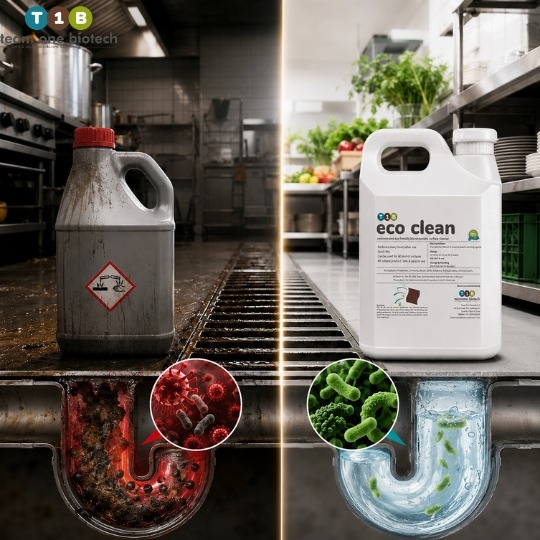
What Are Nanobubbles and Why Do They Behave Differently
Nanobubble Technology in Wastewater: How It Works and When It Outperforms Conventional Aeration

Many plant managers running biological treatment systems have faced the same frustrating scenario. You follow the prescribed aeration schedule. You maintain the blower run-hours. You check the equipment, everything looks fine on paper. And yet BOD and COD in the effluent keeps creeping above discharge limits. The diffusers are working. The blowers are humming. But the biology is struggling, and your compliance reports are telling a different story than your operational logs.

The issue is not always the quantity of air being pushed into the tank. More often than engineers initially expect, the real problem is how efficiently that oxygen is actually transferring into the mixed liquor where microorganisms can use it. You can move enormous volumes of air through a system and still starve your biology of dissolved oxygen if the gas transfer mechanism is inefficient. This is exactly where nanobubble technology changes the conversation, not by blowing more air, but by making every unit of oxygen work dramatically harder.

If you have ever stood beside an aeration tank running at full blower capacity, watching the surface churn, and still pulled DO readings that made you wince, this article was written for you.

What Are Nanobubbles and Why Do They Behave Differently

What Are Nanobubbles and Why Do They Behave Differently

To understand why nanobubble technology performs the way it does, you need to first understand what makes nanobubbles physically distinct from the bubbles produced by conventional aeration systems, including fine bubble diffusers, which are themselves considered an improvement over coarse bubble systems.

Nanobubbles are gas-filled cavities in liquid that are orders of magnitude smaller than conventional fine bubbles. We are talking about bubble diameters in the sub-micron range, so small they are invisible to the naked eye and behave more like dissolved species in the liquid than like the bubbles most engineers are used to working with. That size difference is not a cosmetic distinction. It fundamentally changes the physics of how gas transfers into liquid, and that is where the performance gains come from.

High surface area-to-volume ratio

The relationship between bubble size and gas-liquid contact surface is not linear, it is exponential. As bubble diameter decreases, the total interfacial surface area available for oxygen transfer increases dramatically for the same volume of gas injected into the system. This is the foundational reason why nanobubble aeration can achieve substantially higher oxygen transfer efficiency than conventional systems operating with the same gas input.

Neutral buoyancy and extended residence time

This is one of the more counterintuitive properties of nanobubbles for engineers who are accustomed to thinking of bubbles as things that rise. Conventional fine bubbles, even the small ones produced by quality membrane diffusers, rise through the liquid column relatively quickly and escape at the surface before all their oxygen transfers into the mixed liquor. Nanobubbles, because of their extremely small size and correspondingly low buoyancy, remain suspended in the liquid column for extended periods. Some remain in suspension indefinitely until their gas content fully transfers into the surrounding water. This extended residence time means far more of the injected oxygen actually ends up dissolved in the wastewater rather than venting off at the surface.

Zeta potential and electrostatic stability

Nanobubbles carry a surface charge, specifically a negative zeta potential, that gives them electrostatic stability within the liquid. In practical terms, this means they resist coalescence. When conventional bubbles are in close proximity, they tend to merge into larger bubbles, which then rise faster and transfer oxygen less efficiently. Nanobubbles repel each other and maintain their size throughout the aeration tank, sustaining their transfer efficiency across the full volume of the basin rather than degrading as they move through the liquid.

Implosion and reactive oxygen species generation

Under certain conditions, nanobubbles collapse under the pressure of the surrounding liquid, and this collapse event generates reactive oxygen species, primarily hydroxyl radicals. These are powerful oxidising agents that can attack complex organic molecules, including recalcitrant COD compounds that standard biological processes struggle to break down. This mechanism adds a chemical oxidation pathway on top of the biological oxidation that aeration already supports, which is particularly relevant for industrial effluents with complex organic loads.

The combination of these properties, extended residence time, high interfacial surface area, electrostatic stability, and reactive oxygen species generation, explains why nanobubble technology is not simply a variation on conventional aeration. It is a fundamentally different mechanism of gas transfer.

How a Nano Bubble Generator Works in a Wastewater System

How a Nano Bubble Generator Works in a Wastewater System

Understanding the physics of nanobubbles naturally leads to the question of how a nano bubble generator actually produces these structures at scale in a continuous-flow treatment environment.

Most nano bubble generator systems used in wastewater treatment operate on one of two primary principles: pressurised gas dissolution or hydrodynamic cavitation. In pressurised dissolution systems, gas, typically atmospheric air, or pure oxygen in applications where higher DO targets are needed, is dissolved into the process water under elevated pressure. When this pressurised, gas-saturated water is released back into the aeration tank at ambient pressure, the dissolved gas nucleates out of solution as nanobubbles distributed uniformly throughout the liquid volume. In hydrodynamic cavitation-based systems, high-velocity flow through specifically designed geometries creates localised low-pressure zones where nanobubbles are generated through a different but equally effective mechanism.

In both cases, the generator is integrated into the recirculation loop of the aeration tank, STP basin, or ETP equalization and treatment zone. A portion of the tank volume is continuously drawn through the generator and returned to the tank enriched with nanobubbles, maintaining steady-state dissolved oxygen levels across the basin.

A few operational characteristics of nano bubble generator systems are worth noting for plant evaluators. First, these systems are generally designed for retrofit integration into existing infrastructure, they do not require significant civil modification or tank redesign in most cases. The generator is installed in the recirculation pipeline, and the return flow is distributed back into the aeration basin through existing or modified return points. Second, unlike submerged membrane diffuser systems, most nano bubble generator configurations do not have submerged consumable components that require tank dewatering for inspection or replacement. This has meaningful implications for maintenance planning, as diffuser maintenance typically requires taking a tank out of service, a significant operational disruption in continuous-flow systems.

The ability to retrofit without full plant redesign is one of the more practically important features of nanobubble systems, particularly for facilities that are operating under compliance pressure and cannot afford extended downtime for infrastructure upgrades.

Fine Bubble Diffuser vs Nanobubble, A Direct Comparison

Fine Bubble Diffuser vs Nanobubble, A Direct Comparison

This comparison is worth approaching with some intellectual honesty. Fine bubble diffusers represent a mature, well-understood technology that has served the wastewater treatment industry reliably for decades. They are not a bad technology, they are simply not always the right technology, particularly for high-load industrial applications or aging systems that are struggling to maintain compliance.

Bubble size and oxygen transfer efficiency

Fine bubble diffusers produce bubbles in the range of a fraction of a millimetre in diameter, already a significant improvement over coarse bubble systems in terms of gas transfer. Nanobubbles are several orders of magnitude smaller, which translates to substantially higher oxygen transfer efficiency for equivalent gas input volumes. (Disclaimer: Actual OTE values vary significantly by wastewater type, tank geometry, organic loading, temperature, and operating parameters. Values cited in literature and from field installations are indicative and should not be taken as guaranteed performance for any specific installation.)

Energy Consumption

Fine bubble diffuser systems depend on continuous high-volume blower operation to maintain airflow through the diffuser grid. The blowers are typically the single largest energy consumer in an STP or ETP. Nanobubble systems can achieve comparable or, in many applications, superior dissolved oxygen levels at lower aeration energy inputs, because the oxygen they inject is transferred more efficiently, meaning less total gas needs to be processed. Actual energy outcomes are site-specific and depend on the baseline system being compared, but energy reduction is one of the consistently reported operational benefits across diverse installation types.

Dissolved oxygen consistency across the tank

One of the more significant operational differences between fine bubble diffuser systems and nanobubble aeration is DO distribution uniformity. Diffuser grids, even when well-designed, can leave zones of lower DO activity, particularly in corners, near tank walls, or in deeper sections with stratified flow. Nanobubbles, because they remain suspended throughout the liquid column and are distributed via recirculation flow, tend to produce more uniform DO profiles across the basin volume. This matters because DO-deficient zones are where biological performance degrades and where nitrification or COD removal can be inconsistent.

Maintenance and Biofouling

Diffuser membranes are subject to fouling from biological growth, scaling from mineral precipitation, and mechanical wear from continuous flexing. Membrane replacement or cleaning is a recurring maintenance cost in diffuser-based systems and typically requires tank dewatering. Nanobubble generators, with fewer or no submerged consumable components, generally require less frequent maintenance intervention, which reduces both direct maintenance cost and the operational disruption of planned downtime.

Capital cost and retrofit economics

Fine bubble diffuser systems have a lower upfront capital cost for new installations, and for a greenfield plant treating low-strength domestic wastewater with stable loading, they remain a cost-effective choice. Nanobubble systems involve a higher initial investment, but the total cost of ownership calculation changes significantly when you factor in energy savings, reduced maintenance frequency, and, critically, the cost of ongoing non-compliance for plants that are already struggling to meet discharge standards with their existing diffuser setup.

ParameterFine Bubble DiffuserNanobubble System
Bubble sizeSub-millimetre rangeSub-micron range
Oxygen transfer efficiencyModerateHigher (site-specific)
Aeration energy demandHigh (blower-dependent)Generally lower
DO uniformity in tankVariable, zone-dependentMore consistent
Submerged maintenance componentsYes, membrane fouling/wearMinimal to none
Retrofit complexityRequires tank dewateringTypically pipeline-based
Upfront capital costLowerHigher
Operational savings potentialBaselineSignificant in high-load applications

(Disclaimer: The above comparison reflects general operational characteristics. Specific performance outcomes depend on wastewater characteristics, plant design, and operating conditions. A site-specific assessment is recommended before making technology selection decisions.)

Dissolved Oxygen Improvement in STP, What Changes Operationally

Dissolved Oxygen Improvement in STP, What Changes Operationally

For the ETP or STP operator, understanding the physics of nanobubbles is useful, but what matters most is what actually changes at the plant level when nanobubble aeration is introduced into the treatment train.

The most immediate and consistent change reported by facilities that have adopted nanobubble technology is improved DO uniformity across the aeration basin. Rather than seeing high DO near the diffuser grid and progressively lower DO toward tank edges or at depth, operators typically observe a more stable DO profile throughout the basin volume. Dead zones, areas of chronically low oxygen activity, are significantly reduced or eliminated. This matters because biological treatment performance in an activated sludge system is directly tied to DO availability at the point where organisms and substrate interact, not just at the measurement probe.

With more consistent DO levels sustained across the tank, MLSS activity improves. Healthy, oxygen-sufficient biomass produces better settling characteristics, which flows through to clarifier performance and final effluent quality. This is a system-wide effect, better aeration in the biological reactor does not just improve BOD and COD removal, it also reduces sludge bulking risk and makes the downstream solids handling process more predictable.

Odour reduction is another operationally significant outcome that does not always feature prominently in technical literature but matters enormously to plant operators dealing with community relations or regulatory complaints. Anaerobic zones in aeration tanks are the primary source of hydrogen sulphide and other odorous compounds in biological treatment systems. When DO levels are consistently maintained throughout the basin, anaerobic microenvironments are suppressed, and odour generation drops considerably.

For plants that are running against CPCB and SPCB discharge norms, particularly during peak organic load events from seasonal production surges or industrial process changes, nanobubble aeration provides a meaningful buffer. Better oxygen transfer during peak loading means the biology can handle the surge more effectively, reducing the risk of compliance violations during the most operationally challenging periods.

If your STP or ETP is struggling with inconsistent DO levels, recurring compliance violations, or odour complaints that conventional aeration adjustments have not resolved, speak with our aeration specialists at Team One Biotech to evaluate whether nanobubble technology is the right fit for your system.

When Nanobubble Technology Outperforms Conventional Aeration, And When It Does Not

Technical credibility requires acknowledging that nanobubble technology is not the universal answer for every wastewater treatment application. Here is an honest evaluation of where it tends to outperform conventional systems, and where conventional approaches remain entirely adequate.

Nanobubble aeration tends to outperform conventional systems when:

  • The wastewater has a high organic load and the aeration tank is frequently DO-deficient despite sustained high blower run-hours, this is the profile where nanobubbles deliver the clearest benefit
  • The plant is treating industrial effluent with complex or recalcitrant COD compounds, pharmaceutical wastewater, food processing effluent, textile ETP streams, and similar high-strength applications where reactive oxygen species generation adds a meaningful oxidation pathway
  • Space constraints prevent aeration tank expansion, and the facility needs to improve treatment performance within the existing footprint
  • Energy cost reduction is a formal operational objective alongside compliance improvement, nanobubble systems offer a path to both simultaneously in many industrial applications
  • The existing diffuser system is aging, approaching end-of-useful-life, and the facility is evaluating whether to replace it with the same technology or upgrade

Conventional fine bubble diffuser aeration may still be the more appropriate choice when:

  • The plant is treating low-strength domestic wastewater with stable, predictable organic loading, in these conditions, a well-maintained diffuser system typically performs adequately without the additional capital investment that nanobubble systems require
  • The existing diffuser system was recently installed, is performing within acceptable DO and effluent quality parameters, and there is no pressing compliance or energy cost driver
  • Budget constraints make the higher initial capital investment in nanobubble generation infrastructure impractical at this stage of the facility’s lifecycle

The honest answer for most industrial ETP operators evaluating aeration upgrades is that nanobubble technology deserves serious, structured evaluation, not as a replacement for engineering judgment, but as an input to it. The technology has matured to the point where field performance data is available across a range of wastewater types and plant configurations, and that data supports a well-reasoned investment case for many high-load industrial applications.

Frequently Asked Questions

Q: Can a nano bubble generator be retrofitted into an existing ETP or STP?

In most cases, yes. Nano bubble generators are designed to integrate with existing aeration infrastructure through the tank recirculation loop, typically without significant civil modification or the need to take the tank out of service for extended periods. The specific retrofit approach depends on tank geometry, current flow rates, aeration configuration, and available pipe connections. A site assessment is recommended to confirm feasibility and define the integration scope before proceeding.

Q: How does nanobubble aeration help with CPCB compliance?

By improving dissolved oxygen consistency across the aeration basin and enhancing gas transfer efficiency, nanobubble systems support more complete biological oxidation of BOD and COD within the treatment tank. Better oxygen availability means better biological performance, and better biological performance translates to more consistent effluent quality within the limits prescribed by CPCB and SPCB discharge standards. In high-load industrial applications, the reactive oxygen species generated during nanobubble collapse can also contribute to COD reduction beyond standard biological pathways. Results are plant-specific and depend on wastewater characteristics and current treatment configuration.

Q: Is nanobubble technology suitable for all types of wastewater?

Nanobubble aeration has demonstrated strong results across a range of wastewater types, industrial effluent, pharmaceutical wastewater, food and beverage processing ETPs, textile effluent, and municipal STPs with elevated organic loads. Its effectiveness depends on the specific wastewater characteristics, current DO deficits, organic loading profile, and treatment objectives. Low-strength domestic wastewater with stable loading represents a category where the performance differential over conventional systems may not justify the capital investment without other driving factors.

Q: What is the typical energy saving compared to conventional aeration?

Energy outcomes vary significantly between installations and should not be generalised without a site-specific assessment. Facilities that have supplemented or replaced fine bubble diffuser systems with nanobubble aeration commonly report measurable reductions in aeration energy consumption, attributable to achieving equivalent or superior DO levels with lower total gas input volumes. The magnitude of savings depends on baseline blower energy consumption, wastewater characteristics, DO targets, and the specific nanobubble system configuration. A feasibility study based on your plant’s actual operational data will produce a more reliable energy savings estimate than any general range.

(Disclaimer: All performance values, efficiency ranges, and operational outcomes referenced in this article are general indicative estimates based on available literature and field data. Actual results vary depending on wastewater characteristics, plant configuration, organic loading rates, temperature, and site-specific operating conditions. We recommend a detailed site assessment before making any technology selection decisions.)

The Aeration Decision That Affects Everything Downstream

Aeration is not a background utility function in a wastewater treatment plant. It is the engine of biological treatment, the mechanism by which the microbial community that does the actual work of breaking down organic load receives the oxygen it needs to function. When aeration underperforms, the consequences are not confined to the aeration tank. They propagate downstream: into the secondary clarifier, into the sludge handling system, into the compliance report, and ultimately into the relationship between the facility and the regulatory authority.

Nanobubble technology offers a scientifically grounded, field-validated pathway to improve aeration efficiency without necessarily expanding tank volumes, adding blower capacity, or undertaking major civil works. For facilities that are operating hard to meet CPCB and SPCB norms and still falling short, particularly in high-load industrial applications where conventional aeration is running at its design limits, this technology deserves serious, structured evaluation.

The shift it represents is not from one brand of aeration equipment to another. It is a shift in the fundamental mechanism of oxygen delivery into the mixed liquor, and that is a meaningful distinction worth understanding before the next aeration infrastructure decision is made.

Team One Biotech works with environmental engineers and plant operators across India to evaluate, design, and implement nanobubble aeration solutions tailored to your ETP and STP requirements. Get in touch with our technical team to discuss your plant’s specific challenges and explore whether nanobubble technology is the right next step for your facility.

Looking to improve your ETP/STP efficiency with the right bioculture?
Talk to our experts at Team One Biotech for customised microbial solutions.

Contact: +91 8855050575

Email:  sales@teamonebiotech.com

Visit: www.teamonebiotech.com

Discover More on YouTube – Watch our latest insights & innovations!-

Connect with Us on LinkedIn – Stay updated with expert content & trends!
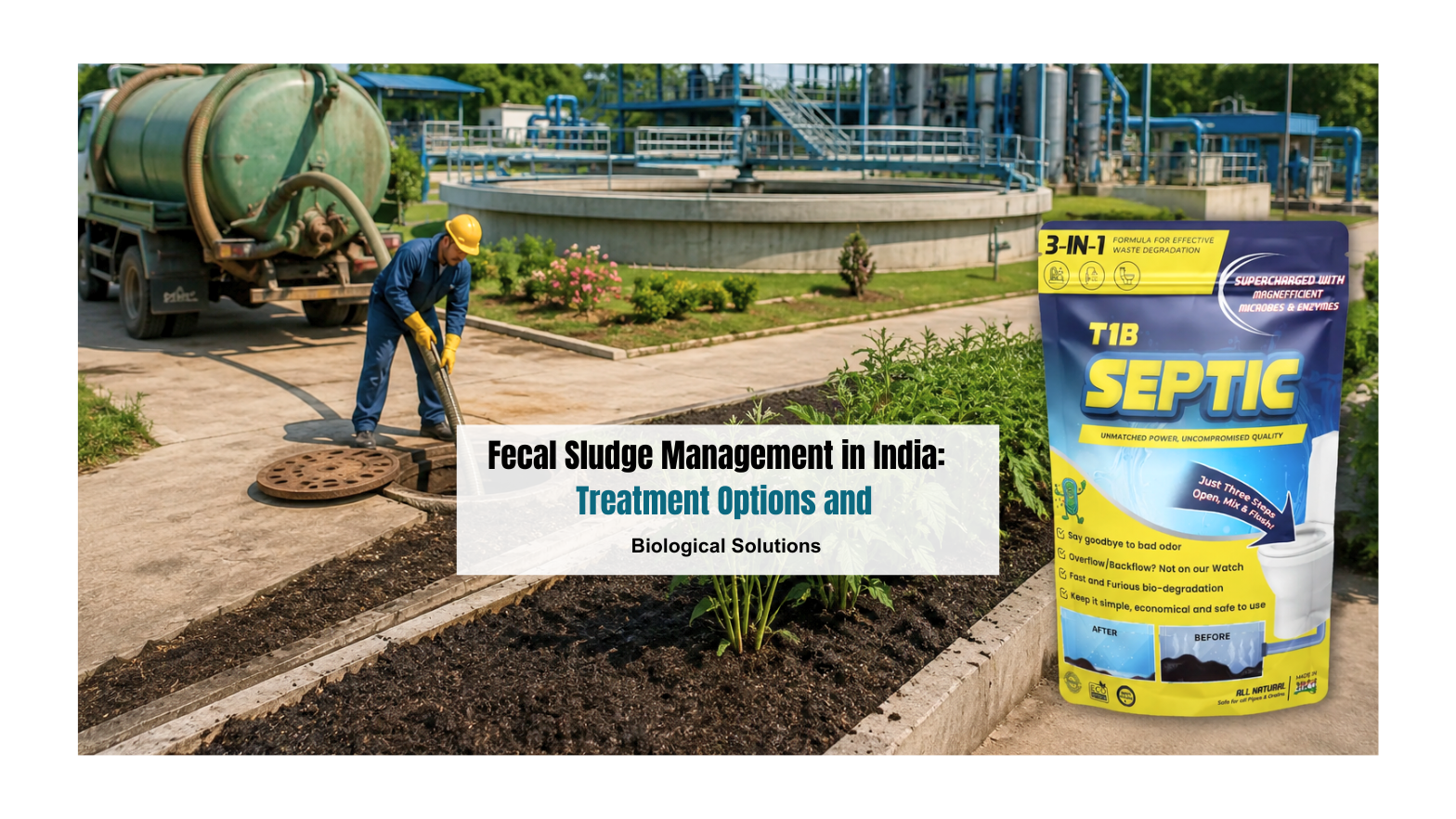
Nitrification and Denitrification in Wastewater Treatment: A Process Engineer's Overview
Nitrification and Denitrification in Wastewater Treatment: A Process Engineer’s Overview

There is a particular kind of dread that settles in when a consent violation notice lands on your desk. The ammonia levels in your treated effluent are elevated again. The CPCB or SPCB inspector is scheduled for next week. Your plant’s performance data tells a story you are not proud of, and you know that the next conversation with management is going to be uncomfortable. If you have been in this position, or are in it right now, you understand that nitrogen removal from wastewater is no longer a technical afterthought. It is a compliance imperative.

Biological nitrogen removal through nitrification and denitrification has become the cornerstone of compliant effluent treatment across India’s industrial and municipal sectors. As regulatory limits on total nitrogen, ammonia-nitrogen, and nitrate continue to tighten under CPCB and SPCB frameworks, plants that rely on conventional treatment alone are finding themselves perpetually on the wrong side of the discharge standards. The biology has to work. And for that to happen, the process engineer has to understand the biology.

This article walks through the complete picture, what nitrification and denitrification are, how they work at a biochemical level, what makes them fail, and what it takes to run them reliably under the pressures of industrial wastewater treatment in India.

If your plant is currently struggling to meet CPCB or SPCB nitrogen discharge norms, Team One Biotech’s specialized bioremediation cultures are engineered specifically to help. Reach out to our technical team today for a plant-specific assessment.

Why Nitrogen in Wastewater Is a Regulatory and Environmental Problem

Why Nitrogen in Wastewater Is a Regulatory and Environmental Problem

Nitrogen enters wastewater streams in multiple forms, primarily as ammonia (from industrial processes, fertilizer runoff, and domestic sewage), organic nitrogen, nitrate, and nitrite. Left untreated, this nitrogen load creates serious downstream consequences.

When nitrogen-rich effluent discharges into rivers, lakes, or coastal water bodies, it fuels eutrophication, an explosive growth of algae and aquatic plants that depletes dissolved oxygen, suffocates aquatic life, and renders water bodies unusable for irrigation, fisheries, or drinking water abstraction. The ecological damage compounds over time, and in water-stressed regions like much of India, the consequences extend well beyond environmental aesthetics.

From a regulatory standpoint, CPCB and various SPCBs have progressively tightened effluent discharge standards for total nitrogen, ammonia-nitrogen, and nitrate. These are limits that most conventional aerobic treatment systems, designed primarily for BOD and suspended solids removal, simply cannot meet without dedicated biological nitrogen removal. Industries most exposed include pharmaceutical manufacturers, food and beverage processors, fertilizer plants, municipal sewage treatment plants, and tanneries. For these sectors, the cost of non-compliance is not abstract: it includes consent violations, financial penalties, forced plant shutdowns, and reputational damage that is difficult to recover from.

The only sustainable solution, both economically and operationally, is biological nitrogen removal through the sequential processes of nitrification and denitrification.

What Is Nitrification? The Biochemical Mechanism Explained

The Nitrification Reaction, Two-Stage Aerobic Oxidation

Nitrification is a two-stage aerobic biological process in which ammonia-nitrogen is first converted to nitrite, and then nitrite is oxidized to nitrate. Each stage is carried out by distinct groups of highly specialized autotrophic bacteria that derive their energy not from organic carbon, but from the chemical oxidation of inorganic nitrogen compounds.

The first stage is performed by ammonia-oxidizing bacteria (AOB), predominantly species of the genus Nitrosomonas. These organisms oxidize ammonia to nitrite, releasing energy that they use for growth and cell synthesis. The second stage is handled by nitrite-oxidizing bacteria (NOB), primarily Nitrobacter spp., which oxidize nitrite to nitrate.

In simplified terms, the nitrification reaction proceeds as follows:

  • Stage 1 (AOB): Ammonia → Nitrite (with consumption of dissolved oxygen and alkalinity)
  • Stage 2 (NOB): Nitrite → Nitrate (with further oxygen consumption)

The net result is the conversion of toxic ammonia-nitrogen into nitrate, which is far less immediately toxic but still ecologically harmful and subject to discharge limits. Nitrification alone does not achieve total nitrogen removal from wastewater, it only transforms the form of nitrogen present. Complete removal requires denitrification as the second step.

One operational reality that every plant engineer must internalize: nitrifying bacteria are among the slowest-growing organisms found in activated sludge systems. They grow two to three orders of magnitude more slowly than the heterotrophic bacteria responsible for BOD removal. This makes them extraordinarily sensitive to washout, toxic shock, and process upsets. A nitrifier population that takes weeks to establish can be destroyed in hours.

Operating Conditions That Drive Nitrification Efficiency

Operating Conditions That Drive Nitrification Efficiency

Dissolved Oxygen (DO)

Nitrifiers are obligate aerobes, they cannot function without oxygen. The nitrification process requires dissolved oxygen levels to be maintained above a certain minimum threshold in the aeration tank. Below this threshold, nitrification rates drop sharply and can cease entirely. In practice, DO control in the aeration zone is one of the most direct levers an operator has for managing nitrification performance. (Note: These are general indicative ranges; actual values vary significantly depending on the specific ETP/STP design, influent characteristics, and operating conditions.)

pH

pH exerts a profound influence on nitrification efficiency. The nitrification process ceases at pH levels that fall outside the tolerable range for nitrifying organisms. The optimal pH window for nitrification lies within a moderately alkaline range, and activity drops sharply as pH approaches the acidic or strongly alkaline extremes. Engineers should note that nitrification itself consumes alkalinity, which means systems without adequate buffering capacity are prone to a pH crash that then further suppresses the very biological activity driving that pH shift, a self-reinforcing failure cycle. 

(Note: Indicative ranges only; site-specific values will differ based on system design and influent composition.)

Temperature

Nitrification is temperature-sensitive in a way that creates predictable seasonal challenges in many Indian climates. While high ambient temperatures can generally support nitrification, cold winters, particularly in northern India, can significantly reduce nitrifier metabolic rates and effective population density. Process engineers operating STPs and ETPs in these regions should anticipate performance degradation during colder months and plan accordingly, whether through bioaugmentation, extended SRTs, or temperature compensation strategies. (Indicative ranges only.)

Alkalinity

Because nitrification consumes bicarbonate alkalinity as a carbon source for autotrophic growth and as a buffer, systems receiving low-alkalinity influent or operating at high nitrogen loads may experience progressive pH depression. Alkalinity supplementation, typically through sodium bicarbonate or lime addition, is a standard corrective measure, but it must be managed carefully to avoid overcorrection.

Sludge Retention Time (SRT)

The slow growth rate of nitrifying bacteria means that a minimum SRT is required to maintain an active nitrifier population in the system. If the SRT falls below this biological threshold, nitrifiers are washed out of the system faster than they can reproduce. This is one of the most common and most damaging operational errors in plants that have not been specifically designed or adjusted for nitrification. In practice, nitrification-optimized systems require considerably longer SRTs than systems designed only for BOD removal. (Range is system-specific; consult a process specialist.)

Toxic Inhibitors

Industrial ETP operators face a challenge that municipal STP operators rarely encounter at the same scale: toxic influent loads. Heavy metals, free ammonia at elevated concentrations, chlorine residuals, and various industrial solvents and process chemicals can inhibit or outright kill nitrifying communities. Identifying and characterizing the inhibitory components in a plant’s influent is an essential step in any nitrification troubleshooting exercise.

What Is Denitrification? Closing the Nitrogen Loop

What Is Denitrification? Closing the Nitrogen Loop

The Biochemistry of Denitrification

If nitrification is the first half of biological nitrogen removal, denitrification is the step that completes it. Denitrification is the microbial reduction of nitrate and nitrite to nitrogen gas, which escapes harmlessly from the liquid phase into the atmosphere. It is the only biological mechanism that achieves actual removal of nitrogen from the wastewater system, not merely a transformation of its chemical form.

The organisms responsible for denitrification are fundamentally different from nitrifiers in their physiology and ecology. Denitrification bacteria in STP environments are facultative heterotrophs, organisms capable of switching their metabolic strategy depending on the availability of oxygen. Under anoxic conditions (where dissolved oxygen is absent or minimal, but the environment is not fully anaerobic), these bacteria use nitrate or nitrite as their terminal electron acceptor in place of oxygen, reducing them stepwise to nitrogen gas.

Key genera involved in denitrification include Pseudomonas, Paracoccus, Bacillus, and several others. Unlike nitrifiers, these organisms are not slow-growing specialists, they are metabolically flexible and relatively robust, which makes them somewhat easier to manage operationally. However, their effectiveness is still contingent on specific process conditions being met.

Without denitrification, a plant achieving full nitrification will simply accumulate nitrate in its treated effluent. This satisfies ammonia discharge limits but may still violate total nitrogen or nitrate-specific limits, and it represents an incomplete treatment outcome from both regulatory and environmental standpoints.

Key Operating Conditions for Denitrification

Key Operating Conditions for Denitrification

Carbon-to-Nitrogen (C:N) Ratio

Denitrification is fundamentally a heterotrophic process, the organisms require an organic carbon source as the electron donor to drive the reduction of nitrate. This creates a significant operational challenge in many industrial effluents, where the carbon-to-nitrogen ratio may be too low to support adequate denitrification rates. When influent BOD or COD is insufficient relative to the nitrogen load, denitrification stalls and nitrate accumulates in the final effluent. In such cases, external carbon sources, such as methanol, acetate, or other readily biodegradable organics, may need to be dosed into the anoxic zone to supplement the available carbon. 

(Note: Required C:N ratios are indicative and vary significantly with system configuration and influent characteristics.)

Anoxic Zone Design

Denitrification requires an environment where oxygen is absent but nitrate is available. This is the anoxic zone, a specific volume within the biological treatment system where dissolved oxygen is maintained at near-zero levels. In conventional activated sludge systems, MBRs, and SBRs, the configuration and sequencing of aerobic and anoxic zones is a critical design and operational variable. Both the volume of the anoxic zone and its hydraulic retention time (HRT) within that zone determine how completely denitrification can proceed.

Temperature

Like nitrification, denitrification rates are temperature-dependent. Cold conditions slow microbial metabolism and can cause denitrification performance to degrade seasonally. (Site-specific ranges apply; consult a qualified engineer.)

Nitrate Recycling

In pre-denitrification systems, where the anoxic zone precedes the aerobic nitrification zone, nitrate must be recycled from the aerobic effluent back into the anoxic zone through an internal recycle stream. The recycle ratio directly controls how much nitrate is available for denitrification and therefore how completely total nitrogen can be removed. Getting the recycle ratio right is one of the more nuanced operational adjustments in a BNR system.

Difference Between Nitrification and Denitrification, A Practical Comparison

For engineers who need to communicate this distinction clearly, whether in internal reports, client briefings, or regulatory documentation, the following comparison captures the essential differences:

ParameterNitrificationDenitrification
Primary organismsAutotrophic bacteria (AOB, NOB)Facultative heterotrophic bacteria
Electron acceptorDissolved oxygen (O₂)Nitrate / Nitrite (NO₃⁻ / NO₂⁻)
Environmental conditionAerobicAnoxic
Carbon requirementNone (autotrophic)Yes (BOD/COD required)
End productNitrate (NO₃⁻)Nitrogen gas (N₂)
Role in nitrogen removalConverts ammonia to nitrateRemoves nitrate as N₂ gas
Rate sensitivityHighly sensitive (slow-growing)Moderately sensitive

The key takeaway: nitrification transforms nitrogen; denitrification removes it. Both processes are required for true total nitrogen removal from wastewater.

Common Process Failures and How Engineers Diagnose Them

Process failures in biological nitrogen removal are frustratingly common, and they rarely announce themselves clearly. Here are the most frequently encountered failure modes and their diagnostic indicators:

Rising effluent ammonia despite adequate aeration

This typically points to nitrifier inhibition, nitrifier washout due to insufficient SRT, or a toxic loading event. The first diagnostic step is to verify DO levels in the aeration zone, confirm the actual SRT being achieved in the system, and review whether any unusual influent characteristics coincided with the performance decline.

Incomplete denitrification and rising effluent nitrate

When ammonia is adequately removed but nitrate climbs in the final effluent, the anoxic zone is underperforming. Common causes include insufficient carbon source (low C:N ratio), inadequate anoxic zone HRT, excessive internal recycle oxygen carry-over, or temperature suppression during cold months.

pH instability affecting both processes simultaneously

If pH is oscillating or trending downward, the first place to look is alkalinity balance. Nitrification consumes alkalinity; if the system’s buffering capacity is overwhelmed, pH destabilization can suppress nitrification directly, which then creates ammonia accumulation, a compound failure that can be difficult to reverse without systematic intervention.

Seasonal performance collapse

Temperature-driven performance drops in winter are predictable but still catch operators off guard. The response toolbox includes extending SRT where possible, reducing hydraulic loading temporarily, and in more severe cases, supplementing with external nitrifying and denitrifying bacterial cultures through bioaugmentation.

Many of these failures are rooted not in equipment design but in the biology, specifically, in the health, population density, and metabolic activity of the nitrifying and denitrifying microbial communities. A plant with well-designed infrastructure but a compromised biological community will consistently underperform.

Team One Biotech offers specialized nitrification and denitrification bacterial consortia, formulated for Indian effluent characteristics and CPCB compliance targets. Contact our technical team for a plant-specific recommendation.

Bioaugmentation as a Solution, When Native Microbiology Is Not Enough

Industrial ETPs operate under conditions that are genuinely hostile to biological communities. High and variable toxic loads, temperature swings, intermittent operation, shock loads from batch processes, these conditions suppress native nitrifier and denitrifier populations chronically, not just during acute upset events.

Bioaugmentation is the practice of adding concentrated, pre-adapted microbial cultures to an existing biological treatment system to reinforce or re-establish the microbial communities responsible for specific treatment functions. It is not a replacement for sound process design, but it is a highly effective tool for bridging the gap between what a system’s native biology can achieve and what CPCB or SPCB compliance requires.

For nitrification specifically, bioaugmentation allows plants to rebuild nitrifier populations far faster than natural growth rates would allow, reducing the time to stable compliance after a washout event from weeks to days. For denitrification, inoculating with robust denitrifying consortia adapted to low C:N industrial effluents can substantially improve nitrate removal rates without requiring major infrastructure changes.

Team One Biotech develops and supplies specialized nitrification and denitrification cultures engineered for the specific influent matrices, temperature ranges, and regulatory targets that Indian ETP and STP operators face. Our formulations have supported process recovery and compliance establishment across pharmaceutical, food processing, municipal, and specialty chemical sectors.

Frequently Asked Questions

What is the nitrification process in wastewater treatment?

The nitrification process is a two-stage aerobic biological conversion in which ammonia-nitrogen is first oxidized to nitrite and then further oxidized to nitrate by specialized autotrophic bacteria. It is a critical first step in biological nitrogen removal, though it does not by itself remove nitrogen from the system.

What organisms carry out nitrification?

Nitrification is carried out by two distinct groups of autotrophic bacteria. Ammonia-oxidizing bacteria (AOB), primarily Nitrosomonas spp., perform the first stage (ammonia to nitrite). Nitrite-oxidizing bacteria (NOB), primarily Nitrobacter spp., complete the second stage (nitrite to nitrate).

At what pH does the nitrification process cease?

The nitrification process operates within a specific pH window, and activity drops sharply outside of this range. At strongly acidic pH levels or highly alkaline conditions, nitrifier activity can cease almost entirely. The optimal range falls within moderate alkalinity, though the exact threshold at which nitrification process ceases at pH extremes is system-specific. (Note: Indicative only; actual thresholds depend on specific organism populations and operating conditions.)

What is the difference between nitrification and denitrification?

Nitrification converts ammonia to nitrate under aerobic conditions using autotrophic bacteria, while denitrification reduces nitrate to nitrogen gas under anoxic conditions using heterotrophic bacteria. Nitrification changes the form of nitrogen in the system; denitrification achieves actual removal of nitrogen from the wastewater.

What are denitrification bacteria in STP?

Denitrification bacteria in STP environments are facultative heterotrophs, organisms that can use either oxygen or nitrate as their terminal electron acceptor depending on the conditions. Key genera include Pseudomonas, Paracoccus, and Bacillus. These bacteria reduce nitrate and nitrite stepwise to nitrogen gas under anoxic conditions.

How does the carbon-to-nitrogen ratio affect nitrogen removal from wastewater?

Denitrification is a heterotrophic process that requires organic carbon as the electron donor. If the C:N ratio in the influent is too low, denitrification becomes carbon-limited and fails to reduce nitrate adequately, resulting in elevated nitrate in the treated effluent. External carbon dosing may be required in low-C:N industrial effluents.

Can nitrification and denitrification happen in the same tank?

Yes, this is the principle behind simultaneous nitrification and denitrification (SND), which is intentionally exploited in systems like sequencing batch reactors (SBRs) and certain MBR configurations. By creating micro-aerobic conditions or alternating aerobic and anoxic phases within a single vessel, both processes can be achieved in the same physical space, simplifying plant footprint requirements.

Compliance Is a Biology Problem as Much as an Engineering One

Nitrogen removal from wastewater through nitrification and denitrification is, at its core, a biological problem. The hydraulics can be right, the aeration equipment can be well-maintained, and the instrumentation can be calibrated perfectly, but if the microbial communities carrying out these processes are compromised, the plant will not achieve compliance.

Process engineers who understand the biochemistry of nitrification and denitrification, who know why nitrifiers wash out, why denitrification stalls when carbon is insufficient, and why pH instability cascades through both processes simultaneously, are far better equipped to maintain consistent performance and defend their effluent quality in front of a regulatory inspector.

The biology must be respected on its own terms. These organisms have requirements, sensitivities, and growth dynamics that do not bend to operational convenience. Meeting them consistently requires both good process design and a commitment to monitoring and maintaining the biological communities that do the actual work.

Team One Biotech has helped industrial and municipal plants across India achieve consistent CPCB and SPCB nitrogen compliance through our engineered bioremediation products. If your plant is facing nitrification failures, incomplete denitrification, or total nitrogen exceedances, talk to our specialists today. We will assess your current process and recommend a targeted biological solution, one designed for your specific effluent characteristics, regulatory targets, and operational constraints.

Visit our website or speak to a technical expert today.

Disclaimer: The values, ranges, and parameters discussed in this article are general indicative figures for reference and educational purposes only. Actual operating parameters, thresholds, and performance outcomes vary significantly based on the specific ETP/STP design, influent composition, hydraulic loading, temperature, and site-specific conditions. Always consult a qualified process engineer or technical specialist before making operational adjustments.

Looking to improve your ETP/STP efficiency with the right bioculture?
Talk to our experts at Team One Biotech for customised microbial solutions.

Contact: +91 8855050575

Email:  sales@teamonebiotech.com

Visit: www.teamonebiotech.com

Discover More on YouTube – Watch our latest insights & innovations!-

Connect with Us on LinkedIn – Stay updated with expert content & trends!
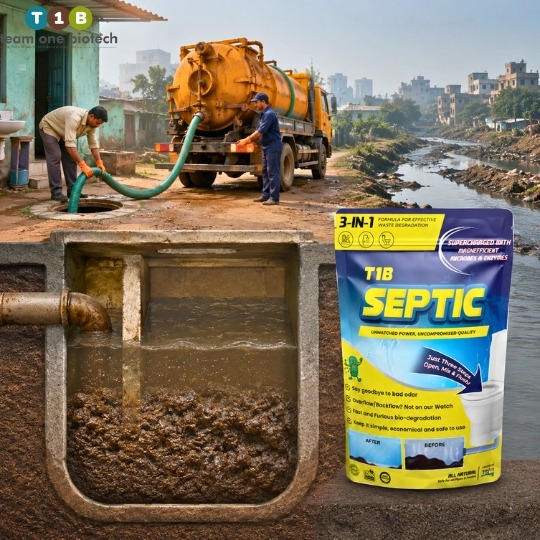
Sludge Bulking in STP/ETP: Causes & Biological Control Methods
Sludge Bulking in STP/ETP: Causes and Biological Control Methods

Few things frustrate an STP or ETP operator quite like walking up to a secondary clarifier and realizing the sludge has stopped behaving. The aeration system appears to be running, dosing has been done, pumps are operating, and yet the sludge blanket is climbing, foam is gathering at the surface, or cloudy solids are escaping with the final effluent. If an inspection or compliance sampling is approaching, what looked like another process fluctuation suddenly becomes a much bigger problem. Sludge bulking is one of those activated sludge process problems that can turn an apparently stable biological plant into a troubleshooting exercise very quickly.

The important thing to understand is that bulking is usually a symptom rather than the disease itself. Something in the biological environment has shifted enough to change which microorganisms dominate and how the biomass forms flocs. Low oxygen, nutrient deficiency, inappropriate F/M conditions, septic zones, shock loading, temperature changes, or combinations of these stresses can create conditions in which poor-settling biomass gains an advantage. The solution, therefore, is rarely to attack the clarifier alone. You have to trace the problem back through the biology and operating conditions that produced the sludge in the first place.

This guide explains how to control sludge bulking from that practical, biological perspective. We will look at what causes poor settling, how SVI fits into diagnosis, why filamentous microorganisms become dominant, and how bioaugmentation, aeration optimization, nutrient balancing, selector conditions, and MLSS regulation in STP operations can bring the system back toward stable settling.

When Good Sludge Goes Bad: Why Bulking Demands Immediate Attention

When Good Sludge Goes Bad: Why Bulking Demands Immediate Attention

Healthy activated sludge should form flocs with enough density and structure to separate efficiently from treated water in the secondary clarifier. When that structure changes, the clarifier is often where the problem becomes visible even though the cause may have developed hours or days earlier in the aeration basin. Operators may notice a rising sludge blanket, fluffy settling, pin floc, excessive foam, poor compaction, or solids moving toward the outlet. The natural reaction is to focus on the clarifier because that is where the failure can be seen, but the clarifier is often only displaying a biological imbalance created upstream.

That distinction matters because a settling problem can quickly affect the rest of the plant. Solids lost in the treated water reduce the amount of active biomass retained in the biological system. Biomass loss can then weaken organic removal, which puts additional pressure on the remaining microbial population and may accelerate the instability. What began as poor settling can therefore become a feedback loop: weak settling causes biomass washout, biomass washout reduces biological stability, and reduced stability makes settling even harder to recover.

This is why experienced operators look beyond the surface appearance. They examine settling trends, aeration distribution, loading history, return sludge behaviour, wasting practices, nutrient availability, influent characteristics, and microscopic observations where available. The goal is not simply to make the sludge sink today. It is to restore the microbial conditions that allow it to keep settling tomorrow.

What Exactly Is Sludge Bulking?

What Exactly Is Sludge Bulking?

Sludge bulking describes a condition in which activated sludge does not settle and compact properly during secondary clarification. Instead of forming a dense blanket with clear supernatant above it, the biomass occupies excessive volume or remains suspended, making solid-liquid separation difficult. One of the most useful operational indicators is the sludge volume index in wastewater treatment, because SVI connects settled sludge volume with the solids concentration of the mixed liquor. Operators should pay more attention to the direction and persistence of the SVI trend than to a single isolated reading.

A worsening SVI trend should trigger investigation rather than an automatic treatment response. Look at the settleability test itself: Is the sludge fluffy? Does it settle initially but fail to compact? Is the supernatant cloudy? Is there floating sludge later in the test? These observations can help distinguish filament-related settling problems from other conditions such as dispersed growth, denitrification in the clarifier, hydraulic overloading, or weak floc formation.

Important operating disclaimer: SVI, DO, MLSS, nutrient ratios, F/M ratio, and similar process values should be interpreted as plant-specific operating ranges rather than universal targets. Appropriate ranges vary significantly with influent characteristics, process configuration, design capacity, industrial sector, temperature, sludge age, and historical plant performance. Always validate operating decisions against your plant’s baseline data and, where necessary, a wastewater process specialist.

Filamentous Bulking vs. Viscous Bulking

Not every bulky sludge has the same biological structure. Filamentous bulking occurs when filamentous organisms extend beyond the floc structure in excessive numbers, producing an open network that prevents compact settling. Think of a healthy floc as a compact ball and heavily filamentous sludge as a ball covered with long fibres that catch against neighbouring particles. Those fibres can give the biomass structure in moderate populations, but excessive growth produces a loose matrix that occupies too much volume.

Viscous or non-filamentous bulking is different. It is commonly associated with excessive extracellular material and highly hydrated biomass, which creates a gelatinous sludge that also settles and compacts poorly. The visual symptom may look similar from the clarifier walkway, but the corrective action can be different. This is why microscopy, when available, is valuable before making aggressive process changes. Sludge bulking can often be controlled by managing the environmental conditions that allow filamentous bacteria in activated sludge to dominate, but that approach only works well when filament overgrowth is actually the problem.

Root Causes of Sludge Bulking in STP and ETP

Root Causes of Sludge Bulking in STP and ETP

Bulking rarely has a single universal cause. Activated sludge is a living ecosystem, and the microbial community responds continuously to what the plant feeds it and to the environment operators create around it. Change the oxygen profile, nutrient availability, organic loading, temperature, pH, sludge age, or presence of toxic compounds and you change the competitive balance between microorganisms. That is why copying another plant’s corrective action can fail even when both clarifiers appear to have the same problem.

For practical troubleshooting, think in terms of microbial selection pressure. Ask what conditions have recently changed and which organisms those conditions favour. Review influent loading trends, production schedules in industrial plants, blower performance, nutrient dosing, RAS and wasting practices, upstream holding tanks, equalization performance, and any periods of stagnation. The more accurately you identify the selective pressure behind the bulking, the less trial-and-error you need during recovery.

Filamentous Bacteria Overgrowth

Filamentous organisms are not automatically harmful. A controlled filament population can contribute to floc structure, but excessive filament growth prevents biomass from compacting efficiently. Problems develop when plant conditions repeatedly favour filamentous organisms over compact floc-forming populations. Low-oxygen microenvironments, nutrient limitations, septic influent, inappropriate loading conditions, and prolonged biological stress can all contribute depending on the organisms present.

This is why “kill the filaments” is often the wrong first objective. If the underlying environment still favours them, suppressing the existing population without correcting that environment can simply create room for the same problem to return. A more durable strategy changes the competitive conditions inside the biological system. Restore oxygen where it is deficient, correct nutrient limitations, stabilize organic loading, remove septic pockets, manage biomass inventory, and reinforce desirable microbial populations when necessary.

Microscopic identification can make this troubleshooting far more precise. If microscopy confirms excessive filament bridging, combine that information with process data rather than treating the microscope result in isolation. Biology tells you what is dominating; operating history helps tell you why.

Low Dissolved Oxygen and Poor Aeration Distribution

Low dissolved oxygen is one of the first conditions worth investigating when sludge settling begins deteriorating, but a single DO reading can be misleading. An aeration basin is not a perfectly mixed laboratory vessel. One probe may show acceptable oxygen while another part of the tank experiences an oxygen-limited zone because of diffuser fouling, uneven airflow, mixing problems, high localized oxygen demand, or hydraulic short-circuiting. For that reason, DO mapping across the basin provides much better information than repeatedly measuring one convenient location.

Look at the mechanical side as well as the biology. Are blowers delivering what operators expect? Have diffusers become fouled? Are certain sections mixing poorly? Has organic loading increased without a corresponding increase in oxygen-transfer demand? An aeration problem can masquerade as a purely microbial problem because microorganisms simply respond to the environment the equipment creates.

Correcting aeration distribution can therefore be one of the most cost-effective biological control measures available. The objective is not blindly increasing airflow. It is creating an oxygen environment appropriate to the plant’s actual loading and process configuration while avoiding unnecessary energy consumption.

Nutrient Imbalance in Biological Treatment

Microorganisms need more than carbonaceous organic matter. They also require nitrogen, phosphorus, trace elements, and other nutrients to build cells and maintain metabolism. Municipal sewage often supplies many of these nutrients naturally, but industrial effluent can be very different. A wastewater stream may carry substantial COD or BOD while remaining deficient in one or more nutrients needed for stable biological growth.

When that balance is disturbed, floc-forming organisms may become stressed and the microbial community can shift. Simply increasing aeration will not correct a nutritional limitation any more than giving someone more air would fix an empty dinner plate. The sensible approach is to characterize the wastewater, examine nutrient availability in relation to biodegradable organic loading, and supplement only where the data shows a deficiency.

For plants dealing with recurring nutrient limitations, targeted nutrient balancing solutions for wastewater treatment can support a more stable microbial environment. Team One Biotech’s SustainX, for example, is positioned as a nutrient supplement intended to provide biologically available nutrients for wastewater microorganisms. Nutrient addition should still be based on process assessment rather than routine overfeeding.

Low F/M Ratio, Shock Loads, and Changing Influent Conditions

The food-to-microorganism ratio, or F/M ratio, is another useful lens for understanding bulking. If a plant retains a large biomass inventory while readily biodegradable food becomes limited, organisms adapted to low-food conditions may gain a competitive advantage. At the opposite extreme, sudden organic loading can overwhelm oxygen-transfer capacity and create temporary stressed or oxygen-deficient conditions. Both situations illustrate why the biological process needs balance rather than simply “more biomass” or “more aeration.”

Industrial ETPs are particularly vulnerable because production changes can transform the influent almost overnight. A new product campaign, cleaning cycle, batch discharge, temperature increase, pH swing, toxic compound, or hydraulic surge may disturb a microbial population that looked perfectly stable the previous week. Equalization helps, but operators should still correlate biological changes with production and influent records.

When bulking appears suddenly, ask what changed before asking what should be dosed. That simple question often saves days of troubleshooting.

Why Sludge Bulking Becomes a Compliance Risk

Poor settling is not merely an untidy clarifier. When biological solids escape with treated water, final effluent TSS can increase, and the organic matter associated with those solids can also contribute to poorer BOD performance. That creates a direct link between sludge settleability and discharge compliance. India’s CPCB publishes general standards for discharge of environmental pollutants, while applicable requirements can also depend on discharge route, plant category, consent conditions, and state-level requirements. Plant managers should therefore verify the standards and consent conditions that specifically apply to their facility rather than relying on a generic target.

The risk becomes more serious if solids washout begins reducing biomass inventory in the biological reactor. Now the plant is facing two problems at once: deteriorating clarification and reduced biological treatment capacity. If the condition continues, operators can find themselves chasing TSS, BOD, COD, ammonia, or other performance indicators while the biological system becomes progressively less resilient.

This is why CPCB/SPCB compliance should be part of bulking diagnosis from the beginning. Don’t wait for the laboratory report to confirm that poor settling has become a compliance problem. If the sludge blanket is rising and solids are visibly carrying over, treat it as an early warning that deserves immediate process investigation.

How to Control Sludge Bulking Biologically

How to Control Sludge Bulking Biologically

There is no universal bottle, blower setting, or wasting rate that fixes every bulking event. Effective biological control is usually a sequence: identify the dominant failure mechanism, remove the condition favouring poor-settling organisms, strengthen desirable biomass, and then monitor the settling response. This is slower than reaching for a random corrective dose, but it is much more likely to produce stable recovery.

Start with evidence. Review SVI and settling trends, map DO, inspect aeration, examine recent loading changes, check nutrient sufficiency, assess RAS and wasting behaviour, and use microscopy if available. Once you understand the likely cause, choose the smallest set of changes capable of correcting it. Multiple simultaneous changes may make recovery harder to interpret because you will not know which intervention actually worked.

Bioaugmentation with Selected Microbial Cultures

Bioaugmentation introduces selected microbial cultures into a biological treatment system to reinforce degradation capability and microbial stability. In a bulking situation, the objective is not merely to pour bacteria into the aeration basin. A well-designed program aims to strengthen desirable biological activity while operating conditions are simultaneously adjusted so those organisms can establish themselves and compete effectively.

Team One Biotech’s T1B Aerobio is positioned for aerobic wastewater treatment and includes microbial cultures intended to support floc formation, biological degradation, shock-load resistance, and control of excessive foaming and sludge bulking. Team One Biotech also reports industrial case studies in which customized bioaugmentation programs were paired with process analysis and dosing schedules rather than used as isolated additions. That process-first approach is important because even a well-selected microbial consortium cannot permanently compensate for severe oxygen limitation, uncontrolled toxic shocks, or persistent nutrient starvation.

If your plant has confirmed filament overgrowth or repeatedly loses settling stability after shock loads, talk to Team One Biotech about its bioaugmentation solutions for activated sludge systems. A plant-specific dosing plan should be based on wastewater characteristics, process configuration, biomass condition, and the actual bulking pattern rather than a generic dose copied from another facility.

DO and Aeration Optimization

Before making complicated changes, verify that oxygen is reaching the biology where it is needed. Walk the basin and measure DO at multiple representative locations and operating periods. Compare those observations with airflow, loading, mixing, and diffuser condition. A plant can have adequate blower capacity on paper while still creating localized low-oxygen zones in practice.

Correcting those zones may require diffuser cleaning, airflow redistribution, blower scheduling changes, mixing improvements, or addressing an unexpected increase in oxygen demand. The exact response depends on plant design, which is why a universal DO number is less useful than a stable plant-specific operating range supported by performance trends.

After making changes, monitor settleability and biological performance rather than expecting an instant visual transformation. Microbial populations need time to respond to their new environment. The goal is sustained ecological selection, not a one-hour cosmetic improvement in the clarifier.

Nutrient Balancing and Biostimulation

If testing shows that the wastewater is nutrient deficient, controlled supplementation can help restore microbial growth and floc quality. This is especially relevant in ETPs receiving carbon-rich but nitrogen- or phosphorus-poor industrial streams. The correct nutrient requirement should be determined from actual biodegradable loading and plant behaviour, not from a fixed recipe applied regardless of influent composition.

Overdosing nutrients is not a harmless insurance policy. Excess nutrients can create additional effluent-management problems and increase operating cost without correcting the real cause of bulking. Supplementation works best when it addresses a demonstrated limitation and is monitored through biological response, effluent quality, and sludge behaviour.

For plants where nutrient deficiency is suspected, Team One Biotech’s nutrient balancing solutions for wastewater treatment provide one route for targeted supplementation. The decision should still begin with wastewater characterization and process diagnosis.

F/M Correction and Selector Tanks

Managing F/M conditions means managing the relationship between biodegradable food and active biomass. Operators influence that relationship through sludge wasting, RAS management, biomass inventory, equalization, loading distribution, and other process controls. If too much old biomass is being retained relative to available food, controlled wasting may help shift the system. If shock loading is the problem, equalization and feed management may be more important.

Selector zones can also be useful in plants designed or configured to use them. A selector creates controlled conditions in which desirable floc-forming organisms rapidly take up available substrate before the mixed liquor moves through the rest of the biological process. In simple terms, you are changing who gets first access to the buffet. When properly designed and operated, that competitive advantage can help suppress certain filamentous populations.

Selector performance depends heavily on plant configuration and the organisms involved, so it should not be treated as a universal retrofit. Use process engineering and microbial evidence before changing basin configuration or operating strategy.

MLSS Regulation in STP and ETP

MLSS regulation in STP operation is not about chasing a fashionable target. MLSS represents biomass inventory, and the appropriate operating range depends on the treatment process, influent loading, sludge age, oxygen-transfer capability, clarifier capacity, and desired treatment objectives. Too much biomass can contribute to low-F/M conditions and clarification pressure, while excessive wasting can leave the system without enough active organisms to handle incoming load.

Operators should therefore manage MLSS alongside SVI, sludge age, RAS, wasting rates, effluent quality, and loading trends. These measurements form a feedback loop. If settling deteriorates while MLSS rises and F/M shifts downward, that combination tells a different story from a plant experiencing sudden solids loss after a hydraulic shock.

If your SVI and MLSS trends are moving in the wrong direction before an audit or compliance sampling cycle, request a plant-specific process assessment rather than making several aggressive changes at once. Team One Biotech can support wastewater diagnosis, bioaugmentation planning, and process optimization based on the plant’s actual operating conditions.

A Practical Field Checklist for Operators

When sludge starts bulking, resist the temptation to change everything simultaneously. Work through the plant logically and document what you find. A useful field sequence is:

  • Check DO at several representative locations rather than relying on one aeration-basin reading.
  • Review recent hydraulic and organic loading for shock loads, production changes, cleaning discharges, or flow surges.
  • Examine nutrient availability where industrial wastewater may be nutrient deficient.
  • Inspect channels, equalization tanks, aeration zones, and sludge lines for septic or poorly mixed pockets.
  • Review RAS and wasting practices together with the current MLSS trend.
  • Track sludge volume index wastewater trends and settling observations over time rather than reacting to one test.
  • Use microscopy, where available, to confirm whether filamentous organisms are actually dominating.
  • Consider targeted bioaugmentation after correcting the environmental conditions that created the biological imbalance.

Record each intervention and its timing. Biological systems rarely respond like switches; they behave more like ecosystems recovering after a disturbance. Good records let you connect operational changes with settling improvement and build a plant-specific troubleshooting playbook for the next upset.

Treat the Cause, Not Just the Clarifier

Sludge bulking becomes manageable when you stop seeing it purely as a settling failure and start treating it as a biological signal. Filament overgrowth, oxygen limitation, nutrient deficiency, inappropriate F/M conditions, shock loads, septic zones, and unstable biomass management all change the microbial competition taking place inside an activated sludge system. The secondary clarifier simply reveals the result.

The most reliable answer to how to control sludge bulking is therefore a coordinated biological strategy: diagnose the organism and environmental cause, optimize aeration, restore nutrient balance, correct loading and biomass conditions, use selectors where appropriate, maintain disciplined MLSS regulation in STP, and reinforce beneficial populations through targeted bioaugmentation when justified. Keep SVI and settling behaviour in the feedback loop so you can see whether the biology is genuinely recovering.

If recurring bulking is threatening TSS/BOD performance or making compliance unpredictable, Team One Biotech can help evaluate the biological process and develop a customized bioaugmentation and optimization plan. Visit Team One Biotech to discuss wastewater process assessment, microbial treatment options, and dosing support suited to your STP or ETP.

Operating disclaimer: All references in this article to SVI, DO, MLSS, nutrient ratios, F/M ratio, and related operating conditions are general guidance for typical activated sludge systems. Actual operating ranges vary significantly according to influent characteristics, design capacity, process configuration, industrial sector, temperature, loading pattern, and site-specific conditions. Validate operational changes against your plant’s historical baseline, applicable CPCB/SPCB requirements, consent conditions, and qualified process guidance.

FAQs 

1: Can sludge bulking be controlled without chemicals?

Yes, many bulking problems can be addressed primarily through biological and operational control when the root cause is correctly identified. Aeration optimization, nutrient balancing, loading stabilization, selector operation, MLSS management, RAS and wasting adjustments, and targeted bioaugmentation can all alter the microbial conditions that favour poor-settling organisms. The key is diagnosis: a treatment that works for oxygen-related filament growth may not solve viscous bulking or clarifier denitrification. Chemical intervention should not substitute for understanding the biological cause.

2: Does a high sludge volume index always mean filamentous bulking?

No. A deteriorating sludge volume index wastewater trend tells you that settling or compaction is becoming poorer, but it does not identify the organism or mechanism responsible. Filamentous growth is an important cause, yet viscous bulking, weak floc formation, dispersed growth, hydraulic problems, or other process disturbances can also affect settling behaviour. Use SVI alongside settleability observations, MLSS, operating history, effluent appearance, and microscopy where possible. Think of SVI as an alarm bell, not a complete diagnosis.

3: How quickly can sludge bulking be corrected?

Recovery time varies because activated sludge is biological. A minor problem caused by a recent operating change may respond relatively quickly once that condition is corrected, while an established filamentous population may require a longer period of stable selective pressure before the floc structure improves. Plant configuration, wastewater characteristics, temperature, sludge age, shock loading, nutrient status, and the severity of biomass loss all influence recovery. Rather than promising a fixed timeline, monitor SVI trend, blanket behaviour, effluent solids, microscopic appearance, and overall biological performance.

4: Can bioaugmentation help control filamentous bacteria?

It can be useful when it is part of a properly diagnosed process strategy. Selected cultures can strengthen desirable microbial activity and help rebuild stable biological performance, but bioaugmentation works best when operators simultaneously correct the conditions that allowed unwanted organisms to dominate. Team One Biotech describes its aerobic bioculture solutions as supporting floc formation, organic degradation, shock-load resilience, and control of excessive filament growth and sludge bulking. Treat bioaugmentation as a tool for ecological recovery, not a substitute for adequate oxygen, nutrients, loading control, and biomass management.

5: What should operators monitor after sludge bulking is controlled?

Keep watching the same variables that helped diagnose the upset. Track SVI and settling characteristics, MLSS and biomass trends, RAS and wasting behaviour, DO distribution, influent loading, nutrient conditions, sludge blanket behaviour, and final effluent performance. Where recurring filament problems have occurred, periodic microscopy can provide an early warning before the clarifier visibly deteriorates. Most importantly, establish your own plant’s stable baseline so operators can recognize a slow drift before it becomes a compliance-threatening event.

Looking to improve your ETP/STP efficiency with the right bioculture?
Talk to our experts at Team One Biotech for customised microbial solutions.

Contact: +91 8855050575

Email:  sales@teamonebiotech.com

Visit: www.teamonebiotech.com

Discover More on YouTube – Watch our latest insights & innovations!-

Connect with Us on LinkedIn – Stay updated with expert content & trends!
Scan the code