
ZLD Mandates by State: Where They Apply and What They Cost
It is a Tuesday morning and the gate supervisor calls to say the State Pollution Control Board (SPCB) team has arrived for an unannounced inspection. They ask for your water balance, your online monitoring data and your salt cake records. Or maybe the scene is quieter: the finance head is staring at a Zero Liquid Discharge (ZLD) budget that doubled somewhere between approval and commissioning.
Either way, the fear is the same. Closure notice, penalties, a blown budget. This guide maps the ZLD requirements India’s major industrial states are enforcing, shows where the money actually goes, and helps you see your regulatory exposure before an inspector does.
What Zero Liquid Discharge Really Means for Indian Industry
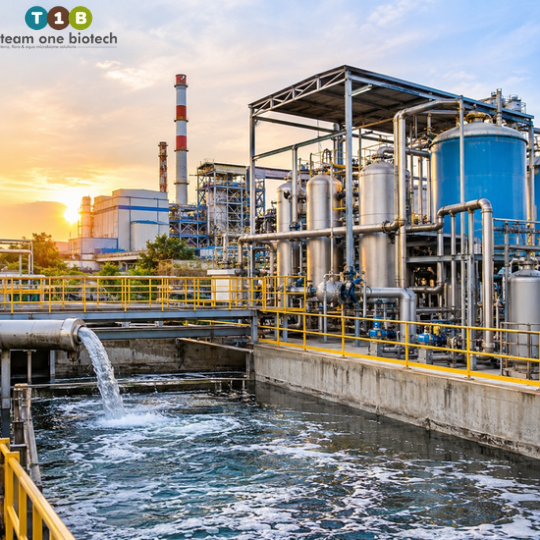
Zero liquid discharge means that no treated or untreated process effluent leaves your plant boundary as liquid. Water is recovered and reused. What remains is a concentrated reject stream, which is evaporated and dried into solid residue, usually called salt cake.
A typical ZLD train starts with the effluent treatment plant (ETP), followed by reverse osmosis (RO), which separates clean water from dissolved salts. The reject goes to a multiple effect evaporator (MEE), and the thick concentrate finishes in an agitated thin film dryer (ATFD) or a crystallizer.
Why do regulators push this so hard? Because many Indian industrial clusters sit on stressed rivers, shrinking groundwater and soils already carrying a heavy salt and chemical load. Conventional treatment cannot remove dissolved salts, so discharging “treated” water into those systems still harms them. ZLD closes that gap by keeping the water inside your fence.
For you, the practical meaning is simple: a zero liquid discharge India mandate turns your effluent from a compliance item into a production system that needs its own budget and its own operating discipline.
How CPCB Directives Become State-Level ZLD Mandates
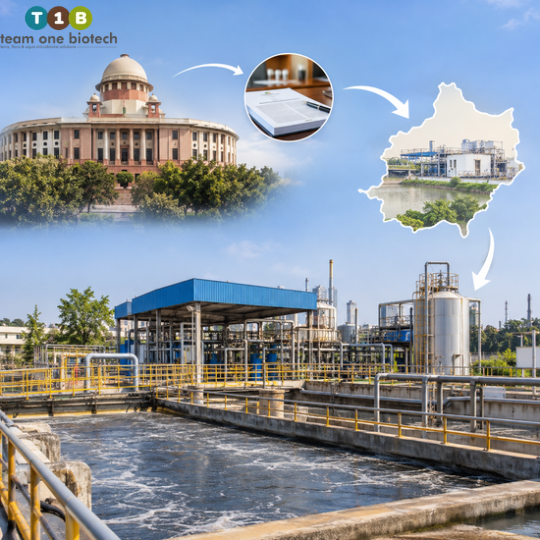
The Central Pollution Control Board (CPCB) sets national direction. It issues guidelines, sector-specific discharge standards and directions that apply to categories of industry, particularly the 17 category highly polluting industries such as textiles, tanneries, distilleries, pharmaceuticals, pulp and paper, and chemicals.
The SPCB is where policy meets your gate. Under Section 33A of the Water Act, a pollution control board can issue binding directions, including closure, stoppage of power or water supply, or regulation of operations. CPCB directions reach a plant through these state-level instruments.
Your SPCB consent to operate (CTO) is the document that carries it all. A ZLD condition may appear as a specific clause in your CTO, as a separate direction letter, or as a requirement tied to your expansion consent. Renewal is the point where inspectors check whether you are actually meeting it.
So why does the same industry face different expectations in different states? There are several reasons:
- Local environmental pressure. A plant on a stressed river basin or in a critically polluted area (CEPI) faces tighter conditions than one in a less burdened region.
- Tribunal and court directions. Orders on specific clusters or rivers often push the SPCB toward stricter enforcement.
- State policy and cluster infrastructure. The availability of a common effluent treatment plant (CETP) changes what the SPCB expects from individual units.
- Board discretion. Boards interpret CPCB directions in light of local conditions.
Always confirm current notifications and your own CTO conditions with the SPCB before budgeting. Rules in this area change, and what your neighbor’s CTO says may not match yours.
CPCB sets the direction, but your CTO and SPCB directions decide what you actually have to build.
State-by-State ZLD Requirements in India
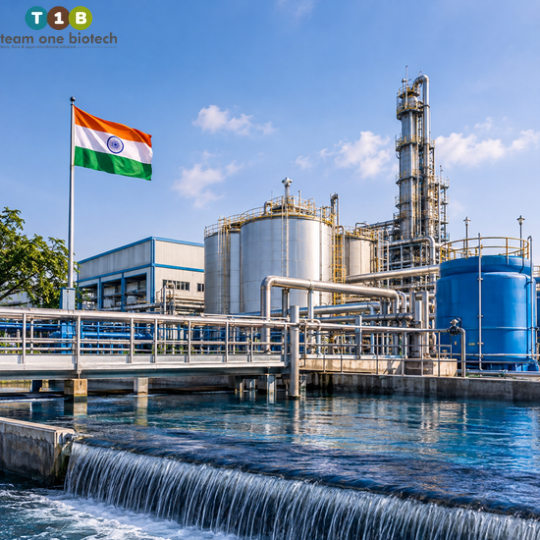
The summary below reflects general regulatory patterns, not a legal opinion. Verify current requirements with your SPCB.
Gujarat
Gujarat’s pressure centers on textile processing, dyes and intermediates, chemicals and pharmaceutical clusters, many of them in highly industrialized belts. Triggers typically include cluster-level directions, CEPI status of an area and the carrying capacity of receiving water bodies or common discharge systems. The practical risk is a CTO renewal that arrives with tighter discharge conditions, plus close scrutiny of OCEMS data and hazardous waste records. Plants that lean on common facilities should not assume that protects them from unit-level conditions.
Tamil Nadu
Tamil Nadu is closely associated with ZLD through textile processing and tanneries, particularly around river basins and clusters where court and tribunal directions shaped enforcement. Enforcement here has historically been firm, with power disconnection and closure as real consequences. The practical risk is operational: a ZLD plant that exists on paper but runs poorly, with unreliable recovery or stored salt waste. Inspectors tend to look at how the plant performs day to day, not only at whether it was commissioned.
Maharashtra
Maharashtra’s exposure spans chemicals, pharmaceuticals, distilleries, sugar-linked units, textiles and clusters on stressed river stretches. Triggers include river rejuvenation efforts, CEPI-listed areas and cluster-level SPCB directions. The practical risk for a plant is variability: expectations can differ between regions and between consent cycles. A unit that was comfortable under one CTO can face a new condition at renewal, so budgeting for that possibility is wise.
Uttar Pradesh
Uttar Pradesh pressure is strongly shaped by the Ganga basin and its tributaries. Tanneries, distilleries, paper and pulp, sugar-linked units and textile processing sit under close watch, supported by tribunal-linked monitoring. The practical risk is enforcement through direct action: notices, power cuts and environmental compensation exposure. Illegal off-site disposal is treated seriously, and tanker dumping can quickly become the most expensive mistake a plant makes.
Telangana
Telangana’s focus is on its pharmaceutical and bulk drug clusters, along with chemicals and other process industries around urban water bodies. Triggers include cluster-level concerns and proximity to sensitive lakes and rivers. The practical risk is concentrated scrutiny on complex, high-COD effluent, where a plant’s ETP stability and recovery performance are examined closely, especially at CTO renewal.
State Comparison at a Glance
| State | Typical Industries in Focus | Regulatory Pressure Level | Common Compliance Risk |
| Gujarat | Textiles, dyes, chemicals, pharma | High | Tighter CTO conditions, OCEMS and waste records |
| Tamil Nadu | Textiles, tanneries | Very High | Poor day-to-day ZLD performance, closure or disconnection |
| Maharashtra | Chemicals, pharma, distilleries, textiles | High | Varying expectations across consent cycles |
| Uttar Pradesh | Tanneries, distilleries, paper, textiles | Very High | Notices, compensation, illegal off-site disposal |
| Telangana | Pharma, bulk drugs, chemicals | High | Scrutiny of complex, high-COD effluent |
These pressure levels are general indications of enforcement attention, not official ratings. Your own cluster, CEPI status and CTO matter more than any state average.
Not sure where your plant sits? Book a free ETP and ZLD pre-treatment assessment with Team One Biotech before your next CTO review.
What ZLD Really Costs: CapEx and OpEx Breakdown
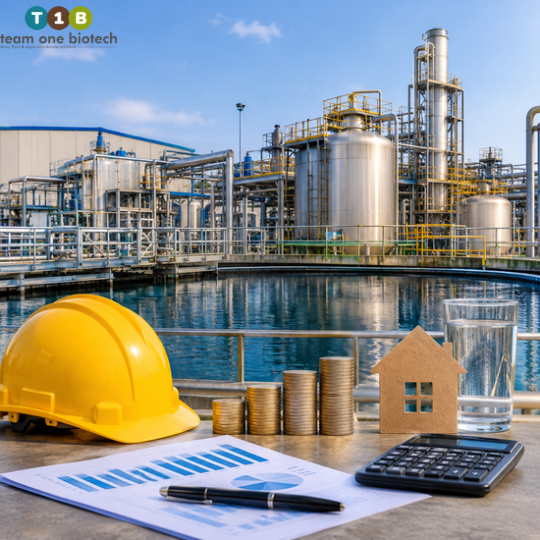
Most budget surprises come from treating ZLD as a single equipment purchase. In reality it is a capital project followed by a long operating commitment. The capital figure usually lands in a wide range of several crores depending on capacity and effluent, and operating costs continue every day the plant runs. Here is how ZLD CapEx and OpEx typically break down.
CapEx: What You Build
- Pre-treatment: equalization, biological treatment, clarification and filtration ahead of RO
- RO system: membranes, high-pressure pumps and cleaning systems
- MEE: the evaporator body, condensers, vacuum system and heat exchange surfaces
- ATFD or crystallizer: final drying of concentrate into solid residue
- Storage: tanks for feed, permeate, concentrate and condensate, plus a secure salt cake area
- Instrumentation and OCEMS: flow meters, online analyzers, data loggers and telemetry to the board
- Civil work: foundations, sumps, pipe racks, containment and roofing
OpEx: What You Pay Every Month
- Steam and power: evaporation is energy-intensive and usually the largest recurring item
- Antiscalants and chemicals: dosing for RO protection, pH control and cleaning
- Membrane replacement: a recurring cost that rises sharply when feed quality is poor
- Evaporator descaling: downtime plus chemical and labor cost
- Labor: trained operators and maintenance staff for a plant that runs continuously
- Salt cake handling and authorized disposal: collection, storage, transport and charges at an authorized treatment, storage and disposal facility (TSDF)
Standalone Plant vs CETP-Based Setup
A standalone plant gives you control but puts the entire capital and operating burden on you. A CETP ZLD setup spreads equipment, manpower and some disposal logistics across member units, which can ease the load on any one plant. The trade-off is shared responsibility: one member’s high-load or off-spec effluent can affect everyone’s cost and compliance. CETP performance depends heavily on how consistently members control inlet quality.
Disclaimer: The figures and ranges mentioned here are general values for reference only. Actual costs and requirements differ for every ETP and plant based on industry type, effluent characteristics, capacity, location and prevailing SPCB conditions.
![Image suggestion 3: CapEx versus OpEx breakdown chart. Alt text: “Chart comparing capital expenditure and operating expenditure components of a zero liquid discharge plant including RO, MEE, ATFD, steam, chemicals and salt cake disposal”]
Plan for the lifetime operating cost, because a ZLD plant that is cheap to build but expensive to run will hurt you every year.
Want to know how much load you can take off your RO and MEE? Talk to our technical team to find out.
Where Costs Quietly Spiral (and How to Control Them)
Most ZLD overruns do not come from one dramatic failure. They build slowly, stage by stage.
Poor pre-treatment
Everything downstream inherits whatever the ETP lets through. If the pre-treatment stage is unstable, the rest of the train pays for it.
High organic load and COD
Elevated chemical oxygen demand (COD) feeds fouling on RO membranes and contributes to scaling and foaming in evaporators. Cleaning cycles become more frequent, and membrane life shortens.
RO membrane fouling
Organics, suspended solids and biological growth coat the membrane surface. Recovery drops, pressure rises, and you spend more on chemicals and replacement.
MEE scaling
Scaling cuts heat transfer, so you burn more steam for less evaporation. Descaling means stopping the unit and spending on chemicals and labor.
Salt cake volume
More concentrate and more contaminants mean more residue to store, manifest and send to an authorized TSDF. That brings Hazardous and Other Wastes Rules audit risk right to your yard.
Unplanned downtime
A stalled evaporator or fouled RO can leave you holding effluent you cannot legally discharge. That is when tankers show up, and illegal off-site dumping is one of the fastest routes to penalties and closure notices.
Where Biological Pre-Treatment Helps
A strong biological stage reduces the organic load that reaches RO and the evaporators. Better-stabilized effluent generally means less fouling, steadier recovery and fewer emergency cleanings. Over time, that can mean a more predictable cost of operation and a more reliable plant.
To be clear about the limits: bioremediation does not remove dissolved salts, and it does not replace ZLD. Your RO, MEE and ATFD still do the salt work. Biological treatment is a cost and reliability lever for the stage before RO, protecting your expensive downstream equipment from avoidable stress. The effect depends on your effluent, so it should be assessed plant by plant.
Every rupee spent on stable pre-treatment tends to save more in membranes, steam and downtime further along.
A Practical Compliance Checklist for EHS and Plant Teams
Use this list ahead of your next inspection or CTO renewal:
- CTO validity and conditions: confirm the validity period, ZLD clauses, and any pending directions or compliance deadlines
- OCEMS calibration and data integrity: check analyzers, calibration records, uptime and that the data reaching the board matches reality
- Flow telemetry verification: make sure meters are calibrated and consistent with your water balance
- Water balance audit: reconcile intake, consumption, recovery and evaporation losses against what you report
- Recovery rate review: track RO and overall recovery trends to catch fouling early
- Salt cake manifest and authorized TSDF disposal: verify quantities, manifests and facility authorization
- Storage conditions: inspect salt cake storage for containment, roofing and leakage control
- ETP biological performance: monitor COD, load variation and biomass health before RO
- Contingency plan: define what happens to effluent if evaporators or RO go down, so tankers never become the answer
If a few of these boxes would be hard to tick today, that is useful information. Request a consultation today and stay ahead of your next inspection.
How Team One Biotech Helps You Lower the ZLD Burden
Team One Biotech works on the stage many plants underestimate: the biology in your ETP. Our bioremediation solutions for industrial ETP are designed to help stabilize treatment performance, improve organic load reduction and make the effluent reaching your RO more consistent.
In practice, that means working with your existing system rather than replacing it. We look at your effluent characteristics, aeration and process conditions, load variations and the real behavior of your treatment train. Then we recommend biological treatment options matched to that picture, an approach we apply to ETP biological treatment at individual plants as well as to CETP performance improvement.
What can you reasonably expect? A more stable ETP, less shock load reaching downstream units, and the potential for reduced fouling pressure on RO and evaporators. We do not claim to eliminate salts or replace ZLD, because biology cannot do that. What we can do is protect the equipment that does.
Ready to see what that looks like for your plant? Book a free ETP and ZLD pre-treatment assessment with Team One Biotech through our consultation page, and we will show you where your pre-treatment stage is costing you downstream.
Frequently Asked Questions
Is ZLD mandatory for all industries in India?
No. ZLD is not a blanket rule. It is typically imposed on specific industry categories, particularly highly polluting sectors, or on plants in sensitive locations or clusters. Whether you need it depends on your industry, location and CTO conditions, so confirm with your SPCB.
Who decides ZLD requirements, CPCB or the State Pollution Control Board?
Both play a role. CPCB sets national policy, standards and directions, while the SPCB applies them locally through consent conditions and Section 33A directions. In practice, your CTO and SPCB directions define what your plant must actually do.
What is the typical cost range of a ZLD plant in India?
Costs vary widely, generally in a range of several crores for capital investment, plus continuing operating costs for energy, chemicals, labor and disposal. The actual figure depends on effluent volume and quality, plant configuration and location. A plant-specific assessment is the only reliable way to estimate it.
What happens to the salt generated from ZLD?
The salt cake from evaporators and dryers is often classified as hazardous waste, depending on its composition. It must be stored properly, tracked through manifests and sent to an authorized TSDF under the Hazardous and Other Wastes Rules. Improper disposal creates serious penalty and audit risk.
Can biological treatment reduce ZLD operating costs?
It can help indirectly. Biological pre-treatment lowers the organic load reaching RO and evaporators, which can reduce fouling, cleaning frequency and downtime. It does not remove dissolved salts or replace ZLD. The benefit depends on your effluent and current ETP performance.
Conclusion
ZLD mandates are shaped by CPCB direction but enforced through your SPCB, your CTO and the pressures of your own cluster. Gujarat, Tamil Nadu, Maharashtra, Uttar Pradesh and Telangana each press on different industries in different ways, so your exposure is local before it is national. The true cost of ZLD sits in the operating years, and the biggest avoidable costs come from unstable pre-treatment, fouled membranes, scaled evaporators and unmanaged salt cake.
Understanding ZLD requirements India-wide is only the first step, and your own CTO is the real test. Request a consultation with Team One Biotech today and find out how a stronger biological pre-treatment stage can protect your ZLD investment before your next inspection.
Disclaimer: The figures and ranges mentioned here are general values for reference only. Actual costs and requirements differ for every ETP and plant based on industry type, effluent characteristics, capacity, location and prevailing SPCB conditions.
Looking to improve your ETP/STP efficiency with the right bioculture?
Talk to our experts at Team One Biotech for customised microbial solutions.
Contact: +91 8855050575
Email: sales@teamonebiotech.com
Visit: www.teamonebiotech.com
Discover More on YouTube – Watch our latest insights & innovations!-
Connect with Us on LinkedIn – Stay updated with expert content & trends!