
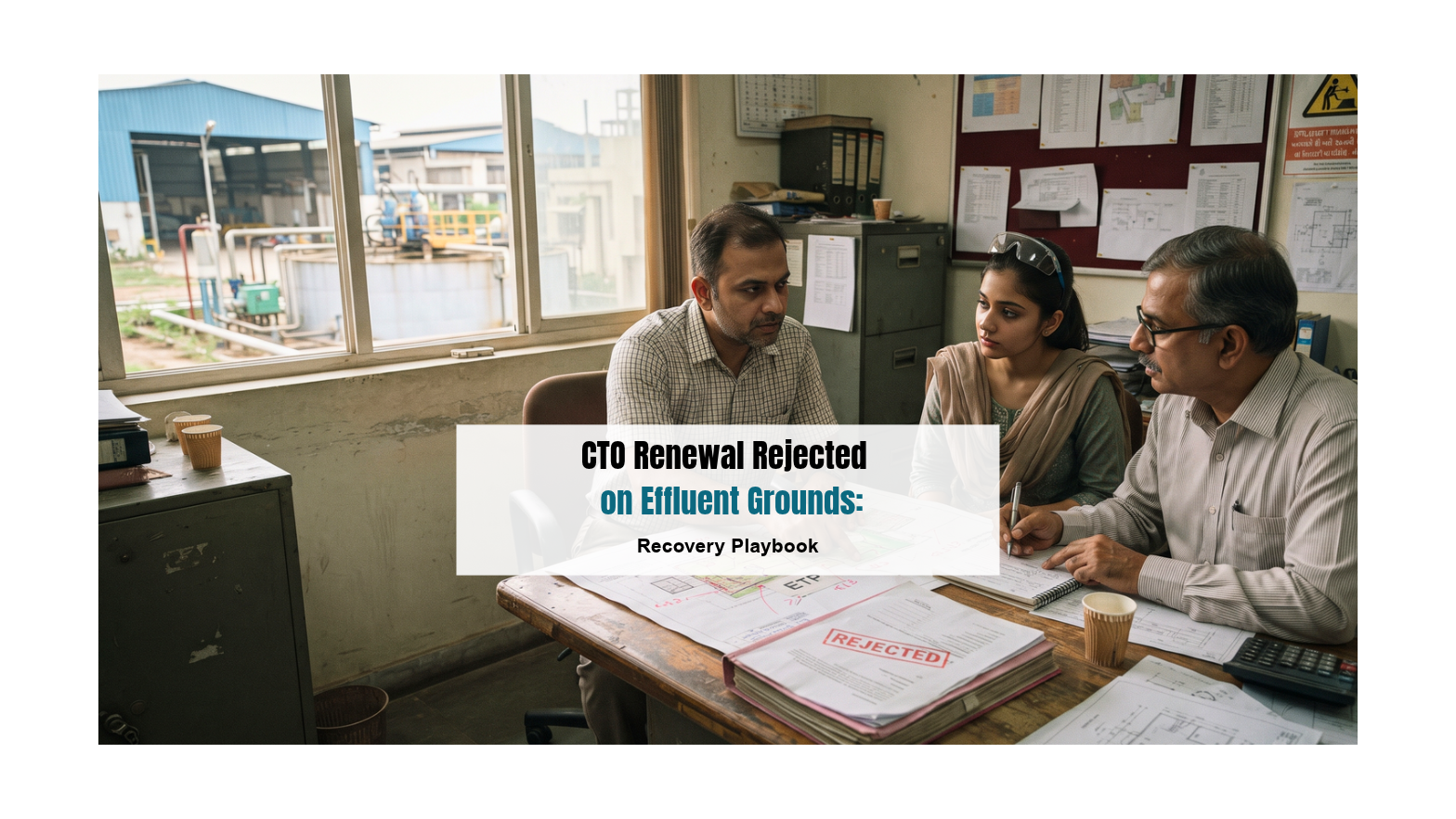

CTO Renewal Rejected on Effluent Grounds: Recovery Playbook
The rejection letter lands a little after the morning shift begins. You read the first paragraph twice. Your consent to operate renewal has been turned down, the reason is effluent, and the power utility is copied on the notice. Your production head walks in and asks the question nobody wants to answer: “How long do we have?” Down the corridor, the stores team is already wondering whether to stop accepting raw material.
If it feels unfair, you’re not alone. Your ETP has been running every day, your operators have been doing their rounds, and a few bad results have turned into a paper problem that threatens the whole plant. A CTO rejected on effluent grounds is stressful, but it is rarely the end of the road.
It is recoverable if you act in the right order. This playbook covers why Boards reject renewals, what’s really at stake, and a step-by-step path from stabilising your ETP to filing a sound compliance undertaking. It also lists the mistakes that quietly add weeks to the process.
Quick Recovery Checklist
- Read the rejection order line by line and list every deficiency in writing.
- Stabilise your ETP hydraulics, aeration, sludge age and dosing before any sampling.
- Bring BOD, COD and TSS under control with a site-specific bioaugmentation plan.
- Fix OCEMS calibration and data continuity so your trend line is honest.
- Prepare for joint sampling with the SPCB and get NABL-accredited third-party reports.
- File a realistic, time-bound compliance undertaking and follow up in writing.
Why SPCBs Reject or Hold Consent to Operate Renewal
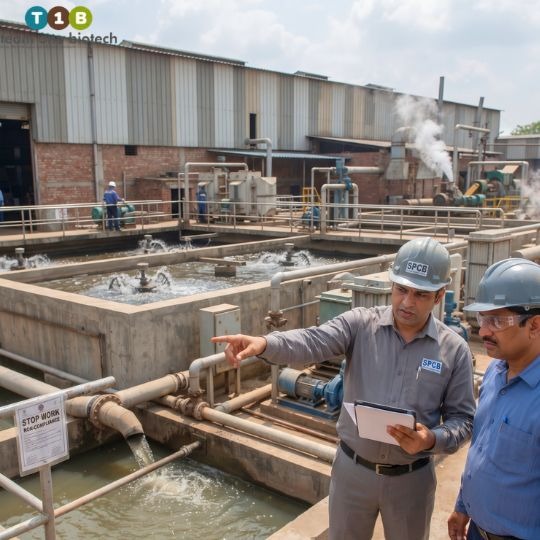
Boards don’t reject a renewal on a whim. Behind most letters sit a handful of recurring reasons, and knowing which one applies to you decides where you start. Under the Water (Prevention and Control of Pollution) Act, 1974, the Board’s consent conditions are the yardstick, and the Board can issue directions when those conditions aren’t met. Here is what typically triggers a hold or rejection.
- Effluent parameters outside prescribed limits. BOD, COD and TSS in your treated discharge exceed the limits set in your consent for your industry category. This is the most common reason.
- Missing or broken ZLD conditions. If your consent requires Zero Liquid Discharge and the recycle or evaporation system is bypassed, undersized or poorly documented, ZLD non-compliance can block the CTO on its own.
- Repeated OCEMS exceedances or data gaps. Online monitoring that shows frequent exceedances, or long stretches of missing data, tells the Board your plant isn’t under control.
- Poor ETP operation records. Missing log sheets, irregular dosing records and no maintenance history make it hard to prove the plant is run properly.
- Unverified lab data. Results from an in-house lab with no external verification rarely carry weight against the Board’s own sampling.
Look at the pattern. In most cases it isn’t one dramatic failure. It’s a slow drift: a sludge problem here, a sensor out of calibration there, a lab report nobody cross-checked. The Board’s inspector sees the sum of those drifts, and so should you.
Which of these is yours? Your rejection order usually points to one or two. Start there, but be honest about the others, because the inspector will find them during a re-inspection anyway.
What Is Actually at Stake in the Next Few Weeks

Let’s be straight about the risks, without drama.
The Board has real powers. Depending on how serious the findings are, it can issue a closure direction and power disconnection, and water supply can be cut as well. Legal proceedings can follow if violations are repeated or ignored. None of this happens overnight in most cases, but a notice that’s ignored tends to escalate.
Then there’s the commercial side. Customers who audit your plant for environmental compliance will ask about your consent status. A lapsed or rejected CTO can pause approvals, delay purchase orders and put you on a watch list with buyers who have their own sustainability commitments. Supply-chain trust is slow to build and quick to lose.
The window to act is usually short, often measured in a few weeks. These are general ranges and will differ for every ETP and every SPCB.
The good news: Boards generally respond well to plants that show clear, documented, verifiable corrective action. That’s what the playbook below is built around.
The Recovery Playbook, Step by Step

Work through these in order. Skipping ahead is the most common reason plants end up submitting a second weak application.
Step 1: Read the Rejection Order Line by Line
Don’t skim it. Sit down with your EHS lead, your ETP in-charge and, if possible, someone who understands consent conditions, and mark every deficiency the order mentions.
Make a simple list: the parameter or condition cited, the date of the Board’s observation, and what evidence they relied on. Was it their own sample, your self-monitoring data, or OCEMS records? That tells you what kind of evidence you’ll need to counter or correct.
Also note any deadlines in the order. Some letters give a window to respond, and missing it can cost you more than the original failure.
Step 2: Stabilise the ETP Before Any Sampling
This is where many plants go wrong. They rush to collect samples while the plant is still unstable, then submit results that don’t help. Stabilise first.
Check these in sequence:
- Hydraulic load. Is the plant receiving flow variations or shock loads it wasn’t designed for? Equalisation matters more than most people think.
- Aeration. Are the blowers or aerators delivering enough oxygen? Check dissolved oxygen across the tank, not at one convenient point.
- Sludge age and MLSS. Over-aged or under-aged sludge leads to poor settling and carry-over of suspended solids.
- Chemical dosing. Are pH correction, coagulants and nutrients being dosed against measured need, or by habit?
Give the plant time to respond after each correction. Biological systems don’t snap back in a day. Typically that means a few days to a few weeks of steady operation before results settle. These are general ranges and will differ for every ETP.
Step 3: Apply Bioaugmentation to Bring BOD, COD and TSS Within Limits
Once the basics are steady, bioaugmentation is one of the most practical tools for tightening treatment performance. The idea is simple. Your biological treatment depends on microbes to break down organic pollutants. When those populations are weak, unbalanced or poorly suited to your waste stream, treatment suffers.
ETP bioaugmentation for compliance adds specialised microbial consortia selected for your effluent’s character. In practical terms, here is what they do:
- Break down organic load faster. Targeted strains attack the specific compounds in your waste, which supports lower BOD and COD at the outlet.
- Reduce excess sludge. More complete biological degradation means less biomass left to dispose of, and fewer solids carried into the clarifier.
- Improve process stability. A robust microbial community recovers faster from shock loads, pH swings and variable feed.
- Support better settling. A healthy floc helps clarifier performance and eases the pressure on TSS.
Is it a magic fix? No. It depends on the effluent type, the existing ETP design, the dosing method and how well the rest of the plant is run. Results are never guaranteed. Many plants see early signs of improvement within a few days to a few weeks, with fuller stabilisation taking longer. These are general ranges and will differ for every ETP.
A good bioaugmentation programme starts with a look at your effluent characteristics, your current microbial health and your treatment train. It continues with a trial, close monitoring and adjustments to the dosing plan. Blind dosing without that groundwork wastes time.
Facing a failed BOD or COD trend right now? Talk to Team One Biotech’s technical team for a site-specific bioaugmentation plan.
Step 4: Fix OCEMS Reliability
Your online monitoring system speaks to the Board in real time, so it needs to be credible. If it isn’t, even good treatment performance can look bad on paper.
Focus on these basics:
- Calibration. Follow the calibration schedule and keep records. Uncalibrated sensors give readings nobody trusts.
- Data continuity. Gaps in transmission can look like concealment. Fix connectivity, power backup and data-logger issues.
- Sensor maintenance. Probes foul, drift and fail. Regular cleaning and timely replacement matter.
- Honest trend review. Look at your OCEMS trend over the past few months. Are the exceedances random, or tied to specific shifts, batches or weather? A pattern you can explain is far better than a pattern the Board discovers first.
Don’t tune the instrument to produce comfortable numbers. Boards know the difference between a maintained system and a manipulated one, and the consequences of the latter are far worse than a failed renewal.
Step 5: Arrange Joint Sampling With the SPCB
Once your ETP is stable and your data is clean, request joint sampling with the SPCB. This is where your corrective work becomes visible to the Board.
Prepare as you would for an audit. Make sure the plant has been running steadily in the period beforehand. Check that sampling points are accessible and clearly identified. Brief your operators on what will happen and who will be present. Keep your own split sample so you can compare results later.
Don’t try to “manage” the day by diverting flow or changing the operation just for the visit. If the plant is stable, you don’t need to. If it isn’t, the sample will show it.
Step 6: Get NABL-Accredited Third-Party Analytical Reports
In-house lab results are useful for day-to-day control, but they rarely carry enough weight for a compliance submission. A NABL-accredited third-party effluent report gives the Board independent, traceable evidence.
Pick a lab accredited for the parameters in your consent conditions, not just a general accreditation. Ask for the scope of accreditation in writing.
Keep chain-of-custody records for every sample: who collected it, when, how it was preserved, how it was transported and when it reached the lab. Gaps in this chain are one of the easiest ways for a good result to be questioned.
One report is not a trend. Plan for a series of samples across a period that shows consistent performance, not a single good day. The period depends on your plant and your SPCB. These are general ranges and will differ for every ETP.
Step 7: File a Legally Sound Compliance Undertaking
A compliance undertaking for CTO reinstatement is a formal commitment, so draft it carefully. Treat it like a legal document, because that’s how the Board will treat it.
A strong undertaking usually includes:
- A clear acknowledgement of the deficiencies cited in the order.
- A specific corrective action plan, with named responsibilities.
- A realistic, time-bound schedule for each action, expressed in ranges you can actually meet.
- A commitment to monitoring and reporting, including third-party testing and OCEMS reliability.
- Supporting documents: lab reports, calibration records, sludge handling records and so on.
Avoid vague promises such as “we will ensure compliance at all times.” The Board wants specifics. Also avoid over-promising. A schedule you miss is worse than a slightly longer one you meet. Have your legal or compliance team review it before it goes out.
Step 8: Follow Up in Writing and Keep a Documented Trail
After filing, don’t just wait. Follow up with the SPCB in writing, politely and regularly. Record every call, every visit and every acknowledgement.
Keep a single file, physical or digital, with the rejection order, your responses, lab reports, sampling records, undertaking and every piece of correspondence. If the matter escalates, or a different officer takes over your file, this trail protects you.
Re-issuance timelines vary a great deal, typically from a few weeks to a couple of months or more depending on the Board’s workload and the completeness of your submission. These are general ranges and will differ for every ETP.
Common Mistakes That Delay Re-Issuance
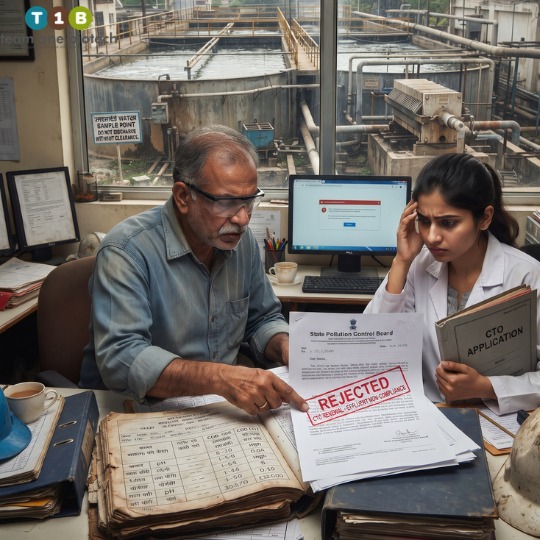
Plants lose weeks, sometimes months, to avoidable errors. Watch for these.
- Submitting one good sample as proof. A single clean result looks like luck. The Board wants to see consistency over time.
- Relying on in-house data only. Without independent verification, your numbers carry less weight than the Board’s own.
- Dosing chemicals blindly. Overdosing coagulants, acids or alkalis to chase a number can push the plant out of balance and create sludge problems later.
- Ignoring sludge handling. Poor sludge dewatering, storage and disposal records can trigger fresh observations even when your water quality is fine.
- Vague undertakings. General promises without owners, dates or evidence invite rejection or further queries.
- Missing deadlines. Late responses suggest you aren’t taking the matter seriously, and they can weaken an otherwise sound case.
Notice the common thread. Each of these is about evidence and discipline, not about treatment technology. The plants that recover quickly are usually the ones that run tight and document everything.
How Team One Biotech Supports Your Recovery
When your CTO is on the line, you don’t need a sales pitch. You need a practical partner who understands effluent treatment and the pressure you’re under. That’s the role Team One Biotech aims to play.
Here’s how we typically support plants in your position:
- Site-specific bioremediation solutions. We look at your effluent profile and treatment train before recommending anything. A formulation that works for one industry may not suit another.
- Trial and dosing support. We help you plan and monitor trials, set dosing approaches and adjust based on observed performance, rather than leaving you to guess.
- Technical guidance for ETP stabilisation. Our team can work with your operators on aeration, sludge management and process control, since bioaugmentation works best on a well-run plant.
- Documentation help for inspections. We help you organise treatment records and performance data so your submission and inspection files are clear and complete.
We can’t promise outcomes, because every plant is different. What we can promise is a structured, transparent approach based on your actual data. For related reading, see our guidance on BOD COD reduction and sludge reduction in biological treatment plants.
Do not wait for the next notice. Request a free ETP assessment from Team One Biotech and get a clear recovery path for your plant.
Frequently Asked Questions
How long does CTO re-issuance take after rejection?
It varies widely. Many plants see a process that runs from a few weeks to a couple of months or longer, depending on how quickly you stabilise the ETP, how complete your submission is and how the SPCB schedules re-inspection. These are general ranges and will differ for every ETP.
Can bioaugmentation help if my COD or BOD keeps failing?
It often can, when the cause is biological: weak or mismatched microbial populations, poor degradation of specific organics or recurring shock loads. It won’t fix hydraulic design flaws, aeration shortfalls or toxic inhibition on its own. A site assessment tells you whether it fits your case, and response windows typically range from days to a few weeks. These are general ranges and will differ for every ETP.
Does a third-party report need to be NABL accredited?
For a compliance submission, it is strongly advisable. Accreditation gives the Board confidence in the lab’s methods and traceability. Check that the accreditation covers the specific parameters in your consent conditions, and confirm what your SPCB expects.
What happens if OCEMS data keeps exceeding limits?
Repeated OCEMS exceedance can lead to further notices, directions from the Board and, in serious or persistent cases, closure direction and power disconnection. The Board may also question data quality if gaps or irregularities appear. Fix the treatment problem and the monitoring reliability together, and document both, because the consequences and timelines vary by state and case.
Conclusion
A rejected renewal is a hard morning, but it isn’t a verdict. Read the order carefully, stabilise your ETP, strengthen treatment with a well-planned bioaugmentation programme, clean up your OCEMS data, and back everything with independent reports and a sound undertaking. Do it in that order and keep the paper trail tidy.
Your CTO should not hang on one more failed sample. Contact Team One Biotech today and start your recovery.
Disclaimer: All values, ranges and timelines in this article are general guidance only. Discharge standards, consent conditions and treatment performance differ for every industry, ETP design, SPCB and state. Always confirm requirements with your Consent to Operate conditions, your SPCB and a qualified environmental consultant.
Looking to improve your ETP/STP efficiency with the right bioculture?
Talk to our experts at Team One Biotech for customised microbial solutions.
Contact: +91 8855050575
Email: sales@teamonebiotech.com
Visit: www.teamonebiotech.com
Discover More on YouTube – Watch our latest insights & innovations!-
Connect with Us on LinkedIn – Stay updated with expert content & trends!