Why Cheap Bioculture Costs More: A Cost-Per-Result Analysis

A purchase order lands on the plant manager’s desk. Three bioculture bids, one clearly the cheapest. The per-kilogram figure beats the incumbent supplier by a comfortable margin, the procurement head has a savings target to hit, and the approval goes through without much debate. Two weeks later, during an effluent inspection, the BOD reading comes back well above the permissible limit. Nobody connects it to the purchase order yet, but the connection is there.

This scenario plays out across Indian industrial plants more often than most people admit. Budget pressure is real. Procurement teams are measured on what they save, and a lower number on a quotation looks like a win. Nobody should be criticised for wanting to control costs in an operation that spends heavily on utilities, chemicals, power, and manpower.

The trouble is the metric itself. Price per kilogram is one of the most misleading numbers in wastewater treatment procurement. It tells you what you pay to receive a bag. It tells you nothing about what that bag does inside your biological reactor, how much of it you will need, or what happens to your plant when it fails to perform.

Cheap bioculture problems rarely show up on the invoice. They show up later, as higher dosing volumes, unstable biology, heavier sludge loads, emergency purchases, and regulatory exposure. This article walks through each of those hidden layers and offers a better framework for evaluation.

Saving on bioculture and saving money are not the same thing.

What Makes a Bioculture “Cheap” and Why It Matters
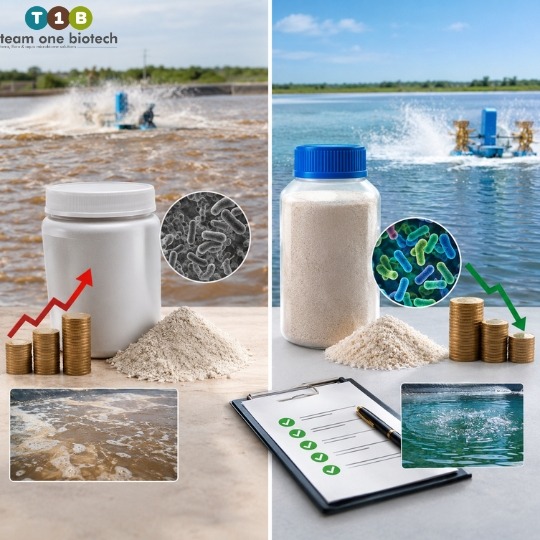
Low price in a biological product is almost never the result of a more efficient factory or a smaller margin. In most cases, it reflects what has been left out of the product. Understanding what is missing is the first step toward understanding why the cost-per-kilogram figure misleads.

The CFU Count Problem

Colony-Forming Units, or CFUs, are a measure of the live, active bacteria in a product. Put simply, they are the workers. When you dose bioculture into an ETP or STP, the CFUs are the organisms that actually consume organic pollutants, break down BOD and COD, and build the stable biological community your treatment depends on.

A product with a high viable CFU count delivers a dense population of working organisms per gram. A product with a low count delivers far fewer. This is where low cost bioculture usually reveals its true nature. Budget products often carry viable CFU counts well below what the label suggests, or well below what a premium product delivers in practice. Labels can describe the count at the time of manufacture, while the viable count at the time of use depends on formulation quality, storage, and shelf life.

The consequence is straightforward. If each kilogram carries fewer living organisms, you need more kilograms to reach the same microbial density in your system. A plant that would have dosed a certain quantity of a high-quality product may need to dose a considerably larger quantity of a budget product to reach comparable biological activity. The headline price advantage begins to disappear before the product even enters the tank.

Any serious evaluation therefore starts with CFU count bioculture data that has been independently verified, not simply stated on a datasheet.

Note: CFU counts and dosing volumes vary significantly depending on wastewater composition, ETP design, temperature, and organic load. The ranges referenced in this article are general indicators and may differ substantially at your facility.

Inert Filler Content and Dead Cell Matter

The second issue is what else is in the bag. Many low-cost biocultures are bulked up with inert carrier material, dead cell mass, or biologically inactive matter. This material has weight and volume. It does not have biological function.

Buyers who purchase by weight are, in effect, paying for material that contributes nothing to treatment. When a significant portion of a kilogram is filler or non-viable biomass, the effective price of the active component is much higher than the quoted figure suggests. A cheap per-kilogram rate on a product that is mostly carrier is not cheap at all once you calculate the price of the living fraction.

Buying cheap bioculture by weight without checking viable CFU is like buying fuel by volume without checking octane rating. Two tanks may look identical. What happens in the engine is entirely different.

Strain Selection and Resilience

The third difference is the least visible and the most consequential: which organisms are in the product, and how well they cope with real operating conditions.

Premium bioculture is built around strains selected for resilience. These organisms are chosen for their ability to tolerate pH fluctuations, temperature swings, toxic shock loads, and the high COD variability that characterises many industrial effluents. They have defined functional roles, whether degrading specific compounds, flocculating well, or competing against filamentous growth.

Budget products frequently use generic, uncharacterised microbial communities. They may perform acceptably when conditions are ideal and steady. But very few ETPs operate under ideal and steady conditions. A production change upstream, a cleaning chemical discharge, a cold week, a sudden spike in organic load: any of these can push a delicate culture past its tolerance.

When that happens, the biology collapses, and recovery is slow. It can take days to weeks to re-establish stable biological activity, and during that window the plant is operating on borrowed time. This is the point at which operators begin to say the bioculture is not working, and by then the damage is already accumulating on several fronts at once.

The Real Costs That Never Appear on the Purchase Order
The Real Costs That Never Appear on the Purchase Order

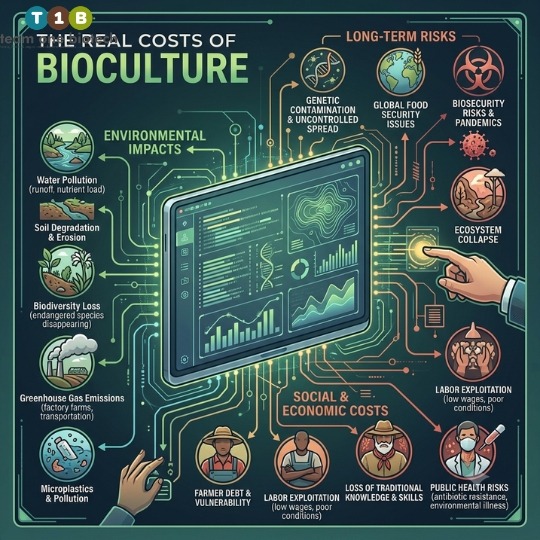
If the purchase order shows only the price of the product, then the real cost of a bioculture decision is spread across the operating budget, the maintenance schedule, the sludge account, and the compliance file. This section follows those costs one by one.

Massive Dosing Volume Requirements

Low CFU counts and high filler content have a direct operational effect: operators must dose more product to achieve the microbial density the system needs. The extra volume is not a one-time adjustment. It repeats with every dosing cycle, every week, across the whole year.

Over a quarter, the surplus may seem modest. Over a year, the additional kilograms purchased, handled, stored, and dosed can erode the per-kilogram saving or eliminate it entirely. In some cases, the plant ends up spending more in total than it would have with a higher-priced, higher-potency product, while still receiving less consistent treatment performance.

There is also a hidden handling cost. More volume means more bags, more storage space, more labour, and more opportunities for dosing error. These are small items individually, but they accumulate.

Note: Dosing requirement differences between high-quality and budget bioculture products vary based on site-specific conditions. Consult your biological treatment specialist for a site-calibrated dosing analysis.

Biological System Crashes and Recovery Costs

A dosing premium is a predictable cost. A system crash is not, and it is far more expensive. ETP bioculture failure tends to arrive without warning and takes a long time to resolve. The costs of a crash event include several distinct items:

  • Emergency procurement of replacement biology. When the system fails, plants cannot wait for the next scheduled order. They buy at spot-market rates, often at a premium, often from whichever supplier can deliver fastest.
  • Extended aeration and higher power consumption. Operators run blowers and aerators for longer hours to keep what remains of the biology alive and to support re-establishment. Power is typically one of the largest operating costs in biological treatment, and crash recovery pushes it higher.
  • Operator overtime. Stabilising a failed system demands extra monitoring, sampling, adjustment, and supervision, often outside regular shifts.
  • Bypass risk. In the worst situations, plants face pressure to discharge partially treated or untreated effluent to avoid overflow or production stoppage. This carries serious regulatory and reputational consequences.

Taken together, these recovery costs often represent a multiple of whatever was saved by choosing the budget product in the first place. A saving measured in a purchase order can be cancelled out in a single bad week.

Increased Secondary Sludge Generation

Inefficient biological treatment does not make pollution disappear. It converts it into something else. When bioculture performs poorly, biodegradation is incomplete, and a greater share of the organic load ends up as secondary sludge rather than being mineralised.

More sludge means more volume to dewater, store, transport, and dispose of. Sludge disposal cost ETP operators face in India varies by region, treatment method, hazardous classification, and contractor, and plants should always obtain site-specific disposal quotes rather than relying on general figures. But the direction of the effect is consistent: more sludge means more disposal cycles, and each cycle adds to operating expenditure.

This cost recurs quarter after quarter. Unlike a one-off emergency purchase, it becomes a permanent feature of the budget, quietly absorbing the savings that justified the purchase decision.

Regulatory Penalties and Shutdown Risk

Beyond operational costs sits the largest exposure of all: regulatory consequences.

The Central Pollution Control Board (CPCB) and State Pollution Control Boards (SPCBs) mandate specific effluent quality standards before discharge. These cover BOD, COD, Total Suspended Solids (TSS), and other parameters depending on the industry. Plants must demonstrate compliance through monitoring, and regulators can inspect and sample at their discretion.

A biological crash, or chronic underperformance caused by inadequate bioculture, can push effluent parameters outside permissible limits. BOD COD treatment failure of this kind sets off a chain of escalating consequences: closer inspection, show-cause notices, financial penalties under environmental regulations, and, for repeat offences, directions that can include statutory shutdown orders.

This is not a hypothetical scenario. A CPCB compliance penalty is a documented reality across industrial sectors, from textiles and pharmaceuticals to food processing and chemicals. And a shutdown order does not just cost the fine. It costs lost production, delayed orders, strained customer relationships, and management time that no budget line captures.

When the price of a bag of bioculture is weighed against even one of these outcomes, the per-kilogram saving looks very small indeed. These are the cheap bioculture problems that procurement metrics never measure.

Cost-Per-Result: The Only Metric That Tells the Truth
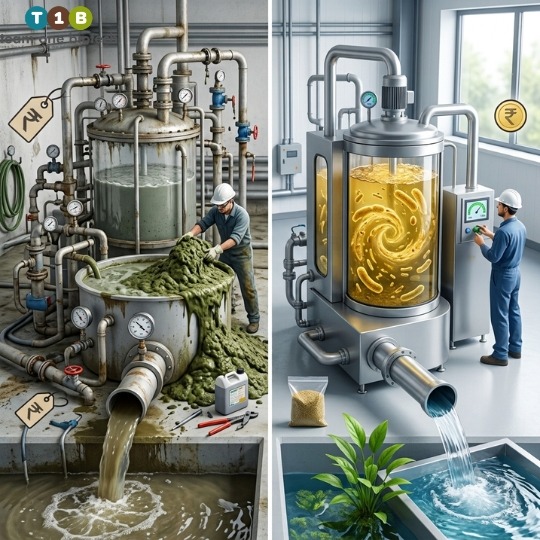
Cost-Per-Result: The Only Metric That Tells the Truth

If cost-per-kilogram is misleading, what should replace it? The more reliable framework is cost-per-result. The question is not how much the product costs per kilogram, or even per dose. The question is how much it costs to remove a unit of pollutant, or to deliver one compliant discharge cycle.

Consider the logic. A bioculture that achieves consistent BOD and COD reduction at lower dosing volumes, with fewer crash events, lower sludge output, and reliable regulatory compliance, will deliver a lower cost-per-result even if its per-kilogram price is higher. Each of the costs described above shrinks: fewer kilograms dosed, less emergency spending, less sludge to dispose of, and no penalty exposure.

The inverse is equally true. A product that looks economical at procurement may deliver the highest total operating cost per compliant discharge once dosing surplus, instability, sludge, and risk are counted. The invoice looks good while the plant’s actual cost curve moves in the wrong direction.

This is the foundation of any honest bioremediation ROI calculation. Return is not measured by the price of inputs, but by the cost of outcomes: what the plant spends to treat a defined volume of wastewater to the required standard, consistently, across variable conditions.

To apply this framework, procurement teams and plant managers should request documented performance data before comparing price. That means CFU count certification, strain characterisation sheets, and independent application case studies from comparable industries. A supplier confident in the product will provide these readily. Reluctance to share data is itself informative.

Note: Values are general indicators and vary significantly based on ETP design, wastewater composition, and operational parameters.

Want a true cost-per-result evaluation for your ETP? Contact Team One Biotech’s technical team for a site-specific biological performance review, with no obligation.

What to Look for When Evaluating Bioculture Quality

What to Look for When Evaluating Bioculture Quality

Quality can be assessed before purchase, provided the right questions are asked. The following criteria give buyers a practical way to separate performance products from cheap ones.

  • Verified CFU count. Ask for third-party validated CFU data, not just label claims. Independent testing is the only reliable check on viable organism density.
  • Strain identification. The product should name its specific microbial strains and explain their functional roles, such as BOD degradation, nitrification, or sludge reduction. Unidentified “proprietary blends” deserve scrutiny.
  • Shelf life and storage conditions. Live cultures degrade over time and with poor handling. Confirm cold-chain or controlled-storage requirements and request expiry data. A strong product that has sat in an unsuitable warehouse is no longer a strong product.
  • Application track record. Request case studies or site references from similar industry verticals and ETP types. Results at a dairy plant do not automatically translate to a pharmaceutical effluent stream.
  • Technical support availability. A quality supplier backs the product with application engineering support: dosing protocols, troubleshooting, and performance monitoring. A supplier that disappears after delivery is selling a commodity, not a solution.
  • Regulatory alignment. Confirm the product is formulated for Indian wastewater conditions and supports compliance with CPCB and SPCB discharge norms.

The Questions Every Procurement Team Should Ask Before Signing a Purchase Order

The checklist below works for plant managers and CFOs alike. It moves the conversation from price to performance and gives both technical and financial stakeholders a shared basis for decision-making.

  1. What is the certified viable CFU count per gram or kilogram of this product?
  2. What dosing volume will be required to achieve our target BOD and COD reduction at our specific organic load?
  3. What is the documented crash recovery performance of this strain under our operating temperature range?
  4. What is the expected secondary sludge generation rate compared with a premium-tier bioculture alternative?
  5. What is the supplier’s liability or support protocol in the event of treatment failure?
  6. What is the total cost per compliant discharge cycle, rather than cost per kilogram?

If a supplier cannot answer these questions clearly, the price quoted is not the price you will pay. Asking them before the purchase order is signed costs nothing. Asking them after a failed inspection costs a great deal.

FAQ: Cheap Bioculture, Real Answers

Can a cheap bioculture still achieve acceptable BOD and COD removal?

In stable, low-variability wastewater streams with consistent loads, some budget products may perform adequately at higher dosing volumes. However, most industrial ETPs experience fluctuating loads, temperature variation, and periodic toxic shock, which are the conditions under which low-resilience strains are most likely to fail. When bioculture is not working in these circumstances, the failure is often sudden. Operational risk is always elevated with budget products, even where short-term results look acceptable.

How do I know if my current bioculture is underperforming?

Early indicators include creeping BOD and COD trends in your effluent monitoring data, rising secondary sludge volumes, increased aeration requirements, recurring odour issues, and difficulty maintaining a stable MLSS (Mixed Liquor Suspended Solids) reading. No single sign is conclusive, but several appearing together point strongly toward a biological problem. Reviewing trends over several months, rather than week to week, usually makes the pattern clearer.

Is switching bioculture suppliers disruptive to my ETP?

A properly managed biological transition, supported by technical guidance, can be completed with minimal disruption. The key is a planned changeover with monitoring, rather than an abrupt switch. The risk of staying with an underperforming product typically outweighs the effort of transition.

How does Team One Biotech’s bioculture differ?

Team One Biotech manufactures bioremediation solutions engineered for verified CFU activity, strain-specific performance, and resilience under Indian industrial wastewater conditions. Our technical team provides site-specific dosing protocols and ongoing application support, so performance is measured at your plant and not only in the laboratory.

The Most Expensive Bioculture Is the One That Does Not Work

The argument comes down to one idea. In biological wastewater treatment, the procurement metric that matters is not what you pay per kilogram. It is what you pay per compliant, verified treatment outcome.

Everything else follows from that. Low CFU counts drive up dosing. Filler dilutes the active fraction. Fragile strains crash under routine variation. Crashes trigger emergency spending, higher power use, and overtime. Incomplete treatment raises sludge volumes. Poor effluent quality invites inspection, penalties, and in serious cases, closure. Each link in the chain begins with a purchasing decision that looked sensible on paper.

Budget pressures are real, and they are valid. Nobody in procurement or finance is wrong to seek savings. But with the cost-per-result framework, certified performance data, and the right questions in hand, decision-makers can evaluate bioculture on what it delivers rather than what it costs to buy.

Your ETP has to meet its discharge norms every single day. The biology inside it has to match that standard. Choose accordingly.

Ready to find out what high-performance bioculture actually costs, and saves, at your facility? Get in touch with Team One Biotech. Our application engineers will walk you through a no-pressure, site-specific cost-per-result analysis.

Looking to improve your ETP/STP efficiency with the right bioculture?
Talk to our experts at Team One Biotech for customised microbial solutions.

Contact: +91 8855050575

Email:  sales@teamonebiotech.com

Visit: www.teamonebiotech.com

Discover More on YouTube – Watch our latest insights & innovations!-

Connect with Us on LinkedIn – Stay updated with expert content & trends!
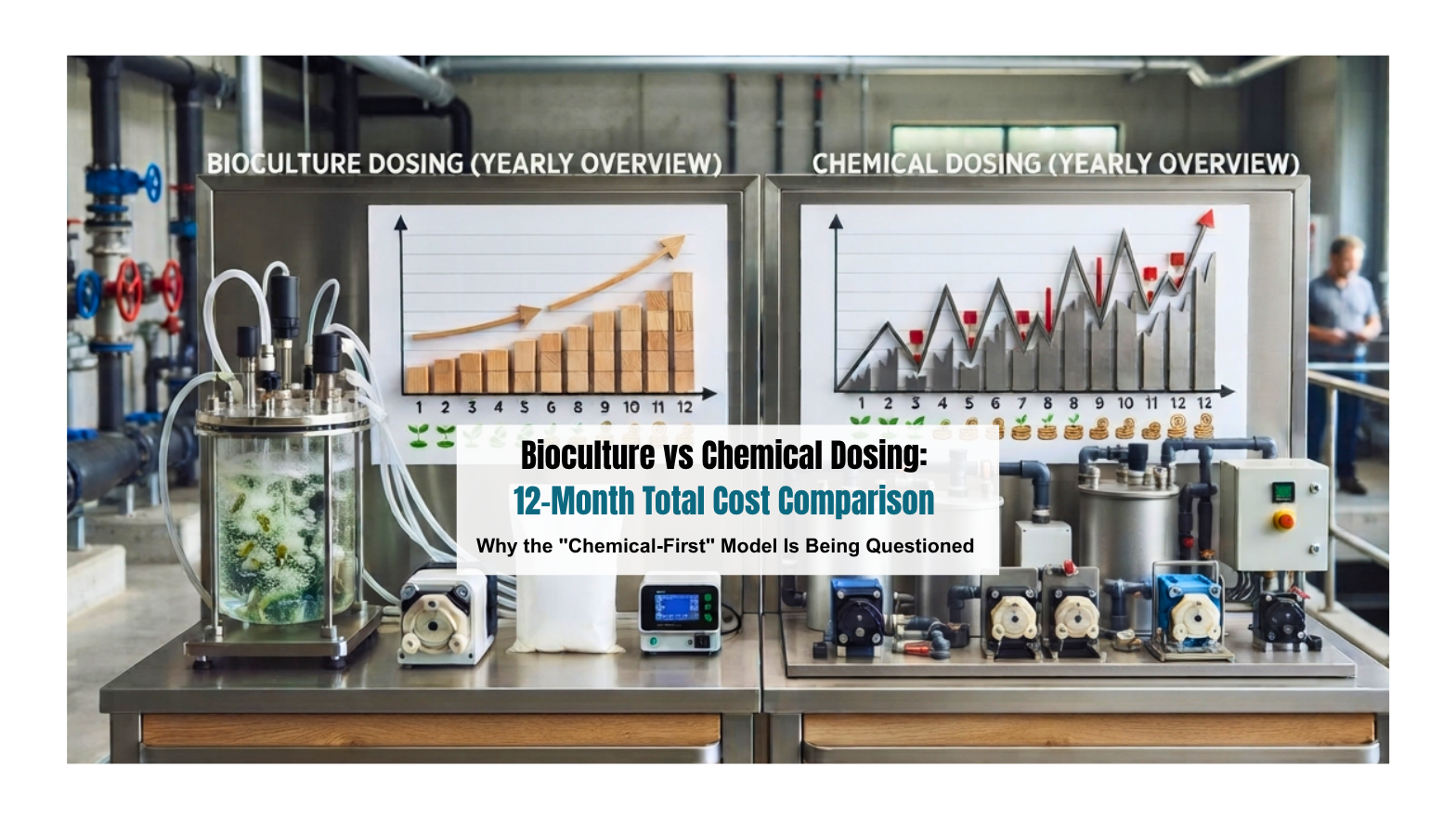
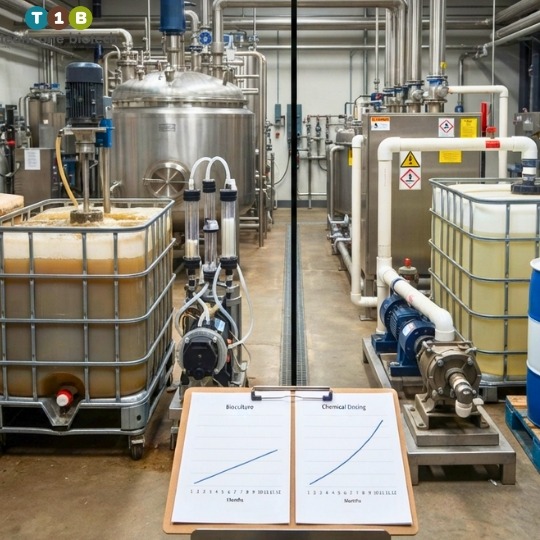
Bioculture vs Chemical Dosing: 12-Month Total Cost Comparison

Walk through almost any industrial ETP in India and you will hear the same quiet frustration. Chemical procurement budgets creep upward quarter after quarter, compliance pressure from CPCB and SPCB keeps tightening, and the sludge yard keeps filling. Plant managers sense that chemical dependency has a ceiling, but few have a financial model to prove it. This article breaks down the true bioculture vs chemicals cost picture over a full year, so you can take a credible total cost of ownership (TCO) comparison into your next budget review with confidence.

If any of these sound familiar, this comparison was written for you:

  • Chemical costs rise every quarter, and there is no visible ceiling
  • CPCB / SPCB compliance is non-negotiable, yet chemical dosing is becoming harder to justify financially
  • Sludge disposal quietly drains the budget and rarely appears in cost presentations
  • You want to move toward biological treatment but cannot get CFO approval without a financial model
  • You worry that bioculture may not deliver consistent BOD, COD and heavy metal compliance the way chemicals do

Why the “Chemical-First” Model Is Being Questioned

Why the "Chemical-First" Model Is Being Questioned

Chemical dosing has been the default for decades because it delivers fast, visible results. Add a coagulant and flocs form, correct the pH and the reading moves, dose a flocculant and turbidity drops within minutes. For a plant manager under pressure to hit discharge limits, that immediacy is reassuring.

But the model was built around short-term compliance, not long-term cost efficiency. It treats every compliance target as a dosing problem, and every dosing problem as a purchase order. Over time, that logic ties your operating budget to commodity markets and supplier timelines you do not control.

Several things have changed. Input costs have risen, CPCB and SPCB norms have tightened, and sludge disposal now draws far more scrutiny than it once did. Corporate ESG and sustainability mandates have also entered the picture, asking plants to justify their carbon footprint as well as their discharge quality. Plant managers are no longer judged only on whether the outlet meets limits, but increasingly on cost per kiloliter treated.

This is the environment in which a direct comparison of chemical dosing vs bioculture becomes not just useful, but operationally necessary.

The 12-Month Cost Framework: Chemical Dosing vs Bioculture

The 12-Month Cost Framework: Chemical Dosing vs Bioculture

A fair comparison has to go beyond the per-liter price of chemicals. A proper 12-month TCO model should account for these categories:

  • Recurring consumable costs: chemical procurement versus bioculture replenishment
  • Sludge generation and disposal: volume produced and the cost of getting it out of the plant legally
  • Energy consumption: aeration, mixing and chemical feed pumps
  • Labor and monitoring: operator hours, testing frequency and supervision
  • Asset wear and maintenance: pump corrosion, dosing equipment and chemical storage infrastructure
  • Regulatory non-compliance risk: penalty exposure and remediation cost

Most facilities compare only the direct chemical purchase price against the price of a bioculture product. That approach dramatically underestimates the true gap, because the largest differences tend to sit in the other categories.

Disclaimer: All cost ranges and figures referenced in this article are indicative and general in nature. Actual costs vary significantly based on plant capacity, influent characteristics, industry type, treatment objectives, and geographic location. We recommend conducting a site-specific TCO audit for accurate projections.

Recurring Consumable Costs: The Most Visible Line Item

Recurring Consumable Costs: The Most Visible Line Item

This is the line item everyone sees, so it is where most comparisons begin and, unfortunately, end.

Chemical Dosing: Month-on-Month Procurement Burden

A typical ETP or STP chemical program is a cocktail rather than a single product. It often includes coagulants such as alum and ferric chloride, flocculants such as polyelectrolytes, pH correctors such as lime and sulfuric acid, defoamers, and specialty chemicals for heavy metal precipitation. Each one is purchased repeatedly, in volumes that track your effluent flow.

These are not one-time purchases. They are monthly, volume-dependent and price-indexed to commodity markets, which means your budget moves whenever the market does. Seasonal swings in influent load make matters worse, because dosing is rarely perfectly optimized. Plants often overdose as a safety buffer against compliance risk, and that habit inflates costs further.

For mid-sized industrial ETPs, chemical consumables can account for a significant share of the monthly operational budget. Costs typically range across a wide band depending on industry type and effluent complexity.

Bioculture: Replenishment Logic and Cost Behavior

Bioculture works on a different principle. It is not a daily-dose chemical but a living microbial consortium that, once established, self-sustains within the bioreactor. Initial inoculation is a one-time or periodic event, and ongoing replenishment costs are substantially lower than continuous chemical procurement.

The cost curve looks different too. Spending is front-loaded around setup and inoculation, then flattens through months 3 to 12 as the microbial ecosystem matures and stabilizes. Chemical dosing has no such flattening. Its costs follow influent load and market prices, so they fluctuate but never fall just because the plant has been running longer.

That difference in trajectory matters more than any single month’s invoice. A cost that flattens and a cost that tracks the market will always diverge over a full year.

Sludge Generation and Disposal: The Hidden Cost Nobody Budgets Correctly

Sludge Generation and Disposal: The Hidden Cost Nobody Budgets Correctly

If your TCO model leaves out sludge, it is incomplete, and this is often where the gap is largest. Many plants carry sludge costs in a separate budget head, so they never get attributed to the treatment method that created them.

Chemical dosing, especially with coagulants and flocculants, dramatically increases sludge volume. The chemicals bind with suspended and dissolved matter and settle out as a heavy precipitate. Depending on the industry, that sludge may be classified as hazardous, which means it must be handled and disposed of through CPCB-authorized vendors at a significant per-metric-ton cost.

The pattern is a compounding one. Higher dosing frequency means more sludge, more sludge means more handling, storage and transport, and all of it adds up to higher disposal spending. Bioculture-based treatment generates substantially less sludge because the biological process mineralizes organic matter instead of flocculating and settling it. Over a 12-month cycle, reduced sludge disposal can be one of the largest single savings levers in the entire comparison.

Disclaimer: Sludge volume and disposal costs are highly site-specific. Figures referenced here are general estimates and should not be used for project budgeting without site-specific assessment.

Wondering how much your plant currently spends on sludge disposal versus what it could look like with a bioculture-optimized system? Connect with our team for a no-obligation TCO assessment.

Energy Consumption: An Underrated Variable in the Cost Model

Chemical feed systems carry an energy cost that rarely gets attributed to them. Dosing pumps, rapid mix tanks and flash mixers all run on electricity, and that consumption disappears into the plant’s general power bill. Nobody looks at the electricity line and thinks of it as a chemical treatment expense.

Bioculture-based systems, when properly designed, can reduce energy demand by optimizing aeration cycles and easing the load on downstream clarification equipment. A healthier biological stage means less polishing is needed after it.

This is a secondary lever, not the primary driver of savings, but it is a consistent contributor to annual savings. It also carries a benefit beyond the electricity bill. Lower energy use translates directly into a smaller carbon footprint, which is increasingly relevant for ESG reporting.

Compliance Cost and Risk: The Line Item That Does Not Appear Until It Does

This is where the real hesitation sits, so it deserves a direct answer. Both approaches must achieve the same goal: consistent discharge within CPCB and SPCB limits for BOD, COD, TSS and heavy metals. The question plant managers ask is whether bioculture will hold when influent load spikes or temperatures swing.

It is a fair concern. Modern targeted bioculture formulations are designed for resilience, not just average-condition performance. When correctly inoculated and maintained, they deliver consistent compliance across seasonal variation. The key word is targeted, because a consortium matched to your effluent profile behaves very differently from a generic off-the-shelf product.

Chemical dosing carries its own risk, and it is easy to overlook because the method feels familiar. Heavy reliance on chemicals creates a fragile system in which any supply disruption, price spike or dosing error can trigger immediate compliance trouble. A late delivery or a miscalibrated pump can undo weeks of stable performance.

The cost of non-compliance is real and direct. It includes penalties, show-cause notices, potential plant shutdown and remediation, and these costs can dwarf any savings made on chemical procurement. This is why CPCB compliance cost belongs in the model as a risk-weighted line, even though it does not appear on a monthly invoice.

12-Month TCO Snapshot: Bioculture vs Chemicals Cost, Put Together

Here is how the year typically unfolds when every category is honestly accounted for.

Months 1 to 3: Chemical dosing often appears cheaper in this window because bioculture carries setup and inoculation costs. This is the point where many comparisons stop, and it is the most misleading window in the whole cycle. A three-month view should never define a twelve-month decision.

Months 4 to 6: Bioculture costs stabilize and begin to flatten as the microbial consortium matures. Chemical costs keep tracking influent load and market prices, so the two curves start to converge.

Months 7 to 12: The compounding effects begin to widen the gap. Lower sludge disposal spending, reduced chemical procurement and lower energy use add up month after month. Fewer emergency orders and less firefighting also reduce the hidden labor and management cost of running a chemical-heavy plant.

By month 12, a complete TCO comparison typically favors bioculture by a meaningful margin for most mid-to-large industrial ETPs. That is a directional finding, not a guarantee, and it depends entirely on plant conditions.

Disclaimer: This narrative represents a generalized cost trajectory. Actual outcomes vary significantly based on plant-specific conditions. A site-specific analysis is strongly recommended before any operational transition.

Chemical Dosing vs Bioculture: Is Your Plant Ready to Make the Shift?

The move from chemical-heavy to bioculture-optimized treatment is not a wholesale overnight change. It is a phased operational shift that requires careful inoculation, process monitoring and adjustment over the first 60 to 90 days. Done properly, the chemical dose is stepped down as biological performance is validated, not removed on day one.

Plants that have made the transition tend to report benefits beyond cost. They see fewer emergency chemical orders, less sludge crisis management and more predictable compliance outcomes. The decision is not purely financial. It is also operational risk management and a question of long-term sustainability positioning.

For CFOs, the payback profile makes bioculture a defensible CapEx/OpEx reallocation rather than a speculative experiment. The front-loaded cost is real, but so is the flattening curve that follows. For plant managers, the stability and compliance record of properly deployed bioculture gives you a credible alternative to defend at your next CPCB audit visit.

If you are ready to move from chemical dependency to biological optimization, Team One Biotech’s technical team can walk you through a customized 12-month TCO model for your specific plant. Get in touch today and let the numbers make your case for you.

Frequently Asked Questions

Q1: Will bioculture deliver consistent CPCB compliance performance the way chemicals do?

Yes. When correctly formulated and deployed for your specific effluent profile, bioculture delivers stable, reliable compliance for BOD, COD and heavy metals. The key is using a targeted consortium, not a generic off-the-shelf product. Team One Biotech’s formulations are designed for industry-specific effluent characteristics.

Q2: How long does it take for bioculture to show results compared to chemical dosing?

Chemical dosing shows immediate visible results, such as floc formation and pH correction. Bioculture requires an establishment period of roughly 30 to 90 days for the microbial consortium to fully colonize and stabilize. This initial period is a one-time investment, and after establishment the system self-sustains and costs flatten significantly.

Q3: Can we run bioculture alongside our existing chemical treatment system?

Absolutely. In fact, most plants begin with a hybrid approach, gradually reducing chemical dosing as bioculture performance is validated. This phased transition reduces operational risk and allows side-by-side performance monitoring before a full transition.

Conclusion

Run honestly and comprehensively, a 12-month comparison makes a strong case for bioculture-optimized treatment. The bioculture vs chemicals cost question is rarely settled by the purchase price alone. It is settled by what happens to sludge, energy, labor and risk over the full year.

Three levers carry most of the weight: consumable procurement, sludge disposal and compliance risk exposure. Chemical dosing keeps all three tied to market prices and influent swings, while a well-established bioculture system flattens them. No two plants are identical, which is why a site-specific analysis matters more than any general claim.

The best time to run a TCO comparison for your plant was last budget cycle. The second best time is now. Reach out to Team One Biotech and let us help you build the business case.

Looking to improve your ETP/STP efficiency with the right bioculture?
Talk to our experts at Team One Biotech for customised microbial solutions.

Contact: +91 8855050575

Email:  sales@teamonebiotech.com

Visit: www.teamonebiotech.com

Discover More on YouTube – Watch our latest insights & innovations!-

Connect with Us on LinkedIn – Stay updated with expert content & trends!
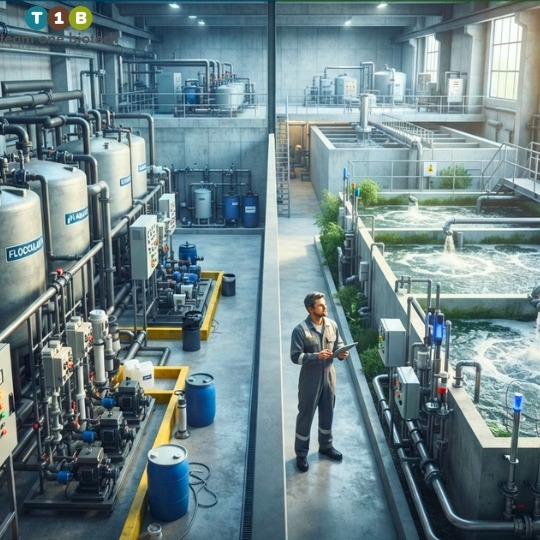
10 Questions to Ask Before Signing a Bioculture Supply Contract

A facility manager at a mid-sized industrial ETP trusted a supplier’s sales pitch. The presentation was polished, the price was competitive, and the contract was signed within a fortnight. Three months later, a batch arrived underpotent. The microbial population in the aeration tank thinned out, BOD and COD readings climbed, and the effluent failed discharge norms. When the State Pollution Control Board (SPCB) asked for explanations, the manager went back to the contract, only to find there was no enforceable CFU guarantee anywhere in it.

This is not a hypothetical. As a manufacturer supplying bioculture to industrial and municipal plants across India, Team One Biotech has seen versions of this story more than once. The pattern is always the same: a purchasing decision made on price and promises, and a compliance problem that follows.

Choosing a bioculture supplier is not a price negotiation exercise. It is a risk management decision. Your biological treatment supply chain sits directly underneath your regulatory standing, and a weak link in it becomes your problem, not the supplier’s.

The bioculture supplier questions below are not just due diligence. They are your last line of defense before a long-term commitment that directly affects your compliance record. Whether you manage a single ETP, oversee a network of STPs, or lead corporate procurement for wastewater bioculture procurement across multiple sites, these questions apply to you.

Why Bioculture Supplier Evaluation Is a High-Stakes Decision

Why Bioculture Supplier Evaluation Is a High-Stakes Decision

Biological performance is not like buying chemicals or mechanical parts. A pump either works or it does not, and a chemical either meets specification or it does not. A bioculture product is a living system, and a bad batch does not simply underperform. It can destabilize the entire microbial ecosystem in your treatment plant, undoing weeks of acclimatization in days.

There is also the matter of dependency. Once a microbial community is seeded and adapted to your influent, switching products or suppliers mid-cycle is operationally costly. You are not just changing a vendor; you are disturbing a working biological balance.

Finally, there is regulatory exposure. CPCB and SPCB discharge norms are non-negotiable. When a supplier fails, it quickly becomes your compliance failure, with audits, notices, and possible penalties landing on your desk, not theirs.

The 10 Questions You Must Ask Before You Sign

The 10 Questions You Must Ask Before You Sign

Question 1: What Is Your Guaranteed CFU Count Per Batch, and How Is It Verified?

Why it matters: CFU (Colony Forming Units) per gram or milliliter is the only objective measure of product potency. A supplier who cannot guarantee CFU count is selling you a biological unknown. Any serious CFU consistency supplier should treat this question as the baseline, not a favor.

What a good answer looks like: A documented Certificate of Analysis (CoA) for every batch, issued by an accredited laboratory, showing CFU count within a defined, contracted range. The range should be written into the agreement itself, not left in a brochure.

Red flag: Vague language like “millions of CFUs” with no quantifiable floor value and no third-party verification. If the number cannot be measured and enforced, it is marketing, not a specification.

Disclaimer: CFU requirements vary significantly based on plant type, influent load, and treatment objectives. The values acceptable for your facility should be determined in consultation with a qualified environmental engineer.

Question 2: Is There Batch-to-Batch Consistency, and What Is Your Deviation Tolerance?

Why it matters: Biological treatment systems thrive on stability. Inconsistent microbial populations between batches cause unpredictable treatment efficiency, which can be worse than no dosing at all. Your operators tune dosing around expected performance, and a batch that behaves differently from the last one throws that tuning off.

What a good answer looks like: The supplier has documented Standard Operating Procedures (SOPs) for production, with defined acceptable deviation ranges and a replacement or credit policy when deviations occur. Ask to see how consistency is monitored across production runs, not just at final dispatch.

Red flag: No SOP documentation, or claims of “natural variation” used to justify inconsistency. Biology is variable, but a competent manufacturer controls that variability. It does not excuse it.

Question 3: Are Your Microbial Strains Patented or Proprietary? Can You Provide Documentation?

Why it matters: Proprietary, well-characterized strains backed by patent or trade secret documentation indicate genuine R&D investment. They also reduce the risk of contaminated, substituted, or diluted cultures, a risk that rises when a supplier is simply repackaging someone else’s product.

What a good answer looks like: Documented strain identity (genus, species, and function), the rationale behind the proprietary blend, and ideally, performance data for those strains under varying conditions such as temperature swings, salinity, or shock loads.

Red flag: A refusal to share any strain documentation, or generic descriptions like “naturally occurring bacteria” with no further characterization. If the supplier cannot tell you what is in the product, you cannot predict what it will do in your tank.

Question 4: What Is the Shelf Life of Your Product, and Under What Storage Conditions?

Why it matters: A bioculture product that degrades before application is money spent on dead biology. Shelf life directly determines your procurement planning windows and inventory risk, particularly for plants with seasonal load variation or irregular dosing schedules.

What a good answer looks like: A clearly stated shelf life on the label and in the contract, with storage temperature requirements, humidity guidelines, and a performance guarantee tied to proper storage. The supplier should also specify how potency is expected to change over the shelf-life window, not just the expiry date.

Red flag: Shelf life stated verbally but not written into the contract, or no guarantee clause if the product fails before expiry under correct storage. A verbal promise has no value in a dispute.

Disclaimer: Shelf life performance may vary based on local storage infrastructure and ambient conditions at individual facilities.

Question 5: What Technical Support Do You Provide Post-Supply, and What Is Your SLA?

Why it matters: Bioculture is not a set-and-forget input. Dosing, acclimatization protocols, and troubleshooting all require ongoing technical engagement, especially during plant startup or upset conditions. When your MLSS drops or foaming appears at 2 a.m., you need a technical team that responds, not a sales representative who has moved on to the next account.

What a good answer looks like: A documented Service Level Agreement (SLA) for on-site or remote technical support, with defined response time windows and escalation protocols. It should specify who you call, how quickly they respond, and what happens if they do not.

Red flag: Technical support offered enthusiastically during the sales pitch but not written into the contract. If support is not in the document, it is not part of the deal.

Team One Biotech includes post-supply technical support as a standard commitment, not an afterthought. Talk to our team to understand what that looks like for your plant.

Question 6: How Do You Handle Supply Disruptions or Force Majeure Events?

Why it matters: A wastewater treatment plant cannot pause operations. Supply disruptions, whether from manufacturing issues, logistics failures, or seasonal raw material constraints, must carry contractual remedies. Without them, you absorb the entire operational consequence of a supplier’s problem.

What a good answer looks like: A written contingency plan in the contract, including alternate sourcing provisions, priority supply clauses, advance notice requirements, and compensation terms for delays. Ask where the supplier manufactures and whether production depends on a single facility.

Red flag: Contract language that completely indemnifies the supplier for all disruptions without any obligation to mitigate. Force majeure should cover genuine, unforeseeable events, not ordinary supply chain failures dressed up in legal language.

Question 7: What Are the Liability Clauses If the Product Fails to Perform?

Why it matters: If a bioculture product fails, resulting in an effluent discharge violation, regulatory action, or treatment upset, who bears the cost? This must be answered before signing, not after. In an ETP bioculture contract, the liability section is often the most heavily one-sided clause, and it is frequently the least scrutinized.

What a good answer looks like: Performance-linked liability clauses, clear definitions of what constitutes “failure,” exclusions that are reasonable and narrow, and a dispute resolution mechanism that does not require years of litigation. The contract should link supplier accountability to measurable outcomes such as CoA compliance.

Red flag: Blanket “no liability” clauses or vague “best effort” language with no performance benchmark attached. A supplier confident in their product has no reason to avoid accountability for it.

Question 8: Does Your Product Comply With CPCB and SPCB Guidelines for Biological Additives?

Why it matters: Regulatory compliance is non-negotiable. Using a bioculture product that does not align with national or state pollution control board guidelines can expose your facility to audit risk and questions during inspections. CPCB compliance bioculture documentation should be available on request, not hunted down after a notice arrives.

What a good answer looks like: The supplier is familiar with CPCB and SPCB frameworks and can provide documentation of product composition confirming it does not include restricted organisms or prohibited components. They should also understand that requirements can differ between states and be able to speak to your SPCB’s specific expectations.

Red flag: The supplier is unfamiliar with Indian environmental regulations, or dismisses compliance questions as irrelevant to their product category. A supplier that does not understand your regulatory environment cannot protect you within it.

Question 9: Can You Provide References From Similar Industrial or Municipal Plants?

Why it matters: A supplier with a proven track record in plants similar to yours, in terms of influent type, capacity range, and discharge norms, carries meaningfully lower risk than one operating on theoretical claims. Results in a textile ETP say little about performance in a pharmaceutical effluent stream or a municipal STP.

What a good answer looks like: At least two or three verifiable references from ETP or STP operations of comparable complexity, with contact details and a willingness to facilitate a direct conversation. Ask the reference what went wrong at any point and how the supplier responded. That answer is often more revealing than the success story.

Red flag: References that are unavailable, unverifiable, or drawn from completely dissimilar applications. Reluctance to connect you with existing clients is itself information.

Question 10: What Are the Payment, Pricing Escalation, and Renewal Terms?

Why it matters: Long-term contracts with no price escalation caps or unclear renewal terms can expose procurement budgets to unpredictable cost increases, especially in a market where fermentation input costs are volatile. A competitive first-year price means little if year-two pricing is open-ended.

What a good answer looks like: A defined pricing structure, a transparent escalation mechanism linked to a published index or capped at a stated ceiling, and renewal terms that require mutual consent rather than automatic renewal. Payment terms should be clear on timelines, advance requirements, and any penalties.

Red flag: Open-ended escalation language or auto-renewal clauses buried in the contract’s fine print. If you need a magnifying glass to find the renewal terms, assume they do not favor you.

Before You Sign: A Final Pre-Contract Checklist

Before You Sign: A Final Pre-Contract Checklist

Before any signature goes on a bioculture contract, your procurement team should have the following in hand. Use this as your bioculture procurement checklist, and share it with legal and technical colleagues alike:

  • Verified CoA with an agreed CFU range
  • Signed SLA with response time commitments
  • Liability and performance clause review completed
  • CPCB/SPCB documentation confirmed
  • Minimum two references validated directly
  • Shelf life guarantee in writing
  • Price escalation cap confirmed
  • Contingency supply clause included
  • Strain documentation reviewed
  • Legal review of force majeure terms

This is not bureaucratic box-ticking. It is operational self-defense. Every item on this list corresponds to a failure that has cost a real plant real money, time, or regulatory goodwill. A procurement process that skips these steps is not faster. It simply moves the cost to a later date, usually a worse one.

If your team is also running a broader bioculture vendor evaluation across multiple suppliers, apply the same checklist to each one. The comparison will tell you more than any price sheet.

The Right Supplier Is a Long-Term Partner, Not Just a Vendor

The Right Supplier Is a Long-Term Partner, Not Just a Vendor

The best bioculture supplier relationships are partnerships, not transactional exchanges. The questions in this article are not adversarial. They are the foundation of a relationship built on accountability and trust. A supplier who welcomes these questions, answers them directly, and puts the answers in writing is a supplier who expects to be around for the long term.

Team One Biotech approaches supply from a specific position: as a manufacturer, not a distributor. That means we control every variable in the chain, from strain development to batch testing to delivery. There is no intermediary to blame and no gap in accountability. When you ask us about CFU verification, batch consistency, or liability, you are asking the people who actually make the product.

If a supplier cannot answer these questions confidently and in writing, that is your answer. Contact Team One Biotech to understand how we approach every supply contract: with transparency, documented performance guarantees, and a technical team that stays with you after the ink dries. Request a consultation today.

Looking to improve your ETP/STP efficiency with the right bioculture?
Talk to our experts at Team One Biotech for customised microbial solutions.

Contact: +91 8855050575

Email:  sales@teamonebiotech.com

Visit: www.teamonebiotech.com

Discover More on YouTube – Watch our latest insights & innovations!-

Connect with Us on LinkedIn – Stay updated with expert content & trends!
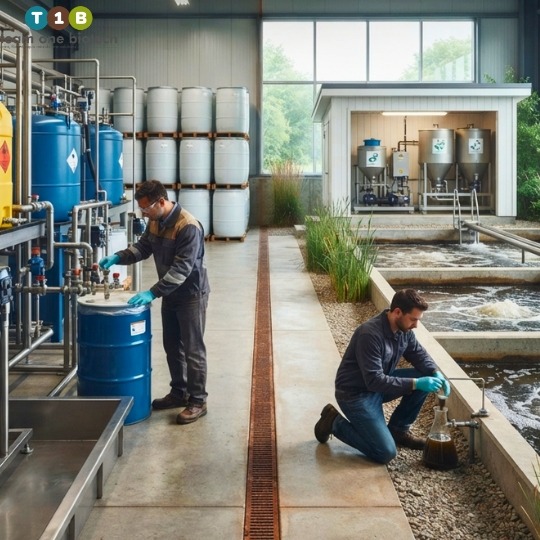
Bioculture Manufacturer vs Trader: How to Tell Who Actually Makes Your Bioculture

You order a bioculture for your ETP, dose it as instructed, and see COD and BOD come down as expected. Three months later you place a repeat order with the same vendor, under the same product name, at the same dosing rate. This time the aeration tank is sluggish, the sludge looks different, and your effluent numbers drift toward the limit.

You call the vendor. The answer is vague. Someone mentions “batch variation,” someone else suggests you increase the dose, and nobody can tell you what changed.

This is more common than most plants admit, and the cause is often not your process. It is your source. A large share of the companies selling bioculture products in India are traders or repackagers, not manufacturers, even when their brochures, websites, and sales pitches suggest otherwise.

The stakes are real. The wrong source can mean inconsistent COD and BOD reduction, unplanned downtime, higher consumption of product to compensate for weak performance, and compliance exposure under CPCB and SPCB norms. The difference between a bioculture for wastewater treatment manufacturer vs supplier is rarely visible on a label.

This guide gives you a practical framework to find out who actually makes your ETP bioculture source, and what to ask before you sign the next purchase order.

Why the Manufacturer vs Trader Distinction Matters More Than You Think

Why the Manufacturer vs Trader Distinction Matters More Than You Think

Procurement teams often treat bioculture as a commodity: same category, same specification sheet, so compare on price and move on. That logic works for chemicals with a fixed composition. It fails for a living product, where the strain, the fermentation conditions, and the handling history decide whether the culture works at all.

The Supply Chain Reality of Bioculture Products in India

Most bioculture products reaching Indian ETPs pass through at least one intermediary. A trader buys microbial consortia in bulk from a domestic or overseas producer, packs or relabels the material under a proprietary brand, and resells it. In many cases, nothing about the product is modified.

That arrangement is not illegal, and some traders are honest about it. The problem is what the buyer loses. A trader has no control over strain consistency, fermentation batch quality, or the storage conditions the product experienced before it reached the warehouse. When the culture underperforms, the trader cannot tell you why, because the trader never made it.

Disclaimer: The supply chain structure described here reflects general industry patterns and may vary significantly depending on product category, geography, and vendor. Buyers are advised to conduct independent verification for each procurement.

What Happens When Your Bioculture Is Repackaged, Not Manufactured

What Happens When Your Bioculture Is Repackaged, Not Manufactured

Four problems show up repeatedly when plants buy repackaged cultures.

Viability erodes before dosing. Microbial cultures are sensitive to temperature, moisture, and time. Every additional handoff, warehouse, and transport leg adds risk that viable cells are lost before the product reaches your dosing point.

The paperwork describes someone else’s batch. The Certificate of Analysis (COA) a repackager supplies usually reflects the original producer’s batch, not necessarily the material in your drums. Lot numbers, testing dates, and even the testing laboratory may not match what you received.

You cannot customise. If your wastewater has high TDS, high salinity, elevated phenols, or heavy surfactant load, you need a consortium built or adjusted for that matrix. A trader sells what is in stock. There is no one to ask for a different microbial ratio.

You have no escalation path. When your ETP results deviate, you need a microbiologist who can look at your influent data and your dosing log. A trader passes your question up the chain to its own supplier, and that adds days to a problem that costs you every hour it continues.

If you have ever received a bioculture that performed inconsistently without explanation, it is worth tracing where it was actually produced. Our technical team can walk you through a vendor audit checklist. Contact our technical team to start.

The 6-Point Verification Framework: Real Manufacturer vs Trader

The 6-Point Verification Framework: Real Manufacturer vs Trader

The framework below is built for plant managers and environmental engineers. Use it as a set of questions to put to any vendor before a purchase order is signed. A genuine manufacturer will answer all six without hesitation. A trader will struggle with most of them.

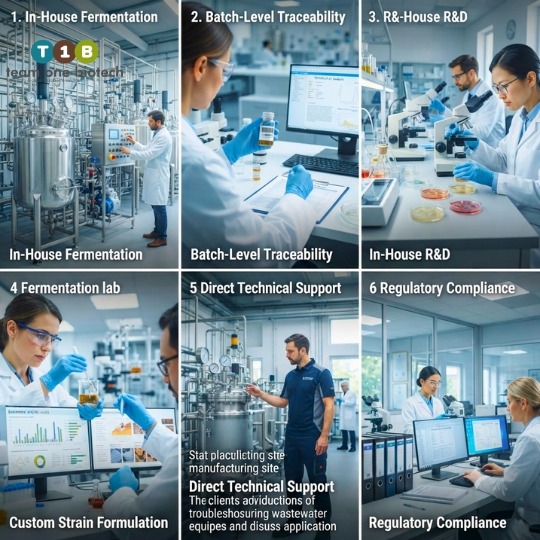
1. In-House Fermentation Infrastructure

A real bioculture manufacturer operates fermentation vessels, bioreactors, and controlled incubation environments on its own premises. Production is something they do, not something they outsource.

Ask directly: can we visit the production unit? Is the facility registered and open to inspection?

A trader has a warehouse, not a production floor. Evasive answers about the facility location, or a sudden shift to “our partner facility,” tell you what you need to know.

How to verify: Request a facility walk-through, or ask for a third-party facility audit report. Genuine manufacturers treat this as routine, because buyers who ask are the buyers they want to keep.

2. Batch-Level Traceability and COA Authenticity

Every batch from a genuine manufacturing run should carry a unique batch ID that traces to a specific production event. A proper COA lists strain identity, viable count at production, production date, expiry date, and the testing methodology used.

Repackagers typically pass on COAs from the original producer. The tell is in the details: lot numbers that differ from the label on your drum, testing laboratories unrelated to the vendor, and dates that do not line up with your delivery.

How to verify: Ask the supplier to map the batch number on your COA to their own internal production records. A manufacturer can do this in minutes, because it made the batch. A repackager cannot, because the records belong to someone else. This single check addresses batch traceability for bioculture better than any brochure claim.

3. In-House R&D and Microbiology Capability

Real manufacturers employ microbiologists, maintain a culture library, and carry out strain development or enrichment internally. This is what makes technical conversations useful. When you describe your effluent, someone on the other end understands the metabolic pathways involved and can propose a response.

A trader has no in-house R&D function. Their technical knowledge is whatever the original producer’s datasheet says.

How to verify: Ask for a list of in-house scientific personnel and their qualifications. Ask whether the company holds any published or proprietary research on its microbial consortia. You are not looking for a long list of papers, only evidence that the science is done in-house.

4. Custom Strain Formulation for Specific Wastewater Profiles

No two ETPs are identical. COD loads, pH ranges, temperature profiles, and effluent composition differ between a textile unit, a pharmaceutical plant, a food processor, and a municipal STP. Even within one site, influent changes with production schedules and seasons.

A manufacturer can develop or adapt a consortium for your wastewater matrix. A trader offers catalogue products with fixed formulations and has no ability to change them.

Disclaimer: Customisation timelines and technical feasibility vary depending on wastewater complexity and the manufacturer’s existing strain library. Buyers should request a site-specific technical assessment before procurement.

How to verify: Ask what the vendor would change in the formulation for your specific effluent, and why. A manufacturer answers with specifics. A trader answers with a product name.

5. Direct Technical Support and Post-Sale Accountability

When your ETP underperforms, you need a microbiologist, not a salesperson. Real manufacturers provide direct technical support: dosing protocol design, troubleshooting under varied influent conditions, and periodic performance reviews.

Traders escalate to their own supplier, which delays the response and dilutes accountability. When something goes wrong, you have no one to hold responsible, because the trader did not make the product and the producer has no contract with you.

How to verify: Ask who your technical point of contact will be after the sale, and check their credentials. If the answer is the same person who quoted the price, you have your answer.

6. Regulatory Compliance Documentation and Statutory Alignment

Bioculture products used in industrial and municipal ETPs must align with applicable CPCB and SPCB guidelines for biological additives. A genuine manufacturer maintains current statutory documentation, safety data sheets, and the relevant clearances for its own facility and products.

Repackagers often inherit documentation from the original producer, and that documentation may not reflect the product on the label. For a plant that answers to a pollution control board, this gap is a liability. Compliance for a CPCB compliant bioculture depends on the documentation chain being intact from production to your gate.

How to verify: Request all compliance documents and cross-reference the label details against the COA and the statutory filings. Product names, strain descriptions, and manufacturer names should match across every document. Where they do not, ask why before you buy.

Red Flags That Signal You Are Dealing With a Trader, Not a Manufacturer

Red Flags That Signal You Are Dealing With a Trader, Not a Manufacturer

Some warning signs show up before you ever request an audit. If several of these apply to your current vendor, a closer look is overdue.

  • They cannot provide a facility address, or they resist a site visit request.
  • Their COA batch numbers do not align with their own dispatch records.
  • They offer every product category with no specialisation in microbiology.
  • Pricing fluctuates significantly between orders without a clear explanation.
  • Their technical team amounts to the sales team.
  • Product labels describe microbial content in vague terms, with no strain identification.
  • They cannot explain why their product suits your specific effluent type.
  • Lead times change unexpectedly, which often signals dependence on a third-party producer.

A bioculture repackager rarely shows all of these at once. One or two is enough to justify a deeper review.

Do not wait for a compliance failure to trigger a vendor review. Download our Bioculture Vendor Verification Checklist, or speak directly with our technical team to audit your current supply source before your next procurement cycle.

Manufacturer vs Trader at a Glance

CriteriaReal ManufacturerTrader / Repackager
Production facilityIn-house fermentation and incubation, open to inspectionWarehouse or storage only
Batch traceabilityBatch ID maps to own production recordsCOA reflects original producer’s batch
R&D capabilityDedicated microbiologists and culture libraryNone; sells available stock
CustomisationFormulation adapted to your effluentFixed catalogue products
Technical supportDirect access to microbiology teamEscalates to upstream supplier
Compliance documentationOwns the full documentation chainInherits documents that may not match the label
Consistency across ordersControlled by one production processVaries with sourcing from different producers

Why Procurement Heads and Plant Managers Are Shifting to Direct Manufacturer Relationships

More buying teams now go straight to the source, and the reasons are practical.

Cost over a procurement cycle. Direct sourcing removes the trader’s margin. Over a full cycle, that can reduce your per-unit cost, though the extent depends on product category, volume, and geography.

Batch consistency. With no intermediate handling, repackaging, or storage gap, the product that leaves the fermenter is the product that reaches your dosing tank. That makes performance easier to predict and easier to diagnose when it slips.

Technical alignment. Procurement teams working directly with a manufacturer can co-develop specifications tied to seasonal shifts or load variations in influent quality. That is not possible when the specification belongs to someone two steps removed.

Compliance confidence. A manufacturer owns its documentation from production through dispatch. As regulatory scrutiny on biological additives in effluent treatment increases, documentation integrity has moved from best practice to procurement requirement.

Disclaimer: Cost savings and performance outcomes described here are indicative and based on general industry observations. Actual results depend on plant configuration, influent characteristics, dosing protocols, and operational parameters specific to each ETP or STP.

Frequently Asked Questions

How do I verify that a bioculture supplier is a genuine manufacturer and not a trader?

Ask for three things: a facility visit, batch-traceable COA documentation tied to the supplier’s own production records, and a named technical contact with microbiology credentials. A repackager will be unable to provide all three.

Can a trader provide bioculture products that are compliant with CPCB and SPCB standards?

A trader may carry products that originated from a compliant manufacturer. However, documentation integrity, strain viability, and accountability in case of non-compliance all weaken when an intermediary is involved. Buying from a direct manufacturer removes that layer of risk.

Is customised bioculture formulation available from manufacturers for specific industrial effluents?

Yes. Manufacturers with in-house R&D can design microbial consortia for specific wastewater matrices, including textile effluent, pharmaceutical waste, food processing streams, and high-TDS industrial discharge. Traders cannot offer this service.

What documents should I request before finalising a bioculture procurement decision?

At minimum, request a batch-traceable COA, statutory compliance documentation under applicable CPCB and SPCB guidelines, a Safety Data Sheet, and documentation of the manufacturing facility’s registration or accreditation.

Why do bioculture products from traders sometimes show inconsistent performance across batches?

Traders source from multiple producers depending on availability, pricing, and stock. Each producer may use different strains, fermentation parameters, and quality thresholds. The buyer receives a different product under the same label with each order.

Know Who Is Behind Your Bioculture Before Your ETP Depends on It

The difference between a manufacturer and a trader is not cosmetic. It determines product integrity, the quality of technical support you receive, and how defensible your records are when a regulator asks questions.

You carry real accountability for ETP performance and compliance. The vendor behind your bioculture should carry the same level of accountability, and the six checks in this guide are how you find out whether they do.

Team One Biotech is a manufacturer with in-house fermentation, dedicated microbiology R&D, batch-traceable documentation, and direct technical support. We are not a catalogue company.

At Team One Biotech, we manufacture. We do not resell. Every product we deliver carries full batch traceability, direct technical accountability, and formulations built around real effluent challenges. Contact our technical team today to verify your current bioculture source or to discuss your plant’s specific requirements.

Values are indicative and vary depending on plant configuration, influent characteristics, and operational parameters.

Looking to improve your ETP/STP efficiency with the right bioculture?
Talk to our experts at Team One Biotech for customised microbial solutions.

Contact: +91 8855050575

Email:  sales@teamonebiotech.com

Visit: www.teamonebiotech.com

Discover More on YouTube – Watch our latest insights & innovations!-

Connect with Us on LinkedIn – Stay updated with expert content & trends!
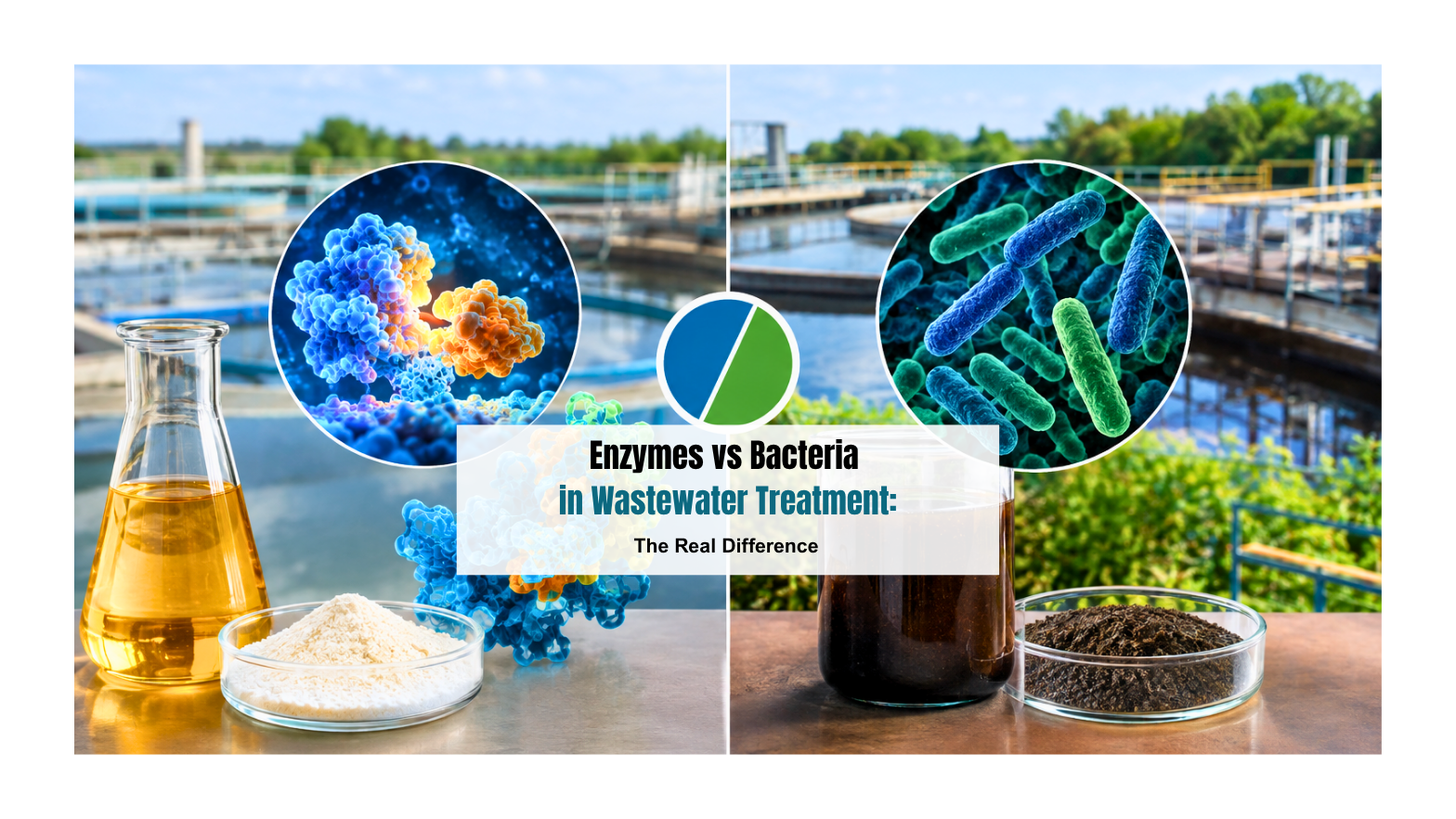
Enzymes vs Bacteria in Wastewater Treatment: The Real Difference

It is two weeks before your CPCB compliance audit. Your BOD readings have spiked. Your COD is running higher than it should. Someone on your team suggests adding an enzyme-based product because they heard it works fast. Someone else insists you need a fresh bacterial dosing cycle. You are standing in front of your aeration tank trying to decide which advice to follow, and the clock is ticking.

This is not a hypothetical. This is Tuesday morning at hundreds of industrial ETPs across India.

The problem is not that plant managers make bad decisions under pressure. The problem is that most people in the industry have never been clearly told what enzymes actually do versus what bacteria actually do inside a treatment system. They are sold as alternatives. They are marketed in similar-looking packaging. But they are fundamentally different tools that serve fundamentally different purposes.

This article will give you a technically honest, operator-level explanation of the enzymes vs bacteria wastewater debate, what each one does, where each one works, where each one fails, and how to combine them when your ETP design calls for it.

What Enzymes Actually Do in Wastewater Treatment

What Enzymes Actually Do in Wastewater Treatment

Enzymes Are Catalysts, Not Organisms

Let us start with the most important thing to understand about enzymes: they are not alive.

Enzymes are biological molecules, specifically, proteins, that speed up chemical reactions. In a wastewater context, they work by binding to specific organic compounds and breaking them apart into simpler molecules. A lipase enzyme attacks fats. A protease targets proteins. An amylase goes after starches. Each enzyme has a specific job, and it can only do that job.

Here is the critical limitation: enzymes do not reproduce. Once an enzyme has done its work, it either gets consumed in the reaction, washed out of the system, or, and this is the part that catches most operators off guard, it gets denatured.

Denaturation is what happens when an enzyme loses its functional shape due to changes in temperature, pH, or chemical exposure. Think of it like this: if an enzyme is a specialized wrench designed to fit a specific bolt, denaturation means the wrench gets bent. It no longer fits. It no longer works. And unlike a bacterial population, it cannot grow a replacement.

In plant-floor language: if your effluent temperature runs high, if your pH swings outside the operating window, or if a toxic chemical hit enters your inlet, your enzyme dose is gone. You are starting from zero again at the next dosing cycle.

A useful way to think about enzymes is this: they are specialized tools, not workers. They do one job fast, but they wear out, they cannot adapt, and they cannot replace themselves.

Where Enzymes Deliver Real Value

That said, dismissing enzymes entirely would be a mistake. Used correctly and in the right location within your treatment system, they deliver genuine value.

Enzymes excel in pre-treatment applications, grease traps, screen channels, and inlet zones where you need fast breakdown of specific compounds before the effluent reaches your biological treatment stage. In food processing ETPs, dairy effluent systems, slaughterhouse waste treatment, and textile facilities dealing with heavy grease loads, enzymatic pre-treatment can significantly reduce the burden on downstream bacterial systems.

They are also useful for short-term shock load management. If your plant receives an unexpected slug of high-fat or high-protein effluent, a batch discharge from a production line that ran over, for example, targeted enzyme dosing at the inlet can begin breaking down those compounds quickly, buying time for your biological system to absorb the load without crashing.

But the operative phrase in both of these use cases is targeted and temporary. Enzymes solve a specific problem at a specific point. They do not build anything lasting inside your treatment system.

Not sure which enzyme type suits your effluent profile? Talk to Team One Biotech’s technical team for a site-specific recommendation.

What Live Bacteria Do Differently, and Why It Matters for Long-Term Compliance

What Live Bacteria Do Differently, and Why It Matters for Long-Term Compliance

Bacteria Are Self-Replicating Biological Systems

Now here is where biological wastewater treatment fundamentally changes character.

Live bacteria are not tools. They are workers, and workers who train themselves on your specific waste composition over time.

Bacteria consume organic matter in your effluent as a food source. As they consume, they reproduce. As they reproduce, they establish a living biomass, the activated sludge, biofilm, or suspended microbial community that does the sustained treatment work inside your biological tank. This biomass, once established, becomes a biological infrastructure. It does not disappear between dosing cycles. It does not get consumed. It grows, adapts, and, under the right operating conditions, becomes increasingly effective at processing your specific effluent stream.

Here is the distinction that most procurement teams miss entirely: bacteria produce their own enzymes as part of their metabolic process. A thriving bacterial population inside your treatment system is not just consuming organic matter, it is continuously synthesizing and secreting the specific enzymes needed to break down whatever it is feeding on. The bacteria read your effluent, adapt their metabolic toolkit, and produce exactly what is needed.

This is why a well-established bacterial consortium consistently outperforms standalone enzyme dosing in long-term biological wastewater treatment. You are not adding a fixed amount of one type of catalyst and hoping it covers everything. You are building a living, self-sustaining biological system that continuously generates its own catalytic capacity.

The process of acclimatization matters enormously here. When you introduce the right bacterial strains into an ETP and maintain appropriate operating conditions, those bacteria gradually adapt to the specific chemical composition of your effluent. Over weeks, the biomass becomes increasingly efficient at handling your particular mix of organics, pH fluctuations, and industrial contaminants. That adaptive capacity is something no enzyme product can replicate.

Why Bacteria Sustain BOD, COD, and TSS Reduction Under Load Fluctuations

This brings us to the compliance dimension, which, for most ETP operators reading this, is the one that matters most.

CPCB and SPCB discharge norms are not evaluated on your best day. They are evaluated consistently, across inspection windows, across seasonal load variations, and across production cycle fluctuations. Consistent BOD, COD, and TSS reduction is not something you can achieve with a product that resets between applications.

A well-established microbial population handles fluctuating organic loads far better than enzyme dosing alone, precisely because the bacteria can respond dynamically to changing conditions. When your organic load increases, a healthy biomass has the capacity to accelerate its metabolic activity. When load drops, the population adjusts. This is biological buffering, and it is the mechanism behind reliably meeting CPCB and SPCB discharge norms month after month.

Understanding which bacterial types are working in your system also matters for ETP bacteria dosing decisions. Aerobic bacteria, operating in the presence of oxygen, are the primary drivers of BOD reduction in aeration tanks. Facultative bacteria can operate under both aerobic and low-oxygen conditions, giving them versatility in systems with variable aeration. Anaerobic bacteria, operating without oxygen, play a critical role in sludge digestion and the breakdown of more complex organic compounds in specific treatment zones. The right bacterial consortium brings all of these functional groups together in proportions matched to your treatment design and effluent characteristics.

Team One Biotech’s consortium bacterial formulations are designed for Indian industrial effluent conditions. Get in touch to understand what your ETP needs.

Enzymes vs Bacteria Wastewater, A Direct Functional Comparison

Enzymes vs Bacteria Wastewater, A Direct Functional Comparison

Let us put the two approaches side by side in terms that matter on the plant floor.

Mechanism of action: Enzymes work through catalysis, they accelerate the breakdown of specific compounds without consuming them directly and without being alive. Bacteria work through biological consumption, they eat organic matter, reproduce, and sustain a living treatment system.

Duration of effect: Enzyme activity is short-term and tied directly to each dosing event. Once the dose is consumed, degraded, or washed out, the effect ends. Bacteria, once established, provide sustained treatment that continues and improves over time.

Self-replication: Enzymes do not reproduce. Their concentration in your system only goes up with dosing and only goes down with time, temperature, pH, or chemical exposure. Bacteria reproduce under favorable conditions, meaning your biological capacity can grow and self-sustain.

Adaptability to load changes: Enzymes have fixed specificity. A lipase dose added in response to a fat load does nothing when the next shock load carries primarily protein compounds. Bacteria, particularly diverse consortium formulations, adapt metabolically to shifting influent compositions over time.

Substrate range: Enzyme products target narrow compound classes, this specificity is useful in pre-treatment but limiting in full biological treatment. Bacterial consortia handle a broad range of organic substrates simultaneously, including many complex industrial compounds.

Compliance sustainability: Enzyme-only treatment strategies produce episodic results. They can bring numbers down before an inspection but cannot maintain consistent performance across the full compliance period. A properly seeded and maintained bacterial population provides the consistent, sustained BOD COD TSS reduction that CPCB and SPCB discharge norms require.

Ideal use case: Enzymes belong in pre-treatment, grease traps, shock load response, and targeted compound breakdown at specific process points. Bacteria belong in the core biological treatment stage, and in any situation where long-term, compliant, stable effluent quality is the objective.

Cost structure: Enzyme products often carry higher per-application costs and require repeated purchase cycles because the effect does not compound. Bacterial products, invested in properly at startup and maintained with periodic dosing, deliver progressively better performance at lower per-unit cost as the biomass establishes and strengthens.

Mistake: Using Enzymes as a Long-Term Compliance Strategy

Mistake: Using Enzymes as a Long-Term Compliance Strategy

This is worth saying directly because it happens all the time, particularly in the weeks before a regulatory inspection.

A plant is struggling. BOD and COD are elevated. An enzyme-based product gets recommended because the results are visible and fast. Numbers improve. The inspection passes. And then, over the following weeks and months, the numbers creep back up, because nothing was built, nothing adapted, and nothing sustained.

The fundamental risk is this: enzymes provide visible short-term improvement but they do not build the biological resilience your ETP needs for sustained, consistent compliance. They treat the symptom without addressing the underlying biological treatment capacity of your system.

CPCB and SPCB discharge norms exist to ensure that effluent quality is consistently maintained, not just managed during audit windows. A system that performs well for three weeks around an inspection and struggles for the remaining forty-nine weeks of the year is a compliance liability, not a compliant operation.

The decision between an enzyme based cleaner vs bacteria is not always a binary choice, but the roles must be correctly understood and correctly assigned. Enzymes applied to the pre-treatment stage while a strong bacterial consortium manages the biological stage, that is a treatment design, and it works. Enzymes substituting for bacteria in the biological stage because they are faster to show results, that is a risk strategy, and regulators eventually see through it.

The industry-standard approach for compliant, stable ETP performance is a properly designed bacterial consortium, supported by strategic enzyme application where pre-treatment conditions genuinely call for it. Everything else is a workaround.

If your ETP is struggling to maintain stable effluent quality ahead of compliance checks, do not rely on enzyme applications alone. Speak with Team One Biotech’s bioremediation experts to design a treatment protocol built for your load profile.

When to Use Enzymes, When to Use Bacteria, and When to Use Both

This is the practical decision framework that most content on this topic fails to provide clearly. Here it is.

Use Enzymes When:

  • You need rapid breakdown at the inlet or pre-treatment stage, before biological treatment begins
  • You are managing a one-time shock load from a high-fat, high-protein, or high-starch effluent event
  • Your grease trap or screen channel requires targeted, fast-acting intervention
  • You need to reduce solids or odor at a specific process point without waiting for biological establishment

Use Bacteria When:

  • You need consistent, long-term BOD, COD, and TSS reduction that holds up across production cycles and inspection periods
  • Your ETP must reliably meet CPCB and SPCB discharge norms on an ongoing basis, not just during audits
  • You are starting up a new biological treatment system or restarting one after a shutdown
  • Your existing biomass has crashed, due to a chemical shock, an antibiotic-carrying effluent stream, a toxic load, or system neglect, and needs to be rebuilt from a reliable seed culture

Use Both When:

  • Your influent carries complex compounds, heavy fats, recalcitrant proteins, industrial surfactants, that benefit from enzymatic pre-breakdown before the bacterial stage can process them efficiently
  • You are managing a multi-stage ETP where distinct pre-treatment and biological treatment zones exist and each can be optimized separately
  • You are dealing with a severe organic load that temporarily exceeds your biomass capacity, and enzymatic support at the inlet gives your bacterial system the breathing room it needs to recover

Frequently Asked Questions

Q1: Can enzymes replace bacteria in wastewater treatment?

No. Enzymes catalyze specific reactions but they do not replicate, they do not adapt, and they do not build a stable biological infrastructure inside your treatment system. Bacteria are the core of sustained biological wastewater treatment. Enzymes can support and enhance bacterial activity, particularly in pre-treatment stages, but they cannot substitute for a live, established microbial population in a compliant ETP. Any strategy that uses enzymes in place of bacteria in the biological treatment stage is a short-term workaround, not a treatment solution.

Q2: How long does it take for bacteria to establish in an ETP?

Establishment timelines depend on the bacterial strain, the operating conditions in your system, temperature, influent composition, and the health of any existing biomass. Every ETP is different, and a meaningful answer requires a site-specific assessment. What is consistent across most industrial systems is that proper bacterial seeding followed by a managed acclimatization period produces a significantly more stable and effective biomass than unplanned or reactive dosing.

Q3: Are enzyme based cleaners and bacteria the same product?

No. Enzyme-based cleaners contain isolated biological catalysts, proteins that perform specific chemical breakdown functions. Bacterial products contain live or spore-forming microorganisms that, once introduced into your treatment system, establish themselves, reproduce, and build a self-sustaining biological treatment community. They serve different functional roles at different stages of treatment and are not interchangeable. Using one in place of the other, without understanding this distinction, is one of the most common and costly mistakes in industrial ETP management.

Q4: Do bacteria produce enzymes naturally?

Yes, and this is one of the most important points in the entire enzymes vs bacteria wastewater discussion. Live bacteria synthesize and secrete enzymes as part of their normal metabolic activity. When you build a healthy bacterial consortium inside your treatment system, you are not just adding organisms that consume organic matter. You are building a biological system that continuously produces exactly the enzymes it needs, calibrated to the specific compounds in your effluent. This is why a well-established bacterial population consistently outperforms standalone enzyme dosing over any sustained treatment period.

Q5: How do I know if my ETP needs enzymes, bacteria, or both?

The right approach depends on your effluent characteristics, your treatment stage design, the current health of your biomass, your hydraulic retention time, and your specific CPCB or SPCB compliance targets. There is no universal answer that applies across all industrial ETPs. A technical assessment from a qualified bioremediation specialist, one who understands Indian industrial effluent conditions and regulatory requirements, is the most reliable way to determine the optimal treatment protocol for your specific operation.

Know What You Are Treating Before You Choose What to Add

Enzymes and bacteria are not rivals competing for the same role in your ETP. They are fundamentally different tools with different mechanisms, different timescales, and different outcomes.

Enzymes are fast, specific, and temporary. They belong in the right places, pre-treatment, grease management, shock load response, and they deliver real value there. But they do not build anything, they do not adapt, and they cannot carry the compliance burden of sustained biological wastewater treatment.

Bacteria are slower to establish but they build something real: a living, self-sustaining biological system that improves over time, adapts to your specific effluent composition, and delivers the consistent BOD, COD, and TSS reduction that CPCB and SPCB discharge norms require. ETP bacteria dosing, done correctly with the right consortium formulations and a proper acclimatization plan, is not a quick fix, it is a treatment infrastructure.

Using the wrong tool for the wrong stage of treatment is not just a technical inefficiency. It is a compliance risk. And in a regulatory environment where discharge norms are tightening and inspection frequency is increasing, understanding this distinction is no longer optional for serious ETP and STP operators.

Team One Biotech manufactures bioremediation solutions built for Indian industrial effluent realities. Whether you need a bacterial consortium, enzymatic pre-treatment support, or a combined protocol, our technical team will assess your ETP and recommend what actually works. Contact us today.

Looking to improve your ETP/STP efficiency with the right bioculture?
Talk to our experts at Team One Biotech for customised microbial solutions.

Contact: +91 8855050575

Email:  sales@teamonebiotech.com

Visit: www.teamonebiotech.com

Discover More on YouTube – Watch our latest insights & innovations!-

Connect with Us on LinkedIn – Stay updated with expert content & trends!
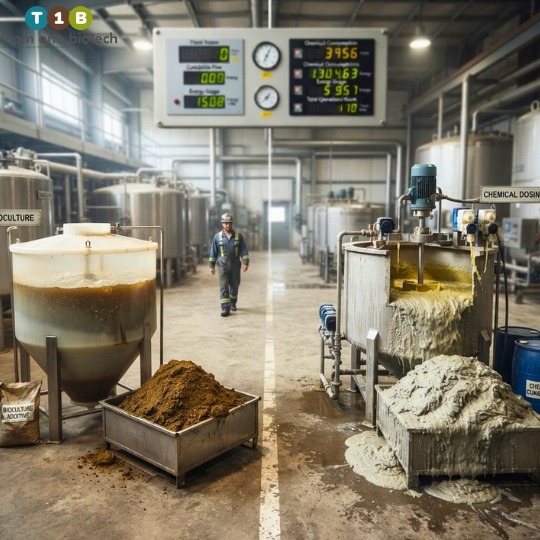
Reading a Bioculture COA: What Each Parameter Actually Means

Why Most COAs Are Misread, And What It’s Costing Your Plant

Most plant operators have experienced this: a bioculture product arrives, the COA is attached, and everyone nods at the numbers, but quietly, no one is entirely sure what they are actually looking at. The lot number gets recorded. The document gets filed. And the product gets dosed into the system based largely on trust, trust that the vendor’s numbers are accurate, trust that someone else in the chain has verified them, trust that it will simply work.

That trust is sometimes well-placed. Often, it is not.

Vendors regularly present bioculture COA documents in dense, column-heavy formats that prioritize the appearance of rigor over actual readability. Parameters are listed without context. Units are inconsistent. Reference ranges are missing. And because most procurement teams are not staffed with microbiologists, the document gets treated as a formality rather than the critical verification tool it was designed to be.

The cost of this gap is real. A bioculture product with degraded viable counts will underperform in your biological treatment stage. Inadequate BOD and COD reduction follows. Discharge parameters begin to drift. And when your effluent fails to meet CPCB or SPCB norms, the penalty lands on your facility, not on the vendor who supplied a product you never properly verified.

The certificate of analysis bioculture suppliers provide is your first line of defense in that chain. Most people are not reading it correctly. This blog changes that. Parameter by parameter, here is exactly what a bioculture COA is telling you, and what it means for your plant.

What Is a Certificate of Analysis (COA) for Bioculture?

What Is a Certificate of Analysis (COA) for Bioculture?

A bioculture COA is a vendor-issued document that certifies a specific batch of microbial product has been tested and meets defined quality standards before it leaves the manufacturing facility. That distinction, batch-specific, tested before dispatch, is what separates a genuine COA from marketing literature.

A COA is not a product brochure. It is not a standard specification sheet that applies to every unit ever produced under a given product name. A real certificate of analysis bioculture document will reference a specific lot number, a specific testing date, and results that correspond to that exact batch, because microbial products are living systems, and quality can vary between production runs.

A responsible manufacturer tests every batch independently. They do not issue a blanket COA generated from historical data and applied across months of production. If a supplier cannot show you a lot-specific COA for the batch you are actually receiving, not a sample document, not a reference file, but the one tied to your shipment, that is the first signal to probe further.

When evaluating a new bioculture vendor, always request the COA for the specific batch being supplied. If they hesitate, that hesitation is information.

The Core Parameters in a Bioculture COA, Explained

The Core Parameters in a Bioculture COA, Explained

COA formats differ between manufacturers in layout, terminology, and depth of testing. However, across responsible bioremediation product suppliers, the following parameters appear consistently. These are the ones that determine whether a product will perform, or quietly fail, inside your ETP or STP.

1. Viable Cell Count / Spore Count (CFU/g or CFU/mL)

CFU stands for Colony Forming Units, a measure of how many living, active microbial units are present per gram or per milliliter of the product. When a bioculture COA lists CFU/g or CFU/mL, it is telling you the biological density of what you are about to dose into your system. Higher numbers are not automatically better, but a number that falls significantly below the product’s stated specification is always a problem.

This is the parameter that most directly predicts treatment performance. A product with a lower-than-specified viable count will underperform in your biological treatment stage. The microbial population you are introducing into the reactor will be insufficient to establish the colony density needed for effective BOD and COD breakdown. You may dose correctly by volume and still see degraded performance, because the product itself delivered fewer active organisms than it claimed.

Viable cell count is also the parameter most sensitive to mishandling. It degrades with exposure to heat, moisture, UV light, and time. A product that was produced with excellent CFU values but stored incorrectly, whether during transit, at a distributor’s warehouse, or at your own facility, can arrive with counts substantially lower than what the COA recorded at the time of manufacture. This is why the manufacturing date and storage conditions on the COA matter as much as the CFU figure itself.

Acceptable ranges for ETP-grade biocultures span a broad spectrum depending on organism type, product formulation, and treatment application. Aerobic and anaerobic strains have different benchmarks. Granular, powder, and liquid formulations are not directly comparable on a per-unit basis. The meaningful check is not a universal threshold, it is whether the value on the COA aligns with the specification sheet for that specific product. When it does not, the mismatch requires an explanation before the product is accepted.

2. pH Stability / pH Range

The pH parameter on a bioculture COA tells you the range within which the microbial population in that product remains active, viable, and capable of performing its treatment function. Read carefully, this is distinct from the pH of the product itself, which refers to the formulation’s acidity or alkalinity as a physical characteristic. What matters operationally is the pH window within which those organisms actually work.

This matters more than most operators account for. Biological treatment systems at ETPs do not always hold a stable pH. Industrial influent, particularly from textile, food processing, chemical, or pharmaceutical operations, can introduce significant pH variation into the equalization or aeration stage. If your operating pH drifts outside the range stated on the COA, the microbial culture you have dosed will not perform as expected. This holds regardless of the CFU count. A product with excellent viable counts applied in the wrong pH environment is a wasted investment.

Many biological system failures in ETPs are attributed to poor product quality when the actual cause is a pH mismatch. The culture was fine. The conditions were not. Catching this before dosing, by cross-referencing the COA’s pH range with your system’s actual operating data, prevents troubleshooting exercises that could have been avoided at the procurement stage. Your ETP bioculture parameters must align with your effluent reality, and the COA gives you the data to make that check.

3. Moisture Content

Moisture content is a parameter that primarily applies to powder and granular bioculture formulations, and it is frequently underweighted in the COA review process. It should not be.

In dry microbial products, moisture is the primary accelerant of biological degradation. When moisture content exceeds the manufacturer’s stated threshold, whether during production, storage, or transit, it creates conditions that accelerate microbial death, trigger premature spore germination, and cause the product to clump or cake. A product with elevated moisture content may still visually resemble the original specification. It may smell the same. But its viable count will have declined, often substantially, and dosing will become inconsistent because the product no longer disperses uniformly.

Moisture content on the COA is therefore a direct indicator of how well the product has been handled before it reached your facility. A value within spec suggests the cold chain and storage protocols have been maintained. A value outside spec suggests intervention, whether during manufacturing, warehousing, or the last-mile logistics, that the product has experienced conditions it was not designed to withstand.

Before you even reference the COA, examine the product physically on receipt. Powder products that are clumped, discolored, or unusually hard are showing you moisture compromise before any lab value confirms it. The COA gives you the documented baseline. The physical inspection tells you what happened after that document was issued.

Acceptable moisture content thresholds differ across formulations and should always be verified against the manufacturer’s specification sheet.

4. Enzyme Activity

Not all bioculture COAs include enzyme activity data. Those that do are providing significantly more insight into how a product will perform in the reactor, not just how many organisms are present, but what those organisms are capable of doing.

Enzyme activity in this context refers to the capacity of the microbial culture to produce extracellular enzymes, proteases, lipases, amylases, cellulases, that break down specific categories of organic compounds in wastewater. These are the enzymes that do the actual degradation work on complex pollutants before or alongside microbial assimilation. A bioculture product selected for an industrial ETP treating food processing effluent, for instance, should demonstrate meaningful lipase and amylase activity. A product selected for pharmaceutical wastewater treatment has different enzyme requirements entirely.

The reason this matters specifically for COA review is that CFU count and enzyme activity are not always correlated. A product with an acceptable viable count can still display low enzyme activity, either because the strains present are not producing the enzymes required for your specific influent composition, or because enzyme activity has declined due to suboptimal storage conditions. In that scenario, the product may colonize your bioreactor adequately but fail to degrade the target pollutants at the rate your discharge parameters require.

For operators managing ETPs with complex organic loads, food processing, pharmaceuticals, textiles, tanneries, enzyme activity data on the COA is not optional detail. It is a primary performance indicator. Where a supplier does not include it, asking for supporting biodegradation performance data for your specific effluent type is a reasonable and appropriate request.

5. Shelf Life and Manufacturing Date

Shelf life on a bioculture COA is not a conservative estimate. It is the specific window within which the manufacturer guarantees the stated viable count will hold, provided the product is stored exactly as specified. Once that window closes, the guarantee does not exist. The product may still contain active organisms. It may even perform adequately. But you are operating outside the validated specification, and if system performance degrades, you have limited recourse.

This is a parameter where procurement timing creates real operational risk. Teams that purchase bioculture products in bulk to reduce per-unit cost sometimes hold inventory beyond its active window. A product that arrives with six months of shelf life remaining but sits in a stores room for four of those months before dosing begins leaves a narrow margin, and that margin assumes storage conditions have been maintained perfectly throughout. If temperature fluctuations or humidity excursions have occurred, the effective remaining potency may already be below specification even within the stated shelf life.

Every COA review for a bioculture product should include three simultaneous checks: manufacturing date, expiry or shelf life, and current date. Build lead time into your procurement planning so that products are dosed well within their active window, not in the final weeks of it. And cross-reference the storage conditions printed on the COA, temperature range, humidity limits, light exposure requirements, against where and how you actually store materials at your facility.

Bioculture shelf life is a compliance consideration as much as it is a quality one. If your biological system underperforms because the culture was past its active window, your discharge data suffers, and regulatory bodies are not interested in supply chain explanations.

6. Absence of Pathogens / Contaminant Screen

A COA from a responsible manufacturer will include documented confirmation that the product has been screened for pathogenic organisms, commonly Salmonella species, pathogenic strains of E. coli, and other regulated contaminants relevant to the product’s application context. This is typically expressed as an absence result: tested and not detected within a defined sampling quantity.

Most operators reading a bioculture COA focus heavily on CFU count and skip past the pathogen screen, treating it as a technical formality rather than a meaningful parameter. This is a mistake, and the consequences are more serious than many realize.

A contaminated microbial culture introduced into a biological treatment system does not simply fail to work. It can actively disrupt the existing microbial community in your reactor, the established biomass that has been conditioned over time to your specific influent. Pathogenic or competitive organisms introduced alongside the intended culture can suppress beneficial populations, alter the balance of the biological stage, and in severe cases cause a system crash that takes weeks to recover. That recovery period is your compliance exposure. Effluent quality during a crashed biological system is unlikely to meet your CPCB or SPCB discharge norms.

The regulatory framework does not distinguish between a system failure caused by operator error and one caused by a compromised input product. Your effluent quality is your responsibility. A clean pathogen screen on the COA is part of the documented due diligence that demonstrates you verified the inputs your system received.

How to Use the COA Before Every Purchase, A Quick Checklist

How to Use the COA Before Every Purchase, A Quick Checklist

Before approving any bioculture purchase or accepting a delivery, the following checks should be completed against the COA provided:

  • Confirm the COA references the specific batch or lot number being supplied, not a generic document
  • Verify the manufacturing date and expiry are clearly stated and that current inventory timing keeps dosing within the active shelf life window
  • Compare the CFU/g or CFU/mL value against the product’s own specification sheet, not against a general benchmark
  • Confirm the pH range stated on the COA is compatible with your ETP’s actual operating pH
  • Check that moisture content falls within the manufacturer’s stated limit for that formulation
  • Review enzyme activity data if your effluent contains complex organic compounds, and request supporting performance data if this is absent
  • Confirm the pathogen absence screen is documented and covers relevant organisms
  • For first-time vendors, request third-party lab validation of the stated values before full-scale procurement

If a vendor cannot supply a COA that addresses every item on this list, that is a specification gap that requires resolution before the product is accepted into your facility.

Why This Matters Beyond Product Quality, The Compliance Dimension

Why This Matters Beyond Product Quality, The Compliance Dimension

The connection between a bioculture COA and regulatory compliance is direct, even if it is rarely framed that way in procurement conversations. When a biological treatment system fails, because viable counts were below specification, because pH conditions were mismatched, because moisture had compromised the product, because a contaminated culture crashed the reactor, the downstream consequence is effluent that exceeds your permitted discharge limits. That exceedance triggers CPCB or SPCB review. And in that review, the origin of the failure is irrelevant to the enforcing authority.

Plant operators are responsible for their discharge quality. Regulatory bodies do not accept vendor failure as a mitigating factor in non-compliance proceedings. The penalties, operational shutdowns, and reputational damage that follow a discharge violation land entirely on the facility.

This is the regulatory reality that makes the COA more than a technical document. Treated correctly, it is a documented verification trail, evidence that before dosing any microbial product into your treatment system, your team confirmed the biological input met specification across every critical parameter. That trail demonstrates due diligence. It protects you operationally and positions you to respond to regulatory scrutiny with documented decisions rather than verbal explanations.

Experienced plant managers do not treat the COA as fine print. They treat it as a procurement gatekeeping document, the checkpoint between a supplier’s claim and their system’s performance.

Read the COA Like Your Compliance Depends on It. Because It Does.

A bioculture COA is not supporting documentation. It is the technical specification that determines whether your investment in wastewater treatment microbial products will produce the results your system needs, or create the problems your operations cannot afford.

The parameters covered in this guide, viable cell count and CFU values, pH stability range, moisture content, enzyme activity, shelf life and manufacturing date, and pathogen absence testing, are not bureaucratic line items. Each one maps directly to a failure mode in a biological treatment system. Each one connects to an effluent quality outcome. And each one is something you now have the context to evaluate before the product is dosed, not after performance degrades.

Microbial product quality is verifiable before purchase. The COA is how you verify it. Use it that way.

At Team One Biotech, every batch dispatched comes with a fully documented, lot-specific certificate of analysis covering all critical ETP bioculture parameters, because we believe your plant deserves more than a number on a page. Reach out to our technical team today to request a product COA or to discuss your ETP’s microbial treatment requirements.

Looking to improve your ETP/STP efficiency with the right bioculture?
Talk to our experts at Team One Biotech for customised microbial solutions.

Contact: +91 8855050575

Email:  sales@teamonebiotech.com

Visit: www.teamonebiotech.com

Discover More on YouTube – Watch our latest insights & innovations!-

Connect with Us on LinkedIn – Stay updated with expert content & trends!

How to Run a Bioculture Trial: Protocol and What to Measure

There is a specific kind of dread that settles in when you are considering switching to a new biological additive and your next PCB inspection is six weeks away. You have heard the pitch before. The sales rep was confident, the product literature looked solid, and then three weeks in, your BOD climbed, your MLSS dropped, and you spent the next month explaining to your compliance officer why effluent numbers looked worse than they did before the trial started.

That experience is more common than anyone in this industry likes to admit. And it is not always the product’s fault.

The truth is, most bioculture trials fail not because the biology does not work, but because the trial itself was never properly designed. There was no clean baseline. The evaluation window was too short. Variables were not isolated. And when something shifted, nobody could say with confidence whether it was the bioculture, a load spike, an aeration issue, or just normal process variation.

This guide is written for the plant superintendent, the ETP manager, the environmental engineer who has been burned before and needs a structured, compliance-safe bioculture trial protocol they can actually implement, one that produces real data, protects their consent posture, and gives the biological additive a fair evaluation. If you are serious about biological additive evaluation and doing it right, start by getting clear on what a bioculture for wastewater treatment is designed to do, and what it can reasonably be expected to do in a system like yours.

Why Most Bioculture Trials Are Set Up to Fail

Why Most Bioculture Trials Are Set Up to Fail

Walk into any plant that has had an inconclusive bioculture trial and ask what the baseline data looked like before introduction. More often than not, you will get a pause. Maybe some logbook entries. Maybe a rough idea of where BOD was running. But rarely a clean, consistent, two-week record of influent and effluent parameters, MLSS trends, SVI behavior, and DO profiles.

That is the first failure. Without a documented baseline, you have no reference point. You cannot measure improvement against a number you never recorded.

The second failure is timeline. ETP managers, under pressure to demonstrate results and justify procurement decisions, often evaluate a bioculture trial over a window that is too short for any meaningful biological shift to occur. Bacteria do not operate on procurement timelines. Establishing a stable, active microbial population in a biological treatment system takes time, and that time varies significantly depending on your system’s HRT, SRT, and the existing biomass condition.

The third failure is variable isolation. If your inlet load changes significantly during the trial, or if you adjust your aeration regime, or if you switch a coagulant, and you did not document those changes, you cannot attribute any outcome, positive or negative, to the bioculture with any credibility. Untreated inlet shock loads arriving mid-trial are the single most common reason a good product looks like a bad one.

The reason this guide matters is simple: a well-designed ETP bioculture trial is not complicated, but it does require discipline. And when a parameter moves and you cannot explain it, the discipline is to diagnose why an ETP is underperforming biologically before you blame the product. That discipline starts before you open the product container.

Before You Begin, Establishing a Reliable Baseline

Before You Begin, Establishing a Reliable Baseline

This is, without question, the most important phase of any bioculture trial protocol. If you skip this, everything that follows is opinion, not evidence.

Before introducing any biological product into your system, commit to a minimum of one to two weeks of consistent, documented parameter recording. This is your reference window. Every measurement you take during the trial will be compared against this baseline, so the quality of your baseline directly determines the credibility of your results.

Here is what needs to be tracked and documented before day one of the trial:

Influent flow rate and load variation, Know what is coming in. Inlet load fluctuations during the trial are one of the most common confounding factors. If you did not document them in the baseline period, you cannot account for them later.

BOD, inlet and outlet, Your biochemical oxygen demand numbers, both ends, measured consistently and at the same time of day if possible.

COD, inlet and outlet, Chemical oxygen demand, same discipline. Do not mix sampling times between baseline and trial periods.

TSS, Total Suspended Solids, At the effluent end, and ideally at key internal points if your system design permits.

MLSS, Mixed Liquor Suspended Solids, This tells you where your biomass concentration is sitting. Any biological trial changes this number over time; knowing where it started is essential. If you have never worked the number through properly, read up on how much bioculture your plant actually needs and calculate your MLSS, F/M ratio and organic loading rate before you set any dosing target.

SVI, Sludge Volume Index, Settleability of your mixed liquor. Changes in SVI during a trial can indicate shifts in floc structure, filamentous activity, or biomass health. SVI belongs on any serious checklist for monitoring biological health and effluent stability, because it usually moves before your compliance parameters do.

Dissolved Oxygen (DO), At the inlet to the aeration zone, mid-zone, and outlet. DO profiles tell you whether your system is supporting aerobic biological activity at the levels the incoming load demands.

pH and temperature trends, Both affect biological activity profoundly. Document them daily.

Sludge age or SRT, if applicable, Particularly relevant in activated sludge systems and MBBRs where biological retention time directly influences the trial timeline.

Record all of this consistently. Use the same sampling points. Use the same lab methods. Do not change your lab protocol midway through and then try to compare numbers.

The Bioculture Trial Protocol, Step by Step

The Bioculture Trial Protocol, Step by Step

This is the core of structured bioculture testing. Six steps, applied with discipline, will give you data you can actually use.

Step 1, Define Your Trial Zone and Timeline

Before anything goes into the system, decide exactly where the trial will run. Is this a specific aeration tank? A dedicated zone in an SBR or MBBR system? The full biological treatment train? The answer affects how you dose, what you monitor, and how you interpret results.

Be clear about your timeline, and be realistic. A meaningful bioculture trial duration depends on your system’s HRT and SRT, and it is rarely as short as plant managers initially hope. Systems with longer hydraulic retention times or slower biological cycles need more time for any microbial shift to express itself in effluent quality numbers. Rushing this is the single biggest mistake made in ETP bioculture trials. If you close out the evaluation before the biology has had adequate time to establish, you will get inconclusive data and draw the wrong conclusions.

Plan for a minimum evaluation window of several weeks. Systems with high complexity or longer HRT may require considerably more time.

Step 2, Confirm System Stability Before Introduction

Do not introduce a bioculture into an unstable system. This sounds obvious, but it is violated regularly.

If your plant is currently managing a sudden inlet load spike, dealing with a toxic event, recovering from an aeration equipment failure, or trending toward a consent boundary, wait. Wait until the system has returned to the conditions represented in your baseline.

Why? Because introducing a biological product into an unstable system does two things simultaneously: it complicates the trial and it complicates your compliance posture. If parameters deteriorate after introduction, you will not know whether the plant was already heading in that direction or whether the bioculture introduction was a factor. And when you are standing in front of a CPCB or SPCB inspection officer, “we were in the middle of a trial” is not a strong position.

Confirm that DO, pH, MLSS, and inlet load are all within the ranges documented in your baseline before proceeding to dosing.

Step 3, Dosing Strategy and Introduction Method

There are two distinct phases in a bioculture dosing program: seed dosing and maintenance dosing.

Seed dosing is the initial, higher-concentration introduction of the biological culture. The goal here is to establish a meaningful population of the target microbial strains within the treatment system. Maintenance dosing comes after, a lower, ongoing application designed to sustain population levels and compensate for washout from the system over time.

When introducing the bioculture, do it gradually. Do not dump the entire seed dose in at once if the system is large. Introduce it at a consistent point in the aeration zone, monitor DO response in the hours immediately following dosing, and ensure your aeration is running at levels that support the incoming biology.

Do not adjust your aeration regime significantly during the first week of the trial. You want the bioculture to be the variable, not your aeration.

For dosing quantities and concentrations specific to your system, follow the manufacturer’s technical data sheet. System-specific dosing should be calculated based on your MLSS target, system volume, and inlet organic load, not estimated from a generic table.

Not sure about the right dosing plan for your system? Design a site-specific dosing protocol with our technical team at Team One Biotech, built around your actual plant parameters, or request free bioculture samples for your trial and put it to the test on your own effluent.

Step 4, Daily Monitoring During the Trial Period

Once dosing begins, monitoring discipline is everything. A trial without records is not a trial. It is an anecdote.

Daily monitoring: Dissolved oxygen at key aeration points, pH, temperature, and a visual observation of the mixed liquor, color, clarity, foam type, sludge blanket behavior. These daily observations cost very little time but build a picture of how the system is responding biologically before the lab numbers catch up.

Every two to three days: BOD at the effluent end, COD at the effluent end, TSS. These are your compliance parameters. Track them against your baseline numbers and flag any trend, upward or downward, immediately.

Weekly: MLSS, SVI, and if possible, a microscopic examination of floc structure. Under a microscope, you can see changes in bacterial morphology, floc density, and the presence or reduction of filamentous organisms. Experienced operators know what a healthy mixed liquor looks like under a lens. If you have access to lab microscopy, use it.

When you see a spike in BOD, COD, or TSS during the trial, do not immediately attribute it to the bioculture. Cross-reference your inlet load data from that same day. Check aeration logs. Check for any changes in upstream process inputs. Spikes happen. The question is always: what caused the spike?

Step 5, Identifying Positive Biological Indicators

BOD COD TSS monitoring gives you the compliance picture. But experienced ETP operators also know to watch for qualitative biological signals that indicate the system is responding well, often before the numbers fully reflect it.

Watch for:

Improved floc formation and settling. Better-structured biological floc settles faster and more completely. If your SVI is trending down and your supernatant is getting clearer, that is a positive signal.

Reduction in filamentous bulking. If your system had filamentous organisms causing poor settleability before the trial, a shift in biological population health will often express itself as improved sludge density and reduced filamentous presence under microscopy.

Sludge blanket stability. A more stable blanket in your secondary clarifier, without the rising sludge or floating clumps that indicate denitrification or poor settling, is a good sign.

Odor reduction in the aeration zone. A healthy aerobic biomass does not smell like a septic system. If the odor profile in the aeration zone improves, that is biology working.

Gradual improvement in effluent clarity. Not a single-day drop, a sustained, progressive improvement over the trial window. That is what you are looking for.

These qualitative observations do not replace your lab data. But they support it, and they give you early directional signals during the trial.

Step 6, End-of-Trial Evaluation

At the close of your trial window, you have your baseline data and your trial-period monitoring records. Now compare them honestly.

Define trial success correctly. The benchmark is not just whether your effluent met consent limits during the trial, your system should have been meeting those limits before the trial as well. The question is: did performance improve in a measurable, sustained way over the pre-trial baseline? Did MLSS stabilize or improve? Did BOD and COD outlet values trend downward relative to inlet load? Did SVI move in the right direction?

A single parameter spike during the trial does not constitute failure, context matters. If that spike coincided with an unusual inlet event, a power interruption to aeration, or a known upstream process change, account for it in your evaluation. Attributing a load-driven COD spike to a bioculture without checking the inlet data is bad engineering.

Pilot Trials Only Check Viability & Efficiency — Full-Scale ETP Results Are Always Much Better 

A pilot trial is not designed to show you the best-case performance of a bioculture. It is designed to answer only one question: Does this biology survive, acclimatize, and create a measurable positive shift in YOUR effluent, under YOUR plant conditions? In a pilot, you are dosing a limited zone, for a short window, with high washout and without complete system colonization. You are seeing the START of the biological curve, not the peak. In an actual, full-scale ETP, with continuous maintenance dosing, complete aeration volume colonization, proper SRT control, and mature biofilm and floc formation over 60-90 days, the results are always significantly better. What looks like a modest 15-20% improvement in COD/BOD and a small drop in SVI during a pilot trial typically translates to 30-50% better treatment stability, stronger shock-load recovery, and sustained compliance in full-scale operation. So do not judge the final ROI on pilot numbers alone. The pilot proves viability. The full-scale ETP is where biology delivers its real performance.

Compliance Continuity, Running a Trial Without Risking Your Consent

This is the section that ETP managers actually read twice.

A well-designed bioculture trial is additive to your treatment process. It introduces biology that supports and enhances your existing biomass, it does not replace your treatment system or create a compliance gap. But that only holds true if the trial is designed correctly.

The CPCB and SPCB effluent discharge norms that govern your consent to operate do not pause for trials. Your effluent quality must remain within those norms regardless of what is happening inside your aeration tank. This means your trial design must include a contingency plan.

If during the trial window you see any parameter trending toward your consent boundary, BOD climbing, TSS rising, your response protocol should be clear and pre-decided: increase aeration, reduce inlet load if possible, pause any non-essential process adjustments, and contact your bioculture supplier’s technical team immediately with your monitoring data.

Do not wait for a breach to react. The monitoring frequency built into this protocol exists precisely to give you early warning. Use it.

Team One Biotech products are formulated for smooth integration into existing biological treatment systems. Before beginning your trial, reach out to our compliance-aware technical team, we help you plan for zero disruption to your consent conditions.

What to Do After the Trial, Decision Framework

Your trial is complete. You have the data. Now make a decision based on it, not on intuition.

If results show consistent improvement across BOD, COD, TSS, MLSS, and SVI, sustained across the full trial window, with no compliance events and stable system behavior, proceed to full-scale adoption. The data supports it.

If results are mixed: Before concluding anything about the product, re-evaluate your dosing. Assess whether there were inhibitory substances present in the influent during the trial, surfactants, heavy metals, disinfectants, that could have suppressed microbial activity. Consult the supplier’s technical team with your full dataset before making a procurement decision.

If no measurable improvement is observed: Investigate system conditions first. Was DO consistently at adequate levels throughout the trial? Was pH within the range that supports the bioculture’s target microbial populations? Was the organic load within the range the product is designed to treat? Product performance is always context-dependent. Eliminate system factors before concluding product failure.

Team One Biotech’s technical team is part of this evaluation process, not just the sales process. Bring your data to us.

Frequently Asked Questions About Bioculture Trials

Q: How long should a bioculture trial run before evaluating results?

Trial duration depends on your system’s HRT, SRT, and existing biomass health. A meaningful trial typically spans several weeks at minimum. Systems with longer HRT or slower biological cycles will need more time. Closing the evaluation window too early is one of the most consistent reasons bioculture trials yield inconclusive or misleading data.

Q: Can I run a bioculture trial while staying compliant with CPCB/SPCB norms?

Yes, and that is exactly how a trial must be designed. A properly structured bioculture trial is introduced into a stable system, monitored daily, and managed so that effluent quality remains within consent limits throughout. Team One Biotech’s technical team routinely assists clients in planning compliance-safe trials tailored to their specific discharge conditions.

Q: What parameters should I monitor during a bioculture trial?

At a minimum: BOD, COD, and TSS at the effluent end, along with MLSS, SVI, DO, pH, and temperature within the biological treatment zone. The specific parameters and acceptable ranges vary by plant type, system design, and the discharge norms applicable to your facility.

Q: What if I see a spike in BOD or COD during the trial?

Do not immediately attribute the spike to the bioculture. Check your inlet load data from the same day. Review your aeration performance logs. Isolate the probable cause before drawing any conclusions. Then contact your bioculture supplier with the full monitoring record for a technical assessment.

Q: Does Team One Biotech offer technical support during a trial?

Yes. Team One Biotech provides application support, dosing guidance, and trial design assistance to ensure your evaluation is structured, measurable, and safe from day one through final assessment.

Run the Trial Right, and the Data Will Speak

Come back to where this started: the anxiety of trialing a new biological additive when you have a PCB inspection on the horizon and no margin for system instability. That anxiety is legitimate. But it points to the wrong risk.

The risk is not the bioculture. The risk is a poorly designed trial, one without a clean baseline, without a realistic timeline, without disciplined daily monitoring, and without a compliance contingency plan. That kind of trial sets up both the plant and the product to fail.

A structured bioculture trial protocol, applied with the same rigor you would bring to any engineering change in your plant, is not a risk. It is how you generate the evidence you need to make a defensible procurement decision and protect your compliance record at the same time.

Team One Biotech has helped ETP and STP operators across industries run structured, compliance-safe bioculture trials that produce measurable, documented results. If you are evaluating a biological treatment solution, do not guess your way through it.

Looking to improve your ETP/STP efficiency with the right bioculture?
Talk to our experts at Team One Biotech for customised microbial solutions.

Contact: +91 8855050575

Email:  sales@teamonebiotech.com

Visit: www.teamonebiotech.com

Discover More on YouTube – Watch our latest insights & innovations!-

Connect with Us on LinkedIn – Stay updated with expert content & trends!

GRAS and Non-GMO Status: What It Means for Wastewater Bacteria

There is a kind of quiet pressure that sustainability officers and ETP plant heads carry every single day. It does not make it into board presentations. It rarely surfaces in vendor meetings. But it is always there, the weight of knowing that one wrong input into a biological treatment system can cascade into a compliance failure, a regulatory penalty, or worse, an ecological incident that takes years to walk back.

The pressure is not just about hitting discharge norms. It is about making the right calls at the procurement stage, before the product ever reaches the treatment tank. And one of the most underexamined decisions in that procurement process is the choice of bacterial culture used in biological wastewater treatment.

Not all bacterial cultures are created equal. The origin, classification, and regulatory standing of those microbial strains matter far more than most procurement checklists acknowledge. This is where GRAS bacteria wastewater applications and Non-GMO bioculture status stop being administrative formalities and start becoming operational necessities.

What Does GRAS Actually Mean, and Why It Exists

What Does GRAS Actually Mean, and Why It Exists

The Origin of the GRAS Framework

GRAS stands for Generally Recognized As Safe. The classification originated within the food and pharmaceutical sectors in the United States, developed by the FDA to distinguish naturally occurring, well-studied substances from those requiring formal pre-market safety approval. The underlying logic was straightforward: some materials have such a long, documented history of safe human use that subjecting them to the full drug or additive approval process would be unnecessary and disproportionate.

In the context of environmental biotechnology and wastewater treatment, GRAS designation carries a specific and important meaning. When a bacterial strain holds GRAS status, it signals that the microorganism has a well-established history of safe use, is non-pathogenic to humans and animals, and does not pose a known risk to ecosystem function when used in its intended application.

It is worth clarifying one point that often gets blurred: GRAS is a US FDA framework. It was not designed as a universal international standard. However, it has become widely referenced across global industries, including environmental compliance and biological wastewater treatment, as a credible and recognized benchmark for microbial safety. Procurement teams and plant managers in India, Southeast Asia, the Middle East, and Europe routinely reference GRAS classification when evaluating bioculture suppliers, precisely because it carries the weight of a well-defined regulatory process.

How GRAS Applies to Bacterial Strains in Industrial Use

When a bioculture manufacturer states that their products are formulated using GRAS-classified bacterial strains, that claim carries specific implications, and it is worth understanding exactly what those implications are.

First, it means the strains used are non-pathogenic. They do not cause disease in humans, animals, or plant life under normal conditions of use. This matters in open treatment environments where operators and maintenance staff come into regular physical proximity with the treatment system.

Second, GRAS-classified strains are assessed for horizontal gene transfer risks. Horizontal gene transfer, the movement of genetic material between microorganisms, is a mechanism by which bacteria can exchange traits in ways that alter their behavior unpredictably. Safe bacteria strains that meet GRAS criteria carry low or negligible horizontal gene transfer risk, meaning they are stable in industrial conditions and do not carry traits that could be inadvertently transferred to native environmental bacteria.

Third, these strains have demonstrated stability under industrial conditions, variations in temperature, pH, organic loading, and influent composition. Their behavior is predictable within acceptable biosafety parameters, as established by international biosafety standards.

In short, GRAS classification is not a marketing label. It is a technical designation grounded in documented scientific evidence, strain-level data, and regulatory review.

Non-GMO Biocultures, More Than a Label

Defining Non-GMO in the Context of Microbial Products

The term Non-GMO is well understood in the food sector. In the context of bacterial cultures used for biological wastewater treatment, it deserves an equally precise definition.

A Non-GMO bacterial strain is one that has not been genetically engineered or recombinantly modified in any way. These are naturally isolated organisms, strains that exist in nature, selected and cultivated for their specific metabolic capabilities, and propagated without any deliberate alteration of their genetic structure. They are what they are because of natural selection and environmental adaptation, not laboratory intervention.

The distinction between naturally adapted strains and laboratory-engineered strains has real implications, regulatory, ecological, and operational. Several national environmental boards and industrial discharge regulatory bodies specifically prefer or mandate the use of non-engineered biological agents in open treatment systems. The reason is straightforward: when a biological agent is released into an ETP or STP environment, it interacts with a complex, living ecosystem of native microorganisms. Introducing an organism whose genetic makeup has been artificially altered adds a layer of unpredictability that regulators are, understandably, reluctant to accept.

The Ecological Risk of Introducing Engineered Strains

Think about it this way. Introducing a genetically engineered organism into a functioning biological treatment system is not unlike introducing a foreign species into a natural ecosystem. The existing biological community has evolved a balance, different microbial populations competing, cooperating, and cycling nutrients in ways that collectively achieve treatment outcomes. Introduce something that behaves differently from how nature designed it, and that balance can shift in ways that are difficult to predict and harder to reverse.

This is precisely why the non GMO bioculture designation is not a passive claim. It is an active assurance to plant operators and environmental compliance managers that the biological agent they are introducing will behave in a manner consistent with natural microbial ecology, supporting the system rather than disrupting it.

At Team One Biotech, all bioculture products are formulated exclusively with naturally sourced, Non-GMO bacterial strains, strains selected for their compatibility with industrial and municipal effluent environments, without any genetic modification.

Why Compliance Teams Should Care, Regulatory and Operational Implications

Why Compliance Teams Should Care, Regulatory and Operational Implications

Alignment with Environmental Board Guidelines

Let us address the compliance angle directly, because this is where abstract definitions translate into concrete operational risk.

Pollution Control Boards across India, and equivalent regulatory authorities in most countries, specify that biological agents used in wastewater treatment must be naturally occurring and non-pathogenic. These are not suggestions buried in footnotes. They are active requirements that govern what can legally and safely be introduced into treatment systems that ultimately discharge into public water bodies or municipal drainage networks.

When an ETP plant head or environmental compliance manager can produce documentation showing that their bacterial cultures are GRAS-classified and Non-GMO, they hold something tangible: verified evidence of compliance. During a regulatory audit or inspection, that documentation does not just answer questions, it prevents them from being asked in the first place.

This is risk management in its most practical form. Using GRAS-certified microorganisms reduces liability exposure. It shortens audit cycles. It gives the compliance team a defensible, evidence-backed position if a regulatory body ever scrutinizes the biological treatment inputs of a facility.

The alternative, using bacterial cultures whose regulatory classification is unclear, undocumented, or inconsistent with local norms, creates a gap in the compliance record that no amount of operational performance data can fully close.

Corporate ESG and Procurement Mandates

There is a second pressure point that has grown significantly in recent years, and it sits above the plant level. Corporate sustainability frameworks and ESG (Environmental, Social, and Governance) reporting mandates are increasingly specific about what goes into a company’s operations, including wastewater treatment inputs.

This is no longer limited to large multinationals with publicly disclosed sustainability reports. Mid-sized industrial manufacturers with international export customers are subject to supply chain audits that probe the environmental credentials of their operational inputs. Biological wastewater treatment products fall within scope. The question is no longer just “Does your ETP meet discharge norms?”, it has become “Can you demonstrate that the biological agents in your treatment system meet defined environmental safety standards?”

GRAS and Non-GMO status give procurement and sustainability officers a verifiable, globally referenced answer to that question. These are not proprietary claims made by a single manufacturer. They are recognized markers that external auditors, ESG rating agencies, and international buyers can independently cross-reference.

Looking for a wastewater bioculture that meets your compliance checklist? Contact Team One Biotech for product documentation, strain data sheets, and regulatory alignment support, before your next audit.

What to Look for When Evaluating a Bioculture Supplier

What to Look for When Evaluating a Bioculture Supplier

This section matters most to the people who sit across from sales representatives and vendor presentations with a procurement checklist in hand. Here is what that checklist should include, and why each point is non-negotiable.

Are the bacterial strains classified as GRAS or carry equivalent international biosafety recognition?

Ask for strain-level documentation, not just a brand claim. A credible supplier should be able to provide specific strain identification and the regulatory basis for their safety classification. If a manufacturer can only offer a broad product description without strain-specific data, that is a gap worth probing.

Is the product formulated entirely with Non-GMO microbial strains?

Request a formal declaration from the manufacturer confirming the absence of genetically modified organisms in their bioculture formulation. This declaration should be available in writing and should be specific to the product in question, not a general company policy statement.

Has the bioculture been tested in conditions similar to your effluent type?

Performance in a domestic STP treating municipal sewage can differ significantly from performance in an industrial ETP handling high-strength effluent from a food processing plant, textile mill, or pharmaceutical facility. Ask for application data relevant to your sector. (Disclaimer: Performance parameters are indicative and vary based on influent characteristics, temperature, pH, and system design of each individual plant.)

Does the supplier provide regulatory support documentation?

A credible manufacturer should be able to support your compliance team during audits, not just at the point of sale. Ask whether they provide GRAS certification documentation, Non-GMO declarations, and strain safety data sheets in formats that are audit-ready. The relationship with a bioculture supplier should extend beyond the transaction.

What is the shelf life and storage protocol?

Biological products are alive. They degrade under improper storage conditions, and their efficacy depends on maintaining viable microbial populations through to the point of application. Stability data matters for procurement planning, particularly for facilities that maintain inventory buffers or operate in locations with variable cold-chain infrastructure.

Team One Biotech provides full product documentation, strain classification certificates, and dedicated technical support for ETP compliance teams. Reach out to our specialists today.

Common Misconceptions About GRAS Bacteria in Wastewater

Let us address a few assumptions that circulate in procurement and compliance conversations, some of them subtly incorrect in ways that matter.

“GRAS means FDA-approved.”

Not exactly. GRAS is either a self-affirmed classification supported by scientific evidence, or a notified status submitted to the FDA for review. It is not the same as formal drug approval, which involves a different, more intensive pre-market review process. However, GRAS is a rigorous standard, one that requires documented evidence of safety, non-pathogenicity, and appropriate use conditions. Calling it less than FDA approval does not diminish its credibility; it simply clarifies what it is.

“Non-GMO bacteria are less effective than engineered strains.”

This assumption has been repeated in supplier conversations long enough that some compliance managers now accept it as fact. It is not. Naturally adapted wastewater treatment bacteria, selected over time through environmental exposure to specific industrial effluents, can develop exceptional metabolic capabilities. When properly matched to the organic composition and conditions of a specific effluent stream, safe bacteria strains derived from natural sources can match or outperform engineered alternatives, without the regulatory complexity, ecological unpredictability, or audit risk that comes with genetically modified organisms.

“Any biological product on the market is automatically safe.”

This is perhaps the most dangerous assumption in the group. Regulatory compliance for biological agents used in biological wastewater treatment is not automatically enforced at the point of market entry in every jurisdiction. Products can be sold and applied without the supplier having formally established GRAS or equivalent classification for their strains. Procurement teams must verify safety status independently, not assume it because a product is commercially available.

“GRAS status is the same everywhere.”

Standards and their interpretation vary across regulatory frameworks. What satisfies a central Pollution Control Board in one state may require additional documentation in another. What meets the threshold for an ISO-certified facility may not satisfy the requirements of a company undergoing a third-party ESG audit. Always verify with your local environmental authority and cross-reference supplier documentation accordingly.

(Disclaimer: Regulatory requirements differ across geographies and industrial sectors. Always consult your local environmental authority for jurisdiction-specific compliance guidance.)

Frequently Asked Questions

What does GRAS mean for bacteria used in wastewater treatment?

GRAS, Generally Recognized As Safe, indicates that a bacterial strain has a well-documented history of safe use and is confirmed to be non-pathogenic. In the context of wastewater treatment bacteria, it means the microbial culture introduced into a biological treatment system poses no known risk to human health, operational staff, or the surrounding ecosystem. It is a classification grounded in scientific evidence, not assumption.

Are Non-GMO bacterial cultures less effective in ETP or STP systems?

No. Naturally occurring, Non-GMO bacterial strains, when selected for compatibility with specific effluent compositions and operating conditions, deliver highly effective biodegradation and treatment performance. They do this without the ecological risks or regulatory complications that accompany the use of genetically modified organisms in open treatment environments.

Why do environmental boards prefer GRAS bacteria in wastewater systems?

Regulatory bodies prefer GRAS-classified strains because they are naturally occurring, non-engineered, and carry a well-documented safety record across extended periods of use. This reduces the risk of introducing unpredictable biological variables into water treatment systems that interact with public water bodies and local ecosystems.

How do I know if a bioculture product complies with my local Pollution Control Board norms?

Request strain classification documentation, GRAS certification details, and Non-GMO declarations from your supplier. Cross-reference these against your local PCB or State Environmental Board guidelines. Team One Biotech provides compliance documentation structured to support regulatory verification, including during formal audits.

Can GRAS bacteria be used in both industrial ETP and municipal STP systems?

Yes, GRAS-classified bacterial cultures are suitable across a range of biological treatment environments, from high-strength industrial effluent to domestic sewage. However, strain selection, product formulation, and dosing protocols must be matched to the specific effluent type, organic loading, pH profile, and system design of each individual facility. (Disclaimer: Application parameters are site-specific and vary across different ETP and STP configurations.)

Choosing Compliance-Ready Biology for Your Treatment System

In biological wastewater treatment, what goes into the system matters as much as what comes out of it.

The bacterial cultures introduced into an ETP or STP are not passive additives. They are living biological agents that interact with complex microbial ecosystems, influence treatment performance, and carry regulatory implications that extend from the plant floor to the boardroom. Choosing them carelessly is a risk that most facilities can no longer afford, not with the regulatory scrutiny that environmental compliance now attracts, and not with the ESG transparency that corporate stakeholders and international buyers increasingly expect.

GRAS designation and Non-GMO status are not marketing terms designed to differentiate one supplier’s brochure from another. They are regulatory anchors, documented, verifiable markers that give compliance teams, plant operators, and procurement managers the confidence that the bacterial cultures entering their systems are naturally derived, biologically safe, and aligned with the environmental mandates they are expected to uphold.

As environmental compliance standards continue to tighten across industrial sectors, and as ESG scrutiny moves deeper into supply chains and operational inputs, the choice of a certified, transparent bioculture supplier is becoming a strategic decision, not simply a procurement one. The right partner does not just sell you a biological product. They give you the documentation, the strain data, and the technical support to defend that decision in every audit, every inspection, and every stakeholder review that follows.

Team One Biotech manufactures GRAS-compliant, Non-GMO bacterial cultures designed for both industrial and municipal wastewater systems. Talk to our technical team to find the right bioculture for your ETP, and get the documentation your compliance process demands.

Looking to improve your ETP/STP efficiency with the right bioculture?
Talk to our experts at Team One Biotech for customised microbial solutions.

Contact: +91 8855050575

Email:  sales@teamonebiotech.com

Visit: www.teamonebiotech.com

Discover More on YouTube – Watch our latest insights & innovations!-

Connect with Us on LinkedIn – Stay updated with expert content & trends!

Scan the code