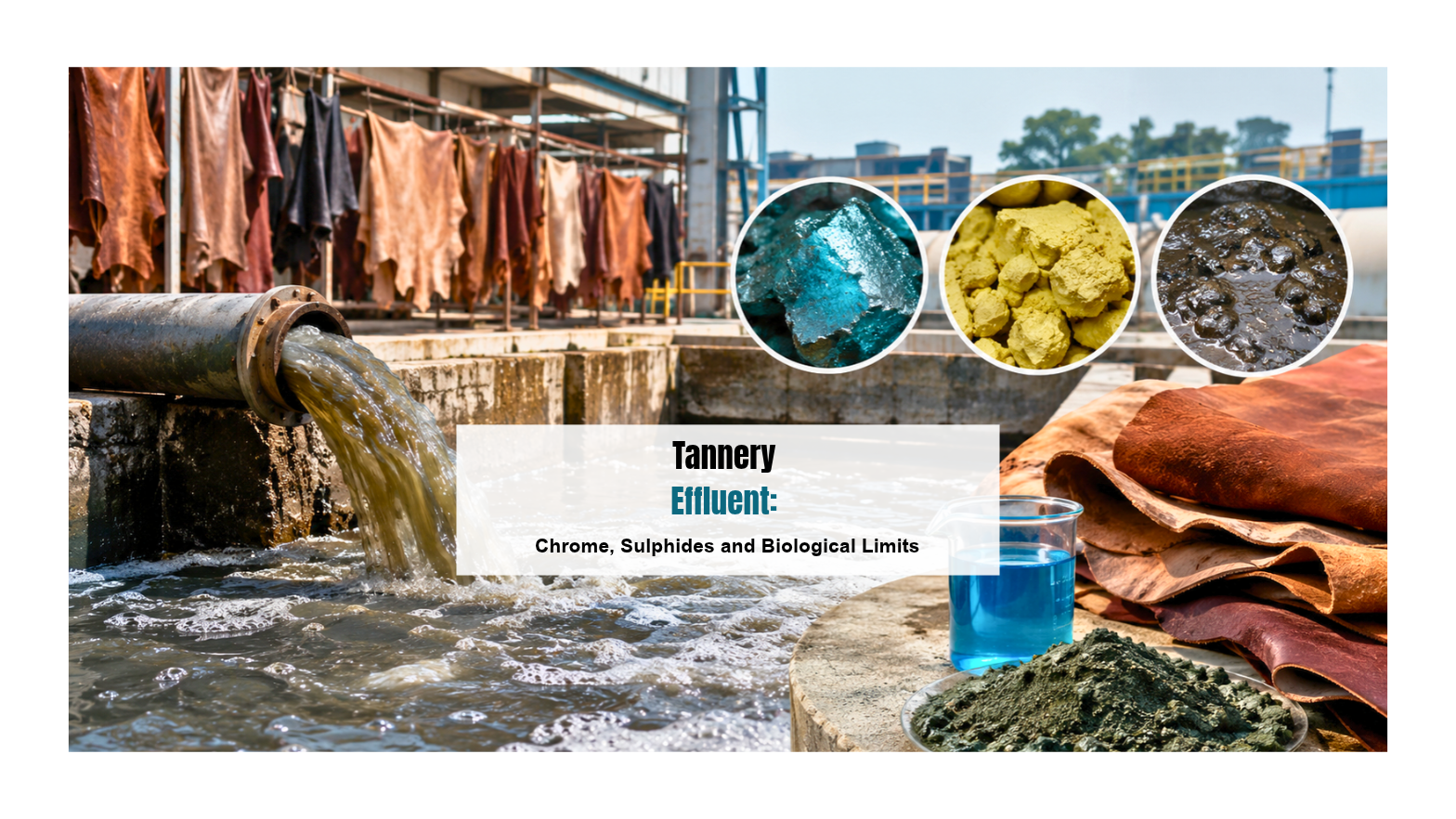
Tannery Effluent: Chrome, Sulphides and Biological Limits
It’s a Tuesday morning at your leather industry ETP, and the aeration tank looks wrong. Last week the mixed liquor was a healthy brown and the clarifier gave you a clean overflow. Today the tank has gone pale and grey, and the oxygen readings make no sense. Anyone who has done tannery effluent treatment for a few seasons has seen this.
Overnight, a slug of sulphide-rich liming liquor reached the equalisation tank, or a batch of chrome wastewater slipped past the tanyard drain. Your culture took the hit. The outlet sample goes to the lab, the report comes back failed, and then the phone rings. It’s the SPCB or the CETP management, and the word they use is penalty.
You can’t remove chrome, sulphide and salt from a tannery. You can stop them from killing your biology. This post walks through a practical way to do that, from stream segregation to bioaugmentation, without pretending any single step does the job alone.
Why Tannery Effluent Treatment Is One of the Toughest Jobs in Industrial Wastewater
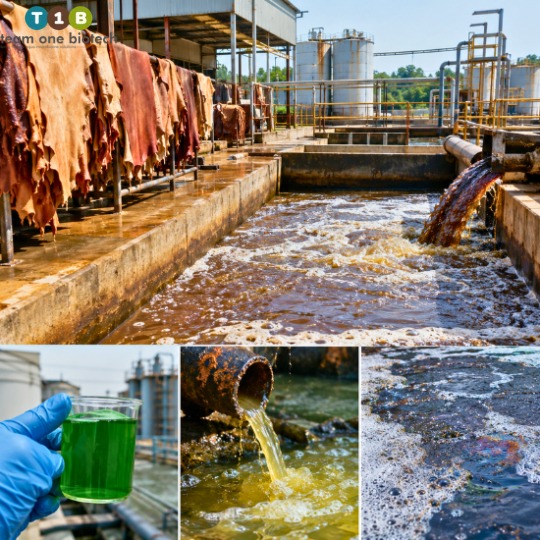
Few industries hand an ETP operator a harder mix. A tannery doesn’t produce one effluent. It produces several, and they rarely arrive at a steady rhythm. Soaking, liming, unhairing, deliming, pickling, chrome tanning, retanning and dyeing each release different chemistry at different hours.
Then there’s hide-to-hide variation. Raw stock, wet-blue processing, buffalo versus goat skins, fresh versus long-cured hides: every change moves your load. A CETP serving a cluster has it worse. You receive the combined chemistry of many units, each with its own recipes and shift pattern.
The result is an influent that swings in pH, colour, salinity and toxicity within a single day. Biology likes stability. Tannery effluent offers almost none.
Five problem areas do most of the damage:
- Trivalent chromium (Cr3+) from tanyard and chrome-tanning streams, toxic to microbes and stubborn in sludge
- Sulphides (S2-) from beamhouse liming and unhairing, toxic, odorous and oxygen-hungry
- Extreme salinity and TDS from hide curing salt, pickling and neutralisation chemicals
- Recalcitrant proteinaceous solids from fleshing, hair and trimmings that hydrolyse slowly
- Refractory organic nitrogen and ammoniacal nitrogen from protein breakdown and deliming salts
None of these is new. What catches plants out is the combination, arriving unbuffered in front of a biological system that never got a chance to cope. Treat each as its own problem with its own fix, and the aeration tank finally gets a fair chance.
Chrome Wastewater: Why Cr3+ Carryover Hurts Your Biology
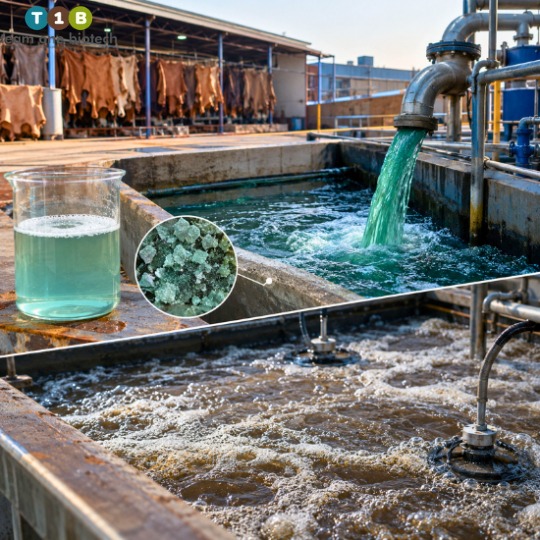
Chrome wastewater is rarely your largest volume, but it’s often the most damaging per litre. Modest carryover, repeated day after day, can wear down a biological system that still looks fine on paper.
Where chrome enters the system
The main source is spent chrome-tanning liquor from the tanyard. Exhaustion is never complete, so some chromium always stays in the float. Rinse waters, draining and piling floors, sammying and shaving areas, and retanning washes add more.
Leaking valves and sloppy drain discipline do the rest. In a CETP, one member unit dumping chrome without pre-treatment can undo the discipline of everyone else.
How it inhibits microbial activity and settles in sludge
Trivalent chromium binds to cell surfaces and proteins, interfering with enzymes and slowing respiration. Nitrifiers go first because they’re slow-growing and sensitive. Heterotrophs follow, and the floc weakens.
Much of the chromium then precipitates into the biological sludge. That raises handling and disposal stress and complicates how you manage that sludge later.
Watch for these warning signs in the aeration tank:
- Mixed liquor turning pale, thin or greyish-green
- Oxygen uptake falling while dissolved oxygen climbs
- Pin floc, turbid supernatant and a clarifier that won’t clear
- Ammoniacal nitrogen rising in the outlet as nitrification stalls
- Sudden foaming or a change in the smell of the tank
Chrome recovery and precipitation as the first line of defence
Collect spent chrome liquor separately, precipitate it with an alkali in a controlled pH window (roughly in the range of 8 to 9), settle it, and remove the bulk before the biology ever sees it. Many plants redissolve the recovered chromium sludge and reuse it in tanning, which cuts both toxicity and chemical cost. That pH range is a general value and varies from ETP to ETP, so confirm it with jar tests.
Chrome recovery isn’t a replacement for biology. It’s what lets biology survive. The trace chromium that still gets through is where chromium-resistant cultures step in.
Keep chrome liquor strictly off the general drain. A dedicated collection sump with a locked valve costs far less than restarting a dead aeration tank.
Sulphides in Beamhouse Effluent: The Silent Biomass Killer
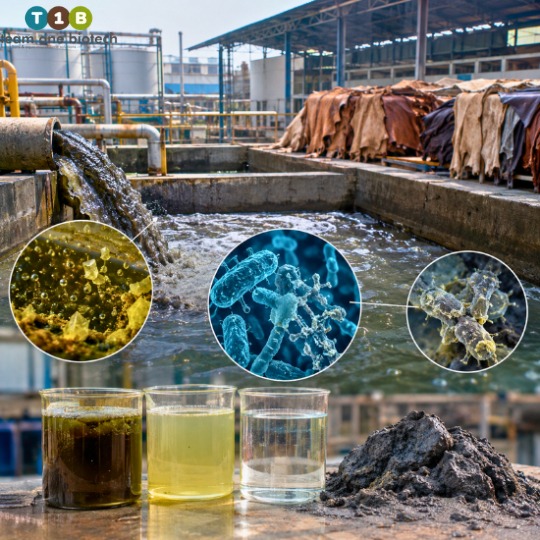
Beamhouse effluent is where most sulphide trouble starts. Liming and unhairing use sodium sulphide and lime, so the spent liquor is strongly alkaline and loaded with sulphide, hair pulp and dissolved protein. Tanyard effluent looks very different, which is why mixing the two is risky.
Toxicity, odour and oxygen demand effects
Sulphide is toxic to many aerobic microbes even at low concentrations. It also grabs oxygen chemically before your bacteria can use it.
A shock load can pull dissolved oxygen down within an hour or two. The culture starts to suffocate, and floc quality slips with it.
Odour follows because sulphide converts to hydrogen sulphide when pH drops. That’s a safety issue, not just a nuisance. Hydrogen sulphide is dangerous to your people.
Anywhere alkaline beamhouse flow meets acidic streams can release it: deliming and pickling drains, acid dosing points, or an equalisation tank whose pH has drifted down. Gas monitoring, ventilation and clear confined-space rules aren’t optional.
Catalytic sulphide oxidation and why segregation matters
Segregation comes first. Keep beamhouse effluent separate from tanyard and acidic streams at source, so sulphide-rich liquor reaches its own treatment tank.
There, catalytic oxidation (air with a manganese-based catalyst under alkaline conditions) converts sulphide into thiosulphate and eventually sulphate, which are far less harmful. Operating pH is usually kept alkaline, roughly in the range of 8 to 9, with contact time of several hours. These are general values and vary from ETP to ETP.
The aim isn’t perfection. It’s turning a violent shock into a steady, manageable load.
If you smell rotten egg at the equalisation tank around shift change, don’t blame the biology first. Check what the beamhouse released and what the pH did over the previous hour.
Salinity, Proteins and Organic Nitrogen: The Hidden Limiters
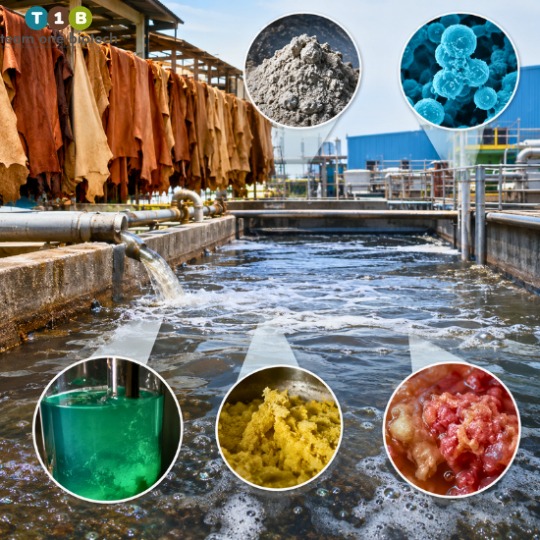
Handle chrome and sulphide well, and three quieter problems still cap what your biological system can deliver.
High TDS and osmotic stress
Hide-curing salt, pickling and neutralisation chemicals push tannery TDS well beyond what conventional activated sludge cultures tolerate. Cells lose water, activity drops and floc disperses.
Swinging salinity is worse than steady salinity. Microbes adapt to a stable level, not to constant jumps. Biology also doesn’t remove TDS, so high TDS wastewater is a limit you manage through segregation, dilution strategy and reject handling.
Proteinaceous solids and slow hydrolysis
Fleshings, hair pulp and trimmings are protein-rich and break down slowly. Without cultures that produce active proteases in saline, alkaline conditions, solids accumulate and COD stays stubborn. Your anaerobic unit then ends up overloaded with partly hydrolysed material.
Ammoniacal nitrogen and sensitive nitrifiers
Protein breakdown releases ammoniacal nitrogen, and deliming salts add more. Nitrifiers are slow-growing autotrophs and the first to suffer from chrome, sulphide and salt.
When nitrification fails, ammonia goes straight to your outlet report. Nitrifiers need adequate alkalinity, steady oxygen (dissolved oxygen typically in the range of 2 to 4 mg/L), and a long enough sludge age to hold on. As always, those ranges are general values and vary from ETP to ETP.
| Untreated Stream Problem | Pre-Treatment Fix | Biological Support |
| Chrome carryover from tanyard | Segregation, recovery and precipitation | Chromium-resistant consortia for trace residuals |
| Sulphide shock from beamhouse | Segregation and catalytic oxidation | Cultures that recover fast after oxygen dips |
| High and swinging TDS | Equalisation, dilution and reject management | Halotolerant bacteria |
| Slow-hydrolysing proteins | Screening and fines removal | Protease-active cultures |
| Ammoniacal nitrogen build-up | pH and alkalinity control | Autotrophic nitrifying cultures |
CPCB and SPCB Discharge Norms: What Non-Compliance Really Costs
Your consent conditions set the finish line, and for tanneries they’re tight. CPCB and the state boards regulate chromium, sulphides, ammoniacal nitrogen, BOD and COD, and the limits sit in the stringent low mg/L range. Chromium and sulphide are often held in the single-digit mg/L range or lower.
The exact figures depend on your state, your cluster and whether you discharge to a CETP, land or a water body. Check your current consent conditions rather than relying on any article, this one included.
Failing them carries consequences well beyond a bad lab report:
- Environmental toxicity: chromium and sulphide harm aquatic life and soil microbes
- Groundwater contamination: saline, chrome-bearing seepage from lagoons and drains is slow and costly to reverse
- CETP penalties and over-fee charges: many CETPs levy extra charges on members whose inlet quality exceeds agreed limits
- Closure directions: repeated violations can escalate from notices to closure directions for the unit or plant
Every one of these starts upstream. A stable biological unit is the cheapest compliance margin you’ll ever own.
How Biocultures Stabilise Aerobic and Anaerobic Units
Pre-treatment lowers the shock. Biology handles what’s left. That’s where bioaugmentation earns its place, as a stabiliser and not a substitute for good housekeeping.
Halotolerant, chromium-resistant consortia
Strains selected from saline and metal-exposed environments keep working when TDS rises and trace Cr3+ gets past your recovery step. They help hold the floc together and keep BOD and COD reduction going. They give the system a stable core population that doesn’t collapse at every swing.
Autotrophic nitrifying cultures
Nitrifiers convert ammoniacal nitrogen to nitrite and then nitrate. Because they grow slowly, a washout can take weeks to recover from on its own. Seeding with dedicated nitrifying bacteria for ammonia removal can shorten that recovery and protect your ammoniacal nitrogen compliance. Results depend on the site, and they’re never guaranteed.
Handling aerobic and anaerobic units correctly
In the aerobic tank, keep MLSS, oxygen and pH inside a workable window instead of chasing extremes. In the anaerobic unit, keep unoxidised sulphide out, since it inhibits methanogens, and keep pH and alkalinity steady.
Sulphate left after sulphide oxidation can still be reduced back to sulphide in anaerobic zones. That’s why oxidation and segregation upstream matter so much.
Recovery after shock loads
When a shock does hit, waiting for natural regrowth costs you days of non-compliance. A well-chosen bioculture for ETP and CETP re-seeds the system with active, tolerant cells, so recovery is quicker than it would be on its own.
Practical benefits you can expect to see:
- Faster recovery after chrome, sulphide or salinity shocks
- Steadier BOD and COD reduction through load swings
- Lower sludge handling stress through better floc and hydrolysis
- A wider compliance margin on ammoniacal nitrogen and COD
Is your biological unit losing ground to chrome or sulphide shocks? Talk to the Team One Biotech technical team for a site-specific assessment of your ETP. Explore our bioremediation solutions for industrial effluent or contact our technical team.
A Practical Stabilisation Checklist for Leather Industry ETP and CETP Teams
Disclaimer: The values and ranges mentioned in this article are general figures for reference. Actual values differ in every ETP depending on process, chemicals, hide type, water source and local consent conditions. Always validate through lab analysis and a site-specific trial.
Use this as a working list for your next review meeting:
- Segregate streams at source. Keep beamhouse, tanyard and acidic flows separate so toxic liquors never mix.
- Equalise properly. Give the plant enough mixing and buffering to flatten daily swings in pH, salinity and load.
- Recover chrome. Collect spent liquor, precipitate, settle and reuse or dispose of it as per your regulations.
- Oxidise sulphides. Treat beamhouse liquor through catalytic oxidation before it joins the main flow.
- Check pH and dissolved oxygen. Track both at the equalisation tank and aeration tank, at least once every shift.
- Seed with the right cultures. Use halotolerant, chromium-resistant and nitrifying cultures matched to your effluent.
- Monitor closely. Follow oxygen uptake, floc quality, ammoniacal nitrogen and sludge settling, not only the outlet report.
- Document everything. Log shocks, dosing and recoveries so you can show boards and management what happened and why.
Ready to put this into practice? Request a bioculture trial plan and sample analysis support from our process team, and we’ll help you set up a site-specific trial.
Frequently Asked Questions
Why does my aeration tank fail after chrome or sulphide shocks?
Chrome inhibits enzymes and floc formation, while sulphide poisons microbes and strips dissolved oxygen. Together they can collapse activity within hours, especially in unsegregated plants. Recovery takes longer when nitrifiers are lost.
Can biocultures work in high-TDS tannery effluent?
Yes, if they’re halotolerant strains selected for saline conditions. Conventional cultures lose activity as salinity climbs and swings. Results depend on your TDS range, stability and pre-treatment, so a site trial is the right way to confirm.
Is chrome recovery necessary if my ETP is already biological?
In most cases, yes. Biology can only handle trace chromium. Recovery and precipitation take the bulk away before it harms your culture and loads your sludge.
How do I improve ammoniacal nitrogen removal in a leather CETP?
Protect nitrifiers from chrome, sulphide and salinity shocks first. Then keep alkalinity, dissolved oxygen and sludge age in a supportive range, and consider seeding with autotrophic nitrifying cultures. Ranges vary from ETP to ETP.
Protect Your Plant Before the Next Shock Load Arrives
Reliable tannery effluent treatment comes down to sequence. Segregate at source, recover chrome, oxidise sulphide, then give your biology halotolerant, chromium-resistant and nitrifying cultures that can survive what’s left. Treat your leather industry ETP that way and chrome wastewater stops being a threat to your discharge report.
Do not wait for a failed discharge report or a closure notice. Contact Team One Biotech today to design a biological stabilisation plan for your tannery or CETP. Book a technical consultation, request a site assessment, or speak to our process team.
Disclaimer: The values and ranges mentioned in this article are general figures for reference. Actual values differ in every ETP depending on process, chemicals, hide type, water source and local consent conditions. Always validate through lab analysis and a site-specific trial.
Looking to improve your ETP/STP efficiency with the right bioculture?
Talk to our experts at Team One Biotech for customised microbial solutions.
Contact: +91 8855050575
Email: sales@teamonebiotech.com
Visit: www.teamonebiotech.com
Discover More on YouTube – Watch our latest insights & innovations!-
Connect with Us on LinkedIn – Stay updated with expert content & trends!

