
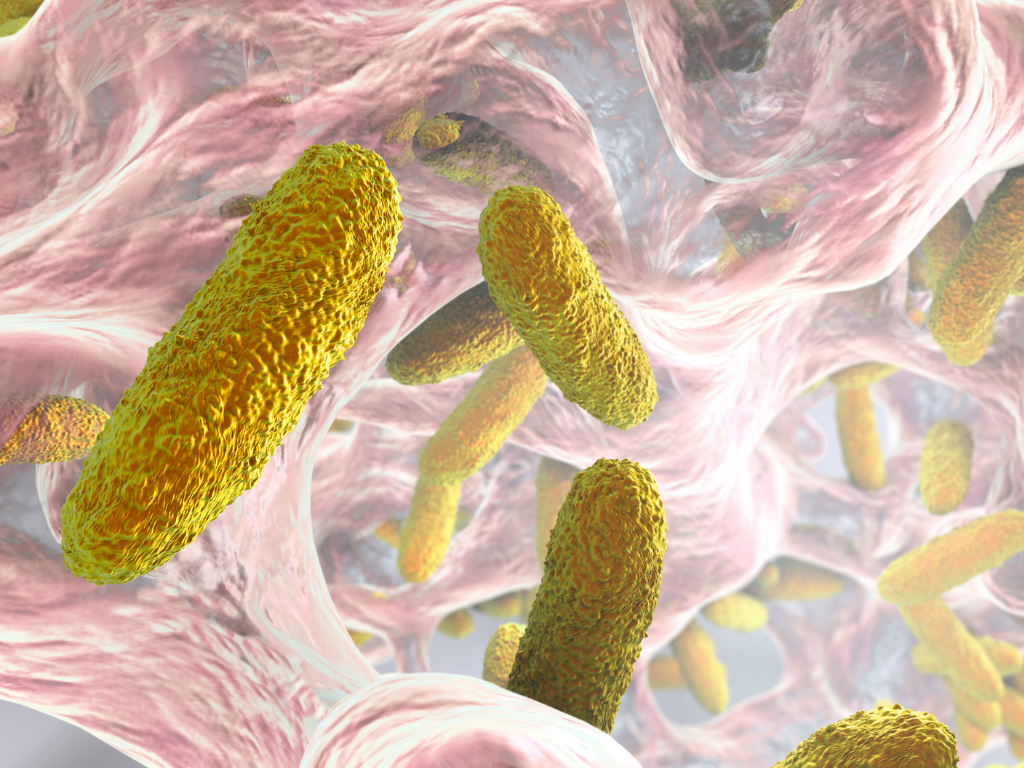
Understanding Quorum sensing

In simple words, quorum sensing (QS) is a method by which bacteria communicate with each other. Quorum sensing or quorum signaling is the ability to detect and respond to cell population density by gene regulation.

QS helps bacteria to coordinate their behaviour, like the formation of biofilms and secretion of virulence factors. The study of quorum sensing has important implications for understanding bacterial behaviour and developing new strategies for controlling bacterial infections and also using them for the benefit of mankind and the environment.

QS involves the production and detection of small signalling molecules called autoinducers. As bacteria grow and divide, they release autoinducers into the surrounding environment. As the concentration of autoinducers increases, bacteria are able to detect the presence of other bacteria in their vicinity, leading to changes in gene expression.

QS is further divided mainly into two types: acyl-homoserine lactone (AHL) and autoinducer-2 (AI-2). AHL is the most extensively studied type of quorum sensing and is used by many gram-negative bacteria. AI-2 is a signalling molecule used by both gram-negative and gram-positive bacteria.

In AHL-mediated QS, bacteria produce and release specific AHL molecules that diffuse across the bacterial cell membrane. When the concentration of AHL reaches a certain threshold, it binds to a receptor protein inside the bacterial cell, activating a response regulator protein that can regulate gene expression. This regulation can lead to the production of virulence factors, such as toxins, or the formation of biofilms.

In AI-2-mediated QS, the signalling molecule is produced by a protein encoded by the luxS gene. AI-2 is synthesized by many different species of bacteria, allowing for interspecies communication. When AI-2 reaches a certain concentration, it binds to a receptor protein, leading to changes in gene expression.

To conclude, quorum sensing is a fascinating and important mechanism used by bacteria to coordinate their behaviour and regulate gene expression. The study of quorum sensing has important implications for understanding bacterial pathogenesis and developing new strategies for controlling bacterial infections. Many times biofilms are also used to clean up waste from the environment.

Beyond medical applications, quorum sensing plays a significant role in environmental biotechnology and wastewater treatment. Microbial communities in sewage treatment plants often rely on quorum sensing to regulate biofilm formation, organic matter degradation, and nutrient removal processes. Researchers are increasingly exploring ways to manipulate quorum sensing pathways to improve the efficiency of biological treatment systems. Understanding bacterial communication can also help control undesirable biofilms that cause operational problems in pipelines, membranes, and industrial equipment. In bioremediation projects, beneficial microbial populations use these signalling mechanisms to coordinate the breakdown of complex pollutants and toxic compounds. The ability to influence quorum sensing may open new opportunities for enhancing wastewater treatment performance while reducing the need for chemical interventions. As scientific research advances, quorum sensing continues to emerge as a valuable tool for both environmental sustainability and industrial process optimization.
Use of AI & ML in environmental industry

Artificial intelligence (AI) and machine learning (ML) are revolutionizing various industries, and the environmental industry is no exception. The use of AI is being used to address environmental issues, climate change, pollution monitoring and wildlife conservation. If used wisely AI and ML have a great potential to contribute to a more sustainable future.

A combination of technologies like AI, ML, Big data, IoT, image processing and many others can be used to support climate change mitigation efforts by improving the accuracy of weather forecasting and climate modelling. This would effectively help us to predict the impacts of climate change on different regions and support policy decisions. The use of AI can also help to optimize energy consumption and reduce carbon emissions by identifying opportunities for energy efficiency improvements and optimizing renewable energy production.

Climate Change: Very recently AI technologies are being used to monitor and track pollution levels in air, water and soil. These technologies can help us identify sources of pollution and develop more effective pollution control measures, so as to mitigate the problem at the source. Today’s many sensors are equipped with high AI API’s which can detect pollution levels in real-time, thus allowing for rapid response to potential pollution threats.

Wild Life: Another use of AI technologies is to support wildlife conservation efforts. Many AI-powered cameras can be used to track animal populations and monitor their behaviour. This information can also give us a huge insight into the factors that affect their habitat and help us develop strategies to protect their ecosystems. Multiple layers of geofencing technology using AI power can help us accurately monitor tagged animal movements, thus helping us identify various eco corridors for them. Such and many more AI technologies can help us analyze large amounts of data to identify patterns and trends in wildlife populations, which can be used to guide conservation efforts and make the necessary changes needed.

Agriculture: Using AI in agricultural practices helps to reduce the environmental impact of agriculture by minimizing the use of fertilizers and pesticides, reducing water usage and mitigating soil erosion. Many AI-powered drones are being used to monitor crop health and identify areas that require irrigation, fertigation or any other nutrients. This is done purely using image-processing AI technologies. Various algorithms can be used to analyze historical data to develop crop growth models and also predict yields with the amount of and need of fertilizers and other nutrients.

Environment: AI technologies also play a very important role in waste management practices like recycling, composting, and waste-to-energy conversion. Various Al & ML-based algorithms can be used to optimize waste collection routes and schedules, reducing the fuel consumption and emissions associated with waste collection. Image processing of various microbes in biological units helps to identify the health of that system, in a matter of seconds using powerful AI tools, thus ensuring better efficiency of the plant. AI-based algorithms are being used to identify microorganisms that are effective in bioremediation. This not only helps to optimize the selection of microorganisms but also improves the effectiveness of the bioremediation process.  There are some AI and ML tools which are being used to model the behaviour of bacteria in a certain type of environment to predict the rate of biodegradation of a pollutant and also estimate the time required to complete the process.

Scan the code