
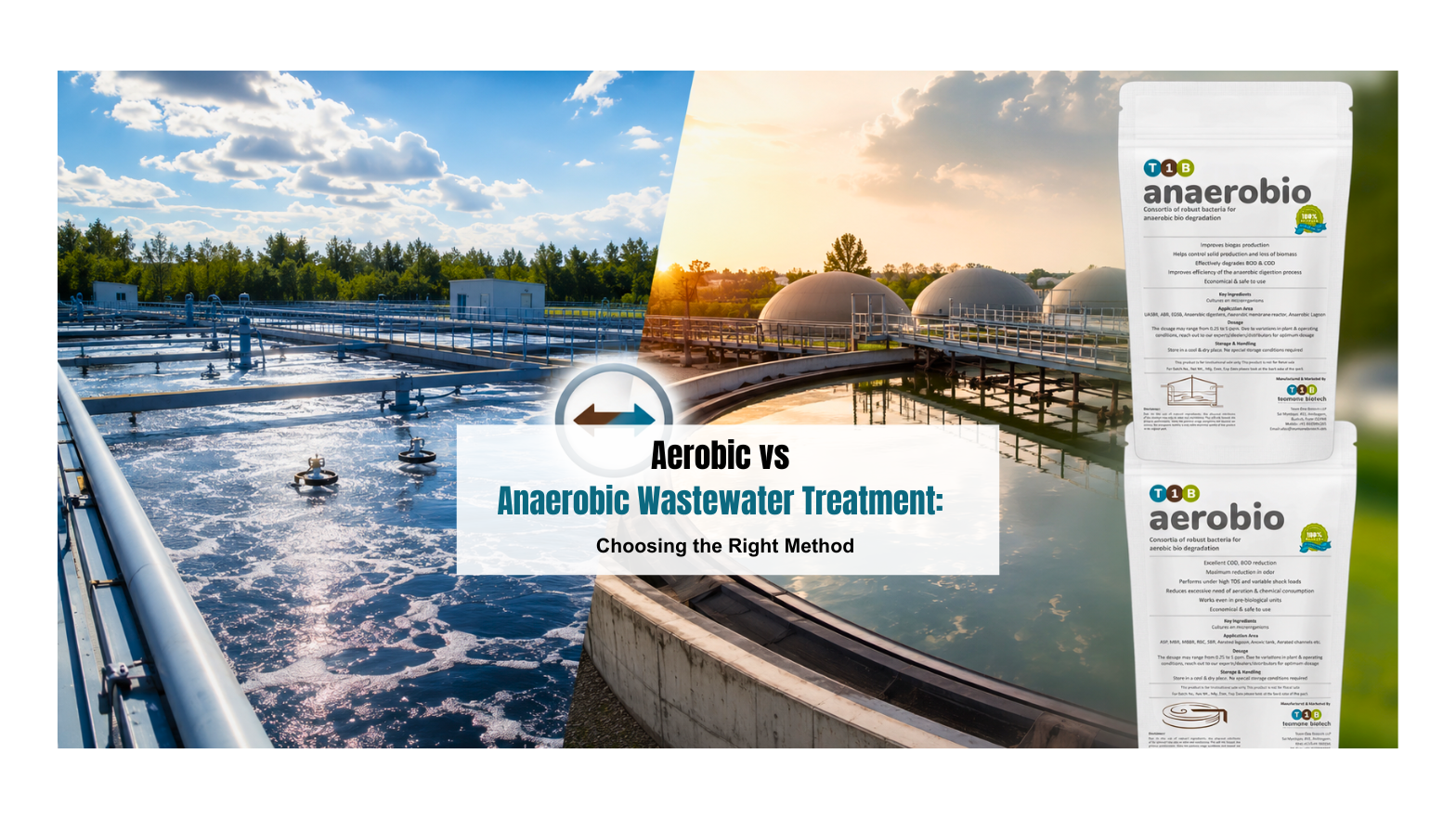

Aerobic vs Anaerobic Wastewater Treatment: Choosing the Right Method
There’s a particular kind of stress that comes with running an effluent treatment plant. It’s not the loud, obvious kind, it’s the quiet dread that builds in the days before a CPCB or SPCB inspection, when you’re not entirely sure your numbers will hold up. It’s the sinking feeling when influent load spikes unexpectedly and you watch your treatment system struggle to keep pace. It’s the budget meeting where someone asks why energy costs keep climbing, and you don’t have a satisfying answer.
If you’re a plant manager, utility head, or process engineer, you already know that the treatment method you choose isn’t just a technical decision, it’s a risk management decision. Pick the wrong system for your load profile, and you’re staring down non-compliance flags, penalty notices, or worse, closure directives. Pick a system that’s technically sound but poorly matched to your space and manpower constraints, and you’re fighting an uphill battle every single day just to keep things running.
This is where the aerobic versus anaerobic wastewater treatment question becomes so important, and so often misunderstood. Both are proven, widely used approaches. Both can deliver compliant discharge quality. But they behave very differently under real-world industrial conditions, and the “right” choice depends heavily on your specific effluent characteristics, available infrastructure, and operational bandwidth.
In this article, we’ll walk through how aerobic sewage treatment and anaerobic wastewater treatment actually work, where each one shines, how they stack up against each other operationally, where an anoxic tank fits into the picture, and how to think through the decision in a way that protects your compliance standing rather than gambling with it. We’ll also touch on the microbiology driving these processes, because understanding what’s actually happening inside your tanks makes troubleshooting, and future-proofing, a lot easier.
Understanding Aerobic Sewage Treatment
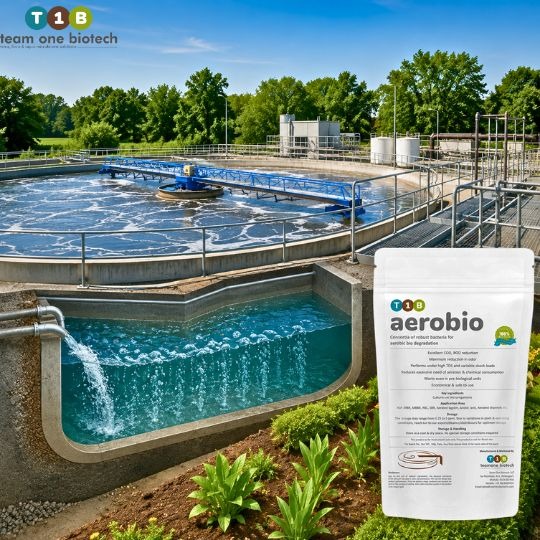
Aerobic sewage treatment relies on oxygen-dependent microorganisms to break down organic pollutants in wastewater. Air or pure oxygen is introduced into the treatment tank, through diffusers, surface aerators, or mechanical agitation, creating an environment where aerobic microbes can thrive and metabolize organic matter efficiently. The by-products of this reaction are primarily carbon dioxide, water, and biomass, which is why aerobic systems are generally associated with lower odor generation compared to their anaerobic counterparts.
This method tends to be best suited for effluents with a low-to-moderate organic load, think domestic sewage, or industrial wastewater from sectors like food and beverage, textiles, or light manufacturing, where the organic strength isn’t extreme but consistency and speed of treatment matter.
Energy and aeration considerations:
- Aerobic systems generally require a continuous or near-continuous supply of oxygen, which translates to a meaningful and ongoing energy demand, a real concern given how energy tariffs have been trending upward across most industrial zones.
- Aeration equipment (blowers, diffusers, surface aerators) needs regular maintenance, and any inefficiency here directly inflates operating costs.
- Retention times in aerobic systems tend to fall on the shorter end relative to anaerobic processes, meaning you can often achieve target reductions in a comparatively smaller treatment footprint, a genuine advantage for retrofitted or space-constrained plants.
- Sludge generation in aerobic systems tends to be higher than in anaerobic systems, which brings its own downstream cost in the form of sludge handling and disposal.
For plants where energy cost isn’t the primary constraint but space and speed of treatment are, aerobic sewage treatment is often the more practical starting point.
Understanding Anaerobic Wastewater Treatment
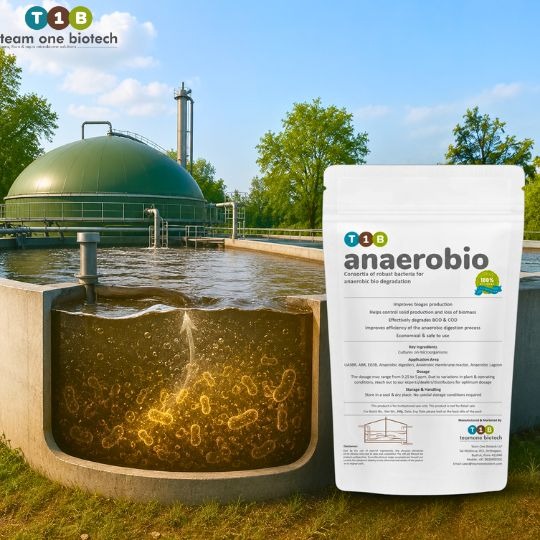
Anaerobic wastewater treatment works in the complete absence of oxygen. Instead of oxygen-breathing microbes, this process relies on anaerobic microbes that break down organic matter through a multi-stage biological pathway, hydrolysis, acidogenesis, acetogenesis, and finally methanogenesis, ultimately producing biogas (a mixture largely composed of methane and carbon dioxide) as a valuable by-product.
This is precisely why anaerobic treatment is often the preferred route for high-strength, high-organic-load effluent, the kind you’d typically see from distilleries, dairies, sugar mills, pulp and paper units, or other sectors where influent BOD and COD levels can vary from moderately high to significantly elevated depending on the process generating the wastewater.
Energy recovery potential vs slower process dynamics:
- One of the standout advantages of anaerobic treatment is energy recovery. The biogas generated can, in many setups, be captured and used as a fuel source, partially offsetting the plant’s overall energy burden, which is a meaningful counterbalance to rising utility costs.
- However, anaerobic systems generally operate on longer retention times compared to aerobic systems, since the microbial breakdown pathway is more complex and the organisms involved tend to be slower-growing.
- Anaerobic microbes are also more sensitive to fluctuations in temperature, pH, and toxic shock loads. A sudden change in influent characteristics can disrupt the microbial balance and take considerably longer to recover from compared to an aerobic system.
- Odor management is a more prominent consideration here, since by-products like hydrogen sulfide can be generated, meaning that anaerobic systems typically require more robust gas handling and odor control infrastructure.
For plants dealing with consistently high organic loads and looking for a way to offset energy costs through biogas recovery, anaerobic wastewater treatment often makes strong operational and financial sense, provided the system is designed to handle load variability without tipping into instability.
Thinking through whether your influent profile is better suited to aerobic or anaerobic treatment isn’t something you need to work out alone, a plant-specific assessment from Team One Biotech’s bioremediation team can help clarify which direction actually fits your load and infrastructure.
Aerobic and Anaerobic Treatment of Wastewater, Key Operational Differences
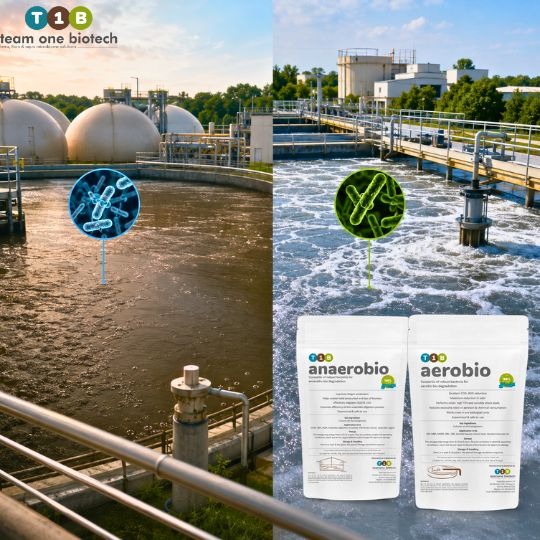
When you line them up side by side, the aerobic and anaerobic treatment of wastewater differ across nearly every operational dimension that matters to a plant manager under compliance pressure:
- Organic load handling capacity: Aerobic systems perform well with low-to-moderate organic loads; anaerobic systems are generally better equipped to handle high-strength, high-organic-load effluent.
- Energy requirement: Aerobic treatment tends to demand higher ongoing energy input for aeration; anaerobic treatment tends to require less external energy and can offset a portion of demand through biogas recovery.
- Sludge generation: Aerobic processes generally produce a higher volume of sludge requiring disposal; anaerobic processes tend to generate comparatively lower sludge volumes.
- Space and infrastructure needs: Aerobic systems often need less land area for a given treatment capacity; anaerobic systems, particularly those using lagoons or larger digesters, can require a larger footprint, though compact anaerobic reactor designs have narrowed this gap considerably.
- Retention time: Aerobic systems typically operate on shorter retention times; anaerobic systems generally require a longer retention period to achieve comparable reductions.
- Odor and by-product management: Aerobic systems tend to generate lower odor levels; anaerobic systems require more deliberate gas capture and odor mitigation measures, though this is offset by the value of biogas recovery.
None of this is abstract for a compliance-focused plant manager. Your ability to consistently hit target reductions in BOD, COD, and suspended solids, the numbers CPCB and SPCB inspectors care about, depends directly on matching your treatment method to your actual load profile. A plant running an aerobic system against a load it wasn’t designed for will chronically underperform, and repeated underperformance is exactly what triggers regulatory scrutiny and penalty exposure.
Where the Anoxic Tank Fits In
This is where a lot of confusion creeps in, so let’s clear it up directly: an anoxic tank is not the same as an anaerobic tank, even though the terms sound similar and are frequently mixed up in casual conversation.
An anoxic tank in a sewage treatment plant operates in a low-oxygen environment, not entirely oxygen-free like an anaerobic system, but with dissolved oxygen levels low enough that specific microbial processes, particularly denitrification, can occur. In an anoxic tank, facultative bacteria use the oxygen bound in nitrate molecules (rather than free dissolved oxygen) to break down organic matter, converting nitrates into nitrogen gas that’s released to the atmosphere.
The distinction matters because:
- Anaerobic conditions involve a complete absence of oxygen (and nitrates), typically used for organic load reduction and biogas generation.
- Anoxic conditions involve a controlled, low-oxygen environment specifically used for nitrogen removal.
This is why many modern ETPs are moving toward a hybrid approach, combining anaerobic, anoxic, and aerobic stages in sequence to tackle organic load reduction, nitrogen removal, and final polishing all within one integrated system. For plants facing stricter nutrient discharge norms alongside conventional BOD/COD requirements, incorporating an anoxic stage is often what closes the compliance gap that a purely aerobic or purely anaerobic system can’t address on its own.
The Microbiology Behind It, Anaerobic Microbes vs Heterotrophic Microbes

You don’t need a microbiology degree to run a compliant plant, but understanding the basic players involved makes a real difference when something goes wrong and you’re trying to figure out why.
Anaerobic microbes are organisms that survive and function without oxygen. They work in coordinated stages, some breaking down complex organic molecules into simpler compounds, others converting those compounds into acids, and finally, methanogenic organisms converting those acids into methane-rich biogas. These microbes tend to be slower-growing and more sensitive to environmental swings, which is why anaerobic systems can take noticeably longer to recover from a shock load or process upset.
Heterotrophic microbes, on the other hand, are organisms, typically found in aerobic and anoxic systems, that derive their energy from consuming organic carbon compounds, using oxygen (or in the anoxic case, nitrate-bound oxygen) as part of their metabolic process. They tend to be faster-growing and generally more resilient to moderate fluctuations in load, which contributes to the comparatively quicker recovery times seen in aerobic systems.
Why does this matter for compliance outcomes? Because microbial balance is essentially the engine driving your treatment performance. If your system’s dominant microbial population isn’t well-matched to your actual influent characteristics, too much organic shock for a slow-recovering anaerobic culture, or insufficient oxygen supply for a heterotrophic-dominant aerobic system, you’ll see it directly in your effluent quality reports, and eventually in your inspection outcomes.
Anoxic vs Anaerobic vs Aerobic Treatment, Which One Do You Actually Need?
This is the question that actually matters at the end of the day. Here’s a practical way to think through it:
Choose aerobic sewage treatment if:
- Your influent organic load is low to moderate and relatively consistent
- You have significant space constraints and need a smaller treatment footprint
- You need faster treatment cycles and quicker recovery from minor load variations
- Energy cost is a manageable line item relative to your overall operating budget
Choose anaerobic wastewater treatment if:
- Your influent is high-strength or high-organic-load in nature
- You want to offset energy costs through biogas recovery
- You have adequate space and can accommodate longer retention times
- Your influent characteristics are relatively stable, minimizing the risk of shock-load disruption
Consider a hybrid or anoxic-inclusive approach if:
- You’re facing both organic load and nitrogen removal requirements
- Your existing system is aerobic-only or anaerobic-only but isn’t consistently hitting compliance targets
- You’re retrofitting an older plant and need a more flexible, multi-stage design that can absorb fluctuating loads without triggering non-compliance flags
- You want a more dependable buffer against the kind of variability that industrial effluent often brings
When it comes to reliability under fluctuating load conditions, which is the reality for most industrial plants, a well-designed hybrid system generally offers the most dependable path to consistent compliance, since it isn’t relying on a single microbial process to absorb every kind of variability your influent throws at it.
A Note on the Numbers
Throughout this article, we’ve deliberately avoided citing exact figures for BOD, COD, retention times, or efficiency percentages, and there’s a good reason for that: every ETP is different. The values and ranges referenced here are general industry indicators only. Actual performance figures for your plant will depend on your specific influent characteristics, system design, hydraulic and organic loading rates, temperature conditions, and day-to-day operating practices.
Treating any generic number as a benchmark for your own plant can be misleading, and in a compliance context, misleading assumptions are exactly what create risk. If you want to understand where your plant genuinely stands relative to CPCB and SPCB norms, the most reliable path is a plant-specific assessment, not a generic industry figure.
This is exactly the kind of clarity Team One Biotech’s bioremediation experts can provide, a detailed look at your actual influent profile, existing infrastructure, and compliance gaps, so your treatment decisions are based on your plant’s reality rather than general assumptions.
FAQs
Is aerobic or anaerobic treatment better for compliance with CPCB norms?
Neither is universally “better”, it depends on your influent load and design. Aerobic sewage treatment often performs more predictably for low-to-moderate organic loads, while anaerobic wastewater treatment is generally more effective for high-strength effluent. Many plants achieve the most dependable CPCB and SPCB compliance through a hybrid system that combines both approaches.
Can a plant use both aerobic and anaerobic treatment together?
Yes, and many modern ETPs do exactly this. A common configuration uses anaerobic treatment as a first stage to handle high organic loads and generate biogas, followed by aerobic (and often anoxic) stages for further polishing and nitrogen removal before final discharge.
What is the role of an anoxic tank in a sewage treatment plant?
An anoxic tank operates in a low-oxygen environment specifically to support denitrification, the conversion of nitrates into nitrogen gas, which helps plants meet nutrient-related discharge norms alongside conventional BOD and COD reduction targets.
How do heterotrophic microbes differ from anaerobic microbes in treatment performance?
Heterotrophic microbes generally operate in aerobic and anoxic environments, tend to be faster-growing, and recover more quickly from load fluctuations. Anaerobic microbes operate without any oxygen, work through a multi-stage biological pathway, and tend to be slower-growing and more sensitive to shock loads, though they offer the added benefit of biogas generation.
Making the Right Call for Your Plant
Choosing between aerobic sewage treatment, anaerobic wastewater treatment, or a hybrid anoxic-inclusive design ultimately comes down to a handful of decision factors:
- Your load profile, how strong and how variable is your influent, realistically?
- Your space availability, are you working within a fixed retrofitted footprint, or do you have room to expand?
- Your energy budget, can you absorb the ongoing demand of an aerobic system, or would biogas recovery meaningfully help your bottom line?
- Your compliance risk tolerance, how much buffer do you need against shock loads and inspection uncertainty?
- Your manpower and O&M capacity, do you have the skilled staff to manage a more complex multi-stage system, or do you need something more straightforward to operate day to day?
There’s no universally “correct” answer here, only the answer that’s correct for your specific plant. And getting that answer right the first time is far less costly, in every sense, than retrofitting a poorly matched system after a compliance failure.
If you’re weighing this decision right now, whether you’re designing a new ETP from scratch, troubleshooting an underperforming system, or trying to figure out why your current setup isn’t holding up under inspection, Team One Biotech’s bioremediation experts are ready to help. From plant-specific assessments to customized bioaugmentation and treatment optimization solutions, we work directly with plant managers and engineers to build treatment systems that hold up under real operating pressure, not just on paper. Reach out to explore what a properly matched aerobic, anaerobic, or hybrid treatment solution could do for your compliance standing and your operating costs.
Looking to improve your ETP/STP efficiency with the right bioculture?
Talk to our experts at Team One Biotech for customised microbial solutions.
Contact: +91 8855050575
Email: sales@teamonebiotech.com
Visit: www.teamonebiotech.com
Discover More on YouTube – Watch our latest insights & innovations!-
Connect with Us on LinkedIn – Stay updated with expert content & trends!