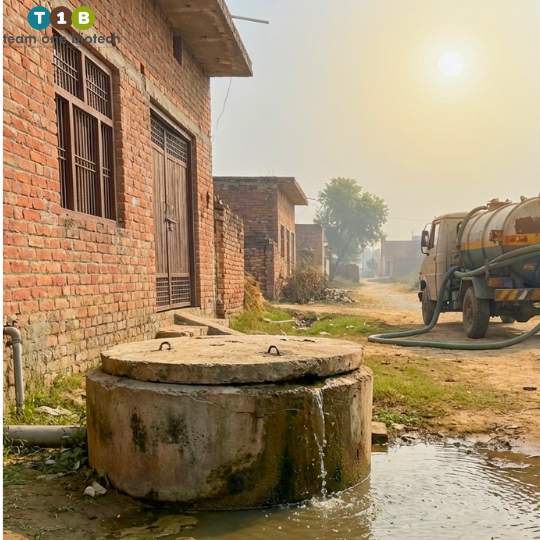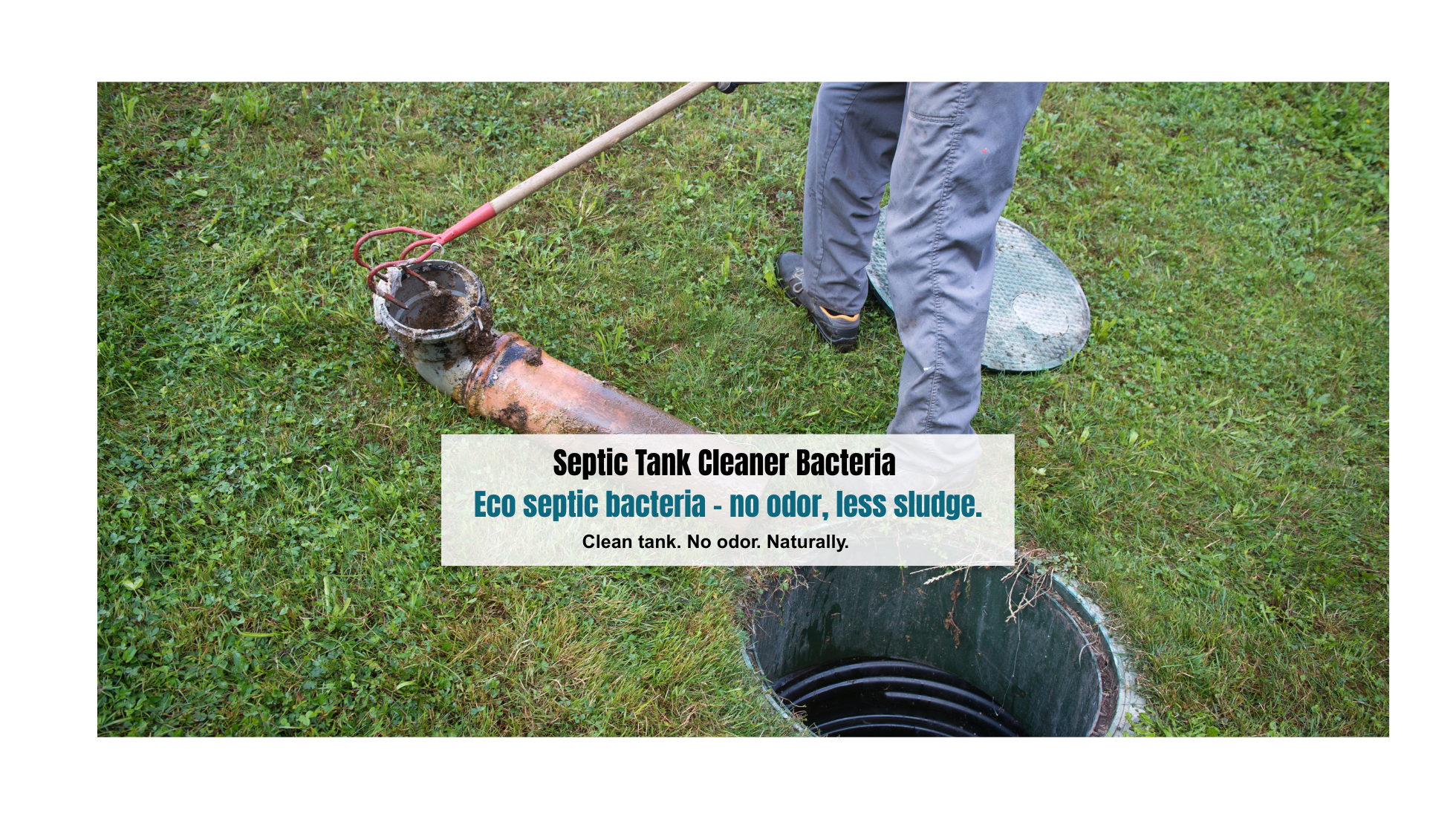
Septic Tank Treatment: How to Eliminate Pumping and Foul Odours Permanently
There is a particular kind of dread that facility managers know well. It is the dread of walking into your own property and smelling something before you see it.
It does not matter how well your rooms are turned, how polished your lobby floors are, or how carefully your operations are run day to day. The moment a guest catches that faint but unmistakable trace of a failing septic system in a corridor, near a restroom, or worse, in a dining area, the experience is over. Not just for that guest, but for everyone they will ever tell about it.
India’s hospitality and commercial food service sector runs on reputation. A luxury hotel in Bangalore, a fine-dining restaurant in Mumbai, a managed corporate campus in Gurugram, these are businesses built on the promise of a controlled, clean, comfortable environment. When the sanitation infrastructure underneath that promise begins to fail, it does not send a warning; instead, as detailed in The Ultimate FOG Management & Septic Health Guide for Commercial Facilities, it announces itself, loudly and at the worst possible moment.
What makes this so frustrating for the people responsible for these facilities is that septic failures are almost always predictable. They do not happen overnight. They build slowly, layer by layer, inside drainage lines and underground tanks, over weeks and months, until the accumulated effect of doing nothing proactive becomes impossible to ignore.
And yet, most commercial facilities across India continue to handle their septic infrastructure the same way they always have. Call the tanker, pump the tank, pay the bill, and wait for the problem to return. Which it always does.
Why Pumping Your Septic Tank Is Not the Same as Maintaining It
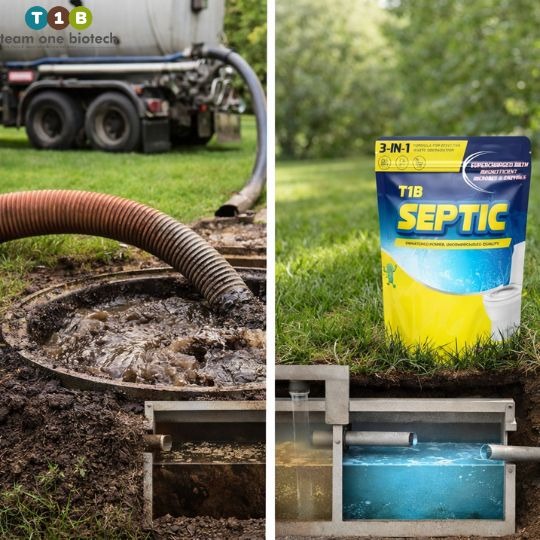
If you manage a commercial property in India, the cycle is familiar. The tank fills. The smell creeps in. You call the contractor. The tanker clears the system and drives away. For a few weeks, everything seems fine. Then it starts again.
That is not a maintenance programme. That is a holding pattern, one that keeps your facility functional on the surface while the underlying problem continues to build.
What Is Actually Happening Inside an Unmanaged Septic Tank
Inside a septic tank that is only being emptied periodically, organic solids accumulate steadily between pump-outs. Anaerobic bacteria dominate the biological environment inside the tank, and the byproducts of that anaerobic activity, primarily hydrogen sulphide and methane, build up continuously. These gases are the direct source of that sewage smell that seems to seep into corridors, service areas, and restrooms regardless of how often the space is cleaned. No surface spray or air freshener gets near what is being generated underground.
Over time, managing a septic system purely through mechanical pumping does not just create an odour problem. It creates a set of compounding operational risks:
- Persistent hydrogen sulphide generation that no deodoriser or masking product can neutralise at the source. The smell keeps returning because the process producing it has never been addressed.
- Underground drainage connections that deteriorate progressively and quietly, showing up eventually as emergency situations rather than items on a scheduled maintenance list.
- Wastewater discharge with elevated BOD and COD levels that puts you in real compliance exposure territory under CPCB and State Pollution Control Board norms, particularly as enforcement activity increases in metro municipalities.
- Gradual infrastructure deterioration that adds to long-term capital replacement costs without ever appearing as a line item until something fails.
- The constant background risk of a backup or overflow during a health inspection, a high-occupancy period, or a formal event, which is precisely when you can least afford it.
Mechanical pumping removes what has accumulated on the day the tanker arrives. It does nothing to change the biological conditions inside the tank that will reproduce the same situation within weeks.
The Real Cost of Doing Nothing Different
For a hotel managing multiple residential blocks, staff accommodation, and banquet infrastructure, the honest annual cost of a purely reactive approach is considerably higher than most finance teams realise. Add up scheduled pump-outs across the year, emergency callout fees, periodic compliance-related expenditure, and any infrastructure repair costs that get attributed to other budget lines, and the number tends to be surprising. That is before you try to put a figure on what a public odour complaint or an unannounced inspection costs in terms of both revenue and brand standing.
How Bioremediation Works, and Why It Produces a Different Result
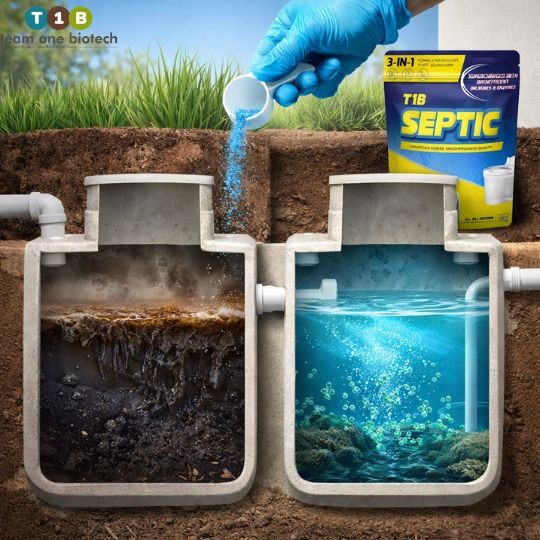
Moving from mechanical pumping to biological treatment is not a change of contractor. It is a change in how you think about the problem, from removing waste after it accumulates to breaking it down continuously before it can.
Bioremediation introduces carefully selected strains of beneficial bacteria and enzymes directly into the septic tank environment. These are not off-the-shelf cultures. They are specific microbial strains chosen for their ability to metabolise the complex organic solids, proteins, and waste compounds that build up inside commercial septic systems, converting them continuously into water, carbon dioxide, and trace mineral byproducts.
The word that matters most here is continuously. A well-established biological treatment system does not create a brief window of cleanliness before accumulation starts again. It works around the clock, every day, regardless of what service period your facility is running.
Why Indian Operating Conditions Demand an India-Specific Solution
This point gets far less attention than it deserves when Indian facility managers evaluate biological treatment products, most of which are either imported or formulated for operating environments that look nothing like a commercial property in India.
Temperature has a direct and significant effect on microbial performance. Bacterial cultures have optimal activity ranges, and the overwhelming majority of bioremediation formulations developed for European or North American markets are calibrated for ambient temperatures that are well below what facilities in Chennai, Hyderabad, Ahmedabad, or Delhi experience for most of the year. When temperatures climb regularly into the 38 to 45 degree Celsius range, standard imported cultures lose efficacy quickly or shift into metabolic states where their organic degradation performance drops significantly.
Team One Biotech’s microbial formulations are developed specifically for Indian conditions. They are tested for stability and consistent performance across the full temperature range encountered across Indian geographies and seasons, from the cooler winters of northern India to the sustained heat of a peninsular summer. This is not a minor technical detail. It is the difference between a product that looks good in a specification sheet and one that actually performs inside your facility month after month.
What the Treatment Process Actually Looks Like
The process begins with a site-level assessment. The technical team evaluates your tank sizing, drainage configuration, daily usage volumes, and the current organic load the system is carrying. From that assessment, a dosing protocol is developed that is matched to the specific wastewater profile of your property rather than a generic average.
An initial establishment period follows, during which the bacterial colonies build and stabilise within the tank environment. After that, a low-intensity ongoing maintenance dosing schedule sustains biological activity and prevents re-accumulation from taking hold.
There is no operational disruption involved. The system simply begins working and continues working in the background, without demanding the same recurring attention that a purely mechanical approach requires.
Septic Odour Is Not a Housekeeping Issue. It Is a Brand Issue.

In the luxury and upper-midscale hospitality segment, this needs to be said directly. A guest who encounters sewage odour anywhere on your property does not classify it as a minor inconvenience. They classify it as evidence that the property is not operating at the standard they paid for. And increasingly, they document it online, where the record sits permanently on a platform that your future guests will check before they book.
Why Chemical Masking Products Are Not a Strategy
The sprays, blocks, gels, and liquid deodorisers that many properties rely on as their first line of response do one thing: they add a smell to cover another smell. The anaerobic decomposition generating hydrogen sulphide and ammonia inside the tank continues completely unaffected while the masking product disperses into the air above it. This is a cosmetic response to a biological problem. It addresses nothing at the source, and it has a shelf life measured in hours.
Bioremediation resolves the odour by resolving the condition that produces it. When the anaerobic biological activity inside a septic tank is displaced by an active, functioning aerobic microbial community, hydrogen sulphide generation drops substantially. The smell does not return because the process responsible for it has been interrupted at a biological level, not papered over at a surface level.
For a hotel general manager managing guest complaints about corridor smells, or a facility director watching review scores trend in the wrong direction without an obvious cause, this is not a subtle distinction. It is the difference between a problem that cycles back every few weeks and one that is genuinely under control.
The Financial Case for Biological Septic Treatment
What You Are Currently Spending Without Realising It
A mid-scale commercial property managing its septic infrastructure under a purely mechanical model carries a set of recurring costs that rarely get looked at together. Scheduled pump-outs throughout the year. Emergency callout fees for the backup events that mechanical maintenance does not prevent. Periodic compliance expenditure when discharge standards are not met. Infrastructure repair costs that show up under various budget categories but trace back to the same underlying neglect.
When these are added up honestly, the total tends to be considerably higher than the line item for scheduled pumping alone suggests.
What Facilities Report After Making the Transition
Businesses that have moved from mechanical pumping to a biological treatment programme typically report total sanitation maintenance costs in the range of 30% to 60% of what they were previously spending on equivalent functions. Please note that these are general estimates and actual outcomes will vary based on tank conditions, influent characteristics, facility size, and local operating environment.
The reduction in direct cost is, in most cases, the smaller part of the story. The more significant change is the reduction in unpredictable expenditure. Emergency callouts, compliance penalties, and unplanned operational disruptions are difficult to budget for precisely because their timing is not in your control. A biological treatment programme does not just reduce what you spend. It makes what you spend far more predictable.
For any finance or operations team working to bring overhead costs under tighter control without compromising service delivery, that shift from unpredictable to managed is worth something well beyond the direct line item saving.
Why a Single Solution Does Not Work Across All of India

A facility management company running commercial properties across Delhi, Kochi, and Pune is not dealing with a single sanitation challenge. It is dealing with three distinct ones, each shaped by its own municipal sewage infrastructure, its own seasonal temperature profile, its own State Pollution Control Board requirements, and its own wastewater composition driven by the nature and volume of operations at each site.
Generic biological products are not built for this reality. They are built on the assumption of a standardised operating environment that simply does not exist across India’s commercial landscape.
How Team One Biotech Approaches Site-Specific Treatment
Team One Biotech begins every new client engagement with a site assessment before any treatment recommendation is made. The technical team looks at local wastewater characteristics, seasonal temperature ranges, drainage infrastructure type and age, daily usage volumes, and applicable local compliance requirements. The protocol that comes out of that process is calibrated for the specific conditions of your property, not for a theoretical average that may bear little resemblance to what your facility actually deals with.
This approach takes more time upfront than ordering from a product catalogue. The results it produces reflect that additional rigour.
The Choice in Front of You
Facilities that continue relying on mechanical pump-outs as their primary septic management approach are not choosing the cost-effective option. They are deferring a change that will eventually become unavoidable, through rising maintenance costs, a compliance event, or a reputational situation that makes the status quo impossible to defend.
The biological treatment technology that breaks the pumping cycle permanently, eliminates septic odours at their source, and converts sanitation from an operational liability into a managed cost line is not a future development. It is available today and in active use across hotels, corporate campuses, and managed commercial facilities throughout India.
Team One Biotech offers a no-obligation site audit for commercial properties anywhere in India. It is a practical technical conversation covering your current infrastructure, your compliance exposure, and what a treatment programme built specifically for your facility would look like.
If you are ready to stop managing the same problem on a repeating schedule and start actually resolving it, reach out to Team One Biotech today. The audit costs nothing. What it tells you might change how your facility operates for good.
Looking to improve your ETP/STP efficiency with the right bioculture?
Talk to our experts at Team One Biotech for customised microbial solutions.
Contact: +91 8855050575
Email: sales@teamonebiotech.com
Visit: www.teamonebiotech.com
Discover More on YouTube – Watch our latest insights & innovations!-
Connect with Us on LinkedIn – Stay updated with expert content & trends!