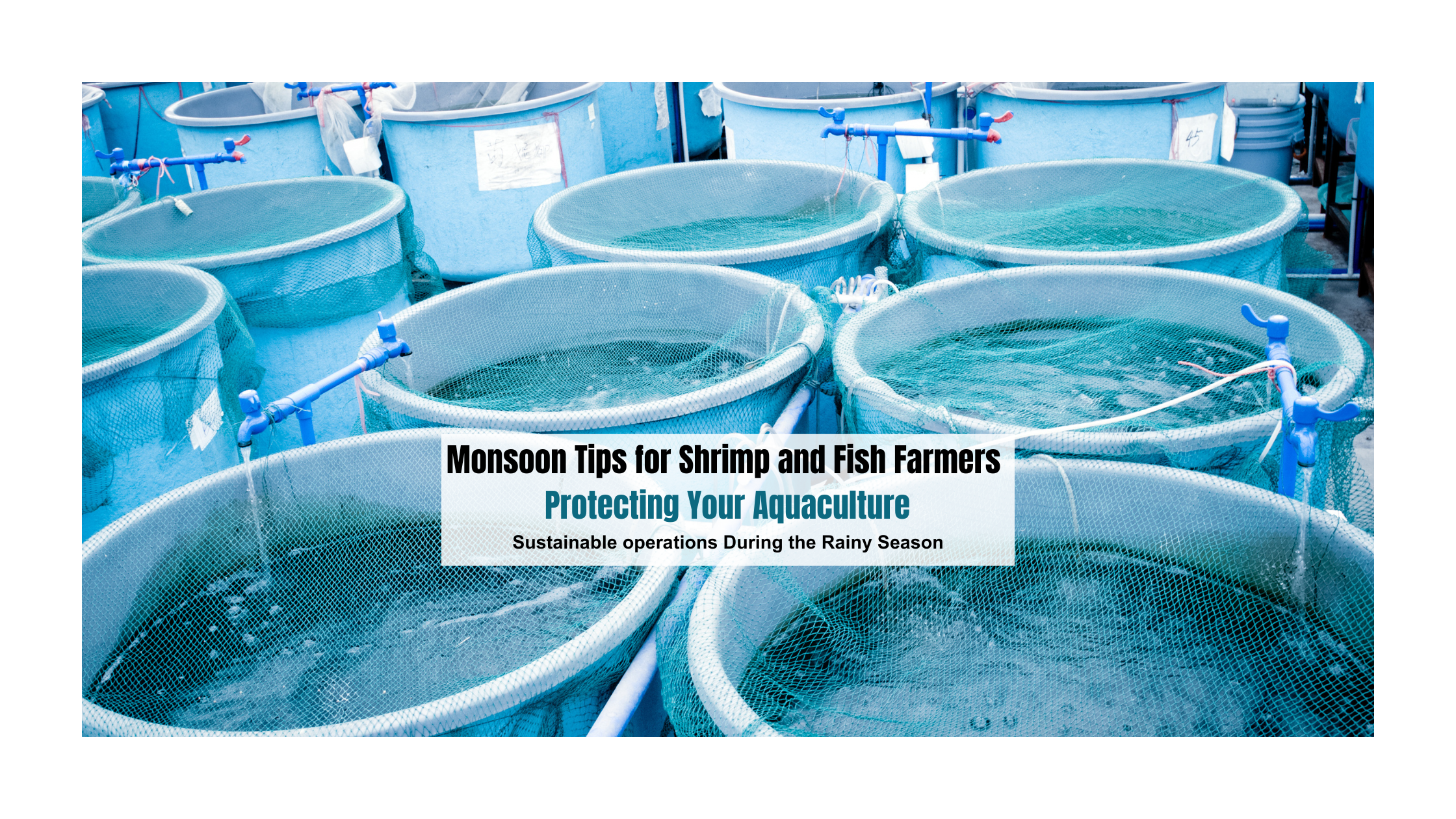
Monsoon Tips for Shrimp and Fish Farmers: Protecting Your Aquaculture Operations During the Rainy Season
The monsoon season presents both opportunities and challenges for shrimp and fish farmers. While rainfall can help replenish ponds and reduce temperature, it also introduces unpredictable water parameters, disease risks, and stress conditions, especially in species like vannamei, Penaeus monodon, tilapia, and pangasius.
Whether you’re managing a fish farming business or an aqua fish farm, adapting your strategies during monsoon is crucial for success.
For queries or support related to monsoon farm management, contact us.
For farmers in tropical and subtropical regions such as Indonesia, Vietnam, Peru, Chile, and parts of the United States, managing monsoon-related risks is key to ensuring survival, growth, and profitability.
This applies across various models—whether you’re engaged in indoor shrimp farming, running the largest fish farm in Nigeria, or focused on sustainable fish farming practices.
Why Monsoon Management is Crucial in Aquaculture?
During the rainy season, shrimp and fish are exposed to:
- Sudden temperature drops and pH fluctuations
- Dilution of pond salinity and mineral imbalance
- Increased organic load and turbidity
- Higher pathogen loads due to stagnant water or runoff
- Reduced feed intake and immune response
If unmanaged, these factors can lead to stress, poor growth, Vibrio outbreaks, white feces syndrome, and even mass mortality.
Additionally, challenges such as aquaculture problems, environmental impacts of aquaculture, and aquaculture issues become more severe during this season.
Proper knowledge about what is aquaculture and understanding the challenges of aquaculture empower farmers to manage risks effectively.
7 Practical Monsoon Tips for Shrimp and Fish Farmers:
- Monitor Water Parameters Daily
Use a reliable test kit to track pH, salinity, ammonia, nitrite, and dissolved oxygen (DO). Rainfall often dilutes alkalinity and drops pond pH, which can stress aquatic species.
Maintaining the importance of alkalinity in aquaculture cannot be overlooked during this time. - Maintain Salinity and Alkalinity
In regions with heavy rainfall, especially for vannamei shrimp, salinity may drop below optimal levels. Use mineral blends or salt to stabilize pond chemistry. - Improve Drainage Around Ponds
Prevent runoff from entering the pond. Surface runoff can introduce contaminants, organic debris, and pathogens that upset the pond’s microbial balance. - Use Probiotics to Stabilize Water Quality
Apply aquaculture probiotics like T1B Aqua S regularly to manage ammonia, reduce sludge, and maintain a healthy microbial ecosystem. Probiotics also help control Vibrio and other harmful bacteria during unstable conditions. - Adjust Feeding Strategy
Shrimp and fish reduce feed intake during stress. Feed smaller quantities more frequently and ensure feed is not wasted to prevent water pollution.
For those following a shrimp farming guide, this step is vital in any monsoon-feeding protocol. - Provide Aeration Support
Install aerators or paddle wheels to maintain oxygen levels, especially during cloudy days or high biomass periods.
This is especially necessary in fish farming tanks South Africa and other regions experiencing water stagnation due to heavy rain. - Strengthen Immunity with Gut-Focused Additives
Use gut probiotics or supplements that boost immunity and digestion. This is critical for disease prevention during weather-related stress.
How T1B Aqua S Supports Farmers During Monsoon
T1B Aqua S, manufactured by Team One Biotech, is a trusted aquaculture probiotic that works effectively during monsoon fluctuations.
- Reduces ammonia, nitrite, and hydrogen sulphide
- Breaks down sludge and organic matter
- Suppresses Vibrio and other pathogens
- Enhances gut health and survival rates
- Supports stable growth in vannamei, Penaeus monodon, tilapia, and catfish
Its versatility makes it ideal for freshwater shrimp farming, aquaculture farms, and even larger operations using aquaculture pond liners for controlled environments.
Technicians and experts, including aquaculture technicians, have found its results promising across diverse environments.
Used in farms across Southeast Asia, Latin America, and North America, T1B Aqua S has become a go-to solution for weather-sensitive aquaculture systems.
Whether you’re involved in fish farming equipment for sale or consulting on sustainable aquaculture practices, the monsoon doesn’t have to mean losses. With proactive planning and effective tools, your aquaculture venture can thrive—even during unpredictable weather.
The monsoon season doesn’t have to mean losses. With proactive management, consistent monitoring, and the use of aquaculture probiotics, shrimp farming and fish farming operations can maintain healthy ponds and secure their harvests.
Need assistance preparing your ponds this monsoon? Contact us for expert guidance and product recommendations.
For bulk inquiries, distribution opportunities, or technical guidance on T1B Aqua S:
Or reach out at sales@teamonebiotech.com/8855050575
 Discover More on YouTube – Watch our latest insights & innovations!
Connect with Us on LinkedIn – Stay updated with expert content & trends!


 Email: sales@teamonebiotech.com
 Visit: www.teamonebiotech.com