


Beginner’s Guide to Enzyme-Based Waste Breakdown
India generates over 160,000 tonnes of municipal solid waste daily, and our industrial sectors discharge millions of litres of complex effluent that traditional treatment methods struggle to handle. From textile dyeing units in Tiruppur to food processing facilities in Punjab, the waste crisis isn’t just an environmental challenge, it’s a business continuity issue that demands smarter, more sustainable solutions.
What if the answer to breaking down stubborn organic pollutants, reducing treatment costs, and meeting increasingly stringent environmental regulations didn’t come from harsher chemicals, but from nature itself?
Welcome to the world of enzyme-based waste breakdown, a biological approach that’s transforming how Indian industries tackle their most persistent waste management challenges.
What Exactly Is Enzyme-Based Waste Breakdown?
Enzyme-based waste breakdown, also known as enzymatic bioremediation, harnesses the power of naturally occurring biological catalysts to decompose organic pollutants into simpler, harmless substances. Think of enzymes as highly specialized molecular scissors that cut complex waste compounds into manageable pieces that nature can easily absorb.
Unlike conventional chemical treatments that often create secondary pollutants or require extensive pH adjustments, enzymes work at ambient temperatures and neutral pH levels. They’re incredibly specific, targeting particular waste compounds while leaving beneficial organisms untouched, making them ideal for sensitive ecosystems and mixed-waste environments common in Indian industrial zones.
The process mimics and accelerates what already happens in nature. Microorganisms in soil and water naturally produce enzymes to break down organic matter. Enzymatic bioremediation simply concentrates and optimizes these biological tools for industrial-scale waste management.
How Does Enzymatic Bioremediation Actually Work?
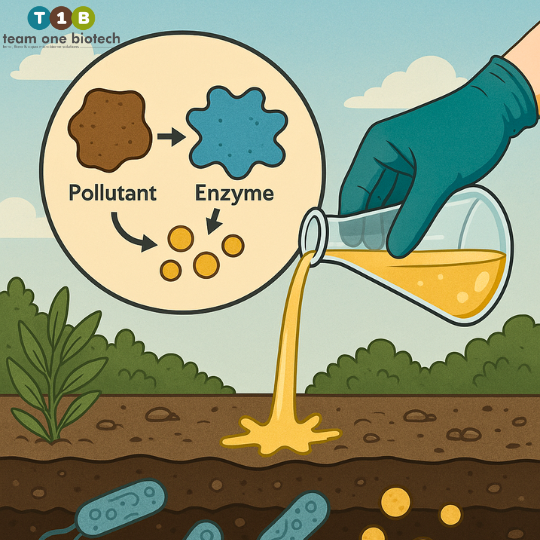
Understanding the mechanics of enzyme-based waste breakdown doesn’t require a biochemistry degree. The process follows a straightforward mechanism that environmental managers can easily grasp and implement.
The Four-Step Breakdown Process:
- Enzyme Introduction: Specialized enzyme formulations are introduced to wastewater, contaminated soil, or solid waste streams. These formulations are designed for specific waste types, lipases for fats and oils, proteases for protein-rich waste, cellulases for organic fibres.
- Molecular Recognition: Enzymes identify and bind to their target pollutant molecules through a “lock-and-key” mechanism. This specificity means the treatment targets exactly what needs breaking down without disrupting the entire waste matrix.
- Catalytic Breakdown: Once bound, enzymes accelerate chemical reactions that split complex organic compounds into smaller molecules. A single enzyme molecule can process thousands of pollutant molecules before becoming inactive, making the process remarkably efficient.
- Final Conversion: The breakdown products are simple organic compounds that naturally occurring bacteria can further metabolize into carbon dioxide, water, and biomass, completing the cycle of biological waste management.
Key Factors Influencing Efficiency:
The success of enzyme-based waste breakdown depends on maintaining optimal conditions. Temperature, pH levels, oxygen availability, and the presence of enzyme inhibitors all affect performance. However, modern enzyme formulations designed for Indian industrial conditions are remarkably robust, functioning effectively even in challenging environments like high-temperature textile effluent or variable-pH food processing waste.
The Compelling Benefits of Choosing Eco-Friendly Waste Treatment
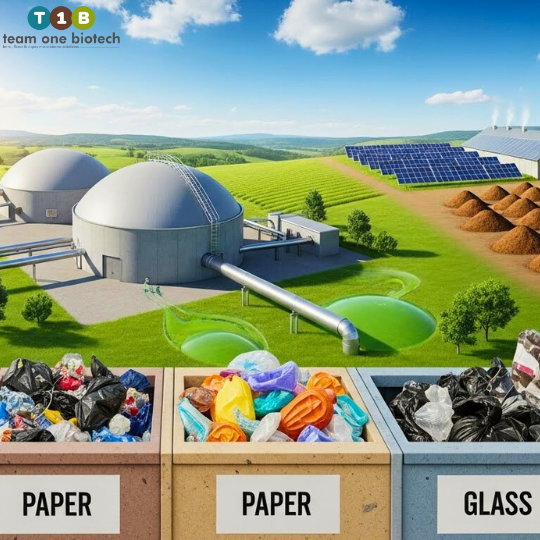
For facility managers evaluating bioremediation solutions in India, enzyme-based systems deliver advantages that extend far beyond basic compliance.
Environmental Advantages:
- Zero Toxic Residuals: Unlike chemical treatments that can leave harmful by-products, enzymatic bioremediation produces only biodegradable end products
- Reduced Chemical Oxygen Demand (COD): Particularly crucial for industries facing strict discharge limits, enzymes can reduce COD levels by 60-85% in industrial effluent
- Lower Sludge Generation: Biological waste management produces significantly less sludge compared to chemical precipitation methods, reducing disposal costs and landfill burden
- Odour Control: Enzymes effectively neutralize the volatile compounds responsible for unpleasant smells in waste water treatment facilities and solid waste management sites
Operational Benefits:
- Cost Efficiency: While initial enzyme costs may seem higher, the reduction in chemical purchases, sludge disposal, and energy consumption delivers substantial long-term savings
- Simpler Operations: Enzyme systems require less monitoring and adjustment than chemical dosing systems, reducing labour requirements
- Compatibility: Enzymatic bioremediation integrates seamlessly with existing treatment infrastructure, no need for complete system overhauls
- Scalability: Solutions scale easily from small manufacturing units to large municipal solid waste treatment facilities
Regulatory Compliance:
With the Central Pollution Control Board tightening discharge standards and state pollution control boards conducting more frequent inspections, enzyme-based solutions help industries meet, and exceed, environmental parameters consistently. The natural, non-toxic nature of enzymatic treatment also positions companies favourably for green certifications and sustainable supply chain requirements from international buyers.
Ready to see how enzyme-based solutions can transform your specific waste challenges? Explore Team One Biotech’s range of specialized enzyme formulations designed for Indian industrial conditions, or request a consultation to assess your facility’s needs.
Real-World Applications: Enzymatic Bioremediation Across Indian Industries
The versatility of enzyme-based waste breakdown makes it applicable across diverse sectors facing unique waste management challenges.
Textile and Dyeing Industries
The textile hubs of Tiruppur, Surat, and Ludhiana discharge effluent laden with synthetic dyes, sizing agents, and finishing chemicals. Traditional treatment struggles with colour removal and persistent organic compounds. Enzyme formulations combining laccases and peroxidases break down complex dye molecules, achieving decolourization rates exceeding 90% while reducing BOD and COD to permissible limits.
Food and Beverage Processing
Dairy plants, fruit processing units, and breweries generate high-strength organic waste with elevated fat, protein, and carbohydrate content. Lipase and protease enzyme blends accelerate the breakdown of these compounds in pre-treatment systems, preventing clogging in downstream biological treatment and dramatically reducing the load on municipal sewage systems.
Municipal Solid Waste Management
Urban local bodies struggling with overflowing landfills and composting challenges are deploying enzyme accelerators to speed up organic waste decomposition. These formulations reduce composting time from 90-120 days to just 45-60 days, producing nutrient-rich compost while minimizing leachate problems and methane emissions.
Pharmaceutical and Chemical Manufacturing
Industries producing complex organic compounds face stringent discharge requirements for emerging contaminants. Customized enzyme cocktails targeting specific pharmaceutical residues and chemical intermediates provide an effective pre-treatment step before conventional biological treatment.
Oil and Petroleum Sector
Hydrocarbon-contaminated soil and oily wastewater from refineries and storage facilities respond well to lipase and esterase treatments. These enzymes break down petroleum compounds that would otherwise persist in the environment for decades, facilitating faster site remediation and groundwater protection.
Implementing Enzyme-Based Solutions: What You Need to Know
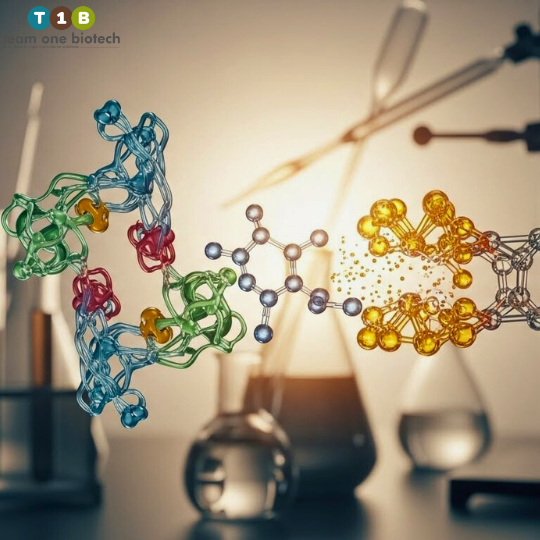
Transitioning to enzymatic bioremediation doesn’t mean abandoning your existing infrastructure or expertise. The implementation process is straightforward when approached systematically.
Assessment Phase:
Begin with a comprehensive waste characterization. Understanding your waste composition, COD/BOD ratios, specific pollutants, flow rates, and temperature ranges, helps identify the most appropriate enzyme formulations. Reputable bioremediation solutions providers in India offer free initial assessments to determine suitability.
Pilot Testing:
Before full-scale deployment, conduct pilot trials to optimize dosing rates and contact times for your specific conditions. This step prevents over-application and ensures cost-effective treatment. Most enzyme manufacturers provide technical support during pilot phases.
Integration Strategies:
Enzyme-based waste breakdown works best when integrated at strategic points in your treatment train:
- Primary Treatment Stage: Enzyme addition in equalization tanks breaks down complex compounds before biological treatment
- Activated Sludge Enhancement: Enzyme dosing in aeration tanks boosts microbial activity and improves settling characteristics
- Tertiary Polishing: Post-biological enzyme treatment removes residual organics for stringent discharge requirements
Monitoring and Optimization:
Track key performance indicators, COD/BOD reduction, colour removal, sludge generation, and operational costs, to demonstrate ROI and refine dosing protocols. Modern enzyme formulations show measurable improvements within 7-14 days of consistent application.
Thinking about how enzyme-based waste breakdown could work in your facility? Download our comprehensive case study showing 70% COD reduction in a textile dyeing unit, or speak with our technical team about customized solutions for your industry.
Overcoming Common Concerns About Biological Waste Management
Despite proven effectiveness, some environmental managers hesitate to adopt enzymatic bioremediation due to misconceptions. Let’s address the most common concerns directly.
“Enzyme treatments are too expensive.”
While per-litre costs may initially appear higher than bulk chemicals, total cost of ownership tells a different story. Factor in reduced sludge disposal, lower energy consumption, minimal pH adjustment chemicals, and decreased regulatory penalties, and enzyme systems often deliver 25-40% cost savings over traditional methods.
“Enzymes are too sensitive for our harsh waste.”
Modern enzyme formulations designed for industrial applications are remarkably robust. Stabilization technologies protect enzyme activity across wide pH ranges (4-10) and elevated temperatures (up to 60°C). Pre-treatment may be necessary for extreme conditions, but most Indian industrial waste falls well within enzyme tolerance ranges.
“The results take too long.”
While complete mineralization of pollutants does take time, measurable improvements in key parameters occur rapidly. Most facilities observe 30-50% COD reduction within the first week of enzyme application, with optimal results achieved within 2-4 weeks of consistent use.
“Our team lacks the expertise to manage enzyme systems.”
One of enzymatic bioremediation’s greatest advantages is operational simplicity. Dosing systems resemble conventional chemical feed setups, and reliable suppliers provide comprehensive training and ongoing technical support. Many facilities successfully manage enzyme-based systems with their existing staff.
The Future Is Biological: Why Now Is the Time to Transition
India’s environmental landscape is evolving rapidly. Stricter regulations, growing consumer awareness, and increasing scrutiny from international partners make sustainable waste management not just ethical, it’s essential for business survival and growth.
Enzyme-based waste breakdown represents a proven, mature technology that aligns perfectly with India’s environmental goals and industrial needs. As chemical treatment costs rise and disposal options become more restricted, biological waste management offers a clear path forward.
The technology continues to advance. Researchers are developing enhanced enzyme formulations for emerging contaminants, including microplastics and pharmaceutical residues. Companies investing in eco-friendly waste treatment today position themselves as environmental leaders while building operational resilience for tomorrow’s challenges.
Your Next Steps Toward Cleaner, More Sustainable Operations
Understanding enzyme-based waste breakdown is just the beginning. The real transformation happens when you move from knowledge to action.
Team One Biotech has helped hundreds of Indian facilities across manufacturing, municipal, and industrial sectors implement effective enzymatic bioremediation solutions. Our formulations are specifically designed for Indian waste characteristics, climate conditions, and regulatory requirements.
Whether you’re facing discharge limit violations, dealing with odour complaints, struggling with high treatment costs, or simply seeking to enhance your sustainability profile, enzyme-based solutions offer a practical, proven path forward.
Contact Team One Biotech today for a complimentary waste assessment and discover how enzymatic bioremediation can solve your specific challenges. Our technical team is ready to evaluate your facility’s needs and recommend customized enzyme formulations that deliver measurable results.
The future of waste management in India is biological, sustainable, and remarkably effective. The question isn’t whether to adopt enzyme-based waste breakdown, it’s how quickly you can implement it to gain competitive advantage while protecting the environment we all depend on.
Start your enzymatic bioremediation journey today. Your facility, your bottom line, and the planet will thank you.
Looking to improve your ETP/STP efficiency with the right bioculture?
Talk to our experts at Team One Biotech for customised microbial solutions.
Contact: +91 8855050575
Email: sales@teamonebiotech.com
Visit: www.teamonebiotech.com
Discover More on YouTube – Watch our latest insights & innovations!-
Connect with Us on LinkedIn – Stay updated with expert content & trends!