
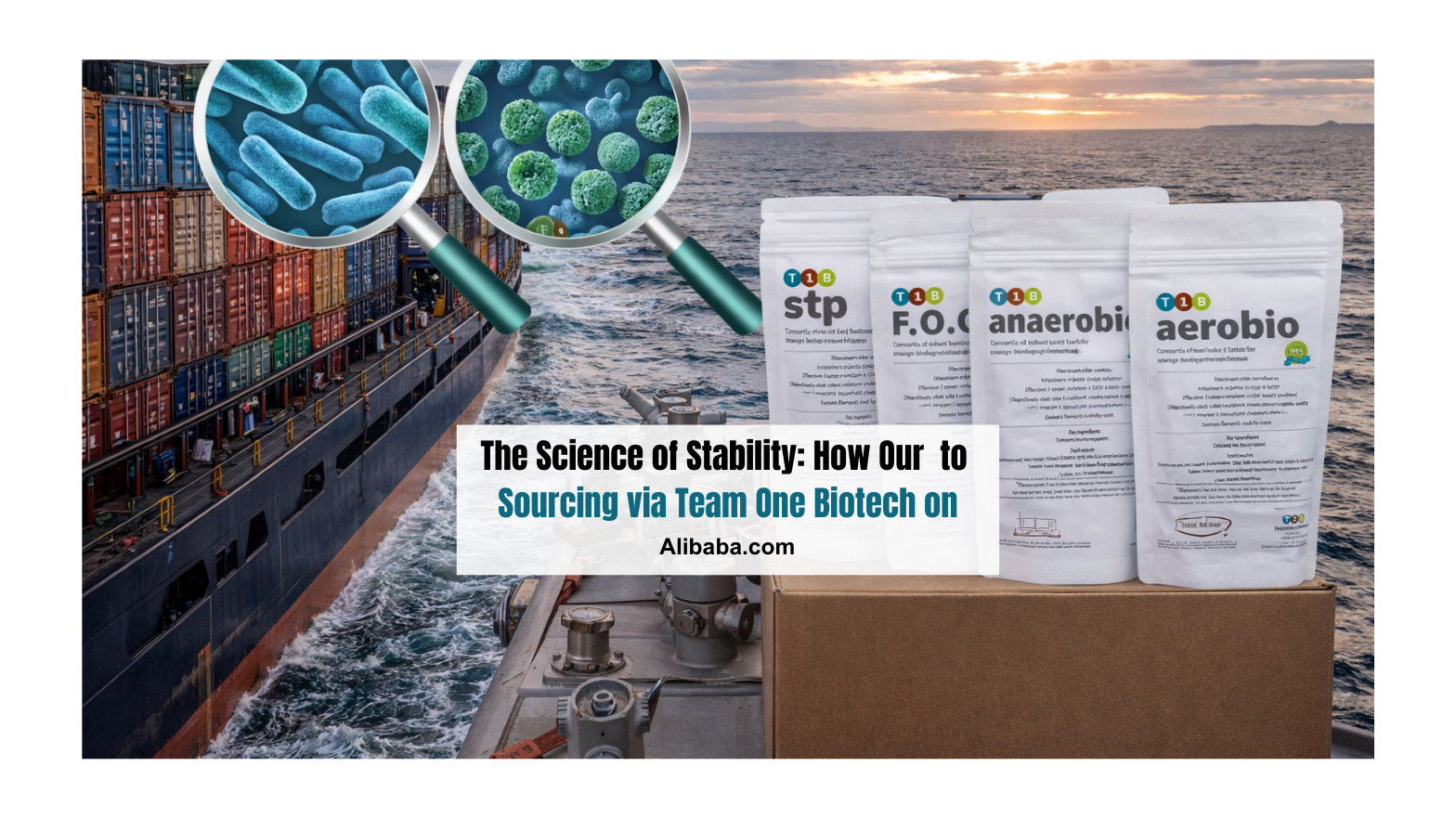
The Science of Stability: How Our Microbes Survive 60-Day Sea Transit to Global Ports

In the high-stakes world of international biotechnology, the journey from the laboratory to the field is often more perilous than the biological challenges the products are designed to solve. When a shipping container leaves a port, it isn’t just carrying cargo; it is carrying a promise of soil regeneration, water purification, or industrial remediation.

For distributors, NGOs, and mining firms, the difference between a viable microbial shipment and a “dead” one is measured in millions of dollars of lost opportunity and broken trust. At Team One Biotech (T1B), we have spent over 27 years perfecting the science of stability. We ensure that our microbial solutions, Terro, Flaro, and Aqua, arrive at global ports with 100% efficacy, even after enduring 60-day maritime transits through the planet’s harshest environments.

The High Stakes of Biological Logistics
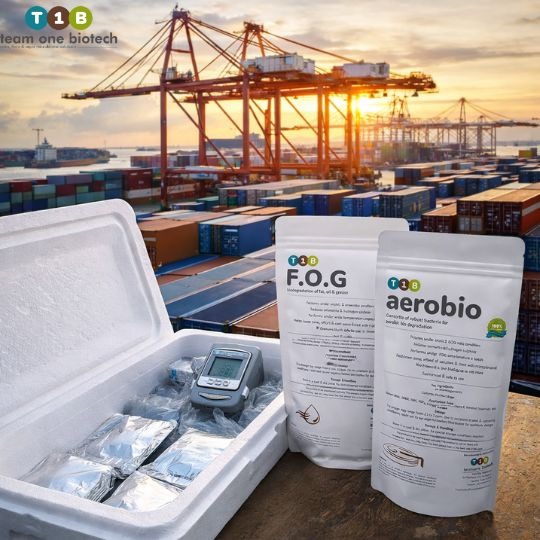
The High Stakes of Biological Logistics

Biological logistics is a field where “good enough” is a recipe for catastrophe. Unlike inert chemicals or mechanical parts, microbes are living entities. In international trade, they are frequently subjected to “The Gauntlet”, a grueling logistics chain that tests the limits of biological endurance.

When a shipment is destined for an NGO in Sub-Saharan Africa or a mining operation in the high Andes of South America, it must first survive weeks in a steel container under a relentless equatorial sun. If those microbes lose viability en route, the consequences are cascading:

  • Agricultural projects stall, leading to food insecurity.
  • Wastewater treatment plants fail to meet compliance, resulting in heavy fines.
  • Aquaculture harvests are wiped out by ammonia spikes that could have been prevented.

For Team One Biotech, microbial stability is not just a technical specification; it is the foundation of global trust. Backed by ISO, GMP, and SGS certifications, and proven across 55+ countries, we deliver more than just bacteria; we deliver reliability.

The Problem: Heat, Humidity, and the 60-Day Horizon
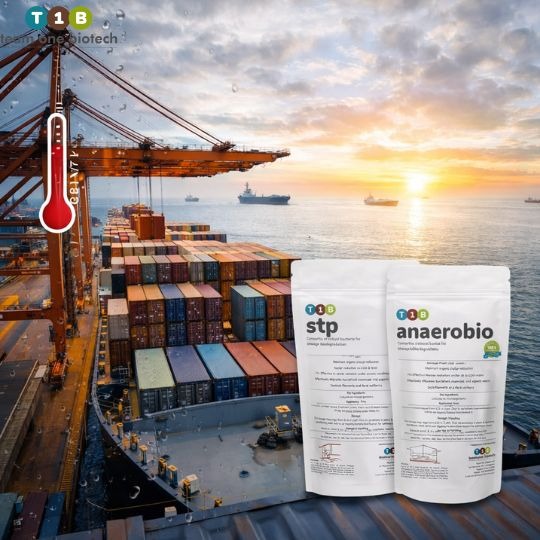
The Problem: Heat, Humidity, and the 60-Day Horizon

Shipping live microbial products across oceans presents three primary environmental antagonists:

1. Extreme Thermal Stress

Containers on the deck of a cargo ship can reach internal temperatures exceeding 60°C (140°F) when crossing equatorial waters. For standard vegetative bacteria, these temperatures cause rapid protein denaturation and cell death.

2. Humidity and Atmospheric Fluctuations

Microbial products are often hygroscopic. Moisture ingress during transit can trigger premature metabolic activation. If a microbe “wakes up” inside its packaging because of high humidity, it will quickly exhaust its nutrient reserves and die long before it reaches the customer.

3. The Time Factor

Global supply chains are currently stretched. A 30-day transit can easily turn into a 60-day ordeal due to port congestion and transshipment delays. A product must not only survive the journey but arrive with a “full tank” of biological energy ready for immediate deployment.

The Science: Dormant Spore Technology and Stabilization
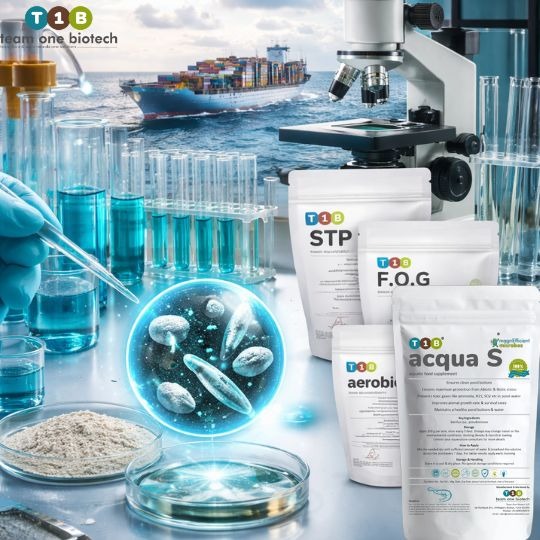
The Science: Dormant Spore Technology and Stabilization

How does Team One Biotech ensure survival under such hostile conditions? We look to nature’s own survival vault: Dormant Spore Technology.

While many competitors use vegetative cells, which are active, fragile, and short-lived, our formulations center on specialized spore-forming strains. A spore is a highly resilient, non-reproductive structure. Think of it as a biological “escape pod.”

Our Proprietary Stabilization Pillars:

  • Advanced Spore Selection: We select specific Bacillus and other robust strains characterized by thick peptidoglycan layers and specialized coat proteins that shield DNA from heat and UV radiation.
  • Cryo-Stabilization Matrices: Our microbes are embedded in a proprietary matrix that acts as a physical buffer. This matrix locks the spores in a protective “glassy” state, preventing any mechanical damage during the vibrations of sea travel.
  • Moisture-Controlled Encapsulation: We use advanced encapsulation techniques that prevent water molecules from reaching the spore. This ensures the microbes stay in deep dormancy until they are intentionally diluted in water by the end-user.
  • Industrial-Grade Desiccation: By reducing water activity ($a_w$) to near-zero levels through controlled industrial drying, we bring metabolic activity to a complete standstill.
  • Technical Insight: By keeping the microbes in a state of suspended animation, we ensure that the biological “shelf life” remains intact regardless of whether the ship is docked in Singapore or sailing past the Cape of Good Hope.

The Logistics: Precision Packaging and Quality Assurance
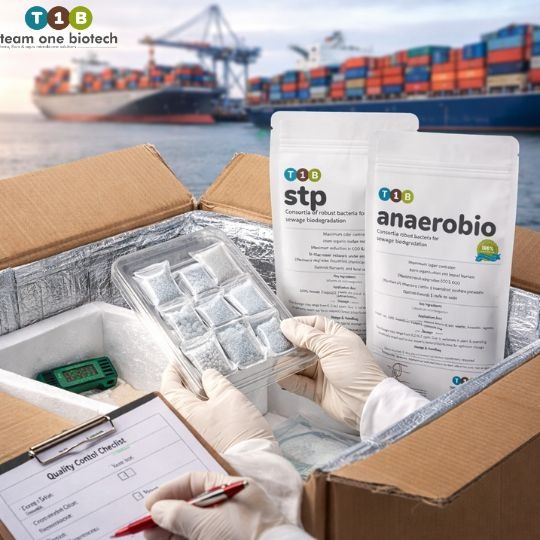
Science in the lab is only half the battle; the other half is fought in the warehouse and the loading dock. Team One Biotech integrates precision engineering into our secondary and tertiary packaging.

Transit Validation Protocols

We don’t guess if our products will survive; we know they will. Our in-house transit simulation chambers replicate the exact heat and humidity profiles of a 60-day maritime journey. Every batch must pass these “stress tests” before it is cleared for export.

  • Triple-Layer Barrier Packaging: We utilize high-spec foil laminates with superior Oxygen Transmission Rates (OTR) and Water Vapor Transmission Rates (WVTR) to create a micro-environment that is immune to outside weather.
  • Thermal-Resistant Boxing: Our bulk shipments are packed to minimize thermal conductivity, slowing the rate of internal temperature changes.
  • ISO/GMP QC Checkpoints: Every single batch undergoes a final viability count (CFU/g) post-packaging to ensure the customer receives exactly what is promised on the COA (Certificate of Analysis).

Sector Deep-Dives: Stability in Action

The resilience of our microbes translates directly into economic value across three primary sectors:

1. Aquaculture: Aqua Microbiome Solutions

In the intensive shrimp and fish farms of South America and Southeast Asia, water chemistry can change in hours. Farmers cannot afford to wait for a “weak” microbial product to slowly replicate.

  • The Benefit: Our Aqua microbes activate instantly. They immediately begin reducing ammonia ($NH_3$) and nitrites ($NO_2^-$), supporting disease resistance and improving Feed Conversion Ratios (FCR).
  • The Result: Consistent water quality even when the product has been stored in tropical warehouses for months.

2. Wastewater Treatment: Flaro Microbiome Solutions

Mining firms and heavy industries operate in remote locations where logistics are a nightmare. They rely on Flaro for industrial wastewater probiotics.

  • The Benefit: Flaro strains are engineered for rapid biofilm formation. Even after a long transit, they retain the enzymatic “machinery” needed to degrade complex hydrocarbons and sequester heavy metals.
  • The Result: Total compliance with environmental discharge standards and avoided downtime for treatment plants.

3. Agriculture: Terro Microbiome Solutions

NGOs and agricultural distributors in Africa deal with some of the most challenging last-mile logistics on earth. Terro microbes are the backbone of sustainable soil health.

  • The Benefit: Terro survives the “last mile” in non-refrigerated trucks. Once applied, they enhance nitrogen fixation and drought resilience.
  • The Result: Increased crop yields and a reduced dependency on expensive, volatile chemical fertilizers.

The Partnership: In-House Expertise and Global Reach

Choosing a microbial partner is a long-term strategic decision. Team One Biotech distinguishes itself through a vertically integrated model that emphasizes Human-to-Human (H2H) trust.

  • In-House Manufacturing: We do not outsource our fermentation. By owning the entire production process, we maintain 100% control over the quality and stability of the strains.
  • Government-Level Experience: We have successfully executed national-scale bioremediation and agricultural programs, proving our ability to handle complex regulatory and logistical frameworks.
  • Global Export Expertise: We navigate the labyrinth of international shipping regulations, ensuring that all phytosanitary and customs documentation is perfect, preventing delays that could further test product stability.

Why Buyers Choose T1B:

FeatureBenefit
27+ Years ExperienceDeep institutional knowledge of microbial behavior.
SGS CertifiedIndependent verification of quality and potency.
Bulk White LabelingHigh-margin opportunities for distributors and NGOs.
55+ CountriesA proven track record on every inhabited continent.

The Global Export Hub: T1B on Alibaba

To streamline the procurement process for international buyers, we have established the Team One Biotech Official Alibaba Store. This serves as our digital Global Export & Private Label Hub.

Through this platform, procurement officers can:

  • Access Full Documentation: Download technical data sheets and certifications instantly.
  • Request Custom Formulations: Discuss specific microbial concentrations for unique environmental challenges.
  • Secure Transparent Pricing: Get direct-to-manufacturer rates for bulk orders and white-labeling.
  • Coordinate Logistics: Leverage our experience in shipping to Africa, South America, and beyond.

Stability as the Foundation of Trust

In the biotech industry, the laboratory results are only as good as the product’s survival during transit. Team One Biotech has bridged the gap between advanced microbiology and global logistics. By mastering dormant spore technology and barrier packaging, we have turned the 60-day sea transit from a risk into a routine.

For the distributor in Lagos, the mine manager in Chile, and the shrimp farmer in Ecuador, T1B represents a guarantee: that the science we put into the container is the same science that comes out, active, potent, and ready to work.

Are you ready to secure your biological supply chain?

Visit the T1B Official Alibaba Store to explore our product lines or Request a Technical Stability Report to see our 60-day transit validation data firsthand.

Looking to improve your ETP/STP efficiency with the right bioculture?
Talk to our experts at Team One Biotech for customised microbial solutions.

Contact+91 8855050575

Email:  sales@teamonebiotech.com

Visit: www.teamonebiotech.com

Discover More on YouTube – Watch our latest insights & innovations!-

Connect with Us on LinkedIn – Stay updated with expert content & trends!

The Science Behind Soil Microbes and Plant Growth
The Science Behind Soil Microbes, biofertilizers and Plant Growth

Healthy soil is alive with activity. Beneath the surface, billions of soil microbes such as bacteria, fungi, protozoa, and actinomycetes are constantly working. These tiny organisms may be invisible to the eye, but they play a vital role in soil health, plant growth, and sustainable farming. They act as nature’s hidden workforce, transforming soil into a living ecosystem that supports agriculture. Connect with us today to discover how our beneficial microbes can boost soil health and crop productivity naturally.

In the rapidly evolving landscape of agricultural biotechnology, understanding soil microbiology has become crucial for crop science professionals, agronomists, and agricultural consultants worldwide. The global biofertilizer market is projected to reach unprecedented heights, driven by increasing demand for organic farming solutions and sustainable agriculture practices.

Our Plant Growth Promoter integrates eco-friendly microbial technology to support sustainable agriculture and soil health.

Microbes as Nature’s Engineers: The Foundation of Precision Agriculture

Soil microbes are central to nutrient cycling, which directly impacts crop productivity. Nitrogen-fixing bacteria like Rhizobium form symbiotic relationships with legume roots, converting atmospheric nitrogen into forms plants can use. Phosphate-solubilizing microbes unlock phosphorus bound in the soil, making it available for plant uptake. Without these essential processes, plants would struggle to access nutrients critical for strong growth and higher yields.

Modern agro-biotechnology companies are developing innovative microbial formulations that enhance nutrient availability, improve crop yields, and reduce the use of synthetic fertilizers. By leveraging microbial inoculants, farmers are achieving precision agriculture outcomes with reduced input costs and improved soil sustainability.

Advanced Microbial Technologies in Modern Agriculture

The agricultural input industry has witnessed revolutionary developments in microbial biotechnology. Leading biofertilizer manufacturers are now producing sophisticated microbial consortium that combine multiple beneficial microorganisms for enhanced efficacy. These bio-based fertilizers represent a paradigm shift from traditional chemical fertilizers to eco-friendly agricultural inputs.

Plant growth promoting rhizobacteria (PGPR) and beneficial soil microorganisms are increasingly being used in commercial agriculture, greenhouse cultivation, and controlled environment agriculture. The integration of soil microbiome analysis with precision farming technologies is enabling farmers to make data-driven decisions about microbial inoculation strategies.

Building Stronger Roots with Mycorrhizal Fungi: The Natural Network Revolution

Fungi, especially mycorrhizal fungi, extend a plant’s root system through underground networks. This “natural internet” allows roots to access water and nutrients far beyond their reach, particularly phosphorus. In exchange, fungi receive sugars from plants. This mutual relationship improves soil fertility, strengthens root systems, and enhances overall crop performance, making it a cornerstone of modern sustainable agriculture.

Industries such as organic farming, horticulture, floriculture, and commercial agriculture are adopting mycorrhizal-based biostimulants to promote healthier crops, improve nutrient uptake, and ensure resilience against drought stress. These eco-friendly solutions are replacing chemical-intensive practices and are in demand across both domestic and international agricultural markets.

Mycorrhizal Applications Across Agricultural Sectors

The mycorrhizal fungi market is experiencing significant growth across multiple agricultural segments. Arbuscular mycorrhizal fungi (AMF) applications are particularly valuable in vegetable production, fruit cultivation, and ornamental plant growing. Agricultural biotechnology companies are developing specialized mycorrhizal inoculants for specific crops including tomatoes, peppers, strawberries, and citrus fruits.

Ectomycorrhizal fungi play crucial roles in forestry applications and tree nursery management, while endomycorrhizal associations are essential for cereal crop production and cash crop farming. The integration of mycorrhizal technology with drip irrigation systems and fertigation practices is revolutionizing water-efficient agriculture and nutrient use efficiency.

Soil Microbes and Plant Immunity: Biological Crop Protection Solutions

Soil microbes not only feed plants but also protect them. Beneficial microbes compete with harmful pathogens in the rhizosphere (the root zone), reducing the risk of disease. Some even stimulate a plant’s natural defence system, boosting immunity and resilience against stress. This biological protection reduces dependence on chemical pesticides and aligns with eco-friendly farming practices.

In today’s agri-industrial landscape, biological crop protection is gaining global attention. With the rising demand for sustainable pest management, products based on Trichoderma, Bacillus subtilis, and Pseudomonas fluorescens are widely used to minimize crop losses. Such microbial crop-care solutions play a key role in integrated pest management (IPM), reducing chemical pesticide residues in food and enhancing export compliance for agricultural producers.

Biocontrol Agents and Sustainable Pest Management

The biological pesticides market is rapidly expanding as agricultural producers seek alternatives to synthetic pesticides. Microbial biocontrol agents including Trichoderma harzianum, Bacillus thuringiensis, and Beauveria bassiana are becoming standard components of integrated pest management programs.

Biopesticide manufacturers are developing targeted solutions for specific pest problems, including soil-borne pathogens, root rot diseases, and fungal infections. These biological control products are particularly important for organic certification compliance and residue-free crop production demanded by export markets and premium food chains.

Plant immunomodulators and resistance inducers derived from beneficial microbes are emerging as powerful tools for prophylactic plant protection. The combination of beneficial bacteria and bioactive compounds is creating new categories of plant health products that enhance crop resilience and stress tolerance.

The Bigger Picture of Soil Health: Industrial Applications and Market Trends

Rich microbial diversity in soil leads to healthier, faster-growing plants with stronger resistance to stress. Depleted soils, on the other hand, result in weak crops and declining yields. To restore soil fertility, farmers are increasingly adopting practices like composting, crop rotation, and the use of biofertilizers. These approaches not only boost plant growth but also build long-term soil health for sustainable farming.

From an industrial perspective, biofertilizer manufacturing companies are playing a major role in addressing challenges faced by large-scale farming, greenhouse cultivation, and precision horticulture. By offering soil conditioners, microbial consortia, and enzymatic soil enhancers, these companies contribute to climate-smart agriculture and long-term soil regeneration.

Market Dynamics and Industrial Applications

The global agricultural biologicals market is experiencing unprecedented growth, driven by increasing awareness of sustainable farming practices and environmental stewardship. Agricultural input companies are investing heavily in research and development of next-generation biofertilizers and soil health products.

Soil rehabilitation products are gaining traction in post-harvest residue management and land reclamation projects. Carbon sequestration technologies based on soil microbiome enhancement are attracting attention from carbon credit markets and climate-smart agriculture initiatives.

Precision agriculture platforms are integrating soil microbiome data with satellite imagery and IoT sensors to provide real-time soil health monitoring. This convergence of agricultural technology and microbiology is creating new opportunities for digital agriculture solutions and farm management software.

Industrial Manufacturing and Quality Standards

Biofertilizer production facilities must adhere to strict quality control standards and regulatory compliance requirements. Good Manufacturing Practices (GMP) and ISO certification are becoming mandatory for agricultural biologicals manufacturers seeking global market access.

Supply chain management for microbial products presents unique challenges related to product stability, shelf life optimization, and cold chain logistics. Contract manufacturing and private label production services are emerging as viable business models for smaller agricultural biotechnology companies.

Research and development partnerships between universities, agricultural research institutes, and commercial entities are accelerating innovation in microbial technology and soil science applications.

Future Trends in Agricultural Microbiology

The convergence of artificial intelligence, machine learning, and soil microbiology is creating new possibilities for predictive agriculture and customized microbial solutions. Microbiome engineering and synthetic biology approaches are being explored for developing designer microbial consortium tailored to specific crop-soil combinations.

Genomic sequencing technologies and metagenomics analysis are providing deeper insights into soil microbiome functionality and microbial interaction networks. This knowledge is driving the development of precision microbiology approaches for targeted soil health interventions.

Regulatory frameworks for agricultural biologicals are evolving to accommodate novel microbial products while ensuring environmental safety and human health protection. Harmonized registration processes and international standards are facilitating global trade in biological agricultural inputs.

Conclusion: The Future of Sustainable Agriculture

Soil microbes are not just helpers; they are essential partners in agriculture. By supporting soil biology, we nurture crops, improve soil fertility, and secure a more resilient food system for the future.

The integration of microbial technologies with digital agriculture tools and sustainable farming practices represents the future of modern agriculture. As climate change challenges intensify and food security concerns grow, soil microbiome management will become increasingly critical for agricultural sustainability and global food production.

Investment opportunities in agricultural biotechnology and soil health solutions continue to attract venture capital and strategic partnerships. The sector’s growth trajectory indicates strong potential for innovation-driven companies focused on biological solutions for agricultural challenges.

Transform your agricultural operations with cutting-edge microbial solutions. Boost your soil fertility and crop productivity with advanced microbial technologies used in plant growth promoters.

Contact Team One Biotech – Your trusted partner in agricultural biotechnology:

Phone: +91 8855050575

Email: sales@teamonebiotech.com

Visit: www.teamonebiotech.com

Discover More on YouTube – Watch our latest insights & innovations!-

Connect with Us on LinkedIn – Stay updated with expert content & trends!

Soil Biome – Bacteria For Soil Improvement, Application, Drip Irrigation, Health, Microbes & High Root Density

Each of the bacterial strains that constitute the composition of the TOB Soil Biome has unique characteristics and performs distinct roles in various ecosystems. Team One Biotech with its innovative and scientific research has combined the best of these microorganisms.

The bacteria strains – Nitrobacter and Nitrosomonas – are responsible for nitrogen cycling in soil and water. Nitrosomonas converts ammonia present in the soil to nitrite, which is then oxidized by Nitrobacter to nitrates. The T1B Soil Biome also facilitates atmospheric nitrogen fixation that enables plants to flourish and enhance their nutritional value and surge the farm produce output.

The unique microbial formulation in T1B Soil Biome helps the plant produce its natural antimicrobial compounds. These compounds are effective against various pathogens and pests and are thus natural alternatives to chemical pesticides. The bacteria are also responsible for making phosphorous soluble in the soil thus enriching the soil and making more of the nutrients available for plants to utilize.

T1B microbes can aid plants in disease resistance and contribute to the structure and fertility of the soil. Furthermore, our specific soil microorganisms can enhance soil quality by decomposing organic debris and liberating nutrients for plants to absorb. T1B Soil Biome uses the concept of competitive exclusion. It encourages the growth of good microbes in the soil while limiting the growth of undesirable microorganisms. This could enhance the sustainability of the agricultural system overall and enhance crop yields and soil health.

T1B Soil Biome | Drip Solution With Microorganisms Culture Mix To Improve Seed Germination Boost Immunity In Crops Promote Plant Growth

 Soil Conditioner – Soil Health – Soil Microbes – Bacteria For Soil Improvement – Bio Product For Agriculture – Bacteria For Soil Application – Bacteria For Drip Irrigation -Bio Products For Improved Yeild – Bacteria For High Root Density – Improved Root Growth – Carbon Improvement In Soil – Increase Humus Content In Soil –  Microbial Cultures – PSB – Nitrosomanas – Nitrobacter – Nitrogen Fixing Bacteria – Root Bacteria – Soil Quality – Agriculture Bio Organic Products – Plant Growth Promoters – Plant Growth Stimulants – Abiotic Stress – Biotic Stress – Microbial Bio Products For Agriculture – Microorganisms Controlling Diseases – Active Metabolites – Promote Plant Growth – Soil Biological Fertility – Soil Health And Productivity – Sustainable Agriculture – Nutrient Assimilation – Improves Top Soil Quality – Increases Seed Germination And Viability – Soil Conditioner – Root Formation – Stem Formation – Azospirillum Bacteria – Soil Water Holding Capacity – Specially Made For Drip Irrigation – Applicable At All Stages And All Crops – Makes Soil More Fertile

Compost Aid For Solid Waste Management, Soil Microbes & Culture, Kitchen, Canteens, Hotels, Gardens Wastes

Be it any kind of composting – open air, hot composting, cold composting, large scale machine favoured or vermicomposting – the microbial culture present in T1B Compost Aid accelerates the process, decomposes organic wastes efficiently and also helps in achieving a higher quality final compost which can then be used as a natural soil amendment, soil supplement and manure.

T1B Compost Aid also combats odour control a problem associated with garbage and composting. By introducing beneficial microorganisms to the compost pit, Team One Biotech’s Compost Aid safeguards the compost against parasitic and pathogenic bacteria and microbes.

The T1B Compost Aid can work under multiple environmental conditions such as low and high temperatures, pH levels and is based on natural and 100% ecologically safe non-genetically modified organisms.  T1B Compost Aid is ideally formulated for household composting, society composting and garden compositing.

T1B Compost Aid | Powder Bacterial Mixture To Compost Domestic Organic Waste – High Quality Final Compost & Bio-compost Manure

 Composting Microbes – Organic Compost Culture – Food Waste Composting Powder -Kitchen Waste Composting Powder – Superior Composting – Know More About Higher Life Forms In – No Odour Composting Cultures – Microbial Starter Cultures – Decomposing Culture – Composting Microbes – Effective And Safe Compost Accelerator – Effective Compost Booster – Solid Waste Management – Soil Microbes – Soil Culture – Kitchen Wastes – Wastes From Canteens – Hotels – Gardens – Superior Composting – Waste To Manure – Reduces Stench – Odour Control – Silage Culture

Scan the code