
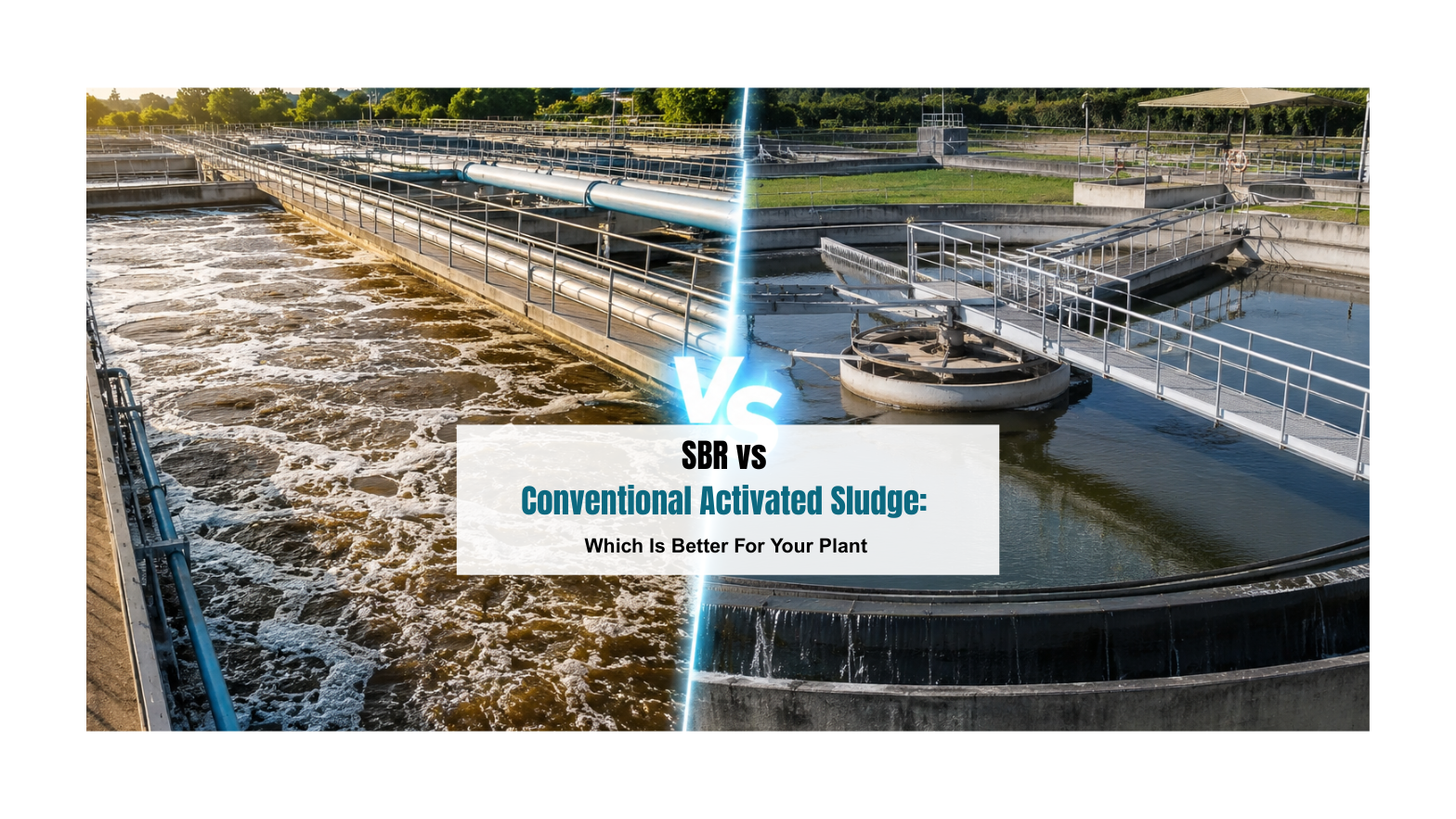

SBR vs Conventional Activated Sludge: Which Is Better For Your Plant
There’s a particular kind of stress that comes with running a wastewater treatment plant that isn’t performing the way it should. It’s the phone call from the pollution control board asking why your effluent samples failed the last inspection. It’s the odor complaint from a neighboring facility that lands on your desk right before a management review. It’s the quiet dread of knowing your plant was designed for a load profile that no longer matches what’s actually coming through the inlet.
Choosing a treatment technology isn’t just an engineering decision, it’s a decision that follows a plant for its entire operating life. Get it right, and you have a system that adapts to your flow, meets your compliance obligations without drama, and doesn’t eat through your operating budget. Get it wrong, and you’re looking at retrofits, penalty notices, and years of firefighting.
Two of the most common technologies plant owners and consultants weigh against each other are the sequential batch reactor (SBR) and conventional activated sludge (CAS). Both are proven, both are widely used across Indian municipal and industrial plants, and both can meet CPCB and SPCB effluent norms when designed and operated well. But they arrive at that outcome very differently, and the differences matter a great deal depending on your plant type, your flow pattern, and how tightly you need to control nutrient removal.
This article walks through how SBR and CAS actually compare, footprint, capital and operating cost, treatment efficiency, and regulatory fit, so you can approach the decision with a clearer head, not just a spec sheet.
What Is SBR? (Sequencing Batch Reactor Explained)
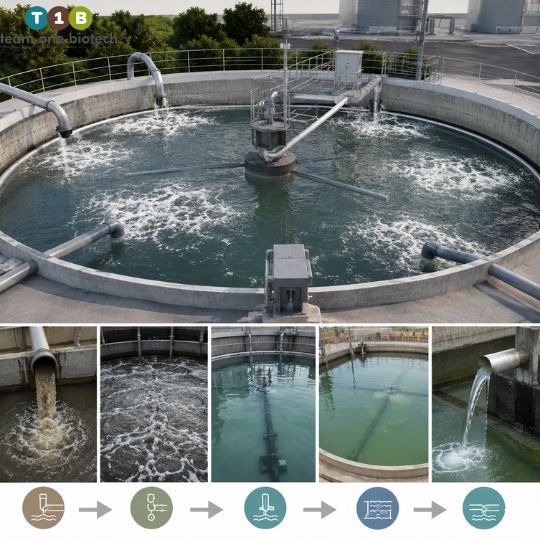
If you’ve been searching for sbr full form or what is SBR, here’s the plain-language version: a sequential batch reactor, sometimes called a sequencing batch reactor, is a wastewater treatment system that carries out all the major treatment steps, aeration, biological treatment, and settling, inside a single tank, one phase at a time, rather than across multiple tanks running continuously.
Instead of water flowing constantly from one unit to the next, an SBR tank operates in cycles. Each cycle typically moves through the following phases:
- Fill, raw or partially treated wastewater enters the tank
- React, aeration and biological treatment take place, breaking down organic load
- Settle, aeration stops, and solids settle to the bottom of the tank
- Decant, clarified water is drawn off from the top
- Idle, the tank rests briefly before the next fill cycle begins
You can think of this as a conceptual SBR process flow diagram, one tank, five phases, repeating in sequence. Because everything happens in one vessel, SBR technology is especially popular in decentralized plants and municipal sewage treatment plants (STPs), where land is limited but treatment flexibility is still needed, and where domestic sewage flow, while it does vary through the day, tends to follow a fairly predictable diurnal pattern that batch cycling handles well.
What Is Conventional Activated Sludge (CAS)?
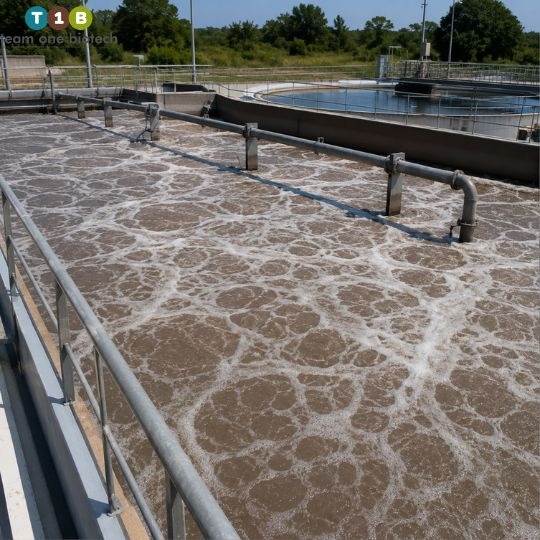
Conventional activated sludge, or CAS, takes a more traditional route. Instead of batching everything into one tank, CAS relies on continuous flow through a series of separate units, typically an aeration tank followed by a secondary clarifier, sometimes with additional tanks for primary settling or sludge handling.
Wastewater moves through the system constantly. The aeration tank keeps biological treatment running around the clock, while the clarifier continuously separates treated water from settled sludge. There’s no pause, no cycling, just steady, ongoing flow through dedicated units.
This structural difference, continuous flow across multiple tanks versus batch treatment in a single tank, is really the core distinction between the two technologies, and it’s what drives most of the downstream differences in cost, footprint, and flexibility.
CAS tends to show up most often in industrial effluent treatment plants (ETPs), where continuous production processes generate a steady, more concentrated effluent stream that needs round-the-clock treatment without the pauses built into a batch cycle. Many industrial facilities run multi-shift, continuous operations, and CAS’s uninterrupted flow-through design matches that operating rhythm more directly than a cycling tank does.
SBR vs CAS, Key Comparison Factors
Footprint and Space Requirements
This is usually the first thing plant owners ask about, especially in urban or space-constrained sites.
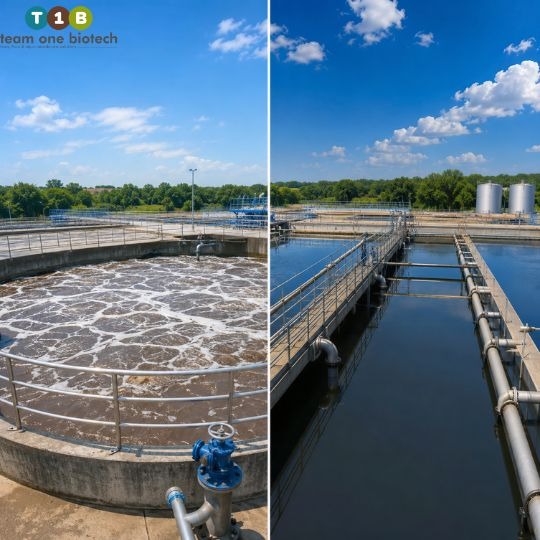
- SBR generally needs a smaller footprint because a single tank handles multiple treatment phases sequentially, there’s no need for separate aeration and clarification structures. This is a large part of why SBR is such a common choice for municipal STPs sited in dense urban areas.
- CAS typically requires more land, since aeration and clarification happen in physically separate units that both need civil construction and piping. Industrial sites, however, are often better positioned to accommodate this, since ETPs are frequently built alongside the industrial facility itself, on land already allocated for utilities.
In general terms, SBR can reduce land requirement by a moderate-to-significant margin compared to CAS, though the exact difference depends heavily on plant capacity and design choices.
Note: The comparisons above reflect general industry patterns and are indicative only. Actual footprint, cost, energy consumption, and compliance performance vary depending on individual plant design, influent characteristics, flow variability, and site-specific conditions. A plant-specific evaluation is recommended before making a final technology decision.
Capital Expenditure (CapEx)
Neither technology is a clear winner on upfront cost, it really comes down to trade-offs.
- SBR typically needs fewer tanks and less civil construction, but requires more sophisticated automation, instrumentation, and control systems to manage the cycling process.
- CAS usually involves simpler mechanical and electrical requirements, but the multiple-tank layout means more civil work, more piping, and a larger overall construction footprint.
Which one ends up costing more depends on your plant’s scale, site conditions, and how much automation you’re planning to invest in from day one. A municipal STP with tight land constraints may find SBR’s compact design offsets its automation cost. An industrial ETP with dedicated utility land and a need for robust, continuous treatment may find CAS’s simpler, well-proven equipment keeps costs and performance more predictable over the plant’s life.
Operational Costs (OpEx)
Three things drive ongoing operating cost in either system: power consumption, manpower, and maintenance.
- SBR systems, thanks to automation, often reduce the need for constant manual monitoring, but energy use can vary depending on how the cycle is designed and how frequently phases run.
- CAS systems run continuously, which tends to make energy and staffing needs more predictable, an advantage for industrial plants that already run continuous operations and have dedicated technical staff on-site around the clock to manage a steady-state process.
Rather than putting hard numbers on this, it’s more useful to think of it qualitatively: SBR trades manual labor for smarter automation and variable energy cycles, which suits municipal operators managing a facility with a leaner team, while CAS trades some automation simplicity for steady, continuous demand on both power and personnel, a trade-off that fits naturally with an industrial site that already staffs for continuous production.
Treatment Efficiency and Effluent Quality
Both technologies are capable of producing effluent that meets CPCB and SPCB norms for BOD, COD, TSS, and nutrient parameters, the technology itself isn’t usually the reason a plant fails compliance. Poor design or inconsistent operation is.
That said, there are real differences in how each system handles the kind of load each is best suited to:
- SBR’s cycle timing can be adjusted, which gives it an edge for municipal STPs managing nitrogen and phosphorus removal from domestic sewage, you can extend or modify react and settle phases to target specific nutrient reduction goals as diurnal flow shifts through the day.
- CAS is well-proven for the steady, high-strength, continuous flows typical of industrial effluent, its round-the-clock aeration and clarification are built for exactly that kind of sustained organic and chemical load, without the interruptions a batch cycle would introduce.
If your plant is a large industrial facility with a continuous production process, that steady-state design tends to match your effluent profile more closely than a batch system would.
Compliance and Regulatory Considerations (CPCB/SPCB Focus)
This is where the decision stops being purely technical and starts being existential for a lot of plant owners. A CPCB or SPCB compliance notice isn’t just a paperwork problem, it can mean fines, forced shutdowns, or reputational damage that follows a facility for years.
- SBR’s flexible cycle control can help municipal STPs hit variable effluent norms more consistently across the day’s flow pattern, particularly where nutrient limits are strict.
- CAS’s continuous, well-characterized treatment process is often preferred for industrial ETPs, where effluent composition needs consistent, round-the-clock control and where regulators are used to seeing CAS as the established, proven technology for industrial discharge.
It’s worth repeating: these are general industry patterns, not guarantees. Actual compliance performance depends on your plant’s specific design, your operations and maintenance practices, and how variable your influent really is.
Flexibility, Scalability, and Ease of Upgrade
Plants rarely stay the same size or load profile forever, so it’s worth thinking ahead.
- SBR systems are generally easier to adjust for municipal STPs, cycle times can be modified to accommodate changing population-driven flow, and the design lends itself well to phased capacity expansion as a town or city grows.
- CAS systems typically require adding new tanks or units to scale up, which is more common in industrial settings where capacity expansion is planned alongside broader facility upgrades and where land for additional units is already budgeted into the site plan.
Every Plant Is Different, Get a Site-Specific View Before You Decide
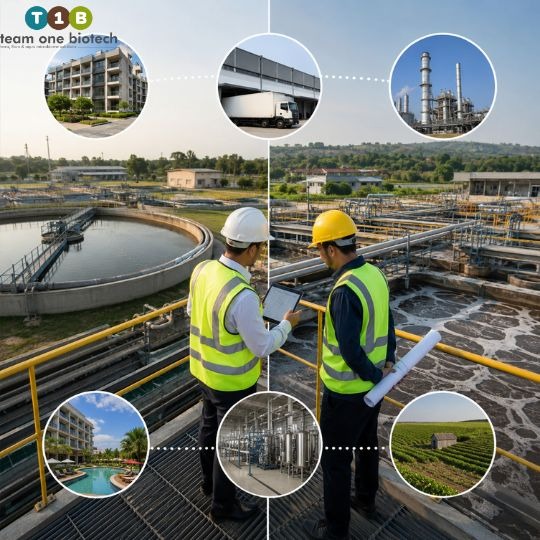
Everything above reflects general patterns, but no two plants are identical. Your raw water quality, your flow pattern, your land availability, and your compliance targets all interact in ways that a generic comparison simply can’t capture. Before finalizing a technology, it’s worth getting a professional assessment specific to your site, one that looks at your actual influent characteristics and operational constraints, not just industry averages.
Which One Should You Choose? A Practical Decision Framework
There’s no universal right answer here, but some patterns tend to hold up across most plants.
SBR tends to make more sense when:
- You’re building or upgrading a municipal sewage treatment plant (STP)
- Land availability is limited or expensive
- Domestic flow follows a variable diurnal pattern rather than a continuous industrial load
- Nutrient removal targets (nitrogen, phosphorus) are strict or likely to tighten in the future
- You have the ability to invest in automation and skilled operational oversight
CAS tends to make more sense when:
- You’re running an industrial effluent treatment plant (ETP) tied to a continuous production process
- Your facility already operates round-the-clock with dedicated technical staff
- Civil infrastructure and land are already available or established on-site
- You need a proven, continuous-flow system for steady, high-strength industrial effluent
This is directional guidance, not a one-size-fits-all rule. Every plant has its own quirks, and the right answer often sits somewhere between “textbook SBR plant” and “textbook CAS plant.”
Common Concerns Plant Owners and Engineers Raise
A few objections come up again and again when this decision is on the table. Worth addressing them directly:
“Does SBR have odor issues?”
Odor control in SBR systems depends heavily on aeration design and tank covering, it’s manageable with the right design choices, but it does need to be planned for, not treated as an afterthought.
“Is sludge handling harder with SBR?”
Not inherently harder, but different, since settling and decanting happen in the same tank, sludge wasting needs to be timed carefully within the cycle rather than continuously, as it is in CAS.
“Can we retrofit our existing CAS plant with SBR technology?”
Often possible in municipal settings, depending on existing tank geometry and available land. For industrial ETPs, retrofitting to SBR is less common in practice, since continuous production flows are generally better served by staying with CAS. Retrofit feasibility really needs a site visit rather than a generic answer, since existing civil structures play a big role in what’s practical.
“Does SBR require more skilled manpower to run?”
Generally, yes to some degree, the automation and cycle-based control mean operators need a solid understanding of the system’s logic, though this is often offset by reduced day-to-day manual monitoring, and is well within reach for the operational teams that typically run municipal STPs.
FAQ Section
What is the full form of SBR in wastewater treatment?
SBR stands for sequential batch reactor, also referred to as a sequencing batch reactor. It’s a treatment system where fill, react, settle, decant, and idle phases all happen in one tank, in sequence, rather than continuously across separate units.
Is SBR better than conventional activated sludge for municipal STPs?
For municipal sewage treatment plants, especially those with limited land, SBR is often favored because of its compact single-tank design and its ability to flex with the diurnal flow pattern typical of domestic sewage.
Is CAS better than SBR for industrial ETPs?
For industrial effluent treatment plants, CAS is generally the preferred technology. Continuous production processes produce a steady, high-strength effluent stream that suits CAS’s round-the-clock, continuous-flow design, and industrial sites are typically better positioned to accommodate the larger footprint CAS requires.
Does SBR need more skilled manpower to operate than CAS?
Generally, yes, SBR relies on automated cycle control, so operators need to understand the system’s logic and be able to troubleshoot phase timing. CAS, being continuous and more mechanically straightforward, is often considered easier for teams less familiar with automated systems, which is one reason it remains the standard choice for industrial ETPs.
Which technology better supports CPCB/SPCB compliance for industrial effluent?
CAS is the more established and widely accepted technology for industrial ETP compliance, given its proven track record with continuous, high-strength industrial discharge. Actual compliance outcomes still depend more on design quality and operational discipline than on the technology alone.
Making the Right Choice for Your Plant
Neither SBR nor conventional activated sludge is universally “better” in the abstract, but the two technologies do tend to map onto different plant types. Municipal STPs, with their variable diurnal domestic flow and land constraints, are frequently better served by SBR. Industrial ETPs, with their continuous production-driven effluent and typically larger available land, are frequently better served by CAS. What works well for a municipal STP may be entirely wrong for an industrial facility, and vice versa.
Getting this decision right isn’t just an engineering exercise. It’s what protects your plant from regulatory trouble, unplanned budget overruns, and the kind of operational headaches that drag on for years after the concrete has already been poured.
Before you finalize your technology choice, it’s worth talking to people who look at this decision every day. Team One Biotech’s bioremediation and wastewater treatment experts can walk through your plant’s specific land, load, and compliance requirements and help you land on a system that actually fits, not just one that looks good on a comparison chart. Reach out for a site-specific assessment before you commit to a direction you’ll be living with for a long time.
Looking to improve your ETP/STP efficiency with the right bioculture?
Talk to our experts at Team One Biotech for customised microbial solutions.
Contact: +91 8855050575
Email: sales@teamonebiotech.com
Visit: www.teamonebiotech.com
Discover More on YouTube – Watch our latest insights & innovations!-
Connect with Us on LinkedIn – Stay updated with expert content & trends!