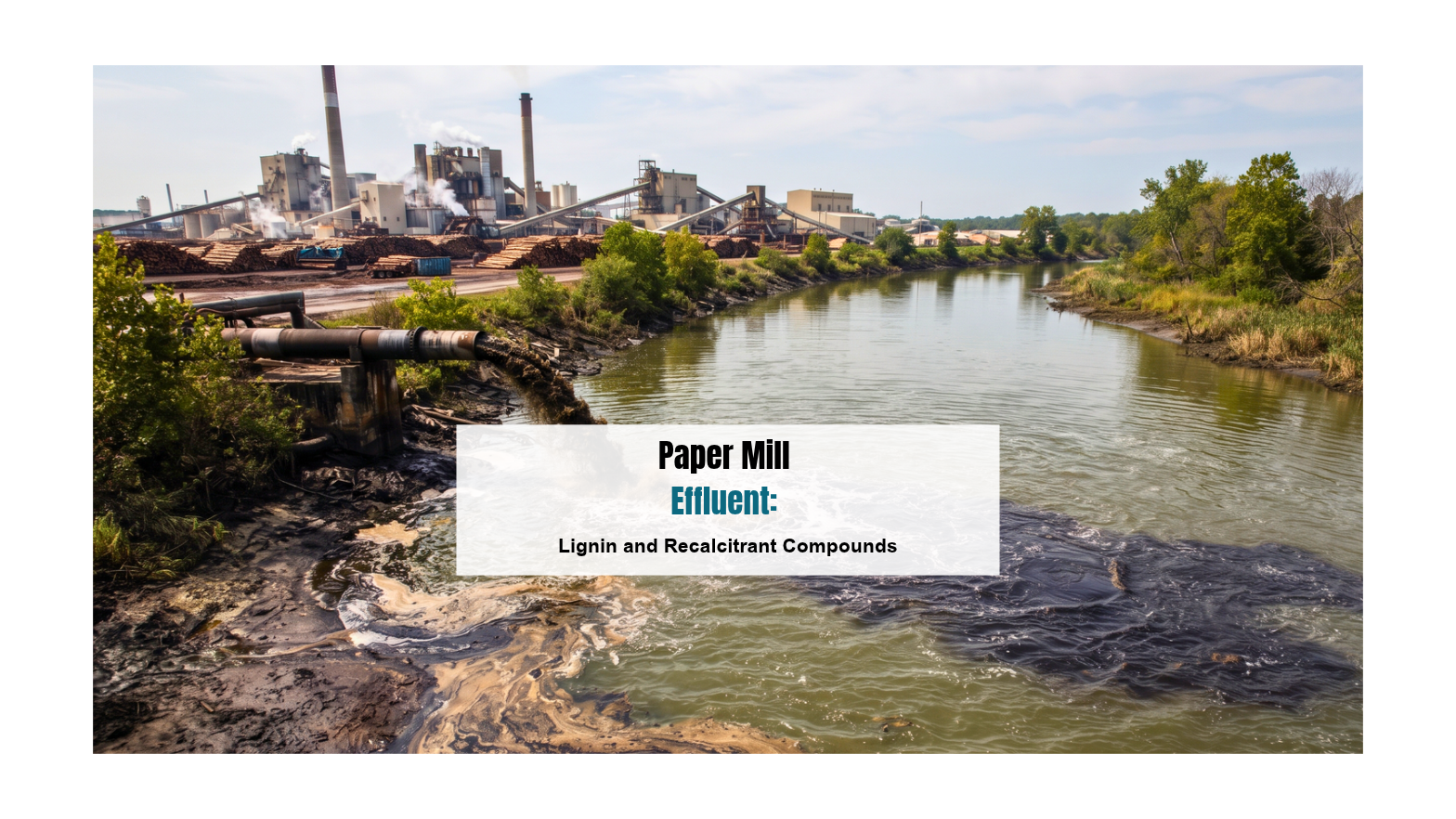

Paper Mill Effluent: Lignin and Recalcitrant Compounds
The outlet is dark brown again. Your operators ran the ETP by the book, aeration is steady, the clarifier is behaving, and still the treated water leaves the plant looking like strong tea. The COD has stopped dropping. The coagulant bill keeps climbing, sludge handling is eating into the budget, and somewhere in the back of your mind is the next SPCB inspection and the phrase nobody wants to read on a letterhead: closure notice.
If that sounds familiar, the problem is rarely discipline. It is chemistry. Paper mill effluent treatment stalls at the same point in plant after plant: lignin-derived color and recalcitrant compounds that an ordinary biological system was never built to break.
This guide covers what is actually in your wastewater, why conventional treatment stalls, how lignin-modifying enzymes and microbial consortia work, and how pulp and paper ETP teams can apply them in a practical, measured way.
What Is Really Inside Paper Mill Effluent?
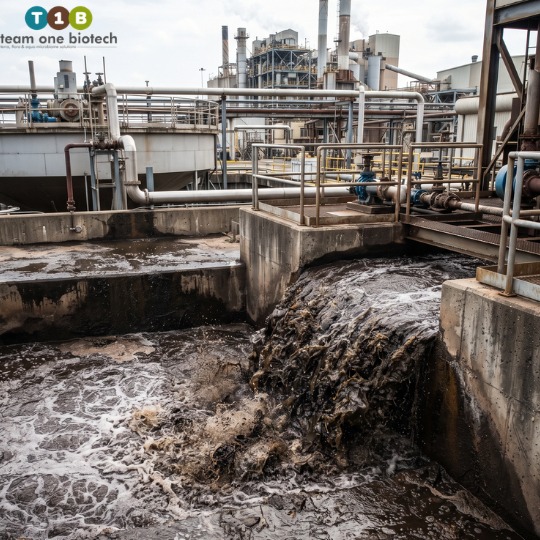
Most ETP teams track COD, BOD, pH, TSS and color. Those numbers tell you how much load you have. They do not tell you what kind of load it is, and that distinction decides whether biology can work on it.
Pulping and bleaching release a mix of compounds, and the troublesome ones share a trait: they resist microbial attack.
- Lignin and its derivatives: The aromatic polymer that binds wood and agro-fibre together. During pulping it breaks into large, partially modified fragments. These carry the dark brown color and a big share of the refractory COD.
- Resin and fatty acids: Released from wood extractives. They are toxic to many ordinary microbes, particularly in the early stages of treatment, and can suppress activity in an otherwise healthy aeration tank.
- Chlorinated organics (AOX): Formed when chlorine or chlorine-dioxide bleaching reacts with residual lignin. They are persistent, can be toxic to aquatic life, and are closely watched by regulators.
- Color-bearing compounds: Chromophores from lignin and tannin-like substances. Color is often the first thing an inspector notices and the last thing a conventional ETP removes.
- Refractory COD: The portion of COD that survives biological treatment. In many mills it is a large fraction of the final outlet COD.
In streams with heavy lignin content, the BOD-to-COD ratio often sits well below the roughly 0.3 to 0.5 band usually associated with easily biodegradable wastewater. These values are general indications and will differ from one ETP to another based on process, raw material, and effluent load.
That gap between COD and BOD is the signature of recalcitrant organics. It is also why simply adding more aeration rarely helps.
How Kraft, Agro-Based and Recycled Paper Mill Effluent Differ
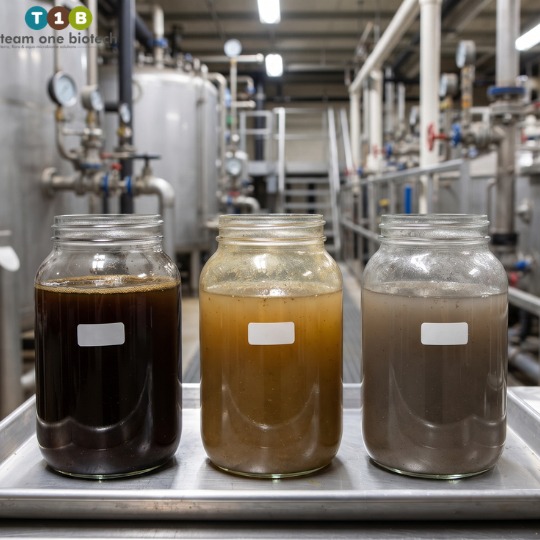
“Paper mill effluent” is not one thing. The same treatment logic applied to every mill type is a common reason for disappointing results.
Kraft mill wastewater is typically the most lignin-heavy. The chemical pulping and bleaching stages release concentrated lignin fragments, and chlorinated organics appear wherever chlorine-based bleaching is used. Color is deep, and the bleach plant streams often carry the toughest load. If you run chemical recovery, the quality of the stream reaching the ETP also depends on how well the recovery plant is holding.
Agro-based paper mill effluent (wheat straw, bagasse, rice straw and similar raw materials) brings a different challenge. Silica, high levels of soluble organics and a distinct lignin structure change how the effluent behaves. Black liquor handling can be a weak point, and shock loads are common when raw material quality varies from batch to batch.
Recycled paper mill ETP deals with less lignin but more variability. Inks, starch, additives, fillers and biocides enter the stream, and the load can swing sharply with the grade of waste paper. Color may be lower than in kraft effluent, but toxicity from additives and a high tertiary load can still push the final outlet out of range.
Knowing which profile you are dealing with shapes everything that follows: which stream to target, where to apply biology, and how much to expect from it.
Why Conventional ETPs Struggle with Lignin and Recalcitrant Compounds
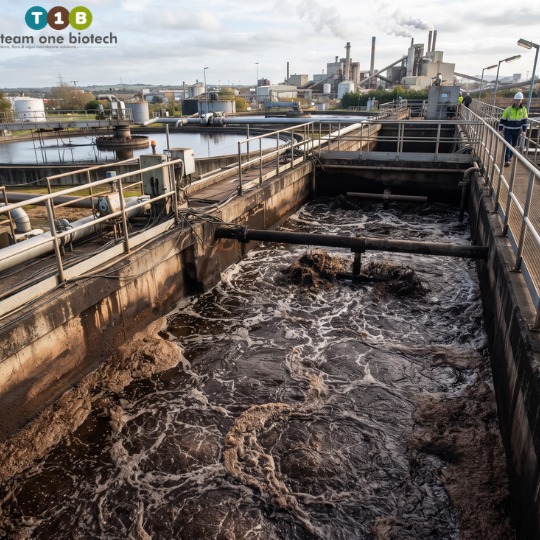
A standard activated sludge process is excellent at what it was designed for: consuming simple, soluble, readily biodegradable organics. Lignin is none of those things.
The structure is the problem
Lignin is a complex aromatic polymer held together by strong carbon-carbon and ether bonds. Ordinary heterotrophic bacteria lack the enzymes to cleave those bonds efficiently. They can nibble at the edges, but the core structure passes through.
Toxicity limits activity
Resin acids, chlorinated phenolics and other extractives can inhibit the very microbes you rely on. A sludge that looks healthy under the microscope may still be underperforming on the difficult fractions.
Biodegradability is low
The compounds responsible for color and refractory COD simply are not food for the average sludge community. They pass through aeration largely unchanged.
Color travels through the system
Because chromophores are not consumed, the dark outlet shows up even when BOD removal looks acceptable on paper. This is why a plant can meet its BOD target and still fail on color.
Chemicals fill the gap, at a price
Most mills compensate with heavy coagulation, metal-salt dosing and sometimes tertiary oxidation. These work to a point, but they transfer the pollutant into chemical sludge. That means higher dosing cost, more sludge handling, more disposal liability, and a clarifier that is working harder than it should.
If your tertiary stage is carrying a load that primary and secondary should have shared, the issue is upstream biology, not downstream chemistry.
Talk to our team before your next inspection, not after it. If dark color and stubborn COD are costing you in chemicals and sludge, request a free effluent assessment from Team One Biotech and see where biology can take some of the load off your ETP.
How Lignin-Modifying Enzymes Break the Chain
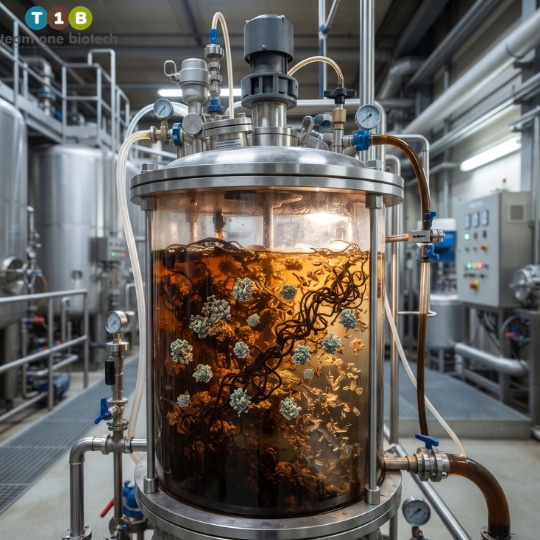
Nature already solved the lignin problem. White-rot fungi evolved an enzyme system that attacks lignin by oxidation instead of ordinary digestion. Three enzymes do most of the work, and each plays a different part.
These enzymes act through oxidative, radical-based reactions rather than simple hydrolysis. That is why they can attack bonds that conventional bacteria cannot touch.
Laccase
Laccase is a copper-containing oxidase that uses oxygen to oxidise phenolic units in lignin and related compounds. In the process it generates reactive radicals that destabilise the polymer and open it to further breakdown.
For ETP teams, laccase matters because it acts directly on phenolic, color-bearing structures. It is often observed to reduce color and toxicity in treated streams, and with suitable mediator compounds its range of action can be extended to non-phenolic structures. It is also relatively forgiving, needing only oxygen as its oxidant.
Lignin Peroxidase
Lignin peroxidase (LiP) is a heme-containing enzyme with a high oxidation potential. It can attack non-phenolic aromatic structures, which make up a large part of the lignin polymer and which laccase alone struggles with.
It requires hydrogen peroxide to function and works by removing electrons from aromatic rings, triggering bond cleavage and ring opening. In practical terms, LiP helps break down the larger, more stubborn fragments into smaller units that downstream biology can handle.
Manganese Peroxidase
Manganese peroxidase (MnP) oxidises divalent manganese to its trivalent form. That trivalent manganese, stabilised by organic acids, acts as a diffusible oxidant that attacks phenolic lignin structures and chromophores some distance from the enzyme itself.
This matters in effluent, where large polymer fragments cannot always reach the enzyme directly. MnP is widely associated with decolorisation, and it often works alongside laccase as part of a coordinated enzyme set rather than on its own.
What this adds up to: Together these enzymes can help depolymerise lignin, open aromatic rings, reduce color-bearing structures and lower the toxicity that suppresses sludge performance. The effect is often observed as a gradual improvement over days to a couple of weeks of operation, not an overnight change. These values are general indications and will differ from one ETP to another based on process, raw material, and effluent load.
White-Rot Fungal and Bacterial Consortia: The Biological Advantage in Paper Mill Effluent Treatment
Enzymes alone are not the full story. In a working ETP, enzymes need living systems to produce them, sustain them and finish the job they start.
What white-rot fungi contribute
These organisms produce the lignin-modifying enzymes described above and can attack the largest lignin fragments. They are the specialists for opening the polymer. Their limitations are practical: they can be sensitive to pH swings, temperature and competition from faster-growing bacteria.
What targeted bacteria contribute
Selected bacterial strains handle what the fungi leave behind: smaller aromatic fragments, resin and fatty acids, and some chlorinated compounds. Bacteria grow quickly, tolerate a wider range of conditions, and can mineralise intermediates that would otherwise accumulate and inhibit the system.
Why a consortium beats a single strain
Lignin degradation is not one reaction. It is a chain of reactions, and each link needs a different capability. A consortium divides the work:
- Fungal enzymes open the large lignin structure.
- Bacterial partners consume the smaller breakdown products, which keeps intermediates from building up and stalling the process.
- Some members detoxify inhibitory compounds, protecting the rest of the community.
- Together they tolerate load variation better than any single organism would.
A single strain, however well characterised, tends to hit a bottleneck: it cannot finish what it starts, or it is knocked back by a shock load. A well-designed consortium is more resilient because the failure of one member does not collapse the whole process.
Where bioaugmentation fits
Bioaugmentation for ETP means introducing selected microbial cultures and enzyme systems into the treatment train at points where they can work, such as equalisation, the aeration stage or a dedicated treatment step. The goal is not to replace your existing sludge but to strengthen it where it is weakest.
Speak to a Team One Biotech bioremediation expert about how a lignin-targeted consortium could fit your ETP, whether you run kraft, agro-based or recycled paper. We will help you work out where to apply it and what to measure.
Staying Compliant: Color, AOX, COD and ZLD Pressure in Paper Mill Effluent Treatment
Compliance for the pulp and paper sector rests on meeting prescribed CPCB/SPCB norms for color intensity (measured in Pt-Co or ADMI units), AOX, COD and BOD. Increasingly, it also means meeting treated-effluent recycling or zero liquid discharge expectations. Please check your own consent conditions for the limits that apply to your plant. They vary by mill type, location and consent.
The risk of falling short is real: environmental toxicity downstream, penalties, and in serious cases a statutory closure notice. Color is the visible failure, AOX is the persistent one, and refractory COD is the one that quietly keeps your outlet borderline.
Zero liquid discharge in the paper industry adds another layer. Recycling treated water back into the process means any residual color, toxicity and recalcitrant organics will accumulate in the loop and cause problems in membranes, evaporators and the process itself. A cleaner biological effluent makes the tertiary and ZLD stages easier to run and cheaper to maintain.
That is the practical case for tackling lignin biologically: the better your upstream biology, the less your downstream chemistry and membranes have to carry.
Practical Steps to Improve Your Pulp and Paper ETP
Start with data, not with a product. These steps work in sequence.
- Characterise your effluent properly. Go beyond routine COD and BOD. Look at the BOD-to-COD relationship, color, AOX where measurable, and variation across shifts and production changes. You cannot fix what you have not defined.
- Check the bleaching stream contribution. In bleached kraft operations, bleach plant filtrates often carry a disproportionate share of color and chlorinated organics. Knowing which stream contributes what tells you where treatment effort will pay off.
- Assess equalisation and pH. Shock loads and unstable pH undermine any biological system, and enzymes and consortia are no exception. A stable, well-mixed feed to the biology is a precondition, not an extra.
- Pilot bioaugmentation. Run a controlled trial before committing. Define the dosing point, run it for a meaningful period, and keep the rest of the plant steady so you can read the result honestly. Pilots in lignin-heavy effluent usually need weeks, not days, to show a trend. These values are general indications and will differ from one ETP to another based on process, raw material, and effluent load.
- Monitor color and COD trends. Track color and COD at multiple points, not just at the final outlet. Trends over time matter more than any single reading.
- Review chemical dosing. As biological performance improves, revisit coagulant and metal-salt dosing. Many plants find room to optimise, which can help reduce chemical sludge and the cost of handling it. Make changes gradually and verify against your outlet quality.
Book a pilot trial for your ETP and let the numbers from your own plant decide.
Common Mistakes ETP Teams Make
- Chasing color with more coagulant. It treats the symptom, raises sludge volume and does little for the underlying recalcitrant load.
- Ignoring the bleach plant. Treating the combined effluent as one stream hides where the problem starts.
- Dosing biology into an unstable system. Without stable pH, equalisation and nutrient balance, even a good consortium will underperform.
- Judging a trial too early. Lignin degradation takes time. Reading a result in a few days can lead to the wrong conclusion.
- Looking only at the final outlet. Intermediate color and COD readings show whether the biology is actually working.
- Copying another mill’s solution. A kraft mill, an agro-based mill and a recycled paper mill have different effluent. What worked next door may not work for you.
Frequently Asked Questions
Why is color so hard to remove in paper mill effluent?
Color comes mainly from lignin-derived chromophores that are not consumed by conventional sludge. They pass through biological treatment largely intact. Removing them usually requires breaking down the aromatic structures, either chemically or, increasingly, with lignin-modifying enzymes and targeted consortia.
Can biological treatment really reduce AOX?
It can help. Certain bacterial and fungal systems can degrade chlorinated organic compounds, though results depend on the bleaching sequence and the nature of the AOX present. Reducing AOX at source through better bleaching practice remains important alongside any biological step.
How do laccase and manganese peroxidase differ?
Laccase uses oxygen to oxidise phenolic structures directly, while manganese peroxidase uses hydrogen peroxide to generate trivalent manganese, which acts as a diffusible oxidant. They are complementary, which is why they are often seen working together in a lignin-degrading system.
How long before bioaugmentation shows results?
In lignin-heavy effluent, a trend is usually visible after a few days to a couple of weeks, with a fuller picture taking longer. These values are general indications and will differ from one ETP to another based on process, raw material, and effluent load. A site-specific pilot is the reliable way to know.
Will this replace my coagulation stage?
Not outright. The realistic aim is to share the load so that coagulation and tertiary treatment work less. Many plants can then review dosing, but your discharge and recycling needs decide how far that goes.
Disclaimer: The values and ranges mentioned in this blog are general and indicative. Actual performance differs in every ETP depending on pulping process, bleaching sequence, raw material, effluent characteristics, and operating conditions. A site-specific study is recommended.
Conclusion
Dark color, refractory COD and AOX are not signs of a badly run plant. They are what happens when recalcitrant chemistry meets a biological system that was designed for something easier. Paper mill effluent treatment improves when you stop asking ordinary sludge to do a specialist’s job.
Lignin-modifying enzymes, laccase, lignin peroxidase and manganese peroxidase, supported by well-matched fungal and bacterial consortia, give your pulp and paper ETP a way to attack the problem at its source. The practical payoff is a cleaner outlet, less reliance on heavy coagulation, less chemical sludge, better downstream performance, and a stronger footing for recycling or ZLD.
You do not need to overhaul your plant to find out whether this works. Begin with a clear picture of your effluent and a controlled pilot.
Talk to our team before your next inspection, not after it. Request a free effluent assessment, speak to a Team One Biotech bioremediation expert, or ask for the technical data sheet. Let us help you take the dark outlet off your list of worries.
Looking to improve your ETP/STP efficiency with the right bioculture?
Talk to our experts at Team One Biotech for customised microbial solutions.
Contact: +91 8855050575
Email: sales@teamonebiotech.com
Visit: www.teamonebiotech.com
Discover More on YouTube – Watch our latest insights & innovations!-
Connect with Us on LinkedIn – Stay updated with expert content & trends!