
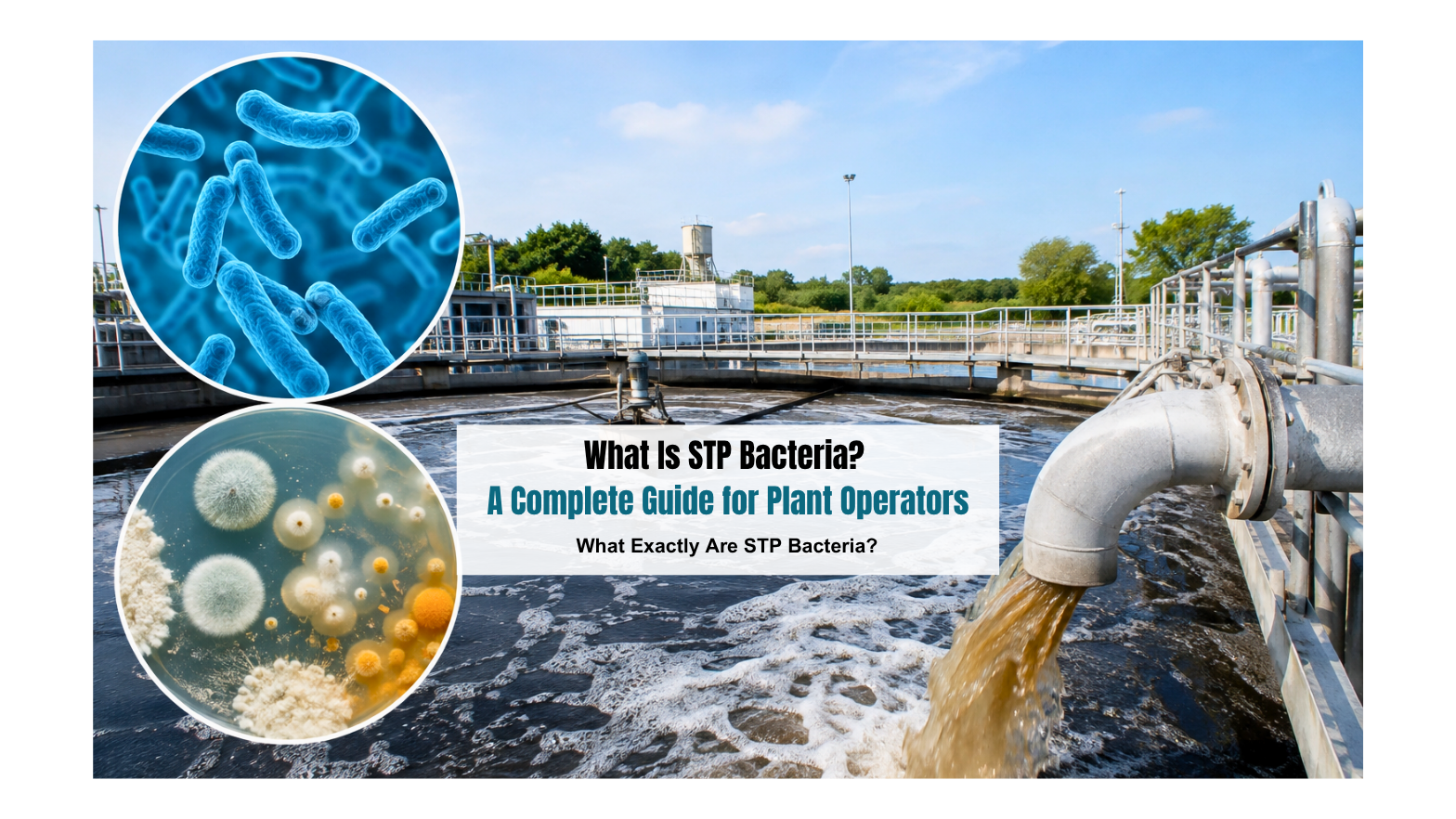
What Is STP Bacteria? A Complete Guide for Plant Operators
Every STP operator has faced this moment, the effluent looks off, BOD levels are climbing, and nobody can pinpoint why. You check the aerators, inspect the pumps, run through the mechanical checklist. Everything looks fine on paper. But the plant is not performing. More often than not, the answer is not mechanical. It is biological.
The invisible workforce running your sewage treatment plant is not steel and concrete, it is bacteria. Understanding what is STP bacteria, how these microorganisms function, and what keeps them healthy is the difference between a plant that consistently meets discharge norms and one that keeps you up at night. This guide covers everything a working operator needs to know: the types of bacteria active in your system, how they break down sewage, what makes them fail, and how to keep your microbial population in peak condition.
What Exactly Are STP Bacteria?
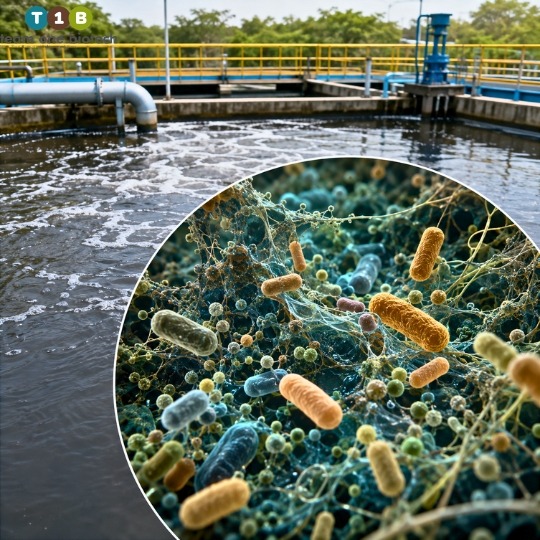
STP bacteria are microorganisms, primarily bacteria, but also fungi and protozoa, that are either naturally established or deliberately cultivated within a sewage treatment system to break down organic matter in wastewater. They are not contaminants. They are not a sign that something has gone wrong. They are the core biological engine of every functional sewage treatment plant in operation.
When a manufacturer like Team One Biotech supplies an STP bioculture product, what they are delivering is a concentrated, carefully selected blend of bacterial strains, organisms chosen for their ability to perform specific treatment functions efficiently and reliably. Think of it as seeding your plant with a purpose-built microbial workforce rather than waiting months for a natural population to develop on its own.
The term “sewage bacteria” often triggers the wrong association in operators who are newer to biological wastewater treatment. These organisms are not the dangerous pathogens you are trying to remove. They are beneficial, process-driving microbes that consume the very pollutants that pathogens feed on. Removing pathogenic organisms is largely a function of disinfection at the tail end of treatment. The bacteria we are discussing here are your allies at every stage before that.
Different treatment stages host fundamentally different bacterial communities, each adapted to local oxygen levels, organic load, and chemical environment. Understanding which bacteria belong where, and what each type does, is what separates an operator who reacts to problems from one who prevents them.
The Main Types of Bacteria Found in an STP
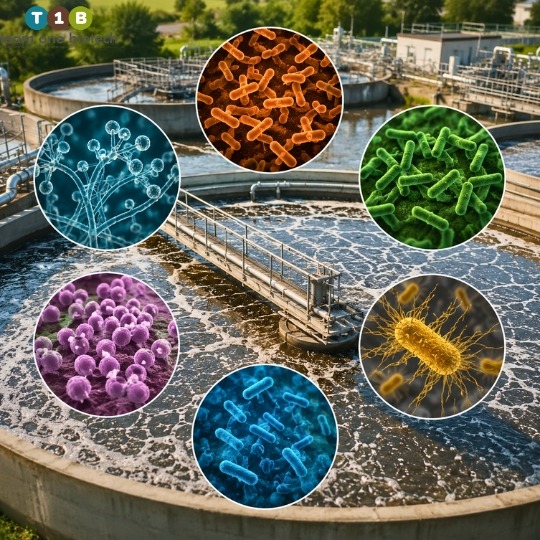
No single type of bacterium handles everything inside a sewage treatment plant. The system works because different microbial communities operate in sequence, each tackling a different fraction of the pollutant load. Here is what you need to know about each major group.
Aerobic Bacteria, The Primary BOD Destroyers
Aerobic bacteria are the workhorse organisms of biological wastewater treatment. They operate in oxygen-rich zones, primarily the aeration tank, and are responsible for breaking down the bulk of the carbonaceous biochemical oxygen demand (BOD) present in incoming sewage.
Key genera found in healthy aerobic zones include Pseudomonas, Bacillus, and Zoogloea, among others. These are not exhaustive categories, a mature aeration tank hosts hundreds of species, but these genera are commonly associated with strong BOD removal and stable floc formation. Floc formation is critical: aerobic bacteria aggregate into clusters that make sludge heavier and more settleable, which is what allows your secondary clarifier to function properly.
What aerobic bacteria need to thrive:
- Adequate dissolved oxygen in the aeration zone (maintain within an appropriate operational range, see disclaimer below)
- Sufficient organic substrate without overloading
- Stable temperature and pH conditions
- Absence of toxic inhibitors such as heavy metals or concentrated disinfectants
What happens when dissolved oxygen drops below adequate levels: aerobic populations crash, filamentous organisms proliferate, sludge bulks, and your clarifier performance deteriorates rapidly.
Disclaimer: The values indicated above are general reference ranges. Actual figures vary based on plant design, influent characteristics, organic load, temperature, and site-specific operational conditions.
If your aerobic zone is underperforming, a targeted aerobic bioculture can dramatically restore microbial density. Reach out to Team One Biotech’s technical team to understand which formulation suits your plant’s specific conditions.
Anaerobic Bacteria, The Deep Decomposers
Anaerobic bacteria thrive in the complete absence of oxygen and are most active in sludge digesters, septic zones, and the deeper layers of settled sludge. Their primary role is breaking down complex organic compounds, particularly the heavier, slower-degrading fraction of organic matter, into simpler end-products, including methane gas as a useful byproduct in plants equipped for biogas recovery.
In sludge digesters, anaerobic activity is responsible for a significant reduction in sludge volume, which directly reduces the cost and frequency of sludge disposal. In plants that recover biogas, well-functioning anaerobic digestion is also a source of energy.
Where operators need to be careful is in zones designed to be aerobic. If dissolved oxygen management fails and sections of your aeration tank go anaerobic, you will see it in odour complaints, typically hydrogen sulphide, and in deteriorating effluent quality. Anaerobic activity in the wrong zone is a signal to check your aeration system immediately.
What anaerobic bacteria require:
- Complete absence of dissolved oxygen
- Stable pH within a neutral to mildly alkaline range (add site-specific calibration, see disclaimer)
- Adequate retention time in the digester
- Absence of toxic compounds at inhibitory concentrations
Disclaimer: The values indicated above are general reference ranges. Actual figures vary based on plant design, influent characteristics, organic load, temperature, and site-specific operational conditions.
Facultative Bacteria, The Adaptable Operators
Facultative bacteria are the most operationally resilient category in your plant. These organisms can shift their metabolism depending on whether oxygen is available or not, functioning aerobically when dissolved oxygen is present and switching to anaerobic or fermentative pathways when it is not.
Their practical importance is often underestimated. In transition zones between aerobic and anoxic conditions, and during operational disturbances like power failures, aeration equipment breakdowns, or sudden organic load spikes, facultative bacteria are frequently what prevents a complete process collapse. They bridge the gap while conditions are re-established.
For operators managing plants with variable influent loads, frequent power interruptions, or older aeration infrastructure, understanding and protecting facultative populations is not a theoretical exercise. These organisms buy you time when your process is under stress.
Nitrifying Bacteria, The Compliance-Critical Microbes
If there is one category of STP bacteria that deserves the most careful operational attention, it is the nitrifying bacteria. These organisms are responsible for the conversion of ammoniacal nitrogen, ammonia and ammonium, into nitrate, a process called nitrification. Under tightening CPCB and SPCB discharge norms that regulate total nitrogen in treated effluent, nitrifier health is directly linked to your compliance status.
Nitrification is a two-stage biological process. The first stage is carried out by organisms like Nitrosomonas, which oxidise ammonia to nitrite. The second stage involves organisms like Nitrobacter, which convert nitrite to nitrate. Both genera are mentioned here as representative examples, not as an exhaustive classification.
What makes nitrifying bacteria uniquely vulnerable is their biology. They are slow-growing organisms, much slower than the heterotrophic aerobic bacteria responsible for BOD removal. This means that once a nitrifier population is damaged or lost, rebuilding it takes considerable time. They are also highly sensitive to operational stress:
- pH swings outside a stable biological range will rapidly inhibit nitrifier activity
- Temperature drops, particularly in winter months in northern India, significantly slow nitrification rates
- Toxic shock events from industrial effluent, heavy metals, or disinfectant overdose can effectively eliminate nitrifier populations almost overnight
- Insufficient sludge age (mean cell residence time) washes nitrifiers out of the system before they can reproduce and maintain population density
If your plant is showing ammonia breakthrough in final effluent, the nitrifiers are telling you something is wrong. Do not wait for your regulator to tell you first.
Nitrifier populations are the first casualty of operational stress. Team One Biotech’s nitrification bioculture is formulated to restore and sustain this critical microbial community in plants recovering from process upsets or establishing nitrification for the first time. Contact us to understand how targeted seeding can accelerate your compliance recovery.
Disclaimer: The values indicated above are general reference ranges. Actual figures vary based on plant design, influent characteristics, organic load, temperature, and site-specific operational conditions.
Denitrifying Bacteria, Closing the Nitrogen Loop
Denitrifying bacteria complete the nitrogen removal process that nitrifiers begin. Where nitrifiers convert ammonia into nitrate, denitrifiers convert nitrate into harmless nitrogen gas, which exits the system through the atmosphere. This is the only biological pathway that actually removes nitrogen from the effluent rather than converting it from one form to another.
Denitrifiers are anoxic-zone organisms. They require nitrate as their electron acceptor but cannot tolerate free dissolved oxygen, which means they are typically active in dedicated anoxic zones positioned upstream of the aeration tank in more sophisticated STP configurations.
What denitrifying bacteria need:
- Absence of free dissolved oxygen in the anoxic zone
- Adequate nitrate supply, typically recycled from the aerobic zone
- A carbon source for their metabolic activity (often provided by the incoming wastewater itself)
- Sufficient hydraulic retention time in the anoxic zone
Operators who underestimate the importance of denitrification increasingly find themselves on the wrong side of nitrogen discharge limits. As CPCB norms evolve and more plants fall under stricter nutrient removal requirements, denitrification is shifting from an optional upgrade to a compliance necessity.
How Do STP Bacteria Actually Break Down Sewage?
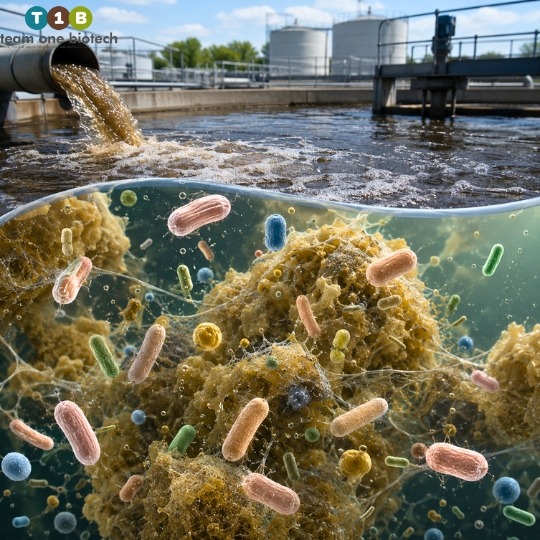
The biological treatment process is not a single event, it is a continuous, dynamic series of microbial interactions happening simultaneously throughout your plant. Here is what actually occurs when bacteria go to work on incoming sewage.
When wastewater enters the biological treatment zone, bacteria colonise organic particles and suspended solids immediately. They secrete extracellular enzymes that break complex organic molecules into simpler compounds that can be absorbed across bacterial cell membranes. Inside the cell, these compounds are metabolised through aerobic or anaerobic respiration, depending on the organism and the available oxygen, producing energy for growth and reproduction, with carbon dioxide, water, and stable biological solids as end-products.
This is what BOD removal actually looks like at the microbial level: bacteria consuming dissolved and suspended organic matter and converting it into their own biomass and stable by-products that either escape as gas or settle as sludge.
Two operational parameters that every plant operator encounters daily reflect the health of this biological process. Mixed Liquor Suspended Solids (MLSS) measures the concentration of biological solids, active bacteria and associated organic matter, in your aeration tank. Maintaining MLSS within an appropriate operational range is essential for adequate treatment capacity. Sludge Volume Index (SVI) reflects how well your sludge settles: healthy aerobic floc settles compactly, giving a low SVI, while bulking sludge, often a sign of filamentous bacteria dominating the population, gives a high SVI and poor clarifier performance.
The critical operational insight is this: your STP is a living system. Unlike a pump or a clarifier, it cannot be repaired by replacing a part. It responds to conditions, oxygen, temperature, pH, toxic load, retention time, and the microorganisms inside it either thrive or deteriorate based on how well those conditions are managed. That is why operators who understand the biology consistently outperform those who only understand the equipment.
Disclaimer: The values indicated above are general reference ranges. Actual figures vary based on plant design, influent characteristics, organic load, temperature, and site-specific operational conditions.
Why Bacterial Health Directly Determines Your Compliance Outcome
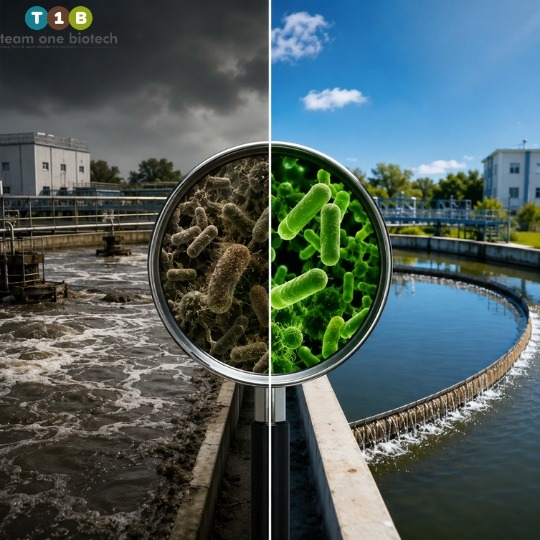
Every discharge norm that your plant is measured against, BOD in final effluent, total suspended solids, ammoniacal nitrogen, total nitrogen, is ultimately a measure of how well your bacterial populations are doing their job. The connection between microbial health and regulatory compliance is not indirect. It is direct, causal, and measurable on every monitoring report you submit.
BOD reduction is primarily the work of aerobic heterotrophic bacteria in your aeration tank. If that population is stressed, underfed, over-loaded, or oxygen-deprived, your effluent BOD climbs. TSS removal depends on floc-forming bacteria that produce settleable biomass. If they are outcompeted by filamentous organisms, your clarifier overflows with suspended solids. Nitrogen removal, as detailed above, depends entirely on the health of nitrifying and denitrifying bacterial communities that are slow to recover once damaged.
The signals that your microbial population is in distress are identifiable before your effluent test results confirm it:
- Rising effluent BOD that does not respond to increased aeration
- Bulking sludge or persistently poor settlement in the secondary clarifier
- Excessive or persistent foaming in the aeration tank
- Ammonia breakthrough appearing in final effluent samples
- Persistent foul odour from zones that should be aerobic
Each of these is a biological symptom, not a mechanical one. Treating them as mechanical problems, adjusting pumps, increasing aeration blindly, dosing chemicals, without addressing the underlying microbial health will produce temporary improvements at best.
Is your STP consistently meeting CPCB discharge norms? If the answer is no, or even sometimes, the root cause is almost always biological. Get in touch with Team One Biotech for a technical process assessment, we work with plant operators to identify what the microbiology is telling them before compliance becomes a crisis.
How to Maintain a Healthy STP Microbial Population
Maintaining microbial health is a daily operational discipline, not a one-time intervention. Here are the key parameters and practices that determine whether your bacterial population thrives or deteriorates.
Dissolved Oxygen Management
Maintain dissolved oxygen in your aeration zone within an appropriate operational range for aerobic treatment. Too low and aerobic bacteria are starved; too high and you are wasting energy while potentially disrupting the anoxic zones needed for denitrification. Monitor DO continuously rather than on fixed schedules.
Disclaimer: The values indicated above are general reference ranges. Actual figures vary based on plant design, influent characteristics, organic load, temperature, and site-specific operational conditions.
pH Control
Biological activity in your STP depends on maintaining pH within a range that supports both heterotrophic and nitrifying bacteria. Nitrifiers in particular are sensitive to pH excursions. Monitor influent pH carefully, especially if your plant receives any industrial contribution, and dose neutralising agents proactively rather than reactively.
Avoiding Toxic Shocks
Industrial effluent containing heavy metals, strong acids or alkalis, solvents, or concentrated disinfectants can devastate microbial populations with little warning. If your plant receives combined municipal and industrial inflow, establish clear pre-treatment requirements at source and monitor for unusual influent characteristics. A single toxic shock event can set back biological recovery by weeks.
Sludge Age Management
Maintaining an appropriate mean cell residence time (sludge age) is essential, particularly for retaining slow-growing nitrifiers. Too short a sludge age washes these organisms out of the system faster than they can reproduce. Too long and you accumulate excess biomass that strains your sludge handling infrastructure. Find the operational range appropriate for your plant configuration and influent load.
Bioaugmentation During Startup and Recovery
When commissioning a new plant, restarting after a shutdown, or recovering from a process failure, seeding your system with a high-quality STP microbial culture dramatically reduces the time needed to establish an active, balanced biological population. Rather than waiting for indigenous bacteria to colonise and multiply over weeks, a commercial STP bioculture delivers a concentrated, proven microbial community ready to perform from day one.
Regular Monitoring
Track MLSS, SVI, dissolved oxygen, influent and effluent BOD, and ammoniacal nitrogen consistently. These parameters tell you the biological story of your plant. Gaps in monitoring are gaps in your early warning system.
Frequently Asked Questions About STP Bacteria
Q1: What is STP bioculture and how is it different from naturally occurring sewage bacteria?
STP bioculture refers to a concentrated, commercially prepared blend of selected bacterial strains that are specifically chosen for their ability to perform treatment functions, BOD removal, nitrification, sludge reduction, reliably and efficiently. Naturally occurring sewage bacteria develop through environmental colonisation over time, often including a wide range of organisms that are not particularly suited to treatment performance. A commercial bioculture gives you a defined, high-density starting population that reduces startup time and improves process stability.
Q2: How long does it take for STP bacteria to establish after a plant startup?
Startup periods vary considerably based on organic load, temperature, seeding method, and plant configuration. Natural colonisation without bioaugmentation can take several weeks to months before stable biological treatment is achieved. With commercial STP bioculture seeding, this period can be reduced substantially, though the exact timeline depends on site-specific conditions.
Disclaimer: The values indicated above are general reference ranges. Actual figures vary based on plant design, influent characteristics, organic load, temperature, and site-specific operational conditions.
Q3: Can STP bacteria survive toxic shocks from industrial effluent?
Toxic shocks, from heavy metals, strong disinfectants, or sudden pH swings, can severely reduce or effectively eliminate active bacterial populations, particularly nitrifiers. Resilience depends on the concentration and duration of the toxic exposure, as well as the overall health and density of the microbial population beforehand. Prevention through influent monitoring and pre-treatment is far more effective than post-shock recovery.
Q4: What are signs that bacterial activity in my STP has dropped?
Rising effluent BOD, poor sludge settleability resulting in high SVI, increased foaming in the aeration tank, and ammonia breakthrough in final effluent are the clearest operational indicators. Persistent foul odour from aerobic zones is another sign worth investigating immediately.
Q5: Is it safe to add commercial microbial cultures to an STP?
Yes. High-quality STP microbial cultures are formulated from non-pathogenic, GRAS-classified bacterial strains that are safe for operators, the surrounding environment, and receiving water bodies. Team One Biotech’s bioculture products are formulated to meet these safety standards and are intended for use in municipal and commercial STPs by trained operators.
Your STP Runs on Biology, Not Just Equipment
Every mechanical system in your sewage treatment plant exists to create the right conditions for one thing: microbial activity. The aerators feed oxygen to bacteria. The clarifiers settle bacterial biomass. The sludge digesters give anaerobic organisms time to work. Strip the biology out of the equation and what remains is expensive infrastructure that treats nothing.
Understanding what is STP bacteria, what types exist, what each one does, and what conditions each one needs, is foundational knowledge for anyone responsible for plant performance. Aerobic bacteria drive BOD removal and floc formation. Anaerobic bacteria reduce sludge and recover energy. Facultative bacteria provide process resilience during operational stress. Nitrifying and denitrifying bacteria determine whether your plant meets nitrogen discharge norms under CPCB and SPCB regulations. All of these microbial communities are interdependent, and all of them respond, positively or negatively, to how you manage your plant every single day.
Maintaining a healthy STP microbial culture is not a luxury or an add-on. It is the core operational task of biological wastewater treatment. When that culture is healthy, your plant performs. When it is compromised, no amount of mechanical adjustment or chemical dosing will fully compensate.
If you are looking to optimise your STP’s biological performance, reduce compliance risk, or recover from a process failure, Team One Biotech’s range of STP bioculture solutions is engineered for exactly that. Get in touch with our technical team today, because your plant deserves biology that works.