
Eco-Friendly Cleaning Products for Diwali: Celebrate a Cleaner, Greener Festive Season with Team One Biotech

📞 Contact Us for bulk orders, product details, or dealership inquiries.

Diwali — the festival of lights — is not just about diyas, sweets, and gifts. It’s also about renewal, clarity, and a fresh start. Every year, before we light the first lamp, we roll up our sleeves and begin the great Diwali cleaning. From dusting corners to polishing silver, cleaning has always symbolized removing negativity and welcoming new energy.

But while our homes may shine, the same cannot always be said for our air, water, and health. The chemical-heavy cleaners that promise instant shine often release harmful toxins that affect our environment and even our families.

This Diwali, let’s bring back the spirit of purity and sustainability. Let’s clean not just our homes — but also our conscience. With Team One Biotech’s eco-friendly cleaning products, you can make your home sparkle naturally and safely using the best eco-friendly cleaning products trusted by sustainable households.

The Hidden Side Effects of Chemical Cleaners

Most household cleaners contain bleach, ammonia, and synthetic fragrances. They might make surfaces shine instantly, but they leave behind harmful residues that affect your health and environment.

  1. Health risks:
    Continuous exposure to strong chemical fumes can cause headaches, allergies, and respiratory irritation. Children, elderly people, and pets are especially sensitive.

  2. Indoor air pollution:
    Many commercial products release VOCs (volatile organic compounds), which lower indoor air quality — a hidden cause of fatigue and breathing problems.

  3. Environmental damage:
    When these products go down the drain, they contaminate water sources and harm aquatic life.

  4. Surface damage:
    Acidic or alkaline cleaners can erode tiles, marble, and wood polish, dulling your home’s natural shine.

Choosing eco-friendly products for cleaning protects your family and supports a healthier planet.

From Traditional Cleaning to Modern Awareness

Our grandparents used organic cleaning methods — like tamarind for brass, lemon for stains, and baking soda for deodorizing. These were nature’s own organic all-purpose cleaners — safe, effective, and gentle.

Modern lifestyles brought convenience, but also chemical dependency. Now, thanks to biotechnology, we have the best organic cleaning products that combine old wisdom with scientific innovation.

Team One Biotech bridges that gap with its bioenzyme-based eco-friendly house cleaning solutions, designed for both homes and industries.

The Science Behind Bioenzyme Cleaning

Bioenzymes are natural proteins that accelerate the breakdown of dirt, grease, and odor molecules. They work on stains at a microscopic level, ensuring surfaces are deeply cleaned without harsh side effects.

  • Lipase removes fats and oils.

  • Protease breaks down protein-based stains.

  • Amylase targets starches and sticky residue.

  • Cellulase gently cleans fibrous materials like wood or fabrics.

Team One Biotech’s cleaners combine these enzymes for powerful, non-toxic cleaning — making them among the best eco-friendly cleaning products for Diwali preparation.

Why Choose Eco-Friendly Cleaners This Diwali?

Switching to eco-friendly house cleaning products isn’t just good for the planet — it’s better for your home and health too.

  • Safe for kids, pets, and sensitive skin

  • Biodegradable and non-toxic ingredients

  • Gentle yet powerful cleaning on multiple surfaces

  • Mild natural fragrance — no harsh chemical smell

  • Supports a sustainable, eco-conscious Diwali

This year, embrace nature’s way of cleaning — with the best organic cleaning products that keep your home fresh and toxin-free.

Team One Biotech’s Eco-Friendly Cleaning Range

Team One Biotech offers a complete range of eco-friendly products for cleaning, made with natural enzymes and probiotics that protect both your family and the environment.

Product Use Case Why It’s Perfect for Diwali
T1B™ Eco Clean Multi-surface cleaner for floors, tiles, wood, and counters A natural organic all-purpose cleaner that removes oil, grease, and dust while keeping surfaces glossy and safe.
T1B™ O-Spray Odor neutralizer spray Eliminates bathroom and kitchen odors with biodegradable ingredients.
T1B™ D-Cleaner Drain and pipe cleaner Uses enzyme action to break down organic waste, preventing blockages naturally.
T1B™ U-Spray Odor control for waterless urinals Ideal for homes, offices, and event washrooms. Keeps air fresh without chemicals.
T1B™ Repel Natural mosquito and fly repellent Keeps insects away during outdoor celebrations — a safe alternative to chemical sprays.
T1B™ Angry Pink Multipurpose enzyme cleaner A top-selling, best organic cleaning product for tough grease and grime in kitchens, chimneys, and tiles.

T1B Angry Pink stands out as a natural yet effective cleaner — perfect for festival-ready kitchens and stainless steel surfaces.

How to Use These Products for Diwali Cleaning

1. Declutter and Dust

Remove unwanted items and wipe surfaces clean.

2. Deep Clean Floors & Furniture

Use T1B Eco Clean diluted with water for mopping and dusting.

3. Degrease Kitchens

Spray T1B Angry Pink directly on chimneys, tiles, and stoves for spotless cleaning.

4. Freshen Bathrooms

Apply T1B O-Spray and pour T1B D-Cleaner in drains weekly.

5. Protect Outdoor Spaces

Clean entryways with Eco Clean and spray T1B Repel to keep insects away.

These eco-friendly products for cleaning keep your home fresh, healthy, and ready for festive guests.

A Cleaner Home Means a Healthier You

Using natural, organic all-purpose cleaners reduces allergies and respiratory problems while improving indoor air quality. Eco-cleaners help create a balanced environment that promotes peace and positivity — the true spirit of Diwali.

Green Diwali Tips

  1. Use eco-friendly cleaning products instead of chemical ones.

  2. Light clay diyas instead of plastic lamps.

  3. Choose cloth or paper décor.

  4. Avoid noise-heavy crackers.

  5. Reuse gift boxes and wrapping paper.

Small steps can lead to a big, positive impact.

 Team One Biotech’s Commitment

At Team One Biotech, we are dedicated to sustainable innovation. Our cleaners are developed with biotechnology that reduces chemical waste and safeguards water quality.

Each formula in our eco-friendly house cleaning range is:

  • Safe for humans and pets

  • 100% biodegradable

  • Scientifically tested for performance

We believe true cleanliness respects both your home and the planet.

FAQs

Q1: Are eco-friendly cleaning products as effective as chemical ones?
Yes! Enzyme-based cleaners break down dirt at a molecular level, offering powerful cleaning without toxins.

Q2: What is the best organic cleaning product for Diwali cleaning?
T1B Eco Clean and T1B Angry Pink are among the best organic cleaning products for festive deep cleaning.

Q3: Can these products be used daily?
Yes — they’re safe for regular household use and gentle on all surfaces.

Q4: Where can I buy Team One Biotech’s cleaning range?
Visit teamonebiotech.com to explore our full range.


Final Thought

Diwali is about light, love, and purity — and your cleaning choices should reflect that.
Switch to eco-friendly cleaning products from Team One Biotech and make this festival truly green.

Because a bright home should never come at the cost of a clean planet. 🌏✨
Shop Now →

Turning Sewage into a Resource using biocultures (2) (1)
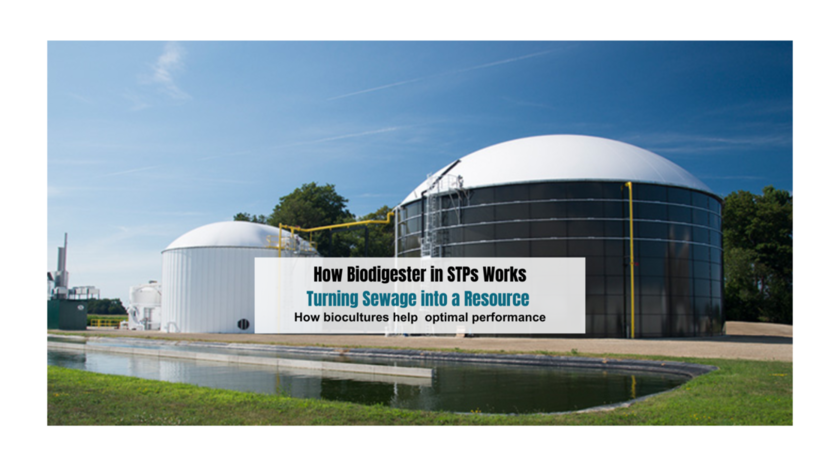
How Biodigester in STPs Works: Turning Sewage into a Resource Using Biocultures
India’s Sewage Challenge

India generates over 72,000 MLD of sewage daily, but less than half is treated effectively. This untreated wastewater flows into rivers like the Yamuna, Ganga, and Mula-Mutha, causing severe health and ecological damage. Despite multiple government initiatives like the Ganga Action Plan and National Mission for Clean Ganga, a significant sewage burden persists.

India is often termed by the world as the Spiritual capital, and people around the world flock to India to seek penance, embrace the tranquillity of nature and follow the path of GOD. But unfortunately, the past few centuries of dark chapters and post-independence blunders have made India and Indians be looked at as unfriendly to cleanliness, and we even prove it sometimes, because the very rivers that we worship and are sacred in our texts are among the most polluted rivers in the world.

By the 1970s and 80s, untreated sewage had become a national crisis. Outbreaks of cholera in Kolkata, jaundice in Surat (1994), and recurring typhoid cases in Delhi highlighted the urgent need for structured sewage management. It was clear that septic tanks and open drains could no longer cope with urban growth.

Why the Government Was Forced to Act

The first large-scale intervention came with the Ganga Action Plan (1986), which introduced Sewage Treatment Plants (STPs) in Kanpur, Varanasi, and other towns along the river. These were followed by the National River Conservation Plan (1995) and later the National Mission for Clean Ganga (2014).

The government realised that simply building drains wasn’t enough. What was needed were systems that could not only treat sewage but also manage solid waste sustainably. This is where biodigesters became a key component of STPs.

City Case Studies

Delhi ( Okhla STP, 1990s): One of the largest STPs in Asia, Okhla adopted biodigesters to process sewage sludge and generate biogas. However, poor maintenance has kept its output below potential, highlighting the gap between design and operation.

Kanpur (Ganga Action Plan, 1986): As one of the first cities to adopt STPs with biodigesters, Kanpur showed early promise.  But decades later, many plants fell into disrepair due to lack of funding and technical oversight, contributing to ongoing Ganga pollution.

Pune (Mula-Mutha River STPs, upgraded in 2018): A positive example, where biodigesters were modernised to produce electricity from biogas, helping reduce operational costs while tackling sewage loads.

Why Many Systems Struggle Today

Despite success stories, 40% of India’s STPs are either non-functional or underperforming (CPCB data). The reasons include:

  1. Poor Maintenance: Microbial cultures die out when not replenished.
  2. Finding Gaps: Municipal budgets often fail to cover operations.
  3. Skill Shortages: A lack of trained operators undermines performance.
  4. Outdated Designs: Many STPs still run on decades-old technology.
Role of Biodigesters in STPs

Biodigesters in Sewage Treatment Plants (STPs) are anaerobic chambers that use microbes to break down sludge. They:

  • Convert organic matter into biogas and nutrient-rich slurry.

  • Enable energy generation from methane.

  • Stabilise sludge and make it safe for reuse.

While cities like Delhi, Kanpur, and Pune have adopted biodigesters, around 40% of India’s STPs underperform due to poor microbial management, outdated designs, and lack of skilled operators.

How Biocultures Improve Biodigester Working

Biodigesters thrive only when the microbial population is balanced and active. Without replenishment, microbial colonies collapse, leading to foul odour, incomplete digestion, and reduced biogas yield.

Here’s how biocultures for STPs can solve these challenges:

  • Enhanced COD/BOD Reduction: Specialised microbial strains accelerate organic load breakdown.

  • Consistent Performance: Prevents biodigester failure during hydraulic shock loads.

  • Sludge Reduction: Biocultures minimise sludge accumulation, reducing disposal costs.

  • Odour & Pathogen Control: Maintains hygienic and sustainable operations.

Team One Biotech’s Expertise

As one of the leading biotech companies in India, Team One Biotech provides customised bioculture formulations to optimise biodigester working in STPs, ETPs, and decentralised sewage systems.

Our solutions include:
  • Anaerobic Biocultures tailored for methane generation.

  • Sludge-reducing microbial consortia to extend biodigester life.

  • Start-up cultures for new STPs or after shock loads.

  • On-site consultation and training for plant operators.

By integrating our biocultures, municipalities and industries can transform underperforming biodigesters into efficient, sustainable, and cost-saving systems.

Conclusion

Biodigesters are the backbone of modern sewage treatment in India, but they need consistent microbial support. Team One Biotech bridges this gap with advanced biocultures for STPs, ensuring reliable biodigester working, reduced sludge, and higher biogas yields.

With the right biotechnological support, India can move towards a circular wastewater economy, cleaner rivers, and healthier cities.

Explore More Solutions by Team One Biotech

Apart from biocultures for wastewater treatment, Team One Biotech also offers innovative and eco-friendly solutions across multiple sectors, including:

– Plant Growth Promoters – microbial formulations for improved agricultural productivity

– Aquaculture Probiotics – supporting fish and shrimp health naturally

– Bio Enzyme Floor Cleaner – eco-safe cleaning for homes and industries

– Multipurpose Cleaner – powerful natural alternative to chemical cleaners

– Septic Tank Cleaning Powder – maintaining septic efficiency and reducing odour

– Probiotic Drain Cleaner – preventing clogs and ensuring hygienic drains

Email: sales@teamonebiotech.com

Visit: www.teamonebiotech.com

Discover More on YouTube – Watch our latest insights & innovations!-

Connect with Us on LinkedIn – Stay updated with expert content & trends!

T1B SustainX can solve the malnutrition of ETP! How and Why?

What you read in the book is always different in the real-world hook!! A quote so accurately framed that and can be applied in every professional aspect, including wastewater treatment. No matter how many SOPs or books we read, the ground reality is different, each ETP is different, each industrial effluent is different and one of the most overlooked challenges across these systems is the malnutrition of ETP, where the biological treatment process suffers due to imbalanced or inadequate nutrient supply.

In the world of industrial wastewater treatment, biological systems are the backbone of sustainable and cost-effective operations. But even the best industrial application of microorganisms can’t function without the right nutrients. And for the right nutrients, the same old C:N:P ratio is followed. And to make up this ratio, unfortunately, the conventional nutrient sources such as UREA-DAP, which are supposed to be used for agriculture, are often used in abundance in common effluent treatment plants (CETPs), which is itself a self-sabotage practice.This leads to a common but critical issue—malnutrition of ETP, where effluent treatment plants suffer from poor nutrient availability or imbalance despite excessive chemical input.

Now, readers must be wondering as to what the ideal solution should be for this, as for every nutrient requirement, we need separate chemicals, like for nitrogen, it’s UREA, for phosphorus, it’s DAP, etc.

Well, Team One Biotech has a solution to this universal problem as well. Introducing T1B SustainX- a natural blend of nutrients in powdered form. A 100% replacement of UREA, DAP, Phosphoric acid, and other conventional nutrients.

Team One Biotech’s T1B SustainX offers a smart, eco-friendly, and efficient alternative. Here’s why it’s time to reconsider your ETP nutrient strategy—and how SustainX provides a smart, eco-friendly, and efficient alternative. Contact Us to know how SustainX can transform your operations.

The problem of using fertilizers in Industries as the nutrient source:

Despite their widespread use, these fertilizers contribute to the malnutrition of ETP, disrupting microbial health and system performance.Industrial effluent is not same as soil where we can put the traditional fertilizers. Using such products may give results, but it has some side effects too such as:

  • Nutrient Spikes & Imbalances: Urea, DAP and other products tend to release ammonia and phosphorous very rapidly causing sudden spike in nutrient availability leading to shock induction in the microbes present.
  • Limited Bioavailability: A significant portion of these nutrients is lost through runoff or chemical interactions, offering poor uptake efficiency.
  • Sludge Bulking & Odors: Excess ammonia from urea or phosphorus from DAP can trigger undesirable side effects like bulking, foaming, and odor removal.
  • Eutrophication Risk: Residual nutrients in treated effluents can pollute water bodies, leading to algal blooms and ecological damage.
T1B SustainX: One stop Nutrition Solution

It is a revolutionary and advanced nutritional solutions consists of balanced C:N:P , which is bioavailable.

Key Benefits of SustainX:

  • Scientifically designed pre-balanced ratio — no need for DAP/urea
  • Boosts microbial growth under anaerobic process and stress
  • Enhances COD/BOD reduction
  • Reduces sludge and odor removal issues
  • Improves methane yield in anaerobic digestion of biomass
  • Improves sludge quality and settleability
  • Reduced operational upsets and foaming
  • Stable system performance over time
  • Reduces operational hassle of doing multiple products
Practical Replacement comparison:

ParameterDAP/Urea/Phosphoric AcidT1B SustainX (Science Power)
Nutrient AvailabilityImmediate (risk of spike)Gradual (consistent)
BioavailabilityMedium to lowHigh (organic complex)
Microbial DiversityLimited impactSignificant positive impact
Sludge ProductionModerate to highReduced and stabilized
Residual NutrientsHigh risk (eutrophication)Minimal residual nutrients
Environmental ImpactHigher pollution potentialEco-friendly and sustainable
T1B SustainX- Nutrient Profile

T1B SustainX is a one blend-multiple nutrient product that gives all the necessary nutrients in one dose:

  • Organic Carbon → Primary electron donor and carbon source for microbial growth and co-metabolic degradation.
  • Total Nitrogen → Essential for amino acids, nucleic acids, and enzyme production, driving biomass formation.
  • Phosphate → Supports ATP synthesis, genetic material integrity, and membrane stability.
  • Calcium → Strengthens cell walls, stabilizes enzymes, and enhances bioflocculation and sludge settling.
  • Magnesium → Key cofactor for ribosomes, ATP handling, and enzyme regulation.
  • Sulfur → Needed for sulfur-containing amino acids, coenzymes, and redox balance.
  • Essential Micronutrient Metal Cofactors + Organic Micronutrient Coenzyme Precursors + Nitrogenous Organic Monomers and Metabolic Precursors

It also includes essential micronutrient metal cofactors, organic precursors, and nitrogenous metabolic compounds to enrich biological sewage treatment plants.

Real-World Impact:

SustainX has proven effective across a wide range of industrial effluents, including:

  • Pharmaceutical & Chemical Wastewater
  • Distilleries, Dairies & Food Units
  • Textiles & Detergents
  • CETPs and STPs
  • Petroleum & Pesticide Industries

Whether dealing with high COD, high TDS, or complex toxic loads, SustainX addresses the root causes of malnutrition of ETP by offering a complete, bioavailable nutrient solution for stable, high-performance biological treatment.

Upgrade Your ETP Nutrition- A Smarter and Sustainable Way:

With increasing regulatory scrutiny and rising sustainability expectations, continuing with outdated nutrient practices is no longer viable. T1B SustainX empowers ETP operators to:

  • Reduce chemical dependency
  • Improve operational efficiency
  • Cut down secondary pollution
  • Foster robust microbial ecosystems

Learn more at www.teamonebiotech.com or reach out at sales@teamonebiotech.com/8855050575

???? Discover More on YouTube – Watch our latest insights & innovations!

???? Connect with Us on LinkedIn – Stay updated with expert content & trends!

Scan the code