
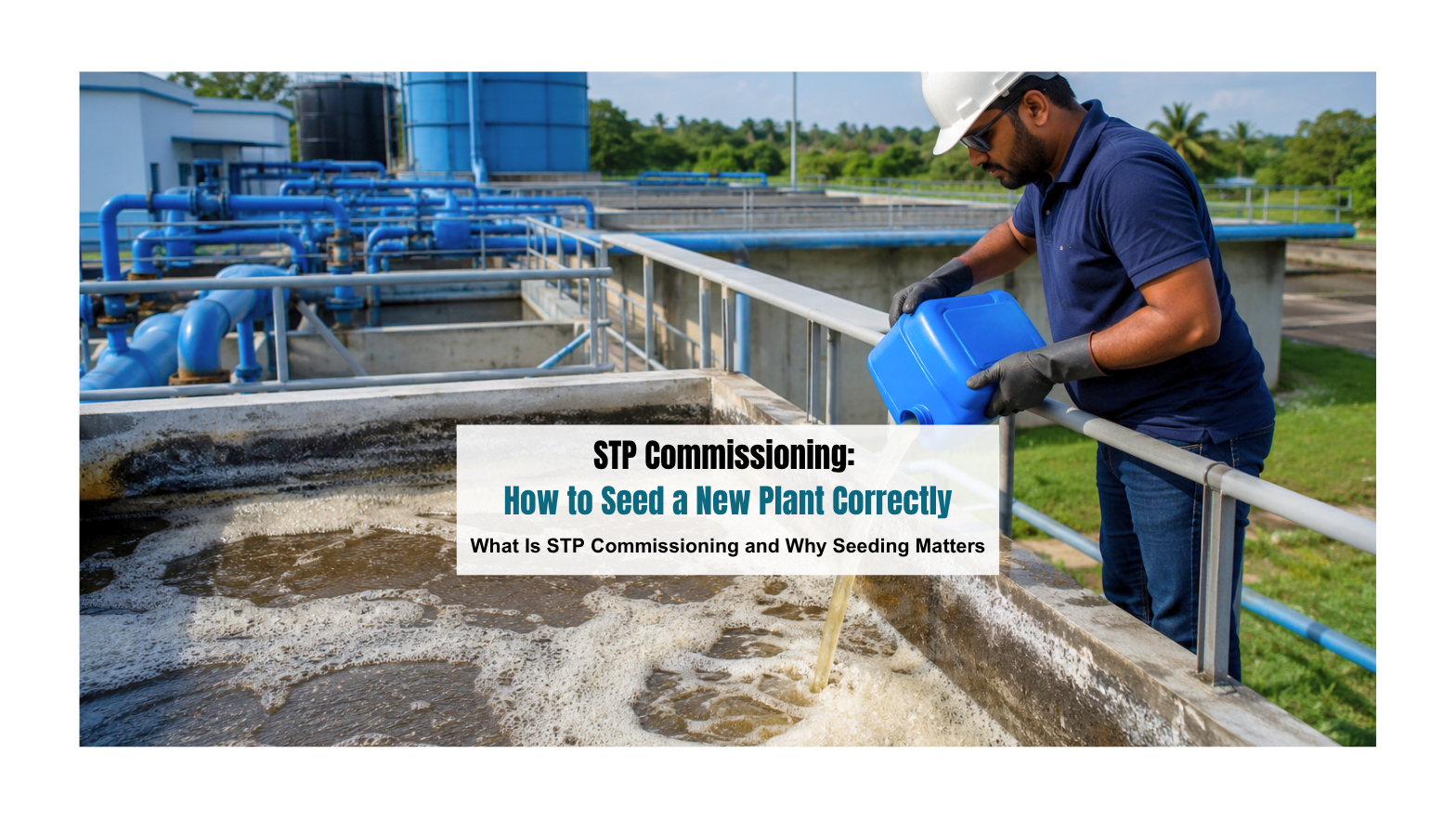
STP Commissioning: How to Seed a New Plant Correctly
You have been on-site for months. The civil work is done, the blowers are running, the tanks are full of water, and the client is standing next to you with a handover checklist. Somewhere in the background, the regulatory clock is already ticking. The consent to operate has been issued. The first self-monitoring report is due in weeks.
And biology? Biology is nowhere near ready.
This is the moment that separates engineers who understand STP commissioning from those who are about to learn a very expensive lesson. A newly constructed plant is nothing more than an empty vessel until a functioning microbial community has been established inside it. The tanks are clean, the equipment works, but the treatment capacity is essentially zero. Raw sewage entering an un-seeded system will pass through with BOD and COD levels barely changed, TSS readings that would alarm any inspector, and effluent that is nowhere close to CPCB discharge norms.
The mistake we see repeatedly on-site is simple: teams under pressure introduce full sewage load into an un-seeded system, wait two weeks, check the effluent quality, and cannot understand why the numbers are still dangerously off. The biology of an STP does not self-assemble overnight. It has to be deliberately established, carefully managed, and given time to stabilize.
This guide covers exactly how to do that, the right way.
What Is STP Commissioning and Why Seeding Matters
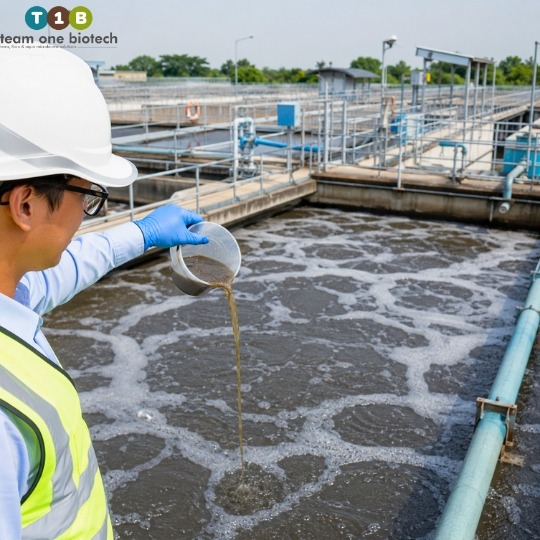
STP commissioning is the process of transitioning a newly constructed plant from mechanical readiness to stable biological operation. It is not the same as dry testing. Dry testing checks whether your blowers are rotating, your pumps are delivering the right flow rates, your instrumentation is calibrated, and your civil structures are watertight. Dry testing is necessary. But it tells you nothing about whether your plant can actually treat sewage.
Biological startup is a different discipline entirely. It is the process of establishing a living, functioning microbial ecosystem inside your aeration tanks, biofilm carriers, or membrane chambers, an ecosystem capable of breaking down organic pollutants, reducing ammonia, and delivering treated effluent that meets regulatory standards.
Seeding new STP systems with the right microbial consortia is not an optional step that some engineers choose to take. It is the critical foundation on which everything else depends. It determines how quickly your plant reaches stable effluent quality. It determines whether you can meet CPCB and SPCB discharge norms from your very first regulated sample collection. It determines how resilient your system is during the vulnerable startup phase, when the microbial population is still thin and susceptible to washout or souring under hydraulic or organic shock.
Our team at Team One Biotech has spent years formulating specialized STP commissioning bacteria products specifically for rapid biofilm establishment and high BOD/COD reduction performance in new plants across India. We have seen what happens when seeding is done correctly, and we have seen the consequences when it is skipped or done poorly.
Need the right biological culture for your plant startup? Contact Team One Biotech’s technical team for a site-specific seeding recommendation.
Understanding the Microbial Ecosystem You Are Building
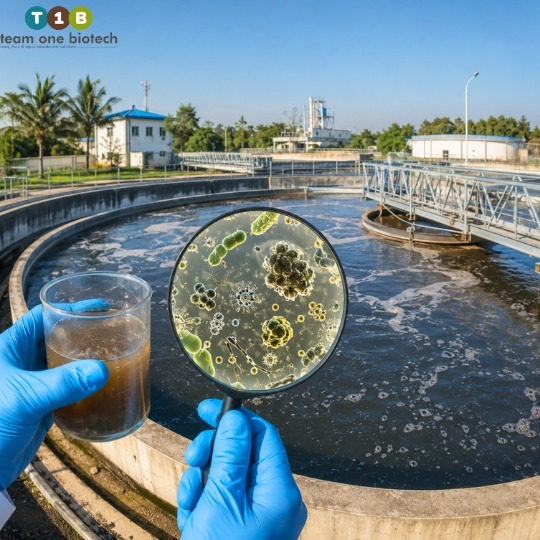
Before you can manage a startup effectively, you need to understand what you are actually building. A functioning STP bioreactor is not a single species, it is a diverse, interdependent community of microorganisms, each playing a specific functional role in the treatment process.
Heterotrophic bacteria are your workhorses. They consume soluble organic matter and are directly responsible for BOD and COD reduction. They are relatively fast-growing, relatively tolerant of variable conditions, and typically the first population to establish itself during STP startup.
Nitrifying bacteria are the slow-movers. These organisms, primarily Nitrosomonas and Nitrobacter, convert ammonia to nitrite and nitrate respectively. They are far more sensitive than heterotrophs. They are inhibited by low dissolved oxygen, by low pH, by sudden temperature changes, and by a wide range of industrial compounds. Their generation times are measured in days rather than hours. Getting nitrification established is often the longest and most technically demanding part of biological treatment startup.
Denitrifying bacteria handle total nitrogen reduction. In extended aeration systems and designs with anoxic zones, these organisms convert nitrate to nitrogen gas, completing the nitrogen removal cycle. Their establishment depends on proper anoxic zone management and substrate availability.
Facultative and anaerobic organisms play important roles in sludge digestion, fermentation zones, and pre-treatment stages. Their community composition will vary significantly depending on your plant design.
The reason this taxonomy matters during plant commissioning is simple. If your seeding strategy does not account for the diversity of organisms you need, or if your early operating conditions suppress the growth of slow-establishing populations like nitrifiers, you will have a plant that partially works, that reduces BOD adequately but cannot control ammonia, or that performs well on low loads but collapses under normal flow.
Understanding what you are building allows you to protect the populations that are most at risk during the startup phase.
Step-by-Step Guide to Seeding a New STP Correctly
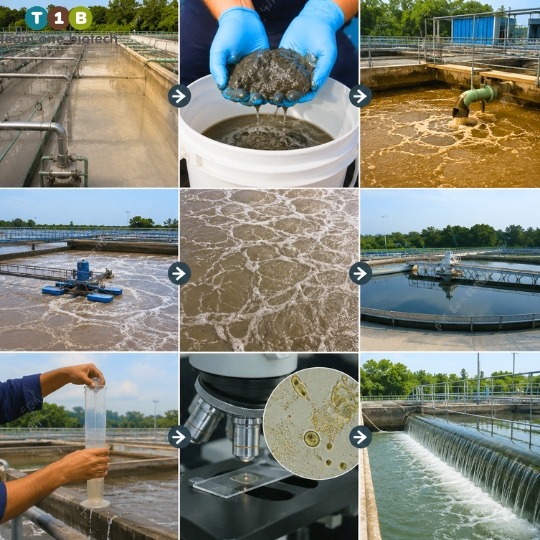
This is the section that matters. The steps below represent a commissioning sequence that our application engineers have refined across dozens of STP startup projects in municipal, residential, and commercial settings.
Step 1: Complete Dry Testing Before Any Biological Work Begins
Before a single microorganism enters your system, every piece of mechanical and electrical equipment must be tested and verified. Blowers, aerators, return activated sludge (RAS) pumps, mixers, sludge transfer equipment, and instrumentation must all be functioning correctly and consistently.
Introducing a microbial seed into a system with faulty aeration, erratic pump behavior, or malfunctioning DO sensors is not just ineffective, it will kill the culture before it has any chance to establish. Biological startup amplifies problems in your mechanical systems. Fix them first.
Step 2: Fill the Bioreactor and Stabilize Operating Conditions
Fill the aeration tank with clean water or appropriately diluted sewage before introducing any biological seed. Allow the system to run and stabilize before you introduce any culture. Key parameters to confirm at this stage include dissolved oxygen levels, pH, and temperature, all of which need to be within appropriate operating ranges before seeding begins.
Typical indicative ranges for biological activity are dissolved oxygen between approximately 1.5 to 3.0 mg/L, pH in the range of approximately 6.5 to 8.5, and temperature in ranges broadly consistent with mesophilic bacterial activity.
Disclaimer: These are general indicative values. Actual parameters vary based on plant design, influent characteristics, and applicable regulatory norms. Always refer to your specific CPCB/SPCB consent conditions.
Do not rush this stabilization phase. Seeding into an unstable system is a waste of product and time.
Step 3: Introduce the Microbial Seed
This is the most consequential step in the entire STP startup sequence. The quality, concentration, and composition of the seed culture you introduce will directly determine how quickly your plant reaches biological stability.
Using a high-density, broad-spectrum STP commissioning bacteria product, formulated specifically for new plant startup, significantly shortens the acclimatization period compared to relying solely on naturally occurring microorganisms or opportunistic colonization from raw sewage. Commercial bioaugmentation products from manufacturers like Team One Biotech are formulated to contain the full range of organisms your plant needs: fast-establishing heterotrophs to begin BOD reduction immediately, and robust nitrifier populations to begin building the ammonia-oxidizing community as conditions stabilize.
Seed sludge from an existing operating STP is sometimes used to supplement or partially replace a commercial seed. There is value in this approach when the donor plant is well-run, treats a similar quality of sewage, and is free of disease outbreak-related conditions. However, there are real risks: importing pathogenic organisms adapted to another facility, introducing populations poorly suited to your plant’s specific design loading, or bringing in organisms that perform well at the donor plant’s conditions but poorly in your new system. Use donor sludge as a supplement, not as your primary seeding strategy.
Step 4: Begin Nutrient Dosing
A freshly seeded system often lacks the nutritional balance required for rapid microbial growth. In biological treatment, the critical nutrient ratio is the relationship between carbon (approximated by BOD), nitrogen, and phosphorus. If incoming sewage is nutrient-deficient, as is sometimes the case with certain industrial or mixed-use streams, supplemental nitrogen and phosphorus dosing is required to fuel microbial growth during the early startup phase.
Indicative nutrient ratios for aerobic biological treatment are broadly in the range of approximately 100:5:1 for BOD:N:P.
Disclaimer: These are general indicative values. Actual parameters vary based on plant design, influent characteristics, and applicable regulatory norms. Always refer to your specific CPCB/SPCB consent conditions.
Under-dosing nutrients during seeding new STP systems is one of the most overlooked mistakes in early-stage commissioning. Do not assume the incoming sewage is nutritionally balanced.
Step 5: Monitor and Maintain Alkalinity
Nitrification, the biological conversion of ammonia to nitrate, is an acid-generating process. Each unit of ammonia oxidized consumes alkalinity from the system. In plants with significant nitrification demand, alkalinity depletion can cause pH to drop sharply during the STP startup phase. A falling pH inhibits the very nitrifying bacteria you are trying to establish, creating a feedback loop that is difficult to break once it begins.
Monitor alkalinity regularly throughout the commissioning period. Maintain it within ranges that provide adequate buffering capacity, typically in the region of approximately 100 to 200 mg/L as CaCO₃ or higher depending on ammonia loading.
Disclaimer: These are general indicative values. Actual parameters vary based on plant design, influent characteristics, and applicable regulatory norms. Always refer to your specific CPCB/SPCB consent conditions.
Sodium bicarbonate is the most commonly used alkalinity supplement in STP commissioning. Have it available and dose proactively, not reactively.
Step 6: Ramp Up Organic and Hydraulic Loading Gradually
This is the step most often compromised under project timeline pressure, and it is the step most responsible for startup failures. Do not introduce full design flow or full organic load immediately after seeding. Begin at a fraction of design loading, typically somewhere in the range of approximately 20 to 30 percent, and increase incrementally over several weeks as the microbial population grows, the biofilm establishes, and effluent quality trends improve.
Disclaimer: These are general indicative values. Actual parameters vary based on plant design, influent characteristics, and applicable regulatory norms. Always refer to your specific CPCB/SPCB consent conditions.
The biological community in a newly seeded plant is fragile. Hydraulic washout, caused by introducing flows that exceed the settling or retention capacity of a still-thin sludge blanket, is one of the fastest ways to undo weeks of careful startup work. Organic overloading can suppress dissolved oxygen, shift the microbial community toward fermentative pathways, and produce the foul odors and poor effluent quality that are the hallmarks of a troubled plant commissioning.
Patience at this stage pays dividends for the operational life of the plant.
Step 7: Monitor Key Parameters Daily
During the commissioning period, monitoring is not a weekly task. It is a daily discipline. The parameters that matter during biological startup include BOD, COD, TSS, dissolved oxygen, pH, MLSS (mixed liquor suspended solids), and where relevant, ammonia nitrogen and alkalinity.
What you are looking for is not a single passing reading. You are tracking trends. A stable or improving trend across multiple days in BOD reduction, increasing MLSS, and rising sludge volume index (SVI) is a sign that your biological community is growing and stabilizing. A sudden drop in DO despite consistent aeration, or rising COD on a flat organic load, tells you something is wrong and needs immediate investigation.
Step 8: Evaluate Effluent Against Discharge Norms as Loading Ramps Up
As the plant approaches design loading and effluent quality begins to stabilize, begin formal evaluation of treated effluent against your applicable CPCB or SPCB discharge norms. Begin documenting results from the earliest possible stage. Establishing a positive regulatory record, even before formal monitoring is mandated, is an asset that demonstrates competence and builds goodwill with the regulatory authority.
Common STP Commissioning Mistakes That Set Plants Back
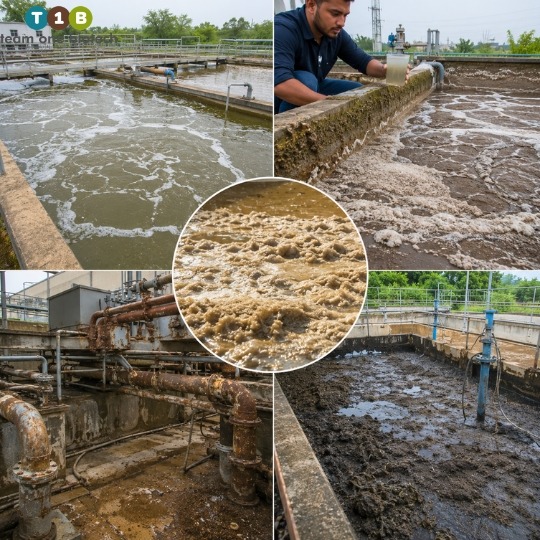
These are not theoretical errors. They are patterns our engineers have observed repeatedly during plant commissioning across India.
- Flooding the system with full sewage load before the microbial population has established, the single most common mistake, usually driven by project timeline pressure.
- Skipping or under-dosing nutrient supplementation during the first weeks of startup, starving the microbial population when it should be growing fastest.
- Ignoring alkalinity until the pH crashes and nitrification collapses, then spending weeks trying to rebuild a suppressed nitrifier population.
- Using seed sludge from an industrial ETP to start a domestic sewage plant, the microbial communities are shaped by very different substrates and will not perform optimally in a mismatched environment.
- Failing to calibrate and verify DO sensors before startup, then operating blind on aeration management during the most sensitive phase of biological treatment startup.
- Treating the commissioning period as a bureaucratic formality rather than a critical biological engineering phase, with insufficient qualified staff on-site and no daily monitoring protocol in place.
- Introducing seed and then reducing aeration to save power, a false economy that starves the aerobic population exactly when it needs oxygen most.
Getting the seeding phase wrong is not just an operational problem. It is a compliance risk that can delay commercial operation, attract regulatory attention, and cost far more to remediate than a properly executed startup would have cost from the beginning.
How Team One Biotech Supports STP Startup and Commissioning
Team One Biotech’s role in the commissioning process goes beyond supplying a product and walking away. Our involvement is technical and application-specific.
Our core offering for plant commissioning is a range of specialized STP commissioning bacteria products, high-density, broad-spectrum microbial cultures formulated to establish rapidly in new plants, deliver measurable BOD and COD reduction within the first weeks of operation, and build the resilient nitrifier populations that are critical for long-term ammonia compliance.
Beyond the product, our application engineers work directly with project teams to develop site-specific dosing protocols, loading ramp-up schedules, nutrient management plans, and parameter monitoring frameworks. We understand that no two plants are identical. Influent characteristics, reactor design, ambient temperature, and applicable discharge norms all vary. Our commissioning support is tailored to those specifics, not delivered as a one-size-fits-all recommendation.
We have supported STP startup projects across municipal, large-scale residential, commercial, and hospitality segments across India. Our track record includes plants that have achieved compliance from their first regulated monitoring cycle, not because we were lucky, but because the commissioning process was engineered correctly from the start.
As an Indian manufacturer of bioremediation and STP biological treatment solutions, our products and support are designed around the regulatory framework and operating conditions that Indian engineers actually work within.
Planning a new STP startup? Let Team One Biotech’s application engineers design a commissioning protocol tailored to your plant configuration and discharge norms. Get in touch today.
Frequently Asked Questions on STP Commissioning
Q: How long does it typically take to commission a new STP biologically?
The timeline depends significantly on plant design, organic loading, ambient temperature, and the quality of the seeding strategy. Heterotrophic BOD reduction can begin showing measurable improvement within the first one to two weeks of startup. Full nitrification, and therefore complete compliance with ammonia-based discharge norms, typically requires a longer period, often several weeks to a few months, depending on conditions. Using a quality STP commissioning bacteria product with a strong nitrifier component, and managing the ramp-up carefully, can substantially shorten this timeline compared to relying on natural colonization alone.
Q: Can I use sludge from another STP to seed my new plant?
Yes, with appropriate caution. Donor sludge from a well-operated plant treating similar sewage can provide a useful supplementary seed. However, it introduces risks: potential import of pathogenic or poorly adapted organisms, variability in community composition, and dependence on the operational health of the donor plant. Commercial bioaugmentation products offer a more controlled, consistent, and concentrated alternative. For most plant commissioning scenarios, we recommend using a purpose-formulated commercial seed as the primary inoculant, with donor sludge as an optional supplement.
Q: What happens if I skip the seeding phase entirely and rely on natural colonization?
The plant will eventually develop a microbial community, but the timeline is unpredictable, often significantly longer, and the startup period will be characterized by poor BOD reduction, high COD, and effluent that consistently fails to meet CPCB norms. The risk of regulatory non-compliance during this extended startup window is real. In competitive project environments where clients and regulators expect performance from the first weeks of operation, relying on natural colonization is a risk that is difficult to justify.
Q: What role does aeration play during STP startup?
Dissolved oxygen is the limiting factor for aerobic microbial growth. Without adequate aeration, the biological community cannot establish effectively, heterotrophic BOD reduction is incomplete, and nitrification, which is extremely sensitive to oxygen depletion, will not proceed. During STP startup, aeration management is more nuanced than during normal operation. Too little oxygen starves the culture. Too much can cause excessive turbulence that disrupts floc formation or strips out the biomass before it has settled into a stable sludge blanket. Aeration must be calibrated carefully during the ramp-up phase, and DO should be monitored daily.
Get the Biology Right Before You Open the Gates
Successful STP commissioning is fundamentally a biological engineering challenge. The microbial community you establish during the startup phase will define the treatment performance, the regulatory compliance trajectory, and the operational resilience of that plant for years to come. Cutting corners at this stage, under timeline pressure, under budget pressure, or simply through underestimating the complexity of biological startup, creates problems that are costly to fix, difficult to explain to regulators, and sometimes impossible to reverse without a full restart.
Approach seeding new STP systems as a science. Understand what organisms you need, create the conditions for them to establish, protect them during the vulnerable early phase, and ramp up loading with patience and discipline. The plants that hit compliance from their first monitoring cycle are not lucky, they are the product of commissioning processes that were planned and executed correctly from day one.
The right STP commissioning bacteria, the right dosing protocol, and the right technical support make all of this achievable, on time and within scope. Talk to Team One Biotech’s technical team before your next STP commissioning. Our biological products and application support are designed to help your plant achieve compliance from the very first cycle of operation.
Looking to improve your ETP/STP efficiency with the right bioculture?
Talk to our experts at Team One Biotech for customised microbial solutions.
Contact: +91 8855050575
Email: sales@teamonebiotech.com
Visit: www.teamonebiotech.com
Discover More on YouTube – Watch our latest insights & innovations!-
Connect with Us on LinkedIn – Stay updated with expert content & trends!