
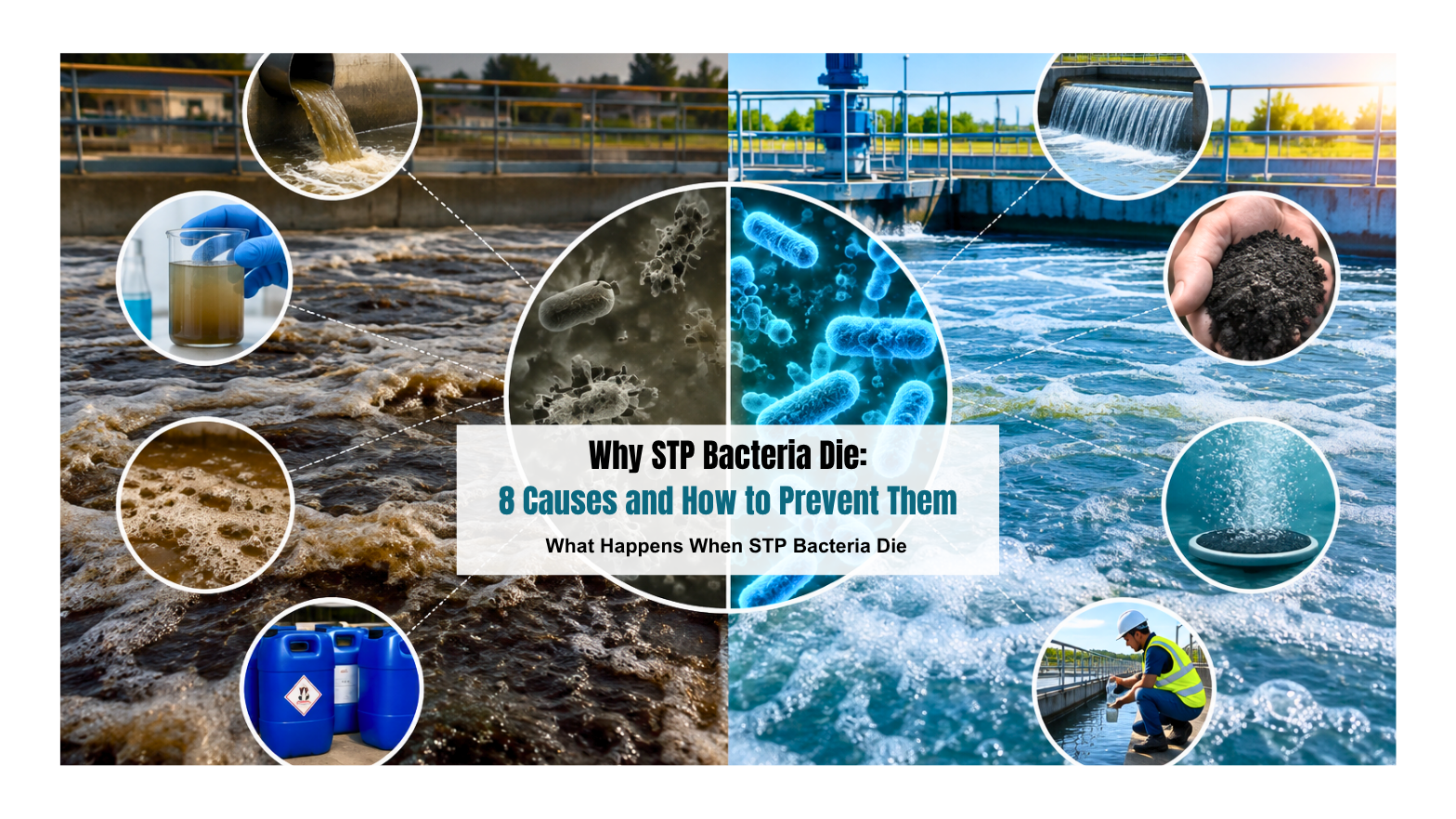
Why STP Bacteria Die: 8 Causes and How to Prevent Them
You walk into the plant on a Monday morning and something is already wrong. The effluent looks cloudy. The mixed liquor in the aeration tank has lost its usual brown earthy appearance, it looks thin, almost grey. You pull up the MLSS readings from the night shift log and your stomach drops. It has fallen sharply, and nobody flagged it. The BOD numbers from last week’s lab report are creeping upward. And somewhere in the back of your mind, you remember that the CPCB inspector is scheduled for a site visit in ten days.
This is not a hypothetical. This is the moment that STP operators across India dread, and it happens more often than most plant managers publicly admit.
STP bacteria dying is not always a dramatic, overnight event. More often, it is a slow biological unravelling that builds quietly in the background until the day it becomes impossible to ignore. By that point, you are no longer dealing with a process problem. You are dealing with a compliance crisis, a potential CPCB or SPCB discharge violation, and the very real possibility of a plant shutdown notice.
The good news is this: biological crashes in sewage treatment plants are almost always preventable. And they are almost always traceable to one of eight specific causes. Understanding those causes, and the warning signs they leave behind, is the difference between an operator who reacts and an operator who prevents.
In this article, we are going to walk through all eight causes of STP bacteria dying, explain what each one does to your biomass, tell you what to watch for before it escalates, and give you a clear picture of how to protect your plant’s biological stability. We will also cover what to do if you are already in a crash.
If your plant is already showing signs of biological stress, our team can help you diagnose the root cause, reach out to Team One Biotech for a consultation.
What Happens When STP Bacteria Die, The Cascade Effect
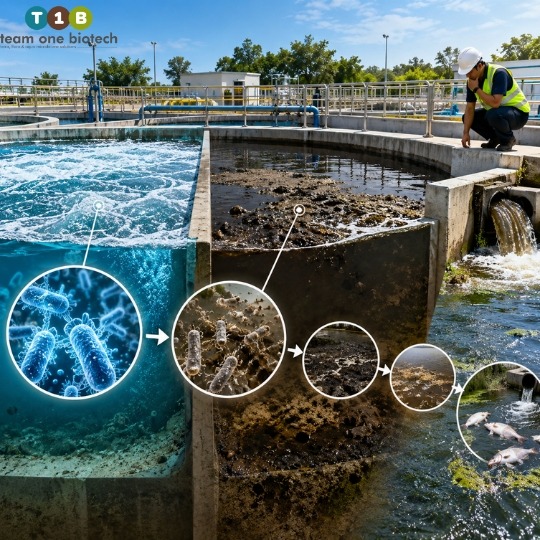
Before getting into the causes, it helps to understand what is actually at stake when the biology fails.
MLSS, Mixed Liquor Suspended Solids, is the measure of the microbial biomass concentration in your aeration basin. It is, in practical terms, the measure of your plant’s treatment capacity. When MLSS drops, so does your plant’s ability to break down BOD, COD, and ammonia. What follows is a cascade: effluent turbidity rises, BOD and COD in the discharge start climbing, TSS violations appear, and you move from a functioning treatment plant to a system that is essentially passing raw or partially treated sewage toward the discharge point.
What makes this especially dangerous is that the damage often builds silently. Bacteria under stress do not announce themselves. The mixed liquor can look visually acceptable even as the active, healthy fraction of your biomass declines. By the time MLSS drops to a visibly alarming level, the plant has usually been struggling for days or even longer.
This is why the eight causes below matter, not just as diagnostic categories, but as early warning systems.
Note: MLSS values vary considerably based on plant design, treatment configuration (ASP, SBR, MBR), and influent characteristics. Always refer to your plant-specific process design document or consult a qualified STP process engineer for target values.
8 Primary Causes of STP Bacteria Dying
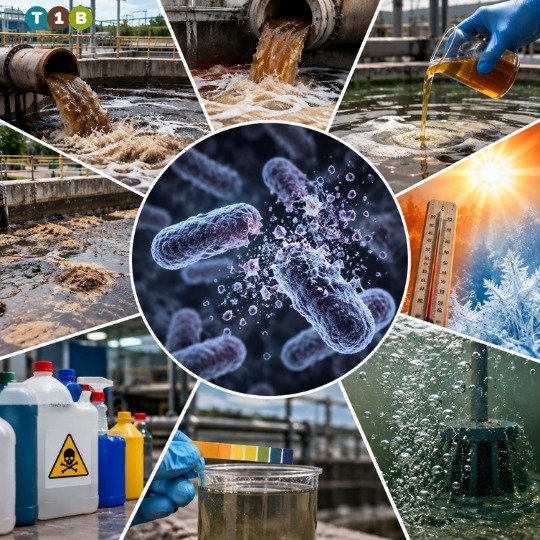
Cause 1, Toxic Chemical Shock
What it is: A sudden entry of disinfectants, cleaning agents, industrial solvents, or high-strength chemical waste into the STP feed. This can happen when a facility does a deep cleaning, when a connected industrial tenant flushes chemical waste, or when disinfectant overuse reaches the biological tank without dilution.
How it harms the biomass: Many common chemicals, bleach, quaternary ammonium compounds, strong acids, industrial solvents, are bactericidal even at relatively low concentrations. A short-duration toxic slug can cause mass bacterial lysis across both heterotrophic and nitrifying populations. Nitrifying bacteria, which are slower-growing and more sensitive than general heterotrophs, may be entirely wiped out while the rest of the biomass is still partially recovering. The result is not just MLSS loss, it is loss of treatment function across multiple parameters simultaneously.
Warning signs: Sudden MLSS drop that does not correspond to any change in wasting rate, unexplained foaming, a visible change in mixed liquor colour, a sharp spike in effluent turbidity, and sometimes a strong chemical odour from the aeration basin.
Prevention: Equalization tank monitoring, influent screening protocols that flag unusual conductivity or pH changes, upstream source control agreements with industrial tenants or connected facilities, and periodic toxicity checks on the incoming feed. The equalization tank is your first line of defence, it absorbs and dilutes shock loads before they reach the biology.
Cause 2, Extreme pH Fluctuations
What it is: pH swings outside the stable operating window, driven by acidic or alkaline industrial waste discharging into the sewer network, improper chemical dosing within the plant, or gradual alkalinity depletion in the system.
How it harms the biomass: STP bacteria, particularly nitrifying bacteria, operate within a relatively narrow pH band. When pH swings beyond this range in either direction, enzyme activity is suppressed, cell membranes are damaged, and bacterial mortality rates rise sharply. Nitrifying bacteria are particularly vulnerable and are often the first population to collapse during a pH excursion, leading to ammonia breakthrough in the effluent even before overall MLSS visibly declines.
Warning signs: Rapid pH swings in the aeration basin, reduced or failed nitrification, rising ammonia levels in effluent, MLSS instability, and in severe cases, visible foaming or discolouration of the mixed liquor.
Prevention: Continuous online pH monitoring in the aeration basin, automated caustic or acid dosing controls, regular buffer capacity checks on the influent, and operator awareness of upstream industrial discharges that could alter incoming pH. Maintaining adequate alkalinity in the system provides a buffer that dampens the impact of incoming pH fluctuations.
Disclaimer: Optimal pH ranges are generally referenced as indicative guidance. Specific tolerance may vary based on your plant’s dominant microbial community, temperature, and treatment configuration. Consult your process engineer for plant-specific targets.
Cause 3, Dissolved Oxygen (DO) Depletion
What it is: Oxygen levels in the aeration basin falling below the minimum threshold required for sustained aerobic bacterial metabolism. This can happen due to aeration equipment failure, blower trips, DO probe drift, or a sudden organic load surge that overwhelms the current aeration rate.
How it harms the biomass: Aerobic bacteria cannot survive without oxygen. When dissolved oxygen in the STP drops to critically low levels, aerobic metabolic pathways shut down. The system begins to shift toward anaerobic or anoxic conditions. Bulking sludge can develop as filamentous organisms that thrive under low-DO conditions begin to dominate. BOD removal efficiency drops, effluent quality deteriorates, and foul odours are generated. Prolonged DO depletion results in mass bacterial death and a collapsed MLSS.
Warning signs: Low or zero DO readings from probes, dark or septic-smelling mixed liquor, rising effluent BOD and COD, sludge with poor settleability, and in some cases, visible gas bubbles rising through the basin from anaerobic decomposition.
Prevention: Regular aeration system audits, monthly or quarterly DO probe calibration checks, redundant blower capacity for critical plants, and where possible, load-based aeration controls that automatically ramp up airflow during high-influent periods. Never assume your DO probe is reading correctly without field verification.
Cause 4, Hydraulic Overloading and Surge Flows
What it is: A sudden influx of wastewater volume far exceeding the plant’s design capacity. This is common during monsoon season in India when stormwater enters the sewer network, or during industrial peak discharge events when multiple high-volume sources flush simultaneously.
How it harms the biomass: When hydraulic loading exceeds design capacity, the sludge retention time in the system drops dramatically. Bacteria, especially slow-growing species like nitrifiers, are physically washed out of the system before they can reproduce and replenish the population. This is called sludge washout, and it results in a sharp, rapid MLSS decline that can persist for days or weeks until the biomass rebuilds. The effluent quality during this period is severely compromised, creating direct CPCB discharge norm violation risk.
Warning signs: Rising effluent TSS, MLSS declining without a corresponding change in wasting rate or any identifiable toxicity cause, abnormal SVI readings, and high effluent turbidity during or after heavy rainfall or surge events.
Prevention: Influent flow equalization using buffer or surge tanks, overflow diversion controls, and close MLSS monitoring during identified high-flow risk periods. Operators in monsoon-prone regions should have a seasonal surge management protocol built into their standard operating procedures.
Cause 5, Thermal Stress from Temperature Drops
What it is: A significant drop in aeration basin water temperature caused by cold weather, cold-water industrial discharges, or cool groundwater infiltration into the sewerage system.
How it harms the biomass: Bacterial metabolic rates are temperature-dependent. As temperature falls, enzymatic reaction rates slow, and the biological processes that drive BOD, COD, and ammonia removal become increasingly sluggish. Nitrification is especially temperature-sensitive, ammonia oxidising bacteria can become functionally inactive at lower temperatures well before heterotrophic bacteria show comparable stress. The result is ammonia breakthrough in effluent and partial treatment failure even when MLSS appears visually stable.
Warning signs: Nitrification failure appearing in winter months, ammonia spikes in effluent without corresponding changes in organic loading, sluggish or delayed MLSS response to operational adjustments, and slower sludge settling times.
Prevention: Where feasible, covered or insulated aeration tanks can maintain basin temperature during cold periods. Seasonal bioaugmentation with cold-adapted bacterial cultures is an option for plants that consistently experience winter nitrification failure. Operators should increase monitoring frequency during temperature transitions rather than waiting for effluent data to flag the problem.
Cause 6, Heavy Metal Toxicity
What it is: Entry of metals such as chromium, lead, copper, zinc, nickel, or cadmium into the STP, typically from industrial drainage, mixed commercial-industrial sewage networks, or plating and manufacturing facility discharges.
How it harms the biomass: Heavy metals are non-biodegradable and they do not flush through the system the way organic toxins sometimes can. Instead, they accumulate in the sludge and inhibit bacterial enzyme systems at a fundamental cellular level. Even sub-lethal concentrations can suppress biological activity over time, gradually degrading MLSS health and treatment performance without triggering the dramatic visual signals that a chemical shock does. The insidious nature of heavy metal toxicity is that operators often attribute the slow performance decline to other causes before the true culprit is identified.
Warning signs: Gradual, unexplained MLSS decline despite no operational changes or identified chemical events, progressive darkening of the sludge colour, slow creep in effluent COD over weeks or months, and poor sludge settleability that worsens gradually rather than suddenly.
Prevention: Upstream metal screening in the influent, periodic metal analysis on both the influent feed and the sludge, source segregation requirements for industrial tenants, and pre-treatment mandates for any connected industrial dischargers. Plants operating near industrial estates should treat heavy metal monitoring as routine, not optional.
Cause 7, Nutrient Deficiency and Nitrogen or Phosphorus Imbalance
What it is: Bacteria need balanced macro-nutrients, particularly nitrogen and phosphorus, for cell synthesis and healthy growth. STP feeds that are very low in these nutrients, or feeds where the carbon-to-nitrogen-to-phosphorus ratio is significantly skewed, create a nutrient-starved biological environment.
How it harms the biomass: Nutrient-starved bacteria become weak and non-viable. They lose the ability to form proper flocs, which means the sludge begins to settle poorly. Filamentous organisms that are better adapted to nutrient-limited conditions may begin to dominate, leading to sludge bulking. MLSS instability follows as the active, healthy biomass fraction declines. BOD carryover in the effluent increases because the bacteria simply lack the cellular resources to sustain normal metabolic activity.
Warning signs: Poor sludge settleability with rising SVI values, pale or dispersed mixed liquor appearance, unexplained BOD carry-over in the effluent, and sludge that does not compact well in the settling tank even when everything else looks operationally normal.
Prevention: Regular nutrient ratio monitoring in the influent, supplemental nitrogen or phosphorus dosing when the feed is nutrient-deficient, and routine influent feed quality analysis, particularly for plants that receive predominantly commercial or institutional sewage rather than domestic sewage, which can have more variable nutrient profiles.
Cause 8, Improper Wasting and Sludge Retention Time Mismanagement
What it is: Either over-wasting, removing too much sludge too quickly, or under-wasting, allowing excessively old sludge to accumulate, disrupts the active biomass balance that biological treatment depends upon. Sludge Retention Time (SRT) management is one of the most powerful and most frequently mismanaged levers in STP operations.
How it harms the biomass: Over-wasting physically removes active bacteria from the system faster than they can reproduce, causing MLSS to drop and treatment capacity to collapse. Under-wasting fills the system with old, endogenous cells that are metabolically inactive, crowding out productive bacteria and reducing effective treatment capacity even as total MLSS appears adequate. Both extremes lead to compromised effluent quality and create the conditions for a biological crash if another stressor is introduced simultaneously.
Warning signs: MLSS trending consistently downward or upward without stable corresponding effluent quality, erratic SVI values, poor and inconsistent sludge settling behaviour, and effluent quality that does not match what MLSS levels would predict.
Prevention: SRT-based wasting calculations rather than volume-based or time-based wasting routines, regular MLSS and VSS monitoring to track the active fraction of the biomass, and calibrated wasting frequency adjustments that respond to seasonal changes in temperature, influent load, and plant performance data.
How to Prevent STP Bacteria from Dying, An Operator’s Checklist

Prevention is dramatically less expensive than recovery, in operational cost, in downtime, and in regulatory risk. Here is what a proactive biological monitoring routine looks like in practice:
- Monitor DO continuously in the aeration basin; calibrate probes on a regular schedule and verify with field DO meters
- Check aeration basin pH daily; flag any deviation beyond your plant’s defined operating range immediately
- Screen influent for unusual conductivity, colour, or odour as an early signal of chemical or industrial discharge events
- Track MLSS and VSS at a minimum twice weekly; daily tracking during any period of operational stress or unusual influent quality
- Manage SRT using calculated wasting, not intuition, keep records and adjust for seasonal changes
- Perform monthly influent nutrient ratio analysis to catch deficiencies before they become biomass problems
- During monsoon season, increase monitoring frequency and ensure surge buffer capacity is operationally ready
- Conduct periodic heavy metal testing on both influent and sludge for plants receiving any industrial drainage
- Consider seasonal bioaugmentation with specialist bacterial cultures during known stress periods, cold weather, post-shutdown restarts, or following a toxic shock event
Not sure where your plant stands? Team One Biotech offers on-site STP biological health assessments. Get in touch with our technical team today.
How to Recover a Crashed STP, Immediate Response Steps
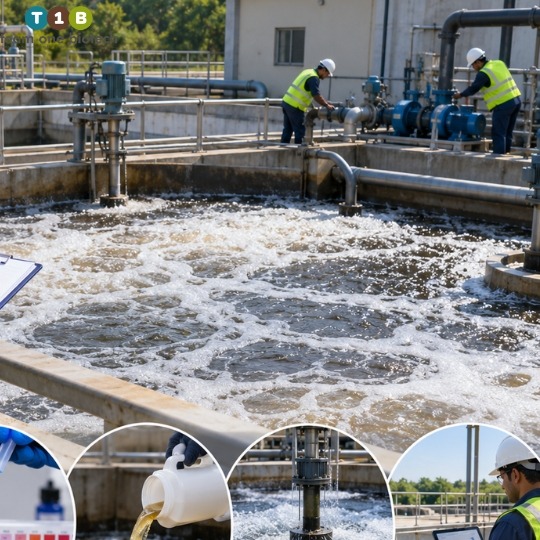
If you are already in a crash situation, the priority is stabilisation before recovery. Acting without identifying the root cause first typically makes the situation worse.
Start by identifying and isolating the cause. Pull your DO, pH, MLSS, and influent data from the past seventy-two hours and look for the trigger. Without understanding what caused the crash, you cannot stop it from happening again during recovery.
Stabilise DO and pH in the aeration basin before anything else. The bacteria that survive the crash need a stable environment to rebuild. Reduce organic loading temporarily if possible, this takes pressure off the depleted biomass and gives it a chance to begin recovering without being overwhelmed.
Consider seeding with fresh activated sludge from a healthy plant or using a bioaugmentation product with high-concentration viable bacterial cultures. This accelerates the recovery timeline significantly compared to waiting for the native biomass to rebuild from a depleted state on its own.
Monitor MLSS daily during recovery. Recovery timelines vary depending on the cause, the severity of the crash, and the temperature, expect a process measured in days to weeks rather than hours, particularly if nitrifying bacteria were impacted.
Team One Biotech’s bioaugmentation cultures for STP are specifically formulated to accelerate STP recovery after biological crashes, reducing the time between crash and restored compliance performance.
Frequently Asked Questions
Q1: What is a safe MLSS range for an STP aeration tank?
Typical STP aeration basins are generally designed to operate within a broad MLSS range, with the appropriate target varying by treatment configuration, HRT, and SRT. Disclaimer: These are general indicative ranges only. Your plant’s target MLSS depends on its specific process design. Consult your process engineer or the plant’s original design document for plant-specific guidance.
Q2: How do I know if my STP bacteria are stressed or dead?
Stressed biomass typically shows poor settleability, rising SVI, sluggish DO uptake, and declining treatment efficiency before MLSS visibly drops. A crashed biomass shows dramatic MLSS decline, very poor settling, near-zero DO uptake response, and severely deteriorated effluent. Microscopic examination of the mixed liquor can confirm whether active, diverse protozoan populations are still present, their disappearance is a reliable indicator of biomass collapse.
Q3: Can bacteria in an STP recover after a crash?
In most cases, yes, if the cause is identified and corrected, the biomass will recover over time. Full re-seeding is generally required only when the crash is severe, prolonged, or caused by persistent toxicity such as heavy metal accumulation. Bioaugmentation with fresh cultures significantly shortens the recovery timeline.
Q4: How quickly can MLSS drop after a toxic shock?
This depends on the type and concentration of the toxic substance and the size and resilience of the biomass at the time of exposure. In severe cases, a meaningful MLSS decline can become apparent within hours to a day or two. Nitrifying bacteria, being slower-growing and more sensitive, may be functionally impaired even before MLSS shows a statistically significant drop.
Q5: Does Team One Biotech provide STP bacteria products for recovery?
Yes. Team One Biotech supplies bioaugmentation cultures specifically formulated for STP recovery and stabilisation, including nitrifier-enriched products for ammonia control and heterotrophic cultures for BOD and COD crash recovery. Reach out to our technical team to discuss the right solution for your plant’s situation.
Protect Your Biomass Before the Regulator Shows Up
Think back to that operator at the start of this article, standing in front of a failing aeration tank, watching MLSS numbers that should not be where they are, with a CPCB inspection less than two weeks away. That moment of helplessness is avoidable. In the vast majority of cases, the biological crash that creates it was building for days or weeks before it became visible, and at multiple points along the way, it could have been caught and corrected.
The eight causes covered in this article, toxic chemical shock, pH fluctuations, DO depletion, hydraulic overloading, thermal stress, heavy metal toxicity, nutrient deficiency, and SRT mismanagement, account for nearly every biological failure seen in operating sewage treatment plants. Knowing them is not just useful knowledge. It is operational insurance.
Biology is the backbone of STP performance. When it fails, everything downstream fails, effluent quality, TSS compliance, BOD and COD discharge norms, and ultimately your plant’s standing with CPCB and SPCB regulators. Protecting that biology is not a reactive task. It is a daily discipline.
Your STP’s biological stability is not something to leave to chance. If you are seeing early warning signs, dropping MLSS, rising BOD, or unexplained sludge behaviour, reach out to Team One Biotech. Our bioremediation experts help STP operators diagnose, stabilise, and prevent biological failures before they become compliance crises. Contact us today.
Looking to improve your ETP/STP efficiency with the right bioculture?
Talk to our experts at Team One Biotech for customised microbial solutions.
Contact: +91 8855050575
Email: sales@teamonebiotech.com
Visit: www.teamonebiotech.com
Discover More on YouTube – Watch our latest insights & innovations!-
Connect with Us on LinkedIn – Stay updated with expert content & trends!