
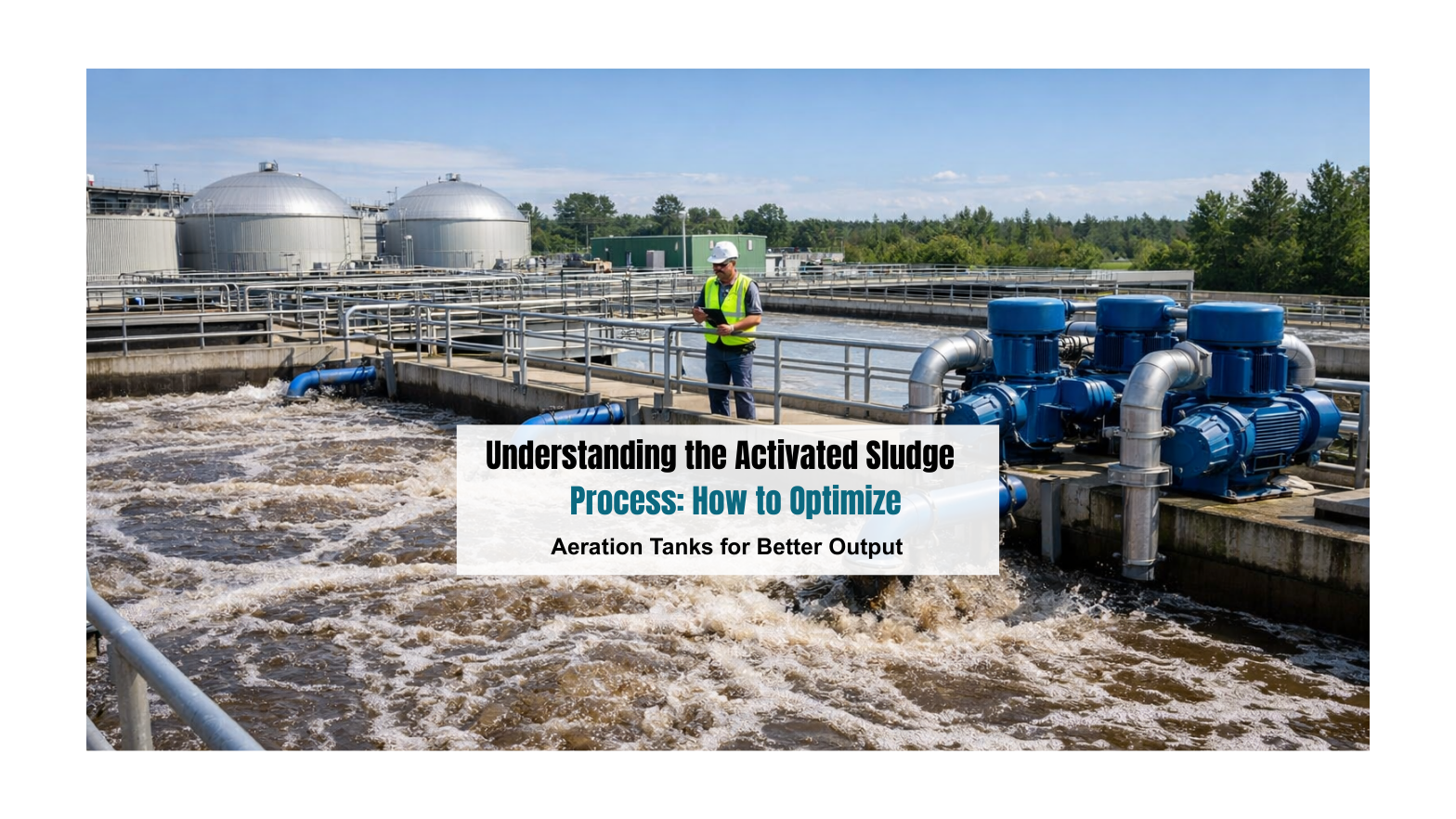
Understanding the Activated Sludge Process: How to Optimize Aeration Tanks for Better Output
The Day Your Plant Fails You And What It Actually Costs
I have stood inside enough effluent treatment plants across India to tell you this with complete confidence: the ones that fail do not fail dramatically. There is no explosion, no sudden catastrophic breakdown that gives you time to prepare. They fail quietly. A COD reading that creeps up over three weeks. A sludge blanket that starts rising a little higher in the clarifier each morning. An aeration tank that smells slightly different than it did last month.
And then one day, the SPCB inspector walks in.
If you are a factory manager in Surat’s textile corridor, or running an effluent treatment plant for a pharma unit in Hyderabad, or overseeing a food processing facility in Punjab, you already know what that moment feels like in your chest. It is not just the regulatory notice. It is the production shutdown that follows, the consent-to-operate suspension, the calls from your MD asking what went wrong, and the quiet but very real damage to your facility’s standing in the industry.
What most operations teams never figure out, until it is too late, is that the failure almost never started at the pump station or the filter press. It started in the aeration tank. Slowly, invisibly, and entirely preventably.
The aeration tank is where your entire ETP-STP plant process either earns its keep or bleeds money. And the activated sludge process that runs inside it is either your strongest compliance asset or your most expensive liability. There is rarely a middle ground.
This is a practical guide written for people who run real plants with real pressures. Not a textbook chapter. Not a vendor brochure. Just 20 years of standing next to aeration tanks across India, watching what works and what quietly destroys treatment efficiency, explained as plainly as I can manage.
The Activated Sludge Process: Why It Is the Beating Heart of Your Plant

Let me explain the activated sludge process the way I would standing next to your tank, not the way it appears in an engineering manual.
Imagine you have an enormous, carefully maintained community of microorganisms living in your aeration tank, billions of bacteria, protozoa, and other microscopic organisms suspended in the wastewater. These organisms are hungry. Their entire purpose is to consume the organic pollutants in your incoming effluent: the BOD, the COD, the nitrogen compounds, the suspended solids that your industry generates as a byproduct of production.
You keep them alive and active by pumping oxygen into the tank, through diffused aerators at the bottom or mechanical surface aerators, depending on your plant design. The microbes eat, multiply, and break down the pollutants. The treated water then flows into a secondary clarifier, where the microbial community, now called sludge, settles to the bottom. A portion of that settled, living sludge gets recycled back into the aeration tank to maintain the population. The excess gets wasted out of the system.
That recycled portion is the “activated” sludge. It is activated because it is biologically alive and ready to work again immediately.
Here is why this matters so much: every single stage of your sewage treatment plant or effluent treatment plant exists either to prepare wastewater for this biological stage, or to clean up after it. Your screens, your equalization tank, your primary settler, they are all just getting the influent ready for the aeration tank. Your secondary clarifier, your tertiary treatment, your disinfection system, they are all finishing what the aeration tank started.
If the biology in your aeration tank is performing at 70 percent efficiency, your downstream systems cannot compensate for that 30 percent gap. They were never designed to. This is why persistent COD exceedances in Indian industrial plants, I see this constantly in textile dyeing units, API pharma plants, and dairy processing facilities, almost always trace back to something going wrong inside the aeration tank, not at the outlet.
The aeration tank is not one component among many. It is the whole game.
STP Plant Process Step-by-Step: Moving from Primary to Tertiary Treatment
Before anyone can fully optimize an aeration tank, they need to understand one uncomfortable truth: the activated sludge process never operates in isolation. It only performs as well as the stages before it, and only delivers compliance when the stages after it are doing their job properly.
In many Indian plants, operators often focus only on blower settings inside the aeration tank while ignoring what happened twenty minutes earlier in the equalization tank or what may already be failing quietly in tertiary filtration downstream. That is like blaming the heart when the lungs are not working.
A sewage treatment plant works as a connected biological chain, not as separate civil structures built side by side.
That is exactly why understanding the full STP treatment sequence, from screening and primary settling to aeration, clarification, and final polishing, is essential before trying to improve biological performance. If you are specifically working on aeration efficiency, it also helps to first understand how the Wastewater Treatment train influences oxygen demand across every stage.
Getting Dissolved Oxygen Right, And Why “More” Is a Trap
Here is a conversation I have had more times than I can count at plants across India:
Me: “What DO are you running at?”
Operator: “High. We keep it high to be safe.”
Me: “How high?”
Operator: “Five, sometimes six mg/L.”
Me: “And what is your monthly electricity bill?”
That conversation always ends the same way.
The belief that higher dissolved oxygen means better treatment is one of the most persistent and costly myths in industrial wastewater management in India. It feels logical, more oxygen means more active microbes, better breakdown, safer compliance margins. In practice, it means you are running your blowers harder than necessary, consuming electricity you are paying for without any treatment return, and in some cases actually disrupting the microbial floc structure that makes your sludge settle properly.
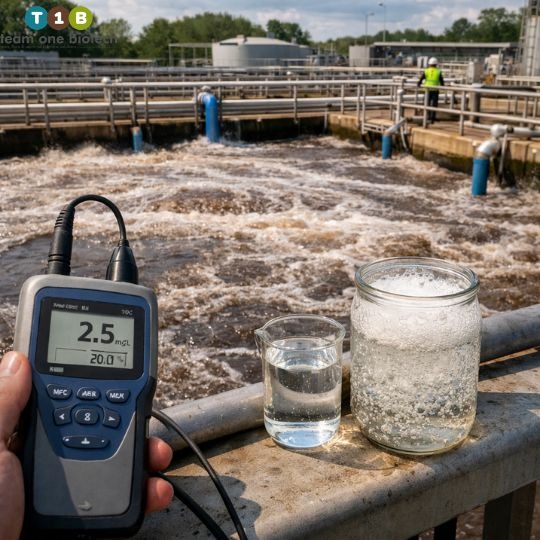
The right DO range for most industrial activated sludge systems is 1.5 to 3.0 mg/L. That is not a conservative estimate, that is the range within which your microbial community does its most efficient work. Aerobic degradation of organic matter does not require saturated oxygen conditions. It requires consistently adequate conditions.
Now flip it the other way. Drop below 0.5 mg/L and you are creating anaerobic microenvironments within the mixed liquor. That is where filamentous bacteria thrive, the organisms responsible for sludge bulking, that maddening condition where your sludge refuses to settle and starts creeping up toward your clarifier weir. If you have ever dealt with sludge bulking during peak summer production in a textile plant, you know exactly how much operational misery that creates.
What actually works in practice:
- Stop relying on manual DO checks twice a day. Install continuous DO probes with automated blower modulation. The DO in your aeration tank changes hour by hour based on incoming load, a fixed aeration schedule set in the morning is already wrong by afternoon.
- Walk the length of your aeration tank and map where the DO is high and where it drops. The inlet zone always has higher oxygen demand because the fresh organic load hits there first. The outlet zone often runs higher DO than necessary, which is where you can dial back aeration without any treatment impact.
- Pay attention to seasonal shifts. During the monsoon, influent in many Indian industrial zones gets diluted, lower organic concentration, lower oxygen demand. If your blowers are still running at the same intensity they were in May, you are wasting money every single day of the rainy season.
Aeration accounts for 50 to 70 percent of total ETP energy consumption. Getting DO management right is not a fine-tuning exercise. It is one of the most significant operational cost levers you have.
MLSS: You Are Not Just Managing Sludge, You Are Managing a Living Population
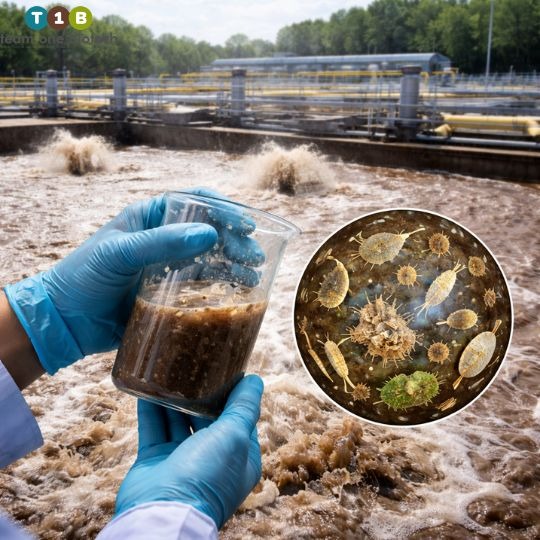
I want you to think about MLSS, Mixed Liquor Suspended Solids, differently than you probably do right now. Most plant operators think of it as a concentration reading to keep within a range. What it actually represents is the total mass of the biological workforce inside your aeration tank.
The working range for most industrial ETP-STP systems is 2,000 to 4,000 mg/L. High-strength wastewater, pharmaceutical fermentation streams, concentrated food processing effluents, may justify pushing toward 4,500 to 5,000 mg/L. But the number alone tells you less than you think.
What matters equally is the MLVSS, Mixed Liquor Volatile Suspended Solids. This is the fraction of your MLSS that is actually living, active biomass as opposed to inert mineral solids that have accumulated in the system. If your MLVSS to MLSS ratio drops below 0.6, a significant portion of what is sitting in your aeration tank is dead weight, not working biology.
I see this consistently in Indian textile plants dealing with high TDS wastewater. Elevated salinity stresses microbial cells, reduces their metabolic rate, and over time pushes up the inert fraction in the mixed liquor. The MLSS reading looks fine, 3,200 mg/L, within range, but the biology is half what it should be. The plant underperforms and no one understands why because they stopped at the MLSS number.
Sludge Age, or Sludge Retention Time (SRT), is the other parameter that most Indian plants manage poorly. Too short an SRT and you wash out the slow-growing nitrifying bacteria essential for ammonia removal. Too long and you accumulate old, tired biomass that forms pin floc, tiny, dispersed particles that do not settle cleanly in the clarifier and carry over into your treated effluent.
Controlling SRT means deliberate, calculated sludge wasting. Not wasting when the clarifier looks too full. Not wasting on a fixed weekly schedule regardless of what the biology is doing. Wasting based on actual MLVSS data, actual influent load, and a clear target SRT for your specific treatment objectives.
One more thing that is specific to Indian industrial operations: production shutdowns. Festive holidays, maintenance shutdowns, seasonal slowdowns in agro-based industries, these events starve your microbial population. When the plant restarts, operators often expect the biology to recover immediately. It does not. Natural biomass regrowth after a significant shutdown can take two to three weeks during which your plant is biologically compromised.
This is where specialized bioremediation solutions make a concrete operational difference. Team One Biotech’s microbial consortia, developed and acclimatized specifically for Indian industrial wastewater matrices, including high-TDS textile effluents, pharmaceutical process streams, and food processing loads, can cut that biological recovery window dramatically. We have seen plants that would normally take 18 days to return to stable MLSS performance after a shutdown recover in under a week with targeted inoculation. When your SPCB compliance clock is running, that difference is not academic.
The F/M Ratio: Balancing the Food Against the Workers
The Food-to-Microorganism ratio is probably the most underused process control parameter in Indian industrial wastewater plants. I say that not as a criticism but as an observation, most plant managers were never shown how to use it as a daily operational tool, so it stays in the commissioning report and is rarely calculated again.
Here is the formula, stated plainly:
F/M = (Daily BOD load entering the aeration tank) divided by (Mass of active biomass in the aeration tank)
The result tells you whether your microbial workforce is overloaded, appropriately fed, or starving. For conventional industrial ASP systems, the healthy range is typically 0.1 to 0.4 kg BOD per kg MLVSS per day.
When F/M runs too high, more food than your microbes can process, you get exactly what you would expect: incomplete treatment, elevated effluent BOD and COD, dispersed growth that does not settle. The biology is overwhelmed. When F/M runs too low, microbes with insufficient food, they enter endogenous respiration, start consuming their own cellular material, and form the fine dispersed particles that give you a turbid, poorly settling effluent.
The practical challenge in Indian industrial settings is that influent BOD is rarely stable. Batch process industries, API pharmaceutical manufacturing, distilleries, seasonal food processing, can see influent BOD swing by a factor of three or four within a single day. If your equalization tank is undersized, or is being operated at partial capacity to save pumping costs (I see this regularly), those swings hit your aeration tank directly and throw your F/M ratio into chaos.
The fix is not complicated, but it requires discipline:
- Calculate F/M at least weekly during stable periods, and daily when your influent is variable.
- Use your equalization tank as an active process control tool, not just a holding basin. Blend high-strength and low-strength batches intentionally before they reach the bioreactor.
- Adjust sludge wasting to maintain your target MLVSS in response to load changes, do not wait for the clarifier to tell you something is wrong.
Hydraulic Retention Time: The Parameter That Indian Plants Most Often Get Wrong
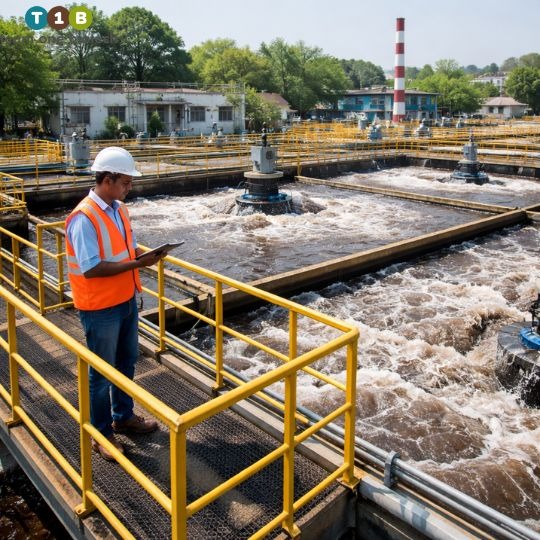
Hydraulic Retention Time, how long your wastewater actually spends inside the aeration tank, is where I see the greatest gap between what plants were designed to achieve and what they actually deliver in the field.
The textbook range for industrial ASP systems is 6 to 24 hours depending on wastewater strength and required treatment efficiency. But here is the real-world complication that no design manual adequately addresses for Indian conditions:
Indian industrial plants do not operate at steady state. They never have.
Production seasonality in agro-based industries. Power cuts that interrupt aeration mid-cycle. Festive shutdowns followed by sudden full-capacity restarts. Monsoon-driven flow spikes that push hydraulic loading well beyond design capacity. All of these compress actual HRT, sometimes to a fraction of the design value, and the wastewater that exits the aeration tank during those periods has simply not had adequate contact time with the biology.
High TDS wastewater makes this worse. Elevated salinity reduces the osmotic efficiency of microbial cells, which means their metabolic rate slows down. A microbial community treating high-TDS textile effluent needs more time to achieve the same BOD removal as one treating lower-salinity wastewater. For these applications, you should be adding 20 to 30 percent to whatever HRT your design tables suggest, and most plants in India are not doing this.
What this looks like in practice:
- If your plant was sized for average daily flow, it is almost certainly hydraulically under-capacity for peak days. Know your peak-to-average flow ratio and design your operations around it, not the average.
- Use inlet flow control to pace hydraulic loading during high-flow periods. Rushing wastewater through the aeration tank to keep up with production is a false economy, you will pay for it at the outlet.
- For pharmaceutical and chemical plants treating wastewater with inhibitory compounds, do not treat HRT as a variable you adjust based on operational convenience. Certain recalcitrant compounds require a minimum contact time for biodegradation that is non-negotiable regardless of what else is happening in the plant.
Where Indian Plants Lose Efficiency Without Realizing It
After two decades of walking through ETPs and STPs across India, the losses I see most consistently are not dramatic failures. They are small, compounding inefficiencies that nobody prioritizes because the plant is technically still running:
- Blowers on fixed timers, running at full capacity at 2 AM when the organic load is a fraction of the daytime peak.
- MLVSS never measured, MLSS monitored in isolation, sludge quality quietly deteriorating over months.
- Equalization tanks operating at 40 percent of capacity because someone calculated that the pumping cost was too high.
- No biological recovery protocol after shutdowns, the plant just restarts and everyone waits and hopes.
- High TDS not factored into aeration design, oxygen transfer efficiency assumed at standard values that simply do not apply to the actual wastewater chemistry.
If you recognize three or more of these in your plant, your aeration tank is underperforming. And your electricity bills, your chemical consumption, and your effluent quality data are all telling you so, if you know what to look for.
The Honest Case for Smarter Bioremediation
I want to be clear about something: specialized microbial inocula are not a substitute for sound process engineering. If your DO management is poor, your F/M ratio is uncontrolled, and your equalization tank is bypassed half the time, adding a microbial culture will not save you.
But when your fundamental process parameters are in reasonable shape, and you are still struggling with treatment efficiency, especially after shutdowns, during seasonal load changes, or when treating wastewater with complex or variable chemistry, a well-designed bioremediation solution is not a gimmick. It is a precision tool.
Team One Biotech has spent years developing microbial consortia that are specifically adapted to the conditions that challenge Indian industrial wastewater treatment: high TDS, high color loads in textile effluents, the inhibitory compounds in pharmaceutical streams, the fat-and-protein-rich loads in food processing facilities. These are not generic off-the-shelf cultures. They are selected and acclimatized strains that hit the ground running in your specific wastewater chemistry.
The operators who use them report faster startup after shutdowns, more stable MLSS during influent fluctuations, and measurable improvements in COD and color removal. Not dramatic overnight transformations, but consistent, reliable performance that compounds over time into real compliance margins and real cost savings.
That is the kind of result that matters when an inspector is scheduled to visit next week.
Talk to an Engineer Who Has Seen Your Problem Before
If your plant is struggling with persistent COD exceedances, sludge bulking, biological instability after shutdowns, or you are simply not confident that your aeration tank is performing at the efficiency it should be, we can help you find out exactly where the gap is.
Team One Biotech offers hands-on ETP and STP plant audits conducted by environmental engineers with direct industrial experience across India’s textile, pharma, food processing, and chemical sectors. We look at your aeration system performance, your MLSS and MLVSS data, your energy consumption relative to treatment output, and your current process control practices, and we give you a specific, prioritized action plan, not a generic report.
One Question Before You Go
Every plant has a particular operational challenge that keeps the manager up at night. For some it is sludge bulking that returns every summer. For others it is a COD number that simply will not come down no matter what they adjust. For others it is the biological crash that follows every production shutdown.
What is the single hardest operational problem you are dealing with in your aeration tank right now?
Leave it in the comments. Our engineering team reads every question and responds to each one. If your problem is common, we will address it in a future post. If it is specific to your plant, we will tell you what we would look at first.
Looking to improve your ETP/STP efficiency with the right bioculture?
Talk to our experts at Team One Biotech for customised microbial solutions.
Contact: +91 8855050575
Email: sales@teamonebiotech.com
Visit: www.teamonebiotech.com
Discover More on YouTube – Watch our latest insights & innovations!-
Connect with Us on LinkedIn – Stay updated with expert content & trends!


