
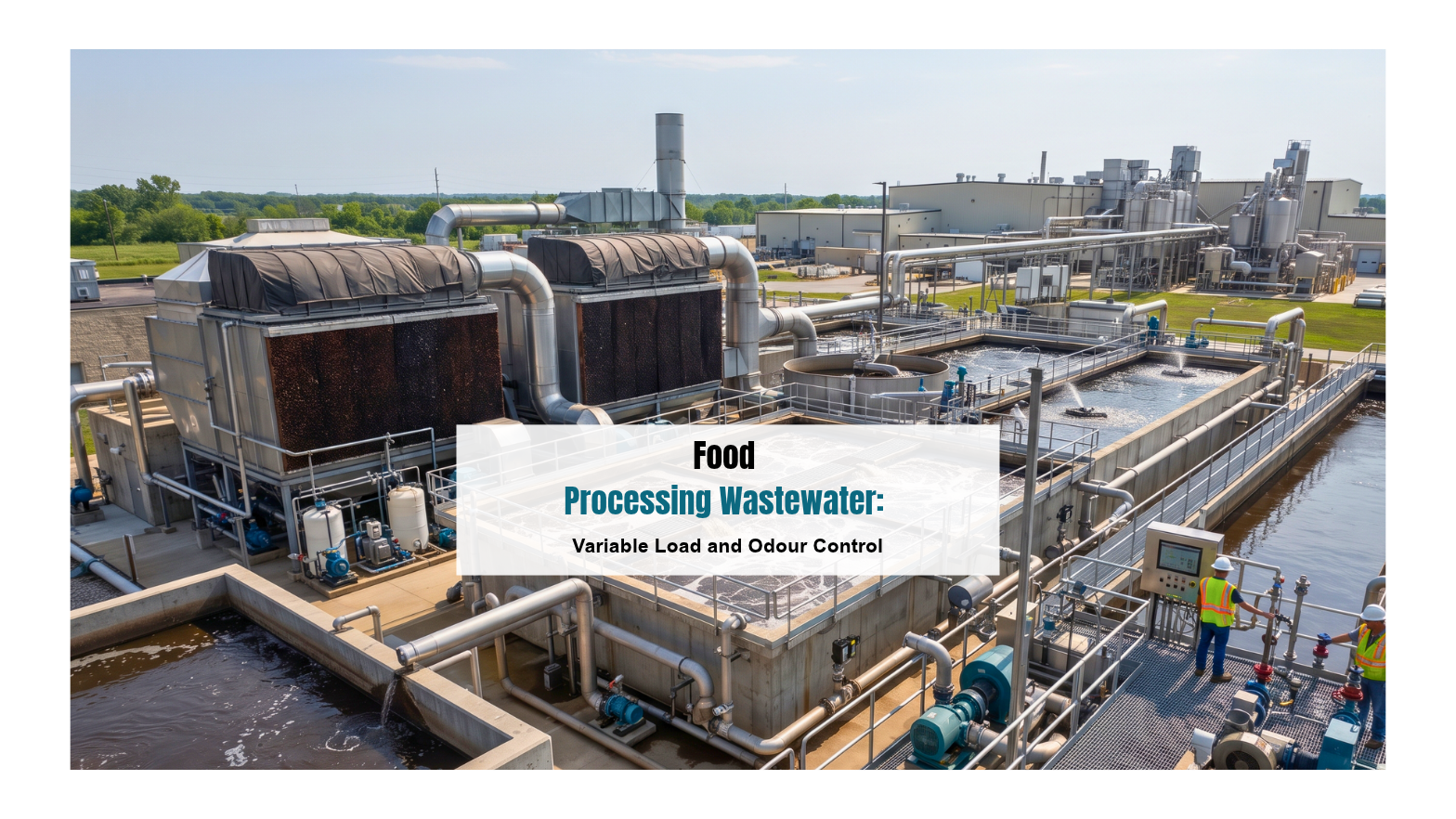
Food Processing Wastewater: Variable Load and Odour Control
It starts with a production surge nobody planned for. By the next morning, the equalization tank smells sour, the aeration tank surface is covered in grey scum, and the operator on shift is already tired. Then the phone rings. A neighbour is complaining about the smell, and an audit is only days away.
If this sounds familiar, you are not alone. Food processing wastewater rarely behaves the same way two days in a row, and most plants only notice the problem once the odour has already left the boundary wall. This guide explains why it happens and what you can do about it. It covers practical biological and engineering steps that keep your food industry ETP stable, compliant, and quiet.
Why Food Processing Wastewater Is So Unpredictable
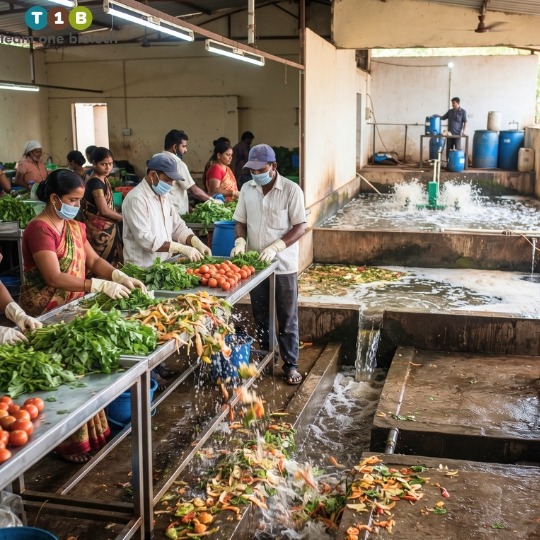
Walk through any meat, poultry, dairy, or vegetable processing unit and you will see why the effluent never settles into a pattern. The load going to your treatment plant is tied to what the production floor does, and the production floor changes constantly.
Variable loads, seasonal peaks, and wash-down cycles
A typical day brings batch cleaning, product changeovers, tank drain-downs, and equipment wash-downs. Each one sends a slug of concentrated waste to the drain in a short window. Add seasonal peaks such as harvest months, festival demand, or export orders, and the variable organic load can swing from mild to severe within hours.
That swing shows up as a BOD COD shock load. Biochemical oxygen demand (BOD) and chemical oxygen demand (COD) are the two numbers that tell you how much organic matter your biology must consume. In many food plants, COD can move across a very wide band, from a few hundred to several thousand mg/L, depending on what is being processed that day. These are general values and will differ in every ETP depending on the product, process, and plant design.
Your bacteria cannot grow overnight to match a sudden jump. That gap between load and biological capacity is where most problems begin.
Fast hydrolysis of starches and sugars
Vegetable, bakery, beverage, and grain-based processes add another twist. Starches and sugars break down quickly in water. This is called hydrolysis, and it produces simple organic acids within a short time, sometimes a few hours.
When that happens in a holding tank or equalization tank, the pH drops. The wastewater turns acidic before it even reaches the aeration basin. Acidic, sugar-rich feed favours acid-forming organisms over the slower-growing bacteria that polish the effluent. The result is a sour tank, poor settling, and a treatment train that struggles to catch up.
What Really Causes the Odour in a Food Industry ETP
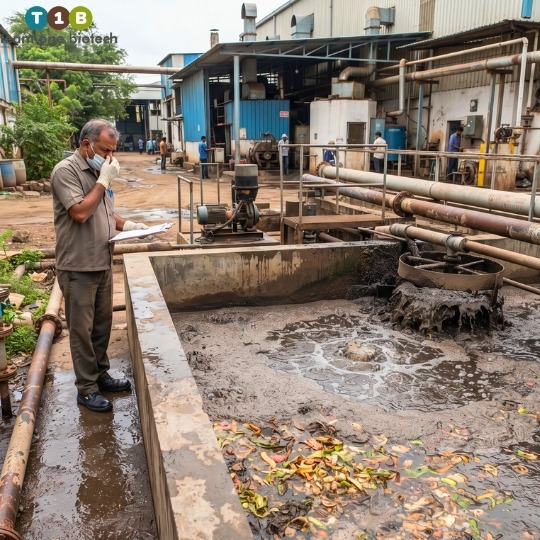
Odour is not a mystery. It is chemistry and biology reacting to a lack of oxygen, and it usually points to a few specific causes.
Volatile fatty acids and hydrogen sulphide
Volatile fatty acids (VFAs) are small organic acids such as acetic, propionic, and butyric acid. They form when organic matter ferments without enough oxygen. Butyric acid in particular has the sharp, rancid smell that plant staff describe as “something gone off”. Meat and poultry waste, with its fats and proteins, makes this worse.
Hydrogen sulphide odour is the rotten-egg smell. It comes from sulphate-reducing bacteria, which become active when oxygen is absent and sulphate is present in the water. Proteins also release sulphur compounds as they decay. H2S is more than a nuisance. It corrodes concrete and metal, irritates eyes and throats, and can reach levels that matter for worker safety.
Septic conditions and dead zones
Wherever wastewater sits still, it goes septic. Common culprits include:
- Poorly mixed equalization tanks with settled solids at the bottom
- Screen chambers and sumps where food solids stay for long periods
- Corners and low-velocity zones in aeration basins
- Sludge holding and handling areas
- Long, flat drain lines that collect fats and fines
In these dead zones, oxygen runs out and anaerobic activity takes over. Even if your main aeration tank is healthy, a septic equalization tank can send VFAs and sulphides into the system continuously.
Why masking chemicals only hide the problem
Many plants reach for fragrances, oxidizing sprays, or neutralizing chemicals when complaints start. These products cover the smell for a while, but the source keeps producing it. Dosing has to continue, often at higher volumes in peak season, and chemical costs keep climbing.
Masking agents also do nothing for scum, poor sludge settling, or shock-load recovery. Your plant ends up paying for the cover-up and still facing the same underlying problem. Fixing the biology and the conditions behind the odour is slower to set up, but it costs less over time.
Struggling with odour complaints? Talk to our team about a site-specific bioremediation plan.
Compliance Pressure: What Plant Teams Are Really Worried About
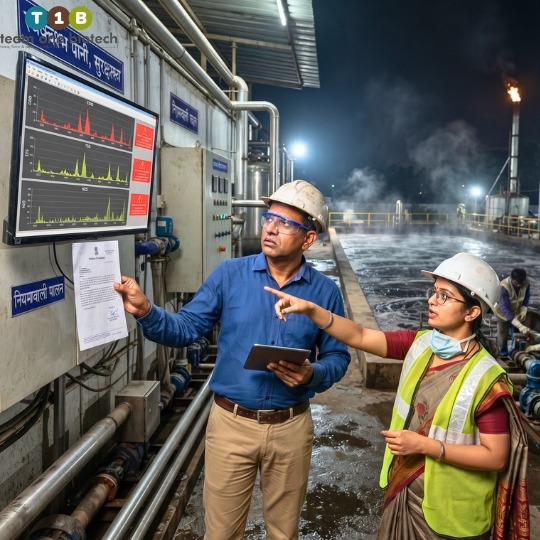
Ask an ETP manager what keeps them up at night and the answer is rarely about technology. It is about being caught out.
Your plant has to hold stable, continuous compliance with discharge limits set by the CPCB and your State Pollution Control Board. These CPCB discharge norms and SPCB compliance conditions typically cover BOD, COD, and total suspended solids (TSS), along with pH and oil and grease for many food categories. Odour and H2S emissions are also watched, especially where homes or commercial areas sit close to the plant.
Beyond the numbers, there are several other pressures:
- Audit readiness. Food safety audits and regulatory inspections look at the condition of your treatment area, records, and housekeeping.
- Community complaints. One persistent odour problem can lead to repeated visits and notices.
- Permit conditions. If your site runs on Zero Liquid Discharge, any instability upstream affects the recovery and reuse stages. If you discharge to surface water or a common facility, quality has to hold on every sampling day, not just on average.
Limits differ by industry category, state, and discharge point. Treated BOD limits, for example, are often set within a range of a few tens of mg/L, and COD limits within a range of roughly one hundred to a few hundred mg/L. These are general values and will differ in every ETP depending on the product, process, and plant design. Always check your own consent conditions.
The real danger is not a single bad day. It is a pattern of instability that leaves you exposed whenever a sample is taken.
Practical Strategies to Handle Variable Load
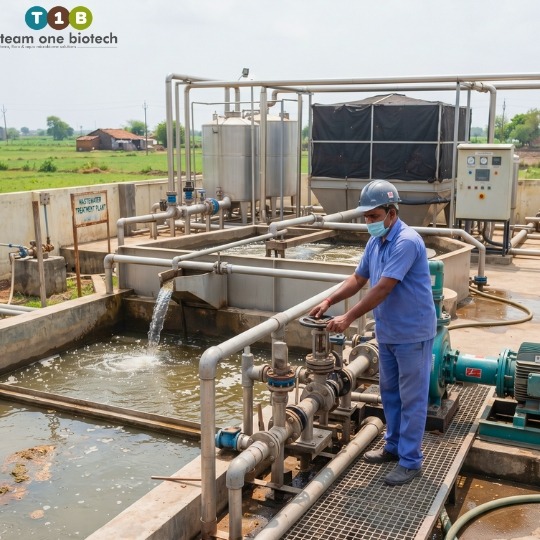
You cannot control what production sends down the drain, but you can control how your plant receives it. These steps work together, and most of them need discipline more than capital.
- Equalization and flow balancing. A well-sized equalization tank evens out peaks in flow and strength. Retention time commonly sits in a range of several hours to about a day, depending on how erratic your discharge is. Make sure the tank is actually mixed, because a large tank that is not mixed just becomes a septic reservoir.
- pH buffering. Sugar-rich and acid-forming waste can pull pH down quickly. Install online pH monitoring in the equalization tank and dose a suitable buffer in a controlled way. Keep the working pH in a near-neutral band, typically somewhere around the high six to low eight range for most biological systems.
- Controlled feeding. Use a feed pump with a variable speed drive, or a timer-based schedule, so the aeration tank receives load gradually instead of in gulps. Resist the urge to pump the whole equalized volume forward the moment production ends.
- Aeration management. Match air supply to actual demand. Dissolved oxygen in the aeration tank should generally be held in a range of about one to three mg/L. Too little invites septic pockets and filamentous growth. Too much wastes power and can break up flocs.
- Sludge age and MLSS stability. Mixed liquor suspended solids (MLSS), the biomass in your aeration tank, should be held within a steady working band instead of being allowed to swing. Plan sludge wasting on a regular schedule, not only when the settling tank looks bad.
- Seasonal preparedness. Before peak season, review your last year’s load pattern, service blowers and diffusers, stock up on required nutrients and consumables, and refresh your biological culture. Plan manpower for the weeks when your team is stretched thin.
These are general values and will differ in every ETP depending on the product, process, and plant design. Use them as a starting point and refine them with your own operating data.
Biological Odour Control That Works Without Masking Chemicals
Engineering fixes give your Biological Odour Control to work. The biology itself is what actually removes the odour at its source.
Biostimulation and bio-augmentation
Biostimulation means improving conditions so that useful bacteria already in your system grow better, for example by supplying micronutrients, balancing nitrogen and phosphorus, and correcting pH. Bio-augmentation means adding selected bacterial cultures to strengthen the population when the existing one cannot cope. In a food industry ETP the two often work best together. Nutrients and conditions support the biology, and added cultures bring extra capacity for fats, starches, and proteins.
This is the core of bioremediation for food industry plants. Instead of covering up the smell, you give the system the tools to consume what causes it.
Facultative bacteria in low-oxygen pockets
Not every corner of your ETP will ever be fully aerobic, however well you design it. That is where facultative bacteria earn their place. These strains can work with oxygen when it is available and keep working when it is scarce.
In a low-oxygen pocket, such as the bottom of an equalization tank or a screen chamber, they continue breaking down organic matter before it turns into VFAs. They also compete with sulphate-reducing organisms, which helps limit sulphide formation. The effect is that odour-forming compounds are consumed earlier in the process, instead of being produced and then chased downstream.
Localized bio-elimination at the source
Rather than treating the whole plant uniformly, target the places where odour begins:
- Screens and grit chambers: food solids and fats collect here and start fermenting quickly
- Sumps and collection pits: stagnant water that goes septic overnight
- Equalization tank: the biggest single source in most food plants
- Sludge handling areas: thickeners, drying beds, and holding tanks
Dosing a suitable microbial formulation at these points builds a working biology right where the problem starts. It supports odour reduction without adding fragrance chemicals to the air or the effluent.
Less scum, faster recovery
Scum forms when fats, oils, and partially degraded solids float and trap gas. A strong, diverse bacterial population breaks down fats and surface organics so they do not collect as a thick layer. This helps reduce surface scum control efforts and manual skimming.
After a shock load, a resilient biological system can return to normal sooner. It does not remove the need for good operation. What it does is shorten the time between a bad day and a stable effluent, which is where compliance is won or lost.
A Simple Action Checklist for ETP Managers
Print this and keep it near the control panel.
- Walk the plant every day and note where smell is strongest. Odour is your cheapest early warning.
- Check pH in the equalization tank and aeration tank at the start of every shift.
- Confirm that mixers and aerators are running and that no dead zones have formed.
- Review production schedules each week so you know when wash-downs and heavy batches are coming.
- Feed the aeration tank gradually after large discharge events.
- Keep dissolved oxygen and MLSS inside your working band, and record both.
- Clear screens and sumps on a fixed schedule, not only when they overflow.
- Look at your scum layer each day. A change in colour or thickness usually means a change in load or biology.
- Keep nutrient and culture stock available before peak season starts.
- Update your logbook so audits find clear, consistent records.
Want a second opinion on your plant? Book a free consultation or technical discussion with our team.
How Team One Biotech Supports Your Food Industry ETP
Team One Biotech manufactures bioremediation solutions in India for industrial wastewater treatment, including food and beverage effluent. We are not a chemical masking supplier, and we do not believe a single product fits every plant.
Our approach starts with understanding your process. We look at your product mix, discharge pattern, tank layout, and current problem areas. From there, we suggest microbial and nutrient solutions that support your existing treatment steps, whether the issue is odour, scum, slow recovery after shock loads, or sludge handling.
In practical terms, this can include:
- Microbial formulations selected for fats, starches, proteins, and VFAs
- Facultative strains for equalization tanks, sumps, and other low-oxygen zones
- Guidance on dosing points, monitoring, and operating adjustments
- Support during seasonal peaks, when your plant is under the most stress
Results depend on your plant design, load, and operating discipline, and we will tell you plainly what biology can and cannot do for your site.
Ready to get ahead of the next production surge? Request a plant assessment or book a consultation with our bioremediation experts, and get a site-specific treatment plan.
Frequently Asked Questions
Why does my food industry ETP smell worse during peak season?
Peak season sends higher and more variable organic loads, while your oxygen supply and biomass stay the same. The extra load turns parts of the system septic, and VFAs and H2S begin to form. Dead zones in the equalization tank and screen areas usually get worse first.
How can biological treatment handle sudden BOD and COD spikes?
Biological treatment copes better when you pair it with flow balancing and gradual feeding. Biostimulation and added bacterial cultures increase the system’s capacity to consume organic matter quickly. This helps reduce the time your effluent stays out of range, though no biology can absorb unlimited load.
Can bioremediation replace odour masking chemicals?
In many plants, bioremediation can reduce or replace routine masking chemicals, because it addresses the cause instead of covering the smell. Microbes consume the compounds that form VFAs and sulphides at the source. Results depend on how well the system is mixed, aerated, and monitored, so it works best alongside good operating practice.
What causes thick scum on the aeration tank surface?
Scum usually comes from fats, oils, and grease that were not removed upstream, along with poorly degraded solids and certain filamentous organisms. Low dissolved oxygen, unstable sludge age, and sudden shock loads make it worse. Better pre-treatment, steady aeration, and a stronger bacterial population help reduce it.
How do I stay compliant with CPCB and SPCB limits during production surges?
Plan for surges before they arrive. Balance flow in the equalization tank, buffer pH, feed gradually, and keep MLSS and dissolved oxygen steady. Support the biology with suitable cultures and nutrients, and keep clear records. Always check your own consent conditions, since limits vary by industry and state.
Stable Food Processing Wastewater Treatment Is a Daily Habit
Managing food processing wastewater is less about one big fix and more about small, consistent habits. Balance the load, keep the tanks mixed, watch your pH, and give your biology the support it needs to handle whatever production sends your way. A stable food industry ETP means fewer odour complaints, calmer audits, and an operator who is not firefighting every weekend.
Masking chemicals will always be a temporary answer. Biostimulation, facultative strains, and targeted bio-elimination at the source tackle the problem where it begins, and they can improve your plant’s resilience season after season.
A final reminder: every number mentioned here is a general range. Values for BOD, COD, pH, retention time, dissolved oxygen, and limits will differ in every ETP depending on the product, process, and plant design, so confirm them against your own data and consent conditions.
If your plant is dealing with odour, scum, or unpredictable loads, we would like to help. Talk to our bioremediation experts, request a plant assessment, and get a site-specific treatment plan.
Looking to improve your ETP/STP efficiency with the right bioculture?
Talk to our experts at Team One Biotech for customised microbial solutions.
Contact: +91 8855050575
Email: sales@teamonebiotech.com
Visit: www.teamonebiotech.com
Discover More on YouTube – Watch our latest insights & innovations!-
Connect with Us on LinkedIn – Stay updated with expert content & trends!