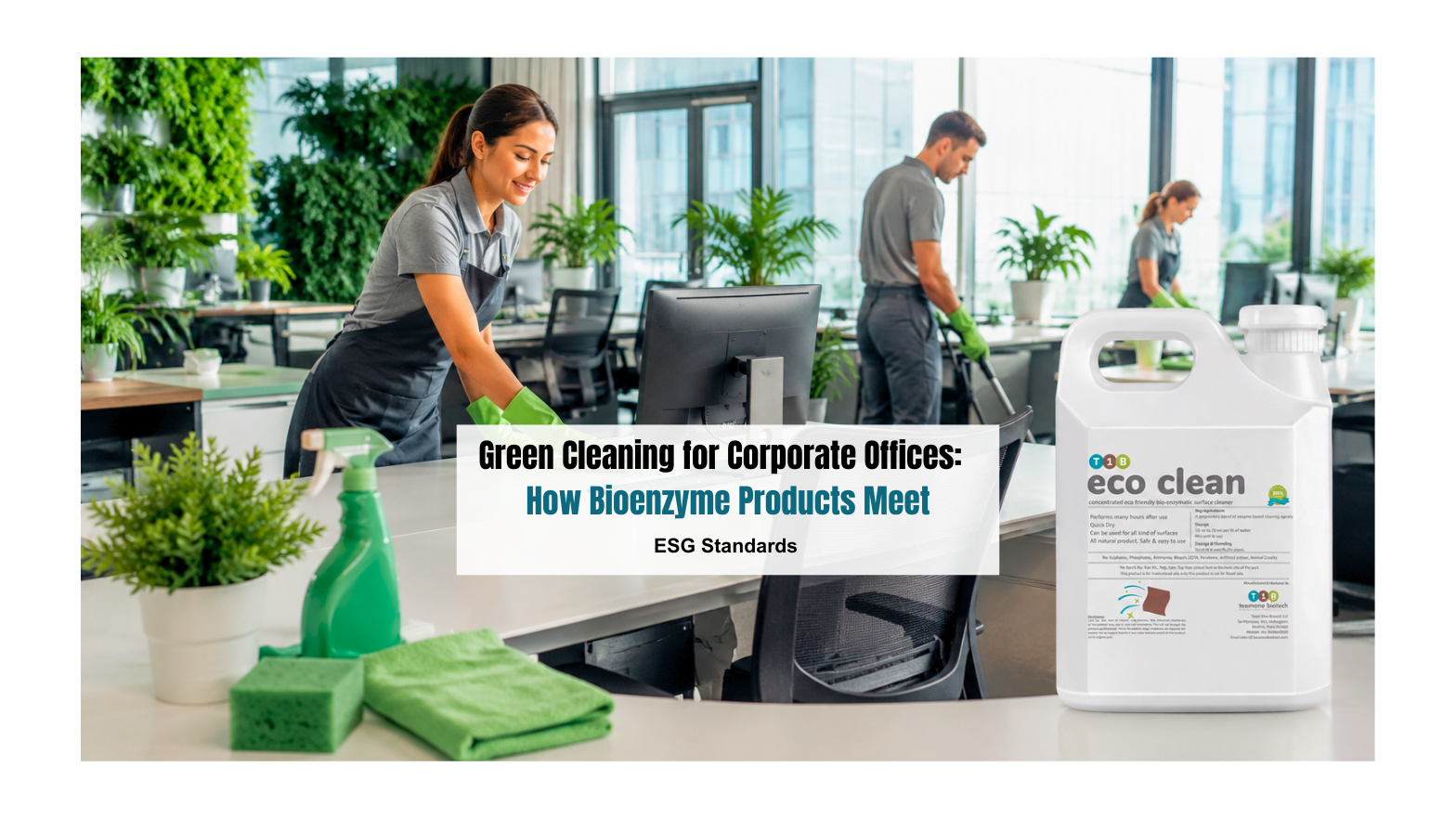
Green Cleaning for Corporate Offices: How Bioenzyme Products Meet ESG Standards

The Air You’re Not Talking About

Walk into any premium corporate campus in Bengaluru’s Whitefield corridor, a glass-and-steel IT park in Pune’s Hinjewadi, or a centrally air-conditioned headquarters in Mumbai’s BKC district. What you notice immediately is the gleam. Polished floors. Sanitized restrooms. Lobbies that smell aggressively clean.

What you don’t notice is the chemistry hanging in the air.

Conventional industrial cleaning products, quaternary ammonium compounds, chlorine-based disinfectants, synthetic surfactants, volatile fragrance compounds, don’t simply vanish after use. In a building where windows don’t open and HVAC systems recirculate the same air for eight to twelve hours a day, residual chemical vapors accumulate. According to indoor environmental quality research cited by global green building bodies, indoor air can contain two to five times more chemical pollutants than outdoor urban air. In a country where the majority of India’s top 500 companies operate out of sealed, centrally conditioned campuses, this is not a peripheral concern. It sits at the intersection of employee health, operational liability, and corporate reputation.

And increasingly, it sits squarely within the scope of ESG reporting.

This piece is for the facility managers, procurement heads, and operations directors who are being handed ESG targets by their leadership teams and asked to translate those targets into on-ground action. The argument here is straightforward: the single most consistent, cost-manageable, and measurable lever available to facilities teams is the shift from conventional chemical cleaning to bioenzyme-based cleaning solutions. It is not a trend. It is an operational upgrade with compounding returns.

Why Indian Corporate Facilities Are at an Inflection Point
Why Indian Corporate Facilities Are at an Inflection Point

India’s corporate real estate sector is in the midst of a green building revolution. The Indian Green Building Council (IGBC) has certified over 12 billion square feet of green building footprint, and LEED India certification has become a non-negotiable benchmark for Grade A commercial developments in NCR, Bengaluru, Mumbai, and Hyderabad. Many of India’s largest conglomerates, from Infosys and Wipro to Mahindra and Tata, have publicly committed to net-zero carbon goals within this decade.

What is often underestimated is how deeply housekeeping and sanitation practices feed into these targets. Green building rating systems evaluate indoor air quality, water usage, chemical toxicity, and waste generation, all of which are directly impacted by cleaning protocols. A facility that has invested crores of rupees in green HVAC systems and energy-efficient lighting can quietly undermine those credentials through the continued use of phosphate-heavy floor cleaners and chlorinated disinfectants that discharge into drainage and contaminate ETP influent.

Bioenzyme cleaners, products that deploy naturally occurring microbial cultures and enzyme complexes to break down organic matter at a molecular level, offer facilities teams a way to close that gap. They are not a compromise. In high-performance operational contexts, they consistently match or outperform conventional chemicals on key hygiene parameters, while delivering a fundamentally different chemical footprint.

Sector-by-Sector: Why the Vertical Matters
Sector-by-Sector: Why the Vertical Matters

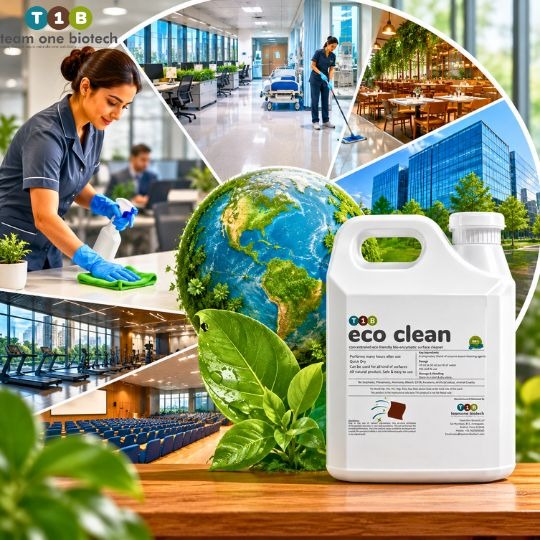
The transition to green cleaning is not one-size-fits-all. The specific drivers and operational requirements vary meaningfully depending on the facility type. Here is how the case for bioenzyme cleaners plays out across the verticals that matter most.

Corporate Office Complexes and Tech Parks

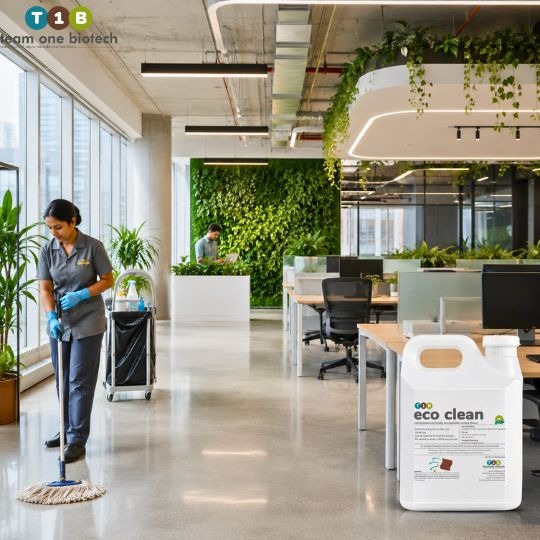
In a large IT campus housing 5,000 to 15,000 employees, housekeeping teams run cleaning cycles across multiple shifts. The cumulative chemical load deposited on surfaces, in the air, and into drainage systems across a single week is substantial. For facilities managers operating under LEED or IGBC certification requirements, every cleaning input counts toward the facility’s environmental performance score.

Bioenzyme floor cleaners, restroom care formulations, and drain maintenance products reduce Volatile Organic Compound (VOC) emissions from cleaning activities, a parameter that directly affects a building’s Indoor Air Quality score. They also break down organic residues in drainage lines, reducing drain blockage incidents and lowering the BOD (Biological Oxygen Demand) load entering ETPs, a meaningful benefit for large campuses managing their own wastewater infrastructure.

Hospitals and Healthcare Facilities

This is arguably where the stakes are highest. Healthcare-associated infections (HAIs) are a persistent challenge for Indian hospitals, and the instinctive response of many facility managers has been to increase the concentration and frequency of chemical disinfectants. The problem is that many of these compounds, particularly chlorine-based and phenolic disinfectants, leave toxic residues on surfaces, contribute to airborne chemical contamination in patient areas, and accelerate the corrosion of expensive medical equipment surfaces.

Bioenzyme-based sanitation products work differently. By targeting the organic biofilm matrix that pathogens use as a substrate, they disrupt the environment in which harmful microorganisms thrive, without depositing toxic chemical residues. For ICUs, operation theaters, and patient wards where surface and air purity are clinical requirements, this distinction is not academic. Cleaning staff, who are often the most chemically exposed workers in a healthcare facility, also benefit significantly from the shift to non-corrosive, non-allergenic formulations.

Educational Institutions and Schools

Children are not small adults when it comes to toxicological exposure. A child’s body surface area relative to body weight is higher, their respiratory rates are faster, and their detoxification systems are less developed. A school hallway cleaned with a harsh chemical disinfectant and then occupied by 400 children twenty minutes later is a scenario that few parents or school administrators have quantified, but many are beginning to question.

Bioenzyme cleaners address this directly. Their formulations are free of carcinogenic compounds, synthetic fragrances, and corrosive agents. For schools pursuing green certifications or positioning themselves as health-forward campuses, a growing differentiator in India’s premium private school segment, the shift to biological cleaning solutions is both a safety upgrade and a marketing asset.

Large Commercial Malls

The organic load in a large commercial mall is formidable. Food courts processing thousands of meals daily, restrooms servicing tens of thousands of footfalls, waste collection areas accumulating grease and organic decomposition, these create a maintenance challenge that brute-force chemical cleaning often fails to solve sustainably. Bioenzyme drain care products, for instance, don’t just mask odors. They colonize drain infrastructure with enzymatic microbial cultures that continuously break down grease and organic accumulation, reducing drain blockage frequency and associated maintenance costs. For mall facility teams working with third-party housekeeping contractors on tight SLA targets, this means fewer reactive interventions and more predictable operations.

The ESG Breakdown: How Bioenzymes Deliver Across All Three Pillars
The ESG Breakdown: How Bioenzymes Deliver Across All Three Pillars

Environmental

  • Biodegradability: Bioenzyme formulations break down into water, carbon dioxide, and inert biomass. They do not persist in soil or water systems.
  • Effluent Quality: Facilities using bioenzyme cleaners consistently report a measurable reduction in the chemical oxygen demand (COD) and BOD loads in their drainage outflows, typically in the range of 30% to 40%, though actual figures will vary based on facility design and load. This eases the operational burden on ETPs and reduces the risk of regulatory non-compliance.
  • Water Efficiency: Bioenzyme products are generally formulated for use with reduced water volumes compared to conventional chemical protocols, contributing to a facility’s overall water conservation metrics.

Social

  • Worker Safety: Housekeeping staff are disproportionately exposed to cleaning chemicals. Eliminating corrosive acids, synthetic biocides, and harsh surfactants from daily use reduces incidences of chemical burns, respiratory sensitization, and long-term dermal exposure effects.
  • Indoor Air Quality: Reduced VOC emissions from cleaning operations contribute directly to a healthier work environment for office occupants, with potential downstream effects on productivity and absenteeism.
  • Non-Allergenic Spaces: Bioenzyme formulations are free of synthetic fragrances and common allergens, making them appropriate for shared environments with diverse occupant health profiles.

Governance

  • Regulatory Alignment: India’s Central Pollution Control Board (CPCB) and state-level pollution control boards are progressively tightening discharge standards for commercial and industrial facilities. Using products that reduce chemical load in effluent is a proactive compliance posture.
  • ESG Reporting: Global reporting frameworks, GRI Standards, BRSR (Business Responsibility and Sustainability Reporting) mandated by SEBI for listed Indian companies, require disclosure of environmental impact metrics. Housekeeping chemical inputs that generate auditable data on biodegradability and reduced toxicity strengthen these disclosures.
  • Third-Party Audits: Facilities pursuing IGBC or LEED recertification benefit from documentation showing a shift to low-impact cleaning chemistry. Bioenzyme products typically carry verifiable biodegradability certifications that can be submitted directly to auditors.

Disclaimer: The operational benchmarks and performance ranges referenced in this article, including effluent parameter improvements and water usage reductions, represent general industry benchmarks based on observed operational data across a range of facility types. Actual performance will vary based on the specific design, occupancy load, plumbing configuration, and Effluent Treatment Plant (ETP) setup of each individual facility. Team One Biotech recommends a site-specific audit prior to establishing performance baselines for any facility.

Making the Transition: What It Actually Looks Like
Making the Transition: What It Actually Looks Like

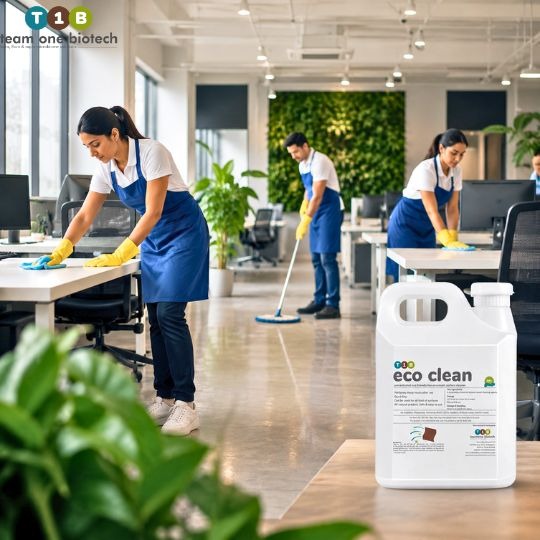
The practical barrier to switching is often not cost or conviction, it is inertia. Housekeeping teams are trained on specific products. Procurement teams have existing vendor relationships. Facility managers are managing too many variables to introduce new unknowns.

Here is what a structured transition looks like in practice:

  • Phase 1, Audit: Identify current chemical inventory, application areas, and discharge points. Map ESG reporting requirements to cleaning inputs.
  • Phase 2, Pilot: Replace conventional products in one high-impact zone, typically restrooms and drainage systems, and run a 30 to 60-day performance comparison.
  • Phase 3, Scale: Extend bioenzyme protocols facility-wide, train housekeeping staff, and establish documentation trails for ESG and certification reporting.
  • Phase 4, Report: Use product biodegradability data, VOC profiles, and operational logs as verifiable inputs for BRSR disclosure, IGBC/LEED audits, or internal ESG dashboards.

The Chemistry of Corporate Responsibility

The facilities that will define the next generation of corporate sustainability in India are not going to be defined solely by solar panels and green rooftops. They will be defined by the granular, operational decisions that stack up daily, what goes into the mop bucket, what flows into the drain, what lingers in the air after the cleaning crew has moved on.

The shift to bioenzyme cleaning is not a sacrifice. It is not a compromise between hygiene and responsibility. It is an upgrade, to cleaner air, safer staff, lower regulatory risk, and credible ESG reporting.

Team One Biotech works with facility managers across corporate, healthcare, educational, and commercial sectors to design customized bioenzyme cleaning protocols that align with your ESG targets, building certification requirements, and operational realities.

Ready to move from chemical dependency to biological efficiency?

  • Request a free facility audit to identify your current chemical exposure and effluent impact.
  • Sign up for a structured pilot program tailored to your facility type and ESG reporting cycle.
  • Download our product documentation for IGBC/LEED certification submissions.

Contact Team One Biotech to schedule your consultation. The transition starts with one conversation.

Looking to improve your ETP/STP efficiency with the right bioculture?
Talk to our experts at Team One Biotech for customised microbial solutions.

Contact+91 8855050575

Email:  sales@teamonebiotech.com

Visit: www.teamonebiotech.com

Discover More on YouTube – Watch our latest insights & innovations!-

Connect with Us on LinkedIn – Stay updated with expert content & trends!
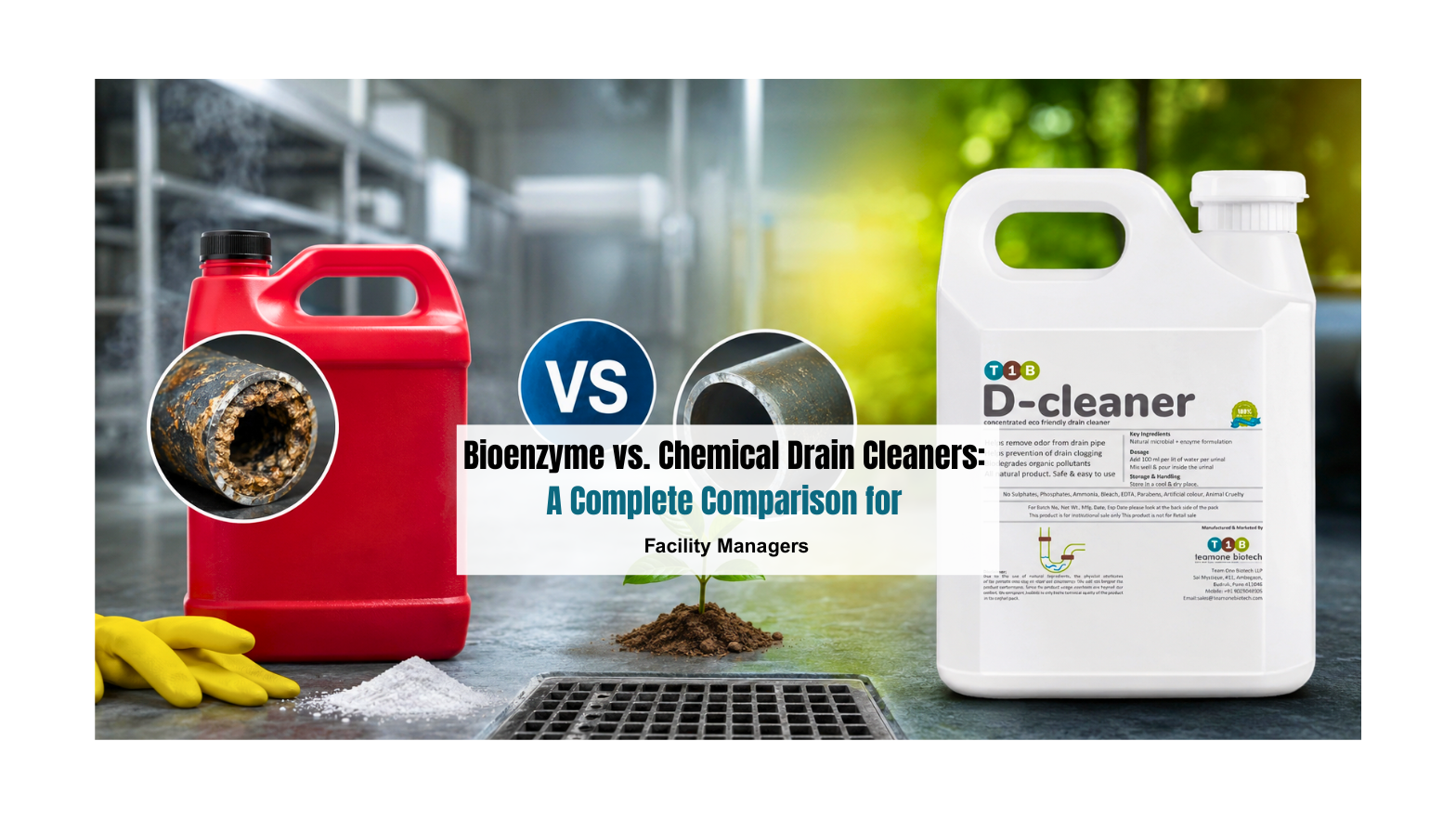
Bioenzyme vs. Chemical Drain Cleaners: A Complete Comparison for Facility Managers

It’s a Tuesday morning. Your hospital’s surgical wing is at full capacity. Or your school’s cafeteria is mid-service for 800 students. Or your corporate campus is hosting an investor walkthrough. And then, without warning, a drain line backs up.

The maintenance team reaches for the familiar blue bottle of chemical drain cleaner. Within minutes, the acrid smell drifts through the ventilation system. A nurse flags it. A teacher files a safety complaint. The facilities inbox lights up. You’ve solved one problem and created three more.

This is not a hypothetical. For operations directors and infrastructure heads managing complex, high-traffic plumbing networks across India, this scenario plays out with exhausting regularity. The real question isn’t just how to clear the blockage, it’s whether the solution you’re using is quietly compounding the very problem you’re trying to solve.

The debate around bio drain cleaner vs chemical approaches is no longer a fringe sustainability conversation. For facility managers navigating healthcare compliance, school safety regulations, municipal load restrictions, and increasingly stringent CPCB norms, it has become a core infrastructure decision.

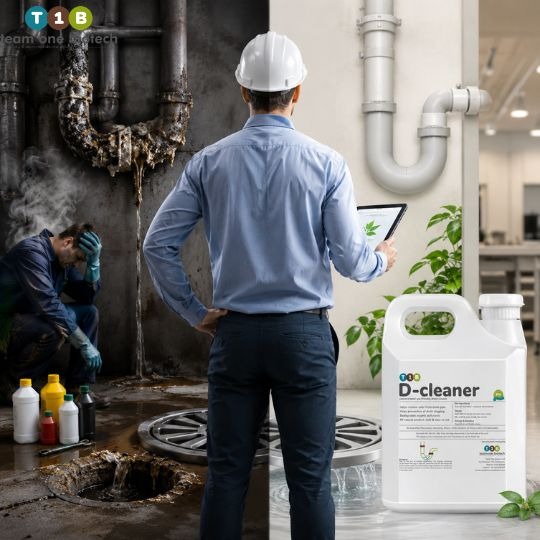
The Chemical Illusion: Fast Results, Slow Damage

The Chemical Illusion: Fast Results, Slow Damage

There’s a reason chemical drain cleaners remain the default in commercial settings. They work fast. Pour a concentrated acid or caustic alkali down a drain and the clog dissolves, often within minutes. For a facility manager under pressure, that speed feels like control.

But what facility plumbing maintenance professionals rarely see is the bill that arrives months later.

What harsh chemical cleaners actually do over time:

  • Pipe degradation: Highly alkaline or acidic formulations attack the internal lining of older cast iron and PVC pipes alike. In buildings constructed more than a decade ago, common across Indian institutional infrastructure, repeated chemical use accelerates micro-fractures that are invisible until they cause a burst.
  • Biofilm disruption without elimination: Chemical agents can strip the surface layer of organic buildup, but they rarely penetrate deep biofilm. What remains continues to accumulate, often faster, because the microbial balance within the pipe has been disrupted.
  • Thermal and fume hazards: In enclosed mechanical rooms and drainage shafts typical of Indian hospitals and high-rise corporate campuses, the off-gassing from chemical cleaners can trigger HVAC safety shutdowns and create genuine occupational health liability.
  • ETP interference: When chemical residues flush downstream into your facility’s Effluent Treatment Plant, they can temporarily neutralize the microbial colonies that your ETP depends on for biological treatment, undermining an expensive, compliance-critical system with a cheap maintenance shortcut.

The chemicals offer an illusion of resolution. The structural and regulatory costs accumulate in silence.

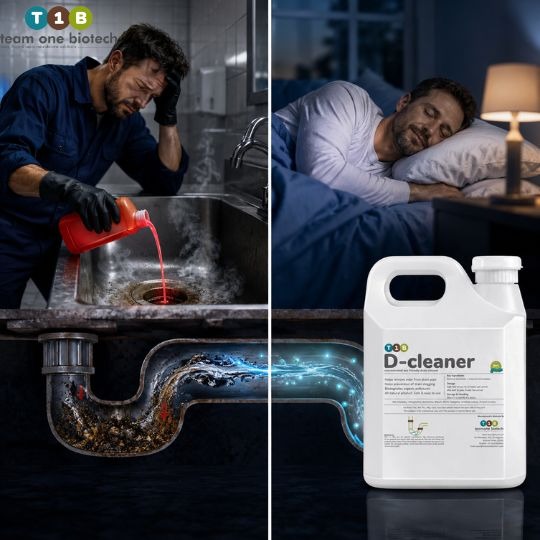
The Bioenzyme Paradigm: Maintenance That Works While You Sleep

The Bioenzyme Paradigm: Maintenance That Works While You Sleep

Enzymatic pipe cleaners and bio drain solutions operate on an entirely different logic. Rather than attacking organic matter with brute chemical force, they introduce concentrated microbial cultures and enzymes that digest fats, oils, grease (FOG), proteins, and cellulose at the molecular level.

Here’s how the process works in a commercial context:

Specific bacterial strains, typically lipase, protease, and amylase producers, are introduced into the drain system in liquid or granular form. These microbes colonize the pipe wall biofilm, continuously breaking down organic deposits as part of their metabolic cycle. Over a period of around 3 to 5 weeks of consistent application, a facility can expect to see a measurable reduction in blockage frequency and drain odour.

Note: These are general values and operational outcomes will vary based on the specific design, microbial load, and unique parameters of individual Effluent Treatment Plants (ETPs).

What makes this approach particularly suited to commercial drain maintenance in complex facilities is its cumulative nature. The microbial population doesn’t reset after each application, it builds. A drain network that has been on a consistent bioenzyme maintenance program for 2 to 3 months behaves fundamentally differently from one treated reactively with chemicals.

It’s the difference between having a maintenance system and having a maintenance crisis management system.

How This Plays Out Across Facility Verticals

How This Plays Out Across Facility Verticals

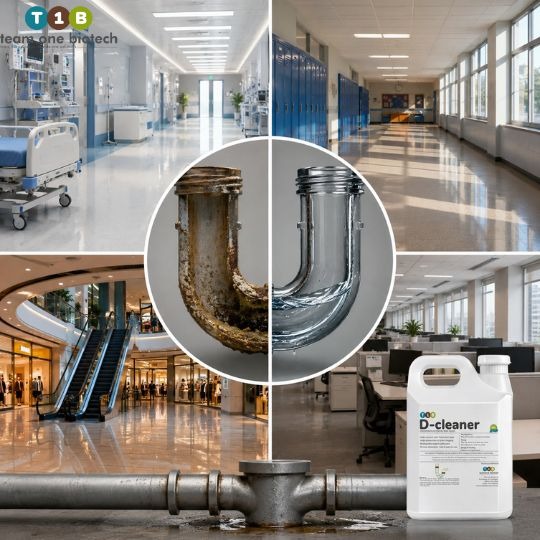
Hospitals and Healthcare Facilities

Healthcare environments present the highest-stakes intersection of plumbing performance and regulatory compliance. Drain systems in hospitals carry a uniquely hazardous mix: bodily fluids, pharmaceutical residues, surgical waste, and cleaning agent runoff, all moving through a network that must function without interruption.

Chemical cleaners in this context create compounding risks. Fume exposure in patient wards or sterile zones is not merely an inconvenience, it’s a compliance incident. More critically, the indiscriminate nature of strong chemicals means they don’t distinguish between harmful pathogens and the beneficial microbial colonies that help naturally suppress drain-borne hazards.

Eco-friendly bioremediation in healthcare settings offers a different model: targeted microbial cultures that can be selected for compatibility with the specific organic load profile of a hospital drain system. Properly deployed, they compete effectively against pathogenic organisms within the pipe environment, while posing no fume or chemical exposure risk to patients or staff.

Schools and Educational Institutions

In institutional settings serving children and adolescents, the calculus is straightforward: chemical exposure risk is unacceptable as a routine maintenance method. Yet the plumbing loads in Indian schools, particularly large residential schools and university campuses, are significant. Cafeteria grease traps, dormitory drain lines, and high-frequency washroom facilities all generate substantial FOG and organic load.

Bioenzyme solutions applied consistently to these systems address the load without introducing chemical hazards into environments where your exposure liability is at its highest. Over time, the reduction in emergency plumbing calls during academic sessions, when disruption is most costly, represents a tangible operational benefit alongside the safety case.

Malls, Corporate Campuses, and High-Traffic Commercial Hubs

This is where the institutional wastewater treatment challenge becomes genuinely complex. A large mall in a tier-one Indian city might see its food court drainage system handling load spikes during weekends and festivals that dwarf its weekday baseline. Corporate campuses with centralized kitchens face similar variability.

Indian operational conditions add specific layers of difficulty here. Monsoon-season plumbing backups, caused by a combination of elevated groundwater levels, municipal sewer surcharge, and intensified organic decomposition in warm, saturated conditions, can overwhelm drain networks that appear perfectly functional during dry months. Fluctuating municipal water quality affects the chemical behavior of both drain systems and treatment processes.

For facilities running their own Effluent Treatment Plants, the downstream implications of chemical drain cleaner use deserve particular attention. ETPs calibrated to handle specific influent chemistry can be significantly destabilized by periodic chemical flushes from building drainage. Bioenzyme-based maintenance, by contrast, is inherently compatible with biological treatment infrastructure, the microbial cultures in a well-managed drain system can actively support ETP performance rather than undermine it.

A facility managing significant daily wastewater volumes through its own ETP can expect, with consistent bioenzyme application across its drain network, to see improved influent quality reaching the treatment plant within a range of approximately 4 to 8 weeks of implementation.

Note: These are general values and operational outcomes will vary based on the specific design, microbial load, and unique parameters of individual Effluent Treatment Plants (ETPs).

Ready to stop managing plumbing emergencies and start preventing them? Request a custom facility audit from Team One Biotech’s technical team.

Head-to-Head: Bio Drain Cleaner vs Chemical

ParameterChemical Drain CleanersBioenzyme / Microbial Cleaners
Speed of ActionImmediate (hours)Gradual (3–5 weeks for full biofilm colonization)
Structural SafetyDegrades pipe lining over repeated useNon-corrosive; compatible with all pipe materials
Long-Term Cost TrendEscalating (infrastructure damage, emergency calls)Declining (preventive action reduces blockage frequency)
Fume / Safety RiskSignificant; HVAC and occupational hazardNone
ETP CompatibilityDisruptive to biological treatment processesSupportive; enhances downstream microbial activity
Environmental ComplianceRisk of CPCB non-compliance in dischargeAligned with bioremediation-positive regulatory direction
Maintenance FrequencyReactive (applied at point of blockage)Proactive (scheduled, low-dose, continuous)
Efficacy Against FOGSurface-level dissolution onlyDeep molecular digestion of fats, oils, and grease

The ETP Connection: Why CPCB Compliance Makes This Decision Urgent

India’s regulatory environment around industrial and institutional wastewater is tightening. The Central Pollution Control Board’s guidelines on effluent quality increasingly scrutinize the inputs that reach treatment systems, not merely the output. For facilities operating their own ETPs or discharging to municipal treatment infrastructure, the chemical composition of drain cleaning agents is no longer a matter purely of internal maintenance preference.

Chemical drain cleaners that introduce high concentrations of chlorine compounds, strong acids, or persistent surfactants into a building’s wastewater stream can create compliance exposure at the point of ETP discharge testing. Bioenzyme-based maintenance, by design, introduces only biodegradable organic compounds and naturally occurring microbial populations, categories that CPCB’s framework for eco-friendly bioremediation actively supports.

For facility managers in sectors subject to environmental audit, hospitals, large commercial properties, manufacturing-adjacent campuses, this alignment is not a secondary consideration. It is increasingly a risk management requirement.

From Reactive Crisis to Proactive Infrastructure Strategy

From Reactive Crisis to Proactive Infrastructure Strategy

The facility managers who will navigate the next decade of Indian infrastructure complexity most effectively are those who stop treating plumbing as a problem to be solved when it breaks and start treating it as a system to be managed continuously.

Bioenzyme drain maintenance is not a premium product for sustainability-conscious buyers. It is a more intelligent operational framework, one that reduces emergency intervention costs, protects pipe infrastructure, keeps sensitive environments chemically safe, and positions your facility’s wastewater stream for regulatory compliance rather than periodic crisis.

The transition from chemical dependency to microbial maintenance does require a shift in scheduling logic: instead of reaching for a solution when a drain fails, you introduce a maintenance culture that prevents the failure from occurring. The return on that shift, in reduced downtime, reduced infrastructure repair, and reduced compliance risk, compounds over time in precisely the way that pipe damage from chemical cleaners does not.

Take the Next Step With Team One Biotech

Your facility has a unique plumbing load profile, a specific ETP configuration, and operational constraints that generic maintenance products cannot account for. Team One Biotech’s technical consultants work with facility managers across hospitals, educational institutions, corporate campuses, and municipal infrastructure to design bioenzyme maintenance programs calibrated to exactly those parameters.

Contact Team One Biotech today for a complimentary facility drain audit and a custom bioremediation maintenance plan built around your infrastructure, not a generic one-size-fits-all approach.

Looking to improve your ETP/STP efficiency with the right bioculture?
Talk to our experts at Team One Biotech for customised microbial solutions.

Contact+91 8855050575

Email:  sales@teamonebiotech.com

Visit: www.teamonebiotech.com

Discover More on YouTube – Watch our latest insights & innovations!-

Connect with Us on LinkedIn – Stay updated with expert content & trends!
Eco-Friendly Cleaning Products for Diwali: Celebrate a Cleaner, Greener Festive Season with Team One Biotech

📞 Contact Us for bulk orders, product details, or dealership inquiries.

Diwali — the festival of lights — is not just about diyas, sweets, and gifts. It’s also about renewal, clarity, and a fresh start. Every year, before we light the first lamp, we roll up our sleeves and begin the great Diwali cleaning. From dusting corners to polishing silver, cleaning has always symbolized removing negativity and welcoming new energy.

But while our homes may shine, the same cannot always be said for our air, water, and health. The chemical-heavy cleaners that promise instant shine often release harmful toxins that affect our environment and even our families.

This Diwali, let’s bring back the spirit of purity and sustainability. Let’s clean not just our homes — but also our conscience. With Team One Biotech’s eco-friendly cleaning products, you can make your home sparkle naturally and safely using the best eco-friendly cleaning products trusted by sustainable households.

The Hidden Side Effects of Chemical Cleaners

Most household cleaners contain bleach, ammonia, and synthetic fragrances. They might make surfaces shine instantly, but they leave behind harmful residues that affect your health and environment.

  1. Health risks:
    Continuous exposure to strong chemical fumes can cause headaches, allergies, and respiratory irritation. Children, elderly people, and pets are especially sensitive.

  2. Indoor air pollution:
    Many commercial products release VOCs (volatile organic compounds), which lower indoor air quality — a hidden cause of fatigue and breathing problems.

  3. Environmental damage:
    When these products go down the drain, they contaminate water sources and harm aquatic life.

  4. Surface damage:
    Acidic or alkaline cleaners can erode tiles, marble, and wood polish, dulling your home’s natural shine.

Choosing eco-friendly products for cleaning protects your family and supports a healthier planet.

From Traditional Cleaning to Modern Awareness

Our grandparents used organic cleaning methods — like tamarind for brass, lemon for stains, and baking soda for deodorizing. These were nature’s own organic all-purpose cleaners — safe, effective, and gentle.

Modern lifestyles brought convenience, but also chemical dependency. Now, thanks to biotechnology, we have the best organic cleaning products that combine old wisdom with scientific innovation.

Team One Biotech bridges that gap with its bioenzyme-based eco-friendly house cleaning solutions, designed for both homes and industries.

The Science Behind Bioenzyme Cleaning

Bioenzymes are natural proteins that accelerate the breakdown of dirt, grease, and odor molecules. They work on stains at a microscopic level, ensuring surfaces are deeply cleaned without harsh side effects.

  • Lipase removes fats and oils.

  • Protease breaks down protein-based stains.

  • Amylase targets starches and sticky residue.

  • Cellulase gently cleans fibrous materials like wood or fabrics.

Team One Biotech’s cleaners combine these enzymes for powerful, non-toxic cleaning — making them among the best eco-friendly cleaning products for Diwali preparation.

Why Choose Eco-Friendly Cleaners This Diwali?

Switching to eco-friendly house cleaning products isn’t just good for the planet — it’s better for your home and health too.

  • Safe for kids, pets, and sensitive skin

  • Biodegradable and non-toxic ingredients

  • Gentle yet powerful cleaning on multiple surfaces

  • Mild natural fragrance — no harsh chemical smell

  • Supports a sustainable, eco-conscious Diwali

This year, embrace nature’s way of cleaning — with the best organic cleaning products that keep your home fresh and toxin-free.

Team One Biotech’s Eco-Friendly Cleaning Range

Team One Biotech offers a complete range of eco-friendly products for cleaning, made with natural enzymes and probiotics that protect both your family and the environment.

Product Use Case Why It’s Perfect for Diwali
T1B™ Eco Clean Multi-surface cleaner for floors, tiles, wood, and counters A natural organic all-purpose cleaner that removes oil, grease, and dust while keeping surfaces glossy and safe.
T1B™ O-Spray Odor neutralizer spray Eliminates bathroom and kitchen odors with biodegradable ingredients.
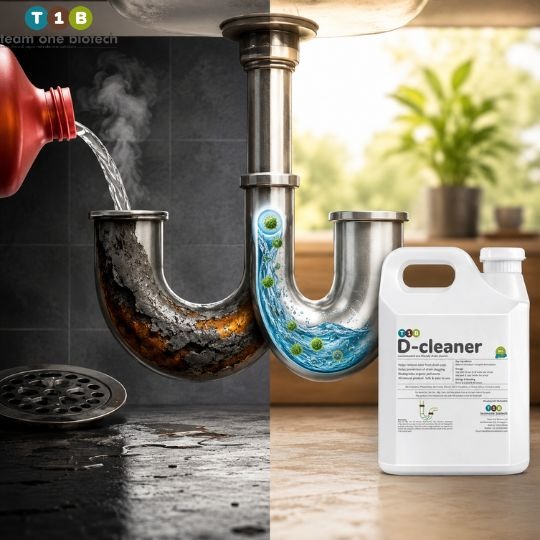
T1B™ D-Cleaner Drain and pipe cleaner Uses enzyme action to break down organic waste, preventing blockages naturally.
T1B™ U-Spray Odor control for waterless urinals Ideal for homes, offices, and event washrooms. Keeps air fresh without chemicals.
T1B™ Repel Natural mosquito and fly repellent Keeps insects away during outdoor celebrations — a safe alternative to chemical sprays.
T1B™ Angry Pink Multipurpose enzyme cleaner A top-selling, best organic cleaning product for tough grease and grime in kitchens, chimneys, and tiles.

T1B Angry Pink stands out as a natural yet effective cleaner — perfect for festival-ready kitchens and stainless steel surfaces.

How to Use These Products for Diwali Cleaning

1. Declutter and Dust

Remove unwanted items and wipe surfaces clean.

2. Deep Clean Floors & Furniture

Use T1B Eco Clean diluted with water for mopping and dusting.

3. Degrease Kitchens

Spray T1B Angry Pink directly on chimneys, tiles, and stoves for spotless cleaning.

4. Freshen Bathrooms

Apply T1B O-Spray and pour T1B D-Cleaner in drains weekly.

5. Protect Outdoor Spaces

Clean entryways with Eco Clean and spray T1B Repel to keep insects away.

These eco-friendly products for cleaning keep your home fresh, healthy, and ready for festive guests.

A Cleaner Home Means a Healthier You

Using natural, organic all-purpose cleaners reduces allergies and respiratory problems while improving indoor air quality. Eco-cleaners help create a balanced environment that promotes peace and positivity — the true spirit of Diwali.

Green Diwali Tips

  1. Use eco-friendly cleaning products instead of chemical ones.

  2. Light clay diyas instead of plastic lamps.

  3. Choose cloth or paper décor.

  4. Avoid noise-heavy crackers.

  5. Reuse gift boxes and wrapping paper.

Small steps can lead to a big, positive impact.

 Team One Biotech’s Commitment

At Team One Biotech, we are dedicated to sustainable innovation. Our cleaners are developed with biotechnology that reduces chemical waste and safeguards water quality.

Each formula in our eco-friendly house cleaning range is:

  • Safe for humans and pets

  • 100% biodegradable

  • Scientifically tested for performance

We believe true cleanliness respects both your home and the planet.

FAQs

Q1: Are eco-friendly cleaning products as effective as chemical ones?
Yes! Enzyme-based cleaners break down dirt at a molecular level, offering powerful cleaning without toxins.

Q2: What is the best organic cleaning product for Diwali cleaning?
T1B Eco Clean and T1B Angry Pink are among the best organic cleaning products for festive deep cleaning.

Q3: Can these products be used daily?
Yes — they’re safe for regular household use and gentle on all surfaces.

Q4: Where can I buy Team One Biotech’s cleaning range?
Visit teamonebiotech.com to explore our full range.


Final Thought

Diwali is about light, love, and purity — and your cleaning choices should reflect that.
Switch to eco-friendly cleaning products from Team One Biotech and make this festival truly green.

Because a bright home should never come at the cost of a clean planet. 🌏✨

Shop Now →

Scan the code