
Heavy Metals in Anaerobic Wastewater Treatment | Recovery Guide

Anaerobic systems are one of the most efficient and popular systems in industrial wastewater treatment. Its cost-effective and easy manoeuvring attributes make its presence prominent in Industries such as Distilleries, Ethanol manufacturing, Sugar mills. Breweries and even used in some facultative systems. In the anaerobic systems, Anaerobic granular sludge systems, such as UASB (Upflow Anaerobic Sludge Blanket) and EGSB (Expanded Granular Sludge Bed) reactors, represent one of the most efficient technologies for wastewater treatment.

Here, granules, which are compact, well-structured microbial aggregates, play the most vital part. These granules consist of layered microbial communities, viz., hydrolytic bacteria at the surface, acetogens in the middle, and methanogens at the core. These microbial communities work in synergy to degrade complex organic matter into methane and carbon dioxide.

These microbial communities include anaerobic bacteria, facultative anaerobe groups, and core obligate anaerobes—together forming stable functional granules essential for efficient anaerobic digestion. Understanding how they interact is explained in our EHS-focused guide

However, the anaerobic process is, at the same time, one of the most sensitive processes & its effectiveness lies in maintaining parameters such as pH, flow rate, temperature, and carbon source, which hold a very narrow range. Similarly, one such parameter is the presence of heavy metals, which has grown in industrial and municipal wastewater from plating, mining, tanneries, and electronics industries. 

Metals like copper (Cu), nickel (Ni), zinc (Zn), cadmium (Cd), chromium (Cr), and lead (Pb) are frequently labelled “toxic,” but this generalization oversimplifies their nuanced impacts. Beyond simply inhibiting enzymes, these metals disrupt the extracellular polymeric substances (EPS) matrix, destabilise syntrophic microbial interactions, and interfere with sulfide-mediated metal precipitation, ultimately leading to granule disintegration and performance failure.

This blog explores the lesser-explored territory of how heavy metals affect anaerobic granules at a structural and biochemical level and, more importantly, how reactors can recover through biogenic sulfide precipitation, bioaugmentation, and staged feeding strategies.

The need to understand the impact of heavy metals beyond toxicity thresholds that drop methane levels is necessary as this understanding is vital for designing resilient reactors and developing recovery protocols after metal shock loads.

To improve stability under fluctuating industrial loads, many ETP/STP plants now supplement with bioculture for wastewater treatment, which enhances shock resistance, improves organic degradation pathways, and strengthens microbial synergy.

The wastewater treatment systems are usually housed in an anaerobic tank or anaerobic chamber, where microbial structure influences overall anaerobic wastewater treatment outcomes.

This blog explores how heavy metals affect anaerobic granules at a structural and biochemical level and how reactors can recover through biogenic sulfide precipitation, bioaugmentation, and staged feeding strategies.

For operational guidance integrating microbial performance with EHS and compliance: Click here

 
Structure of Anaerobic Granules

Granules are self-immobilized microbial communities held together by EPS. Their architecture provides:

  • High biomass retention

  • Metabolic zoning

  • Resistance to shock loads

Granule formation is influenced by anaerobic culture methods, where microbial self-aggregation enables long-term anaerobic sludge digestion efficiency.


How Heavy Metals Impact Anaerobic Granules
  • Disruption of EPS and Structural Stability

The EPS structure consists of negatively charged functional groups (carboxyl, phosphate, hydroxyl) that can bind metal cations, effectively trapping them. Initially, this adsorption reduces metal toxicity, but with time, it has the following effects:

Loosening of granule cohesion: When the balance of tightly and loosely bound EPS changes, granules become porous and fragile.

Cross-linking: Metal ions bridge EPS polymers, changing their viscosity and reducing flexibility.

Oxidative stress: Metal exposure triggers free-radical formation, degrading EPS polymers.

Altered secretion: Metal stress may either stimulate overproduction of EPS (as a defense) or suppress secretion if energy is diverted for stress responses.


  • Inhibition of Syntropic Pathways

Anaerobic digestion depends on a very vulnerable relationship between methanogenic archaea and syntrophic bacteria. As methanogens are more metal-sensitive than acidogens, the balance tilts — acids accumulate, pH drops, and VFAs such as propionate and butyrate build up, further destabilizing granules. Once the methanogenic core is impaired, granule disintegration accelerates.

Metals like Cu2+  Ni²⁺, and Zn²⁺ interfere with these relationships by:

  1. Inhibiting hydrogenases and formate dehydrogenases, essential for interspecies hydrogen/formate transfer.
  2. Reducing the rate of interspecies electron transfer (IET) and direct interspecies electron transfer (DIET), 
  3. Blocking methyl-coenzyme M reductase, the key enzyme for methane formation.

This sensitivity also explains key differences in aerobic vs anaerobic bacteria, where oxygen tolerance and metabolic energy yield differ significantly.

Granule Disintegration Mechanisms

Heavy metals lead to:

  • EPS degradation

  • Methanogenic core collapse

  • Granule fragmentation

  • Biomass washout

Long-Term Recovery Strategies

Recovery involves staged feeding, sulfide control, pH stabilization, and biomass reinforcement.

During recovery, following standard anaerobic digestion steps helps prevent acidification and supports gradual metabolic restoration.


Bioaugmentation and Seeding

Introduction of bioculture that consists of EPS-producing bacteria and metal-resistant methanogens helps re-establish microbial networks and regain granule strength.

To buy High-performance microbial strains for industrial ETP/STP: Click here.


Granule Seeding

Seeding stable granules accelerates recovery.

Circulating mature anaerobic sludge from a healthy system supports faster granule restructuring.

EPS-Enhancing Additives

Polysaccharide-rich substrates (molasses/starch) promote structural cohesion.


Conclusion

Heavy metals do more than inhibit digestion — they structurally dismantle anaerobic granules.

Across industries, maintaining strong microbial granules ensures efficient anaerobic treatment, reduced sludge handling, stable biogas production, and long-term regulatory compliance.

For consultation or plant-level support: Contact Us

 
Explore More Solutions by Team One Biotech

As one of the leading biotech companies in India and trusted bioremediation companies in India, Team One Biotech continues to deliver solutions that redefine sustainability across wastewater treatment, agriculture, aquaculture, and hygiene management. Contact us here for free consultation.

Email: sales@teamonebiotech.com

Visit: www.teamonebiotech.com

Contact: +91 8855050575

Discover More on YouTube – Watch our latest insights & innovations!-

Connect with Us on LinkedIn – Stay updated with expert content & trends!

Zero Liquid Discharge (ZLD): Can Bioremediation Make It Cost-Effective?

The global water crisis continues to intensify, driven by pollution and scarcity. This issue not only threatens current industries but also poses long-term environmental risks. To address these challenges, modern wastewater treatment innovations have introduced Zero Liquid Discharge (ZLD) — a comprehensive system that enables industries to recover, reuse, and recycle water with minimal environmental impact.Upgrade your wastewater management with Team One Biotech — delivering advanced biological treatment solutions that make sustainability and cost-efficiency work together contact us now.

What is Zero Liquid Discharge (ZLD)?

Zero Liquid Discharge is an effluent treatment process designed to ensure that no wastewater is released into the environment. It enables complete water recovery while isolating solid residues such as sludge and salts for disposal.

Industries such as textiles, power plants, chemicals, and pharmaceuticals frequently deal with high TDS, high COD and BOD, and ammonical nitrogen reduction challenges. In such cases, ZLD in wastewater treatment ensures efficient resource utilization while maintaining environmental compliance. The ultimate goal is zero discharge and maximum water reuse.Wastewater treatment is an essential step toward achieving Zero Liquid Discharge, ensuring that every drop of effluent is treated, recycled, and reused to minimize environmental impact.

Illustration of the process:

The Cost Factor in ZLD Implementation

While Zero Liquid Discharge systems are highly effective, they also involve significant CAPEX and OPEX. Implementation can increase wastewater treatment costs by up to 300% when dependent solely on physical and chemical processes. Incorporating biological or anaerobic treatment stages can substantially reduce these expenses and improve long-term sustainability.

How Does a ZLD System Work?

A standard ZLD process integrates physical, chemical, and biological stages to achieve complete recovery. The primary stages include:

1. Pre-Treatment

This step removes suspended solids, oils, and greases through chemical dosing, pH correction, and equalization. It ensures that the influent entering the next stages is stable and easier to process.

2. Biological Treatment

This involves microbial degradation of organic matter to lower COD and BOD levels. Commonly applied in textile, pharma, and tannery industries, it helps minimize scaling, fouling, and odour issues.

3. Reverse Osmosis (RO) / Membrane Bioreactor (MBR)

These systems separate clean water from dissolved salts and pollutants. The permeate is reused within the plant, while the reject moves to the evaporation stage for further concentration and recovery.

4. Evaporation (Multi-Effect Evaporator – MEE)

RO rejects are treated in Multi-Effect Evaporators (MEE) or Mechanical Vapour Recompression (MVR) units. These thermal processes recover clean water through vapor condensation while concentrating the remaining brine.

5. Crystallization

The final step converts concentrated brine into solid form for safe disposal or possible recovery, ensuring complete zero liquid discharge.

Challenges in Sustaining ZLD Operations

Despite its benefits, maintaining Zero Liquid Discharge operations is often difficult due to technical and operational constraints.

High Energy Consumption

Evaporators and crystallizers require large amounts of steam or electricity, accounting for 40–60% of total ZLD OPEX. High COD, TDS, and ammonical nitrogen loads further increase energy consumption.

Scaling and Fouling

Inadequate pre-treatment or high phenol content can lead to scaling and fouling in RO membranes. This reduces permeate recovery, increases cleaning frequency, and shortens membrane life.

Frequent Shutdowns

Industries handling variable effluents—such as textile, dye, and pharmaceutical units—face fluctuations in high COD and BOD loads. This can trigger growth of filamentous bacteria, excess sludge formation, and frequent system shutdowns, increasing operational costs.

Role of Bioremediation in Cost Reduction

Bioremediation offers a sustainable solution for optimizing effluent treatment in ZLD systems. By utilizing specialized microbial strains bioculture, it enhances organic degradation, minimizes sludge generation, and stabilizes biological processes.

Key benefits include:

1. COD and BOD Reduction

Microbes effectively degrade organic compounds, reducing COD/BOD by up to 90%. This lowers aeration energy and chemical usage, while preventing membrane fouling.

2. Sludge Reduction

Bioremediation converts organic waste into carbon dioxide and water, resulting in minimal sludge accumulation and preventing MEE tube blockage. This reduces power and maintenance requirements.

3. Reduced Evaporator Load

Improved settling and clear supernatant reduce the volume sent to evaporators, cutting down energy demand and improving overall ZLD efficiency.

4. Enhanced Operational Stability

By controlling filamentous bacteria and supporting anaerobic treatment, bioremediation strengthens system resilience, stabilizing operations during variable or shock loads.

Compliance and Environmental Benefits

Implementing bioremediation aligns with NGT, CPCB, and PCB guidelines for zero discharge systems. It ensures reduced reliance on chemicals, improved odour control, and better compliance with national environmental regulations. The approach contributes to sustainable development goals by promoting biological wastewater treatment over purely mechanical systems.

Conclusion: Achieving Cost-Effective Zero Liquid Discharge

Zero Liquid Discharge remains critical for sustainable industrial wastewater management, but its high operational costs require strategic optimization. Incorporating bioremediation enhances biological pre-treatment, reduces sludge generation, and improves overall efficiency, making ZLD more affordable and environmentally responsible.

When properly managed, pretreated effluent acts like a well-balanced system—easier to process, more energy-efficient, and more reliable. Integrating bioremediation ensures long-term operational stability and significant cost savings for industries implementing ZLD in wastewater treatment.Achieve compliance, efficiency, and sustainability in every drop. Get in touch with Team One Biotech for expert-driven ZLD solutions.

To achieve sustainable Zero Liquid Discharge with reduced operational costs, contact Team One Biotech for tailored biological solutions. 

As one of the leading biotech companies in India and trusted bioremediation companies in India, Team One Biotech continues to deliver solutions that redefine sustainability across wastewater treatment, agriculture, aquaculture, and hygiene management.

Email: sales@teamonebiotech.com

Visit: www.teamonebiotech.com

Discover More on YouTube – Watch our latest insights & innovations!-

Connect with Us on LinkedIn – Stay updated with expert content & trends!

Sulphide removal in refinery wastewater
Sulfide Removal in Petroleum Refinery Wastewater | Case Study

Introduction: 

A reputed petroleum refinery approached us due to high concentration of sulfides in their effluents. They tried multiple solutions, including electroplating, RO, etc., but they were very cost-intensive. Also, they received multiple notices from the pollution control board and were paying heavy fines. In petroleum refineries, Effluent Treatment Plants (ETPs) are critical for managing complex wastewater containing sulfides, phenols, and hydrocarbons. Our advanced bioculture-based solutions ensure consistent COD and BOD reduction, even under fluctuating hydraulic and organic loads. Reach out to us today to experience how our bioculture-driven solutions can turn wastewater challenges into success stories.

ETP details:

The industry had primary treatment, biological treatment, and then a tertiary treatment.

Previous Capacity

Flow (current) 4500 KLD
Flow (design) 4500 KLD
Type of process Facultative
Capacity of UASB 12500 KL
Capacity of AT 7500 KL
Retention Time 106.66 hours(combined)

Challenges: 

Parameters (PPM) Avg. Inlet parameters  Avg. Outlet parameters 
COD 5500-9010 2200-4600
BOD 2500-5800 1300-3000
Ammoniacal Nitrogen 200 120-150
PAH 1250 680

Operational Challenges :

  • The primary treatment was working at 10 % efficiency in terms of COD reduction 
  • The biological treatment worked at an average of 50 % efficiency in terms of COD reduction. 

They were struggling to control the higher AN levels, and it was inducing shock loads as explained earlier. 

Issues with Process:

The main issue with the process was that there was no significant reduction in AN at the outlet despite having a UASB and an Aeration tank

The Approach: 

The industry partnered with us to commission their UASB and Aeration tank with increased capacity and restart the plant at its full capacity in terms of hydraulic load.

We adopted a 3D approach that included :

  • Research/Scrutiny :  
  • Our team visited their facility to go through the process of the new ETP and to scrutinize the value-addition factors.
  • Analysis :
  • We analyzed the 3-month cumulative data of their ETP to see trends in the inlet-outlet parameters’ variations and the permutation combinations related to it.
  • Innovation : 
  • After the research and analysis our team curated customized products and their dosing schedules with formulation keeping in mind the plan of action to get the desired results.

This process is called bioaugmentation.

Desired Outcomes :

  1. Reduction in AN levels in the final outlet
  2. Development of strong biology to withstand shock loads and prevent upsets.
  3. Making ETP more efficient regarding COD/BOD  and PAH degradation.
  4. Reduction in FOG.

Execution:

Our team selected  the product :

For the Aeration Tank

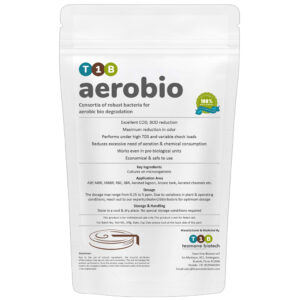
  1. T1B Aerobio: Our aerobic Bioculture blend consists of blends of several strains of Nitrifying and Denitrifying bacteria and facultative microorganisms, usually bacteria, along with key trace elements on a complex inert media. t1b-aerobio

For the UASB tank

  • T1B AnaerobioOur Anaerobic Bioculture blend consists anaerobic microbes that will effectively reduce AN as well as enhance COD/BOD control. t1b-anaerobio

Our plan of action included:

  1. T1B Anaerobio was dosed in UASB for sulphate and COD reduction.
  2. The addition of T1B Aerobio was also done Aeration Tank after UASB every day 

Results:

Parameters

Parameters (PPM) Avg. Inlet parameters  Avg. Outlet parameters (secondary clarifier outlet)
COD 5500-9010 900-1300
BOD 2500-5800 350-750
AN 200 20-25 (After Aeration Tank)
PAH 1250 220

The implementation of the bioaugmentation program resulted in significant improvements in the performance of biological units in their WWTP:

  • The COD/BOD degrading efficiency increased from 50% to 83 % in the biological system.
  • AN reduction was achieved up to 90 %
  • PAH was also getting degraded up to 82.4 %.
  • MLSS: MLVSS ratio was optimized.
  • Biomass in the ASP system displayed great stability even during shock load situations.
  • Methane gas production increased by 12%.

The application of Anaerobic Treatment through UASB reactors combined with Aeration tanks enabled effective Ammoniacal Nitrogen control and reduced PAH levels significantly. This approach minimized the risks of shock loads and enhanced the stability of biological systems.

With a focus on Industrial wastewater treatment, we targeted Sludge reduction and improved MLSS:MLVSS ratios to enhance operational efficiency. Our strategies also mitigated Odour issues and prevented the proliferation of filamentous bacteria, ensuring long-term system reliability.

By aligning with CPCB, PCB, and NGT compliance norms, the refinery avoided penalties while achieving sustainable wastewater management. The integration of bioaugmentation technology, nutrient balancing, and biogas recovery further optimized the performance of the effluent treatment process.

This case study demonstrates how refinery clients can achieve reliable wastewater treatment solutions while reducing OPEX, improving sulphide reduction, and ensuring a future-ready industrial effluent treatment system.

As one of the leading biotech companies in India, we provide a sustainable product range across multiple verticals, including probiotics for aquaculture, biofertilizers and plant growth promoterseco-friendly cleaning solutionsanimal probiotics, and on-site consultation for biocultures for ETP and STP.

Email:  sales@teamonebiotech.com

Visit: www.teamonebiotech.com

Discover More on YouTube – Watch our latest insights & innovations!-

Connect with Us on LinkedIn – Stay updated with expert content & trends!

aerobic, anaerobic, and anoxic treatment
Anoxic vs. Anaerobic vs. Aerobic Wastewater Treatment
Introduction

Wastewater treatment relies on biological processes to remove contaminants before the treated water is discharged or reused. The three primary treatment conditions—anoxic, anaerobic, and aerobic—each utilize different microbial mechanisms to break down pollutants. Understanding these processes is essential for selecting the most efficient stp water treatment process based on wastewater characteristics and treatment goals.

This blog explores the origins, efficiency, and prominence of each treatment type.For expert solutions in wastewater treatment, visit Team One Biotech.

1. Aerobic Wastewater Treatment
Origins and Development

Aerobic wastewater treatment has its roots in the late 19th and early 20th centuries with the development of the activated sludge process (1913, UK). It gained prominence with the increasing need for effective wastewater management in industrial and municipal applications.

Process Mechanism
  • Requires oxygen to support aerobic microbial activity.
  • Bacteria break down organic matter into carbon dioxide, water, and biomass.
  • Common systems include biological sewage treatment plant, trickling filters, and aerated lagoons.

Biological Oxygen Demand (BOD) + O2 + Biomass + nutrients(N/P) → 

CO2 + H2O + new biomass + energy

Efficiency and Prominence
  • Efficiency: High organic matter removal (90-98% BOD and COD reduction).
  • Energy Demand: High energy consumption due to aeration.
  • Sludge Generation: Produces more sludge compared to anaerobic processes.
  • Prominence: Widely used for municipal wastewater treatment and industrial wastewater treatment due to its ability to handle high organic loads efficiently.
2. Anaerobic Wastewater Treatment
Origins and Development

Anaerobic treatment dates back to ancient times when natural decomposition processes were observed in wetlands. The modern anaerobic process was developed in the late 19th century, with advancements in anaerobic digestion of biomass occurring in the 20th century.

Process Mechanism
  • Operates in the absence of oxygen.
  • Microorganisms break down organic matter into methane, carbon dioxide, and biomass through hydrolysis, acidogenesis, acetogenesis, and methanogenesis.
  • Common systems include Upflow Anaerobic Sludge Blanket (UASB) reactors, gases produced in anaerobic sludge digesters, and expanded granular sludge bed (EGSB) reactors.
Efficiency and Prominence
  • Efficiency: Moderate to high COD removal (70-90%) but requires post-treatment.
  • Energy Demand: Low energy requirement; produces biogas as a byproduct.
  • Sludge Generation: Minimal sludge production.
  • Prominence: Used for high-strength industrial wastewater (e.g., food processing, dairy, breweries) and working of sewage treatment plant in developing regions.
3.Anoxic Wastewater Treatment
Origins and Development

Anoxic treatment became prominent with the increasing need for nitrogen removal in wastewater treatment plants. It gained traction in the late 20th century with the development of biological nutrient removal (BNR) systems.

Process Mechanism
  • Operates with no free oxygen but uses chemically bound oxygen (e.g., nitrates).
  • Facilitates denitrification, where bacteria convert nitrates (NO3-) to nitrogen gas (N2), reducing nitrogen pollution.
  • Common systems include anoxic zones in activated sludge plants and sequencing batch reactors (SBRs).
Efficiency and Prominence
  • Efficiency: Essential for nitrogen removal (80-95% nitrate reduction).
  • Energy Demand: Lower than aerobic treatment but requires a carbon source.
  • Sludge Generation: Moderate sludge production.
  • Prominence: Critical for wastewater treatment plants with strict nitrogen discharge regulations.
Removal of nitrogen:

Nitrification: NH4+ +1½O2→NO2 +2H+ + H2O aerobic conditions

NO2 + ½O2→NO3

Denitrification:NO3 + BOD→N2+H2O+COanoxic conditions

Comparison Table
Parameter Aerobic Treatment Anaerobic Treatment Anoxic Treatment
Oxygen Requirement High None No free oxygen (uses nitrates)
Energy Demand High Low (energy-positive) Low
Organic Removal Efficiency High (90-98%) Moderate-High (70-90%) Specific to nitrogen removal
Sludge Production High Low Moderate
Prominence Municipal and industrial wastewater Industrial, high-strength wastewater Used in biological nutrient removal
Conclusion:

Selecting between aerobic, anaerobic, and anoxic treatment depends on the specific wastewater characteristics and treatment objectives.

  • Aerobic treatment is highly efficient but energy-intensive.
  • Anaerobic treatment is energy-efficient and generates biogas but may require post-treatment.
  • Anoxic treatment is crucial for nitrogen removal and is often used in combination with aerobic systems.

By integrating these wastewater treatment processes effectively, wastewater treatment plants can optimize efficiency, odor removal, and meet regulatory standards.

If you are looking for expert wastewater management solutions from trusted sanitation companies, including specialized services such as sanitization, and waste removal, we’ve got you covered

For more details on wastewater management solutions, contact us at Team One Biotech.

???? Email: sales@teamonebiotech.com
???? Visit: www.teamonebiotech.com

???? Discover More on YouTube – Watch our latest insights & innovations!-

???? Connect with Us on LinkedIn – Stay updated with expert content & trends!
Understanding Recalcitrant COD in Wastewater Treatment

Wastewater treatment plants (WWTPs) are designed to remove organic pollutants, typically measured as chemical oxygen demand (COD). However, not all COD is easily degradable. A significant portion, known as recalcitrant COD, poses a major challenge for treatment facilities due to its resistance to conventional biological treatment methods. If you’re looking for effective solutions to tackle recalcitrant COD in wastewater treatment, feel free to contact us.

What is Recalcitrant COD?

Recalcitrant COD consists of complex organic compounds that persist in the environment and do not break down easily by microbial activity. These compounds include industrial dyes, pesticides, phenols, pharmaceuticals, and certain synthetic chemicals. Their persistence in treated effluent can lead to environmental pollution and regulatory non-compliance. The removal of recalcitrant pollutants often requires integrating advanced oxidation processes with conventional wastewater treatment techniques to achieve highly efficient degradation.

Sources of Recalcitrant COD

Recalcitrant COD is commonly found in wastewater from industries such as:

  • Textile & Dyeing – Synthetic dyes and pigments (textile service)
  • Pharmaceuticals – Active drug ingredients (pharma service)
  • Petrochemicals – Hydrocarbons and solvents (chemical service)
  • Pulp & Paper – Lignin and chlorinated compounds (pulp & paper service)
  • Adhesives, Food, Dairy, Pesticides, and Rubber Industries – Contaminants from production and processing (adhesives service, food service, dairy service, pesticides service, rubber service)
Conclusion

Addressing recalcitrant COD is critical for achieving stringent waste water discharge standards and ensuring environmental sustainability. By integrating advanced oxidation processes with conventional biological treatment methods, industries can effectively reduce the environmental impact of their wastewater. Continuous research and innovation in water and wastewater treatment will pave the way for more highly efficient and cost-effective solutions.

For expert solutions in recalcitrant COD removal, consult with bioculture companies for wastewater treatment that provide customised culture and technical support tailored to industrial needs.

Are you dealing with recalcitrant COD in wastewater treatment? Contact us today to explore advanced treatment technologies tailored to your needs!

???? Email: sales@teamonebiotech.com
???? Visit: www.teamonebiotech.com

???? Discover More on YouTube – Watch our latest insights & innovations!-

???? Connect with Us on LinkedIn – Stay updated with expert content & trends!

Anaerobio Bacteria & Treatment – Microbial Culture, Bio Culture & Product, Digestion, Wastewater, Microorganisms, Baffled Reactors (ABRs), Anaerobic Filter

Team One Biotech’s Anaerobio is a unique combination of anaerobic & facultative bacteria like methanogenic bacteria, acidogenic and acetogenic and hydrolytic bacteria that break down the organic waste sludge in the wastewater treatment process in absence of oxygen.

The microbiome mixture is highly efficacious in reducing organic pollutants and industrial waste materials into methane and reducing the generation of hydrogen sulphide gas thereby increasing the productivity of wastewater treatment plants and furnishing higher output of biogas.

Biomass carryover in an anaerobic digestion process is a widely common concern. It is extremely important that the biomass is healthy with matured flocs. This helps the bacteria to maintain a good sludge blanket inside the reactor. T1B Anaerobio moderates the sludge blanket formation at the bottom of the wastewater tank or clarifier. This allows the removal of small dirt particles, metals, and simpler compounds from the wastewater.

T1B Anaerobio supports all type of anaerobic digesters to control its biomass carryover

T1B Anaerobio | Consortium Of Microbes To Process Anaerobic Digestion, Hydrolysis – Can Be Used In Upflow Anaerobic Sludge Blanket Reactor

 Anaerobic Bacteria – Anaerobic Microbial Culture – Anaerobic Bio Culture – Anaerobic Bio Product – Anaerobic Treatment – Anaerobic Digestion – Anaerobic Wastewater Treatment – Anaerobic Filter – Anaerobic Microorganisms – Anaerobic Baffled Reactors (ABRs) – Microbial Strains – Biodegradation – Bioreactor – Methane Production – Organic Matter Removal – Wastewater Treatment – Microbial Consortia – Biogas – Acidogenesis – Methanogenesis – Hydrolysis – Microbial Community – Biomethanation – Temperature – Alkalinity – Sludge Break Down – Removal Of Organic Volatile Compounds VOC’s – Biogas Production – Acetogenesis – Upflow Anaerobic Sludge Blanket Digestion – UASB – Diverse Range Of Bacteria – Advanced Biochemicals – Hydrogen Sulfide And Methane – Bio Digester – Sludge Blanket – Sludge Wasting – Biomass Carryover – Improve Methane Generation – lower Hydrogen Sulfide Production – Enzyme – Bacteria And Enzyme Production – Bio Enzyme For Biogas – Anaerobic lagoon – EGSB (Expanded Granular Sludge Bed) Reactor – Fluidized Bed Reactors – Breakdown Of Organic Matter In The Absence Of Oxygen – Consortium Of Microorganisms – Renewable Energy – Wastewater Treatment – AD Process – Microbial Digestion – Digestate – Green Energy – Energy Efficiency – AD Technology

Scan the code