
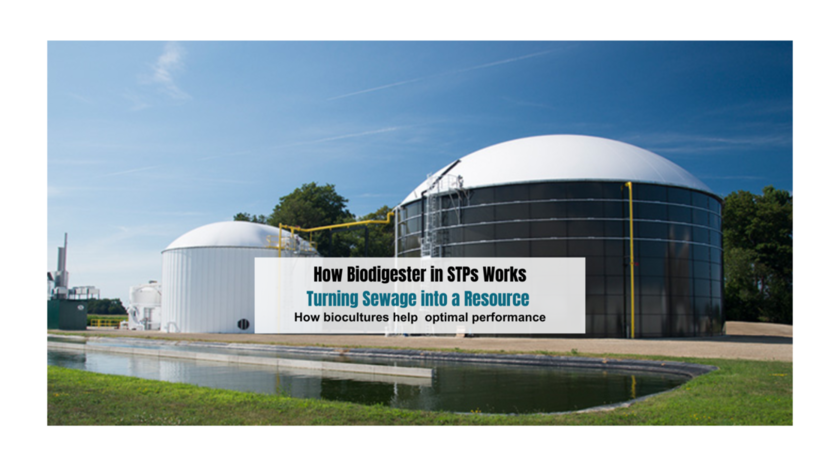
How Biodigester in STPs Works: Turning Sewage into a Resource Using Biocultures
India’s Sewage Challenge
India generates over 72,000 MLD of sewage daily, but less than half is treated effectively. This untreated wastewater flows into rivers like the Yamuna, Ganga, and Mula-Mutha, causing severe health and ecological damage. Despite multiple government initiatives like the Ganga Action Plan and National Mission for Clean Ganga, a significant sewage burden persists.
India is often termed by the world as the Spiritual capital, and people around the world flock to India to seek penance, embrace the tranquillity of nature and follow the path of GOD. But unfortunately, the past few centuries of dark chapters and post-independence blunders have made India and Indians be looked at as unfriendly to cleanliness, and we even prove it sometimes, because the very rivers that we worship and are sacred in our texts are among the most polluted rivers in the world.
By the 1970s and 80s, untreated sewage had become a national crisis. Outbreaks of cholera in Kolkata, jaundice in Surat (1994), and recurring typhoid cases in Delhi highlighted the urgent need for structured sewage management. It was clear that septic tanks and open drains could no longer cope with urban growth.
Why the Government Was Forced to Act
The first large-scale intervention came with the Ganga Action Plan (1986), which introduced Sewage Treatment Plants (STPs) in Kanpur, Varanasi, and other towns along the river. These were followed by the National River Conservation Plan (1995) and later the National Mission for Clean Ganga (2014).
The government realised that simply building drains wasn’t enough. What was needed were systems that could not only treat sewage but also manage solid waste sustainably. This is where biodigesters became a key component of STPs.
City Case Studies
Delhi ( Okhla STP, 1990s): One of the largest STPs in Asia, Okhla adopted biodigesters to process sewage sludge and generate biogas. However, poor maintenance has kept its output below potential, highlighting the gap between design and operation.
Kanpur (Ganga Action Plan, 1986): As one of the first cities to adopt STPs with biodigesters, Kanpur showed early promise. But decades later, many plants fell into disrepair due to lack of funding and technical oversight, contributing to ongoing Ganga pollution.
Pune (Mula-Mutha River STPs, upgraded in 2018): A positive example, where biodigesters were modernised to produce electricity from biogas, helping reduce operational costs while tackling sewage loads.
Why Many Systems Struggle Today
Despite success stories, 40% of India’s STPs are either non-functional or underperforming (CPCB data). The reasons include:
- Poor Maintenance: Microbial cultures die out when not replenished.
- Finding Gaps: Municipal budgets often fail to cover operations.
- Skill Shortages: A lack of trained operators undermines performance.
- Outdated Designs: Many STPs still run on decades-old technology.
Role of Biodigesters in STPs
Biodigesters in Sewage Treatment Plants (STPs) are anaerobic chambers that use microbes to break down sludge. They:
-
Convert organic matter into biogas and nutrient-rich slurry.
-
Enable energy generation from methane.
-
Stabilise sludge and make it safe for reuse.
While cities like Delhi, Kanpur, and Pune have adopted biodigesters, around 40% of India’s STPs underperform due to poor microbial management, outdated designs, and lack of skilled operators.
How Biocultures Improve Biodigester Working
Biodigesters thrive only when the microbial population is balanced and active. Without replenishment, microbial colonies collapse, leading to foul odour, incomplete digestion, and reduced biogas yield.
Here’s how biocultures for STPs can solve these challenges:
-
Enhanced COD/BOD Reduction: Specialised microbial strains accelerate organic load breakdown.
-
Consistent Performance: Prevents biodigester failure during hydraulic shock loads.
-
Sludge Reduction: Biocultures minimise sludge accumulation, reducing disposal costs.
-
Odour & Pathogen Control: Maintains hygienic and sustainable operations.
Team One Biotech’s Expertise
As one of the leading biotech companies in India, Team One Biotech provides customised bioculture formulations to optimise biodigester working in STPs, ETPs, and decentralised sewage systems.
Our solutions include:
-
Anaerobic Biocultures tailored for methane generation.
-
Sludge-reducing microbial consortia to extend biodigester life.
-
Start-up cultures for new STPs or after shock loads.
-
On-site consultation and training for plant operators.
By integrating our biocultures, municipalities and industries can transform underperforming biodigesters into efficient, sustainable, and cost-saving systems.
Conclusion
Biodigesters are the backbone of modern sewage treatment in India, but they need consistent microbial support. Team One Biotech bridges this gap with advanced biocultures for STPs, ensuring reliable biodigester working, reduced sludge, and higher biogas yields.
With the right biotechnological support, India can move towards a circular wastewater economy, cleaner rivers, and healthier cities.
Explore More Solutions by Team One Biotech
Apart from biocultures for wastewater treatment, Team One Biotech also offers innovative and eco-friendly solutions across multiple sectors, including:
– Plant Growth Promoters – microbial formulations for improved agricultural productivity
– Aquaculture Probiotics – supporting fish and shrimp health naturally
– Bio Enzyme Floor Cleaner – eco-safe cleaning for homes and industries
– Multipurpose Cleaner – powerful natural alternative to chemical cleaners
– Septic Tank Cleaning Powder – maintaining septic efficiency and reducing odour
– Probiotic Drain Cleaner – preventing clogs and ensuring hygienic drains
Email: sales@teamonebiotech.com
Visit: www.teamonebiotech.com
Discover More on YouTube – Watch our latest insights & innovations!-
Connect with Us on LinkedIn – Stay updated with expert content & trends!


