Case Study High COD-High TDS effluent treatment and Elimination of MEE (1)
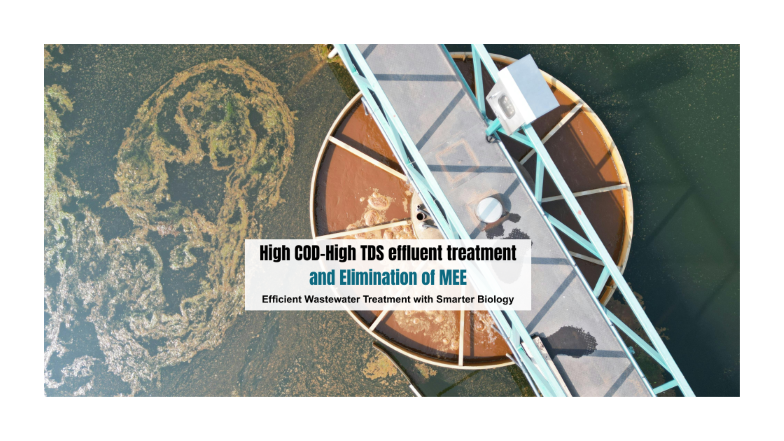
High COD-High TDS effluent treatment and Elimination of MEE
Background

With the head office located at Ankleshwar, this prominent chemical manufacturing company was spending heavily to treat its high COD effluent with high TDS. Their current ETP also did not have any biological system. The company connected us and gave us the challenge not only to treat the High COD effluent with TDS up to, but also to eliminate the use of MEE in order to save cost.

1st Phase: Scrutiny

Our team of experts visited the factory to introspect to identify the scope of improvements.

ETP details:

Flow (current) 400 KLD
Type of process Primary + Tertiary (no Biology)
No of spare tanks 4
Capacity of neutral tank 1 130 KL
Capacity of neutral tank 2 625 KL
Capacity of neutral tank 3 130 KL
Capacity of neutral tank 4 60 KL

Parameters:

Effluent Treated by MEE:

Parameters  Avg. Inlet parameters (PPM)
COD 30000-40000
TDS 150000-180000

Effluent Treated in ETP:

Parameters  Avg. Inlet parameters (PPM)
COD 30000-40000
TDS 20000
Current Scenario

ETP Process:

  • Batch process is followed till neutral effluent storage tank 1.
  • 60 HP pumps are present with a capacity of 80 KL/hr.
  • Both the streams are equalized, while the acidic stream is neutralized at the neutralization tank with lime (400-1500 kg).
  • The supernatant passes through the belt filter while the sludge is passed to the settling tank and then to CF1 and CF2
  • The supernatant is passed to 4 neutral effluent storage tanks one by one through gravity, with capacities 130 Kl, 625 KL, 130 KL, and 60 Kl respectively.
  • No Aeration in Neutral effluent storage tanks.
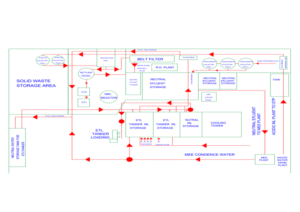
Wastewater treatment of COD BOD AND MEE Image (1).png

Challenges

Treating high COD was not the actual challenge, but treating the effluent with such high TDS up to 160000 ppm was near impossible, as:

  • Conventional biological wastewater treatment struggles at high Total Dissolved Solids (TDS) levels, especially above 10,000–20,000 ppm.
  • High TDS creates osmotic stress, impairs enzyme function, and can rupture microbial cell membranes.
  • At 160,000 ppm TDS, most microbial communities collapse, making biological COD degradation nearly impossible.
  • T1B Aerobio contains specialised, scientifically selected bio cultures that naturally survive and thrive under extreme salinity and high organic loading.
2nd Phase: The Blueprint

After scrutiny and brainstorming with our R&D, we concluded and agreed to transform the existing ETP setup into a fully-functional ASP-based ETP that can treat high COD of effluent with High TDS.

ETP process optimization:

Action Plan:

  • Conversion of current tanks into biological tanks for COD reduction
  • The Neutral storage tanks of 130 KL AND  625 KL were converted into a biological tank, for which fine bubble diffusers were installed.
  • The third neutral effluent storage tank of capacity 130 KL to be used as a clarifier with the provision of recirculation back to the tank of 625 KL through pumps
  • Elimination of MEE gradually
  • We started with 125 kld flow and eventually took the daily flow to 400 kld.
3rd Phase: Technology and Execution
  1. Selecting biocultures:

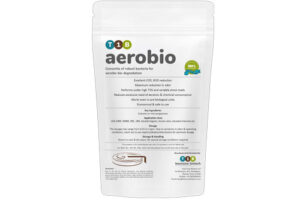
T1B Aerobio

Reduces aeration processing in Wastewater treatment. Improves functioning & efficiency of biological units in WTP. Useful in activated sludge process bioreactors & biodigesters

Team One Biotech’s unique microbial preparation “T1B Aerobio” consists of blends of several strains of microorganisms, usually bacteria. These organisms are isolated from nature and are not genetically altered in any way. They are selected based on accelerated reproduction rates and their ability to perform specific functions, such as good floc-forming capabilities, ability to degrade xenobiotic compounds, ability to survive in high TDS, degrade ammonia, sodium acetate, and other nutrients, ability to perform under variable pH & temperature, ability to secrete various enzymes, etc. 

T1B SustainX
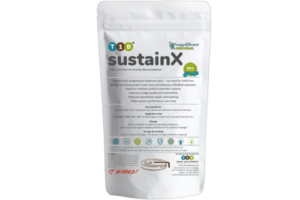
  • Our product T1B SustainX is a 100 % replacement of UREA-DAP and other conventional nutrients. It consists: 
    • Organic CarbonPrimary electron donor and carbon source for microbial growth and co-metabolic degradation.
    • Total Nitrogen → Essential for amino acids, nucleic acids, and enzyme production, driving biomass formation.
  • Phosphate Supports ATP synthesis, genetic material integrity, and membrane stability.
  • Calcium Strengthens cell walls, stabilizes enzymes, and enhances bio flocculation and sludge settling.
  • Magnesium → Key cofactor for ribosomes, ATP handling, and enzyme regulation.
  • Sulfur → Needed for sulfur-containing amino acids, coenzymes, and redox balance.

Essential Micronutrient Metal Cofactors + Organic Micronutrient Coenzyme Precursors + Nitrogenous Organic Monomers and Metabolic Precursors

2. Process optimization:

Our target was to achieve MLSS of 3500-4000 in the first 15 days. After that, the WAS was wasted at 15 KLD, and RAS was recirculated at 5 KLD.

Results:

After 60 days of implementation:

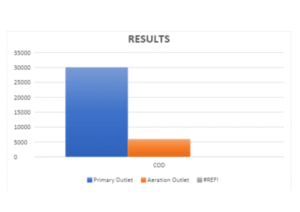
Parameters  Primary Outlet) Neutral (aeration) tank 2 Outlet Clarifier Outlet
COD (PPM) 30000 6000                   >3500
COD Reduction ~ 80 % ~ 88 %
TDS (PPM) 160000  160000 160000

Wastewater treatment of COD BOD AND MEE Image.

MEE elimination:

In 90 days, the MEE was completely eliminated, thereby reducing overall wastewater treatment cost by 62%.

Conclusion

With the combined effect of T1B Aerobio bio culture and T1B SustainX – nutrient source and process optimization, the client achieved an 85-90 % COD reduction efficiency in ETP through the biological system, which further increased after the tertiary system. This translated into:

  • Improved microbial activity and settleability.
  • Stable effluent quality, meeting compliance standards.
  • Bio cultures are effective in high TDS effluents.

This case demonstrates how biology-driven solutions, coupled with system know-how, can deliver tangible performance and cost benefits in industrial wastewater treatment.

Looking to improve your ETP/STP efficiency with the right bioculture?
Talk to our experts at Team One Biotech for customised microbial solutions.

Contact+91 8855050575

Email:  sales@teamonebiotech.com

Visit: www.teamonebiotech.com

Discover More on YouTube – Watch our latest insights & innovations!-

Connect with Us on LinkedIn – Stay updated with expert content & trends!

Maharashtra Government's “Swadeshi-Startup-Sustainability
Matching feet with the Maharashtra Government’s “Swadeshi-Startup-Sustainability” mission march!!

On the rising high tide of the startup wave, Maharashtra is leading with its number of startups in the country. Thanks to the Maharashtra Government’s vision and the Maharashtra State Innovation Society’s initiatives, one of them was MAHARISE 2025. An event which focuses on giving leverage to top startups of Maharashtra and other regions, identifies top prospects in various categories, and gives them a chance to pitch before the top decision makers of the state. Team One Biotech leveraged this opportunity and appeared as winners in the “Waste and Circular Economy Category.”

We were further given the chance to showcase our technology and journey at Mantralay in Tech-Wari week in the honorable presence of Minister Shri Mangal Prabhat Lodha, MSINS Secretary Smt. Manisha Verma and other IAS and IPS officers from Maharashtra, where we got an overwhelming response to our technology, especially our tech on Sewage treatment and Drain Cleaning. The event opened doors for us to work with various departments of the Maharashtra Government.

Here are some of the glimpses:

Article content
Touching new bases – Internationally!

Since our horizon, the trajectory of our growth has always been exponential. Even with all the obstacles, we have added many new feathers to our hat of growth, and one such is doing business internationally. At the threshold of the current financial year, we have been able to do business in 35+ countries in probably all the verticals, including Wastewater Treatment, Sewage Treatment, Aquaculture, Agriculture, Cleanliness, and Animal Probiotics. This expansion of our global presence motivates us and further strengthens our goal towards delivering sustainability and protecting the environment worldwide.

Article content
Movement against fertilizer addition in Industries.

The addition of fertilizers such as UREA–DAP in biological systems has been a practice for ages. Due to their availability and cheap prices, industries use them to provide nutrition to the biomass in the biological system. However, UREA-DAP and other such conventional sources have low-bioavailable nutrients due to their complex chemical structures. Also, being chemicals, the release of nutrients is sudden and abrupt, which sometimes leads to toxicity.

To overcome all such hindrances and nuances, Team Biotech launched T1B – SustainX

“A 100% replacement of UREA-DAP and other conventional nutrients”
Article content

Introducing T1B SustainX – a game-changing, natural nutrient blend that completely replaces Urea & DAP in biological ETPs.

  • Boost microbial health
  • Prevent ammonia spikes
  • Enhance nitrification–denitrification
  • Reduce chemical costs drastically
Nutrient Profile of SustainX:
  • Organic Carbon → Primary electron donor and carbon source for microbial growth and co-metabolic degradation.
  • Phosphate → Supports ATP synthesis, genetic material integrity, and membrane stability.
  • Total Nitrogen → Essential for amino acids, nucleic acids, and enzyme production, driving biomass formation.
  • Calcium → Strengthens cell walls, stabilizes enzymes, and enhances bio flocculation and sludge settling.
  • Magnesium → Key cofactor for ribosomes, ATP handling, and enzyme regulation.
  • Sulfur → Needed for sulfur-containing amino acids, coenzymes, and redox balance.
  • Essential Micronutrient Metal Cofactors + Organic Micronutrient Coenzyme Precursors + Nitrogenous Organic Monomers and Metabolic Precursors
Wastewater Connect India Videos Making Waves

The industrial wastewater treatment industry in India is huge but unorganized. Also, there are no formal on-field training centers where environment graduates are trained in actual industries to get practical experience; rather, institutes and colleges offer bookish level knowledge, which limits the learning and knowledge base of candidates.

Also, most of the industries seek troubleshooting experience, but due to a scattered knowledge base, many times, sufficient and effective advice is not provided. To fill such loopholes, Team One Biotech decided to use the professional experience and launched the Wastewater Connect India series videos that enable EHS professionals and environmental students to learn from on-the-field experiences as well as get troubleshooting ideas.

So far, we have launched 7 episodes, which are available on our group Wastewater Connect India on LinkedIn as well as on our YouTube page.
Get ready to witness one of the biggest disruptions in B2C

Riding on our horse of sustainability, we are now galloping towards the launch of very special, sustainable, and effective products that will disrupt the B2C segment. STAY TUNED!

PRO Tip from the Field –

3 Signs Your Secondary Clarifier Is Overloaded –

  • Scum carryover increasing
  • MLSS settling unevenly
  • DO not recover despite increased airflow

Fix: Check F/M Ratio, sludge age, and nutrient feed.

Schedule a FREE CONSULTATION now!

Questions? Need site-specific help?

Write to us: [sales@teamonebiotech.com] |

Call us: +91-7769862121 |

Visit: www.teamonebiotech.com

Follow Us on LinkedIn|

T1B SustainX can solve the malnutrition of ETP! How and Why?

What you read in the book is always different in the real-world hook!! A quote so accurately framed that and can be applied in every professional aspect, including wastewater treatment. No matter how many SOPs or books we read, the ground reality is different, each ETP is different, each industrial effluent is different and one of the most overlooked challenges across these systems is the malnutrition of ETP, where the biological treatment process suffers due to imbalanced or inadequate nutrient supply.

In the world of industrial wastewater treatment, biological systems are the backbone of sustainable and cost-effective operations. But even the best industrial application of microorganisms can’t function without the right nutrients. And for the right nutrients, the same old C:N:P ratio is followed. And to make up this ratio, unfortunately, the conventional nutrient sources such as UREA-DAP, which are supposed to be used for agriculture, are often used in abundance in common effluent treatment plants (CETPs), which is itself a self-sabotage practice.This leads to a common but critical issue—malnutrition of ETP, where effluent treatment plants suffer from poor nutrient availability or imbalance despite excessive chemical input.

Now, readers must be wondering as to what the ideal solution should be for this, as for every nutrient requirement, we need separate chemicals, like for nitrogen, it’s UREA, for phosphorus, it’s DAP, etc.

Well, Team One Biotech has a solution to this universal problem as well. Introducing T1B SustainX- a natural blend of nutrients in powdered form. A 100% replacement of UREA, DAP, Phosphoric acid, and other conventional nutrients.

Team One Biotech’s T1B SustainX offers a smart, eco-friendly, and efficient alternative. Here’s why it’s time to reconsider your ETP nutrient strategy—and how SustainX provides a smart, eco-friendly, and efficient alternative. Contact Us to know how SustainX can transform your operations.

The problem of using fertilizers in Industries as the nutrient source:

Despite their widespread use, these fertilizers contribute to the malnutrition of ETP, disrupting microbial health and system performance.Industrial effluent is not same as soil where we can put the traditional fertilizers. Using such products may give results, but it has some side effects too such as:

  • Nutrient Spikes & Imbalances: Urea, DAP and other products tend to release ammonia and phosphorous very rapidly causing sudden spike in nutrient availability leading to shock induction in the microbes present.
  • Limited Bioavailability: A significant portion of these nutrients is lost through runoff or chemical interactions, offering poor uptake efficiency.
  • Sludge Bulking & Odors: Excess ammonia from urea or phosphorus from DAP can trigger undesirable side effects like bulking, foaming, and odor removal.
  • Eutrophication Risk: Residual nutrients in treated effluents can pollute water bodies, leading to algal blooms and ecological damage.
T1B SustainX: One stop Nutrition Solution

It is a revolutionary and advanced nutritional solutions consists of balanced C:N:P , which is bioavailable.

Key Benefits of SustainX:

  • Scientifically designed pre-balanced ratio — no need for DAP/urea
  • Boosts microbial growth under anaerobic process and stress
  • Enhances COD/BOD reduction
  • Reduces sludge and odor removal issues
  • Improves methane yield in anaerobic digestion of biomass
  • Improves sludge quality and settleability
  • Reduced operational upsets and foaming
  • Stable system performance over time
  • Reduces operational hassle of doing multiple products
Practical Replacement comparison:

ParameterDAP/Urea/Phosphoric AcidT1B SustainX (Science Power)
Nutrient AvailabilityImmediate (risk of spike)Gradual (consistent)
BioavailabilityMedium to lowHigh (organic complex)
Microbial DiversityLimited impactSignificant positive impact
Sludge ProductionModerate to highReduced and stabilized
Residual NutrientsHigh risk (eutrophication)Minimal residual nutrients
Environmental ImpactHigher pollution potentialEco-friendly and sustainable
T1B SustainX- Nutrient Profile

T1B SustainX is a one blend-multiple nutrient product that gives all the necessary nutrients in one dose:

  • Organic Carbon → Primary electron donor and carbon source for microbial growth and co-metabolic degradation.
  • Total Nitrogen → Essential for amino acids, nucleic acids, and enzyme production, driving biomass formation.
  • Phosphate → Supports ATP synthesis, genetic material integrity, and membrane stability.
  • Calcium → Strengthens cell walls, stabilizes enzymes, and enhances bioflocculation and sludge settling.
  • Magnesium → Key cofactor for ribosomes, ATP handling, and enzyme regulation.
  • Sulfur → Needed for sulfur-containing amino acids, coenzymes, and redox balance.
  • Essential Micronutrient Metal Cofactors + Organic Micronutrient Coenzyme Precursors + Nitrogenous Organic Monomers and Metabolic Precursors

It also includes essential micronutrient metal cofactors, organic precursors, and nitrogenous metabolic compounds to enrich biological sewage treatment plants.

Real-World Impact:

SustainX has proven effective across a wide range of industrial effluents, including:

  • Pharmaceutical & Chemical Wastewater
  • Distilleries, Dairies & Food Units
  • Textiles & Detergents
  • CETPs and STPs
  • Petroleum & Pesticide Industries

Whether dealing with high COD, high TDS, or complex toxic loads, SustainX addresses the root causes of malnutrition of ETP by offering a complete, bioavailable nutrient solution for stable, high-performance biological treatment.

Upgrade Your ETP Nutrition- A Smarter and Sustainable Way:

With increasing regulatory scrutiny and rising sustainability expectations, continuing with outdated nutrient practices is no longer viable. T1B SustainX empowers ETP operators to:

  • Reduce chemical dependency
  • Improve operational efficiency
  • Cut down secondary pollution
  • Foster robust microbial ecosystems

Learn more at www.teamonebiotech.com or reach out at sales@teamonebiotech.com/8855050575

???? Discover More on YouTube – Watch our latest insights & innovations!

???? Connect with Us on LinkedIn – Stay updated with expert content & trends!

Scan the code