
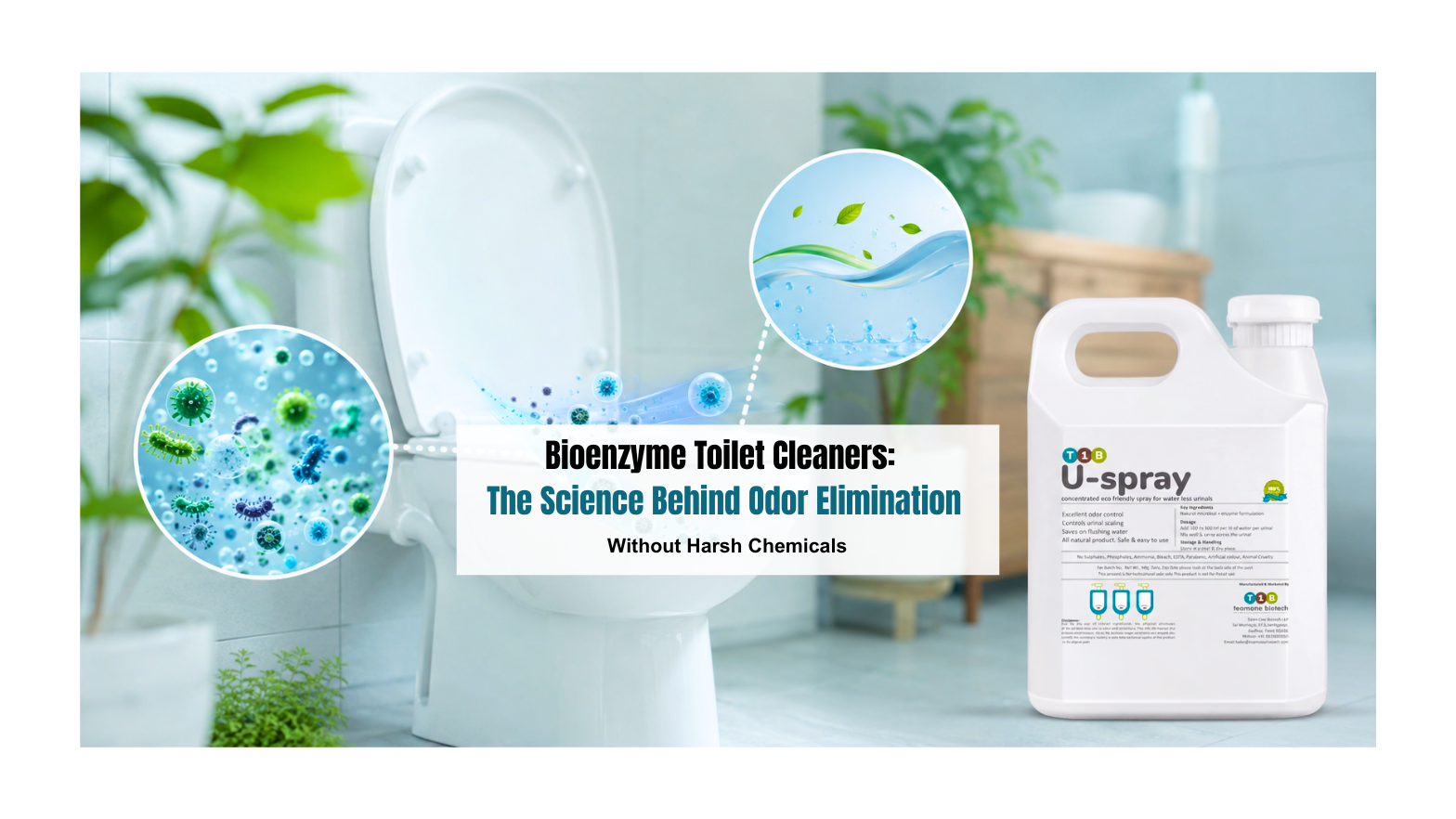

Bioenzyme Toilet Cleaners: The Science Behind Odor Elimination Without Harsh Chemicals
There is a particular kind of frustration that facility managers know well. It usually arrives in the form of a complaint email on a Monday morning, a tenant, a parent, a patient, or a corporate client walking into a restroom that smells like it was cleaned with a chemical weapon and still somehow reeks of ammonia by noon. You cycle through stronger disinfectants. You increase cleaning frequency. You spend more on fragrance dispensers. And the problem comes back, reliably, every single day.
This is not a hygiene failure. It is a chemistry failure. And until you address what is actually happening at the biological level inside your drains, tile grout, and pipe walls, no amount of bleach or synthetic fragrance is going to solve it permanently.
This is where the science of bioenzyme toilet cleaners enters, not as a trend, but as a structural answer to one of the most persistent operational challenges in commercial and institutional facility management across India.
The Real Problem: Why Traditional Cleaners Create a Cycle of Dependency
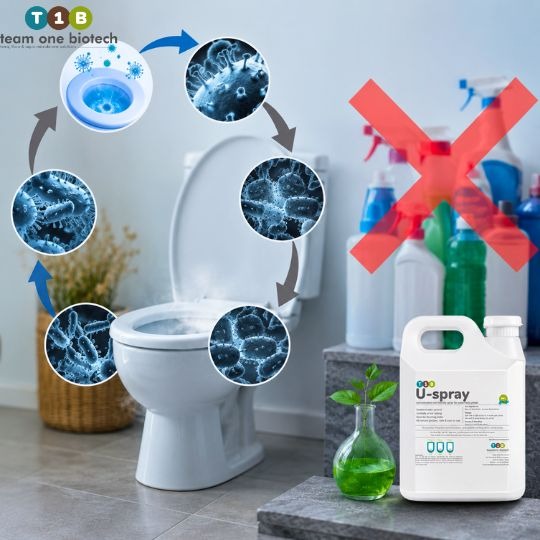
Most conventional toilet cleaners operate on a principle of suppression. Acid-based products dissolve mineral deposits temporarily. Bleach oxidizes surface bacteria. Fragrances chemically mask volatile organic compounds in the air. None of these mechanisms address the root source of odor, which is almost always a colony of odor-producing bacteria thriving inside organic matter, uric acid crystals embedded in grout, biofilm layered along the inner walls of drain pipes, and decomposing organic sludge in the P-traps and U-bends that lie completely out of reach of any surface cleaning product.
In high-traffic institutional environments, a 500-bed hospital, a central school building used by 2,000 students daily, a large commercial mall with restrooms serving thousands of footfalls, this organic buildup is aggressive and continuous. The infrastructure simply cannot keep pace with the biological load being deposited every hour.
The situation is compounded significantly in the Indian context. Aging commercial plumbing in older urban buildings, many constructed in the 1980s and 1990s, was not designed for the current density of use. During monsoon months, backpressure in municipal sewage systems pushes partially treated effluent back into lower-level drainage, dramatically increasing the organic and microbial load on internal sanitation systems. Facilities that are not actively managing their drain biology at this point are fighting an invisible war with no ammunition.
Harsh chemical cleaners also carry a secondary cost that facility procurement officers rarely account for in their initial budgeting: infrastructure degradation. Repeated exposure to strong acids and alkalis accelerates the corrosion of internal pipe fittings, weakens the ceramic glaze on sanitary ware, and destroys the beneficial microbial populations inside Effluent Treatment Plants (ETPs), forcing those systems to work harder and increasing the risk of non-compliance with Central Pollution Control Board (CPCB) effluent discharge standards.
What a Bioenzyme Toilet Cleaner Actually Does (At the Molecular Level)
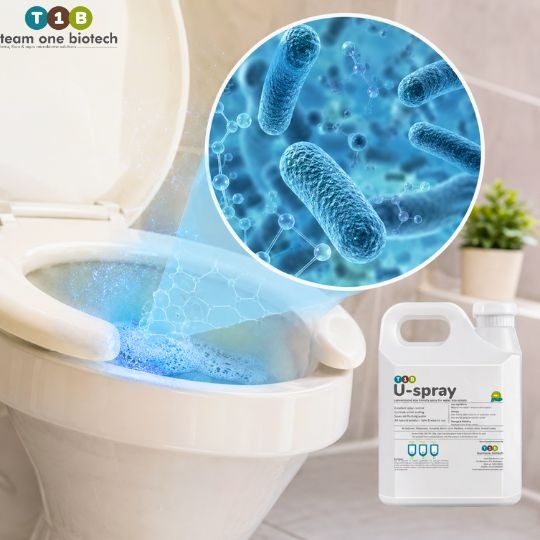
A bioenzyme toilet cleaner is not simply a “natural” or “green” cleaning product. That framing undersells the precision of what it actually does.
These formulations contain carefully selected strains of non-pathogenic, beneficial bacteria along with the enzymes those bacteria produce. When applied to a surface or introduced into a drain, these microbial strains begin a targeted biological process rather than a broad chemical assault.
The Four-Stage Biological Action
Stage 1, Enzymatic Pre-digestion
The enzymes in the formulation, primarily proteases, lipases, amylases, and urease, immediately begin breaking down the complex molecular structure of organic waste. Urease, specifically, targets uric acid: the primary compound responsible for the sharp, persistent ammonia odor in urinals and toilet fixtures. Unlike fragrance, which sits on top of this odor, urease cleaves the uric acid molecule itself, eliminating the compound that produces the smell rather than masking it.
Stage 2, Microbial Colonization
The bacteria in the solution then begin to establish a microbial biofilm on treated surfaces. This is not contamination, it is controlled biological occupation. These beneficial bacteria compete directly with odor-producing, pathogenic bacterial strains for space and nutrients. Establishing this colonization typically takes between 24 to 48 hours in standard conditions, after which the biofilm becomes self-sustaining with regular application. (Note: These timelines are general benchmarking values. Actual establishment rates will vary based on existing microbial populations, surface porosity, water temperature, and cleaning frequency.)
Stage 3, Organic Load Reduction in Drain Systems
As the microbial activity progresses through the drain lines, it continues to digest organic sludge, fats, proteins, and carbohydrates, that accumulate in pipe bends and trap systems. In institutional settings, consistent application has been shown to reduce the biological oxygen demand (BOD) and chemical oxygen demand (COD) of wastewater leaving the facility by a meaningful margin, supporting compliance with CPCB norms for commercial effluent discharge. Studies and field observations have documented organic load reductions in the range of 60% to 80% over sustained application periods. (Disclaimer: These ranges represent general benchmarking values drawn from field applications. Actual results will vary significantly depending on ETP configuration, plumbing infrastructure, hydraulic daily load, and specific site conditions. Facilities should conduct independent assessments for accurate baseline measurement.)
Stage 4, Continuous Odor Control
Unlike chemical fragrances, which dissipate within hours, the microbial biofilm established by a bioenzyme toilet cleaner continues to produce odor-controlling enzymatic activity between cleaning cycles. This means the product keeps working after the cleaning staff has moved on, a critical operational advantage in a 24-hour hospital ward or a commercial mall restroom that cannot be closed for deep cleaning during peak hours.
Why This Matters Specifically for Indian Institutional Facilities
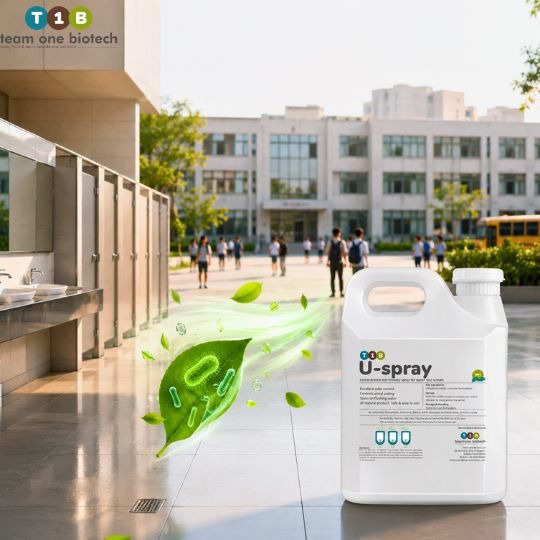
The operational math changes significantly when you are managing sanitation at institutional scale.
Hospital and Healthcare Environments
Infection control protocols in hospitals rightly focus on eliminating pathogens. But many traditional disinfectants used in restrooms are indiscriminate, they kill beneficial as well as harmful microorganisms, creating ecological voids that pathogenic strains rapidly colonize. A bioenzyme toilet cleaner used in non-critical sanitation areas (patient restrooms, visitor washrooms, staff facilities) introduces a controlled microbial population that actively competes against pathogenic colonization without contributing to the chemical burden that janitorial staff are exposed to on daily 12-hour shifts.
Schools and Educational Institutions
High-density, high-turnover restroom usage in schools creates intense organic deposition within very short time windows. The challenge is not just odor, it is also drain blockage from improper disposal and the accelerated buildup of mineral and organic scale in fixtures used by hundreds of students multiple times daily. Bioenzyme cleaners address both problems simultaneously: enzymatic action keeps drains flowing by continuously digesting organic obstruction, and microbial colonization keeps odor under consistent biological control.
If your school’s restroom infrastructure is suffering from chronic odor complaints despite daily cleaning, it is worth consulting a commercial facility sanitation specialist before the problem becomes a parent-committee agenda item.
Corporate Offices and Commercial Malls
The reputational stakes in corporate office buildings and retail environments are immediate and visible. A premium office park or a high-end commercial mall cannot afford restroom experiences that undercut the brand value of the tenant brands operating within them. Procurement officers in these environments are also increasingly sensitive to ESG compliance, the environmental cost of chemical-heavy sanitation is no longer invisible to sustainability auditors. Transitioning to industrial-grade eco-friendly industrial cleaners directly supports green building certification targets and LEED documentation requirements.
The Cost Conversation: What Procurement Officers Need to Know
Institutional procurement decisions are rightly driven by total cost of ownership rather than per-unit price. On this metric, bioenzyme toilet cleaners compare favorably.
Concentrated bioenzyme formulations typically operate at dilution ratios that make the per-application cost competitive with, and in many cases lower than, the equivalent performance-grade chemical cleaner, particularly when the hidden costs are accounted for: reduced plumbing maintenance calls, lower ETP treatment chemical costs due to reduced incoming organic load, and decreased frequency of drain blockages and emergency interventions. Facilities that shift to consistent microbial odor control programmes commonly report measurable reductions in maintenance call-outs within the first two to three months of implementation. (These timelines are indicative benchmarks only and are subject to variation based on facility size, usage intensity, and baseline infrastructure condition.)
Making the Transition: What a Responsible Rollout Looks Like
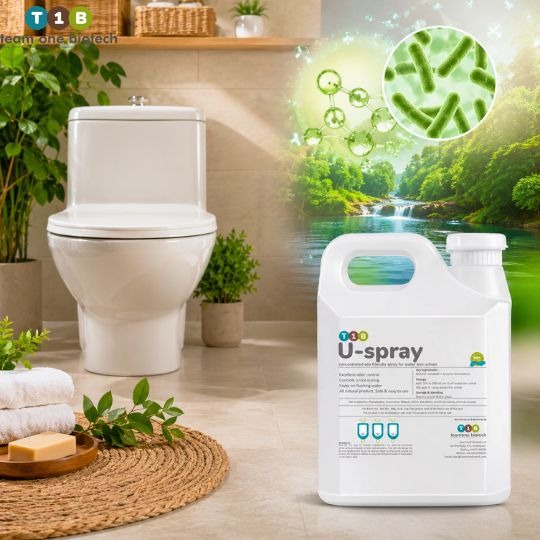
Switching from chemical to bioenzyme-based sanitation at institutional scale is not simply a product swap, it requires a structured introduction.
The first step is a baseline audit: understanding the current organic load in your drain systems, the condition of your ETP, and the specific odor profile you are dealing with. Team One Biotech’s bioremediation specialists work directly with facility management teams to design application protocols tailored to your infrastructure, not generic dilution instructions printed on a label.
The second step is a phased trial. Running a controlled pilot across one or two high-traffic restroom blocks before full-facility deployment allows your team to document performance, build internal confidence, and create a measurable before-and-after baseline for procurement justification.
The Bottom Line for Facility Managers
The restroom experience in your facility is not a secondary operational concern. It is a direct reflection of your management standards, your environmental responsibility, and your duty of care to everyone who uses your infrastructure.
Bioenzyme toilet cleaners represent the convergence of advanced microbiology and practical facility management, delivering odor control that is rooted in science rather than suppression, and infrastructure protection that reduces long-term costs rather than concealing them.
Team One Biotech manufactures industrial-grade bioenzyme and bioremediation solutions engineered specifically for the demands of Indian institutional and commercial environments. Whether you manage a hospital campus, a school district, a corporate office park, or a retail complex, our formulations are designed to work within your existing infrastructure and compliance requirements.
Contact Team One Biotech today to request a product trial, schedule a site assessment with our bioremediation specialists, or discuss a custom application protocol for your facility. The solution your drains have been waiting for is biological, and it is ready to get to work.
Looking to improve your ETP/STP efficiency with the right bioculture?
Talk to our experts at Team One Biotech for customised microbial solutions.
Contact: +91 8855050575
Email: sales@teamonebiotech.com
Visit: www.teamonebiotech.com
Discover More on YouTube – Watch our latest insights & innovations!-
Connect with Us on LinkedIn – Stay updated with expert content & trends!