
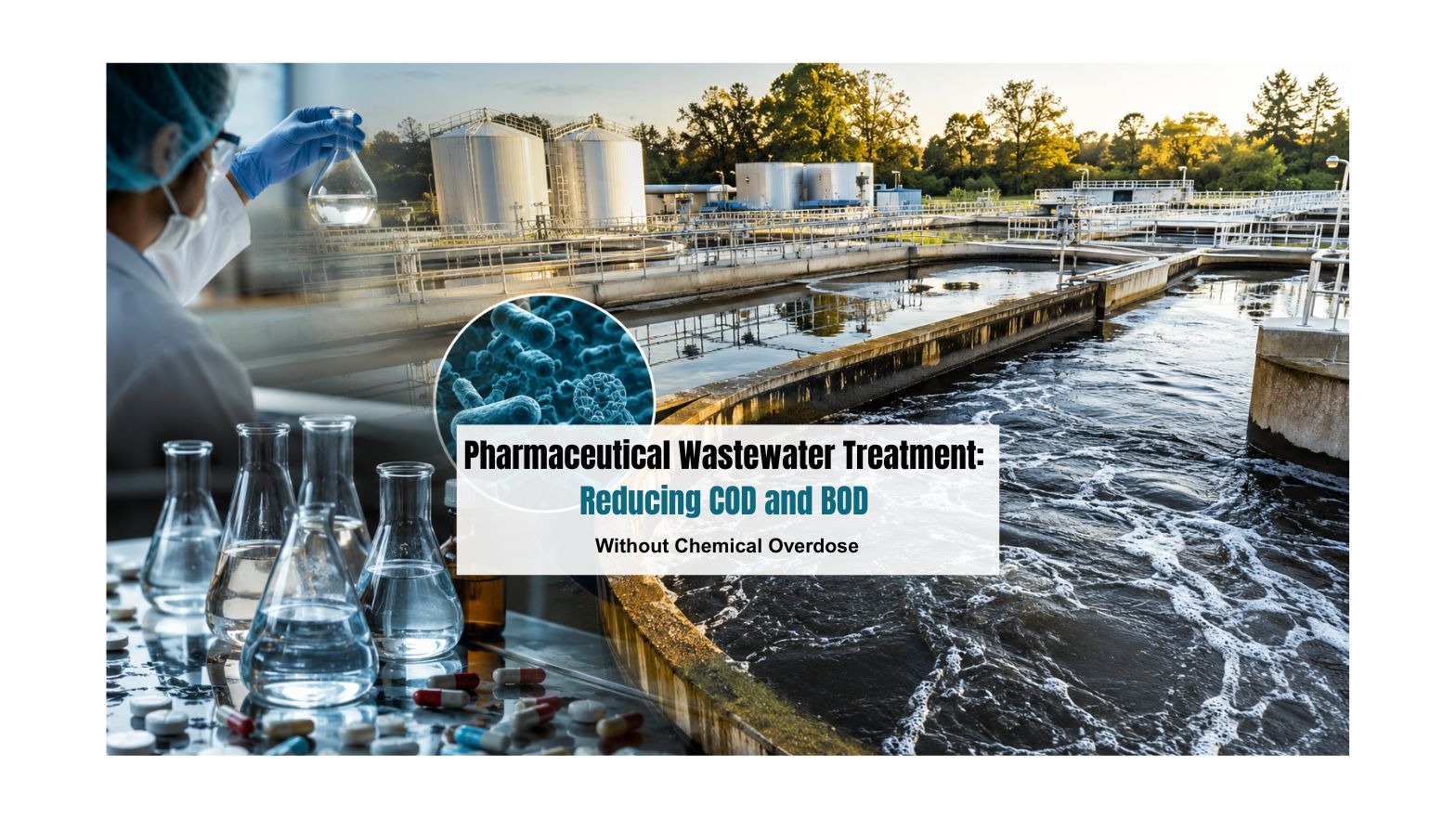
Pharmaceutical Wastewater Treatment: Reducing COD and BOD Without Chemical Overdose
It’s rarely a good sign when your phone rings after midnight and it’s the ETP shift supervisor. Maybe the outlet COD reading spiked. Maybe the pH swung outside range during a batch discharge. Maybe there’s a CPCB inspection scheduled in three days and the numbers from last week still haven’t stabilized. If you manage Industrial wastewater treatment at a pharmaceutical API plant, you already know this feeling, the quiet dread that sits behind every consent-to-operate renewal, every surprise sampling visit, every conversation with a plant head who wants to know why the treatment system that worked fine last quarter suddenly can’t keep up.
The instinctive response, when COD and BOD numbers start creeping toward the edge of compliance, is to reach for more chemicals. More coagulant. More oxidant. More nutrient dosing to keep the biological stage alive under stress. It feels like the safe move, something is clearly better than nothing, and chemicals are fast.
But this is exactly where a lot of pharmaceutical effluent treatment plants get stuck. Chemical overdosing doesn’t just fail to solve the underlying problem, it often creates new ones: more sludge to dispose of, more corrosion in tanks and piping, more residual toxicity hitting the biological stages downstream, and a slow, steady rise in operating cost that never quite translates into proportional compliance gains.
This article is about what actually works instead, the biological, oxidation, and segregation-based strategies that reduce COD and BOD in a way that holds up over time, rather than just buying a few weeks before the next crisis call.
Why API Plant Effluent Is So Difficult to Treat
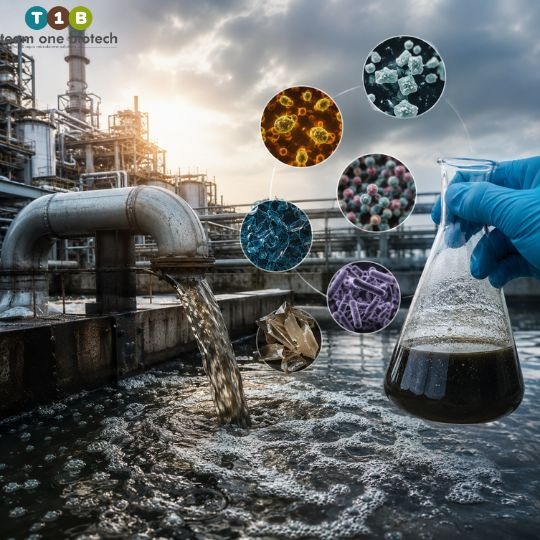
Pharmaceutical API manufacturing effluent is a different animal from most industrial wastewater. It isn’t simply “high strength” in the way people casually describe difficult effluent, it’s structurally resistant to the kind of treatment that works well for more conventional waste streams.
A few things make API effluent especially stubborn:
- Recalcitrant organic molecules. Many active pharmaceutical ingredients and their intermediates are specifically designed to resist biological breakdown, that’s part of what makes them effective as drugs, and it’s exactly what makes them hard to treat as waste.
- Antibiotic and solvent residues. Trace antibiotics can suppress the very microbial populations you’re relying on to digest organic load, while solvent carryover adds toxicity and unpredictability to the mix.
- Imbalanced COD-to-BOD ratios. A lot of API effluent carries a high proportion of non-biodegradable COD relative to biodegradable BOD, which means standard activated sludge systems are working against the composition of the waste itself, not just its volume.
- Batch-driven variability. Unlike continuous manufacturing processes, API production tends to generate effluent in batches, so pH, temperature, and organic load can swing significantly from one discharge to the next.
It’s worth pausing on how this compares to something like textile industrial waste BOD challenges, since the two are often discussed in the same breath. Textile effluent is typically high-volume with dyes, salts, and moderate organic load, difficult, but largely biodegradable once color and salinity are managed. Pharmaceutical effluent flips that equation: lower volume, in many cases, but far more chemically stubborn, and far less forgiving of a “treat and forget” approach.
The real risk here isn’t just a failed outlet reading. Undertreated pharma effluent that slips past the primary and secondary stages can disrupt the biological ecosystem further down the treatment train, killing off the microbial cultures a plant depends on for consistent performance, and turning a one-time problem into a weeks-long recovery effort.
The Chemical Overdose Trap, Why More Isn’t Better
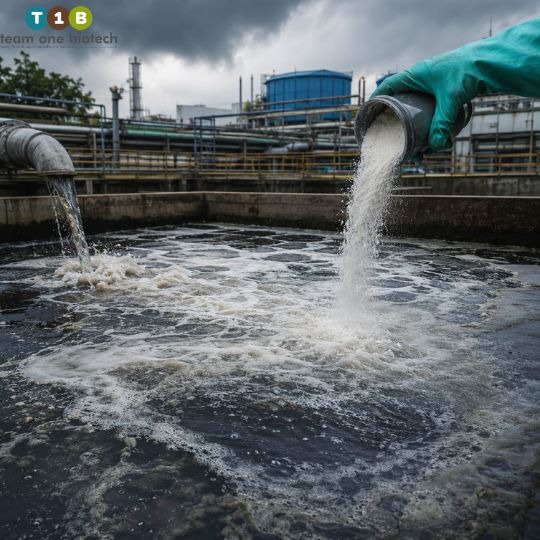
When COD or BOD numbers start trending in the wrong direction, chemical dosing is the lever every ETP operator can pull immediately, no equipment change, no retrofit, no waiting. Increase the coagulant. Push more oxidant into the system. Add nutrients to try to keep a struggling biological stage functioning. In the short term, it can look like it’s working.
The trouble is what happens after that.
- Sludge volume climbs. Higher chemical dosing generally means more chemical sludge, which drives up disposal frequency and cost, often the single biggest hidden expense in an over-dosed ETP.
- Equipment wears faster. Excess oxidants and coagulants are corrosive by nature, and tanks, pumps, and piping degrade faster under chronic overdosing.
- Downstream biology suffers. Residual chemicals from an overdosed primary stage can carry through and suppress the very biological cultures the secondary stage depends on, creating a cycle where more chemical dosing is needed just to compensate for damage the last round of dosing caused.
- Costs rise without matching results. Plants often find that operating expense keeps climbing while COD/BOD reduction plateaus, a sign the system is fighting the wrong problem.
- Secondary parameters drift. Overdosing to fix one parameter can push others, like TDS, or residual chlorine, out of their own compliance range, effectively trading one non-conformance for another.
A quick note before going further: any figures or ranges referenced in this article, including the ones ahead, are general, indicative values meant to illustrate typical patterns, not guaranteed outcomes. Actual dosing thresholds, sludge generation, and treatment results vary significantly depending on ETP design, influent characteristics, and operating conditions, and should always be validated through a site-specific assessment.
Compliance Pressure: Why This Isn’t Just an Operations Problem
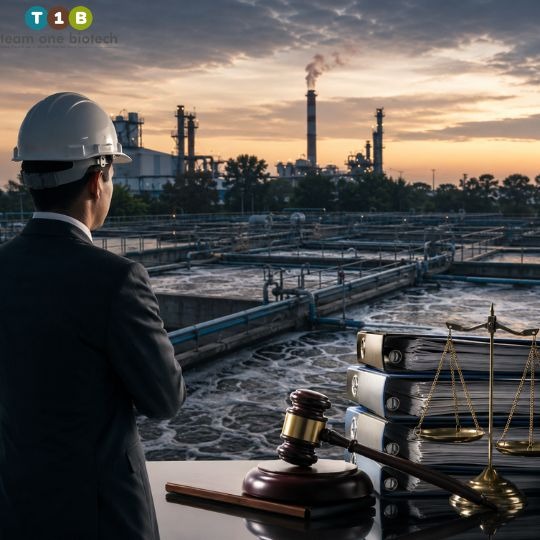
It’s tempting to treat COD and BOD management as a purely technical exercise, get the numbers within range, move on. But for pharmaceutical API plants, this is fundamentally a business continuity issue, not just an environmental one.
CPCB norms for the pharmaceutical sector are specific and increasingly strict, and many pharma clusters now operate under Zero Liquid Discharge expectations that leave very little margin for error. A pattern of non-compliance doesn’t just mean a warning letter, it can mean:
- Financial penalties that compound with repeat violations
- Consent-to-operate revocation, which can halt production entirely
- Plant shutdown orders, sometimes with limited notice
- Reputational damage that follows a facility long after the technical issue is resolved
For the ETP manager, this pressure is deeply personal. You’re often the one whose name is on the compliance report, whose judgment gets questioned in the plant head’s office, and whose sleep gets interrupted when a reading looks off. Getting ahead of this, rather than reacting to it, is the difference between managing a routine operational challenge and managing a crisis.
If your plant has an upcoming CPCB inspection cycle, it’s worth getting an effluent and compliance assessment done now, before the pressure builds, not after a notice arrives. A proactive review can surface the gaps that a reactive chemical top-up will never fix.
A Smarter Path, Advanced Biological, Oxidation, and Segregation Strategies
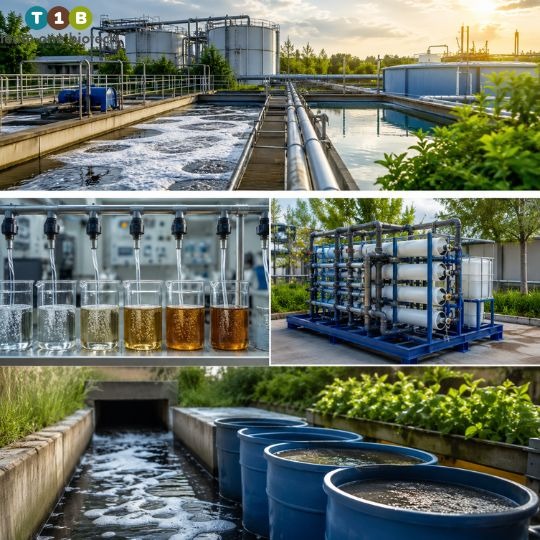
The alternative to chemical overdosing isn’t doing less, it’s being more deliberate about where and how treatment effort is applied.
Bioculture-Led Biological Treatment
Standard activated sludge systems are built for general municipal or light industrial waste, they weren’t designed with recalcitrant pharmaceutical molecules in mind. Targeted bioculture treatment, using microbial consortia selected and acclimatized specifically for API effluent characteristics, changes that equation.
These engineered cultures are chosen for their ability to break down the specific complex organics present in a given plant’s effluent stream, rather than relying on a generic microbial population to muddle through. Over time, plants using this kind of targeted biological approach tend to see benefits like:
- Lower overall sludge generation compared to chemical-heavy treatment
- Reduced dependency on coagulants and oxidants for routine load
- More stable, consistent BOD/COD reduction across varying batch conditions
Again, these are general patterns observed across different plant configurations, actual performance depends heavily on the specific bioculture selected, the effluent profile it’s matched to, and how gradually it’s introduced and monitored.
Advanced Oxidation Processes (AOPs)
For the fraction of effluent that resists biological breakdown entirely, certain solvent residues or highly recalcitrant intermediates, advanced oxidation processes serve a different purpose. Ozone-based systems, Fenton-type reactions, and UV-based oxidation work by breaking down these non-biodegradable compounds chemically, converting them into simpler, more biodegradable forms.
The key here is positioning: AOPs work best as a targeted pre-treatment step applied to the hardest-to-treat fraction of the stream, not as a blanket treatment for the entire effluent volume. Used this way, they reduce the biological load that the downstream stage has to handle, rather than trying to replace biological treatment altogether.
Waste Segregation at Source
Of the three strategies here, segregation is often the most overlooked, and frequently the most cost-effective. Mixing high-strength or solvent-laden streams with general wash water dilutes the problem without solving it, and creates shock loading that makes every downstream stage work harder than it needs to.
Practical segregation practices worth implementing:
- Isolating solvent recovery streams before they reach the main effluent line
- Separating high-COD batch discharges for dedicated pre-treatment rather than blending them into the general flow
- Installing or expanding equalization tanks to buffer load variability before it hits the biological stage
Plants that get segregation right often find that the biological and chemical stages downstream perform more predictably simply because they’re no longer absorbing unpredictable shock loads.
Building a Chemical-Light ETP Strategy, What to Prioritize
Pulling this together into something actionable, here’s a practical sequence for ETP managers looking to move away from a chemical-heavy default:
- Characterize effluent streams individually before designing or redesigning any treatment approach, blended, averaged data hides the streams actually causing problems
- Introduce bioculture augmentation gradually, with close monitoring, rather than switching over all at once
- Apply AOPs selectively, targeting the hardest-to-treat fractions rather than the entire effluent volume
- Segregate at source wherever the plant layout allows it, even partial segregation reduces shock loading meaningfully
- Track COD/BOD trends over time, rather than reacting to any single reading in isolation, since one anomalous sample rarely tells the full story
If your plant hasn’t had a tailored bioculture or AOP feasibility study done for its specific effluent profile, that’s a reasonable next step before committing to any major treatment redesign. A feasibility study grounded in your actual influent characteristics avoids the guesswork that leads plants back into chemical overdosing in the first place.
FAQ Section
Can biological treatment alone handle high-COD pharmaceutical effluent?
In many cases, biological treatment, particularly bioculture-led systems matched to the specific effluent, can handle a significant portion of the organic load, but the most resistant fractions typically still benefit from a pre-treatment step like advanced oxidation. The right mix depends on the plant’s specific COD composition and how much of it is genuinely biodegradable versus recalcitrant.
How is API plant wastewater different from textile industrial waste in terms of BOD load?
Textile effluent tends to carry high volume with dyes and salinity as the primary challenge, and is generally more readily biodegradable once those factors are addressed. API plant wastewater, by contrast, often carries a lower BOD relative to its COD, with a larger share of non-biodegradable and recalcitrant organic content, making it structurally harder to treat even at similar overall strength.
Does reducing chemical dosing affect compliance with CPCB and ZLD norms?
Reducing chemical dosing doesn’t inherently threaten compliance, in fact, a well-designed biological and segregation-first approach can improve consistency of compliance over time by reducing the swings and side effects that come with chemical overdosing. That said, any change to dosing strategy should be validated through monitoring and, ideally, a site-specific assessment before scaling it across the full plant.
How long does it take to see COD/BOD improvement after introducing bioculture treatment?
Timelines vary considerably depending on the culture used, the effluent characteristics, and how the transition is managed, but plants often begin to see measurable stabilization within a few weeks to a couple of months of gradual introduction. As with all figures in this article, this is a general indicative range, not a guarantee, actual results depend on site-specific conditions and should be tracked and validated through ongoing monitoring.
Conclusion, Compliance Without Compromise
Chemical overdosing feels like the responsible move when COD or BOD numbers start slipping, but it’s a short-term fix that tends to generate long-term costs, from mounting sludge disposal bills to equipment wear to biological systems that never quite stabilize. A biological, oxidation, and segregation-led strategy takes more upfront thought, but it holds up in a way that chemical overkill never does, and it puts the plant in a stronger position for the next CPCB cycle, not just the current one.
If your plant is dealing with persistent COD/BOD challenges, chronic chemical dependency, or the kind of compliance anxiety that keeps you checking readings at odd hours, it’s worth having a real conversation about what a chemical-light strategy would look like for your specific effluent profile. Connect with Team One Biotech for an effluent assessment or a bioculture trial suited to your plant’s actual load and compliance requirements, not a generic fix, but a treatment path built around what your effluent is actually doing.
Looking to improve your ETP/STP efficiency with the right bioculture?
Talk to our experts at Team One Biotech for customised microbial solutions.
Contact: +91 8855050575
Email: sales@teamonebiotech.com
Visit: www.teamonebiotech.com
Discover More on YouTube – Watch our latest insights & innovations!-
Connect with Us on LinkedIn – Stay updated with expert content & trends!