
What are biocultures for wastewater Treatment: A complete EHS guide
This is a detailed article on biocultures for wastewater treatment, covering their importance, working mechanism, applications, and industrial benefits. It explains how microbial consortia improve ETP and STP efficiency, enhance biological degradation of pollutants, and ensure compliance with CPCB and NGT wastewater discharge standards. Contact us if you need industry specific consultation on biocultures utility.
Table of Contents
- What are Biocultures for Wastewater Treatment?
- Why Do We Need Biocultures?
- How Do Biocultures Work?
- Types of Biocultures and Formulation
- How Biocultures Are Manufactured (End-to-End)
- Sector-Wise Applications of Biocultures in Wastewater Treatment
- Supporting Conditions for Bioculture Effectiveness
- Environmental, Safety & Compliance Considerations
- FAQs
- Conclusion
Introduction
The current growth of India is exponential in each sector, whether it is defence, semiconductors, industries, or exports, among others. But, there is one more thing where India has an exponential graph, which is pollution, and to be specific, water pollution. Untreated Industrial and sewage wastewater is still one of the biggest menaces that the country is facing, and despite a central body such as the NGT and CPCB in function issuing strict compliance, along with practically every industry having a wastewater treatment plant.
Now the question arises if every industry has a facility to treat wastewater or there are existing STPs to treat sewage, and new ones are being built, then why does this menace of water pollution still exist to such a large scale?
Well, the answer is simple. No hardware can work without proper software. Meaning the infrastructure of an ETP/STP is not enough to treat wastewater. As the maximum work of pollution reduction is done by biological treatment, which uses the same mechanism of nature through which a pile of garbage gets degraded automatically, a dead body is reduced to bones within days, how milk gets transformed into hung curd, or how our food gets digested easily. And the warriors of this mechanism are microbes.
Water pollution is one of the most critical environmental challenges faced by industries today. Despite the presence of advanced Effluent Treatment Plants (ETPs) and Sewage Treatment Plants (STPs), untreated effluents still contribute to high BOD, COD, and TDS levels in water bodies. This is where biocultures for wastewater treatment play a pivotal role.
Biocultures—specialized microbial consortia—are introduced into biological treatment systems to accelerate the biodegradation of organic pollutants, improve sludge reduction, and enhance nitrogen and phosphorus removal. From industrial wastewater management to municipal sewage treatment, biocultures ensure faster recovery from toxic shock loads, stabilize the microbial population, and improve compliance with environmental norms in India.
Now these microbes, when used effectively with proper research and execution, can enhance the pollution-degrading capacity of the wastewater treatment plant 3 times.
What are biocultures for Wastewater Treatment?
Biocultures are combinations of microorganisms that play a crucial role in the biological treatment of wastewater. These microbial consortia work to degrade complex pollutants such as hydrocarbons, phenols, fats, oils, and grease (FOG), ensuring COD and BOD reduction. They are widely used in:
- Industrial wastewater treatment (pharmaceutical, textile, chemical, refinery, and food industries)
- Municipal STPs for sewage management
- Anaerobic digestion systems for biogas generation
This article will focus on the core use of biocultures, the science behind it and how prominent it is.
Why do we need Biocultures?
This is one of the most common questions asked. Let’s first understand why we need external microorganisms when we still have a biological system with a biomass in a wastewater treatment plant. The “workforce” of any waste treatment system is its biomass. In a dynamic state of flux, different microorganisms perish while others proliferate and become more prevalent.
Under extreme circumstances, such as toxic shock, some bacterial populations may be reduced or eliminated, resulting in poor effluent quality. Historically, waste treatment strategies have been slow to recover in such scenarios. In the aeration basin of a typical industrial waste treatment plant, one would expect to find a wide range of bacterial species or strains.
This bacterial diversity is essential because different types of bacteria digest different substances more effectively and efficiently. Regrettably, the vast majority of industrial waste treatment systems never achieve long-term stability. The quantity & the quality of entering wastewater normally vary on a weekly or sometimes even daily basis.
These variances might be caused by batch process production, schedules, chemical spills in the manufacturing plant, ineffective plant equipment, ETP design, process management or human errors. The reality is that biological populations in many treatment facilities never reach optimal numbers or a variety of species. Without bioaugmentation/bioremediation, the indigenous population should be made up of a diverse range of species.
Some of these organisms degrade organic substances more efficiently and effectively than others, generating a settleable biomass. Hence such organisms/microbes are selected and combined into a product called as biocultures, which are then added into the biological systems of a wastewater treatment plant.
Biocultures benefits:
- Indigenous microbes often fail under extreme conditions (toxic loads, variable pH, high salinity).
- Biocultures provide robust microbial strains that stabilize the biomass.
- They ensure faster recovery from shock loads, maintain MLSS:MLVSS ratios, and improve settleability of sludge.
- They help achieve compliance with PCB, CPCB, and NGT norms for effluent discharge.
How do Biocultures work?
Ideally, the biomass is divided into three populations: Population A (desired indigenous microbes), Population B (other indigenous microbes), and Population C (selected robust microbes). The bioaugmentation/bioremediation program’s purpose is to add bioculture with selected microbial strains to boost Population A’s development, establish the selected robust microbial strains of Population C and reduce Population B. This helps us achieve both the quality and quantity of the bacterial population in a biological system.

Understanding the mechanism of microbes
The microbes remove or degrade organic pollutants through enzymes, following a particular mechanism that is distinct for every kind of pollutant such as :
Carbon removal:
In wastewater, biodegradable organics are mostly in the form of carbon that contribute to COD/BOD, such as sugars, starches, fats/oils/grease, proteins, alcohols, etc.). Heterotrophic bacteria reduce these organics for energy and cell generation. Here, one portion of carbon is transformed into CO2 + H2O and assimilated by the rest into biomass (MLSS/MLVSS).
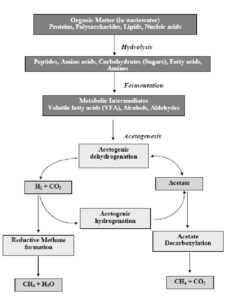
The above flowchart explains the general pathway of carbon removal by microorganisms through both aerobic and anaerobic mechanisms.
Biocultures with a combination of microbes that secrete hydrolytic enzymes, such as lipase, Oxygenases, and dehydrogenases, etc., are used in carbon removal
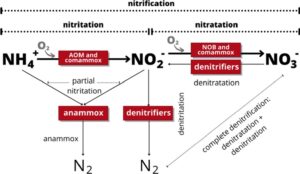
2. Nitrogen Removal: The nitrogen removal pathway consists of two steps:
- Nitrification: In this step, ammonia is converted first into nitrite and then into nitrate in the presence of oxygen by nitrifying bacteria.
- Denitrification: In this process, the nitrate is converted into nitrogen gas in low quantities or in the absence of oxygen.
The complete process is popularly called the anoxic process. Biocultures with a combination of microbes, such as nitrifying and denitrifying bacteria, are used for nitrogen removal.
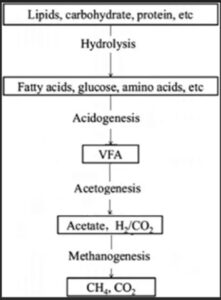
3. Anaerobic Digestion: It is a four-stage biological process.
- Hydrolysis: In hydrolysis, specialised microbes release enzymes (lipases, proteases, amylases) that cleave the macromolecules into simpler compounds such as fatty acids, amino acids, and sugars.
- Acidogenesis: Acidogenic bacteria convert these compounds into VFA (acids), alcohols, hydrogen, and carbon dioxide
- Acetogenesis: The VFAs and alcohols are further converted by syntrophic bacteria into acetic acid, H2 and CO
- Methanogenesis: Methanogenic archaea consume acetate, hydrogen, and CO₂ to produce methane-rich biogas. This is the energy-harvesting stage, yielding about 55–70% methane in the gas stream, which can be used in boilers, combined heat and power (CHP), or upgraded to biomethane.
4. Phosphorus removal:
Phosphate Removal Cycle:
- Anaerobic zone: In the lack of oxygen, PAOs take up VFA (acetate/Propionate) for energy.
- Aerobic Zone: these PAOs with stored energy then take up PO4-P, and then they are removed by wasting the sludge.
So, in this process, the pollutants are not degraded but absorbed by microbes, which are introduced through biocultures.
These biocultures are directly introduced into the biological tanks where they are either kept in suspended growth or with biofilm carriers or media to enhance surface area for reaction.
Environmental Factors to be considered:
| Parameter | Aerobic (carbon removal) | Aerobic (nitrification) | Anoxic (denitrification) | Anaerobic / EBPR-anaerobic | Anaerobic digestion (methanogenic) |
| DO | 2.0–3.0 mg/L | ≥2.0 mg/L (≥1.5 absolute minimum) | <0.2 mg/L (ideally ~0.0) | ≈0.0 mg/L | 0.0 mg/L |
| pH | 6.5–8.5 | 7.0–8.0 (nitrifiers slow <6.8) | 6.8–8.2 | 6.8–7.4 | 6.8–7.4 |
| Temp | 20–35 °C | 20–32 °C (rate drops <15 °C) | 15–35 °C | 18–30 °C | 30–38 °C (mesophilic) |
| ORP (guide) | >+50 to +250 mV | >+100 mV | −50 to +50 mV | <−100 mV (EBPR anaerobic often −100 to −200) | <−300 mV |
| Alkalinity | 80–150 mg/L as CaCO₃ | Ensure 7.14 mg CaCO₃ per mg NH₄-N oxidized; keep effluent >50–80 mg/L | Recovered in denite | — | 2,000–5,000 mg/L (buffering) |
| Nutrients | BOD:N:P ≈ 100:5:1 | N is already present; ensure enough P. | Carbon source available (rbCOD) | VFA supply (acetate/propionate) | Trace metals for methanogens |
Types of Biocultures and Formulation:
The biocultures are generally classified into 3 types:
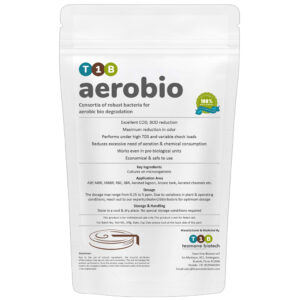
- Aerobic consortia – for COD/BOD reduction in food, beverage, and municipal wastewater.
- Anoxic blends – for denitrification in industrial wastewater streams.
- Anaerobic consortia – for high-COD wastewater and methane generation in refineries, distilleries, and pharmaceuticals.
The following table gives a clear explanation:
| Aspect | Aerobic consortia | Anoxic blends | Anaerobic consortia |
| Main job | Fast carbon (BOD/COD) removal; support nitrification | Denitrification (NO₃⁻/NO₂⁻ → N₂); Conversion to nitrogen from nitrate/nitrite | High-strength COD removal with biogas (CH₄) production |
| Electron acceptor | O₂ | NO₃⁻ / NO₂⁻ (no free O₂) | None (strictly reducing); methanogenesis uses CO₂ as sink |
| Typical microbes | Heterotrophs (e.g., Bacillus, Pseudomonas, Comamonas), plus nitrifiers (Nitrosomonas/Nitrospira) | Heterotrophic denitrifiers (Paracoccus, Thauera, Pseudomonas), DPAOs | Hydrolytic/acidogenic bacteria (Clostridium spp.), syntrophs, methanogens (Methanosaeta, Methanosarcina) |
| Key enzymes/paths | Amylase, protease, lipase; glycolysis → TCA | Nitrate/nitrite reductases; NO₃⁻ → NO₂⁻ → N₂O → N₂ | Hydrolysis → acidogenesis → acetogenesis → methanogenesis |
| Best-fit wastes | Food & beverage, municipal, tanneries (carbon), commercial kitchens (FOG with lipase-rich blends) | Any stream with nitrate from upstream nitrification; low-O₂ polishing zones, tertiary denite filters | Distilleries/ethanol, dairy whey, slaughterhouse, leachate, refinery waste, UASB/EGSB start-ups, digesters |
| Where to dose | Equalization (pre-hydrolysis) and aeration; wet MBBR media | Pre-anoxic/anoxic zone (keep O₂ out) | EQ/acidogenic tank or digester feed; not in aerated zones |
| Operating window | DO 2–3 mg/L; pH 6.5–8.5; ORP >+50 mV; 20–35 °C | DO <0.2 mg/L; ORP −50 to +50 mV; pH 6.8–8.2; 15–35 °C; needs rbCOD | ORP <−300 mV; pH 6.8–7.4; 30–38 °C (meso) or 50–55 °C (thermo) |
| Pros | Quick results, odor control, robust to moderate shocks; simple control | Saves aeration/alkalinity; couples well with nitrification/EBPR | Energy-positive, lowest sludge yield, handles very high COD |
| Cons/risks | Aeration cost; more sludge; nitrifiers sensitive to toxins/low temp | Needs nitrate and carbon; oxygen leakage kills rate; nitrite accumulation risk | Slow start-up; sensitive to solvents/sulfides/salts; temperature dependency; potential odors if upset |
| Success KPIs | Downstream COD/BOD drop, stable DO, good SVI/settling | NOx removal across anoxic, alkalinity recovery, minimal gas bubbles | Rising biogas (CH₄ %), VFA/alkalinity in control, COD removal ↑, foam/odour under control |
Biocultures Manufacturing Process
Being a leading manufacturer of biocultures, we can explain the process as below:
Strain sourcing & Safety: Performance-proven strains are selected on the basis of substrate profile and range, growth rate, pH tolerance, temperature, salinity, and surfactants. Mostly, a master working cell bank under controlled storage is maintained with records.
- Bench Characterisation: Typically, benchtop reactors are in-shaken along with mapping growth curves and profiling of enzymes. Parameters or set points, such as temperature, pH, and the DO control band, are also considered, which vary with every strain.
- Scale-up (production): The strain is then transferred from bench reactors or flasks to larger volume fermenters, which are already sterilised.
- Harvest & stabilisation: Harvest is done by centrifugation or microfiltration, followed by stabilisation depending upon the product’s form:
- Powders: carriers such as maltodextrin, mineral clay, zeolite + protectants (trehalose, skim solids) are mixed, followed by dry spraying.
- Liquids: buffered media is used.
- Encapsulated/blocks: entrap
Where Biocultures are Used: Sector-wise applications
1. Food and Beverage (dairy, breweries, soft drinks, bakeries):
- Effluent Profile: readily degradable organic COD in high content in the form of lactose, proteins, sugars and FOG
- Major issues: Sudden/burst foaming, morning/evening shock loads, ammonia carryover when nitrification lags.
- Bioculture Consortia used: Mostly enzyme-rich aerobic consortia that are rich in hydrolytic enzymes ( amylase, proteases, lipase) are used to accelerate hydrolysis. Nitrifiers are used in case of ammonia.
- Microbial Mechanism: Faster conversion of colloids to soluble carbons. Healthy floc formation occurs with robust and stable biomass development.
2. Pulp and Paper:
- Effluent Profile: High COD effluent with colour, lignin/cellulose fractions and heavy foaming issues.
- Pain Points: Lignin is one of the toughest components to degrade; hence, biodegradability is low. Colour is also a prominent factor that is very hard to reduce.
- Bioculture consortia used: Consortia with microbes that secrete enzymes such as Laccases, lignin peroxidases, along with other hydrolytic enzymes are used.
- Microbial mechanism: the polymers of lignin are cleaved by enzymes, and co-metabolism degrades colour concentration.
3. Textile & Dye
- Effluent Profile: Consists of dyestuff, common surfactants, high temperature, reactive and non-reactive dyes components.
- Issues: prominence of refractory colour, which is a visible pollution indicator, along with nitrite spikes. High temperature up to 55°C kills normal native microbes.
- Bioculture consortia used: Consortia with microbes that secrete enzymes such as reductases, peroxidases, along with other hydrolytic enzymes are used, which should be thermophilic in nature to enhance stability and performance in high temperatures.
- Microbial Mechanism: the thermophilic bacteria that are viable in high-temperature easily degrade dyestuffs and color.
4. Pharmaceuticals & APIs:
- Effluent Profile: Consists of inhibitory intermediates, solvents, high ORP swings, high Ammonia, and refractory COD.
- Issues: high toxicity, long accumulation, shock loads, ammonia spikes and low settling in clarifiers.
- Bioculture consortia used: Biocultures with De-Tox tolerate blend, a few bacillus strains and nitrifiers can be used.
- Microbial Mechanism: Biofilm formation, along with EPS binding buffers toxicity, while the bacillus and other strains degrade refractory COD. For Ammoniacal nitrogen nitrifiers in the presence of oxygen, perform the function of nitrification, followed by denitrification by denitrifying strains.
5. Chemical manufacturing (Paints, resins, surfactants):
- Effluent Profile: Consists of solvents, surfactants, Cyclic-chain compounds, Aldehydes, & Phenols.
- Issues: high toxicity, shock loads, high TDS, low COD/BOD degrading efficiency.
- Bioculture consortia used: Biocultures with De-Tox tolerate blend, a few bacillus strains and nitrifiers can be used.
- Microbial Mechanism: Biofilm formation, along with EPS binding buffers toxicity, while the bacillus and other strains degrade refractory COD.
6. Petrochemical/refineries:
- Effluent Profile: prominence of alkanes, Aromatics, emulsified oil and specifically PHA
- Issues: surfactant interactions, emulsion that passes without degradation, inducing odour, high PHA at outlets affecting efficiency, even loss of sludge blanket in the UASB process and low methanogenesis.
- Bioculture consortia used: Biocultures with hydrocarbon-degrading as well as lipase-producing strains, anaerobic strains with similar properties for UASBs.
- Microbial Mechanism: The enzymes, such as mono/di oxygenases, crack hydrocarbons, lipases split triglycerides and PHAs. The Anaerobic strains form heavy flocs that can settle at the bottom to strengthen the sludge blanket.
Case Studies:
Pharmaceutical(API) company in Gujrat:
Challenges:
The COD, BOD and Ammoniacal Nitrogen were always high above the discharge limits in spite of having a high amount of MLSS & MLVSS in all their aeration tanks. The EHS department of the industry was under pressure to maintain the parameters as per the PCB norms. Some consultants had also suggested having an MBR after the ASP process, which unfortunately was not providing the desired output.
ETP Flow chart:
Primary- Biological and Tertiary systems, with RO & MEE. The activated sludge process (ASP) has 3 aeration tanks in series and one anoxic tank before the aeration tanks.
| Flow: | 200 m3/day |
| Inlet COD: | 14,000 to 17,000 ppm |
| Inlet Ammoniacal Nitrogen: | 280 to 320 ppm |
| COD outlet after biological treatment: | 9000 to 12000 ppm |
| Ammoniacal Nitrogen after biological treatment | 220 to 270 ppm |
Bioculture Selection and Dosing
A blend of microbial strains that were capable of degrading recalcitrant compounds, aromatics, phenols and long-chain carbons was created and incorporated into bioculture, which was dosed in the aeration tanks for 8 weeks.
Results:
Results and discussions:
- 91 % reduction in COD and 75% reduction in TAN levels after 60 days and today the COD is in the range of 500 to 450 ppm in their biological outlet.
EBPR-Phosphate removal:
A prominent chemical manufacturing unit situated in MP near Ratlam wanted to treat an effluent stream with a high phosphate content of up to 1500-2000 ppm. They wanted to use their old ETP, revive it, commission it, and make it efficient for phosphate treatment.
1st Phase: Scrutiny
- OLD ETP details:
The ETP had primary treatment, biological treatment (Anaerobic), and then a tertiary treatment.
| Flow (current) | 350 KLD |
| Type of process | UASB |
| No. of UASBR | 1 |
| Capacity of biological tank | 950 KL |
Parameters of the stream with Phosphate:
| Parameters | Avg. Inlet parameters(PPM) |
| COD | 4300 |
| Phosphate Content | 1500-1800 |
| TDS | 3000 |
2nd Phase: The Blueprint
After scrutiny, it was concluded to transform the old ETP apparatus into an EBPR unit, i.e., Enhanced Biological Phosphorus removal unit, which involves the introduction of PAOs (polyphosphate-accumulating bacteria) into the biological system along with physico-chemical treatment in primary and tertiary systems, respectively, of the old ETP.
ETP process optimisation:
An efficient EBPR unit requires anaerobic as well as aerobic systems, as in anaerobic, the RbCODs get transferred into VFAs, which are then absorbed by PAOs for efficient phosphate uptake, which is dispersed during the anaerobic process. The PAOs then absorb the phosphate rapidly in the aerobic system. Hence, biomass with phosphate-absorbed PAOs is allowed to settle in the clarifier, and then WAS is removed.
In this scenario, the ETP had a UASB system, but no Aeration system, hence:
- We utilised a spare tank of capacity 300 KL located next to USABR, and transformed it into an aeration tank by installing diffusers.
- After our recommendation, the industry installed a 50 KL FRP clarifier after the sedimentation system.
Hence, the old ETP now had a facultative EBPR system.
3rd Phase: Technology and Execution
- Selecting biocultures:
For UASB:
The perfect solution for an Anaerobic system consists of robust bacteria that can efficiently work in anaerobic conditions, leveraging efficiency in terms of:
- COD reduction
- Biomass Generation
- Methane Generation
- F/M ratio optimization
Here, since the goal was phosphate reduction, we amalgamated PAOs as well, which made the product extremely effective to be used in the developed EBPR system.
For Aerobic Tank:
Highly robust and selective strains of bacteria, which, when combined with PAOs.
Results:
After 60 days of implementation:
| Parameters | Primary Outlet | UASB Outlet | Clarifier Outlet |
| COD | 3900 | 1900 | 800 |
| Phosphate | 1300-1500 | 850-900 | 180 |
| COD Reduction | 10 % | ~ 55 % | 82 % |
| Phosphate reduction % | 8-10% | ~ 65 % | ~85-90% |
Supporting Conditions for Biocultures in Wastewater Treatment:
- Essential Parameters to be maintained:
- DO: 1.5 to 3 is essential in an aerobic process to produce the best results from biocultures for wastewater treatment.
- pH: Neutral pH is recommended, but the range between 6.5 and 8 is preferable.
- Temperature: The ideal range for optimum performance should be 20-35 °C, but some thermophilic strains can thrive up to 55 °C
- ORP: For anaerobic, it should be between -100 and -300 mV.
- Feed & Nutrients:
- Carbon removal: For aerobic carbon removal, aim BOD:N:P ≈ 100:5:1 (by mass)
- For denitrification: Keep a readily biodegradable carbon source: rule-of-thumb-3-6 g COD/g of NOx-N removed.
- For EBPR: ensure adequate VFAs (acetate) in the anaerobic zone.
- Dissolved Oxygen & Redox Zoning:
- Aerobic system: 1.5-2 ppm DO
- Nitrification: 2-3 ppm DO
- Anoxic: DO between 0.2 and 0.8 ppm
- Anaerobic/EBPR Anaerobic: 0 ppm
- SRT, HRT & loading (F/M)
- SRT(solids retention time) should be around 6-12 days for COD removal, 15-25 days for Nitrogen removal.
- F/M ratio should be between 0.15 and 0.35.
- SVI; healthy range should be between 80-150 mL/g
- Control RAS and wasting to keep MLSS/SVI in range.
- Add/strengthen selector zones if filaments rise; avoid over-aeration that strips CO₂ and spikes pH.
- Micronutrients & trace metals
- Trace Fe, Mg, Ca, K, Na, Mn, Zn, Cu, Mo, Co, Ni, are some of the essential micronutrients.
- They support enzyme functions, floc formation, methanogenesis, etc.
Apart from these points, biocultures should be stored in a cool and dry place.
FAQs of Biocultures
1.How long before I see COD/BOD improvements?
The ideal time when improvements are observed is within 72 hrs in ideal conditions; however, 7 days in maximum time for visible improvements.
2.Will they work in high Salinity?
Only biocultures with halophilic strains can survive high TDS above 30000 ppm; others get their cell walls ruptured in high salinity.
3.What if influent composition changes daily?
Multiple stream effluents should be equalised first, and a bioculture with multiple strains can work. This process is called bioaugmentation.
4.Can biocultures reduce sludge volume meaningfully?
Yes, they can reduce the sludge meaningfully; however, HRT, SRT and wasting are important factors to be tracked as well.
5.Do I need to stop chemicals when using biocultures?
Chemicals for primary treatment, especially for pH control and coagulation-flocculation, are necessary; however, effective biocultures can reduce their quantity to some extent.
6.Can I use them in grease traps/septic at small facilities?
Yes, biocultures with FOG-degrading strains can be used.
7.Any red flags when buying biocultures?
A vendor/manufacturer giving fake guarantees without studying and analysing the problem of your wastewater treatment plant.
Conclusion:
Nature’s best healing mechanism, i.e microbes, is simple yet extremely effective, especially for wastewater treatment. They are very tiny in size but mighty in effect, and when the right combination of such microbes is created, 60% of wastewater treatment problems are solved. Biocultures for wastewater treatment are proven and effective technologies that have been with us forever, but we have realised their potential in the wastewater sector very late, and it is still misunderstood and unexplored.
Refrences
7thEditionPollutionControlLawSeries2021.pdf
Images:
Anaerobic process of wastewater treatment depicting both… | Download Scientific Diagram
Explore More Solutions by Team One Biotech
As one of the leading biotech companies in India and trusted bioremediation companies in India, Team One Biotech continues to deliver solutions that redefine sustainability across wastewater treatment, agriculture, aquaculture, and hygiene management. Contact us here for free consultation.
Email: sales@teamonebiotech.com
Visit: www.teamonebiotech.com
Discover More on YouTube – Watch our latest insights & innovations!-
Connect with Us on LinkedIn – Stay updated with expert content & trends!



 Email: sales@teamonebiotech.com
 Visit: www.teamonebiotech.com
 Discover More on