
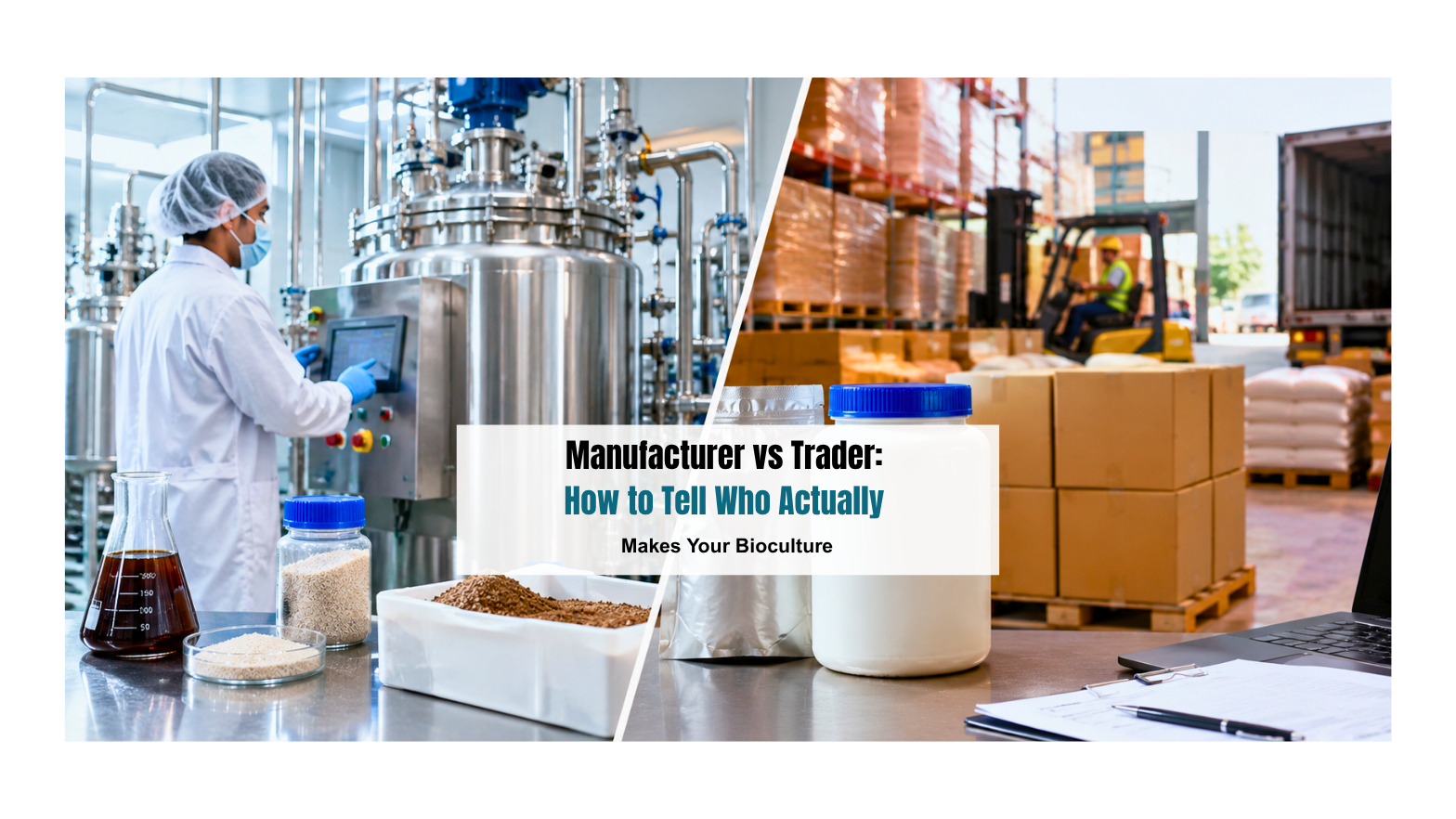
Bioculture Manufacturer vs Trader: How to Tell Who Actually Makes Your Bioculture
You order a bioculture for your ETP, dose it as instructed, and see COD and BOD come down as expected. Three months later you place a repeat order with the same vendor, under the same product name, at the same dosing rate. This time the aeration tank is sluggish, the sludge looks different, and your effluent numbers drift toward the limit.
You call the vendor. The answer is vague. Someone mentions “batch variation,” someone else suggests you increase the dose, and nobody can tell you what changed.
This is more common than most plants admit, and the cause is often not your process. It is your source. A large share of the companies selling bioculture products in India are traders or repackagers, not manufacturers, even when their brochures, websites, and sales pitches suggest otherwise.
The stakes are real. The wrong source can mean inconsistent COD and BOD reduction, unplanned downtime, higher consumption of product to compensate for weak performance, and compliance exposure under CPCB and SPCB norms. The difference between a bioculture for wastewater treatment manufacturer vs supplier is rarely visible on a label.
This guide gives you a practical framework to find out who actually makes your ETP bioculture source, and what to ask before you sign the next purchase order.
Why the Manufacturer vs Trader Distinction Matters More Than You Think
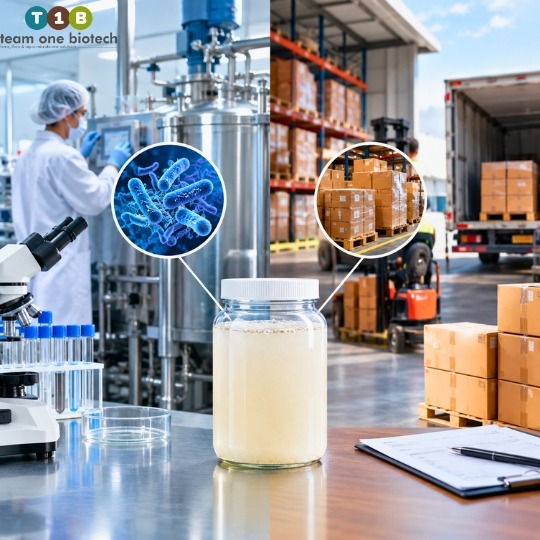
Procurement teams often treat bioculture as a commodity: same category, same specification sheet, so compare on price and move on. That logic works for chemicals with a fixed composition. It fails for a living product, where the strain, the fermentation conditions, and the handling history decide whether the culture works at all.
The Supply Chain Reality of Bioculture Products in India
Most bioculture products reaching Indian ETPs pass through at least one intermediary. A trader buys microbial consortia in bulk from a domestic or overseas producer, packs or relabels the material under a proprietary brand, and resells it. In many cases, nothing about the product is modified.
That arrangement is not illegal, and some traders are honest about it. The problem is what the buyer loses. A trader has no control over strain consistency, fermentation batch quality, or the storage conditions the product experienced before it reached the warehouse. When the culture underperforms, the trader cannot tell you why, because the trader never made it.
Disclaimer: The supply chain structure described here reflects general industry patterns and may vary significantly depending on product category, geography, and vendor. Buyers are advised to conduct independent verification for each procurement.
What Happens When Your Bioculture Is Repackaged, Not Manufactured
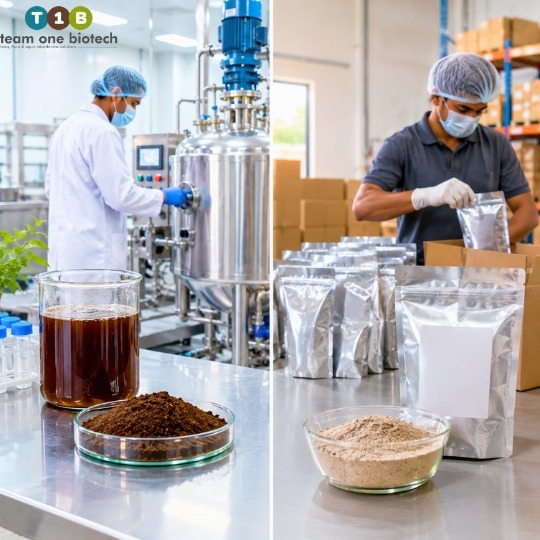
Four problems show up repeatedly when plants buy repackaged cultures.
Viability erodes before dosing. Microbial cultures are sensitive to temperature, moisture, and time. Every additional handoff, warehouse, and transport leg adds risk that viable cells are lost before the product reaches your dosing point.
The paperwork describes someone else’s batch. The Certificate of Analysis (COA) a repackager supplies usually reflects the original producer’s batch, not necessarily the material in your drums. Lot numbers, testing dates, and even the testing laboratory may not match what you received.
You cannot customise. If your wastewater has high TDS, high salinity, elevated phenols, or heavy surfactant load, you need a consortium built or adjusted for that matrix. A trader sells what is in stock. There is no one to ask for a different microbial ratio.
You have no escalation path. When your ETP results deviate, you need a microbiologist who can look at your influent data and your dosing log. A trader passes your question up the chain to its own supplier, and that adds days to a problem that costs you every hour it continues.
If you have ever received a bioculture that performed inconsistently without explanation, it is worth tracing where it was actually produced. Our technical team can walk you through a vendor audit checklist. Contact our technical team to start.
The 6-Point Verification Framework: Real Manufacturer vs Trader
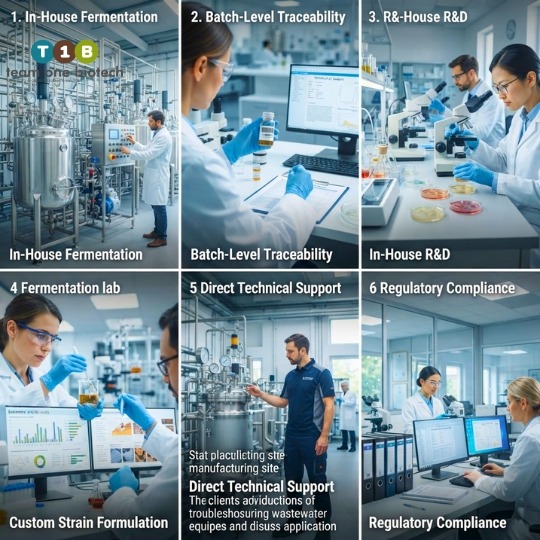
The framework below is built for plant managers and environmental engineers. Use it as a set of questions to put to any vendor before a purchase order is signed. A genuine manufacturer will answer all six without hesitation. A trader will struggle with most of them.
1. In-House Fermentation Infrastructure
A real bioculture manufacturer operates fermentation vessels, bioreactors, and controlled incubation environments on its own premises. Production is something they do, not something they outsource.
Ask directly: can we visit the production unit? Is the facility registered and open to inspection?
A trader has a warehouse, not a production floor. Evasive answers about the facility location, or a sudden shift to “our partner facility,” tell you what you need to know.
How to verify: Request a facility walk-through, or ask for a third-party facility audit report. Genuine manufacturers treat this as routine, because buyers who ask are the buyers they want to keep.
2. Batch-Level Traceability and COA Authenticity
Every batch from a genuine manufacturing run should carry a unique batch ID that traces to a specific production event. A proper COA lists strain identity, viable count at production, production date, expiry date, and the testing methodology used.
Repackagers typically pass on COAs from the original producer. The tell is in the details: lot numbers that differ from the label on your drum, testing laboratories unrelated to the vendor, and dates that do not line up with your delivery.
How to verify: Ask the supplier to map the batch number on your COA to their own internal production records. A manufacturer can do this in minutes, because it made the batch. A repackager cannot, because the records belong to someone else. This single check addresses batch traceability for bioculture better than any brochure claim.
3. In-House R&D and Microbiology Capability
Real manufacturers employ microbiologists, maintain a culture library, and carry out strain development or enrichment internally. This is what makes technical conversations useful. When you describe your effluent, someone on the other end understands the metabolic pathways involved and can propose a response.
A trader has no in-house R&D function. Their technical knowledge is whatever the original producer’s datasheet says.
How to verify: Ask for a list of in-house scientific personnel and their qualifications. Ask whether the company holds any published or proprietary research on its microbial consortia. You are not looking for a long list of papers, only evidence that the science is done in-house.
4. Custom Strain Formulation for Specific Wastewater Profiles
No two ETPs are identical. COD loads, pH ranges, temperature profiles, and effluent composition differ between a textile unit, a pharmaceutical plant, a food processor, and a municipal STP. Even within one site, influent changes with production schedules and seasons.
A manufacturer can develop or adapt a consortium for your wastewater matrix. A trader offers catalogue products with fixed formulations and has no ability to change them.
Disclaimer: Customisation timelines and technical feasibility vary depending on wastewater complexity and the manufacturer’s existing strain library. Buyers should request a site-specific technical assessment before procurement.
How to verify: Ask what the vendor would change in the formulation for your specific effluent, and why. A manufacturer answers with specifics. A trader answers with a product name.
5. Direct Technical Support and Post-Sale Accountability
When your ETP underperforms, you need a microbiologist, not a salesperson. Real manufacturers provide direct technical support: dosing protocol design, troubleshooting under varied influent conditions, and periodic performance reviews.
Traders escalate to their own supplier, which delays the response and dilutes accountability. When something goes wrong, you have no one to hold responsible, because the trader did not make the product and the producer has no contract with you.
How to verify: Ask who your technical point of contact will be after the sale, and check their credentials. If the answer is the same person who quoted the price, you have your answer.
6. Regulatory Compliance Documentation and Statutory Alignment
Bioculture products used in industrial and municipal ETPs must align with applicable CPCB and SPCB guidelines for biological additives. A genuine manufacturer maintains current statutory documentation, safety data sheets, and the relevant clearances for its own facility and products.
Repackagers often inherit documentation from the original producer, and that documentation may not reflect the product on the label. For a plant that answers to a pollution control board, this gap is a liability. Compliance for a CPCB compliant bioculture depends on the documentation chain being intact from production to your gate.
How to verify: Request all compliance documents and cross-reference the label details against the COA and the statutory filings. Product names, strain descriptions, and manufacturer names should match across every document. Where they do not, ask why before you buy.
Red Flags That Signal You Are Dealing With a Trader, Not a Manufacturer
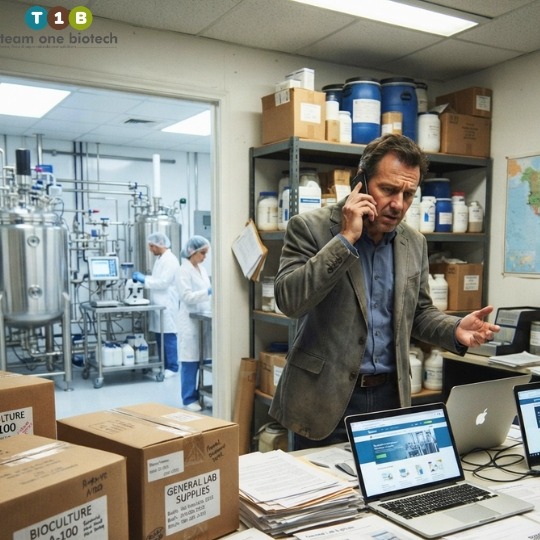
Some warning signs show up before you ever request an audit. If several of these apply to your current vendor, a closer look is overdue.
- They cannot provide a facility address, or they resist a site visit request.
- Their COA batch numbers do not align with their own dispatch records.
- They offer every product category with no specialisation in microbiology.
- Pricing fluctuates significantly between orders without a clear explanation.
- Their technical team amounts to the sales team.
- Product labels describe microbial content in vague terms, with no strain identification.
- They cannot explain why their product suits your specific effluent type.
- Lead times change unexpectedly, which often signals dependence on a third-party producer.
A bioculture repackager rarely shows all of these at once. One or two is enough to justify a deeper review.
Do not wait for a compliance failure to trigger a vendor review. Download our Bioculture Vendor Verification Checklist, or speak directly with our technical team to audit your current supply source before your next procurement cycle.
Manufacturer vs Trader at a Glance
| Criteria | Real Manufacturer | Trader / Repackager |
| Production facility | In-house fermentation and incubation, open to inspection | Warehouse or storage only |
| Batch traceability | Batch ID maps to own production records | COA reflects original producer’s batch |
| R&D capability | Dedicated microbiologists and culture library | None; sells available stock |
| Customisation | Formulation adapted to your effluent | Fixed catalogue products |
| Technical support | Direct access to microbiology team | Escalates to upstream supplier |
| Compliance documentation | Owns the full documentation chain | Inherits documents that may not match the label |
| Consistency across orders | Controlled by one production process | Varies with sourcing from different producers |
Why Procurement Heads and Plant Managers Are Shifting to Direct Manufacturer Relationships
More buying teams now go straight to the source, and the reasons are practical.
Cost over a procurement cycle. Direct sourcing removes the trader’s margin. Over a full cycle, that can reduce your per-unit cost, though the extent depends on product category, volume, and geography.
Batch consistency. With no intermediate handling, repackaging, or storage gap, the product that leaves the fermenter is the product that reaches your dosing tank. That makes performance easier to predict and easier to diagnose when it slips.
Technical alignment. Procurement teams working directly with a manufacturer can co-develop specifications tied to seasonal shifts or load variations in influent quality. That is not possible when the specification belongs to someone two steps removed.
Compliance confidence. A manufacturer owns its documentation from production through dispatch. As regulatory scrutiny on biological additives in effluent treatment increases, documentation integrity has moved from best practice to procurement requirement.
Disclaimer: Cost savings and performance outcomes described here are indicative and based on general industry observations. Actual results depend on plant configuration, influent characteristics, dosing protocols, and operational parameters specific to each ETP or STP.
Frequently Asked Questions
How do I verify that a bioculture supplier is a genuine manufacturer and not a trader?
Ask for three things: a facility visit, batch-traceable COA documentation tied to the supplier’s own production records, and a named technical contact with microbiology credentials. A repackager will be unable to provide all three.
Can a trader provide bioculture products that are compliant with CPCB and SPCB standards?
A trader may carry products that originated from a compliant manufacturer. However, documentation integrity, strain viability, and accountability in case of non-compliance all weaken when an intermediary is involved. Buying from a direct manufacturer removes that layer of risk.
Is customised bioculture formulation available from manufacturers for specific industrial effluents?
Yes. Manufacturers with in-house R&D can design microbial consortia for specific wastewater matrices, including textile effluent, pharmaceutical waste, food processing streams, and high-TDS industrial discharge. Traders cannot offer this service.
What documents should I request before finalising a bioculture procurement decision?
At minimum, request a batch-traceable COA, statutory compliance documentation under applicable CPCB and SPCB guidelines, a Safety Data Sheet, and documentation of the manufacturing facility’s registration or accreditation.
Why do bioculture products from traders sometimes show inconsistent performance across batches?
Traders source from multiple producers depending on availability, pricing, and stock. Each producer may use different strains, fermentation parameters, and quality thresholds. The buyer receives a different product under the same label with each order.
Know Who Is Behind Your Bioculture Before Your ETP Depends on It
The difference between a manufacturer and a trader is not cosmetic. It determines product integrity, the quality of technical support you receive, and how defensible your records are when a regulator asks questions.
You carry real accountability for ETP performance and compliance. The vendor behind your bioculture should carry the same level of accountability, and the six checks in this guide are how you find out whether they do.
Team One Biotech is a manufacturer with in-house fermentation, dedicated microbiology R&D, batch-traceable documentation, and direct technical support. We are not a catalogue company.
At Team One Biotech, we manufacture. We do not resell. Every product we deliver carries full batch traceability, direct technical accountability, and formulations built around real effluent challenges. Contact our technical team today to verify your current bioculture source or to discuss your plant’s specific requirements.
Values are indicative and vary depending on plant configuration, influent characteristics, and operational parameters.
Looking to improve your ETP/STP efficiency with the right bioculture?
Talk to our experts at Team One Biotech for customised microbial solutions.
Contact: +91 8855050575
Email: sales@teamonebiotech.com
Visit: www.teamonebiotech.com
Discover More on YouTube – Watch our latest insights & innovations!-
Connect with Us on LinkedIn – Stay updated with expert content & trends!