
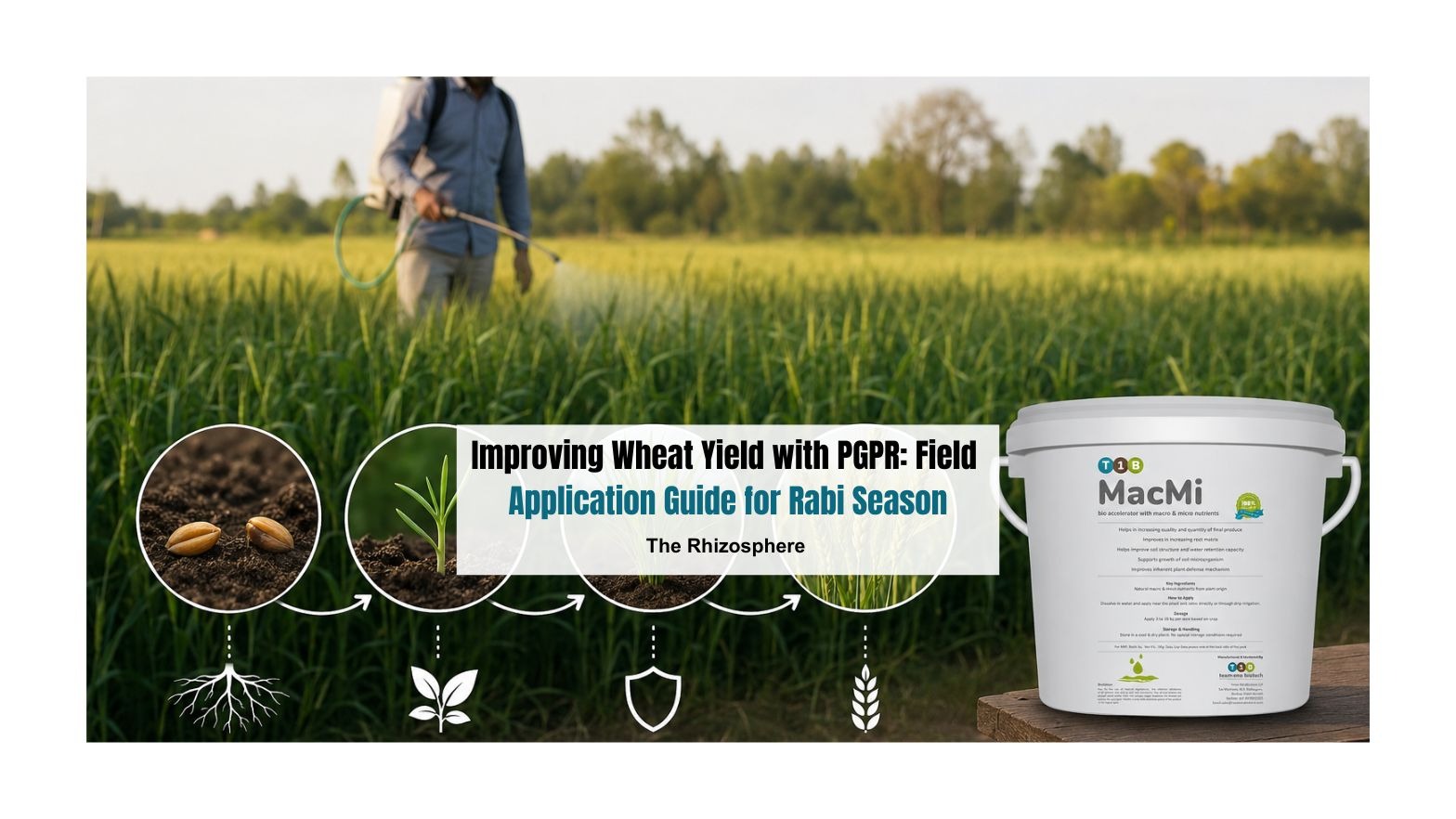
Improving Wheat Yield with PGPR: Field Application Guide for Rabi Season

Every October, as soil temperatures dip across the Indo-Gangetic plains and tractors start turning the post-paddy stubble, a quiet dread settles over wheat-farming communities from Ludhiana to Lucknow. The costs are already locked in before a single seed goes into the ground. DAP prices have climbed steadily. Urea allocations remain unpredictable. And the soil itself, compacted by years of heavy combine harvester traffic and drenched in synthetic chemistry, is beginning to push back. Yields are plateauing even when inputs increase.

This is the Rabi tightrope. Push harder on chemicals, and you erode the very biological foundation that makes productive farming possible. Pull back, and you risk yield losses you cannot afford.

The conversation in progressive farming circles, among sharp crop consultants and forward-thinking agri-input dealers, has been shifting toward a more intelligent approach: restoring the biological workforce that already exists in the soil. This is exactly where a high-quality biofertilizer for wheat enters the picture, specifically, formulations built around PGPR, or Plant Growth-Promoting Rhizobacteria.

These are not trendy supplements. PGPR are a scientifically validated group of soil bacteria that have co-evolved with cereal crops for millennia. When reintroduced into degraded soils at meaningful concentrations, they fundamentally change how a wheat plant feeds, roots, and responds to stress.

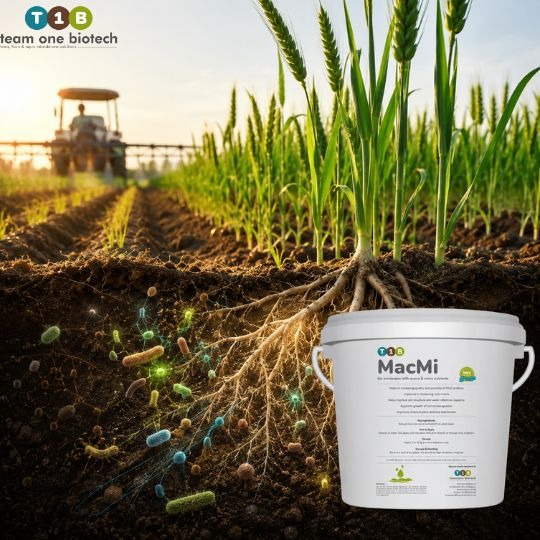
The Rhizosphere: Where the Real Farming Happens
The Rhizosphere: Where the Real Farming Happens

Most agronomic attention is focused above the soil line, canopy color, tiller count, flag leaf health. But the most consequential activity in wheat production happens invisibly, in the narrow cylinder of soil surrounding every root hair. This is the rhizosphere, and it is where PGPR earn their value.

Here is what is actually happening when healthy PGPR populations are active in your wheat field:

Phosphorus Solubilization A staggering proportion of the phosphorus applied to Indian wheat fields over decades is not available to the plant. It has been fixed, chemically locked, into insoluble compounds with calcium, iron, and aluminum. Phosphate-solubilizing bacteria within PGPR consortia secrete organic acids, primarily gluconic and citric acids, that break these bonds and release the phosphorus back into plant-available form. This is not just supplementation. It is remediation of your existing soil chemistry.

Nitrogen Fixation and Cycling Certain PGPR strains, particularly free-living Azospirillum and Azotobacter species, fix atmospheric nitrogen directly in the root zone, making it available to the wheat plant without the energy cost of synthetic urea. This is agricultural bioremediation India’s degraded soils desperately need, reactivating biological nutrient cycles that intensive monoculture has suppressed.

Phytohormone Secretion and Wheat Root Development This is the mechanism that most surprises farmers when they first see it in action. PGPR strains produce indole-3-acetic acid (IAA), a plant hormone that directly stimulates root elongation and lateral root branching. The result is a measurably denser root system that accesses moisture and nutrients from a larger soil volume. In the context of moisture stress during late-season heatwaves, a growing concern across MP and UP wheat belts, improved wheat root development may be one of the most valuable outcomes of PGPR application.

Stress Resilience Compounds Under heat stress and drought conditions, PGPR-inoculated plants have demonstrated a greater capacity to maintain cell membrane integrity and regulate water loss. The bacteria trigger the plant’s own stress-response pathways, essentially preparing it for adversity before adversity arrives.

Step-by-Step PGPR Application Guide for Rabi Wheat
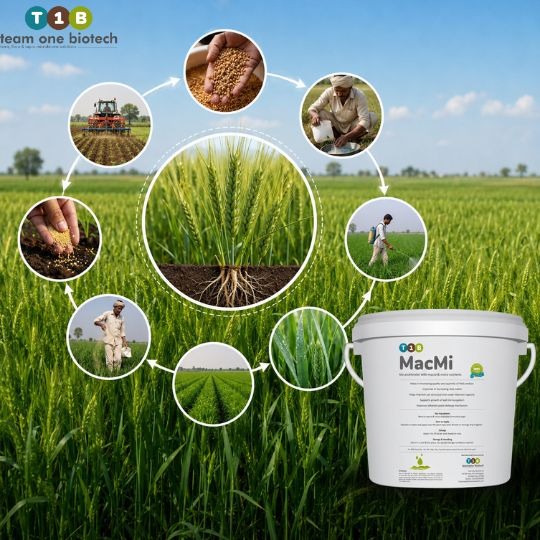
Successful PGPR application for wheat is not complicated, but sequencing and handling protocols matter enormously. Live bacterial populations are sensitive. Here is how to ensure maximum field efficacy.

Phase 1, Seed Treatment (Inoculation Before Sowing)

This is the most critical and cost-efficient application window. Coating the seed ensures the PGPR bacteria are positioned precisely where the emerging root system will develop.

  • Spread the required quantity of wheat seed on a clean, shaded surface. Avoid direct sunlight and any residual chemical contamination on the surface.
  • Mix the PGPR formulation with a small quantity of jaggery solution or rice starch paste to act as a sticking agent.
  • Apply the slurry evenly to the seed, ensuring complete coating, then allow to air-dry in shade for 20 to 30 minutes before sowing.
  • Typical seed treatment rates for PGPR liquid formulations fall in the range of around 200 to 500 grams or milliliters per acre, depending on product concentration and target bacterial load. Note: These are general values and field outcomes will vary based on specific soil health profiles, existing microbial load, climate conditions, and unique irrigation parameters of individual farm plots.
  • Never mix PGPR seed treatment with chemical fungicide seed treatments in the same slurry. If a chemical seed treatment is agronomically necessary, apply it first, allow it to dry completely, and then apply the PGPR coating separately.

Phase 2, Soil Application During Field Preparation or First Irrigation

A secondary soil-drench application, especially at or just after the first irrigation (crown root initiation stage), reinforces the rhizosphere population and compensates for any seed-treatment losses during germination.

  • Mix the PGPR soil application product with a carrier material, well-decomposed farmyard manure or vermicompost works exceptionally well, and broadcast uniformly before the pre-sowing irrigation or the first post-sowing watering.
  • In fields with severe post-paddy soil compaction, pairing PGPR application with a light soil aeration pass significantly improves bacterial penetration and colonization depth.
  • For best results in improving soil microbial health over the season, this phase should ideally happen within 15 to 20 days of sowing. Note: These are general values and field outcomes will vary based on specific soil health profiles, existing microbial load, climate conditions, and unique irrigation parameters of individual farm plots.

Phase 3, Fertigation Considerations for Irrigated Wheat

For farms operating drip or sprinkler systems, increasingly common in progressive wheat operations across Haryana and parts of MP, PGPR fertigation is a viable third application window.

  • Use only specifically formulated liquid PGPR products rated for fertigation compatibility. Wettable powder formulations may clog emitters.
  • Apply through fertigation at the jointing stage, when tiller formation and root system expansion are at their peak demand for nutrients.
  • Coordinate fertigation timing to avoid peak-heat hours. Early morning application preserves bacterial viability in the irrigation lines.

Why This Matters for Agri-Dealers: The ROI Conversation
Why This Matters for Agri-Dealers: The ROI Conversation

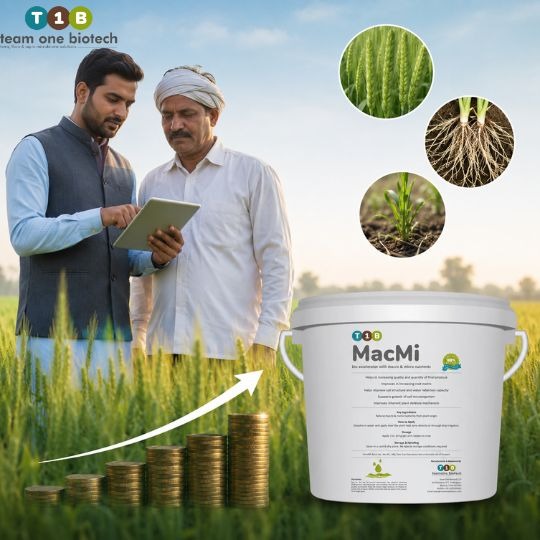
For agri-input dealers recommending PGPR application for wheat to their farmer networks, the conversation cannot stay purely biological. It has to be economic.

Here is the frame that resonates with progressive farmers: PGPR bio-inputs do not replace chemical fertilizers in one season. They progressively reduce the threshold at which chemical inputs become necessary. Fields that have seen consistent PGPR use over two to three Rabi cycles typically show measurably improved organic carbon levels, better water-holding capacity, and reduced compaction, which means DAP and urea requirements can be recalibrated downward without sacrificing yield stability.

Yield improvements in PGPR-integrated Rabi crop bio-inputs programs often range between 10% to 18% over untreated controls, particularly in fields with documented phosphorus fixation problems and low organic carbon. Note: These are general values and field outcomes will vary based on specific soil health profiles, existing microbial load, climate conditions, and unique irrigation parameters of individual farm plots.

For a dealer, this is a product that sells itself on demonstrable field results within a single season, and then retains customers through a multi-season soil improvement story.

If you are an agri-input dealer looking to add a scientifically credible, high-margin bio-input line to your portfolio for the Rabi season, connect with Team One Biotech now to discuss dealership pricing, demo product allocation, and technical training support.

Addressing the Indian Soil Crisis Directly
Addressing the Indian Soil Crisis Directly

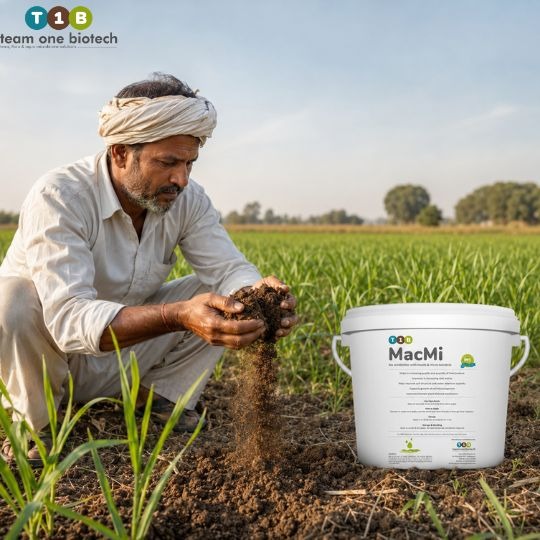
Let us be frank about what decades of intensive wheat-rice rotation have done to the soils of Punjab, Haryana, and western UP. Soil organic carbon levels across large stretches of the Indo-Gangetic plains have dropped to a fraction of what healthy agricultural soil requires. The native microbial populations, the bacteria, fungi, and actinomycetes that once made these soils among the most productive in the world, have been systematically suppressed by the cumulative antibiotic effect of synthetic pesticide and herbicide regimens.

Agricultural bioremediation in India’s wheat belt is not an abstract concept. It is the practical work of rebuilding microbial biomass, restoring biological nutrient cycling, and reducing the soil’s dependency on external chemical inputs. PGPR-based Rabi crop bio-inputs are among the most direct and field-validated tools available for this work.

The farmers who are already doing this, and there are thousands across MP, UP, and Haryana running multi-year bio-input trials, are not doing it out of ideology. They are doing it because their per-acre input costs are coming down while their grain quality scores are improving. Wheat grain protein content, a key determinant of market price in quality-premium procurement systems, consistently trends upward in PGPR-integrated cropping programs.

Conclusion: The Biological Dividend of the Rabi Season

Indian wheat farming is entering a period of genuine reckoning. Soil degradation, input cost inflation, and shifting weather patterns during the grain-filling stage are not seasonal problems. They are structural ones, and they demand structural solutions.

PGPR-based biofertilizer for wheat is not a silver bullet. It is something more durable, a biological investment that pays compound returns across seasons, progressively reducing your exposure to input cost volatility while rebuilding the soil capital that determines the long-term productivity of your land.

The science is solid. The application protocol is straightforward. The economics are favorable. What remains is the decision to act, before the sowing window opens and the season’s outcome is already half-determined.

Connect with Team One Biotech, Before the Season Closes

Whether you are a progressive farmer scouting for a science-backed approach to this Rabi season, a crop consultant building a bio-input recommendation program for your clients, or an agri-input dealer ready to expand into high-performance biological products, Team One Biotech is your technical and supply partner.

Reach out to Team One Biotech today for bulk product scheduling, field trial support, agronomist consultations, and dealer partnership programs tailored for the Rabi wheat-growing belt. Our team works directly with farmers and dealers at the field level, not just from a catalog.

The soil is ready to work with you again. Give it the biological foundation it needs.

Looking to improve your ETP/STP efficiency with the right bioculture?
Talk to our experts at Team One Biotech for customised microbial solutions.

Contact+91 8855050575

Email:  sales@teamonebiotech.com

Visit: www.teamonebiotech.com

Discover More on YouTube – Watch our latest insights & innovations!-

Connect with Us on LinkedIn – Stay updated with expert content & trends!
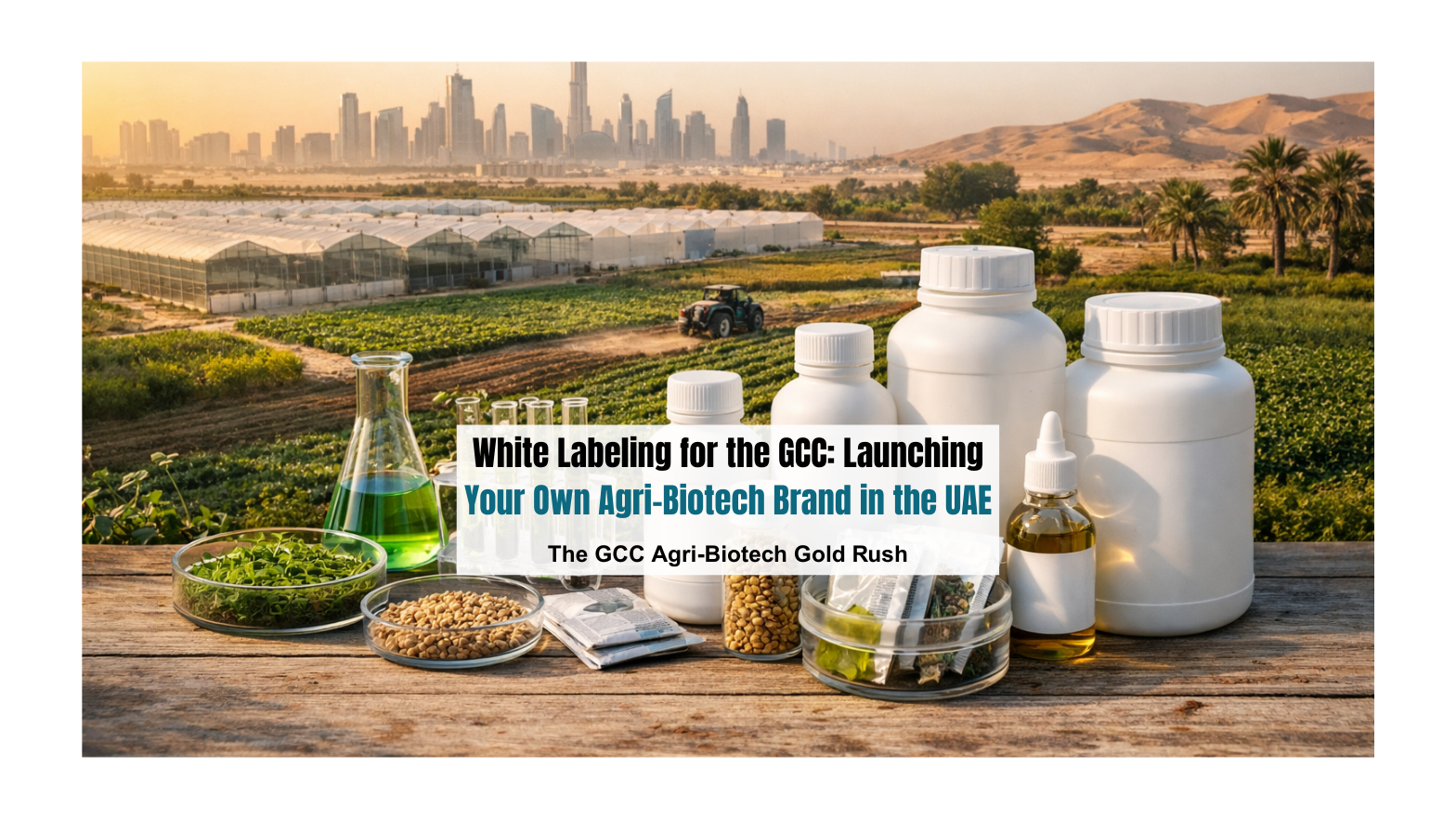
White Labeling for the GCC: Launching Your Own Agri-Biotech Brand in the UAE

The United Arab Emirates is rewriting the rulebook on food production. In a nation where less than 1% of land is arable, vertical farms rise from desert sand, aquaculture facilities operate in former oil infrastructure, and government mandates are driving billions into agricultural innovation. This is not incremental progress, this is a fundamental reimagining of food security in one of the world’s most resource-constrained environments.

For investors and farm operators across the GCC, the moment has arrived. UAE Vision 2031 and the National Food Security Strategy 2051 have created a policy environment where sustainable Agri-Tech is not just encouraged, it’s essential. The question is no longer whether to invest in biological solutions for farming and aquaculture, but how to capture market share before the opportunity window closes.

The answer lies in Agri-Biotech white labeling UAE, a strategic pathway that allows you to launch your own branded bioremediation and probiotic solutions without the decade-long R&D cycle, regulatory navigation, or manufacturing infrastructure typically required.

The GCC Agri-Biotech Gold Rush: Why This Moment Matters

The GCC Agri-Biotech Gold Rush: Why This Moment Matters

The convergence of three powerful forces has created an unprecedented opportunity for Agri-Tech entrepreneurs in the Emirates:

Policy-Driven Demand
The UAE government has committed to increasing local food production from 30% to 50% by 2031. Dubai’s Food Security Strategy specifically prioritizes sustainable farming technologies that reduce water consumption and chemical dependence. These are not aspirational goals, they are backed by sovereign wealth fund investment and regulatory incentives.

Environmental Necessity
Traditional agriculture faces insurmountable challenges in the GCC climate. Summer temperatures routinely exceed 45°C, groundwater salinity levels can reach 15,000 ppm, and water scarcity makes conventional chemical-intensive farming economically unsustainable. Bioremediation for aquaculture and probiotic soil amendments are not premium add-ons, they are survival requirements.

Market Vacuum
While demand for biological solutions is exploding, most international biotech brands treat the Middle East as an afterthought. Distribution is fragmented, products are often poorly adapted to extreme salinity and heat conditions, and technical support is minimal. The entrepreneur who establishes a credible “Made in UAE” biotech brand with localized formulations will dominate this emerging market.

What Is White Labeling? Your Fast Track to Market Leadership

What Is White Labeling? Your Fast Track to Market Leadership

White labeling allows you to sell proven, scientifically validated products under your own brand name. Rather than spending years developing formulations, navigating biosafety approvals, and building manufacturing capacity, you partner with an established biotech producer who handles the complex backend while you focus on brand building and customer relationships.

Here is what Agri-Biotech white labeling UAE specifically means for your business:

Skip the Lab Phase
Team One Biotech (T1B) has already invested in the R&D infrastructure, microbial strain selection, fermentation protocols, and stability testing required for commercial-grade bioremediation products. Your partnership grants immediate access to formulations proven in field trials across Asia, Africa, and the Middle East.

Regulatory Shortcut
Product registrations with UAE Ministry of Climate Change and Environment (MOCCAE) and similar GCC regulatory bodies can take 18-24 months. T1B’s existing compliance frameworks and documentation accelerate this timeline significantly, getting your branded products into customers’ hands faster.

Customization Without Complexity
Need specific bacterial strain combinations for high-salinity shrimp ponds? Want packaging sizes optimized for UAE vertical farms? White label partnerships allow formulation customization and regional adaptation without building your own lab team.

Capital Efficiency
Manufacturing biotechnology products requires bioreactor facilities, quality control laboratories, cold chain logistics, and specialized personnel. White labeling converts these massive capital expenditures into manageable operational costs, preserving your investment capital for marketing and customer acquisition.

The Aquaculture Opportunity: Where Biotech Delivers Immediate ROI

The Aquaculture Opportunity: Where Biotech Delivers Immediate ROI

The GCC’s sustainable farming GCC revolution is particularly pronounced in aquaculture. The UAE alone has committed to tripling domestic seafood production by 2030, with major expansions in shrimp farming, seabass cultivation, and recirculating aquaculture systems (RAS).

This creates massive demand for probiotic water treatment UAE solutions that address the sector’s most pressing operational challenges:

Water Quality Management
In intensive aquaculture systems operating in the Arabian Gulf’s high-salinity conditions, ammonia and nitrite accumulation can reach toxic levels within 48 hours. Probiotic bioremediation products containing Bacillus and Lactobacillus strains rapidly convert these toxic compounds into harmless nitrates, maintaining stable water parameters even at stocking densities that would crash conventional systems.

Feed Conversion Ratio Improvement
Feed costs represent 60-70% of aquaculture operating expenses. Probiotic supplements added to feed or water improve gut health in shrimp and fish, enhancing nutrient absorption and reducing feed requirements by 12-18%. For a mid-scale operation producing 500 tons annually, this translates to AED 400,000+ in annual savings.

Disease Suppression
Vibrio outbreaks, Early Mortality Syndrome (EMS), and white spot syndrome virus (WSSV) can destroy entire harvest cycles. Probiotic water treatment establishes beneficial bacterial populations that outcompete pathogenic species through competitive exclusion, dramatically reducing disease incidence without antibiotics.

Sludge Reduction
Organic waste accumulation in pond bottoms creates anaerobic conditions that produce hydrogen sulfide and methane, toxic gases that stress aquatic animals and reduce yields. Specialized bioremediation products accelerate sludge decomposition, maintaining healthy pond environments and extending operational cycles before cleanout becomes necessary.

For an Agri-Tech investment Dubai portfolio, aquaculture biotech offers something rare: measurable, immediate returns. Farm operators can quantify improvements in water quality, survival rates, and feed efficiency within a single production cycle, making the value proposition undeniable.

Beyond Aquaculture: Terrestrial Agriculture Applications

Beyond Aquaculture: Terrestrial Agriculture Applications

While aquaculture represents the fastest ROI opportunity, the broader agricultural sector in the GCC is equally hungry for biological solutions:

Desert Soil Rehabilitation
Emirate soils are predominantly sandy, low in organic matter, and high in salt content. Microbial soil amendments containing nitrogen-fixing bacteria, phosphate-solubilizing organisms, and organic matter decomposers transform marginal soils into productive growing media for greenhouse operations and controlled-environment agriculture.

Vertical Farm Optimization
The UAE leads the Middle East in indoor farming infrastructure. However, closed-loop hydroponic and aeroponic systems face unique challenges with biofilm formation and root disease pressure. Probiotic inoculants designed for soilless systems prevent Pythium and Fusarium outbreaks while maintaining optimal nutrient availability.

Date Palm Plantation Management
As the UAE’s agricultural heritage crop, date cultivation faces increasing pressure from red palm weevil infestations and declining soil fertility. Biological control agents and soil probiotics offer sustainable solutions that preserve the cultural and economic value of this critical sector.

The White Label Launch Roadmap: Your 6-Month Path to Market

Establishing your branded Agri-Biotech presence in the UAE requires strategic execution across six critical phases:

Phase 1: Market Positioning and Brand Development (Month 1)

Define your target customer segment: Are you serving commercial shrimp farms, greenhouse operators, or government agricultural initiatives? Your brand identity, messaging, and product portfolio must align with specific customer pain points.

Develop brand assets: company name, logo, packaging design that communicates both scientific credibility and regional relevance. The most successful UAE biotech brands balance modern biotechnology imagery with cultural authenticity.

Phase 2: Product Selection and Customization (Month 1-2)

Partner with T1B to identify which formulations best match your market segment and environmental conditions. For GCC aquaculture, prioritize products proven in high-salinity, high-temperature conditions.

Specify any regional customizations: packaging sizes, application instructions in Arabic, concentration adjustments for local water chemistry. This is where white labeling’s flexibility delivers competitive advantage.

Phase 3: Regulatory Navigation (Month 2-4)

Initiate product registration processes with UAE MOCCAE and equivalent bodies in target GCC markets (Saudi Food and Drug Authority, Kuwait EPA). Your white label partner should provide technical documentation, safety data sheets, and efficacy studies to support applications.

For aquaculture products specifically, engage with local fish health authorities early. Demonstrating antibiotic-free disease management aligns perfectly with GCC food safety priorities.

Phase 4: Manufacturing and Quality Verification (Month 3-4)

Place your initial production order with specifications for branded packaging. For UAE market entry, most entrepreneurs start with container-load quantities (20-foot refrigerated container) to balance inventory investment with per-unit costs.

Before committing to large-scale orders, leverage the Team One Biotech Official Alibaba Store to sample products and verify quality. This strategic gateway allows you to test formulations in your specific environmental conditions, conduct small-scale trials with target customers, and validate efficacy claims before investing in branded bulk orders.

Phase 5: Market Entry and Customer Acquisition (Month 4-6)

Launch with a focused pilot program: identify 3-5 early adopter customers willing to conduct side-by-side trials comparing your products against current solutions. Document improvements in water quality parameters, survival rates, or crop yields with data and testimonials.

Invest in technical sales support. GCC farm operators are sophisticated buyers who demand proof. Your ability to provide application guidance, troubleshoot challenges, and quantify ROI will differentiate your brand from generic import competitors.

Phase 6: Scale and Geographic Expansion (Month 6+)

Once you have established case studies and customer references in the UAE, geographic expansion into Saudi Arabia, Oman, Qatar, and Kuwait becomes substantially easier. GCC countries share similar environmental challenges, creating natural product-market fit across the region.

Consider vertical integration into complementary services: water quality testing, farm management consulting, or integrated pest management programs that position your branded products within comprehensive solutions.

Why Team One Biotech Is Your Ideal White Label Partner

The success of your Agri-Biotech white labeling UAE strategy depends entirely on your manufacturing partner’s capabilities. Team One Biotech offers several critical advantages:

Proven Middle Eastern Experience
Unlike biotech manufacturers focused exclusively on Asian or Western markets, T1B has extensive operational history in high-salinity, high-temperature environments similar to the GCC. Products are proven in conditions that mirror UAE aquaculture and agricultural realities.

Flexible Minimum Order Quantities
Many international biotech companies require prohibitively large initial orders. T1B’s white label program accommodates emerging brands with realistic MOQs that allow market validation before massive capital commitment.

Technical Support Infrastructure
Your brand’s reputation depends on effective customer support. T1B provides technical training, application protocols, and troubleshooting guidance that enables your team to deliver professional service even without extensive microbiology backgrounds.

Formulation Customization
The ability to adjust strain combinations, concentration levels, and carrier formulations for specific GCC applications creates genuine differentiation. Your competitors selling off-the-shelf imports cannot match products optimized for local conditions.

The Gateway: T1B Official Alibaba Store

Before committing to full white label partnership, prudent entrepreneurs validate product quality and market fit. The Team One Biotech Official Alibaba Store serves as your strategic entry point:

Sample and Test
Order commercial samples of T1B’s core aquaculture and agriculture products. Conduct trials in your target customers’ actual operations to generate preliminary efficacy data before branding investment.

Build Confidence
Alibaba’s transaction security, product ratings, and verified supplier status reduce risk for international partners. Review existing customer feedback and product performance data from global buyers.

Establish Relationship
Use initial sample orders to evaluate T1B’s responsiveness, technical knowledge, and willingness to customize solutions. The best white label partnerships are built on trust and communication, start small and scale strategically.

The Vision: Building a Regional Biotech Powerhouse

The UAE’s transformation from resource importer to agricultural innovator represents more than food security policy, it is a fundamental economic diversification strategy. The entrepreneurs who establish credible, locally-relevant Agri-Biotech brands in this environment are positioning themselves at the center of a multi-billion dirham market expansion.

Agri-Tech investment Dubai is no longer about betting on uncertain technologies. The science is proven. The regulatory environment is supportive. The customer demand is urgent and growing.

What remains is execution: partnering with the right biotech manufacturer, building a brand that resonates with GCC values and priorities, and delivering measurable value to farm operators facing unprecedented environmental challenges.

White labeling eliminates the traditional barriers, time, capital, expertise, that have kept regional entrepreneurs out of the biotech sector. The pathway is clear. The opportunity window is open.

The question is simple: Will you watch the GCC Agri-Biotech revolution unfold, or will you build a brand that defines it?

Ready to Launch Your Agri-Biotech Brand?

Team One Biotech partners with visionary entrepreneurs and farm operators across the GCC who are ready to establish market-leading biological solutions for agriculture and aquaculture.

Contact us today to discuss white label opportunities, request product samples through our Official Alibaba Store, or schedule a consultation about customized formulations for UAE environmental conditions.

The future of sustainable farming in the Emirates is biological. Your branded presence in this market starts now.

Looking to improve your ETP/STP efficiency with the right bioculture?
Talk to our experts at Team One Biotech for customised microbial solutions.

Contact+91 8855050575

Email:  sales@teamonebiotech.com

Visit: www.teamonebiotech.com

Discover More on YouTube – Watch our latest insights & innovations!-

Connect with Us on LinkedIn – Stay updated with expert content & trends!

Scan the code