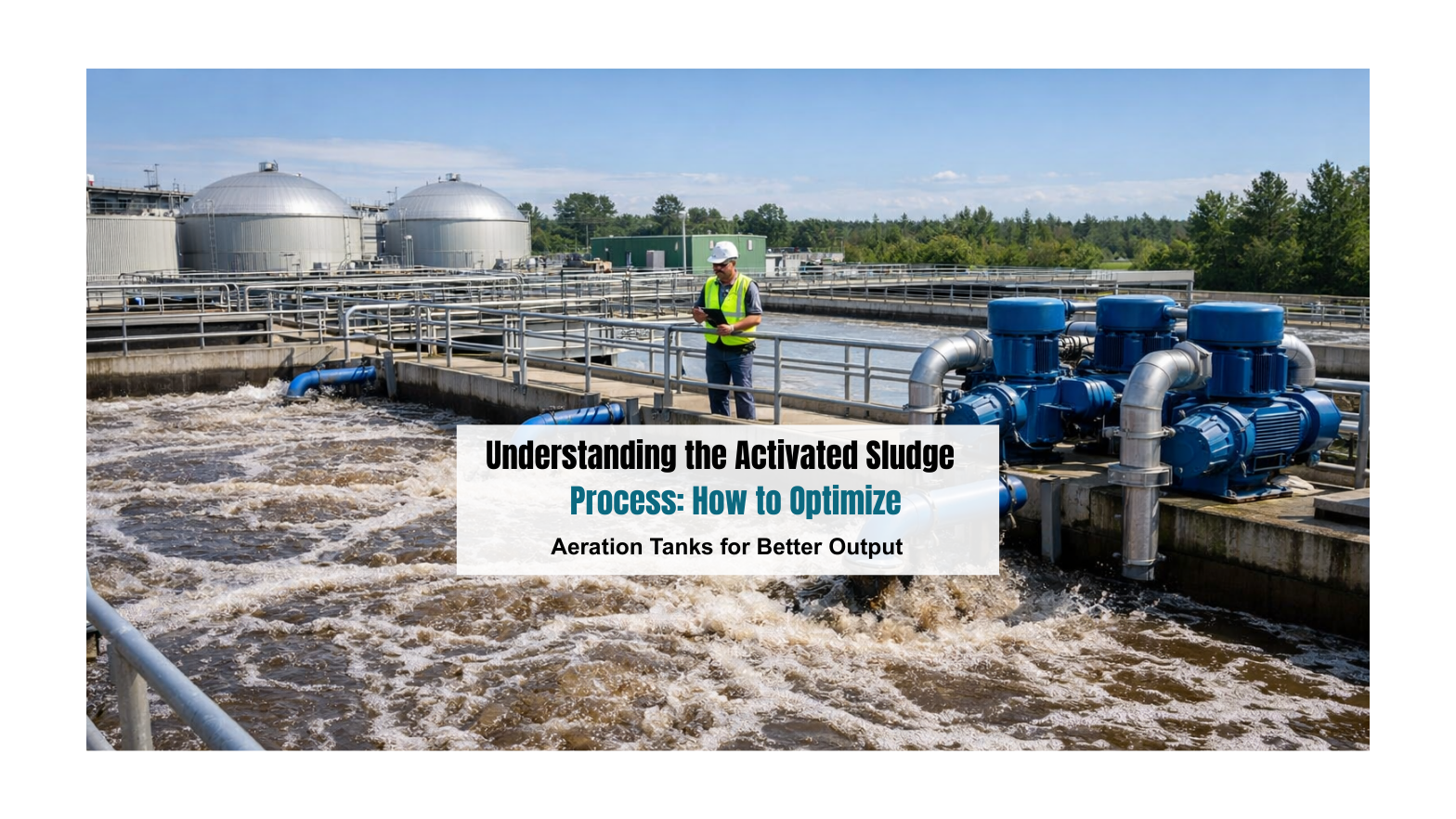
Understanding the Activated Sludge Process: How to Optimize Aeration Tanks for Better Output

The Day Your Plant Fails You And What It Actually Costs

I have stood inside enough effluent treatment plants across India to tell you this with complete confidence: the ones that fail do not fail dramatically. There is no explosion, no sudden catastrophic breakdown that gives you time to prepare. They fail quietly. A COD reading that creeps up over three weeks. A sludge blanket that starts rising a little higher in the clarifier each morning. An aeration tank that smells slightly different than it did last month.

And then one day, the SPCB inspector walks in.

If you are a factory manager in Surat’s textile corridor, or running an effluent treatment plant for a pharma unit in Hyderabad, or overseeing a food processing facility in Punjab, you already know what that moment feels like in your chest. It is not just the regulatory notice. It is the production shutdown that follows, the consent-to-operate suspension, the calls from your MD asking what went wrong, and the quiet but very real damage to your facility’s standing in the industry.

What most operations teams never figure out, until it is too late, is that the failure almost never started at the pump station or the filter press. It started in the aeration tank. Slowly, invisibly, and entirely preventably.

The aeration tank is where your entire ETP-STP plant process either earns its keep or bleeds money. And the activated sludge process that runs inside it is either your strongest compliance asset or your most expensive liability. There is rarely a middle ground.

This is a practical guide written for people who run real plants with real pressures. Not a textbook chapter. Not a vendor brochure. Just 20 years of standing next to aeration tanks across India, watching what works and what quietly destroys treatment efficiency, explained as plainly as I can manage.

The Activated Sludge Process: Why It Is the Beating Heart of Your Plant

The Activated Sludge Process: Why It Is the Beating Heart of Your Plant

Let me explain the activated sludge process the way I would standing next to your tank, not the way it appears in an engineering manual.

Imagine you have an enormous, carefully maintained community of microorganisms living in your aeration tank, billions of bacteria, protozoa, and other microscopic organisms suspended in the wastewater. These organisms are hungry. Their entire purpose is to consume the organic pollutants in your incoming effluent: the BOD, the COD, the nitrogen compounds, the suspended solids that your industry generates as a byproduct of production.

You keep them alive and active by pumping oxygen into the tank, through diffused aerators at the bottom or mechanical surface aerators, depending on your plant design. The microbes eat, multiply, and break down the pollutants. The treated water then flows into a secondary clarifier, where the microbial community, now called sludge, settles to the bottom. A portion of that settled, living sludge gets recycled back into the aeration tank to maintain the population. The excess gets wasted out of the system.

That recycled portion is the “activated” sludge. It is activated because it is biologically alive and ready to work again immediately.

Here is why this matters so much: every single stage of your sewage treatment plant or effluent treatment plant exists either to prepare wastewater for this biological stage, or to clean up after it. Your screens, your equalization tank, your primary settler, they are all just getting the influent ready for the aeration tank. Your secondary clarifier, your tertiary treatment, your disinfection system, they are all finishing what the aeration tank started.

If the biology in your aeration tank is performing at 70 percent efficiency, your downstream systems cannot compensate for that 30 percent gap. They were never designed to. This is why persistent COD exceedances in Indian industrial plants, I see this constantly in textile dyeing units, API pharma plants, and dairy processing facilities, almost always trace back to something going wrong inside the aeration tank, not at the outlet.

The aeration tank is not one component among many. It is the whole game.

STP Plant Process Step-by-Step: Moving from Primary to Tertiary Treatment

Before anyone can fully optimize an aeration tank, they need to understand one uncomfortable truth: the activated sludge process never operates in isolation. It only performs as well as the stages before it, and only delivers compliance when the stages after it are doing their job properly.

In many Indian plants, operators often focus only on blower settings inside the aeration tank while ignoring what happened twenty minutes earlier in the equalization tank or what may already be failing quietly in tertiary filtration downstream. That is like blaming the heart when the lungs are not working.

A sewage treatment plant works as a connected biological chain, not as separate civil structures built side by side.

That is exactly why understanding the full STP treatment sequence, from screening and primary settling to aeration, clarification, and final polishing, is essential before trying to improve biological performance. If you are specifically working on aeration efficiency, it also helps to first understand how the Wastewater Treatment train influences oxygen demand across every stage.

Getting Dissolved Oxygen Right, And Why “More” Is a Trap
Getting Dissolved Oxygen Right, And Why "More" Is a Trap

Here is a conversation I have had more times than I can count at plants across India:

Me: “What DO are you running at?”

Operator: “High. We keep it high to be safe.”

Me: “How high?”

Operator: “Five, sometimes six mg/L.”

Me: “And what is your monthly electricity bill?”

That conversation always ends the same way.

The belief that higher dissolved oxygen means better treatment is one of the most persistent and costly myths in industrial wastewater management in India. It feels logical, more oxygen means more active microbes, better breakdown, safer compliance margins. In practice, it means you are running your blowers harder than necessary, consuming electricity you are paying for without any treatment return, and in some cases actually disrupting the microbial floc structure that makes your sludge settle properly.

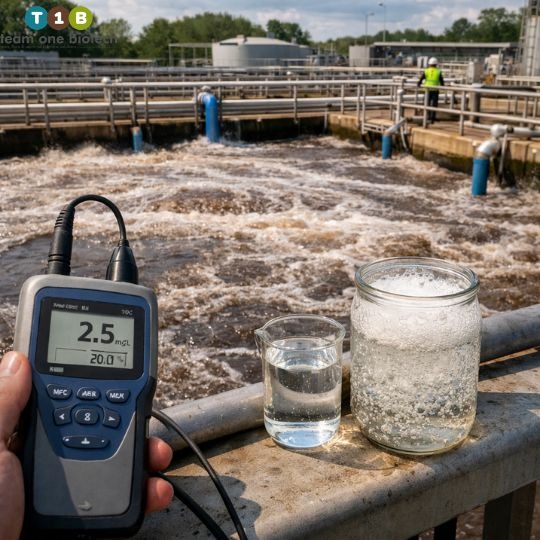
The right DO range for most industrial activated sludge systems is 1.5 to 3.0 mg/L. That is not a conservative estimate, that is the range within which your microbial community does its most efficient work. Aerobic degradation of organic matter does not require saturated oxygen conditions. It requires consistently adequate conditions.

Now flip it the other way. Drop below 0.5 mg/L and you are creating anaerobic microenvironments within the mixed liquor. That is where filamentous bacteria thrive, the organisms responsible for sludge bulking, that maddening condition where your sludge refuses to settle and starts creeping up toward your clarifier weir. If you have ever dealt with sludge bulking during peak summer production in a textile plant, you know exactly how much operational misery that creates.

What actually works in practice:

  • Stop relying on manual DO checks twice a day. Install continuous DO probes with automated blower modulation. The DO in your aeration tank changes hour by hour based on incoming load, a fixed aeration schedule set in the morning is already wrong by afternoon.
  • Walk the length of your aeration tank and map where the DO is high and where it drops. The inlet zone always has higher oxygen demand because the fresh organic load hits there first. The outlet zone often runs higher DO than necessary, which is where you can dial back aeration without any treatment impact.
  • Pay attention to seasonal shifts. During the monsoon, influent in many Indian industrial zones gets diluted, lower organic concentration, lower oxygen demand. If your blowers are still running at the same intensity they were in May, you are wasting money every single day of the rainy season.

Aeration accounts for 50 to 70 percent of total ETP energy consumption. Getting DO management right is not a fine-tuning exercise. It is one of the most significant operational cost levers you have.

MLSS: You Are Not Just Managing Sludge, You Are Managing a Living Population
MLSS: You Are Not Just Managing Sludge, You Are Managing a Living Population

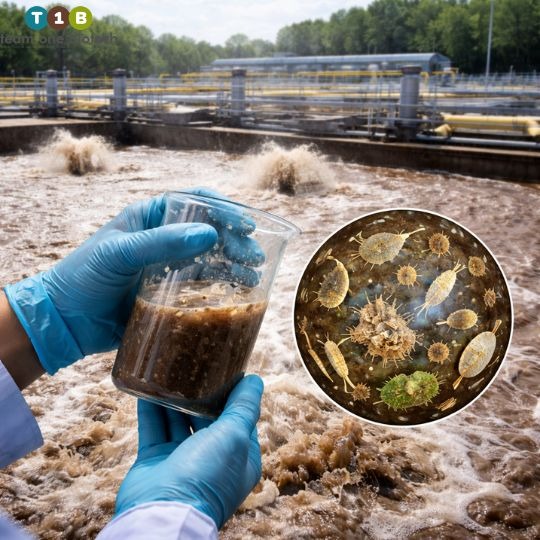
I want you to think about MLSS, Mixed Liquor Suspended Solids, differently than you probably do right now. Most plant operators think of it as a concentration reading to keep within a range. What it actually represents is the total mass of the biological workforce inside your aeration tank.

The working range for most industrial ETP-STP systems is 2,000 to 4,000 mg/L. High-strength wastewater, pharmaceutical fermentation streams, concentrated food processing effluents, may justify pushing toward 4,500 to 5,000 mg/L. But the number alone tells you less than you think.

What matters equally is the MLVSS, Mixed Liquor Volatile Suspended Solids. This is the fraction of your MLSS that is actually living, active biomass as opposed to inert mineral solids that have accumulated in the system. If your MLVSS to MLSS ratio drops below 0.6, a significant portion of what is sitting in your aeration tank is dead weight, not working biology.

I see this consistently in Indian textile plants dealing with high TDS wastewater. Elevated salinity stresses microbial cells, reduces their metabolic rate, and over time pushes up the inert fraction in the mixed liquor. The MLSS reading looks fine, 3,200 mg/L, within range, but the biology is half what it should be. The plant underperforms and no one understands why because they stopped at the MLSS number.

Sludge Age, or Sludge Retention Time (SRT), is the other parameter that most Indian plants manage poorly. Too short an SRT and you wash out the slow-growing nitrifying bacteria essential for ammonia removal. Too long and you accumulate old, tired biomass that forms pin floc, tiny, dispersed particles that do not settle cleanly in the clarifier and carry over into your treated effluent.

Controlling SRT means deliberate, calculated sludge wasting. Not wasting when the clarifier looks too full. Not wasting on a fixed weekly schedule regardless of what the biology is doing. Wasting based on actual MLVSS data, actual influent load, and a clear target SRT for your specific treatment objectives.

One more thing that is specific to Indian industrial operations: production shutdowns. Festive holidays, maintenance shutdowns, seasonal slowdowns in agro-based industries, these events starve your microbial population. When the plant restarts, operators often expect the biology to recover immediately. It does not. Natural biomass regrowth after a significant shutdown can take two to three weeks during which your plant is biologically compromised.

This is where specialized bioremediation solutions make a concrete operational difference. Team One Biotech’s microbial consortia, developed and acclimatized specifically for Indian industrial wastewater matrices, including high-TDS textile effluents, pharmaceutical process streams, and food processing loads, can cut that biological recovery window dramatically. We have seen plants that would normally take 18 days to return to stable MLSS performance after a shutdown recover in under a week with targeted inoculation. When your SPCB compliance clock is running, that difference is not academic.

The F/M Ratio: Balancing the Food Against the Workers

The Food-to-Microorganism ratio is probably the most underused process control parameter in Indian industrial wastewater plants. I say that not as a criticism but as an observation, most plant managers were never shown how to use it as a daily operational tool, so it stays in the commissioning report and is rarely calculated again.

Here is the formula, stated plainly:

F/M = (Daily BOD load entering the aeration tank) divided by (Mass of active biomass in the aeration tank)

The result tells you whether your microbial workforce is overloaded, appropriately fed, or starving. For conventional industrial ASP systems, the healthy range is typically 0.1 to 0.4 kg BOD per kg MLVSS per day.

When F/M runs too high, more food than your microbes can process, you get exactly what you would expect: incomplete treatment, elevated effluent BOD and COD, dispersed growth that does not settle. The biology is overwhelmed. When F/M runs too low, microbes with insufficient food, they enter endogenous respiration, start consuming their own cellular material, and form the fine dispersed particles that give you a turbid, poorly settling effluent.

The practical challenge in Indian industrial settings is that influent BOD is rarely stable. Batch process industries, API pharmaceutical manufacturing, distilleries, seasonal food processing, can see influent BOD swing by a factor of three or four within a single day. If your equalization tank is undersized, or is being operated at partial capacity to save pumping costs (I see this regularly), those swings hit your aeration tank directly and throw your F/M ratio into chaos.

The fix is not complicated, but it requires discipline:

  • Calculate F/M at least weekly during stable periods, and daily when your influent is variable.
  • Use your equalization tank as an active process control tool, not just a holding basin. Blend high-strength and low-strength batches intentionally before they reach the bioreactor.
  • Adjust sludge wasting to maintain your target MLVSS in response to load changes, do not wait for the clarifier to tell you something is wrong.

Hydraulic Retention Time: The Parameter That Indian Plants Most Often Get Wrong
Hydraulic Retention Time: The Parameter That Indian Plants Most Often Get Wrong

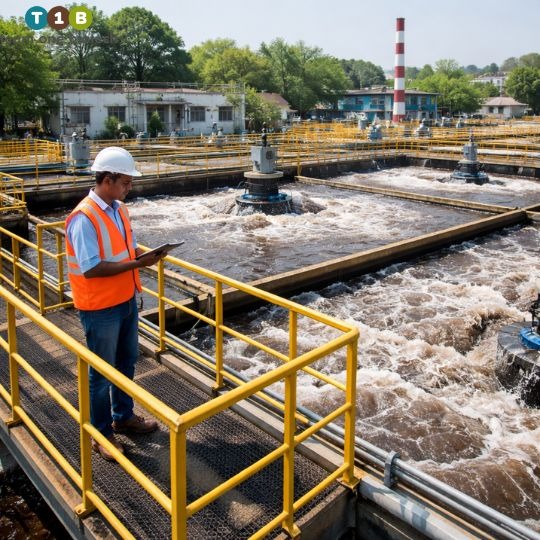
Hydraulic Retention Time, how long your wastewater actually spends inside the aeration tank, is where I see the greatest gap between what plants were designed to achieve and what they actually deliver in the field.

The textbook range for industrial ASP systems is 6 to 24 hours depending on wastewater strength and required treatment efficiency. But here is the real-world complication that no design manual adequately addresses for Indian conditions:

Indian industrial plants do not operate at steady state. They never have.

Production seasonality in agro-based industries. Power cuts that interrupt aeration mid-cycle. Festive shutdowns followed by sudden full-capacity restarts. Monsoon-driven flow spikes that push hydraulic loading well beyond design capacity. All of these compress actual HRT, sometimes to a fraction of the design value, and the wastewater that exits the aeration tank during those periods has simply not had adequate contact time with the biology.

High TDS wastewater makes this worse. Elevated salinity reduces the osmotic efficiency of microbial cells, which means their metabolic rate slows down. A microbial community treating high-TDS textile effluent needs more time to achieve the same BOD removal as one treating lower-salinity wastewater. For these applications, you should be adding 20 to 30 percent to whatever HRT your design tables suggest, and most plants in India are not doing this.

What this looks like in practice:

  • If your plant was sized for average daily flow, it is almost certainly hydraulically under-capacity for peak days. Know your peak-to-average flow ratio and design your operations around it, not the average.
  • Use inlet flow control to pace hydraulic loading during high-flow periods. Rushing wastewater through the aeration tank to keep up with production is a false economy, you will pay for it at the outlet.
  • For pharmaceutical and chemical plants treating wastewater with inhibitory compounds, do not treat HRT as a variable you adjust based on operational convenience. Certain recalcitrant compounds require a minimum contact time for biodegradation that is non-negotiable regardless of what else is happening in the plant.

Where Indian Plants Lose Efficiency Without Realizing It

After two decades of walking through ETPs and STPs across India, the losses I see most consistently are not dramatic failures. They are small, compounding inefficiencies that nobody prioritizes because the plant is technically still running:

  • Blowers on fixed timers, running at full capacity at 2 AM when the organic load is a fraction of the daytime peak.
  • MLVSS never measured, MLSS monitored in isolation, sludge quality quietly deteriorating over months.
  • Equalization tanks operating at 40 percent of capacity because someone calculated that the pumping cost was too high.
  • No biological recovery protocol after shutdowns, the plant just restarts and everyone waits and hopes.
  • High TDS not factored into aeration design, oxygen transfer efficiency assumed at standard values that simply do not apply to the actual wastewater chemistry.

If you recognize three or more of these in your plant, your aeration tank is underperforming. And your electricity bills, your chemical consumption, and your effluent quality data are all telling you so, if you know what to look for.

The Honest Case for Smarter Bioremediation

I want to be clear about something: specialized microbial inocula are not a substitute for sound process engineering. If your DO management is poor, your F/M ratio is uncontrolled, and your equalization tank is bypassed half the time, adding a microbial culture will not save you.

But when your fundamental process parameters are in reasonable shape, and you are still struggling with treatment efficiency, especially after shutdowns, during seasonal load changes, or when treating wastewater with complex or variable chemistry, a well-designed bioremediation solution is not a gimmick. It is a precision tool.

Team One Biotech has spent years developing microbial consortia that are specifically adapted to the conditions that challenge Indian industrial wastewater treatment: high TDS, high color loads in textile effluents, the inhibitory compounds in pharmaceutical streams, the fat-and-protein-rich loads in food processing facilities. These are not generic off-the-shelf cultures. They are selected and acclimatized strains that hit the ground running in your specific wastewater chemistry.

The operators who use them report faster startup after shutdowns, more stable MLSS during influent fluctuations, and measurable improvements in COD and color removal. Not dramatic overnight transformations, but consistent, reliable performance that compounds over time into real compliance margins and real cost savings.

That is the kind of result that matters when an inspector is scheduled to visit next week.

Talk to an Engineer Who Has Seen Your Problem Before

If your plant is struggling with persistent COD exceedances, sludge bulking, biological instability after shutdowns, or you are simply not confident that your aeration tank is performing at the efficiency it should be, we can help you find out exactly where the gap is.

Team One Biotech offers hands-on ETP and STP plant audits conducted by environmental engineers with direct industrial experience across India’s textile, pharma, food processing, and chemical sectors. We look at your aeration system performance, your MLSS and MLVSS data, your energy consumption relative to treatment output, and your current process control practices, and we give you a specific, prioritized action plan, not a generic report.

One Question Before You Go

Every plant has a particular operational challenge that keeps the manager up at night. For some it is sludge bulking that returns every summer. For others it is a COD number that simply will not come down no matter what they adjust. For others it is the biological crash that follows every production shutdown.

What is the single hardest operational problem you are dealing with in your aeration tank right now?

Leave it in the comments. Our engineering team reads every question and responds to each one. If your problem is common, we will address it in a future post. If it is specific to your plant, we will tell you what we would look at first.

Looking to improve your ETP/STP efficiency with the right bioculture?
Talk to our experts at Team One Biotech for customised microbial solutions.

Contact+91 8855050575

Email:  sales@teamonebiotech.com

Visit: www.teamonebiotech.com

Discover More on YouTube – Watch our latest insights & innovations!-

Connect with Us on LinkedIn – Stay updated with expert content & trends!

Removal of aldehydes in industrial wastewater and solutions
Aldehydes in Industrial Wastewater: Pollution, Sources & Treatment
Introduction

In this blog, we will explore pollution of aldehydes in industrial wastewater, its impact on the environment, and the methods available for treatment. You’ll gain a clear understanding of what aldehydes are, how they contribute to chemical pollution, and the best practices to treat them effectively in effluent streams. At Team One Biotech, we help industries tackle environmental pollution caused due to aldehydes and related chemical discharge through smart, science-backed wastewater treatment solutions.

???? Contact us for expert advice on aldehyde removal and advanced effluent treatment systems.

What are Aldehydes?

Aldehydes are a group of organic compounds containing a carbonyl group (C=O) bonded to a hydrogen atom and an R group (which can be hydrogen or an organic side chain). Their general formula is R-CHO, where:

  • R is a hydrogen or carbon-containing group.
  • CHO is the aldehyde functional group.

Common examples of aldehydes include:

  • Formaldehyde (HCHO)
  • Acetaldehyde (CH₃CHO)
  • Glutaraldehyde (C₅H₈O₂)
  • Benzaldehyde (C₆H₅CHO)

Aldehydes and ketones are widely used in manufacturing, pharmaceuticals, and food industries, contributing significantly to chemical industry pollution if untreated. They are known for their reactivity, distinct odors, and broad industrial applications.

How Aldehydes Contribute to Wastewater Pollution

Aldehydes in industrial wastewater, especially at high concentrations, are harmful industrial chemicals that significantly contribute to water pollution. They are toxic to aquatic ecosystems and cause serious chemical effects, posing major environmental risks.Some impacts include:

  • Oxygen depletion: Aldehydes are highly biodegradable and demand large amounts of dissolved oxygen during degradation, leading to lower DO levels.
  • Toxicity to microbes: In ETPs, aldehydes can be harmful to bacteria and other microbes essential for biological treatment, especially nitrifiers.
  • Persistent odor and volatility: Aldehydes like formaldehyde can cause secondary chemical pollution through volatilization.
  • Formation of harmful by-products: Under certain conditions, aldehydes can react with ammonia, chlorine, or other substances adding to chemicals involved in water pollution.
Industries That Release Aldehydes in Industrial Wastewater

Several industrial sectors contribute aldehydes and industrial chemicals that pollute water in effluent streams, either directly or as by-products:

  1. Textile & Dye Manufacturing
    – Formaldehyde-based resins are used for wrinkle resistance and dye fixation.
  2. Paper & Pulp Industry
    – Aldehyde derivatives used in wet strength resins and coatings.
  3. Pharmaceuticals & Chemicals
    – Production of intermediates like formaldehyde, acetaldehyde, and glutaraldehyde.
  4. Leather Tanning
    – Use of aldehyde-based tanning agents.
  5. Cosmetics & Personal Care
    – Preservatives and fixatives may contain low levels of aldehydes.
  6. Disinfectant Manufacturing
    – Glutaraldehyde is used in sanitizers and biocides.
  7. Food Processing (especially flavorings and preservatives)
    – Aldehydes like benzaldehyde used in synthetic flavorings.

These examples highlight the scale of chemical industry pollution and the need for effective regulation and treatment.

Treatment Methods for Aldehydes in Wastewater

Effective treatment depends on the concentration, type of aldehyde, and co-contaminants. The goal is often the reduction of aldehydes and ketones into less harmful substances using a mix of treatment methods:

1. Biological Treatment

Biological treatment is often the core of an Effluent Treatment Plant (ETP), especially for organic pollutants. Aldehydes are biodegradable to some extent, making biological treatment viable — but only if concentrations are not too high.

???? a. Activated Sludge Process (ASP)
    • How it works: In ASP, aerobic bacteria in the aeration tank metabolize organic matter. Aldehydes are broken down into simpler compounds like organic acids, CO₂, and water.
    • Requirements: Adequate DO (Dissolved Oxygen), stable temperature, and pH (around 6.8–7.5).
Challenges:
    • Aldehydes, especially formaldehyde or glutaraldehyde, can be toxic at high concentrations.
    • They may inhibit microbial activity, especially nitrifiers.
    • Best practice: Use equalization tanks to prevent sudden chemical pollutants in environment spikes
???? b. Aerobic Degradation
    • Specificity: Some bacteria (like Pseudomonas, Bacillus, etc.) are specially adapted to degrade aldehydes.
    • Conditions: Requires good aeration and neutral pH.
  • Pros:
    • Low operational cost.
    • Produces minimal secondary pollution.
  • Cons: Not suitable for very high concentrations or highly toxic aldehydes.
???? c.Anaerobic Digestion
    • Use case: Rare for aldehydes, but can work in mixed wastewater treatment (especially with long-chain aldehydes).
  • Caution: Anaerobic microbes are more sensitive to chemicals that cause water pollution.
2. Advanced Oxidation Processes (AOPs)

AOPs are highly effective for treating toxic, non-biodegradable, or concentrated aldehydes. They work by producing hydroxyl radicals (•OH) — extremely reactive species that attack and oxidize aldehydes.

???? a. Fenton’s Reagent (Fe²⁺ + H₂O₂)
  • How it works:
    • Hydrogen peroxide reacts with ferrous iron (Fe²⁺) to generate hydroxyl radicals.
    • These radicals oxidize aldehydes into acids or CO₂.
  • Equation: Fe²⁺ + H₂O₂ → Fe³⁺ + OH⁻ + •OH
  • Use case: Effective for formaldehyde, acetaldehyde, and glutaraldehyde.
  • Pros: Fast, powerful oxidation.
  • Cons:
    • Requires pH ~3.
    • Sludge generation due to iron salts.
???? b. Ozonation
  • How it works: Ozone gas (O₃) is bubbled through wastewater. It reacts directly with aldehydes or generates radicals in water.
  • Reactions:
    • O₃ + aldehyde → organic acids + O₂
  • Pros:
    • Powerful disinfectant.
    • Effective even at low concentrations.
  • Cons:
    • High operating cost.
    • Short half-life of ozone; must be generated on-site.
???? c. UV/H₂O₂ or UV/O₃ Systems
  • How it works:
    • UV light breaks down H₂O₂ or O₃ to produce hydroxyl radicals.
    • These radicals degrade aldehydes completely.
  • Pros:
    • High removal efficiency.
    • Can achieve near-total mineralization.
  • Cons:
    • Requires UV setup.
    • Higher energy demand.
3. Chemical Treatment

In this method, chemicals are used to neutralize or oxidize aldehydes directly.

???? a. Chemical Oxidation
    • Agents used: Potassium permanganate (KMnO₄), sodium hypochlorite (NaOCl), chlorine dioxide (ClO₂).
    • Reaction: Aldehyde + Oxidant → Carboxylic acid or CO₂
    • Use case: Ideal for small-volume, high-toxicity effluent (e.g., lab or pharma).
  • Pros:
    • Rapid action.
  • Cons:
    • Residual oxidants must be neutralized.
    • Risk of forming additional chemical pollutants in environment (e.g., chloroform with chlorine).
???? b. Neutralization
    • Example: Glutaraldehyde can be neutralized with:
    • Sodium bisulfite (NaHSO₃): reduces toxicity.
    • Glycine: forms stable, less harmful complexes.
    • Use case: Common in pharma, hospitals, and labs.
  • Pros:
    • Easy to dose.
  • Cons:
    • Only works for specific aldehydes.
    • Generates salt residues.
4. Adsorption Techniques

Adsorption is mainly used as a polishing step or for low concentrations of aldehydes.

???? a. Activated Carbon
    • How it works: Porous carbon adsorbs aldehyde molecules from water.
  • Types:
    • Powdered Activated Carbon (PAC)
    • Granular Activated Carbon (GAC)
  • Best for: Trace-level removal in final polishing.
    • Pros:
    • Simple, no chemical use.
  • Cons:
    • Media needs regular regeneration or replacement.
    • Not effective for large volumes or high aldehyde levels.
???? b. Ion Exchange Resins / Synthetic Polymers
    • Used for: Specific aldehydes or when very low discharge limits are required.
    • Cost: High, but precise.
5. Membrane Filtration

This method involves physically separating aldehydes using semi-permeable membranes.

???? a. Nanofiltration (NF) & Reverse Osmosis (RO)
  • How it works:
    • Pressure is applied to force water through a membrane.
    • Aldehydes and other organics are rejected and concentrated in the reject stream.
  • Pros:
    • High removal efficiency.
    • Produces clean, reusable water.
  • Cons:
    • High CAPEX & OPEX.
    • Membrane fouling risk.
    • Reject stream needs further treatment.
Integration Example in an ETP

If a pharmaceutical plant has glutaraldehyde in its effluent:

  • Equalization Tank – for dilution.
  • Chemical Neutralization – with glycine or bisulfite.
  • Biological Treatment (ASP) – for biodegradation.
  • AOP (UV/H₂O₂) – as a polishing stage.
  • GAC Filtration – before final discharge or RO.
Summary Table
Method Best For Limitations
Biological (ASP) Low–moderate aldehydes Sensitive to toxicity
Fenton / Ozone High-concentration aldehydes Cost, sludge
Chemical Oxidation Small volumes Toxic by-products
Adsorption Polishing stage Media replacement
Membrane (RO/NF) Reuse/very clean water Expensive, complex
Best Practices in ETPs for Aldehyde-Contaminated Effluent
  1. Equalization Tank:
    – To reduce the shock loading of aldehydes on biological systems.
  2. Pre-treatment Unit (AOPs or Chemical Neutralization):
    – Before biological treatment for high aldehyde loads.
  3. Bioaugmentation:
    – Use of aldehyde-degrading microbial strains to enhance biodegradation.
  4. pH and DO Monitoring:
    – Aldehyde toxicity is pH-dependent; maintaining optimal pH (6.8–7.5) helps reduce toxicity.
  5. Toxicity Testing:
    – Regular bioassays to monitor  chemical effects of pollution on microbes
Conclusion

Aldehydes, though small in molecular size, can pose significant environmental challenges if not properly managed in industrial wastewater. As chemical pollutants in environment, they demand robust treatment and monitoring strategies. Integrating pre-treatment, biological processes, and advanced oxidation ensures comprehensive aldehyde removal and compliance with environmental norms.

Industries must also invest in source reduction, green chemistry alternatives, reduction of aldehydes and ketones and ETP upgrades to curb chemical pollution and ensure regulatory compliance.

For expert assistance on treatment solutions or inquiries about the removal techniques of aldehydes in industrial wastewater, Contact Us today!

???? Email: sales@teamonebiotech.com???? Visit: www.teamonebiotech.com

???? Discover More on YouTube – Watch our latest insights & innovations!-

???? Connect with Us on LinkedIn – Stay updated with expert content & trends!

aerobic, anaerobic, and anoxic treatment
Anoxic vs. Anaerobic vs. Aerobic Wastewater Treatment
Introduction

Wastewater treatment relies on biological processes to remove contaminants before the treated water is discharged or reused. The three primary treatment conditions—anoxic, anaerobic, and aerobic—each utilize different microbial mechanisms to break down pollutants. Understanding these processes is essential for selecting the most efficient stp water treatment process based on wastewater characteristics and treatment goals.

This blog explores the origins, efficiency, and prominence of each treatment type.For expert solutions in wastewater treatment, visit Team One Biotech.

1. Aerobic Wastewater Treatment
Origins and Development

Aerobic wastewater treatment has its roots in the late 19th and early 20th centuries with the development of the activated sludge process (1913, UK). It gained prominence with the increasing need for effective wastewater management in industrial and municipal applications.

Process Mechanism
  • Requires oxygen to support aerobic microbial activity.
  • Bacteria break down organic matter into carbon dioxide, water, and biomass.
  • Common systems include biological sewage treatment plant, trickling filters, and aerated lagoons.

Biological Oxygen Demand (BOD) + O2 + Biomass + nutrients(N/P) → 

CO2 + H2O + new biomass + energy

Efficiency and Prominence
  • Efficiency: High organic matter removal (90-98% BOD and COD reduction).
  • Energy Demand: High energy consumption due to aeration.
  • Sludge Generation: Produces more sludge compared to anaerobic processes.
  • Prominence: Widely used for municipal wastewater treatment and industrial wastewater treatment due to its ability to handle high organic loads efficiently.
2. Anaerobic Wastewater Treatment
Origins and Development

Anaerobic treatment dates back to ancient times when natural decomposition processes were observed in wetlands. The modern anaerobic process was developed in the late 19th century, with advancements in anaerobic digestion of biomass occurring in the 20th century.

Process Mechanism
  • Operates in the absence of oxygen.
  • Microorganisms break down organic matter into methane, carbon dioxide, and biomass through hydrolysis, acidogenesis, acetogenesis, and methanogenesis.
  • Common systems include Upflow Anaerobic Sludge Blanket (UASB) reactors, gases produced in anaerobic sludge digesters, and expanded granular sludge bed (EGSB) reactors.
Efficiency and Prominence
  • Efficiency: Moderate to high COD removal (70-90%) but requires post-treatment.
  • Energy Demand: Low energy requirement; produces biogas as a byproduct.
  • Sludge Generation: Minimal sludge production.
  • Prominence: Used for high-strength industrial wastewater (e.g., food processing, dairy, breweries) and working of sewage treatment plant in developing regions.
3.Anoxic Wastewater Treatment
Origins and Development

Anoxic treatment became prominent with the increasing need for nitrogen removal in wastewater treatment plants. It gained traction in the late 20th century with the development of biological nutrient removal (BNR) systems.

Process Mechanism
  • Operates with no free oxygen but uses chemically bound oxygen (e.g., nitrates).
  • Facilitates denitrification, where bacteria convert nitrates (NO3-) to nitrogen gas (N2), reducing nitrogen pollution.
  • Common systems include anoxic zones in activated sludge plants and sequencing batch reactors (SBRs).
Efficiency and Prominence
  • Efficiency: Essential for nitrogen removal (80-95% nitrate reduction).
  • Energy Demand: Lower than aerobic treatment but requires a carbon source.
  • Sludge Generation: Moderate sludge production.
  • Prominence: Critical for wastewater treatment plants with strict nitrogen discharge regulations.
Removal of nitrogen:

Nitrification: NH4+ +1½O2→NO2 +2H+ + H2O aerobic conditions

NO2 + ½O2→NO3

Denitrification:NO3 + BOD→N2+H2O+COanoxic conditions

Comparison Table
Parameter Aerobic Treatment Anaerobic Treatment Anoxic Treatment
Oxygen Requirement High None No free oxygen (uses nitrates)
Energy Demand High Low (energy-positive) Low
Organic Removal Efficiency High (90-98%) Moderate-High (70-90%) Specific to nitrogen removal
Sludge Production High Low Moderate
Prominence Municipal and industrial wastewater Industrial, high-strength wastewater Used in biological nutrient removal
Conclusion:

Selecting between aerobic, anaerobic, and anoxic treatment depends on the specific wastewater characteristics and treatment objectives.

  • Aerobic treatment is highly efficient but energy-intensive.
  • Anaerobic treatment is energy-efficient and generates biogas but may require post-treatment.
  • Anoxic treatment is crucial for nitrogen removal and is often used in combination with aerobic systems.

By integrating these wastewater treatment processes effectively, wastewater treatment plants can optimize efficiency, odor removal, and meet regulatory standards.

If you are looking for expert wastewater management solutions from trusted sanitation companies, including specialized services such as sanitization, and waste removal, we’ve got you covered

For more details on wastewater management solutions, contact us at Team One Biotech.

???? Email: sales@teamonebiotech.com
???? Visit: www.teamonebiotech.com

???? Discover More on YouTube – Watch our latest insights & innovations!-

???? Connect with Us on LinkedIn – Stay updated with expert content & trends!

Sequencing Batch Reactors (SBR) for Wastewater Treatment: A Comprehensive Guide
Introduction

With the growing concerns over sewage treatment plant efficiency and environmental pollution, Sequencing Batch Reactors (SBR) for wastewater treatment have emerged as a vital technology. SBRs are a type of activated sludge process designed for the biological treatment of wastewater through a time-controlled sequence of operations in a single reactor.

This blog delves into the history, working mechanism, current applications, advantages, disadvantages, and methods to enhance the efficiency of SBR systems. If you’re looking for expert guidance on optimizing SBR technology for your wastewater treatment needs, feel free to Contact Us for more information

Origin and History of SBR

The concept of batch reactors in wastewater treatment dates back to the early 1900s when activated sludge processes were first developed. However, the modern SBR system gained prominence in the 1950s and 1960s, when technological advancements enabled automated sequencing controls.

In the 1970s, the Environmental Protection Agency (EPA) in the United States supported research into SBRs, leading to their wider implementation in municipal wastewater treatment plants and industrial wastewater treatment facilities.

What is a Sequencing Batch Reactor (SBR)?

A Sequencing Batch Reactor (SBR) is a fill-and-draw activated sludge system where wastewater is treated in batches. Unlike conventional continuous-flow systems, SBRs operate in time-sequenced cycles within the same tank, eliminating the need for multiple tanks for different stages of treatment.

Key Components of an SBR System
  • Influent tank – Stores incoming wastewater before treatment.
  • SBR reactor tank – Where biological treatment occurs.
  • Decanter – Separates treated water from sludge.
  • Aeration system – Supplies oxygen for microbial activity.
  • Control system – Automates the sequencing of operations.
How SBR Works: The Five Phases

SBR systems operate in distinct cycles, typically consisting of five phases:

Fill
  • Raw wastewater is introduced into the reactor.
  • Mixing begins to distribute the organic load evenly.
  • Aeration may or may not occur, depending on treatment objectives.
React
  • Aeration is provided to promote microbial degradation of organic pollutants.
  • Microorganisms break down biochemical oxygen demand (BOD), nitrogen, and phosphorus.
Settle
  • Aeration stops, allowing solids (sludge) to settle at the bottom.
  • A clear liquid (treated effluent) forms above the settled sludge.
Decant
  • The treated effluent is removed using a decanter, leaving behind the sludge.
Idle
  • The system is temporarily inactive before the next batch starts.
  • Excess sludge may be removed for disposal or further treatment.
Ideal Time Period for Each SBR Cycle

The total cycle time for a Sequencing Batch Reactor (SBR) varies depending on the wastewater characteristics, treatment objectives, and operational conditions. However, a typical SBR cycle lasts 4 to 8 hours, with each phase allocated time as follows:

  • Fill: 0.5 – 2 hours
  • React (Aeration): 1.5 – 4 hours
  • Settle: 0.5 – 1.5 hours
  • Decant: 0.25 – 1 hour
  • Idle: 0.25 – 1 hour

The number of cycles per day typically ranges from 3 to 6 cycles, depending on influent flow rate and treatment requirements.

Sequencing Batch Reactors (SBR) for Wastewater Treatment  tank diagram

Key Parameters to Analyze Before Deciding SBR Cycle Times

Before finalizing the cycle duration, several parameters must be analyzed to ensure efficient treatment and compliance with discharge standards:

  1. Influent Characteristics
  • Biochemical Oxygen Demand (BOD5) – Determines organic load.
  • Chemical Oxygen Demand (COD) – Indicates the total oxidizable pollutants.
  • Total Suspended Solids (TSS) – Affects settling time and sludge formation.
  • Ammonia (NH₃) and Total Nitrogen (TN) – Important for nitrification and denitrification.
  • Phosphorus (P) – Influences biological phosphorus removal processes.
  • pH & Alkalinity – Affects microbial activity and process stability.
  1. Effluent Quality Standards
  • Regulatory discharge limits for BOD, COD, TSS, nitrogen, and phosphorus influence cycle duration.
  • More stringent regulations may require longer aeration and settling times.
  1. Microbial Kinetics and Sludge Characteristics
  • Sludge Volume Index (SVI) – Determines sludge settling efficiency.
  • Mixed Liquor Suspended Solids (MLSS) – Helps optimize aeration duration.
  • F/M Ratio (Food-to-Microorganism ratio) – Ensures balanced microbial growth.
  1. Treatment Objectives
  • If nitrification and denitrification are required, additional aeration and anoxic phases may be needed.
  • For biological phosphorus removal, proper anaerobic-aerobic cycling is essential.
  1. Hydraulic and Organic Load Variability
  • If the influent flow rate or pollutant load varies significantly, a dynamic control strategy should be used.
  • Peak flow conditions may require shorter idle times or multiple cycles per day.
  1. Aeration and Energy Consumption
  • Optimizing aeration time can reduce energy costs while maintaining treatment efficiency.
  • Dissolved Oxygen (DO) control is essential to prevent excess aeration.
Current Usage of SBR Systems

SBR technology is widely used in municipal wastewater treatment and industrial wastewater treatment plants, particularly in scenarios where space constraints or fluctuating flow rates make conventional systems impractical. Common applications include:

  • Small to medium-sized municipal wastewater treatment plants
  • Industrial wastewater treatment (e.g., food processing, pharmaceuticals, textiles)
  • Remote or decentralized wastewater treatment facilities
  • Retrofit solutions for existing plants requiring process upgrades
Advantages of SBR Systems
  • Space Efficiency – Eliminates the need for separate tanks for aeration, settling, and decanting.
  • Flexibility – Easily adjustable to handle varying influent flow rates and loads.
  • Superior Nitrogen & Phosphorus Removal – Optimized for nutrient removal due to controlled aeration and anoxic cycles.
  • Cost-Effective – Lower infrastructure costs as fewer tanks are required.
  • Automated Operation – Modern SBRs are highly automated, reducing manual intervention.
Disadvantages of SBR Systems
  • Requires Skilled Operation – Effective management depends on proper sequencing and automation.
  • Higher Energy ConsumptionAeration and mixing require continuous energy input.
  • Sludge Bulking Issues – Poor settling characteristics can reduce efficiency.
  • Time-Dependent Process – Treatment occurs in cycles, making it less suitable for high, continuous-flow systems.
How to Improve the Efficiency of SBR Systems

To maximize the efficiency of SBR systems, consider the following strategies:

1. Optimizing Cycle Times
  • Adjust the duration of each phase based on influent characteristics and organic load variations.
2. Implementing Real-Time Monitoring
  • Use sensors and SCADA (Supervisory Control and Data Acquisition) systems to monitor dissolved oxygen (DO), pH, and nutrient levels.
3. Improving Aeration Efficiency
  • Employ energy-efficient blowers and fine-bubble diffusers to enhance oxygen transfer.
4. Regular Sludge Management
  • Remove excess sludge at appropriate intervals to prevent bulking and maintain process stability.
5. Utilizing Advanced Bioculture Additives
  • Introducing specialized microbial consortia can enhance biological degradation and improve nutrient removal.
6. Enhancing Decanting Mechanisms
  • Using automated and controlled decanting systems reduces the risk of sludge carryover.
Conclusion

Sequencing Batch Reactors (SBR) represent a highly effective and flexible solution for wastewater treatment. Their ability to treat a wide range of effluents while maintaining a compact footprint makes them a preferred choice for municipal and industrial applications.

However, careful attention must be given to cycle optimization, aeration efficiency, sludge management, and real-time monitoring to achieve optimal performance. By integrating modern automation and biotechnological advancements, SBR systems can continue to evolve as a sustainable wastewater treatment technology.

Are you looking for advanced wastewater treatment solutions, including Sequencing Batch Reactor (SBR) systems?Contact us today to discuss your wastewater treatment needs and find the best solution for your facility!

???? Email: sales@teamonebiotech.com

???? Visit:www.teamonebiotech.com

???? Discover More on YouTube – Watch our latest insights & innovations!

???? Connect with Us on LinkedIn – Stay updated with expert content & trends!

Aeration Systems for Efficient Biological Treatment
Optimizing Aeration Systems for Efficient Biological Treatment

Effluent Treatment Plants (ETPs) and Common Effluent Treatment Plants (CETPs) play a crucial role in treating industrial and municipal wastewater before its discharge into the environment. The primary treatment of wastewater often involves physical and chemical processes, while the secondary biological treatment stage heavily depends on an efficient aeration system. In this blog, we will discuss the significance of aeration technologies, their alignment with biological treatment, and how to assess the aeration efficiency in ETPs and sewage treatment plants, focusing on biological sewage treatment and aeration systems.

???? Visit: www.teamonebiotech.com/contact-us

What is Aeration Essential in ETPs?

Aeration is the process of introducing oxygen into wastewater to support the growth of aerobic microorganisms that break down organic pollutants in the biological treatment process. The key reasons why a well-designed aeration system is critical in effluent treatment plants (ETPs) and sewage treatment plants in India include:

  • Enhanced Biological Degradation – A proper aeration system maintains adequate dissolved oxygen (DO) levels, enabling microbial communities to efficiently degrade organic matter in wastewater treatment projects.
  • Prevention of Septic Conditions – Insufficient aeration efficiency can lead to anaerobic conditions, causing foul odors and incomplete treatment, which can negatively impact sewage disposal methods.
  • Reduction of BOD and COD – A well-functioning aeration system significantly lowers Biochemical Oxygen Demand (BOD) and Chemical Oxygen Demand (COD) by enhancing microbial activity.
  • Improved Sludge Settling – Proper aeration technologies prevent the growth of filamentous bacteria, which can cause sludge bulking and poor settling in the clarifier.
  • Energy Optimization – Advanced aeration technologies improve aeration efficiency, reducing energy costs while ensuring superior wastewater treatment.
The Role of Aeration in the Biological Treatment Process


The biological treatment process in ETPs primarily relies on aerobic bacteria to break down organic pollutants. The aeration system facilitates this by:

  • Maintaining Optimal DO Levels – Most aerobic microbes require a DO level of 1.5–3.0 mg/L for effective degradation.
  • Enhancing Microbial Growth and Diversity – Different microbes thrive under well-aerated conditions, ensuring the complete breakdown of organic matter in the effluent treatment process.
  • Supporting Nitrification – Ammonia in wastewater is converted to nitrates by nitrifying bacteria, which require a stable oxygen supply.
  • Ensuring Proper Mixing – Aeration technologies prevent sludge settling, ensuring uniform microbial distribution throughout the effluent treatment plant.

Types of Aeration Technologies Used in ETPs


Different aeration technologies improve aeration efficiency in effluent treatment plants, including:

  • Surface Aerators – Use mechanical action to mix wastewater and increase oxygen transfer.
  • Diffused Aeration Systems – Utilize fine bubble diffusers to enhance oxygen dissolution in biological sewage treatment plants.
  • Jet Aerators – Combine air and liquid to increase oxygen contact time.
  • Hybrid Aeration Systems – Integrate multiple aeration technologies for optimized efficiency and energy savings, ideal for advanced ETPs.
How to Assess if Your Aeration System is Functioning Optimally?


An inefficient aeration system can compromise the biological treatment process and lead to poor effluent quality. Here are key indicators to monitor:

  • Dissolved Oxygen (DO) Monitoring – Regularly check DO levels; if they drop below 1.0 mg/L, microbial activity may be hindered in your ETP plant.
  • Foam and Sludge Observation – Excessive foaming or bulking sludge may indicate an aeration imbalance in your effluent treatment plant.
  • Bubble Size and Distribution – Fine bubbles should be evenly spread across the aeration tank; large or irregular bubbles suggest inefficiencies in diffused air aeration.
  • Air Blower Functionality – Inspect blowers, diffusers, and the air distribution system for blockages or mechanical failures in aeration systems.
  • Energy Consumption Analysis – A sudden increase in energy usage without improved treatment efficiency may indicate poor aeration efficiency.
  • MLSS (Mixed Liquor Suspended Solids) and F/M Ratio – Maintaining a balanced microbial population ensures optimal treatment in ETPs and sewage treatment plants in India.
  • Effluent Quality Check – High levels of BOD, COD, or ammonia in treated effluent signal inadequate aeration.

Best Practices to Improve Aeration Efficiency


To enhance aeration efficiency in effluent treatment plants, consider the following best practices:

  • Regular System Audits – Periodic assessments help detect inefficiencies early, especially in ETP plant manufacturers’ installations.
  • Use of Energy-Efficient Blowers – Advanced blowers optimize air distribution and reduce operational costs in wastewater treatment plants.
  • Optimized Diffuser Placement – Properly placed diffusers ensure maximum oxygen transfer in biological treatment plants.
  • Automated Oxygen Control Systems – Smart control systems adjust oxygen supply based on real-time DO measurements in wastewater treatment projects.
  • Routine Cleaning and Maintenance – Prevent blockages and maintain performance with scheduled maintenance for aeration systems in ETPs and CETPs.
Conclusion:


A well-functioning aeration system is the backbone of the biological treatment process in effluent treatment plants, sewage treatment plants, and biological sewage treatment plants. Regular monitoring and maintenance of aeration technologies ensure optimal performance, energy conservation, and compliance with environmental regulations.
By investing in advanced aeration technologies and conducting periodic system audits, industries can enhance aeration efficiency, reduce ETP plant costs, and achieve sustainable wastewater treatment. For expert assistance in optimizing your ETP’s aeration system and biological treatment process, connect with Team One Biotech. Our customized bioculture solutions and technical support can help you achieve superior treatment efficiency in your effluent treatment plant!

Are you looking for a reliable wastewater treatment solution?
???? Contact us today to explore customized bioremediation strategies for your industry!
???? Email: sales@teamonebiotech.com
???? Visit: www.teamonebiotech.com/contact-us

Aerobio – Microbial Cultures, Bio Product, Bacteria with Enzymes, Bacterial Culture, Digester Treatment

Since aerobic digestion is an integral and important step in wastewater treatment, the health status of activated sludge becomes a fundamental concern for any industrial WWTP or ETP management.

T1B Aerobio is a trustworthy aid to maintain the functionality and productiveness of any wastewater treatment process. T1B Aerobio is tenacious in breaking down organic matter and reducing the biological oxygen demand (BOD) or chemical oxygen demand (COD) levels in wastewater.

With its exceptional tendency to remain conducive even with fluctuating temperature ranges, unstable pH levels, and escalated levels of total dissolved solids or TDS, the T1B Aerobio is a quintessential addition to a wastewater treatment process.

Recalcitrant compounds are hard to degrade chemical substances. Adding T1B Aerobio in sludge waste fortifies the degradation of these harmful compounds. T1B Aerobio is also a robust bioproduct that decomposes xenobiotic compounds effectively. Use of T1B Aerobio will definitely improve the efficiency of various biological process and units like, ASP, MBR, MBBR, SBR, RBC, Trickling Filter. etc. It works under suspension mode as well as attached mode systems.

T1B Aerobio | Microbiome Solution For Aerobic Digestion – Efficient For Reduction Of BOD and COD in wastewater for reclacitrant and xenobiotic compounds

Aerobic Microbial Cultures – Aerobic Bio Product – Aerobic Bacteria With Enzymes – Aerobic Bacterial Cultures – Aerobic Digester Treatment – Wastewater Bioremediation – Bioremediation – Bioaugmentation – Bio Product – High COD/BOD – High Ammoniacal Nitrogen – High TDS – Tough To Biodegrade Efflunet – Xenobiotic Compounds – Reclacitrants – Oil & Grease – Activated Sludge Process – ASP – Microbial Process – Oxygenation – Carbon Dioxide – Nutrient Removal – Aerobic Microorganisms – Sludge Reduction – Secondary Treatment – Respiration – Oxidation – Air Supply – Energy Efficiency – Carbon Footprint – Environmental Benefits – BOD (Biochemical Oxygen Demand) – COD (Chemical Oxygen Demand) – Aeration Tank – Activated Sludge – Activated Sludge Process – SBR (Sequential Batch Reactor) Process – MBR (Membrane BioReactor) Process – MBBR (Moving Bed Biofilm Reactor) process – RBC (Rotating Biological Contactor) Process – MBR-IFAS (Integrated Fixed-film Activated Sludge) Process – ASP (Aeration Stabilization Process) – Extended Aeration Process – Oxidation Ditch Process – Trickling Filter Process – High-Rate Trickling Filter Process – Submerged Aerated Filter Process – Membrane Aerated Biofilm Reactor (MABR) – Biofilm Reactors – Effective Microbes – Effective Microorganisms – High Strength CFU Per Gram – Industrial Wastewater Treatment – ETP – Efflunet Treatment Plant – CETP – Common Effluent Treatment Plant – Improve MLSS – Reduce Aeration – Plant Stability – Enhance Nitrogen And Phosphorus Removal – Commissioning Time of ETP – Rapid Growth Of MLSS and MLVSS – Shock load Stabilization – Overall Cost Of Operation – Faster Commissioning – Reduce COD BOD Ammoniacal Nitrogen – Improved Setteling – Colour Reduction – Aromatic Compounds Cellulose Proteins lignin lipids – High TDS Tolerant – Food Industry Effluent – Beverage Industry Wastewater – Dairy Industry Effluent – Meat Processing Industry – Paper Industry Effluent – Pharmaceutical Industry Effluent – Effluent From Textile Units – Effluent From Chemical Manufacturing Units – Dyes and Colorants Effluent – Detergents Effluent – Active Bioremediation

Scan the code