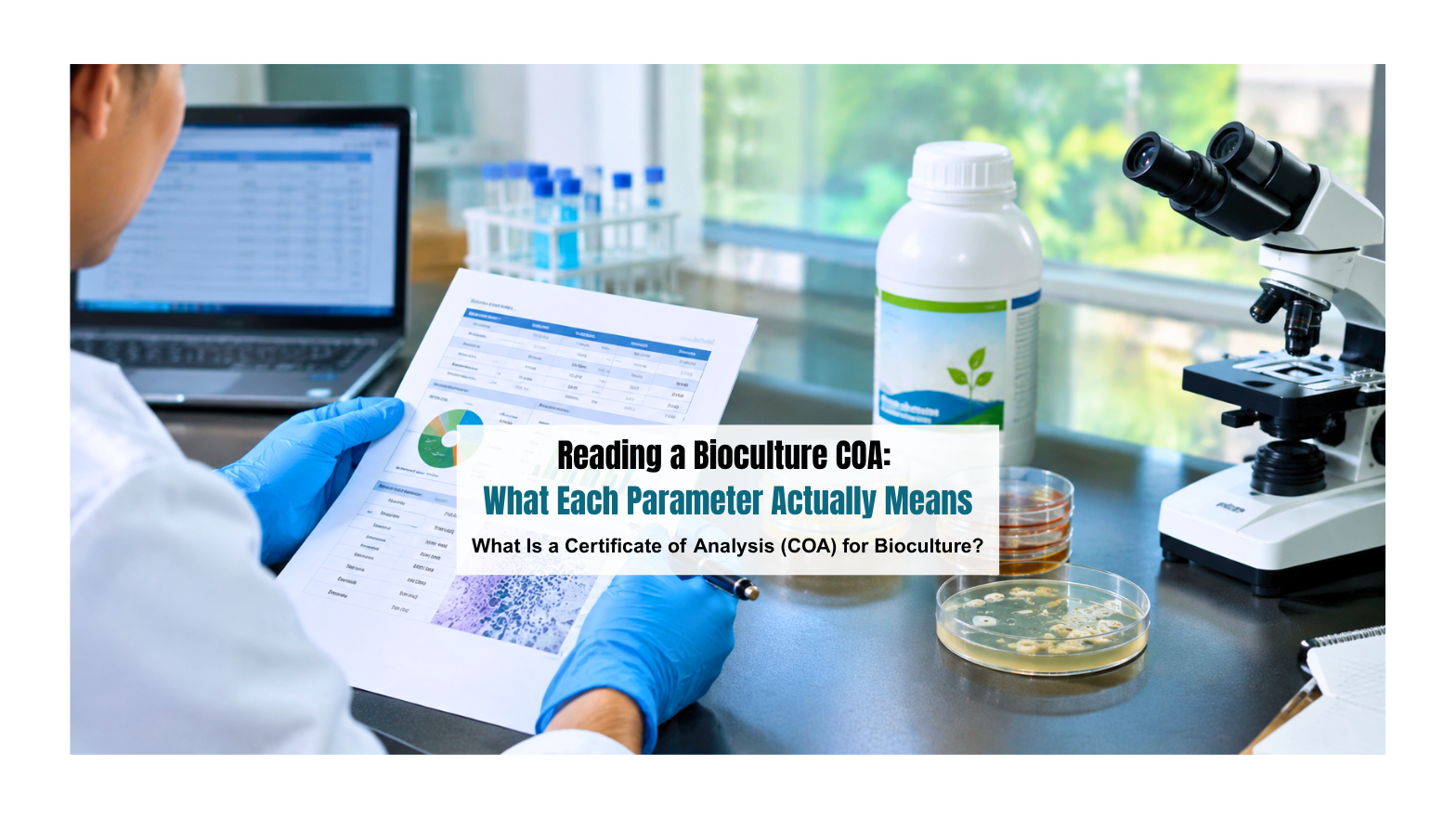
Reading a Bioculture COA: What Each Parameter Actually Means

Why Most COAs Are Misread, And What It’s Costing Your Plant

Most plant operators have experienced this: a bioculture product arrives, the COA is attached, and everyone nods at the numbers, but quietly, no one is entirely sure what they are actually looking at. The lot number gets recorded. The document gets filed. And the product gets dosed into the system based largely on trust, trust that the vendor’s numbers are accurate, trust that someone else in the chain has verified them, trust that it will simply work.

That trust is sometimes well-placed. Often, it is not.

Vendors regularly present bioculture COA documents in dense, column-heavy formats that prioritize the appearance of rigor over actual readability. Parameters are listed without context. Units are inconsistent. Reference ranges are missing. And because most procurement teams are not staffed with microbiologists, the document gets treated as a formality rather than the critical verification tool it was designed to be.

The cost of this gap is real. A bioculture product with degraded viable counts will underperform in your biological treatment stage. Inadequate BOD and COD reduction follows. Discharge parameters begin to drift. And when your effluent fails to meet CPCB or SPCB norms, the penalty lands on your facility, not on the vendor who supplied a product you never properly verified.

The certificate of analysis bioculture suppliers provide is your first line of defense in that chain. Most people are not reading it correctly. This blog changes that. Parameter by parameter, here is exactly what a bioculture COA is telling you, and what it means for your plant.

What Is a Certificate of Analysis (COA) for Bioculture?
What Is a Certificate of Analysis (COA) for Bioculture?

A bioculture COA is a vendor-issued document that certifies a specific batch of microbial product has been tested and meets defined quality standards before it leaves the manufacturing facility. That distinction, batch-specific, tested before dispatch, is what separates a genuine COA from marketing literature.

A COA is not a product brochure. It is not a standard specification sheet that applies to every unit ever produced under a given product name. A real certificate of analysis bioculture document will reference a specific lot number, a specific testing date, and results that correspond to that exact batch, because microbial products are living systems, and quality can vary between production runs.

A responsible manufacturer tests every batch independently. They do not issue a blanket COA generated from historical data and applied across months of production. If a supplier cannot show you a lot-specific COA for the batch you are actually receiving, not a sample document, not a reference file, but the one tied to your shipment, that is the first signal to probe further.

When evaluating a new bioculture vendor, always request the COA for the specific batch being supplied. If they hesitate, that hesitation is information.

The Core Parameters in a Bioculture COA, Explained
The Core Parameters in a Bioculture COA, Explained

COA formats differ between manufacturers in layout, terminology, and depth of testing. However, across responsible bioremediation product suppliers, the following parameters appear consistently. These are the ones that determine whether a product will perform, or quietly fail, inside your ETP or STP.

1. Viable Cell Count / Spore Count (CFU/g or CFU/mL)

CFU stands for Colony Forming Units, a measure of how many living, active microbial units are present per gram or per milliliter of the product. When a bioculture COA lists CFU/g or CFU/mL, it is telling you the biological density of what you are about to dose into your system. Higher numbers are not automatically better, but a number that falls significantly below the product’s stated specification is always a problem.

This is the parameter that most directly predicts treatment performance. A product with a lower-than-specified viable count will underperform in your biological treatment stage. The microbial population you are introducing into the reactor will be insufficient to establish the colony density needed for effective BOD and COD breakdown. You may dose correctly by volume and still see degraded performance, because the product itself delivered fewer active organisms than it claimed.

Viable cell count is also the parameter most sensitive to mishandling. It degrades with exposure to heat, moisture, UV light, and time. A product that was produced with excellent CFU values but stored incorrectly, whether during transit, at a distributor’s warehouse, or at your own facility, can arrive with counts substantially lower than what the COA recorded at the time of manufacture. This is why the manufacturing date and storage conditions on the COA matter as much as the CFU figure itself.

Acceptable ranges for ETP-grade biocultures span a broad spectrum depending on organism type, product formulation, and treatment application. Aerobic and anaerobic strains have different benchmarks. Granular, powder, and liquid formulations are not directly comparable on a per-unit basis. The meaningful check is not a universal threshold, it is whether the value on the COA aligns with the specification sheet for that specific product. When it does not, the mismatch requires an explanation before the product is accepted.

2. pH Stability / pH Range

The pH parameter on a bioculture COA tells you the range within which the microbial population in that product remains active, viable, and capable of performing its treatment function. Read carefully, this is distinct from the pH of the product itself, which refers to the formulation’s acidity or alkalinity as a physical characteristic. What matters operationally is the pH window within which those organisms actually work.

This matters more than most operators account for. Biological treatment systems at ETPs do not always hold a stable pH. Industrial influent, particularly from textile, food processing, chemical, or pharmaceutical operations, can introduce significant pH variation into the equalization or aeration stage. If your operating pH drifts outside the range stated on the COA, the microbial culture you have dosed will not perform as expected. This holds regardless of the CFU count. A product with excellent viable counts applied in the wrong pH environment is a wasted investment.

Many biological system failures in ETPs are attributed to poor product quality when the actual cause is a pH mismatch. The culture was fine. The conditions were not. Catching this before dosing, by cross-referencing the COA’s pH range with your system’s actual operating data, prevents troubleshooting exercises that could have been avoided at the procurement stage. Your ETP bioculture parameters must align with your effluent reality, and the COA gives you the data to make that check.

3. Moisture Content

Moisture content is a parameter that primarily applies to powder and granular bioculture formulations, and it is frequently underweighted in the COA review process. It should not be.

In dry microbial products, moisture is the primary accelerant of biological degradation. When moisture content exceeds the manufacturer’s stated threshold, whether during production, storage, or transit, it creates conditions that accelerate microbial death, trigger premature spore germination, and cause the product to clump or cake. A product with elevated moisture content may still visually resemble the original specification. It may smell the same. But its viable count will have declined, often substantially, and dosing will become inconsistent because the product no longer disperses uniformly.

Moisture content on the COA is therefore a direct indicator of how well the product has been handled before it reached your facility. A value within spec suggests the cold chain and storage protocols have been maintained. A value outside spec suggests intervention, whether during manufacturing, warehousing, or the last-mile logistics, that the product has experienced conditions it was not designed to withstand.

Before you even reference the COA, examine the product physically on receipt. Powder products that are clumped, discolored, or unusually hard are showing you moisture compromise before any lab value confirms it. The COA gives you the documented baseline. The physical inspection tells you what happened after that document was issued.

Acceptable moisture content thresholds differ across formulations and should always be verified against the manufacturer’s specification sheet.

4. Enzyme Activity

Not all bioculture COAs include enzyme activity data. Those that do are providing significantly more insight into how a product will perform in the reactor, not just how many organisms are present, but what those organisms are capable of doing.

Enzyme activity in this context refers to the capacity of the microbial culture to produce extracellular enzymes, proteases, lipases, amylases, cellulases, that break down specific categories of organic compounds in wastewater. These are the enzymes that do the actual degradation work on complex pollutants before or alongside microbial assimilation. A bioculture product selected for an industrial ETP treating food processing effluent, for instance, should demonstrate meaningful lipase and amylase activity. A product selected for pharmaceutical wastewater treatment has different enzyme requirements entirely.

The reason this matters specifically for COA review is that CFU count and enzyme activity are not always correlated. A product with an acceptable viable count can still display low enzyme activity, either because the strains present are not producing the enzymes required for your specific influent composition, or because enzyme activity has declined due to suboptimal storage conditions. In that scenario, the product may colonize your bioreactor adequately but fail to degrade the target pollutants at the rate your discharge parameters require.

For operators managing ETPs with complex organic loads, food processing, pharmaceuticals, textiles, tanneries, enzyme activity data on the COA is not optional detail. It is a primary performance indicator. Where a supplier does not include it, asking for supporting biodegradation performance data for your specific effluent type is a reasonable and appropriate request.

5. Shelf Life and Manufacturing Date

Shelf life on a bioculture COA is not a conservative estimate. It is the specific window within which the manufacturer guarantees the stated viable count will hold, provided the product is stored exactly as specified. Once that window closes, the guarantee does not exist. The product may still contain active organisms. It may even perform adequately. But you are operating outside the validated specification, and if system performance degrades, you have limited recourse.

This is a parameter where procurement timing creates real operational risk. Teams that purchase bioculture products in bulk to reduce per-unit cost sometimes hold inventory beyond its active window. A product that arrives with six months of shelf life remaining but sits in a stores room for four of those months before dosing begins leaves a narrow margin, and that margin assumes storage conditions have been maintained perfectly throughout. If temperature fluctuations or humidity excursions have occurred, the effective remaining potency may already be below specification even within the stated shelf life.

Every COA review for a bioculture product should include three simultaneous checks: manufacturing date, expiry or shelf life, and current date. Build lead time into your procurement planning so that products are dosed well within their active window, not in the final weeks of it. And cross-reference the storage conditions printed on the COA, temperature range, humidity limits, light exposure requirements, against where and how you actually store materials at your facility.

Bioculture shelf life is a compliance consideration as much as it is a quality one. If your biological system underperforms because the culture was past its active window, your discharge data suffers, and regulatory bodies are not interested in supply chain explanations.

6. Absence of Pathogens / Contaminant Screen

A COA from a responsible manufacturer will include documented confirmation that the product has been screened for pathogenic organisms, commonly Salmonella species, pathogenic strains of E. coli, and other regulated contaminants relevant to the product’s application context. This is typically expressed as an absence result: tested and not detected within a defined sampling quantity.

Most operators reading a bioculture COA focus heavily on CFU count and skip past the pathogen screen, treating it as a technical formality rather than a meaningful parameter. This is a mistake, and the consequences are more serious than many realize.

A contaminated microbial culture introduced into a biological treatment system does not simply fail to work. It can actively disrupt the existing microbial community in your reactor, the established biomass that has been conditioned over time to your specific influent. Pathogenic or competitive organisms introduced alongside the intended culture can suppress beneficial populations, alter the balance of the biological stage, and in severe cases cause a system crash that takes weeks to recover. That recovery period is your compliance exposure. Effluent quality during a crashed biological system is unlikely to meet your CPCB or SPCB discharge norms.

The regulatory framework does not distinguish between a system failure caused by operator error and one caused by a compromised input product. Your effluent quality is your responsibility. A clean pathogen screen on the COA is part of the documented due diligence that demonstrates you verified the inputs your system received.

How to Use the COA Before Every Purchase, A Quick Checklist
How to Use the COA Before Every Purchase, A Quick Checklist

Before approving any bioculture purchase or accepting a delivery, the following checks should be completed against the COA provided:

  • Confirm the COA references the specific batch or lot number being supplied, not a generic document
  • Verify the manufacturing date and expiry are clearly stated and that current inventory timing keeps dosing within the active shelf life window
  • Compare the CFU/g or CFU/mL value against the product’s own specification sheet, not against a general benchmark
  • Confirm the pH range stated on the COA is compatible with your ETP’s actual operating pH
  • Check that moisture content falls within the manufacturer’s stated limit for that formulation
  • Review enzyme activity data if your effluent contains complex organic compounds, and request supporting performance data if this is absent
  • Confirm the pathogen absence screen is documented and covers relevant organisms
  • For first-time vendors, request third-party lab validation of the stated values before full-scale procurement

If a vendor cannot supply a COA that addresses every item on this list, that is a specification gap that requires resolution before the product is accepted into your facility.

Why This Matters Beyond Product Quality, The Compliance Dimension

Why This Matters Beyond Product Quality, The Compliance Dimension

The connection between a bioculture COA and regulatory compliance is direct, even if it is rarely framed that way in procurement conversations. When a biological treatment system fails, because viable counts were below specification, because pH conditions were mismatched, because moisture had compromised the product, because a contaminated culture crashed the reactor, the downstream consequence is effluent that exceeds your permitted discharge limits. That exceedance triggers CPCB or SPCB review. And in that review, the origin of the failure is irrelevant to the enforcing authority.

Plant operators are responsible for their discharge quality. Regulatory bodies do not accept vendor failure as a mitigating factor in non-compliance proceedings. The penalties, operational shutdowns, and reputational damage that follow a discharge violation land entirely on the facility.

This is the regulatory reality that makes the COA more than a technical document. Treated correctly, it is a documented verification trail, evidence that before dosing any microbial product into your treatment system, your team confirmed the biological input met specification across every critical parameter. That trail demonstrates due diligence. It protects you operationally and positions you to respond to regulatory scrutiny with documented decisions rather than verbal explanations.

Experienced plant managers do not treat the COA as fine print. They treat it as a procurement gatekeeping document, the checkpoint between a supplier’s claim and their system’s performance.

Read the COA Like Your Compliance Depends on It. Because It Does.

A bioculture COA is not supporting documentation. It is the technical specification that determines whether your investment in wastewater treatment microbial products will produce the results your system needs, or create the problems your operations cannot afford.

The parameters covered in this guide, viable cell count and CFU values, pH stability range, moisture content, enzyme activity, shelf life and manufacturing date, and pathogen absence testing, are not bureaucratic line items. Each one maps directly to a failure mode in a biological treatment system. Each one connects to an effluent quality outcome. And each one is something you now have the context to evaluate before the product is dosed, not after performance degrades.

Microbial product quality is verifiable before purchase. The COA is how you verify it. Use it that way.

At Team One Biotech, every batch dispatched comes with a fully documented, lot-specific certificate of analysis covering all critical ETP bioculture parameters, because we believe your plant deserves more than a number on a page. Reach out to our technical team today to request a product COA or to discuss your ETP’s microbial treatment requirements.

Looking to improve your ETP/STP efficiency with the right bioculture?
Talk to our experts at Team One Biotech for customised microbial solutions.

Contact: +91 8855050575

Email:  sales@teamonebiotech.com

Visit: www.teamonebiotech.com

Discover More on YouTube – Watch our latest insights & innovations!-

Connect with Us on LinkedIn – Stay updated with expert content & trends!
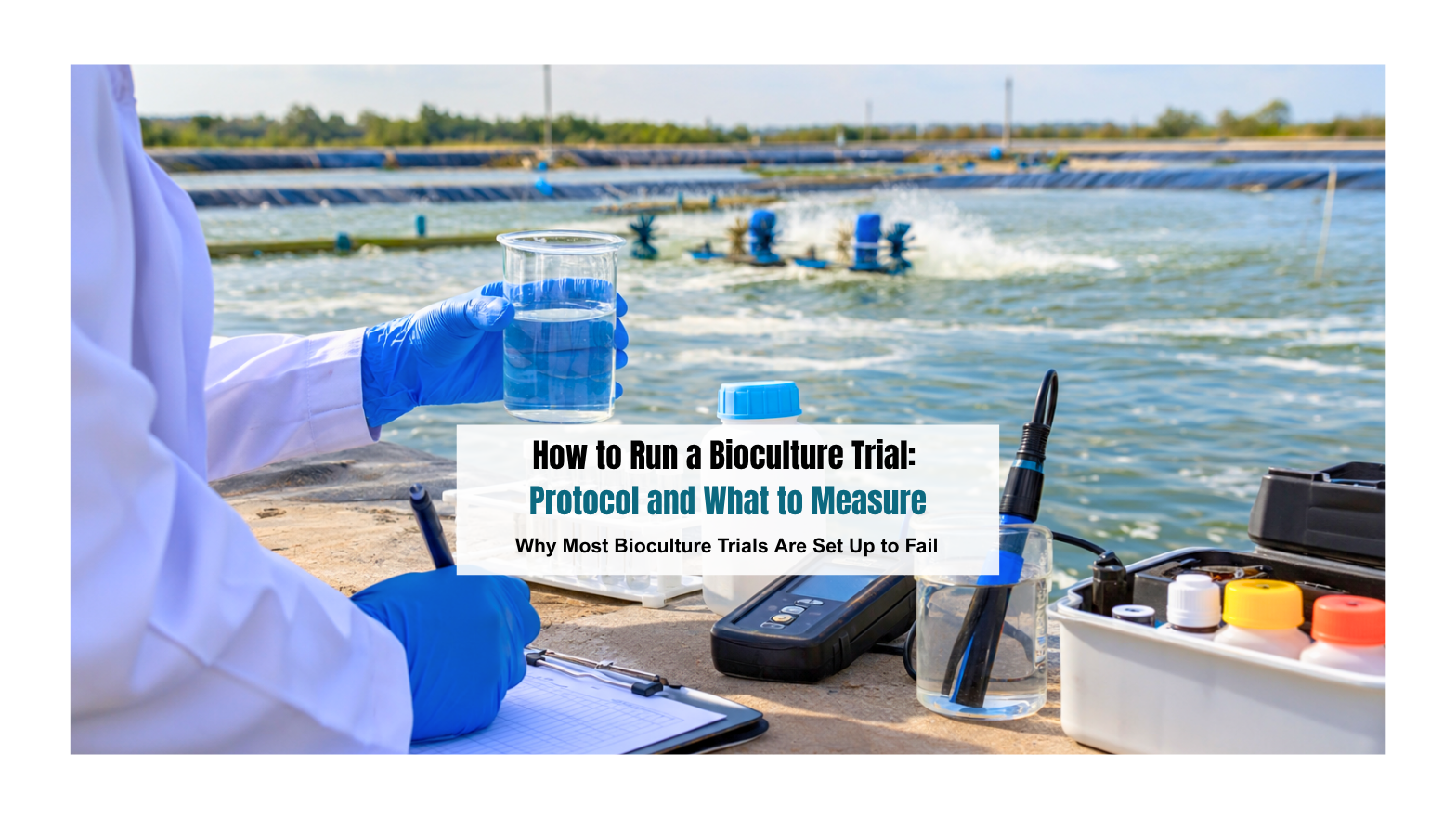
How to Run a Bioculture Trial: Protocol and What to Measure

There is a specific kind of dread that settles in when you are considering switching to a new biological additive and your next PCB inspection is six weeks away. You have heard the pitch before. The sales rep was confident, the product literature looked solid, and then three weeks in, your BOD climbed, your MLSS dropped, and you spent the next month explaining to your compliance officer why effluent numbers looked worse than they did before the trial started.

That experience is more common than anyone in this industry likes to admit. And it is not always the product’s fault.

The truth is, most bioculture trials fail not because the biology does not work, but because the trial itself was never properly designed. There was no clean baseline. The evaluation window was too short. Variables were not isolated. And when something shifted, nobody could say with confidence whether it was the bioculture, a load spike, an aeration issue, or just normal process variation.

This guide is written for the plant superintendent, the ETP manager, the environmental engineer who has been burned before and needs a structured, compliance-safe bioculture trial protocol they can actually implement, one that produces real data, protects their consent posture, and gives the biological additive a fair evaluation. If you are serious about biological additive evaluation and doing it right, start by getting clear on what a bioculture for wastewater treatment is designed to do, and what it can reasonably be expected to do in a system like yours.

Why Most Bioculture Trials Are Set Up to Fail

Why Most Bioculture Trials Are Set Up to Fail

Walk into any plant that has had an inconclusive bioculture trial and ask what the baseline data looked like before introduction. More often than not, you will get a pause. Maybe some logbook entries. Maybe a rough idea of where BOD was running. But rarely a clean, consistent, two-week record of influent and effluent parameters, MLSS trends, SVI behavior, and DO profiles.

That is the first failure. Without a documented baseline, you have no reference point. You cannot measure improvement against a number you never recorded.

The second failure is timeline. ETP managers, under pressure to demonstrate results and justify procurement decisions, often evaluate a bioculture trial over a window that is too short for any meaningful biological shift to occur. Bacteria do not operate on procurement timelines. Establishing a stable, active microbial population in a biological treatment system takes time, and that time varies significantly depending on your system’s HRT, SRT, and the existing biomass condition.

The third failure is variable isolation. If your inlet load changes significantly during the trial, or if you adjust your aeration regime, or if you switch a coagulant, and you did not document those changes, you cannot attribute any outcome, positive or negative, to the bioculture with any credibility. Untreated inlet shock loads arriving mid-trial are the single most common reason a good product looks like a bad one.

The reason this guide matters is simple: a well-designed ETP bioculture trial is not complicated, but it does require discipline. And when a parameter moves and you cannot explain it, the discipline is to diagnose why an ETP is underperforming biologically before you blame the product. That discipline starts before you open the product container.

Before You Begin, Establishing a Reliable Baseline

Before You Begin, Establishing a Reliable Baseline

This is, without question, the most important phase of any bioculture trial protocol. If you skip this, everything that follows is opinion, not evidence.

Before introducing any biological product into your system, commit to a minimum of one to two weeks of consistent, documented parameter recording. This is your reference window. Every measurement you take during the trial will be compared against this baseline, so the quality of your baseline directly determines the credibility of your results.

Here is what needs to be tracked and documented before day one of the trial:

Influent flow rate and load variation, Know what is coming in. Inlet load fluctuations during the trial are one of the most common confounding factors. If you did not document them in the baseline period, you cannot account for them later.

BOD, inlet and outlet, Your biochemical oxygen demand numbers, both ends, measured consistently and at the same time of day if possible.

COD, inlet and outlet, Chemical oxygen demand, same discipline. Do not mix sampling times between baseline and trial periods.

TSS, Total Suspended Solids, At the effluent end, and ideally at key internal points if your system design permits.

MLSS, Mixed Liquor Suspended Solids, This tells you where your biomass concentration is sitting. Any biological trial changes this number over time; knowing where it started is essential. If you have never worked the number through properly, read up on how much bioculture your plant actually needs and calculate your MLSS, F/M ratio and organic loading rate before you set any dosing target.

SVI, Sludge Volume Index, Settleability of your mixed liquor. Changes in SVI during a trial can indicate shifts in floc structure, filamentous activity, or biomass health. SVI belongs on any serious checklist for monitoring biological health and effluent stability, because it usually moves before your compliance parameters do.

Dissolved Oxygen (DO), At the inlet to the aeration zone, mid-zone, and outlet. DO profiles tell you whether your system is supporting aerobic biological activity at the levels the incoming load demands.

pH and temperature trends, Both affect biological activity profoundly. Document them daily.

Sludge age or SRT, if applicable, Particularly relevant in activated sludge systems and MBBRs where biological retention time directly influences the trial timeline.

Record all of this consistently. Use the same sampling points. Use the same lab methods. Do not change your lab protocol midway through and then try to compare numbers.

The Bioculture Trial Protocol, Step by Step

The Bioculture Trial Protocol, Step by Step

This is the core of structured bioculture testing. Six steps, applied with discipline, will give you data you can actually use.

Step 1, Define Your Trial Zone and Timeline

Before anything goes into the system, decide exactly where the trial will run. Is this a specific aeration tank? A dedicated zone in an SBR or MBBR system? The full biological treatment train? The answer affects how you dose, what you monitor, and how you interpret results.

Be clear about your timeline, and be realistic. A meaningful bioculture trial duration depends on your system’s HRT and SRT, and it is rarely as short as plant managers initially hope. Systems with longer hydraulic retention times or slower biological cycles need more time for any microbial shift to express itself in effluent quality numbers. Rushing this is the single biggest mistake made in ETP bioculture trials. If you close out the evaluation before the biology has had adequate time to establish, you will get inconclusive data and draw the wrong conclusions.

Plan for a minimum evaluation window of several weeks. Systems with high complexity or longer HRT may require considerably more time.

Step 2, Confirm System Stability Before Introduction

Do not introduce a bioculture into an unstable system. This sounds obvious, but it is violated regularly.

If your plant is currently managing a sudden inlet load spike, dealing with a toxic event, recovering from an aeration equipment failure, or trending toward a consent boundary, wait. Wait until the system has returned to the conditions represented in your baseline.

Why? Because introducing a biological product into an unstable system does two things simultaneously: it complicates the trial and it complicates your compliance posture. If parameters deteriorate after introduction, you will not know whether the plant was already heading in that direction or whether the bioculture introduction was a factor. And when you are standing in front of a CPCB or SPCB inspection officer, “we were in the middle of a trial” is not a strong position.

Confirm that DO, pH, MLSS, and inlet load are all within the ranges documented in your baseline before proceeding to dosing.

Step 3, Dosing Strategy and Introduction Method

There are two distinct phases in a bioculture dosing program: seed dosing and maintenance dosing.

Seed dosing is the initial, higher-concentration introduction of the biological culture. The goal here is to establish a meaningful population of the target microbial strains within the treatment system. Maintenance dosing comes after, a lower, ongoing application designed to sustain population levels and compensate for washout from the system over time.

When introducing the bioculture, do it gradually. Do not dump the entire seed dose in at once if the system is large. Introduce it at a consistent point in the aeration zone, monitor DO response in the hours immediately following dosing, and ensure your aeration is running at levels that support the incoming biology.

Do not adjust your aeration regime significantly during the first week of the trial. You want the bioculture to be the variable, not your aeration.

For dosing quantities and concentrations specific to your system, follow the manufacturer’s technical data sheet. System-specific dosing should be calculated based on your MLSS target, system volume, and inlet organic load, not estimated from a generic table.

Not sure about the right dosing plan for your system? Design a site-specific dosing protocol with our technical team at Team One Biotech, built around your actual plant parameters, or request free bioculture samples for your trial and put it to the test on your own effluent.

Step 4, Daily Monitoring During the Trial Period

Once dosing begins, monitoring discipline is everything. A trial without records is not a trial. It is an anecdote.

Daily monitoring: Dissolved oxygen at key aeration points, pH, temperature, and a visual observation of the mixed liquor, color, clarity, foam type, sludge blanket behavior. These daily observations cost very little time but build a picture of how the system is responding biologically before the lab numbers catch up.

Every two to three days: BOD at the effluent end, COD at the effluent end, TSS. These are your compliance parameters. Track them against your baseline numbers and flag any trend, upward or downward, immediately.

Weekly: MLSS, SVI, and if possible, a microscopic examination of floc structure. Under a microscope, you can see changes in bacterial morphology, floc density, and the presence or reduction of filamentous organisms. Experienced operators know what a healthy mixed liquor looks like under a lens. If you have access to lab microscopy, use it.

When you see a spike in BOD, COD, or TSS during the trial, do not immediately attribute it to the bioculture. Cross-reference your inlet load data from that same day. Check aeration logs. Check for any changes in upstream process inputs. Spikes happen. The question is always: what caused the spike?

Step 5, Identifying Positive Biological Indicators

BOD COD TSS monitoring gives you the compliance picture. But experienced ETP operators also know to watch for qualitative biological signals that indicate the system is responding well, often before the numbers fully reflect it.

Watch for:

Improved floc formation and settling. Better-structured biological floc settles faster and more completely. If your SVI is trending down and your supernatant is getting clearer, that is a positive signal.

Reduction in filamentous bulking. If your system had filamentous organisms causing poor settleability before the trial, a shift in biological population health will often express itself as improved sludge density and reduced filamentous presence under microscopy.

Sludge blanket stability. A more stable blanket in your secondary clarifier, without the rising sludge or floating clumps that indicate denitrification or poor settling, is a good sign.

Odor reduction in the aeration zone. A healthy aerobic biomass does not smell like a septic system. If the odor profile in the aeration zone improves, that is biology working.

Gradual improvement in effluent clarity. Not a single-day drop, a sustained, progressive improvement over the trial window. That is what you are looking for.

These qualitative observations do not replace your lab data. But they support it, and they give you early directional signals during the trial.

Step 6, End-of-Trial Evaluation

At the close of your trial window, you have your baseline data and your trial-period monitoring records. Now compare them honestly.

Define trial success correctly. The benchmark is not just whether your effluent met consent limits during the trial, your system should have been meeting those limits before the trial as well. The question is: did performance improve in a measurable, sustained way over the pre-trial baseline? Did MLSS stabilize or improve? Did BOD and COD outlet values trend downward relative to inlet load? Did SVI move in the right direction?

A single parameter spike during the trial does not constitute failure, context matters. If that spike coincided with an unusual inlet event, a power interruption to aeration, or a known upstream process change, account for it in your evaluation. Attributing a load-driven COD spike to a bioculture without checking the inlet data is bad engineering.

Pilot Trials Only Check Viability & Efficiency — Full-Scale ETP Results Are Always Much Better 

A pilot trial is not designed to show you the best-case performance of a bioculture. It is designed to answer only one question: Does this biology survive, acclimatize, and create a measurable positive shift in YOUR effluent, under YOUR plant conditions? In a pilot, you are dosing a limited zone, for a short window, with high washout and without complete system colonization. You are seeing the START of the biological curve, not the peak. In an actual, full-scale ETP, with continuous maintenance dosing, complete aeration volume colonization, proper SRT control, and mature biofilm and floc formation over 60-90 days, the results are always significantly better. What looks like a modest 15-20% improvement in COD/BOD and a small drop in SVI during a pilot trial typically translates to 30-50% better treatment stability, stronger shock-load recovery, and sustained compliance in full-scale operation. So do not judge the final ROI on pilot numbers alone. The pilot proves viability. The full-scale ETP is where biology delivers its real performance.

Compliance Continuity, Running a Trial Without Risking Your Consent

This is the section that ETP managers actually read twice.

A well-designed bioculture trial is additive to your treatment process. It introduces biology that supports and enhances your existing biomass, it does not replace your treatment system or create a compliance gap. But that only holds true if the trial is designed correctly.

The CPCB and SPCB effluent discharge norms that govern your consent to operate do not pause for trials. Your effluent quality must remain within those norms regardless of what is happening inside your aeration tank. This means your trial design must include a contingency plan.

If during the trial window you see any parameter trending toward your consent boundary, BOD climbing, TSS rising, your response protocol should be clear and pre-decided: increase aeration, reduce inlet load if possible, pause any non-essential process adjustments, and contact your bioculture supplier’s technical team immediately with your monitoring data.

Do not wait for a breach to react. The monitoring frequency built into this protocol exists precisely to give you early warning. Use it.

Team One Biotech products are formulated for smooth integration into existing biological treatment systems. Before beginning your trial, reach out to our compliance-aware technical team, we help you plan for zero disruption to your consent conditions.

What to Do After the Trial, Decision Framework

Your trial is complete. You have the data. Now make a decision based on it, not on intuition.

If results show consistent improvement across BOD, COD, TSS, MLSS, and SVI, sustained across the full trial window, with no compliance events and stable system behavior, proceed to full-scale adoption. The data supports it.

If results are mixed: Before concluding anything about the product, re-evaluate your dosing. Assess whether there were inhibitory substances present in the influent during the trial, surfactants, heavy metals, disinfectants, that could have suppressed microbial activity. Consult the supplier’s technical team with your full dataset before making a procurement decision.

If no measurable improvement is observed: Investigate system conditions first. Was DO consistently at adequate levels throughout the trial? Was pH within the range that supports the bioculture’s target microbial populations? Was the organic load within the range the product is designed to treat? Product performance is always context-dependent. Eliminate system factors before concluding product failure.

Team One Biotech’s technical team is part of this evaluation process, not just the sales process. Bring your data to us.

Frequently Asked Questions About Bioculture Trials

Q: How long should a bioculture trial run before evaluating results?

Trial duration depends on your system’s HRT, SRT, and existing biomass health. A meaningful trial typically spans several weeks at minimum. Systems with longer HRT or slower biological cycles will need more time. Closing the evaluation window too early is one of the most consistent reasons bioculture trials yield inconclusive or misleading data.

Q: Can I run a bioculture trial while staying compliant with CPCB/SPCB norms?

Yes, and that is exactly how a trial must be designed. A properly structured bioculture trial is introduced into a stable system, monitored daily, and managed so that effluent quality remains within consent limits throughout. Team One Biotech’s technical team routinely assists clients in planning compliance-safe trials tailored to their specific discharge conditions.

Q: What parameters should I monitor during a bioculture trial?

At a minimum: BOD, COD, and TSS at the effluent end, along with MLSS, SVI, DO, pH, and temperature within the biological treatment zone. The specific parameters and acceptable ranges vary by plant type, system design, and the discharge norms applicable to your facility.

Q: What if I see a spike in BOD or COD during the trial?

Do not immediately attribute the spike to the bioculture. Check your inlet load data from the same day. Review your aeration performance logs. Isolate the probable cause before drawing any conclusions. Then contact your bioculture supplier with the full monitoring record for a technical assessment.

Q: Does Team One Biotech offer technical support during a trial?

Yes. Team One Biotech provides application support, dosing guidance, and trial design assistance to ensure your evaluation is structured, measurable, and safe from day one through final assessment.

Run the Trial Right, and the Data Will Speak

Come back to where this started: the anxiety of trialing a new biological additive when you have a PCB inspection on the horizon and no margin for system instability. That anxiety is legitimate. But it points to the wrong risk.

The risk is not the bioculture. The risk is a poorly designed trial, one without a clean baseline, without a realistic timeline, without disciplined daily monitoring, and without a compliance contingency plan. That kind of trial sets up both the plant and the product to fail.

A structured bioculture trial protocol, applied with the same rigor you would bring to any engineering change in your plant, is not a risk. It is how you generate the evidence you need to make a defensible procurement decision and protect your compliance record at the same time.

Team One Biotech has helped ETP and STP operators across industries run structured, compliance-safe bioculture trials that produce measurable, documented results. If you are evaluating a biological treatment solution, do not guess your way through it.

Looking to improve your ETP/STP efficiency with the right bioculture?
Talk to our experts at Team One Biotech for customised microbial solutions.

Contact: +91 8855050575

Email:  sales@teamonebiotech.com

Visit: www.teamonebiotech.com

Discover More on YouTube – Watch our latest insights & innovations!-

Connect with Us on LinkedIn – Stay updated with expert content & trends!
GRAS and Non-GMO Status: What It Means for Wastewater Bacteria

There is a kind of quiet pressure that sustainability officers and ETP plant heads carry every single day. It does not make it into board presentations. It rarely surfaces in vendor meetings. But it is always there, the weight of knowing that one wrong input into a biological treatment system can cascade into a compliance failure, a regulatory penalty, or worse, an ecological incident that takes years to walk back.

The pressure is not just about hitting discharge norms. It is about making the right calls at the procurement stage, before the product ever reaches the treatment tank. And one of the most underexamined decisions in that procurement process is the choice of bacterial culture used in biological wastewater treatment.

Not all bacterial cultures are created equal. The origin, classification, and regulatory standing of those microbial strains matter far more than most procurement checklists acknowledge. This is where GRAS bacteria wastewater applications and Non-GMO bioculture status stop being administrative formalities and start becoming operational necessities.

What Does GRAS Actually Mean, and Why It Exists

What Does GRAS Actually Mean, and Why It Exists

The Origin of the GRAS Framework

GRAS stands for Generally Recognized As Safe. The classification originated within the food and pharmaceutical sectors in the United States, developed by the FDA to distinguish naturally occurring, well-studied substances from those requiring formal pre-market safety approval. The underlying logic was straightforward: some materials have such a long, documented history of safe human use that subjecting them to the full drug or additive approval process would be unnecessary and disproportionate.

In the context of environmental biotechnology and wastewater treatment, GRAS designation carries a specific and important meaning. When a bacterial strain holds GRAS status, it signals that the microorganism has a well-established history of safe use, is non-pathogenic to humans and animals, and does not pose a known risk to ecosystem function when used in its intended application.

It is worth clarifying one point that often gets blurred: GRAS is a US FDA framework. It was not designed as a universal international standard. However, it has become widely referenced across global industries, including environmental compliance and biological wastewater treatment, as a credible and recognized benchmark for microbial safety. Procurement teams and plant managers in India, Southeast Asia, the Middle East, and Europe routinely reference GRAS classification when evaluating bioculture suppliers, precisely because it carries the weight of a well-defined regulatory process.

How GRAS Applies to Bacterial Strains in Industrial Use

When a bioculture manufacturer states that their products are formulated using GRAS-classified bacterial strains, that claim carries specific implications, and it is worth understanding exactly what those implications are.

First, it means the strains used are non-pathogenic. They do not cause disease in humans, animals, or plant life under normal conditions of use. This matters in open treatment environments where operators and maintenance staff come into regular physical proximity with the treatment system.

Second, GRAS-classified strains are assessed for horizontal gene transfer risks. Horizontal gene transfer, the movement of genetic material between microorganisms, is a mechanism by which bacteria can exchange traits in ways that alter their behavior unpredictably. Safe bacteria strains that meet GRAS criteria carry low or negligible horizontal gene transfer risk, meaning they are stable in industrial conditions and do not carry traits that could be inadvertently transferred to native environmental bacteria.

Third, these strains have demonstrated stability under industrial conditions, variations in temperature, pH, organic loading, and influent composition. Their behavior is predictable within acceptable biosafety parameters, as established by international biosafety standards.

In short, GRAS classification is not a marketing label. It is a technical designation grounded in documented scientific evidence, strain-level data, and regulatory review.

Non-GMO Biocultures, More Than a Label

Defining Non-GMO in the Context of Microbial Products

The term Non-GMO is well understood in the food sector. In the context of bacterial cultures used for biological wastewater treatment, it deserves an equally precise definition.

A Non-GMO bacterial strain is one that has not been genetically engineered or recombinantly modified in any way. These are naturally isolated organisms, strains that exist in nature, selected and cultivated for their specific metabolic capabilities, and propagated without any deliberate alteration of their genetic structure. They are what they are because of natural selection and environmental adaptation, not laboratory intervention.

The distinction between naturally adapted strains and laboratory-engineered strains has real implications, regulatory, ecological, and operational. Several national environmental boards and industrial discharge regulatory bodies specifically prefer or mandate the use of non-engineered biological agents in open treatment systems. The reason is straightforward: when a biological agent is released into an ETP or STP environment, it interacts with a complex, living ecosystem of native microorganisms. Introducing an organism whose genetic makeup has been artificially altered adds a layer of unpredictability that regulators are, understandably, reluctant to accept.

The Ecological Risk of Introducing Engineered Strains

Think about it this way. Introducing a genetically engineered organism into a functioning biological treatment system is not unlike introducing a foreign species into a natural ecosystem. The existing biological community has evolved a balance, different microbial populations competing, cooperating, and cycling nutrients in ways that collectively achieve treatment outcomes. Introduce something that behaves differently from how nature designed it, and that balance can shift in ways that are difficult to predict and harder to reverse.

This is precisely why the non GMO bioculture designation is not a passive claim. It is an active assurance to plant operators and environmental compliance managers that the biological agent they are introducing will behave in a manner consistent with natural microbial ecology, supporting the system rather than disrupting it.

At Team One Biotech, all bioculture products are formulated exclusively with naturally sourced, Non-GMO bacterial strains, strains selected for their compatibility with industrial and municipal effluent environments, without any genetic modification.

Why Compliance Teams Should Care, Regulatory and Operational Implications

Why Compliance Teams Should Care, Regulatory and Operational Implications

Alignment with Environmental Board Guidelines

Let us address the compliance angle directly, because this is where abstract definitions translate into concrete operational risk.

Pollution Control Boards across India, and equivalent regulatory authorities in most countries, specify that biological agents used in wastewater treatment must be naturally occurring and non-pathogenic. These are not suggestions buried in footnotes. They are active requirements that govern what can legally and safely be introduced into treatment systems that ultimately discharge into public water bodies or municipal drainage networks.

When an ETP plant head or environmental compliance manager can produce documentation showing that their bacterial cultures are GRAS-classified and Non-GMO, they hold something tangible: verified evidence of compliance. During a regulatory audit or inspection, that documentation does not just answer questions, it prevents them from being asked in the first place.

This is risk management in its most practical form. Using GRAS-certified microorganisms reduces liability exposure. It shortens audit cycles. It gives the compliance team a defensible, evidence-backed position if a regulatory body ever scrutinizes the biological treatment inputs of a facility.

The alternative, using bacterial cultures whose regulatory classification is unclear, undocumented, or inconsistent with local norms, creates a gap in the compliance record that no amount of operational performance data can fully close.

Corporate ESG and Procurement Mandates

There is a second pressure point that has grown significantly in recent years, and it sits above the plant level. Corporate sustainability frameworks and ESG (Environmental, Social, and Governance) reporting mandates are increasingly specific about what goes into a company’s operations, including wastewater treatment inputs.

This is no longer limited to large multinationals with publicly disclosed sustainability reports. Mid-sized industrial manufacturers with international export customers are subject to supply chain audits that probe the environmental credentials of their operational inputs. Biological wastewater treatment products fall within scope. The question is no longer just “Does your ETP meet discharge norms?”, it has become “Can you demonstrate that the biological agents in your treatment system meet defined environmental safety standards?”

GRAS and Non-GMO status give procurement and sustainability officers a verifiable, globally referenced answer to that question. These are not proprietary claims made by a single manufacturer. They are recognized markers that external auditors, ESG rating agencies, and international buyers can independently cross-reference.

Looking for a wastewater bioculture that meets your compliance checklist? Contact Team One Biotech for product documentation, strain data sheets, and regulatory alignment support, before your next audit.

What to Look for When Evaluating a Bioculture Supplier

What to Look for When Evaluating a Bioculture Supplier

This section matters most to the people who sit across from sales representatives and vendor presentations with a procurement checklist in hand. Here is what that checklist should include, and why each point is non-negotiable.

Are the bacterial strains classified as GRAS or carry equivalent international biosafety recognition?

Ask for strain-level documentation, not just a brand claim. A credible supplier should be able to provide specific strain identification and the regulatory basis for their safety classification. If a manufacturer can only offer a broad product description without strain-specific data, that is a gap worth probing.

Is the product formulated entirely with Non-GMO microbial strains?

Request a formal declaration from the manufacturer confirming the absence of genetically modified organisms in their bioculture formulation. This declaration should be available in writing and should be specific to the product in question, not a general company policy statement.

Has the bioculture been tested in conditions similar to your effluent type?

Performance in a domestic STP treating municipal sewage can differ significantly from performance in an industrial ETP handling high-strength effluent from a food processing plant, textile mill, or pharmaceutical facility. Ask for application data relevant to your sector. (Disclaimer: Performance parameters are indicative and vary based on influent characteristics, temperature, pH, and system design of each individual plant.)

Does the supplier provide regulatory support documentation?

A credible manufacturer should be able to support your compliance team during audits, not just at the point of sale. Ask whether they provide GRAS certification documentation, Non-GMO declarations, and strain safety data sheets in formats that are audit-ready. The relationship with a bioculture supplier should extend beyond the transaction.

What is the shelf life and storage protocol?

Biological products are alive. They degrade under improper storage conditions, and their efficacy depends on maintaining viable microbial populations through to the point of application. Stability data matters for procurement planning, particularly for facilities that maintain inventory buffers or operate in locations with variable cold-chain infrastructure.

Team One Biotech provides full product documentation, strain classification certificates, and dedicated technical support for ETP compliance teams. Reach out to our specialists today.

Common Misconceptions About GRAS Bacteria in Wastewater

Let us address a few assumptions that circulate in procurement and compliance conversations, some of them subtly incorrect in ways that matter.

“GRAS means FDA-approved.”

Not exactly. GRAS is either a self-affirmed classification supported by scientific evidence, or a notified status submitted to the FDA for review. It is not the same as formal drug approval, which involves a different, more intensive pre-market review process. However, GRAS is a rigorous standard, one that requires documented evidence of safety, non-pathogenicity, and appropriate use conditions. Calling it less than FDA approval does not diminish its credibility; it simply clarifies what it is.

“Non-GMO bacteria are less effective than engineered strains.”

This assumption has been repeated in supplier conversations long enough that some compliance managers now accept it as fact. It is not. Naturally adapted wastewater treatment bacteria, selected over time through environmental exposure to specific industrial effluents, can develop exceptional metabolic capabilities. When properly matched to the organic composition and conditions of a specific effluent stream, safe bacteria strains derived from natural sources can match or outperform engineered alternatives, without the regulatory complexity, ecological unpredictability, or audit risk that comes with genetically modified organisms.

“Any biological product on the market is automatically safe.”

This is perhaps the most dangerous assumption in the group. Regulatory compliance for biological agents used in biological wastewater treatment is not automatically enforced at the point of market entry in every jurisdiction. Products can be sold and applied without the supplier having formally established GRAS or equivalent classification for their strains. Procurement teams must verify safety status independently, not assume it because a product is commercially available.

“GRAS status is the same everywhere.”

Standards and their interpretation vary across regulatory frameworks. What satisfies a central Pollution Control Board in one state may require additional documentation in another. What meets the threshold for an ISO-certified facility may not satisfy the requirements of a company undergoing a third-party ESG audit. Always verify with your local environmental authority and cross-reference supplier documentation accordingly.

(Disclaimer: Regulatory requirements differ across geographies and industrial sectors. Always consult your local environmental authority for jurisdiction-specific compliance guidance.)

Frequently Asked Questions

What does GRAS mean for bacteria used in wastewater treatment?

GRAS, Generally Recognized As Safe, indicates that a bacterial strain has a well-documented history of safe use and is confirmed to be non-pathogenic. In the context of wastewater treatment bacteria, it means the microbial culture introduced into a biological treatment system poses no known risk to human health, operational staff, or the surrounding ecosystem. It is a classification grounded in scientific evidence, not assumption.

Are Non-GMO bacterial cultures less effective in ETP or STP systems?

No. Naturally occurring, Non-GMO bacterial strains, when selected for compatibility with specific effluent compositions and operating conditions, deliver highly effective biodegradation and treatment performance. They do this without the ecological risks or regulatory complications that accompany the use of genetically modified organisms in open treatment environments.

Why do environmental boards prefer GRAS bacteria in wastewater systems?

Regulatory bodies prefer GRAS-classified strains because they are naturally occurring, non-engineered, and carry a well-documented safety record across extended periods of use. This reduces the risk of introducing unpredictable biological variables into water treatment systems that interact with public water bodies and local ecosystems.

How do I know if a bioculture product complies with my local Pollution Control Board norms?

Request strain classification documentation, GRAS certification details, and Non-GMO declarations from your supplier. Cross-reference these against your local PCB or State Environmental Board guidelines. Team One Biotech provides compliance documentation structured to support regulatory verification, including during formal audits.

Can GRAS bacteria be used in both industrial ETP and municipal STP systems?

Yes, GRAS-classified bacterial cultures are suitable across a range of biological treatment environments, from high-strength industrial effluent to domestic sewage. However, strain selection, product formulation, and dosing protocols must be matched to the specific effluent type, organic loading, pH profile, and system design of each individual facility. (Disclaimer: Application parameters are site-specific and vary across different ETP and STP configurations.)

Choosing Compliance-Ready Biology for Your Treatment System

In biological wastewater treatment, what goes into the system matters as much as what comes out of it.

The bacterial cultures introduced into an ETP or STP are not passive additives. They are living biological agents that interact with complex microbial ecosystems, influence treatment performance, and carry regulatory implications that extend from the plant floor to the boardroom. Choosing them carelessly is a risk that most facilities can no longer afford, not with the regulatory scrutiny that environmental compliance now attracts, and not with the ESG transparency that corporate stakeholders and international buyers increasingly expect.

GRAS designation and Non-GMO status are not marketing terms designed to differentiate one supplier’s brochure from another. They are regulatory anchors, documented, verifiable markers that give compliance teams, plant operators, and procurement managers the confidence that the bacterial cultures entering their systems are naturally derived, biologically safe, and aligned with the environmental mandates they are expected to uphold.

As environmental compliance standards continue to tighten across industrial sectors, and as ESG scrutiny moves deeper into supply chains and operational inputs, the choice of a certified, transparent bioculture supplier is becoming a strategic decision, not simply a procurement one. The right partner does not just sell you a biological product. They give you the documentation, the strain data, and the technical support to defend that decision in every audit, every inspection, and every stakeholder review that follows.

Team One Biotech manufactures GRAS-compliant, Non-GMO bacterial cultures designed for both industrial and municipal wastewater systems. Talk to our technical team to find the right bioculture for your ETP, and get the documentation your compliance process demands.

Looking to improve your ETP/STP efficiency with the right bioculture?
Talk to our experts at Team One Biotech for customised microbial solutions.

Contact: +91 8855050575

Email:  sales@teamonebiotech.com

Visit: www.teamonebiotech.com

Discover More on YouTube – Watch our latest insights & innovations!-

Connect with Us on LinkedIn – Stay updated with expert content & trends!
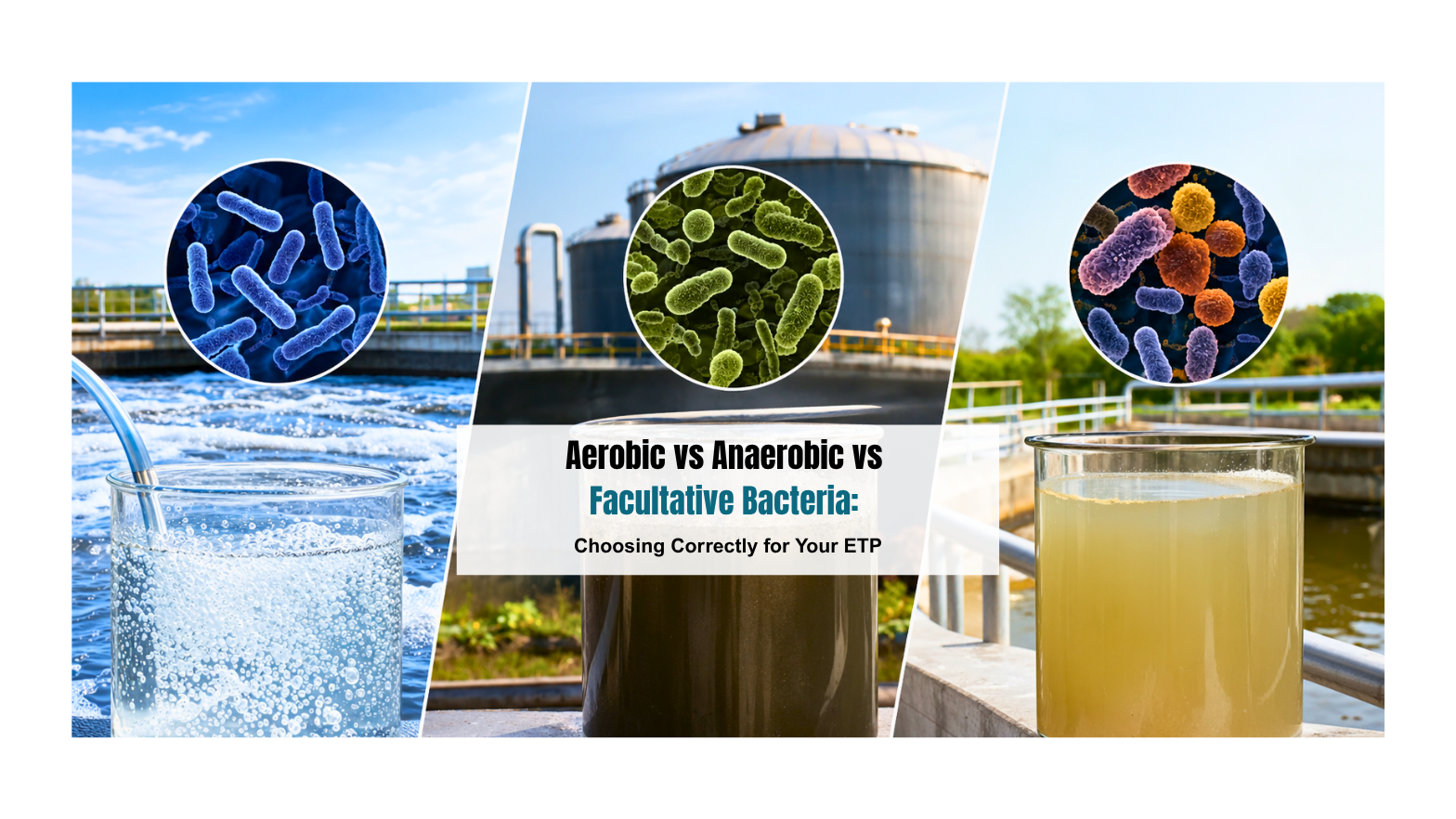
Aerobic vs Anaerobic vs Facultative Bacteria: Choosing Correctly for Your ETP

When a biological treatment system underperforms, effluent colour does not clear, COD remains stubbornly high, or the plant starts generating complaints from downstream users or regulators, the instinct is to add more bacteria. But adding the wrong type of bacteria to the wrong stage of treatment does not fix the problem. It often makes it worse.

This is not a hypothetical scenario. It plays out in ETPs and STPs across India every season, and the consequences are real: consent-to-operate violations, CPCB or SPCB show-cause notices, operational downtime, and the kind of reputational risk that takes years to recover from.

The type of bacteria deployed in a biological treatment system is the single most critical variable in determining process performance, not the tank size, not the hydraulic retention time, not the coagulants dosed upstream. Infrastructure sets the stage. Biology drives the outcome.

CPCB and SPCB discharge violations are frequently traced back not to equipment failure or capacity constraints, but to biological process failure, specifically, the deployment of the wrong microbial communities for the pollutant load and reactor conditions present in the system. This article addresses that problem directly.

By the time you reach the end of this guide, you will have a clear, practical framework for selecting between aerobic bacteria, anaerobic bacteria, and facultative bacteria for each stage of your ETP or STP, and you will understand why getting this wrong is one of the most common and most costly mistakes in biological wastewater treatment.

Aerobic Bacteria, The Workhorses of Organic Degradation

Aerobic Bacteria, The Workhorses of Organic Degradation

How They Function

Aerobic bacteria require dissolved oxygen to survive, grow, and metabolise organic pollutants. In the presence of adequate oxygen, they break down BOD and COD rapidly and with high efficiency, converting organic carbon into biomass, carbon dioxide, and water.

The dissolved oxygen range typically cited for effective aerobic biological treatment falls between approximately 1.5 and 4 mg/L, though the optimal window can shift based on the nature of the wastewater and the organic loading rate applied to the system.

Note: These are indicative ranges based on general process knowledge. Actual operating parameters will vary depending on your specific wastewater composition, organic loading rate, and plant design. Always validate against your ETP’s baseline data.

Aerobic bacteria are also sensitive to temperature and pH shifts. Broadly, mesophilic aerobic cultures perform within temperature ranges commonly found in Indian industrial effluent conditions, but sudden shifts, particularly during monsoon season, can destabilise the biological community. Similarly, pH excursions outside the range tolerated by your specific culture can cause significant population loss.

Note: These are indicative ranges. Actual values will vary based on your specific ETP design, wastewater composition, and operating conditions.

Where Aerobic Bacteria Excel in an ETP

Aerobic bacterial cultures are the standard microbial choice for:

  • Activated Sludge Process (ASP) systems, where continuous aeration and mixed liquor suspension support high microbial density
  • Moving Bed Biofilm Reactors (MBBR), where biofilm carriers provide surface area for aerobic biofilm development
  • Sequential Batch Reactors (SBR), where react, settle, and decant cycles rely on aerobic degradation during the reaction phase
  • Secondary treatment stages following primary settling or upstream anaerobic pre-treatment
  • Industries with moderate to high BOD loads: food and beverage processing, dairy, textiles, pharmaceuticals, and agro-processing facilities

These are environments where aerobic bacteria in wastewater treatment consistently demonstrate their value, fast reaction kinetics, high BOD/COD removal efficiency, and relatively predictable process behaviour under stable conditions.

Their Limitations

Aerobic systems are energy-intensive. Continuous aeration demands consistent power supply and mechanical reliability. In facilities where power availability is variable or aeration equipment is poorly maintained, aerobic bacterial populations suffer.

Aerobic bacteria are also vulnerable to shock loading events, sudden spikes in organic concentration, temperature, or the introduction of toxic influents like heavy metals or high-solvent effluents from batch discharge operations. When the biological community is overwhelmed, recovery is not instant. It can take days to weeks.

For very high-strength industrial effluents, where incoming COD concentrations are in the range of several thousand mg/L or higher, attempting aerobic treatment alone is neither efficient nor economical. The energy cost of aeration at that scale, combined with the elevated sludge generation typical of aerobic systems, makes upstream anaerobic pre-treatment the more rational engineering decision.

Aerobic bacteria are powerful, but they are not always the right first step, especially when the incoming effluent is heavily loaded.

Anaerobic Bacteria, Built for High-Strength Effluents

Anaerobic Bacteria, Built for High-Strength Effluents

How They Function

Anaerobic bacteria operate in the complete absence of dissolved oxygen. Rather than a single metabolic pathway, anaerobic digestion involves a consortium of microbial groups working in sequence: hydrolytic bacteria break down complex organic polymers; acidogenic bacteria convert the products into volatile fatty acids; acetogenic bacteria transform those into acetate and hydrogen; and finally, methanogenic archaea complete the process by converting acetate and hydrogen into biogas, primarily methane and carbon dioxide.

This multi-stage process is inherently slower than aerobic degradation. Reaction kinetics in anaerobic systems are measured in days and weeks, not hours. The upside is significant: very high COD reduction is achievable, and the biogas produced can be captured and used as an energy source, offsetting operational costs at scale.

Anaerobic bacteria ETP applications are critically dependent on maintaining stable environmental conditions. These organisms are far more sensitive to temperature fluctuations, pH shifts, and the presence of inhibitory compounds than aerobic cultures. Once disrupted, anaerobic communities are slow to recover.

Where Anaerobic Bacteria Are Indispensable

There are process scenarios where no other bacterial category is the right choice:

  • UASB (Upflow Anaerobic Sludge Blanket) reactors, the most widely deployed anaerobic technology in Indian industrial wastewater treatment
  • Anaerobic digesters and covered lagoons, for high-volume, high-strength applications
  • Pre-treatment of industrial effluents before aerobic polishing, to reduce the COD load to a range that aerobic systems can handle efficiently
  • Industries generating very high-strength wastewaters: distilleries, paper and pulp mills, slaughterhouses, sugar mills, and tanneries
  • Situations where COD concentrations in the incoming effluent are typically above several thousand mg/L, requiring anaerobic-first process sequencing to achieve downstream compliance

Note: Specific COD thresholds at which anaerobic pre-treatment becomes necessary will vary based on wastewater characterisation, design criteria, and target discharge standards. These are indicative benchmarks, not design specifications.

When biogas recovery is a project objective, either for internal energy use or as part of a sustainability compliance mandate, anaerobic treatment is not just appropriate. It is the only viable option.

Their Limitations

Startup time is one of the most operationally significant constraints with anaerobic systems. Establishing a stable granular sludge bed in a UASB reactor, for example, can take several weeks under ideal conditions and longer if seed sludge quality is poor or the influent characteristics are inconsistent.

Anaerobic communities are particularly sensitive to inhibitory compounds. Heavy metals, sulphates above certain thresholds, certain organic solvents, and free ammonia at elevated concentrations can all suppress methanogenic activity, sometimes irreversibly if the exposure is prolonged.

Perhaps the most important limitation for Indian ETP operators to understand: effluent from anaerobic treatment alone will rarely, if ever, meet CPCB discharge norms for BOD, COD, or TSS. Anaerobic treatment is a pre-treatment and load-reduction step. Aerobic polishing downstream is almost always required to bring the treated effluent within regulatory limits.

Anaerobic treatment is powerful at scale but demands operational discipline. Between these two extremes, there is a third category of bacteria that offers remarkable flexibility.

Facultative Bacteria, The Adaptive Bridge

Facultative Bacteria, The Adaptive Bridge

How They Function

Facultative bacteria are metabolic generalists. Unlike aerobic or anaerobic specialists, facultative organisms can survive and function across a range of oxygen conditions, shifting their metabolic pathways in response to what the environment makes available.

In the presence of dissolved oxygen, they respire aerobically. When oxygen is depleted or absent, they switch to fermentation or anaerobic respiration pathways. This switching is not instantaneous, but it is reliable, and it makes facultative bacteria uniquely suited to environments where oxygen availability is variable or inconsistent.

This metabolic flexibility is not a compromise. In certain process environments and operational contexts, it is precisely the characteristic that a treatment system needs most.

Where Facultative Bacteria Are Most Valuable

Facultative bacteria STP and ETP applications include:

  • Facultative stabilisation ponds and waste stabilisation lagoons, where oxygen levels vary by depth, time of day, and weather conditions
  • Oxidation ditches, where zones of aeration and oxygen depletion coexist within a single basin
  • Transition zones between aerobic and anaerobic compartments in multi-stage ETP configurations
  • Systems where aeration is intermittent or variable due to power supply constraints, load fluctuations, or decentralised infrastructure
  • Smaller municipal STPs and decentralised treatment systems where continuous process monitoring and control are not always feasible
  • Facilities that deal with variable industrial effluent loads and cannot guarantee consistent reactor conditions

For many Indian municipal STPs operating in semi-urban and rural settings, where power availability is not guaranteed and staffing levels are limited, facultative systems and cultures offer a level of inherent resilience that neither purely aerobic nor purely anaerobic systems can match.

Their Limitations

Facultative bacteria, by nature, are not optimised for peak performance under any single set of conditions. Under well-aerated, controlled conditions, dedicated aerobic cultures will typically outperform facultative communities in terms of COD removal rate and efficiency.

For very high-strength industrial effluents requiring aggressive organic reduction in the primary treatment stage, facultative bacteria alone are not sufficient. They work best as a supporting element within a multi-stage process, not as the primary workhorse for heavy industrial loads.

Performance can also be inconsistent if process conditions shift too rapidly, denying the bacterial community time to adapt its metabolic pathway.

Side-by-Side Comparison, Aerobic vs Anaerobic vs Facultative

ParameterAerobic BacteriaAnaerobic BacteriaFacultative Bacteria
Oxygen RequirementMandatory (DO 1.5–4 mg/L, indicative)Must be absentFlexible, aerobic or anaerobic
COD Reduction EfficiencyHigh under optimal conditionsVery high for high-strength loadsModerate; depends on conditions
Energy DemandHigh (continuous aeration required)Low (no aeration)Low to moderate
Sludge GenerationComparatively higherLowLow to moderate
Startup TimeRelatively fastSlow (weeks to months)Moderate
Typical Reactor TypesASP, MBBR, SBRUASB, digesters, anaerobic lagoonsStabilisation ponds, oxidation ditches
Best Industry FitFood/beverage, dairy, pharma, textilesDistilleries, sugar mills, paper/pulp, tanneriesMunicipal STPs, mixed-load industrial ETPs
Sensitivity to Shock LoadsModerate to highVery highLower, moderate resilience

Disclaimer: All values and performance characteristics in this table represent general indicative benchmarks based on standard process knowledge. Actual performance will vary significantly based on wastewater composition, organic loading rate, temperature, reactor design, and microbial seed quality. These figures should not be used as design specifications without site-specific engineering assessment.

The Decision Framework, Choosing the Right Bacteria for Your ETP

The Decision Framework, Choosing the Right Bacteria for Your ETP

This is not about picking a favourite. It is about matching the biology to the process reality. Here are the questions every plant manager or environmental engineer should work through before selecting or deploying a microbial culture:

What is the incoming COD and BOD concentration?

  • Very high-strength effluent (COD typically in the range of several thousand mg/L or above) → Begin with anaerobic pre-treatment to reduce organic load, followed by aerobic polishing
  • Moderate-strength effluent → Aerobic systems may handle the load directly; facultative treatment can serve as a primary or buffer stage
  • Variable or mixed loads → Facultative bacteria offer the resilience that variable loading demands

What reactor infrastructure do you currently operate?

  • UASB reactor or anaerobic digester → Anaerobic microbial cultures, properly seeded
  • ASP, MBBR, or SBR → Aerobic bacterial consortia matched to your industry’s effluent profile
  • Stabilisation ponds or oxidation ditches → Facultative bacterial cultures suited to variable oxygen environments

What are your CPCB or SPCB discharge targets?

  • CPCB discharge compliance requires specific BOD, COD, TSS, and pH values to be met consistently, not occasionally
  • Single-stage biological treatment is rarely sufficient for high-strength industrial effluents
  • A two-stage or three-stage configuration combining anaerobic pre-treatment with aerobic polishing, and optionally a facultative buffer stage, typically delivers the most consistent compliance outcomes across industries and seasons

What is your operational capacity and monitoring infrastructure?

  • Skilled operators, continuous online monitoring, reliable power → Anaerobic systems are viable and economical at scale
  • Limited monitoring capability, variable power supply, smaller teams → Facultative bacteria offer built-in resilience with lower monitoring burden
  • High-performance secondary treatment target with consistent aeration → Aerobic cultures, properly managed

Is your system currently underperforming or experiencing a crash?

  • Persistent high COD or BOD in treated effluent despite adequate HRT and aeration is a strong indicator of biological mismatch
  • Poor sludge settleability, foam formation, or inconsistent effluent quality are common symptoms
  • The fastest path to recovery in most cases is bioaugmentation ETP, introducing targeted, concentrated, pre-adapted microbial cultures to restore biological activity in the affected stage

Not sure which bacterial culture is right for your ETP stage? Our technical team at Team One Biotech has helped hundreds of plants across India recover from biological failures and achieve consistent CPCB compliance. Reach out for a free technical consultation.

Why Bioaugmentation Works, And When to Use It

Natural microbial communities in a new or recovering ETP are rarely optimised for the specific pollutant load, temperature profile, and industrial effluent composition they are expected to treat. Population density may be insufficient. Bacterial diversity may be limited. The organisms present may simply not be the right species for the job.

Bioaugmentation addresses this by introducing concentrated, pre-adapted microbial consortia, cultures that have been specifically developed and characterised to perform under the conditions found in Indian industrial effluent treatment environments. The benefits are well-established in practice:

  • Significantly reduced startup time for new plants
  • Accelerated recovery after biological system crashes or shock loading events
  • Improved and more consistent BOD/COD reduction across treatment stages
  • Support for scaling up operations without proportional increases in biological failure risk
  • Targeted response to new or changing effluent streams resulting from process changes upstream

Bioaugmentation ETP applications work best when the correct bacterial type is matched to the correct treatment stage, aerobic cultures for aerated secondary stages, anaerobic cultures for UASB or digester pre-treatment, and facultative cultures for pond systems and variable-load environments.

Team One Biotech manufactures a range of aerobic, anaerobic, and facultative microbial consortia specifically formulated for Indian industrial effluent conditions and CPCB discharge compliance. Each culture is characterised for its target pollutant profile and process environment, not adapted from international formulations and applied generically.

Team One Biotech’s bioaugmentation cultures are built for Indian effluent conditions. Speak to our biological treatment specialists to identify the right culture for your specific ETP stage and industry.

Frequently Asked Questions

Can aerobic and anaerobic bacteria be used together in the same ETP?

Yes, and in fact, the most effective industrial ETPs typically use both in sequence. High-strength effluent enters anaerobic pre-treatment first, where COD is reduced significantly before the wastewater enters the aerobic polishing stage. This staged configuration is standard practice for distilleries, sugar mills, tanneries, and other high-load industries seeking consistent CPCB discharge compliance.

What happens if you add aerobic bacteria to an oxygen-depleted tank?

The bacteria will not function effectively. Without dissolved oxygen, aerobic metabolic pathways shut down, and the culture will die off over time. The system will not achieve meaningful BOD or COD reduction regardless of the microbial quantity added. This is one of the most common, and most avoidable, causes of biological system failure in ETPs where aeration is inconsistent or where cultures are added to the wrong treatment zone.

How long does it take for a new microbial culture to establish in an ETP?

This varies considerably depending on the bacterial type, reactor conditions, organic loading rate, and seed culture quality. Aerobic systems in stable conditions typically establish biological activity faster than anaerobic systems. Bioaugmentation with pre-adapted cultures significantly shortens the acclimation period compared to relying on natural seeding from incoming wastewater alone.

Note: Actual startup timelines depend on site-specific conditions, influent composition, and process management. These are general observations and should not be treated as design specifications.

What are the signs that the wrong bacterial culture has been deployed?

Common indicators include persistent high COD or BOD in the treated effluent despite adequate hydraulic retention time and aeration, poor sludge settleability, foam formation on the surface of aeration tanks, inconsistent effluent quality from day to day, and recurring failure to meet CPCB or SPCB discharge norms. If these symptoms are present, biological mismatch, rather than infrastructure failure, should be one of the first root causes investigated.

Get the Biology Right First

The distinctions between aerobic, anaerobic, and facultative bacteria are not academic. They are operationally decisive. Aerobic bacteria deliver high-efficiency organic degradation in oxygenated secondary treatment stages. Anaerobic bacteria are the right tool for high-strength pre-treatment and energy recovery. Facultative bacteria provide metabolic resilience in systems where oxygen availability is variable or operational control is limited.

Biological treatment failure, persistent COD non-compliance, system crashes, poor sludge management, is almost never purely a problem of tank capacity or hydraulic design. It is almost always a problem of mismatched microbial selection. The wrong organisms in the wrong environment will not perform, regardless of how much you dose.

CPCB and SPCB discharge compliance is not achievable without a stable, correctly-configured biological stage. And a correctly-configured biological stage requires the right microbial communities, deployed at the right concentrations, in the right reactor environment, matched to the specific organic loading and effluent characteristics of your plant.

This is exactly the problem that bioremediation bacteria India specialists like Team One Biotech exist to solve, with field-proven, purpose-formulated microbial solutions developed for the realities of Indian industrial wastewater treatment.

If your ETP is struggling to achieve consistent discharge compliance, or if you are configuring a new plant and want to get the biology right from day one, Team One Biotech’s technical team is ready to help. Reach out for a no-obligation consultation on microbial culture selection and bioaugmentation strategy.

Looking to improve your ETP/STP efficiency with the right bioculture?
Talk to our experts at Team One Biotech for customised microbial solutions.

Contact: +91 8855050575

Email:  sales@teamonebiotech.com

Visit: www.teamonebiotech.com

Discover More on YouTube – Watch our latest insights & innovations!-

Connect with Us on LinkedIn – Stay updated with expert content & trends!
Bioculture Shelf Life and Storage: Protecting What You Paid For

A plant operator at a mid-sized pharmaceutical effluent treatment facility orders a fresh batch of bioculture. It arrives, gets logged by the store team, and gets stacked in a corner of the general chemical warehouse, not ideal, but space is tight. Three weeks later, the operator doses it into the system as planned. Everything looks normal. The mixed liquor appears active. Aeration is running. The team moves on.

Then, ten days later, the BOD levels refuse to drop. COD is climbing. The sludge volume index is off. By the time the discharge sample goes to the lab, the numbers are already in violation territory. The regulator sends a notice. The facility manager is fielding calls. And nobody, not one person on that team, suspects that the bacteria were dead long before they hit the treatment tank. Not because of anything the manufacturer did wrong. Because of what happened in that warehouse corner.

This is the invisible risk that never appears in procurement checklists. Bioculture shelf life is not just a number printed on a label, it is a countdown that begins the moment the product leaves controlled conditions. And across ETP and STP facilities in India, that countdown is being cut short every single day, silently, without anyone noticing until the biology fails.

Why Bioculture Shelf Life Matters More Than You Think

Why Bioculture Shelf Life Matters More Than You Think

Bioculture is not a chemical. That distinction matters more than most procurement teams and store managers appreciate. When you buy a coagulant or a pH correction agent, the active ingredient is stable. It will sit in your warehouse and do its job when you need it. Bioculture does not work that way, because the active ingredient is alive.

The bacteria inside a bioculture product, whether it is a powdered consortium or a liquid formulation, have colony-forming viability that degrades over time under normal conditions and degrades rapidly under poor ones. Once the colony-forming unit count, often abbreviated as CFU, drops below a functional threshold, the bioculture will not seed a healthy microbial population in your mixed liquor. The mixed liquor is the biological heart of your system, where organic matter is broken down by active bacteria. If the bacteria you introduce are already weakened or dead, that breakdown simply does not happen at the rate your treatment system requires.

What makes this particularly dangerous is that the failure is not immediate and not obvious. A facility operator can dose a compromised batch and observe no immediate red flags. The system appears to be running. Parameters may even hold steady for a short period, supported by whatever residual biological activity exists in the system. Then, over the following days, you start seeing sluggish COD and BOD reduction. The biological oxygen demand, a measure of organic load, stops responding the way it should. The sludge volume index, which tracks how well your sludge settles and consolidates, begins to deteriorate. And then, sometimes suddenly, the system crashes.

The compliance consequence of that crash is not abstract. Facilities operating under CPCB, the Central Pollution Control Board, and state-level SPCB discharge norms have no margin for inconsistent effluent quality. A single failed discharge test can trigger a show-cause notice. Repeated violations can jeopardise your consent-to-operate, which is the regulatory authorisation that allows your facility to discharge treated effluent. For industries where uninterrupted operation is critical, pharmaceuticals, textiles, food processing, that is not a risk any manager can afford to treat casually.

At Team One Biotech, every batch we ship is tested for colony-forming viability before dispatch. But protecting that viability after it reaches your facility is equally your responsibility, and this guide is designed to help you do exactly that.

What Affects Bioculture Shelf Life, The Real Culprits

What Affects Bioculture Shelf Life, The Real Culprits

Understanding what degrades bioculture is the first step to preventing it. These are not abstract threats. They are conditions that exist in most Indian industrial facilities right now.

Temperature Fluctuations

Bacterial cultures are sensitive to temperature in both directions, and this is where most storage failures originate. Exposure to excessive heat, think warehouses without climate control in the middle of an Indian summer, can destroy bacterial cell integrity, denature the protective coatings around spore-forming species, and accelerate metabolic exhaustion. The bacteria, in simple terms, burn through their reserves and die before they are ever used.

Freezing creates a different but equally damaging problem. Ice crystal formation within or around bacterial cells can rupture membranes. Even spore-forming bacteria, which are generally more resilient, can have their germination viability compromised by freeze-thaw cycles. The practical implication is that bioculture stored near cold rooms, refrigeration units, or outdoor areas in northern Indian winters may be at just as much risk as product stored in an open warehouse in summer.

The general guidance is to store bioculture in a cool, stable, moderate temperature environment, but the specific thresholds vary by product formulation and the microbial strains included. Always refer to the product-specific storage label your manufacturer provides. What applies to one consortium formulation may not apply to another.

Disclaimer: Exact temperature storage ranges are product-specific and depend on microbial strain composition and formulation method. The above reflects general industry guidance only.

Moisture and Humidity

Powdered bioculture formulations are particularly vulnerable to humidity, and this is a significant concern given India’s monsoon seasons and high ambient humidity in coastal and eastern industrial zones. When moisture enters a powdered bioculture, it can trigger premature microbial activity. The bacteria, sensing available moisture, begin metabolic activity, and exhaust themselves before they ever reach a treatment system. The result is a product that looks intact but has already spent its biological energy.

Physical signs of moisture damage include clumping and caking, where the powder binds together and loses its free-flowing texture. This is not just an aesthetic issue, it signals that the bacterial population has likely been compromised. Liquid bioculture formulations, while sealed, can suffer secondary contamination or phase separation if packaging integrity is breached, or if they are stored in conditions that promote condensation inside the container.

Packaging Integrity

A torn seal, a pinhole in a bag, or a lid that was not properly closed after a spot inspection, these are not minor inconveniences. They are entry points for moisture, oxygen, and contaminants that can destroy bacterial viability. Train your store team to conduct a packaging integrity check on every incoming batch at the point of receipt, and again before use. Any batch with compromised packaging should be quarantined and the supplier contacted before dosing.

This is especially relevant for bioculture products that arrive in multi-layer packaging or valve-sealed bags. The outer packaging may appear intact while the inner seal is compromised. A thorough receipt inspection is not optional, it is part of your biological quality control.

FIFO Inventory Management Failures

First-In-First-Out, or FIFO, is a basic inventory principle that is routinely ignored in practice when it comes to biological products. New stock arrives, it gets placed in the front because that is where there is space, and older stock migrates to the back of the shelf. Weeks later, the older stock is either dosed past its viable period or quietly discarded, a waste that often goes untracked.

In bioculture storage, FIFO is not a logistics preference. It is a viability protection protocol. Implement it formally. Label shelves. Train your store team. Make it a condition of the store manager’s checklist. The cost of enforcing FIFO is trivial compared to the cost of dosing an out-of-date batch into a treatment system.

Storage Near Incompatible Chemicals

This is perhaps the most commonly overlooked risk in mixed-use warehouse environments. Bioculture should never be stored near disinfectants, chlorine compounds, oxidising agents, strong acids, strong alkalis, or materials containing heavy metals. The reason is that vapour and off-gassing from these substances, even from sealed containers, can penetrate bioculture packaging over time and compromise bacterial viability.

Consider the irony: a store that keeps its disinfectant and its bioculture in the same section is actively using one product to undermine the other. Dedicated, separated biological product storage is not a luxury, it is a basic requirement for protecting your inventory.

How to Store Bioculture Correctly, A Practical Facility Guide

How to Store Bioculture Correctly, A Practical Facility Guide

This is the section to print and put on the wall of your store room. It is not theoretical. It is what effective ETP bioculture handling looks like in practice.

1. Designate a dedicated biological product storage area.

This space should be physically separated from chemical storage. It should be cool, dry, and well-ventilated. Install a basic thermometer and check it at least once daily, more frequently during summer months. In facilities located in high-temperature regions, which includes most of peninsular and central India for a significant part of the year, consider investing in a small insulated or air-conditioned unit specifically for biological products. The capital cost is modest. The cost of a biological system crash is not.

2. Track shelf life from the date of manufacture, not the date of receipt.

This is one of the most important corrections procurement teams need to make. A bioculture batch may spend several weeks in a distributor’s warehouse or in transit before it reaches your facility. By the time it arrives, a meaningful portion of its viable shelf life may already have elapsed. Always request the date of manufacture from your supplier, and calculate remaining viability from that date, not from your goods receipt date.

3. Label and log every incoming batch without exception.

Create a storage register, physical or digital, that captures the date of receipt, batch number, manufacture date, calculated expiry date, quantity received, storage location, and the name of the person who accepted the delivery. Cross-check this register before every dose. If something does not match, pause and investigate.

4. Conduct a condition check before every dose.

Before bioculture goes into your ETP or STP, do a brief physical inspection. Powders should be free-flowing and uniform in appearance. Clumping or caking is a red flag. Liquid formulations should match expected colour and consistency, phase separation, discolouration, or cloudiness beyond the normal appearance of the product warrants a call to your supplier before dosing. Any odour that is markedly different from the typical fermentation smell, unusual sourness, putrid notes, chemical smell, should also prompt a hold.

5. Do not stockpile beyond your operational consumption cycle.

Bulk purchasing to reduce freight costs is a reasonable procurement instinct. But it becomes counterproductive when the quantity purchased exceeds what can be used within the product’s viable shelf life. Work with your supplier to calculate the correct order quantity based on your dosing schedule and the product’s shelf life. For high-volume facilities, plan staggered deliveries rather than single large orders.

Disclaimer: Optimal inventory cycles depend on plant size, treatment load, seasonal variation, and the specific bioculture formulation in use. The above guidance reflects general best practices and should be calibrated to your plant’s operating conditions with support from your supplier.

If you are unsure how to plan your bioculture inventory cycle without compromising viability, our technical team at Team One Biotech can help you build a storage and dosing schedule tailored to your plant’s biology. Reach out for a consultation.

The Hidden Cost of Improper Storage, Beyond the Wasted Product

The Hidden Cost of Improper Storage, Beyond the Wasted Product

It is easy to think of a degraded bioculture batch as a product loss, unfortunate but contained. The actual cost is far larger, and it compounds in ways that are difficult to fully account for after the fact.

When a biological system crashes following a dose of compromised bioculture, the immediate task is emergency re-seeding. This means sourcing product quickly, often at short notice and at premium cost, and then waiting for the microbial population to re-establish itself in the mixed liquor. That re-establishment takes time, measured in days to weeks depending on system size and organic load. During that period, your plant may be producing non-compliant effluent. If that effluent is being discharged, you are in violation. If you are holding it, you are building up a treatment backlog that creates its own operational pressures.

The regulatory consequences that follow a CPCB or SPCB notice are not just paperwork. They require management time, legal responses, and in some cases site inspections. Persistent violations can result in consent-to-operate conditions being modified or suspended. For industries where continuous production depends on continuous effluent treatment, a suspended consent-to-operate is an existential operational risk.

There is also a subtler, longer-term consequence that plant operators and environmental engineers understand well. Repeated biological system failures erode confidence in the biological treatment approach among senior management and finance teams. The instinct that follows is to reach for chemical treatment as a backup or a replacement, heavy dosing of coagulants, flocculants, and other agents that can achieve short-term compliance but at higher operating costs, higher sludge generation, and a full retreat from the sustainability goals that made biological treatment the right choice in the first place.

And then there is the matter of accountability. When a system fails, someone has to explain why. If your storage records are incomplete, no batch logs, no receipt dates, no inspection notes, you have very little to work with when trying to determine whether the failure was a product issue, a storage issue, a dosing issue, or a system issue. Proper documentation protects you. It protects the operator. It protects the facility.

What to Ask Your Bioculture Supplier

Before you place your next order, ask these questions. A supplier who answers them clearly and confidently is a supplier you can rely on. One who cannot answer them is a risk you are carrying on behalf of your facility.

  • What is the shelf life of this product, measured from the date of manufacture, under your recommended storage conditions?
  • What are the specific storage temperature and humidity requirements for this formulation?
  • Is batch-level viability testing data, colony-forming unit counts, available for the batch you are supplying?
  • What are the physical and sensory signs of a degraded batch, and what should we do if we suspect our stock has been compromised?
  • Can you support us with a staggered delivery schedule that aligns with our consumption cycle and protects shelf life?

These are questions Team One Biotech has clear, documented answers for, because we manufacture, test, and technically support every batch we supply. Talk to our technical team today.

Frequently Asked Questions

Q: What is the typical shelf life of bioculture for wastewater treatment?

Shelf life varies significantly by product formulation and the specific microbial strains included. Liquid cultures generally have a shorter viable window than stabilised powder formulations. Always confirm the manufacture date and cross-check it against the storage requirements specified on the label. When in doubt, ask your supplier for batch-specific documentation.

Disclaimer: Any shelf life ranges mentioned in general guidance are indicative. Actual viability depends on the specific product, its formulation, storage conditions, and microbial strain composition. Always refer to product-specific documentation.

Q: Can I freeze bioculture to extend its shelf life?

Freezing is generally not recommended unless the product has been specifically formulated and validated for frozen storage. Freezing can rupture bacterial cell walls and disrupt spore integrity, leading to significant viability loss. Do not attempt non-standard storage without explicit guidance from your supplier.

Q: How do I know if my bioculture has gone bad?

For powder formulations, clumping, caking, or an off-colour appearance are warning signs. For liquid formulations, look for phase separation, unexpected discolouration, or unusual odour beyond the normal fermentation smell. When any of these signs are present, do not dose, contact your supplier for guidance.

Q: Does bioculture need refrigeration?

This depends entirely on the specific product. Some formulations benefit from cool storage without requiring refrigeration. Others are designed for ambient storage within a defined temperature range. Temperature extremes in both directions carry risk. Always follow the manufacturer’s label, and never assume that colder is safer.

Storage Is Part of the Treatment

The bacteria you purchase are not consumable in the way that a reagent or a filter medium is a consumable. They are a working biological population that you are taking custody of from the moment they arrive at your gate. From that moment forward, your storage conditions, your inventory practices, and your handling protocols are directly responsible for whether those bacteria arrive at your treatment system alive, functional, and ready to do the work you bought them for.

Facilities that get this right do not just protect a product purchase, they protect their biological system’s long-term performance, their compliance track record, and the entire logic of choosing biological treatment over a chemical-heavy alternative. Bioculture storage is not a back-of-house logistics matter. It is a front-line plant performance decision.

Team One Biotech does not just supply bioculture, we support the biology of your plant from procurement to performance. If you want to review your current storage practices, build a compliant bioculture inventory system, or simply understand whether your existing stock is still viable, speak to our team. We are here to help your plant stay healthy, stay compliant, and stay chemical-free.

Looking to improve your ETP/STP efficiency with the right bioculture?
Talk to our experts at Team One Biotech for customised microbial solutions.

Contact: +91 8855050575

Email:  sales@teamonebiotech.com

Visit: www.teamonebiotech.com

Discover More on YouTube – Watch our latest insights & innovations!-

Connect with Us on LinkedIn – Stay updated with expert content & trends!

Microencapsulation in Bioculture: Why Most Products Lose Viability

You have been through this before. The effluent parameters are trending outside acceptable range. BOD is climbing. COD is not responding the way it should. You dose the ETP with a bioculture product, follow the application protocol, give it the time the supplier recommended, and then check your readings again. Nothing meaningful has shifted. The numbers are still stubborn. You call the supplier, and they tell you to increase the dose.

If this scenario feels familiar, you are not alone, and more importantly, you are probably not doing anything wrong. The problem, more often than not, is not your ETP. It is what you put into it.

Here is what the bioculture industry rarely discusses openly: a significant portion of the products currently sold to ETP and STP operators contain microbial populations that have already experienced substantial die-off before the product even reaches your facility. The CFU count printed on the label reflects what was present at the time of manufacture, under controlled conditions, in a laboratory. What survives the supply chain, warehouse storage, and transit to your dosing point is often a fraction of that stated figure.

This is not a fringe occurrence. It is a structural problem with how most standard bioculture products are formulated. Liquid concentrates, loose dry powders, basic granule mixes, all of these formats expose microbial cells to environmental stressors without any meaningful protective barrier. The bacteria are vulnerable from the moment they leave the manufacturing facility.

What makes this worse is the absence of transparency. Most standard bioculture products disclose viability only at the point of manufacture. There is rarely any obligation, or industry norm, to state what the viable count looks like at the point of use, after six weeks in a warehouse, after transport through varying temperatures, after sitting on a shelf in a plant storeroom. That gap in disclosure is where a great deal of wasted procurement budget quietly disappears.

Why Bacteria Die Before They Reach Your ETP

Why Bacteria Die Before They Reach Your ETP

The Storage and Transportation Challenge

To understand why unprotected microbial cells struggle to survive the journey from manufacturer to reactor, it helps to think about what bacterial cells actually require to remain viable. They are living organisms. They respond to environmental conditions, temperature, moisture levels, oxygen exposure, pH, in ways that can either sustain or compromise their integrity.

Standard bacterial formulations, whether in liquid concentrate or dry powder form, offer little to no physical separation between the microbial cells and the surrounding environment. During transport, even temperature deviations within a range that might seem commercially acceptable can compromise membrane integrity and reduce enzymatic activity in sensitive microbial strains. A bacterial cell that has been thermally stressed is not simply weakened, in many cases, it has already lost the metabolic functionality required to degrade target compounds effectively once dosed.

Oxidative stress during storage is another compounding factor. When microbial cells in unprotected formulations are exposed to ambient oxygen levels during extended warehousing, cellular oxidation accelerates. This leads to progressive cell lysis, the breakdown of cell walls, before the product has ever touched your wastewater stream. Bioremediation bacteria storage conditions at distribution points and plant storerooms are rarely equivalent to the controlled environments where shelf life was originally tested.

The shelf life figures on a product label are almost always derived from accelerated stability testing under refrigerated, controlled laboratory conditions. Real-world supply chain conditions, ambient warehouse temperatures in Indian summers, cold chain breaks during transit, inconsistent humidity, rarely replicate those conditions. The stated shelf life and the effective usable life of an unprotected bioculture product under real supply chain conditions can diverge significantly.

Shock Loads and Harsh Reactor Conditions

Assume, for a moment, that your bioculture product does arrive with a reasonably intact viable population. The challenge does not end there. The environment inside an industrial ETP is not a gentle, static medium, it is a chemically complex, often hostile environment that changes by the hour based on production schedules, raw material inputs, and process variations.

Industrial wastewater streams can carry heavy metals, industrial solvents, surfactants, fluctuating pH conditions, and sudden spikes in organic loading, all within the same treatment cycle. When unprotected bacterial cells are dosed directly into this environment, they face immediate and concentrated exposure to compounds that are inhibitory or outright toxic to microbial populations.

Without any acclimation buffer, the population response is rapid and often severe. Cells that cannot tolerate the immediate chemical environment begin dying off quickly. What looked like a successful inoculation in the first few days, a brief improvement in effluent parameters, begins reversing within a week or two as the microbial population collapses under sustained stress. This is one of the most common patterns plant managers observe after dosing with standard ETP bioculture products: a short window of apparent improvement followed by a return to baseline, or worse.

BOD and COD levels begin creeping back upward. Compliance windows narrow. And the engineering team is back to troubleshooting a biological system that cannot maintain consistent performance.

This is where the stakes become real. Non-compliance with CPCB discharge standards or SPCB effluent parameters is not a technical inconvenience, it is a regulatory and reputational liability. Non-compliance notices, consent violations, and potential operational shutdowns carry consequences that extend well beyond the cost of a bioculture product. When a biological treatment system fails because of unreliable microbial viability, the downstream impact lands on the plant manager, the environmental engineer, and ultimately the organization.

What Microencapsulation Actually Does (and Why It Matters)

What Microencapsulation Actually Does (and Why It Matters)

This is where the conversation shifts from problem identification to engineering response.

Microencapsulation is the process of enclosing viable microbial cells within a protective polymeric shell or matrix, creating a defined micro-environment that physically separates the bacteria from external stressors. The encapsulant material, selected based on its compatibility with microbial physiology and target wastewater conditions, acts as both a physical and chemical barrier. It buffers the enclosed bacterial population against pH fluctuations, toxic compound exposure, temperature extremes, and dehydration during storage and transport.

This is not a passive coating. The encapsulant in a well-engineered bioculture encapsulation system is designed to behave predictably within the treatment environment. Upon dosing into the wastewater stream, the encapsulant undergoes controlled degradation or selective permeability changes in response to the surrounding medium. This enables a sustained, controlled release of viable bacteria into the treatment system, rather than a single bolus exposure that leaves cells immediately vulnerable.

That distinction, controlled release versus immediate exposure, is critical to understanding why microencapsulated bacteria wastewater applications perform differently from standard formulations. When bacteria are released gradually into the treatment environment, they have the opportunity to establish stable populations within the existing biomass before they are subjected to full-strength exposure to inhibitory compounds. The biological community that develops is more resilient, more functionally integrated into the biofilm, and more capable of maintaining consistent pollutant degradation over extended operating periods.

The practical outcome of this mechanism is significant: microencapsulated bacteria wastewater treatment systems demonstrate more consistent pollutant removal rates, recover more effectively from operational disruptions and shock loading events, and maintain biological system performance through the seasonal and process variations that industrial ETPs routinely experience.

It is also worth noting what microencapsulation is not. It is not a technology that simply claims to extend shelf life through marketing language. It is a functional engineering solution, one that addresses a documented and measurable problem in microbial product stability through physical and chemical formulation design. The protective mechanism can be characterized, the release kinetics can be measured, and the performance differential between encapsulated and unencapsulated formulations can be evaluated under controlled and field conditions.

The Difference in Shelf Life

The bacteria shelf life differential between standard and microencapsulated bioculture formulations is one of the most practically relevant distinctions for procurement teams and plant managers evaluating suppliers.

Standard bioculture products, liquid concentrates, loose dried powders, uncoated granules, begin losing viable cell counts from the point of manufacture. Under non-refrigerated storage conditions, the rate of decline in viable populations can be substantial. By the time a product has moved through a distributor, spent time in a regional warehouse, and been received and stored at a plant facility, the viable microbial population may represent only a fraction of the stated CFU count, even within the stated shelf life window.

Microencapsulated formulations change this trajectory. Because the encapsulant physically prevents the environmental stressors, oxidative exposure, temperature variation, moisture fluctuation, that drive cell death in storage, the viable population is maintained at significantly higher levels over comparable storage periods and under comparable ambient storage conditions. A qualitative comparison of standard versus microencapsulated formulations over the same storage duration under real warehouse conditions consistently demonstrates this retention advantage.

This difference in bacteria shelf life is not a minor formulation refinement. For procurement teams buying bioculture products in bulk, or for facilities with longer procurement cycles, it represents a meaningful difference in the actual functional value delivered per unit of product purchased.

Why This Matters for CPCB and SPCB Compliance

Why This Matters for CPCB and SPCB Compliance

Wastewater treatment is not a static, controlled process. Industrial ETPs operate under continuous variation, influent load fluctuations tied to production schedules, seasonal temperature changes that affect microbial kinetics, unplanned process upsets, and periodic cleaning cycles that can disrupt established biomass.

A biological treatment system that depends on unprotected microbial formulations is inherently fragile within this operational reality. When the bioculture product arriving at your facility has already lost a significant portion of its viable population, the inoculation is compromised from the start. The bacterial community established in your reactor is smaller, less diverse, and less resilient than the product label would suggest. It performs adequately under stable conditions but struggles to maintain performance through the disruptions that are simply part of industrial operations.

When a shock load arrives, a batch of high-toxicity effluent, a pH excursion, a sudden increase in heavy metal concentrations, an already weakened microbial community has limited capacity to absorb and recover from the stress. BOD and COD parameters begin to slip. Effluent quality trends toward exceedance. And the window before a compliance notification narrows rapidly.

The compliance implications of this biological unreliability are direct and serious. CPCB discharge standards and state-level SPCB requirements for BOD, COD, and toxicity parameters are not suggestions, they carry enforcement consequences that range from non-compliance notices to consent revocations and operational stoppages. For environmental engineers who are personally accountable for effluent quality metrics, a biological treatment system that cannot maintain consistent performance is an ongoing professional and operational risk.

Microencapsulated bacteria address this risk at its source. The protected microbial community is more resilient through storage, more capable of surviving initial post-dosing conditions, and more robust in the face of the operational disruptions that industrial ETPs routinely experience. This makes microbial viability wastewater treatment more reliable, not just in ideal conditions, but in the variable, demanding conditions that define real plant operations.

For plant managers and environmental engineers who have spent time managing the consequences of underperforming bioculture products, this is not a marginal improvement. It is a fundamentally different approach to biological treatment reliability.

What to Look for When Evaluating a Bioculture Product

What to Look for When Evaluating a Bioculture Product

The next time you are evaluating a bioculture supplier, whether renewing a current contract or comparing new options, these are the criteria that should drive your assessment:

  • Viability at Point of Use, Not Just at Manufacture: Ask your supplier to provide viable cell count data at multiple storage durations under ambient conditions, not just at the time of production. If this data is not available, that absence itself is informative.
  • Encapsulation Technology Disclosure: Understand what encapsulant material is used, how it performs within your specific pH and temperature operating range, and what the release kinetics look like under your effluent conditions. A supplier who cannot answer these questions with specificity is not offering a genuine microencapsulation solution.
  • Shock Load Performance Data: Request documented performance data under simulated shock load conditions. If your ETP handles variable industrial effluents, and most do, you need to know how the microbial formulation behaves under stress, not just under ideal conditions.
  • Shelf Life Under Real Storage Conditions: Stability data should reflect ambient warehouse temperature conditions, not laboratory refrigeration. Ask specifically for stability data at ambient temperatures representative of your region and storage environment.
  • Regulatory Compatibility: Confirm that the microbial strains included in the formulation, and the encapsulant materials used, are permissible under applicable environmental regulations in your state and under your CPCB or SPCB consent conditions.

Team One Biotech’s microencapsulated bioculture formulations are designed with all of the above parameters in mind. If you are evaluating solutions for your ETP or STP, speak with our technical team to understand what makes our approach different.

Frequently Asked Questions

Q: How do I know if my current bioculture product has lost viability?

Signs of viability loss include declining treatment efficiency without corresponding changes in influent load, persistently rising BOD and COD trends despite regular dosing, inconsistent or absent biomass activity, and an inability to recover quickly after shock load events. If your system requires progressively higher dosing volumes to maintain even marginal performance, or if results are highly inconsistent between dosing cycles, compromised microbial viability at the point of use may be a significant contributing factor.

Q: Is microencapsulated bacteria wastewater treatment suitable for high-toxicity industrial ETPs?

Yes. Microencapsulation is particularly advantageous in high-toxicity treatment environments precisely because the protective shell delays direct microbial exposure to inhibitory compounds in the effluent stream. This delay provides the bacterial population with time to acclimate and begin establishing itself within the biomass before facing full-concentration exposure. That said, the specific encapsulant chemistry should be evaluated against your effluent characteristics, particularly if your ETP handles streams with unusual solvent profiles or extreme pH conditions.

Q: How does microencapsulation affect dosing frequency and volume?

Because viable cell populations are better preserved during storage and are more effectively established post-dosing, microencapsulated products generally support more consistent and predictable dosing schedules. The sustained release mechanism reduces the need for compensatory over-dosing that is often used to offset viability losses in standard formulations. Exact dosing requirements will depend on your ETP configuration, organic load, influent variability, and target effluent parameters. (Disclaimer: Values differ per ETP, consult your supplier’s technical team for site-specific dosing recommendations.)

The Bottom Line for Plant Managers and Environmental Engineers

The core issue is not that biological wastewater treatment does not work. The science is well established, and when microbial systems function as designed, they deliver consistent, cost-effective pollutant removal. The issue is that most standard bioculture products are not formulated to survive the journey from manufacturing facility to your reactor in a condition that allows them to perform as designed.

Microencapsulation is not a marketing term. It is a functional engineering response to a documented and measurable problem: microbial viability loss during storage, transport, and post-dosing exposure. By providing a physical and chemical protective barrier around viable bacterial cells, it changes the operational reliability profile of biological treatment in a way that standard formulations cannot match.

As CPCB and SPCB discharge standards continue to tighten across industrial sectors, the margin for biological system failures is shrinking. A single non-compliance event carries consequences, financial, operational, and reputational, that far exceed the cost difference between a standard and a microencapsulated bioculture product. The question is no longer whether your ETP needs a reliable biological treatment solution. The question is whether the product you are currently using is genuinely capable of delivering one.

If your ETP deserves a bioculture solution that actually works when it reaches your plant, Team One Biotech is ready to show you the difference that advanced microencapsulation makes. Contact our technical team today for a product consultation tailored to your effluent profile and compliance requirements.

Looking to improve your ETP/STP efficiency with the right bioculture?
Talk to our experts at Team One Biotech for customised microbial solutions.

Contact: +91 8855050575

Email:  sales@teamonebiotech.com

Visit: www.teamonebiotech.com

Discover More on YouTube – Watch our latest insights & innovations!-

Connect with Us on LinkedIn – Stay updated with expert content & trends!
What Is Bioculture? Composition, Mechanism and Applications

An ETP plant manager is three days away from a compliance audit. The discharge parameters are slipping, the chemical dosing costs have doubled in the last quarter, and the treatment results are inconsistent at best. The team is doing everything by the book, adjusting pH, adding coagulants, tweaking the aeration schedule, and yet the BOD and COD numbers refuse to cooperate. This is not an unusual story. It is the everyday reality for thousands of ETP and STP operators across India, working under the growing pressure of CPCB and SPCB discharge norms that leave little room for error.

The good news is that there is a proven biological approach that addresses these challenges not by masking the problem, but by solving it at the microbial level. That approach is bioculture. Understanding what is bioculture, how it is composed, how it functions inside a treatment system, and where it is applied can fundamentally change how plant operators think about wastewater management.

This guide covers everything you need: bioculture meaning, its microbial makeup, the step-by-step mechanism of action, real-world applications in ETP and STP systems, and how to choose the right formulation for your specific plant. Whether you are an environmental science student, a plant operator, or an industrial compliance officer, what follows is written for you.

Bioculture Meaning, A Simple Definition

Bioculture Meaning, A Simple Definition

Bioculture is a concentrated formulation of carefully selected, naturally occurring microorganisms, including bacteria, fungi, and associated enzymes, purposefully designed to biodegrade organic pollutants in wastewater. It is the biological engine that powers effective effluent treatment.

What makes bioculture different from generic microbial products is the deliberate assembly of its microbial consortium. It is not random biology introduced into a tank and hoped to work. Each formulation is assembled to target specific pollutants in specific treatment conditions. The term bio culture wastewater is used broadly across the industry and is interchangeable with terms such as microbial culture, bacterial culture, and biological culture, all referring to this same principle of harnessing microbial metabolism for treatment purposes.

To be clear about what bioculture is not:

  • It is not a chemical disinfectant or a substitute for physical treatment processes
  • It is not a standalone solution, it functions within a designed treatment system
  • It is not a one-size-fits-all product, formulations are customised based on wastewater type, organic load, and system configuration
  • It is not a regulatory shortcut, it is a science-backed tool that supports compliance when correctly applied

Microbial Composition of Bioculture

Microbial Composition of Bioculture

The composition of a bioculture formulation is what gives it its power. Different microorganisms perform different roles inside a treatment system, and a well-designed bioculture brings them together in a coordinated, functional consortium.

Aerobic Bacteria

Aerobic bacteria thrive in oxygen-rich environments such as aeration tanks and activated sludge zones. These are the workhorses of conventional ETP aerobic stages. Their primary role is the rapid breakdown of soluble BOD and suspended organic matter through oxidative metabolism. Genera commonly associated with aerobic bioculture activity include Bacillus, Pseudomonas, and Nitrosomonas, among others. Their efficiency at reducing BOD and COD under aerated conditions makes them the first line of biological defence in most treatment systems.

Anaerobic Bacteria

Where oxygen is absent, in anaerobic digesters, septic tanks, sludge lagoons, and submerged zones, anaerobic bacteria take over. These microorganisms are essential for treating high-strength wastewater, such as that generated by distilleries, food processing plants, and pharmaceutical manufacturing units. They break down complex organic compounds into simpler molecules through a multi-stage process, ultimately producing biogas (primarily methane) as a metabolic by-product. Their role in volatile fatty acid breakdown and methanogenesis makes them indispensable for high-COD effluent streams.

Facultative Bacteria

Facultative bacteria are the adaptable members of the consortium. They can function in both aerobic and anaerobic conditions, switching their metabolic pathways depending on the oxygen availability in their immediate environment. This makes them particularly valuable in treatment systems where oxygen levels fluctuate, a common operational reality in lagoons, sequential batch reactors, and transitional zones between aerobic and anaerobic chambers. Their flexibility provides a biological buffer that keeps the treatment process functioning even during process swings.

Specialised and Niche Strains

Beyond the broad aerobic and anaerobic categories, certain bioculture formulations include highly specialised microbial strains to address specific pollutant profiles:

Nitrifying bacteria, These convert ammonia to nitrate, which is critical for meeting CPCB and SPCB nitrogen discharge limits, particularly in pharmaceutical and fertiliser industry effluents.

Denitrifying bacteria, These complete the nitrogen cycle by converting nitrate to harmless nitrogen gas, which is released into the atmosphere. Together with nitrifying bacteria, they enable complete biological nitrogen management.

Phosphate-accumulating organisms (PAOs), These microbes remove phosphorus biologically, reducing or eliminating the need for chemical precipitation using alum or lime.

Hydrocarbon-degrading strains, These are specifically developed to target oil, grease, and petrochemical compounds in effluent from automotive, refining, and lubrication industries.

Cellulolytic and ligninolytic microbes, These are formulated for paper, pulp, and textile wastewater, which contains complex cellulose and lignin structures that conventional bacteria struggle to break down.

Disclaimer: The microbial strains and their proportions in a bioculture formulation vary significantly depending on the wastewater type, industry, and treatment system design. The genera mentioned above are indicative examples. Actual bioculture compositions are customised to site-specific conditions and should be determined by a qualified manufacturer or wastewater treatment specialist.

How Bioculture Works, The Mechanism of Action

How Bioculture Works, The Mechanism of Action

Understanding how bioculture works helps plant operators use it more effectively and set realistic expectations. The mechanism is elegant in its logic: microorganisms consume organic pollutants as food, converting them into harmless end products. Here is how that process unfolds inside a treatment system.

Step 1, Colonisation

When bioculture is introduced into a treatment system, the microorganisms begin attaching themselves to available organic surfaces, tank walls, media, and sludge particles. Over time, they form a stable biofilm, a living microbial layer that continuously intercepts and processes incoming organic matter. This colonisation phase is the foundation of long-term biological performance.

Step 2, Enzyme Secretion

Once colonised, the bacteria begin secreting extracellular enzymes into the surrounding liquid. These include proteases (which break down proteins), lipases (which target fats and oils), amylases (which work on starches and sugars), and cellulases (which degrade cellulose chains). These enzymes act as the first molecular tools, breaking large, complex polymer chains into smaller, digestible monomers that the microbial cells can physically absorb.

Step 3, Assimilation

The microorganisms absorb the simpler organic compounds produced by enzymatic breakdown and use them as their primary carbon and energy source. This is where the actual biological consumption of pollutants takes place. BOD levels fall because the organic matter causing that demand is being eaten and converted by the microbial population.

Step 4, Mineralisation

In aerobic conditions, the end products of complete microbial metabolism are carbon dioxide and water, both environmentally benign. In anaerobic conditions, the end products are methane, carbon dioxide, and trace compounds. This mineralisation step is what separates biological treatment from chemical treatment: the pollutant is not merely transformed or transferred, it is degraded at the molecular level.

Step 5, Sludge Reduction

An often overlooked benefit of efficient bioculture activity is the measurable reduction in excess sludge generation. Because organic matter is more thoroughly broken down through biological degradation, less undigested material accumulates as sludge. For plant operators, this translates directly into lower sludge disposal costs and reduced operational complexity.

If you are setting up a new ETP or struggling to maintain consistent BOD/COD levels, our team at Team One Biotech can help you select the right bioculture formulation for your process.

Key Applications of Bioculture in Wastewater Treatment

Key Applications of Bioculture in Wastewater Treatment

One of the strongest arguments for bioculture adoption is its versatility. It is not a solution designed for a single industry or a single type of pollutant. Across municipal and industrial settings alike, bio culture wastewater applications span an enormous range of treatment challenges.

Municipal Sewage Treatment Plants (STP)

Domestic sewage carries a complex and fluctuating organic load, food waste, human waste, detergents, and pharmaceutical residues from household consumption. Bioculture helps STPs accelerate the biological treatment stages, stabilise effluent quality across seasonal load variations, and consistently meet municipal discharge norms. For STPs handling growing urban populations, bioculture seeding during startup and maintenance dosing during operation are both standard practice.

Industrial Effluent Treatment Plants (ETP)

Industrial wastewater is often far more concentrated and chemically complex than domestic sewage. Bioculture plays a critical role across industry segments:

  • Food and beverage processing, High BOD and COD from sugars, proteins, and fats; bioculture rapidly degrades these organic fractions
  • Textile and dyeing units, Complex dye molecules, surfactants, and sizing agents that resist conventional treatment; specialised strains target these recalcitrant compounds
  • Pharmaceutical and API manufacturing, Trace organic residues, solvents, and antibiotic residues require tailored microbial consortia
  • Dairy processing, Lactose, casein, and fat-heavy effluents respond well to lipase and protease-producing bioculture strains
  • Distillery and brewery, High-strength organic effluent with significant colour and BOD; anaerobic bioculture combined with aerobic polishing is the standard approach

Common ETP and STP Process Applications

Beyond industry type, bioculture is applicable across a range of treatment process configurations:

  • Activated Sludge Process (ASP) augmentation to boost underperforming biological stages
  • Sequential Batch Reactor (SBR) seeding during startup or after process upsets
  • Moving Bed Biofilm Reactor (MBBR) biofilm support, providing the right microbial load for media colonisation
  • Anaerobic digester startup and reactivation after shock loads or toxic influent events
  • Lagoon systems where biological activity has become stagnant or overloaded

Bioremediation of Contaminated Sites

Beyond conventional treatment plants, bioculture is also deployed in broader environmental remediation contexts. These include soil and groundwater remediation following industrial spills, landfill leachate treatment where high organic and ammoniacal loads challenge standard systems, and the restoration of oil-contaminated land or water bodies through targeted hydrocarbon-degrading microbial blends.

Why Bioculture Is Preferred Over Chemical Treatment

For plant managers evaluating their treatment strategy, the comparison between chemical and biological approaches is not merely academic, it has direct implications for cost, compliance, and safety.

ParameterChemical TreatmentBioculture-Based Treatment
Mode of actionReactive, masks or transfers pollutantsDegradative, eliminates at source
Long-term costRecurring, often escalating chemical costsReduces over time as biological stability improves
Sludge generationTypically higher, especially with coagulantsGenerally lower with efficient biological degradation
Environmental impactChemical residues can persist in treated waterBiodegradable; no toxic residues in effluent
CPCB/SPCB complianceRisk of secondary contamination from chemical inputsAligned with biological treatment norms
Operator safetyHandling hazards with corrosives and oxidantsGenerally safe, non-pathogenic microbial formulations

Note: The comparison above reflects general operational trends. Actual performance depends on wastewater characteristics, system design, and application dosage, which vary from plant to plant.

The key insight here is not that chemicals have no role in wastewater treatment, pH correction, coagulation, and disinfection all have their place. The argument is that where biological degradation is possible and appropriate, bioculture delivers more sustainable, cost-effective, and environmentally responsible outcomes than chemical treatment alone.

How to Choose the Right Bioculture for Your Plant

Selecting the right bioculture is not a catalogue exercise. It requires a structured understanding of your wastewater, your system, and your compliance targets. Here is a practical checklist for plant operators and managers approaching this decision:

  • Identify your primary pollutants, Is the challenge primarily BOD, COD, nitrogen, phosphorus, oil and grease, or a combination? Each profile points to a different microbial requirement.
  • Know your treatment system design, Aerobic, anaerobic, combined, or sequential? The bioculture consortium must be matched to the oxygen environment it will operate in.
  • Understand your current discharge gap, Compare your actual effluent parameters against CPCB and SPCB limits for your industry category. This defines the biological performance required.
  • Determine the dosing scenario, Are you starting a new plant (startup culture), maintaining an established system (maintenance dose), or recovering from a process upset such as a toxic shock or operational failure (shock-recovery dose)? Each requires a different formulation approach.
  • Assess your organic load variability, Plants with highly fluctuating influent loads need biocultures with greater microbial diversity and resilience, not just high cell counts.
  • Partner with a manufacturer who provides site-specific guidance, A responsible bioculture manufacturer in India should offer microbial profiling support, dosage recommendations based on your system volume and organic load, and ongoing technical assistance rather than a generic product with a one-page instruction sheet.

At Team One Biotech, we do not offer generic solutions. We formulate biocultures specific to your industry, your effluent, and your compliance targets.

Frequently Asked Questions About Bioculture

Q1: What is the meaning of bioculture in wastewater treatment?

Bioculture refers to a concentrated formulation of beneficial microorganisms specifically selected and cultivated to biodegrade organic pollutants in wastewater. It is the biological engine of modern effluent treatment plants, replacing or reducing the need for chemical intervention by using natural microbial metabolism to degrade contaminants at their source.

Q2: How long does bioculture take to show results in an ETP?

The time to visible results depends on system conditions, organic load, temperature, and the microbial adaptation period. Generally, initial biological activity becomes apparent within a range of days to a few weeks after correct dosing and acclimatisation to the effluent environment. Disclaimer: Exact timelines vary significantly by system design, influent conditions, and microbial formulation. Confirm expected timelines with your supplier before application.

Q3: Is bioculture safe to handle and store?

Yes. Bioculture formulations are generally composed of naturally occurring, non-pathogenic microorganisms. Standard precautions apply during handling, avoid direct sun exposure, extreme temperatures, and contact with chemical disinfectants. Your supplier should provide a complete Safety Data Sheet (SDS) with detailed storage temperatures, shelf life, and handling instructions.

Q4: Can bioculture help meet CPCB discharge standards?

When correctly formulated and dosed for your specific effluent type, bioculture supports consistent biological treatment performance that aligns with CPCB and SPCB discharge parameters for BOD, COD, nitrogen, and other regulated parameters. It is not a regulatory guarantee in itself but is a core, science-backed component of a compliant biological treatment system when applied as part of a properly designed ETP or STP.

Q5: Where can I find a reliable bioculture manufacturer in India?

Team One Biotech is a leading bioculture manufacturer in India, offering customised microbial formulations for ETP, STP, and industrial bioremediation applications across sectors including food processing, pharmaceuticals, textiles, distilleries, and dairy. [Explore Our Bioculture Products]

The Biological Shift Your Plant Needs

We began with a familiar scene: a plant manager under pressure, discharge limits being missed, and chemical costs climbing without delivering consistent results. That pressure is real, and it is not going away. CPCB and SPCB discharge norms are tightening, not loosening, and the regulatory and reputational cost of non-compliance is rising with them.

Bioculture is not a new trend or an experimental technology. It is an established, science-backed, and field-validated approach to sustainable wastewater management. What makes it powerful is precisely what makes biology powerful: it gets to the root of the problem. It does not mask pollutants or shift them from one phase to another. It degrades them, thoroughly, continuously, and at the molecular level.

Here is what you should take away from this guide:

  • Bioculture is a targeted microbial consortium that degrades organic pollutants at the source, not around them
  • Its composition, aerobic, anaerobic, facultative, or specialised, is matched to your specific wastewater and treatment configuration
  • It supports CPCB and SPCB compliance by consistently improving treated effluent quality across BOD, COD, nitrogen, and other critical parameters
  • It reduces chemical dependency, sludge generation volumes, and long-term operational costs, making your plant more sustainable and less expensive to run over time
  • Choosing the right formulation requires a proper assessment of your wastewater, your system, and your compliance targets, not a catalogue selection

The plants that are consistently meeting discharge norms, controlling costs, and building a reputation for responsible operation are increasingly the ones that have made this biological shift. The ones still relying entirely on chemicals are fighting the same battles month after month, audit after audit.

Your plant deserves a treatment solution that works with nature, not against it. Team One Biotech manufactures bioculture formulations trusted by ETP and STP operators across India. Whether you are starting a new plant, recovering from a process upset, or looking to reduce chemical dependency and cut long-term operational costs, we have a solution built for your specific needs and your specific effluent.

Looking to improve your ETP/STP efficiency with the right bioculture?
Talk to our experts at Team One Biotech for customised microbial solutions.

Contact: +91 8855050575

Email:  sales@teamonebiotech.com

Visit: www.teamonebiotech.com

Discover More on YouTube – Watch our latest insights & innovations!-

Connect with Us on LinkedIn – Stay updated with expert content & trends!
Bioculture Price in India: What Drives Cost and What You're Paying For
Bioculture Price in India: What Drives Cost and What You’re Paying For

A plant manager at a mid-sized textile processing unit in Gujarat selects a bioculture supplier based primarily on price. The rate per kilogram is attractive, the lead time is short, and the procurement team signs off. Three months later, the effluent treatment plant is struggling to meet BOD and COD discharge norms. A CPCB inspection follows. The consent-to-operate is at risk. The cost of that “savings”, in regulatory penalties, emergency re-seeding, and operational downtime, dwarfs the original difference in bioculture pricing.

This is not a rare scenario. It plays out across industrial clusters in Maharashtra, Tamil Nadu, Telangana, and Uttar Pradesh more often than most environmental managers care to admit. Procurement teams, under pressure to reduce input costs, treat bioculture as a commodity line item. The result is a market where the cheapest option gets selected, and compliance becomes a quarterly gamble.

The problem is not negligence. It is a lack of pricing transparency. Most suppliers in the Indian bioculture market do not explain what their price reflects, what you are actually buying when you place an order. This guide is built to change that, giving ETP and STP operators the information needed to evaluate bioculture price in India with the same rigor applied to any critical process input.

If you are currently evaluating bioculture suppliers in India, speak with our technical team before finalizing your order. A 15-minute call can prevent months of underperformance.

What Is Bioculture and Why Does Its Price Vary So Widely?

What Is Bioculture and Why Does Its Price Vary So Widely?

Bioculture, sometimes referred to as bacterial culture for ETP or microbial culture for STP, is a formulated consortium of live, beneficial microorganisms, primarily bacteria and in some cases fungi, developed specifically to accelerate the biological degradation of organic waste in effluent and sewage treatment systems. When introduced into a treatment plant, these microorganisms establish themselves in the reactor environment and begin breaking down BOD, COD, suspended solids, and other organic pollutants that would otherwise exceed CPCB and SPCB discharge norms.

The critical point that most procurement decisions overlook is this: bioculture is not a generic product. A microbial consortium developed for pharmaceutical effluent, where compounds may include antibiotic residues, solvents, and biorecalcitrant molecules, behaves fundamentally differently from one designed for a dairy processing plant or a municipal sewage treatment facility. The strains are different, the CFU concentration requirements are different, and the formulation considerations are different. Treating all of them as equivalent based on price per kilogram is the root of most bioculture procurement failures.

The variation in bioculture price in India is not arbitrary. It is a direct reflection of formulation complexity, live cell concentration, strain selection methodology, shelf stability engineering, and the quality assurance infrastructure behind every batch. Liquid, powder, and granular formulations each carry distinct cost structures, tied to their shelf lives, dosing requirements, and performance profiles under real operating conditions. Understanding these differences is the prerequisite to making a procurement decision that actually serves your plant.

Disclaimer: All cost ranges and performance benchmarks referenced in this article are general industry estimates. Actual bioculture price in India, dosing requirements, and treatment outcomes vary significantly based on effluent characteristics, plant design, organic load, and operational conditions. Always consult a qualified bioculture supplier or environmental engineer for site-specific recommendations.

The Real Cost Drivers Behind Bioculture Pricing in India

The Real Cost Drivers Behind Bioculture Pricing in India

When you compare two bioculture products and find a significant price difference, that gap is not a negotiating artifact. It reflects real differences in what is inside the product, how it was made, and what it will do under the conditions of your ETP or STP. Here is what is actually driving the numbers.

Colony-Forming Unit (CFU) Count, The Measure That Matters Most

CFU, or colony-forming unit count, is the measure of viable, active microorganisms present per gram or milliliter of a bioculture product. It is, in practical terms, the most important specification on any bioculture datasheet, and it is the one most frequently omitted or misrepresented in low-cost offerings.

Higher CFU concentrations mean faster colonization of your treatment system after seeding. The biological community establishes itself more quickly, BOD and COD reduction begins sooner, and the effective dosing volume required to maintain performance is lower. Products with verified, guaranteed CFU counts cost more to manufacture and test. That cost is passed on in the price, and it is entirely justified.

What budget biocultures often offer is either no guaranteed CFU count at all or a count that is accurate at the manufacturing date but degrades rapidly under Indian storage and transport conditions. By the time a product reaches a plant in Rajasthan or Assam after sitting in an unrefrigerated warehouse, the viable microbial count may be a fraction of what was stated. The bioculture rate per kilogram may look attractive. The actual microbial density delivered to your reactor is another matter entirely.

Strain Specialization, Generic vs. Application-Specific Consortia

Generic biocultures contain broad-spectrum bacterial strains that perform adequately in low-complexity wastewater environments, municipal sewage, general organic loads, and straightforward BOD reduction scenarios. For many applications, this is sufficient. For many others, it is not.

Industry-specific consortia are formulated with bacterial strains pre-adapted, through selective cultivation and process conditioning, to degrade specific toxic, inhibitory, or recalcitrant compounds found in particular effluent streams. A tannery ETP carries chromium-tolerant organic loads. A pharmaceutical plant may have antibiotic residues that suppress conventional bacterial populations. A distillery produces high-strength, low-pH effluent that demands acid-tolerant degraders. In each case, deploying a generic consortium is not just suboptimal, it may produce no meaningful treatment effect at all.

Specialized consortia command a higher bioculture rate in the market. That premium reflects years of strain development, application testing, and field validation. It justifies itself through measurably faster COD reduction timelines, more stable treatment performance during organic load fluctuations, and significantly better compliance outcomes under CPCB and SPCB audit conditions.

Formulation Type, Liquid, Powder, and Granular

The physical form of a bioculture product has a direct bearing on both its cost and its performance characteristics, and plant managers should understand these differences before committing to a procurement decision.

Liquid biocultures carry the highest immediate microbial viability. The bacteria are active, in suspension, and ready for rapid integration into the treatment system. Activation time is short, and the product performs quickly after dosing. The trade-off is shelf life and logistics sensitivity. Liquid formulations require careful temperature management through the supply chain. In India’s climate, particularly during summer months, improper cold-chain handling can degrade product quality before it reaches your plant.

Powder and dry bioculture formulations offer extended shelf stability and are significantly more tolerant of the ambient storage conditions found across Indian industrial sites. They are the more practical choice for plants with longer procurement cycles or remote locations. The requirement is proper rehydration, a step that, if skipped or done incorrectly, compromises viability and performance.

Granular formulations are slower-release by design, suited to specific reactor configurations and longer-duration seeding programs. Each formulation type carries a different manufacturing cost, a different logistics cost, and a different effective-use profile. The price you see reflects all of these factors, not just the raw microbial material inside.

Quality Assurance, Certifications, and Regulatory Compliance

A bioculture manufacturer operating under documented quality assurance protocols, with batch-level testing, COA generation, traceability records, and validated production processes, carries a higher cost of manufacturing. This is not overhead that should be squeezed out through competitive pricing pressure. It is the infrastructure that protects your plant’s compliance position.

When a bioculture batch underperforms, the first thing a regulatory auditor, or your own troubleshooting team, needs is documentation. What was the CFU count? What strains were present? What were the manufacturing and storage conditions? A supplier who cannot answer these questions with batch-specific records cannot be a reliable compliance partner. The higher bioculture price associated with quality-assured manufacturers is, in direct terms, the cost of your compliance confidence.

CPCB and SPCB discharge norms for BOD, COD, and suspended solids are non-negotiable. The bioculture you select must perform well enough to consistently keep your effluent within permissible limits, not occasionally, not on average, but reliably and verifiably.

What Does Bioculture Cost Per Kg in India, And What Should You Expect?

What Does Bioculture Cost Per Kg in India, And What Should You Expect?

Bioculture cost per kg in India varies across a wide range, and any supplier who quotes a single standard rate without asking about your application, effluent type, and organic load is almost certainly selling a generic, undifferentiated product. Understanding the market in tiers is more useful than looking for a benchmark number.

At the entry tier, you find lower bioculture cost per kg, typically paired with unverified or unstable CFU counts, generic bacterial strains with no application matching, and minimal to no QA documentation. These products are not inherently fraudulent, but they are appropriate only for low-load, low-risk applications where compliance pressure is limited and biological treatment is supplementary rather than primary.

At the mid-tier, pricing reflects application-matched strains, basic batch-level testing, and reasonable shelf stability. For most industrial ETP requirements, food processing, general manufacturing, moderate-strength municipal-type effluent, mid-tier products from reputable manufacturers offer a reliable performance-to-cost balance when properly dosed and maintained.

At the premium tier, bioculture cost per kg is higher, but the product carries guaranteed CFU concentrations, specialized strain consortia validated for specific industries, comprehensive QA traceability, and typically full technical support from the manufacturer. For pharmaceutical, chemical, tannery, or any CPCB-monitored high-scrutiny facility, this tier is not a luxury, it is an operational requirement.

The core message here is one that experienced environmental engineers understand intuitively: the cheapest bioculture rate per kg almost always results in the highest total cost of treatment. Higher dosing volumes to compensate for low CFU density, repeated seeding cycles when the biological population fails to establish, and the compliance costs of effluent discharge violations all accumulate quickly. The savings at the point of purchase are rarely savings at all.

Disclaimer: Bioculture cost per kg figures vary by supplier, formulation type, order volume, and application. The above tiers are general market observations and should not be treated as fixed price benchmarks.

Want a transparent price quote based on your actual effluent profile? Contact Team One Biotech’s technical sales team, we assess your plant’s requirements before recommending a formulation.

What You Are Actually Paying For, And What You Should Not Compromise On

What You Are Actually Paying For, And What You Should Not Compromise On

Reframing the bioculture price discussion in terms of what you are receiving, rather than what you are spending, is the perspective shift that separates experienced plant managers from procurement teams making first-time mistakes.

When you buy bioculture in India from a credible, quality-committed manufacturer, you are paying for live, viable, application-matched bacterial consortia that will actually colonize your reactor and perform biological treatment under your specific effluent conditions. You are paying for a verified CFU density supported by batch documentation that you can present at any audit. You are paying for packaging and logistics designed to maintain microbial viability through Indian supply chain conditions, not just to the warehouse, but to your dosing point.

You are also paying for technical dosing support. A supplier who manufactures for real ETP and STP operating environments, not just for laboratory benchmarks, will provide seeding protocols, maintenance dosing schedules, and troubleshooting guidance when your plant faces upset conditions from load fluctuations, toxic influent events, or seasonal temperature changes. That post-sale technical relationship is part of what a higher bioculture rate covers.

What you lose when price is the sole selection criterion is more costly: predictability of treatment performance, confidence during CPCB and SPCB inspections, protection against discharge violations, and the operator hours spent troubleshooting a biological system that never properly established. Manufacturers who understand wastewater biology, not just microbiology in a controlled laboratory setting, design bioculture products for the variability, stress, and imperfection of real-world industrial ETPs. That expertise does not come at commodity pricing.

How to Evaluate Bioculture Suppliers Before You Buy

Before finalizing any bioculture procurement decision, the following questions should be put directly to any supplier you are considering. The quality of their responses will tell you more than their price list.

Can you provide a batch-level Certificate of Analysis with a verified CFU count? 

A legitimate manufacturer can answer yes immediately. A reseller or low-quality producer will typically offer only a general product specification.

Is this formulation tested on effluent types similar to mine? 

Application validation matters. A supplier who has tested their bacterial culture for ETP performance in your sector, pharmaceutical, textile, food processing, dairy, distillery, can speak with specificity about expected outcomes.

What is the guaranteed shelf life under Indian ambient storage conditions? 

This is particularly important for powder formulations. The shelf life must reflect Indian climate realities, not laboratory conditions.

Do you provide a technical dosing protocol and seeding schedule? 

Dosing bioculture is not a matter of adding a fixed quantity per day. Seeding protocols must account for your reactor volume, hydraulic retention time, current biomass health, and organic load. A supplier who cannot provide this is selling product, not solutions.

Post-sale technical support is a differentiating factor that the price-only buyer never considers until they need it urgently.

Are you able to share references from operating ETP or STP plants in my industry sector? 

Field references from comparable applications are the most credible performance validation available.

A supplier who cannot answer the majority of these questions clearly and specifically is not positioned to be a partner for a compliance-critical operation, regardless of their pricing.

Team One Biotech provides complete technical documentation, application-matched formulations, and post-seeding support. Reach out to our team to evaluate whether our bioculture is the right fit for your plant.

Frequently Asked Questions, Bioculture Price and Procurement in India

What is the typical bioculture price in India for industrial ETP use?

Pricing varies significantly based on CFU concentration, strain specialization, and formulation type. Rather than a single rate, expect a range tied to your specific application, pharmaceutical ETPs, for instance, require specialized consortia that carry different pricing from generic municipal-grade products. Always request a quote against your actual effluent profile rather than relying on general market averages.

Is cheaper bioculture a viable option for meeting CPCB discharge norms?

It depends entirely on the CFU count, strain match, and documented quality of the product in question. Budget biocultures with unverified microbial counts frequently underperform, requiring repeat dosing that eliminates the initial cost saving while still risking effluent discharge violations during CPCB or SPCB compliance inspections. For high-scrutiny applications, the risk rarely justifies the saving.

How do I calculate how much bioculture I need for my plant?

Dosing requirements are determined by your plant’s hydraulic retention time, organic load expressed as BOD and COD levels, reactor volume, and the current health of your existing biomass. An accurate initial seeding and maintenance dosing schedule requires a technical assessment, contact a bioculture specialist who can calculate requirements against your actual operating parameters rather than using generic volume-based estimates.

What is the difference between liquid and powder bioculture in terms of cost and performance?

Liquid biocultures carry higher immediate viability and activate faster, making them effective for rapid seeding scenarios, but their shorter shelf life creates logistics sensitivity, particularly in warm Indian climates. Powder formulations offer significantly longer shelf stability and are better suited to Indian ambient storage conditions, though proper rehydration protocol is essential for maintaining viability. Both the bioculture cost per kg and the performance profile differ meaningfully between these formats, and the right choice depends on your plant’s procurement cycle and storage infrastructure.

Where can I buy bioculture in India with reliable quality assurance?

Look for manufacturers, not resellers, who provide batch-level COAs, application-specific formulations, and documented field performance across comparable industrial sites. Team One Biotech manufactures bioculture for a range of industrial and municipal applications across India, with full technical support from initial assessment through post-seeding performance monitoring.

Price Is a Starting Point, Not the Decision

Bioculture price in India spans a wide range because the products themselves are fundamentally different in microbial viability, strain suitability, formulation stability, and quality assurance infrastructure. That range is not a market inefficiency to be exploited by finding the lowest number, it is a signal that demands understanding before any procurement decision is made.

For ETP and STP operators functioning under CPCB and SPCB compliance mandates, the cost of bioculture failure, measured in regulatory penalties, emergency re-seeding, operational disruption, and the time your environmental team spends managing a compliance crisis, far exceeds any savings from selecting the cheapest available bioculture rate. The math is rarely close.

Choosing the right bioculture is a technical decision. It depends on your effluent characteristics, your organic load, your reactor design, your compliance obligations, and the realistic operating conditions your treatment plant faces through seasonal and production variations. It deserves a technical conversation, not a purchase order driven by per-kilogram pricing alone.

Team One Biotech’s technical team works directly with plant managers and environmental engineers to recommend the right bioculture for your effluent type, organic load, and compliance requirements. Get in touch today, and buy bioculture in India with confidence.

Looking to improve your ETP/STP efficiency with the right bioculture?
Talk to our experts at Team One Biotech for customised microbial solutions.

Contact: +91 8855050575

Email:  sales@teamonebiotech.com

Visit: www.teamonebiotech.com

Discover More on YouTube – Watch our latest insights & innovations!-

Connect with Us on LinkedIn – Stay updated with expert content & trends!
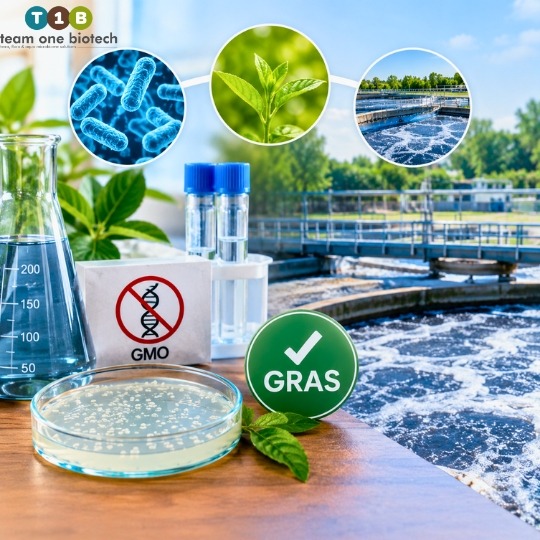
Scan the code