
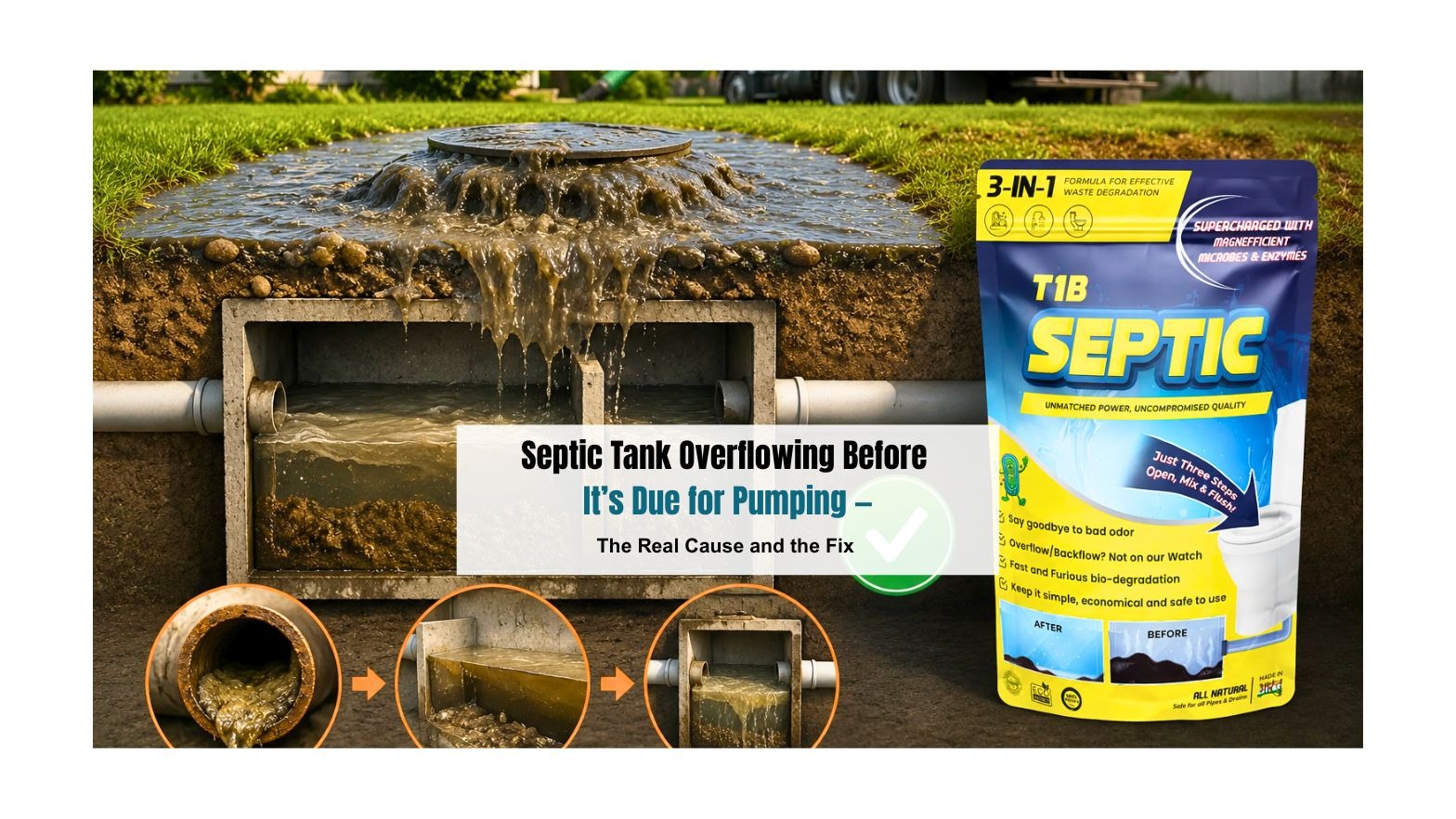

Septic Tank Overflowing Before It’s Due for Pumping? The Real Cause and the Fix
There’s a particular kind of dread that sets in when you catch that first whiff near the lawn, sharp, sulfurous, unmistakable. Maybe you’ve got relatives arriving in two days for a wedding function. Maybe it’s a Tuesday morning at your apartment complex and three different residents are already calling the facility manager. Either way, the thought that follows is always the same: we just had this pumped.
You did everything right. You scheduled the service, paid the vendor, watched the truck pull away thinking the problem was handled for months. And now there’s standing water near the soak pit, a gurgling drain in the bathroom, or worse, backup coming up through the floor trap. The frustration here is completely valid. You paid for a solution and got a few weeks of relief at best.
Here’s the part nobody explains clearly enough: pumping was never the actual solution. It was maintenance on the wrong half of the problem. If your septic tank overflowing before its due date has become a recurring nightmare, the real story is happening at a microscopic level, and no amount of mechanical suction is going to fix it.
The Myth of Pumping Alone
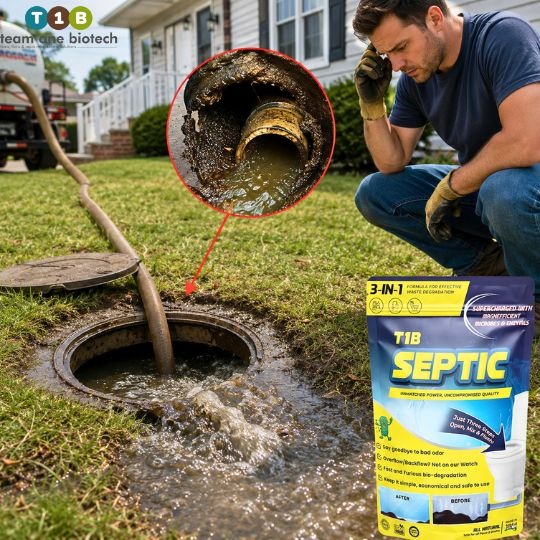
Pumping a septic tank does exactly one thing, it physically removes accumulated solids and sludge sitting at the bottom of the chamber. That’s it. It’s a vacuum job, not a treatment.
What pumping does not do:
- Restore the bacterial colonies that actually digest organic waste
- Repair compaction or clogging in the drain field / soak pit
- Address the chemical residues that may have killed off your tank’s microbial population in the first place
- Prevent the same premature buildup from happening again in a matter of weeks
A septic tank is not a holding box. It’s a living biological reactor. Inside that dark, oxygen-starved chamber, colonies of anaerobic bacteria are constantly working to liquefy solid waste, breaking it down into simpler compounds, gases, and effluent that can safely move into the drain field. When you pump the tank, you’re emptying the workshop, but if the workforce inside has already been wiped out, the tank starts refilling with undigested solids almost immediately. That’s why a septic tank full before pumping was even technically due is so common, and so misunderstood.
The Real Culprit: Biological Die-Off
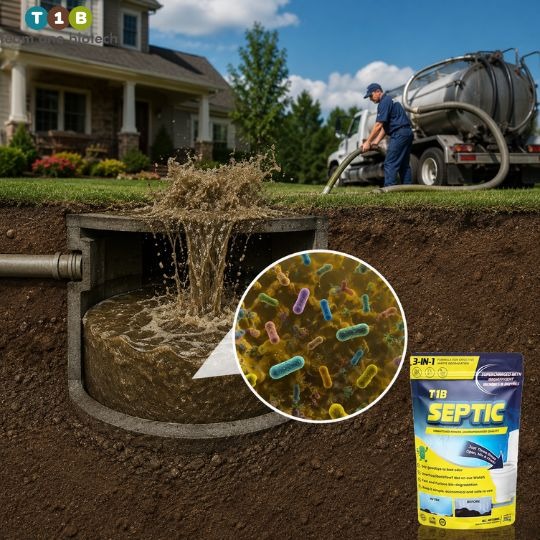
This is the piece that gets left out of almost every plumber’s explanation, and it’s the actual root cause behind most premature overflow cases.
Septic systems rely on a delicate consortia of bacteria to survive and multiply. These microorganisms need a stable, undisturbed anaerobic environment to do their job. The problem is that modern households and commercial spaces are, often unknowingly, waging a slow chemical war against that ecosystem every single day.
Common bacteria-killers found in almost every Indian home or facility:
- Heavy-duty antibacterial floor cleaners and toilet disinfectants
- Bleach-based products used for laundry or surface cleaning
- Strong detergents and degreasers poured down kitchen sinks
- Drain-opening chemicals used to clear minor clogs
- Excessive use of phenyl and harsh acid-based cleaners in bathrooms
Each of these is designed to kill bacteria, that’s literally their job on your bathroom floor. But every drop that goes down a drain eventually reaches the septic tank, where it does the exact same thing to the bacteria you actually need. Over time, repeated exposure can knock the colony down to a fraction of a healthy population, and without enough live bacteria to keep pace with daily waste input, solids start accumulating far faster than the system was ever designed to handle.
Note: These are general values and operational timelines will vary based on individual system usage, soil absorption rates, and the unique design parameters of the localized treatment layout or Effluent Treatment Plant (ETP) elements.
This is precisely why pumping alone solves nothing long-term. You’re removing the symptom while the underlying biological collapse continues untreated.
If this sounds like your situation right now, call for emergency pump-out service if you have active backup, but understand that without restoring the bacterial ecosystem afterward, you’ll likely face the same overflow again. This is the exact gap that Team One Biotech Septic Tank Cleaner Bacteria Powder is engineered to close. It’s formulated to repopulate the tank with the specific bacterial strains needed to resume natural waste digestion immediately after a crisis, not weeks later.
The Indian Factor: Why Local Conditions Make This Worse
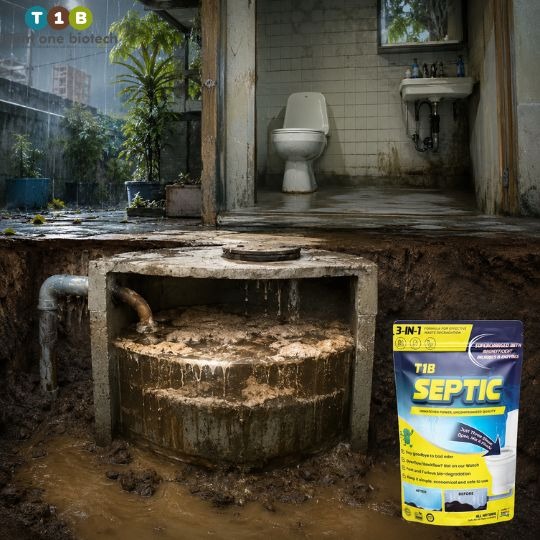
Septic systems across India face a unique combination of environmental and usage pressures that accelerate early failure far more than in drier, lower-density climates.
Monsoon Saturation
During heavy monsoon months, soil around the drain field or soak pit becomes oversaturated. Saturated soil loses its ability to absorb and filter effluent, which means liquid that should be draining away instead backs up into the tank, or worse, into the yard. A tank that was functioning adequately in dry season can suddenly seem to overflow with no warning once groundwater levels rise.
High Ambient Temperatures
Bacterial activity is temperature-sensitive. While moderate warmth generally speeds up microbial digestion, extreme heat swings combined with already-weakened bacterial populations create unpredictable performance. A struggling colony that might survive in cooler conditions can collapse faster under sustained high temperatures, especially in tanks that were already chemically compromised.
High-Density Usage Patterns
Indian residential complexes, hostels, and commercial facility blocks frequently run far higher occupancy-to-tank-capacity ratios than the systems were originally designed for. More users means more daily waste volume, more frequent chemical cleaning cycles, and less recovery time for bacterial colonies between cleaning events.
Note: These are general values and operational timelines will vary based on individual system usage, soil absorption rates, and the unique design parameters of the localized treatment layout or Effluent Treatment Plant (ETP) elements.
Put these three factors together, soil saturation, temperature stress, and overloading, and you have the exact recipe for a septic tank overflow reasons India property owners report most often: a system that was “fine” a month ago suddenly backing up with no obvious trigger.
The Permanent Fix: Biological Resuscitation
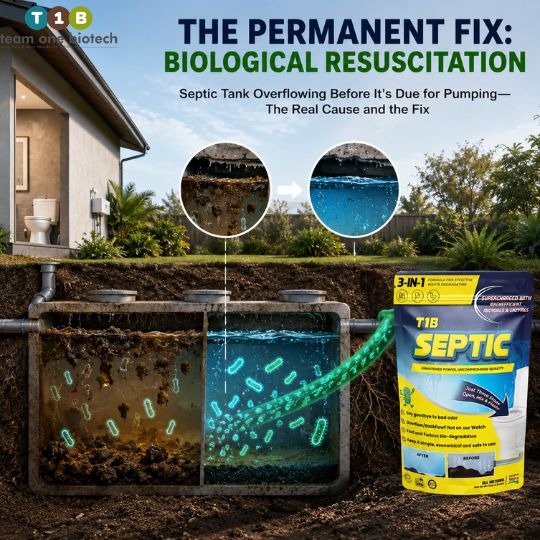
If biological die-off is the disease, the cure is reintroducing a concentrated, targeted population of the right bacterial strains, fast, and in sufficient quantity to outpace incoming waste.
This is exactly what T1B Septic Tank Cleaner Bacteria Powder is built to do. It’s a natural microbial formulation designed specifically for septic tanks, bio-toilets, and biodigesters, where it works to:
- Actively break down accumulated organic solids and existing sludge
- Repopulate the anaerobic ecosystem with consortia of microorganisms suited to degrading household and human waste
- Control the foul odor caused by anaerobic decomposition imbalance
- Reduce the rate of future sludge accumulation, extending the real interval between pump-outs
- Support a more functional drain field by improving the quality of effluent reaching the soil
Rather than treating the tank as a container to be emptied, this approach treats it as what it actually is, a biological treatment system that needs its workforce restored, not just its space cleared out.
Comparative Breakdown: Mechanical Pumping vs. Biological Treatment
| Factor | Mechanical Pumping Alone | Biological Treatment (Bacteria Powder) |
| What it addresses | Physical solids removal only | Root cause: bacterial population and digestion capacity |
| Effect on odor | Temporary relief | Sustained reduction as digestion normalizes |
| Typical recurrence interval | Often within a few weeks to a couple of months if bacteria remain depleted | Generally extends meaningfully, often into several months, with regular use |
| Drain field impact | No direct improvement | Supports healthier effluent quality reaching the soil |
| Cost pattern over a year | Recurring emergency call-out costs, often higher cumulatively | Lower ongoing cost with routine, planned dosing |
| Long-term system health | Cycle of repeated crisis management | Restores self-sustaining biological balance |
Note: These are general values and operational timelines will vary based on individual system usage, soil absorption rates, and the unique design parameters of the localized treatment layout or Effluent Treatment Plant (ETP) elements.
Action Plan: What to Do Right Now
If you’re dealing with an active overflow or a septic tank not draining solution is what you’re searching for at this exact moment, here’s the immediate sequence:
- Stop all chemical use immediately, no more bleach, phenyl, or antibacterial cleaners going down any drain in the property.
- Reduce water load where possible, stagger laundry, dishwashing, and bathing across the household or facility until the system stabilizes.
- Call for pump-out if there is active visible backup, this clears immediate physical risk and gives you a clean starting point.
- Reintroduce bacterial treatment immediately after pumping, this is the step almost everyone skips, and it’s the reason the problem returns.
- For commercial properties, establish a routine dosing schedule as part of standard commercial septic maintenance rather than waiting for the next crisis.
Restore the Balance, Don’t Just Empty the Tank
A septic tank overflowing before it’s due for pumping isn’t bad luck. It’s a system telling you, urgently, that its biological core has been compromised. Pumping buys you days. Restoring the bacterial ecosystem is what actually stops the cycle.
If you’re standing over a backed-up drain right now, the fastest path back to a stable, odor-free, properly functioning system is reintroducing the exact microbial workforce your tank has lost. Get Team One Biotech Septic Tank Cleaner Bacteria Powder into your system today, and give your tank the one thing pumping alone can never provide, a living, working digestive ecosystem built to keep up with real life.
Looking to improve your ETP/STP efficiency with the right bioculture?
Talk to our experts at Team One Biotech for customised microbial solutions.
Contact: +91 8855050575
Email: sales@teamonebiotech.com
Visit: www.teamonebiotech.com
Discover More on YouTube – Watch our latest insights & innovations!-
Connect with Us on LinkedIn – Stay updated with expert content & trends!