
Food Processing Effluent Treatment: A Complete Guide for FSSAI and CPCB Compliance
When Compliance Becomes a Crisis: The Stakes Are Real
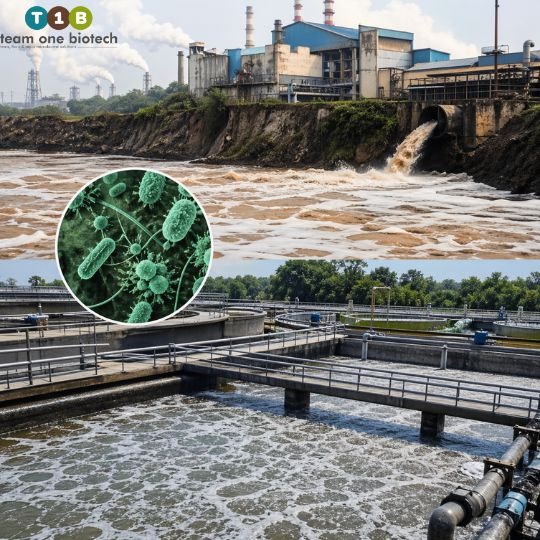
In March 2023, the Central Pollution Control Board issued closure notices to dozens of food processing units across Punjab and Uttar Pradesh for failing to meet discharge standards. These were not small, unregistered operations. Several had functional ETPs on paper. The problem was not always the absence of treatment infrastructure, it was the failure of that infrastructure to perform consistently under the actual organic load their processes generated.
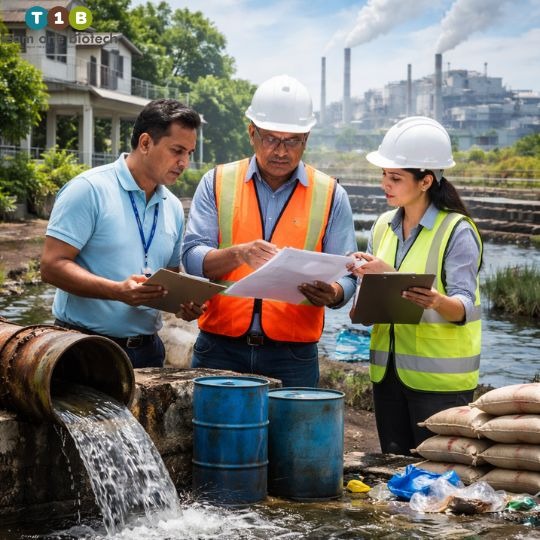
If you are an EHS manager or plant director in the Indian food, dairy, sugar, or allied processing sector, you already understand the pressure. CPCB enforcement has grown significantly more rigorous in the post-COVID period. Simultaneously, FSSAI has made it explicitly clear that poor environmental hygiene, including inadequate effluent management, can trigger license reviews and public scrutiny. The regulatory environment is no longer forgiving of “we’re working on it.”
This guide exists to help you work through it, systematically, technically, and with a clear roadmap toward genuine compliance.
The Regulatory Landscape: CPCB, FSSAI, and the Space Between Them
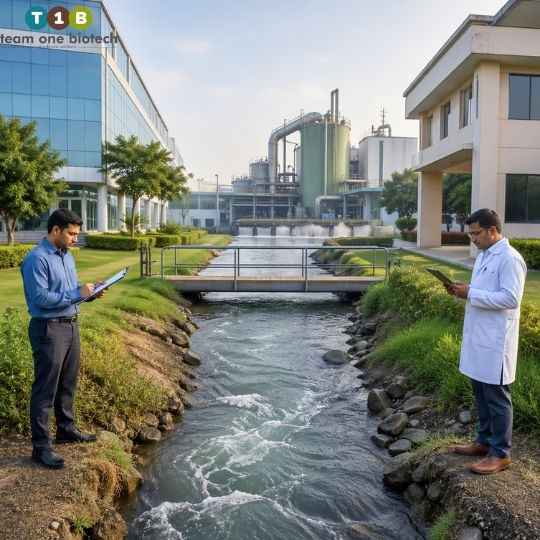
Many plant operators treat CPCB compliance and FSSAI compliance as two separate checklists. This is one of the most consequential mistakes in industrial environmental management in India.
CPCB discharge norms under the Environment (Protection) Act govern what leaves your ETP and enters the receiving water body or municipal drain. For food processing units, the General Standards for Discharge of Environmental Pollutants specify parameters including BOD (Biochemical Oxygen Demand), COD (Chemical Oxygen Demand), TSS (Total Suspended Solids), pH, and oil and grease.
FSSAI’s regulatory framework, while primarily focused on product safety and manufacturing hygiene, increasingly intersects with environmental standards. A facility that cannot demonstrate responsible wastewater management raises red flags during inspections, not just about environmental intent, but about overall process control discipline.
The synergy is this: a well-designed and consistently operated ETP demonstrates that your facility has the microbial control, process monitoring, and operational discipline that FSSAI auditors are also looking for inside your plant. Poorly treated effluent is often symptomatic of broader process hygiene failures, and regulators on both sides of the equation are beginning to recognize this connection.
Practical compliance benchmarks to be aware of:
- BOD at discharge: General CPCB norms require levels below 30 mg/L for inland surface water discharge (site-specific standards may be stricter)
- pH at discharge: Typically within the range of 6.5 to 8.5
- TSS: Not exceeding 100 mg/L for most inland water bodies
- Oil and grease: Within 10 mg/L for most categories
The values and metrics provided are general industry ranges; actual parameters and performance will vary based on specific ETP design and influent characteristics.
What You Are Actually Treating: Characteristics of Food Processing Effluent
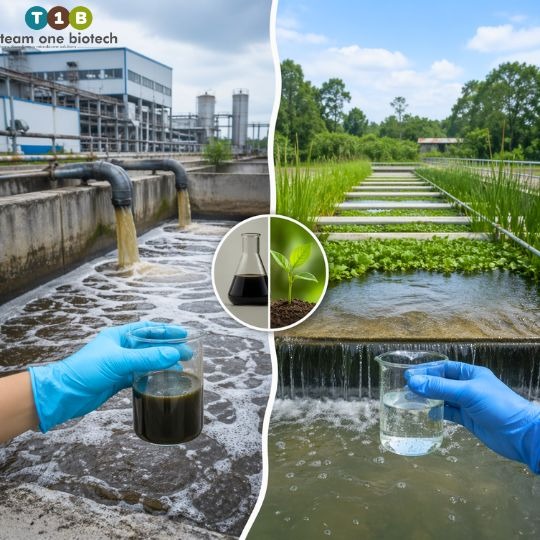
The phrase “food processing wastewater treatment” covers an extraordinarily wide spectrum. Dairy wastewater behaves differently from sugar mill effluent. Meat processing effluent has different microbial profiles than beverage plant discharge. However, there are shared characteristics that define the challenge across sectors.
BOD and COD: The Organic Load Problem
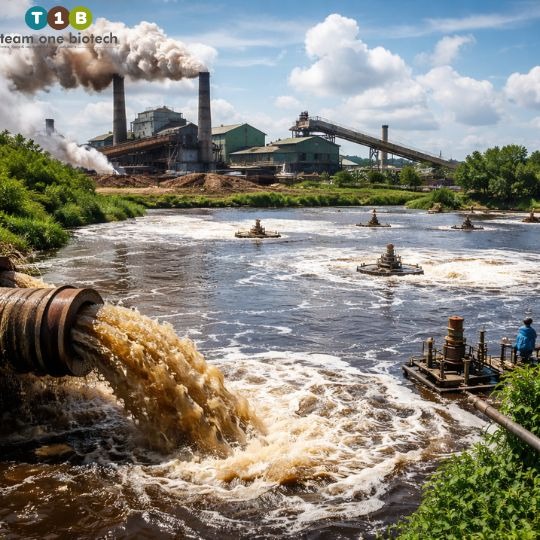
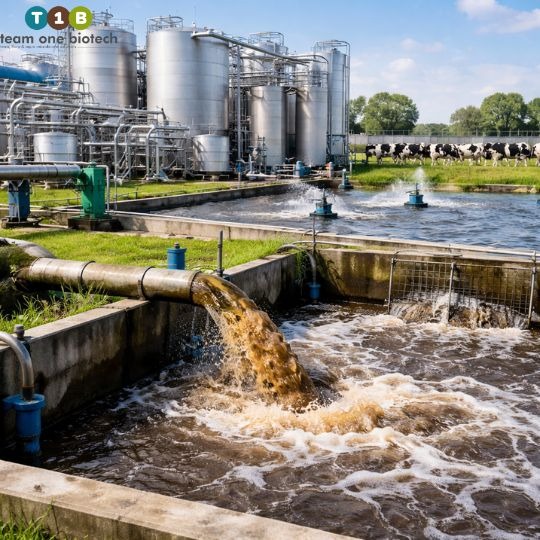
Food processing effluent is, by nature, organically rich. Raw ingredients, cleaning chemicals, process wash-downs, and product losses all contribute to what arrives at your ETP inlet. BOD values in untreated food industry effluent commonly range from 500 mg/L to over 5,000 mg/L depending on the process. COD values can run even higher.
This is not comparable to domestic sewage or even many industrial effluents. A dairy plant processing large milk volumes, for instance, can generate influent with BOD concentrations that would overwhelm an ETP designed without accounting for seasonal milk fat content or CIP (Clean-in-Place) chemical loads.
TSS: The Suspended Solid Burden
Solid particles, from fine food material, cellulose, protein aggregates, and fat globules, add another dimension. High TSS not only violates discharge standards but chokes biological treatment systems, reducing their effectiveness exactly when you need it most.
FOG: Fats, Oils, and Grease
FOG is often underestimated until it causes a catastrophic failure in a biological treatment stage. Fat layers on aeration tanks, clogged diffusers, and inhibited microbial populations are common consequences of inadequate FOG pre-treatment. In a tropical climate like India’s, FOG can congeal rapidly in channels and pipes during cooler months, creating blockages that demand emergency intervention.
The Monsoon Variable
Indian ETPs face a challenge that most global treatment guides do not adequately address: the monsoon season. Hydraulic overloading during heavy rainfall, temperature fluctuation effects on microbial populations, and dilution of treatment chemicals all simultaneously impact performance from June through September. Any robust compliance strategy must account for this seasonal variability, not as an exception, but as a design parameter.
Traditional Chemical Treatment vs. Bioremediation: A Practical Comparison

The Chemical Treatment Approach
Conventional food processing wastewater treatment has historically relied on coagulation-flocculation using chemicals like alum, ferric chloride, and lime. These are effective at reducing TSS and some BOD in primary stages. They are also relatively predictable in performance, when the chemistry is controlled.
The limitations, however, are significant:
- High operational cost: Chemical procurement, dosing systems, and sludge disposal all carry recurring expenses that escalate with effluent volume
- Sludge management burden: Chemical treatment generates considerable sludge that must be handled and disposed of in compliance with Hazardous Waste Management Rules
- Incomplete BOD/COD reduction: Chemicals alone rarely bring high-strength food effluent to CPCB discharge standards without a robust biological stage
- pH sensitivity: Incorrect dosing can create its own compliance problem at the discharge point
The Bioremediation Advantage
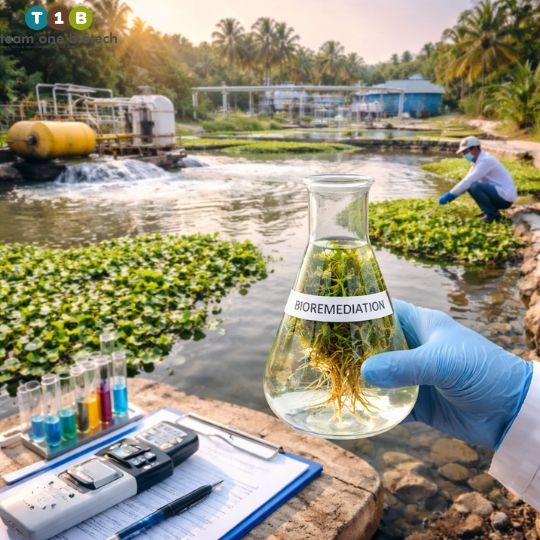
Bioremediation, specifically, the use of specialized microbial consortia engineered for high-strength organic effluent, addresses the limitations of purely chemical approaches. In food processing wastewater treatment, microbial solutions work by accelerating the natural biodegradation of organic compounds, using them as a carbon and energy source.
Well-formulated microbial products for food industry ETPs can achieve:
- BOD reduction efficiencies in the range of 75% to 90% in biological treatment stages
- COD reduction in the range of 60% to 85% under optimized conditions
- Significant FOG degradation through lipase-producing microbial strains
- Odor reduction through suppression of hydrogen sulfide-generating organisms
The advantage of bioremediation over chemicals is not just cost, it is specificity and adaptability. Microbial consortia can be selected and augmented based on the actual organic profile of your effluent. A dairy ETP and a sugar processing ETP have fundamentally different treatment needs. Tailored microbial solutions address those differences in a way that generic chemical dosing cannot.
The values and metrics provided are general industry ranges; actual parameters and performance will vary based on specific ETP design and influent characteristics.
Team One Biotech’s specialized microbial cultures are formulated specifically for the high-BOD, high-FOG effluent profiles common in Indian food processing operations. Contact us for a site assessment to determine which consortium is right for your process profile.
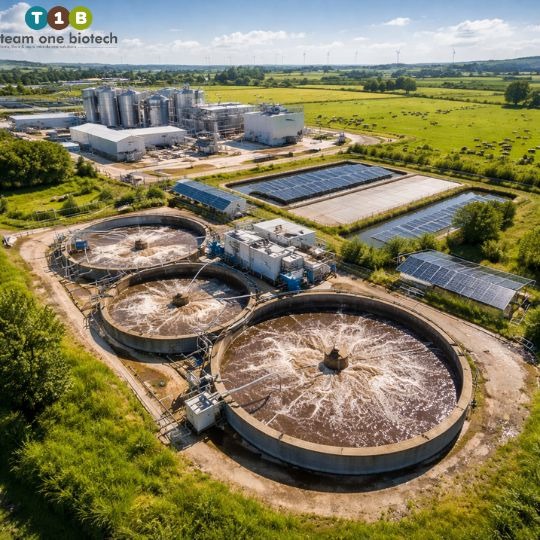
The Compliant ETP: Breaking Down Each Stage
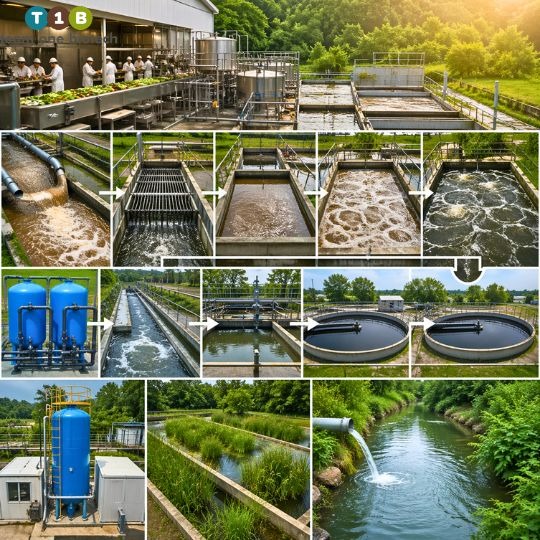
Primary Treatment
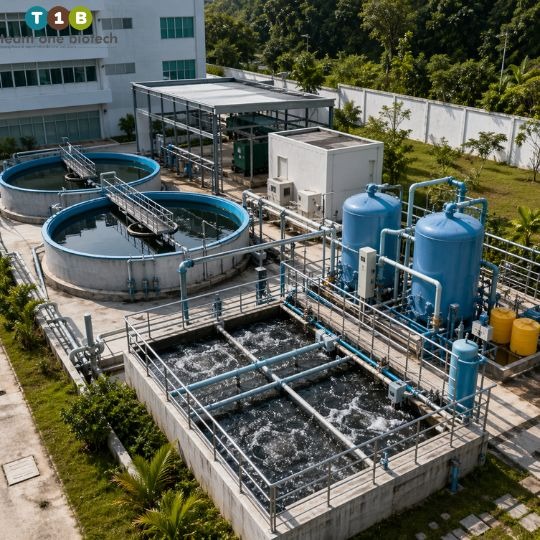
The goal here is physical separation. Screening removes large solids. A grease trap or dissolved air flotation (DAF) unit handles FOG. Equalization tanks buffer the flow and concentration variability before biological stages, critical for Indian operations where production scheduling often creates surge loads.
A well-designed primary stage protects your biological treatment from shock loading. Without it, even the best microbial consortium cannot perform consistently.
Secondary Treatment (Biological Stage)
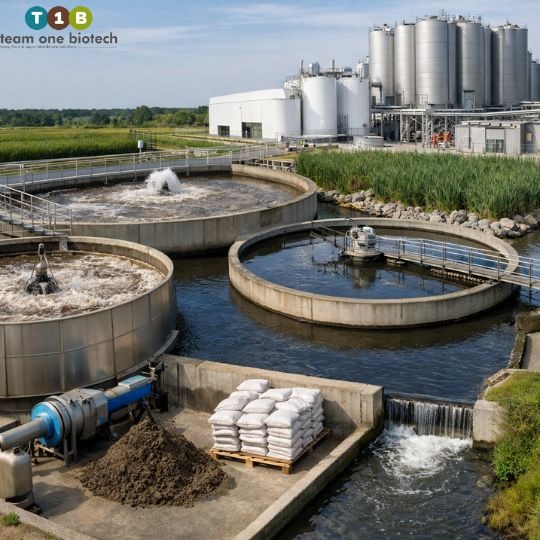
This is where the real BOD and COD reduction happens. Options include:
- Activated Sludge Process (ASP): Reliable for moderate to high-strength effluent when augmented with appropriate microbial cultures
- Sequential Batch Reactors (SBR): Increasingly popular for space-constrained facilities; offers operational flexibility
- Moving Bed Biofilm Reactors (MBBR): Suitable for high-strength effluent and expanding capacity without major civil work
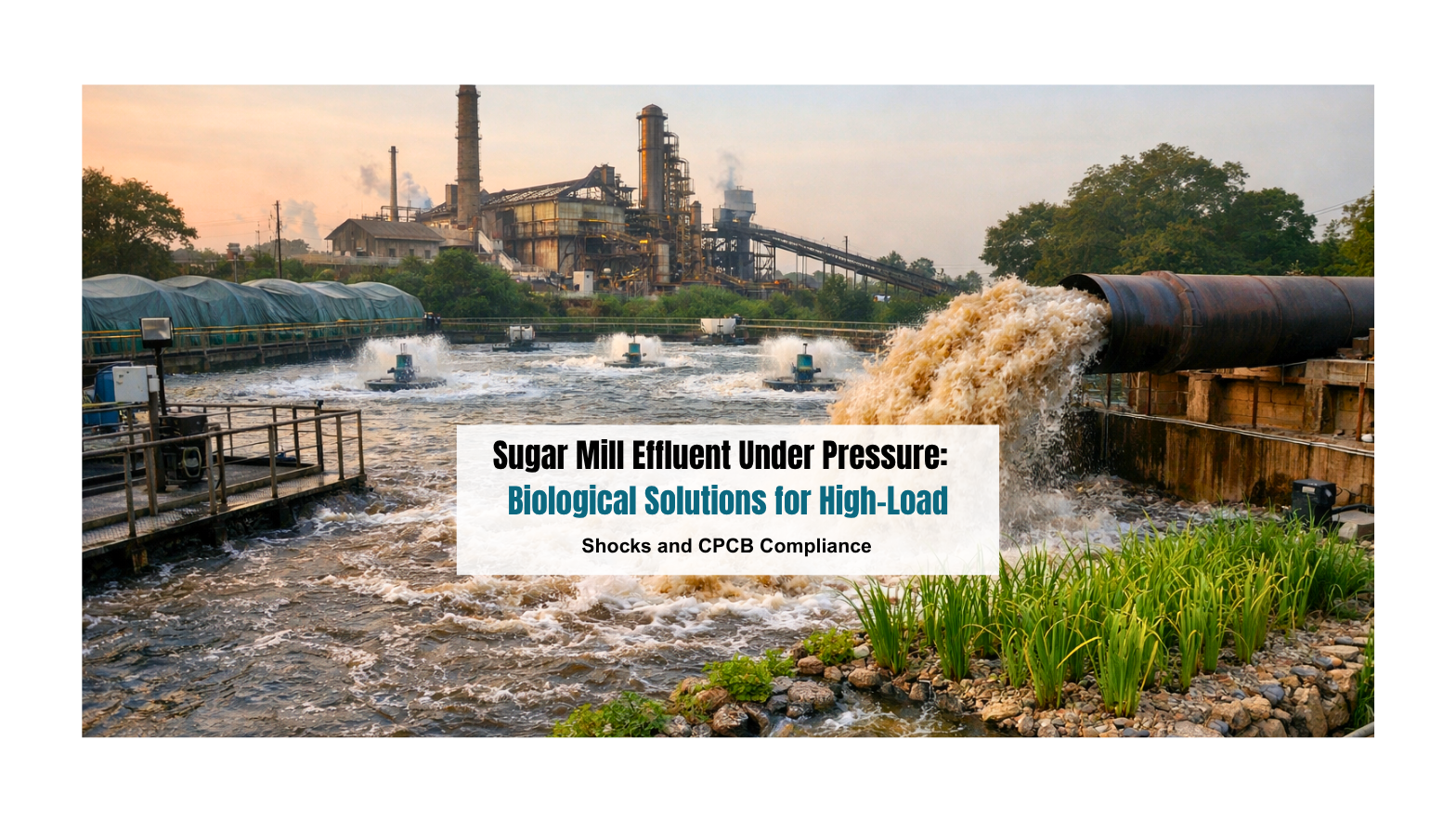
- Anaerobic treatment (UASB or anaerobic lagoons): Particularly effective for very high COD effluent from sugar and starch processing; generates biogas as a recoverable energy source
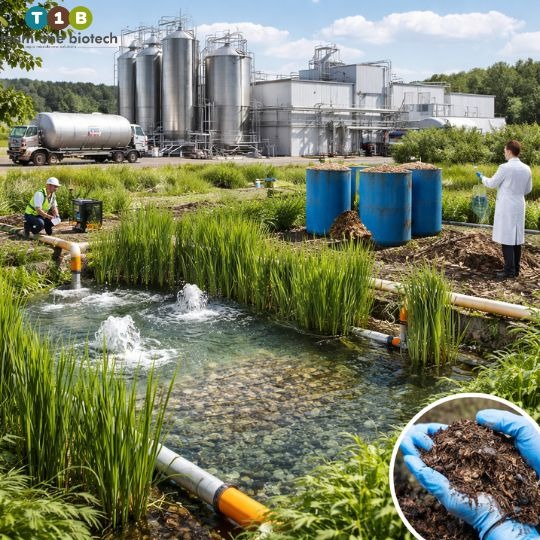
Microbial augmentation, adding concentrated, process-adapted bacterial cultures, is particularly impactful in the secondary stage. It helps establish robust biofilm communities faster, maintains treatment efficiency during monsoon temperature swings, and recovers system performance after upset events.
Tertiary Treatment
Tertiary stages polish the final effluent. Sand filtration, activated carbon adsorption, and UV or chlorine disinfection are commonly employed depending on the receiving water body and local discharge conditions. For zero liquid discharge (ZLD) mandated facilities, increasingly common in water-stressed areas of Rajasthan, Gujarat, and parts of Tamil Nadu, tertiary stages must be followed by evaporation or membrane-based concentration systems.
Building Your Compliance Roadmap: Practical Steps for EHS Managers
1. Conduct an honest influent characterization. Do not design or optimize treatment based on assumed values. Measure your actual BOD, COD, TSS, and FOG across shifts and seasons. Monsoon samples matter as much as peak production samples.
2. Audit your existing ETP design against your current production load. Facilities that have expanded production since their ETP was installed frequently find that their treatment capacity was never updated proportionally.
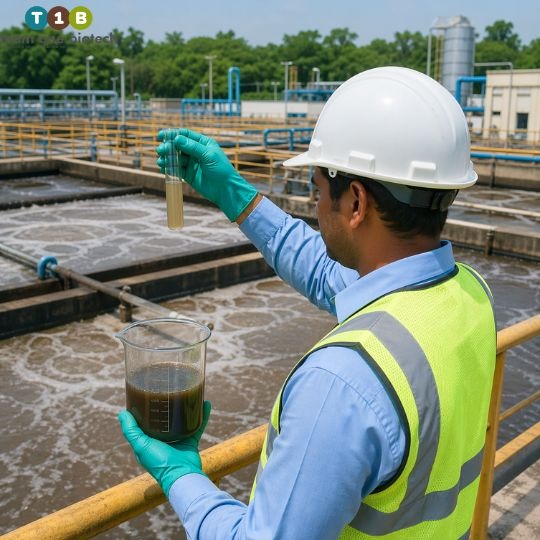
3. Evaluate your biological stage health. Mixed liquor suspended solids (MLSS), dissolved oxygen profiles, and sludge volume index (SVI) readings will tell you whether your microbial community is thriving or under stress.
4. Address FOG at the source. Pre-treatment of FOG-rich streams before they enter the main ETP is almost always more cost-effective than trying to manage FOG accumulation in biological stages.
5. Document everything. CPCB compliance is not just about what your ETP achieves, it is about demonstrating a consistent, monitored process. Online flow meters, daily logbooks, and third-party effluent testing records are your evidence of good faith.
6. Plan for upset recovery. Monsoon season, power failures, and production surges will all periodically stress your ETP. Having a protocol, and a supply of targeted microbial cultures for rapid bioaugmentation, is the difference between a temporary exceedance and a prolonged compliance failure.
Compliance Is Not a Destination, It Is an Operating Standard
The food processing sector in India is under a level of environmental scrutiny that will only intensify. CPCB’s online continuous effluent monitoring requirements for large units, combined with FSSAI’s increasing integration of environmental responsibility into its compliance framework, means that reactive ETP management is no longer a viable strategy.
The facilities that avoid closures, penalties, and reputational damage are those that have moved beyond compliance as a checkbox, toward genuine, technically grounded wastewater management that reflects the organic complexity of their actual processes.
Team One Biotech works with food, dairy, pharmaceutical, sugar, tannery, and paper industry facilities across India to design bioremediation programs that are matched to real operational conditions. Our microbial consortia are developed for Indian organic loads, Indian temperatures, and the variable demands of the Indian production calendar.
If you are ready to move from reactive to robust, reach out to Team One Biotech today. Our team offers confidential site audits, influent characterization support, and customized microbial culture recommendations, with no obligation beyond the conversation.
Your effluent compliance challenge has a technical solution. Let us help you find it.
Disclaimer: The values and metrics provided throughout this article are general industry ranges. Actual parameters, treatment efficiency, and regulatory thresholds will vary based on specific ETP design, influent characteristics, local CPCB notifications, and site-specific consent conditions. Always consult a qualified environmental engineer and your regional pollution control board for facility-specific guidance.
Looking to improve your ETP/STP efficiency with the right bioculture?
Talk to our experts at Team One Biotech for customised microbial solutions.
Contact: +91 8855050575
Email: sales@teamonebiotech.com
Visit: www.teamonebiotech.com
Discover More on YouTube – Watch our latest insights & innovations!-
Connect with Us on LinkedIn – Stay updated with expert content & trends!