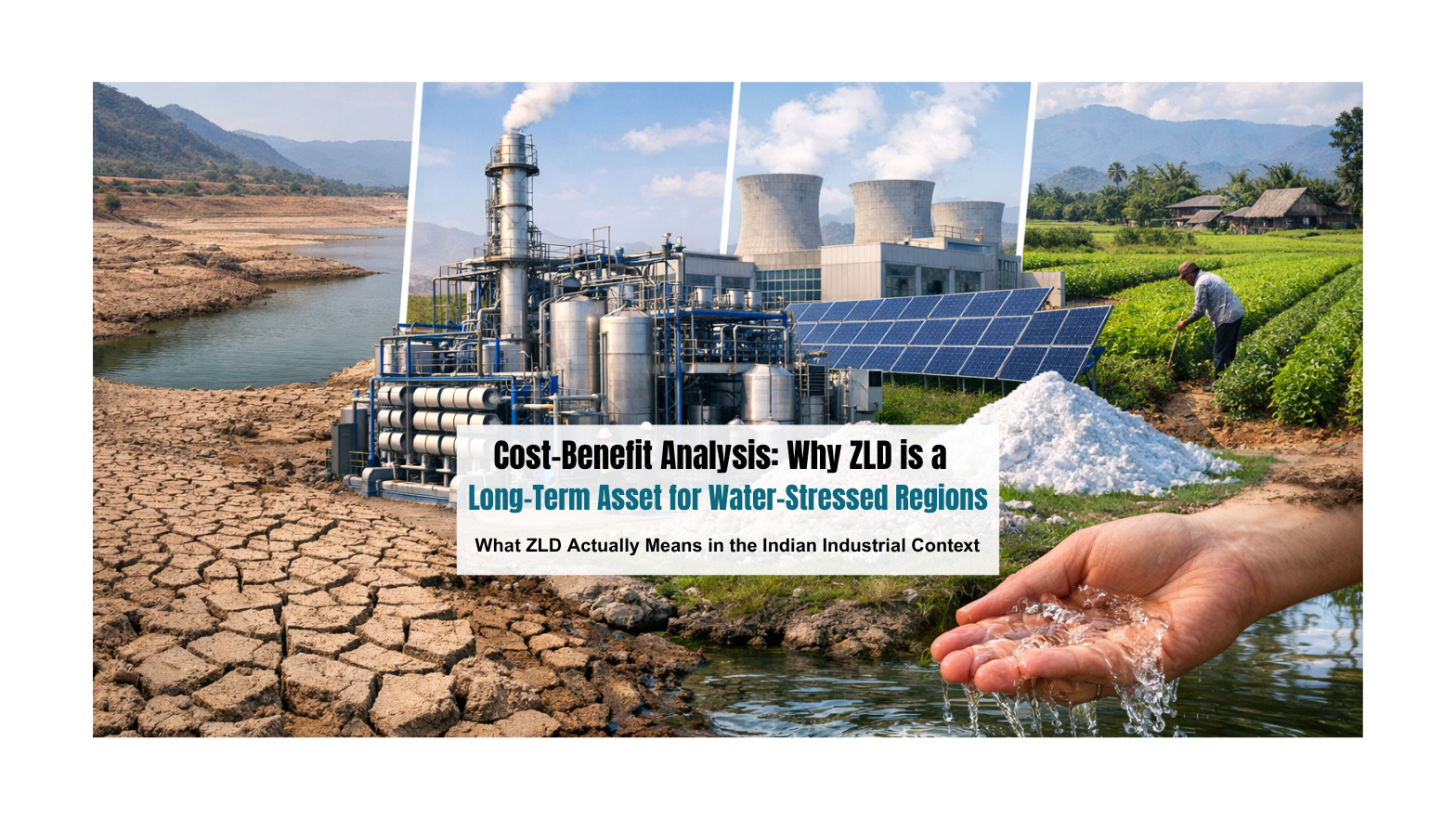
Cost-Benefit Analysis: Why ZLD is a Long-Term Asset for Water-Stressed Regions

Walk into any plant manager’s office in Tiruppur right now and you will likely find two things on the desk: a production schedule and a borewell depth report. Ten years ago, only one of those documents mattered for daily operations. Today, both carry equal weight.

That shift, quiet, gradual, and now impossible to ignore, is reshaping how India’s industrial leadership thinks about water. Not as a utility that flows from a tap and exits through a drain, but as a finite resource that entire communities, ecosystems, and production lines are competing for simultaneously.

In Tamil Nadu, Gujarat, and Maharashtra, the pressure is no longer theoretical. Groundwater levels in key industrial corridors have been declining for years. The National Green Tribunal has shut down hundreds of units for non-compliance. CPCB and SPCB enforcement is no longer occasional, it is systematic. And the question facing every C-suite executive, plant manager, and sustainability officer who depends on water-intensive processes is no longer “should we invest in better water management?” It is “how much longer can we afford not to?”

Zero Liquid Discharge is the answer that keeps coming up. Not because it is fashionable, and not simply because regulators are pushing for it, but because implementing Zero Liquid Discharge (ZLD) Systems ensures that the economics, when looked at honestly and in full, are becoming increasingly difficult to argue against.

This article is that honest look.

What ZLD Actually Means in the Indian Industrial Context

From Treatment to Recovery: A Fundamental Shift in Thinking

For decades, effluent treatment was designed around one core assumption: the water leaves. You treat it to an acceptable standard, you discharge it into a drain or waterbody, and your obligation ends at the boundary wall. The entire infrastructure of conventional ETPs, equalization tanks, aeration basins, secondary clarifiers, was built to service that assumption.

Zero Liquid Discharge tears that assumption up entirely.

In a zero liquid discharge plant, the target is exactly what the name suggests. No liquid waste leaves the facility. Every litre of wastewater that enters the treatment system either comes out the other end as clean, reusable process water, or it gets concentrated down to a solid or semi-solid waste that can be managed, and in some cases, monetized. The drain is no longer the destination. Recovery is.

Making that shift work demands a much more granular understanding of water quality parameters than a conventional ETP ever required. You are no longer just treating to a discharge standard, you are managing a recovery system. And that system is sensitive to everything in the water.

The parameters that ZLD operations must track and control include:

  • Total dissolved solids (TDS) in water, the single most operationally critical parameter in most ZLD systems, because TDS concentration governs how hard your membranes have to work and how much energy your evaporators consume
  • COD and BOD, organic load that must be substantially reduced before water reaches membrane or thermal concentration stages
  • Suspended solids, fine particulates that foul membrane surfaces and reduce system life if not adequately managed upstream
  • pH, conductivity, and specific ionic concentrations, sulfates, chlorides, calcium, heavy metals, all of which influence scaling behavior in evaporation systems
  • Temperature, relevant for both biological activity in pre-treatment and thermal efficiency in concentration stages

Of all these, high TDS in water is what stops most Indian industrial effluent treatment systems in their tracks. Whether you are running a textile dyeing unit in Surat, a pharmaceutical API plant in Hyderabad, a distillery in Uttar Pradesh, or a chemical processing facility in Ankleshwar, managing TDS economically, without sacrificing water recovery, is the central engineering and financial challenge of ZLD implementation.

The Technology Stack Behind a Zero Liquid Discharge Plant

A full-scale ZLD system is not a single piece of equipment. It is a treatment train, a carefully sequenced set of processes, each dependent on the one before it performing to specification:

  • Primary Treatment: Screening, equalization, neutralization, and primary settling to remove gross solids and stabilize the flow
  • Biological Treatment: Aerobic and/or anaerobic systems to reduce organic load before the water reaches membranes
  • Tertiary Polishing: Ultrafiltration or multimedia filtration to remove residual suspended solids and protect downstream membrane systems
  • Reverse Osmosis: Membrane-based concentration to separate clean permeate water from a high-TDS reject stream
  • Evaporation: Multi-effect evaporators (MEE) or mechanical vapor recompression (MVR) systems to concentrate the RO reject further
  • Crystallization or Drying: Final stage to convert concentrated brine into a dry, manageable solid

Each of these stages must be designed for the specific effluent it will handle. A textile mill running reactive dye effluent has a completely different ZLD design requirement than a pharma plant managing solvent-laden process wastewater. That specificity is not a complication, it is a quality marker. Any ZLD proposal that does not begin with detailed effluent characterization is not a proposal worth accepting.

The Cost-Benefit Deep Dive

The Cost-Benefit Deep Dive

CAPEX: Understanding What You Are Actually Paying For

Let us be direct about something that often gets smoothed over in vendor conversations: ZLD systems cost more to build than conventional ETPs. Depending on the industry, effluent volume, and TDS levels involved, the capital expenditure for a zero liquid discharge plant can run 2x to 4x higher than a comparable conventional treatment system. That is a real number, and pretending otherwise does not serve anyone well.

These are general values and estimates; actual performance and costs vary based on the specific ETP/STP configuration and influent characteristics.

Where does that CAPEX go?

  • Membrane systems, UF and RO arrays are precision equipment with significant procurement costs, and they need to be sized generously to handle peak loads without sacrificing recovery
  • Evaporation systems, the MEE or MVR unit is typically the most expensive line item in the entire ZLD capital budget, driven by the materials, engineering complexity, and energy infrastructure required
  • Pre-treatment upgrades, in most Indian facilities, the existing ETP was not built to feed a ZLD system, and bringing it up to standard requires meaningful investment
  • Automation and instrumentation, ZLD systems cannot be run on manual checks and periodic grab samples; they require real-time monitoring, automated dosing controls, and SCADA integration to operate reliably

That CAPEX number is often where the internal conversation stalls. A finance committee sees the figure, compares it to the cost of continuing with existing treatment, and questions whether the investment is justified. That question is valid, but it is only answerable if the comparison includes the full financial picture, not just the build cost.

OPEX: Where the Long-Term Argument Lives

ZLD systems do carry higher operating costs than conventional ETPs. The energy consumption of evaporation systems is the primary driver of this, and it is a legitimate operational cost that any honest analysis must account for.

But here is what that same honest analysis must also account for:

Water recovery in a well-designed ZLD system can reach 80% to 95% of the total inlet volume. That recovered water goes back into the production process as clean, reusable supply. In a district where groundwater extraction is restricted, borewell levels are declining, or industrial water tariffs are rising, which describes a growing number of industrial zones across India, that recovery is not a convenience. It is a direct replacement for freshwater that would otherwise need to be purchased, transported, or extracted. The procurement savings compound over time.

Newer MVR-based evaporation technology is also shifting the energy equation. MVR systems recover and reuse the thermal energy from the evaporation process itself, substantially reducing the power consumption that made older MEE-based ZLD systems expensive to run. For facilities investing in ZLD today, the long-term OPEX profile looks meaningfully better than it did five years ago.

Some industries also recover tangible value from the solid or concentrated byproducts of ZLD processing. Distilleries can recover potassium-rich condensate from evaporation stages. Certain chemical processes generate concentrated salt streams that can be refined and resold. These recoveries are industry-specific and should not be assumed without technical analysis, but where they exist, they directly improve the ZLD business case.

These are general values and estimates; actual performance and costs vary based on the specific ETP/STP configuration and influent characteristics.

The Hidden Costs of Non-Compliance: The Number Nobody Puts in the Spreadsheet

Here is the calculation that most facilities skip, because it involves acknowledging a scenario nobody wants to plan for:

What does it actually cost when things go wrong?

Regulatory fines are the visible tip. The deeper damage runs much further:

  • A single SPCB closure notice, even a temporary production suspension pending compliance verification, can cost more in lost output, missed shipments, and broken contracts than an entire year of ZLD OPEX. Fixed costs do not pause while the legal process runs its course.
  • Legal battles to reverse environmental enforcement orders are slow, expensive, and rarely clean. They consume management bandwidth, legal budgets, and board attention for months, sometimes years.
  • Water procurement costs in genuinely water-stressed districts are already escalating and will continue to do so. Facilities running on tanker water or unreliable borewells are not operating on a stable cost base, they are absorbing an inflation risk that gets worse every dry season.
  • Global buyers in apparel, pharmaceuticals, agrochemicals, and food processing are conducting supplier environmental audits with increasing seriousness. A facility with a non-compliance record risks losing export contracts, failing ESG due diligence reviews, and becoming ineligible for the institutional supply chains that offer the best margins.
  • Operating license renewals in several Indian states are now directly tied to environmental compliance history. A poor track record introduces structural uncertainty into long-term capital planning that no amount of operational efficiency can fully offset.

None of these costs appear in the CAPEX-versus-OPEX comparison that gets presented to the finance committee. They should.

The Hidden Gains: What ZLD Gives You That Nobody Markets Loudly Enough

Beyond avoiding the downside, ZLD adoption creates real, measurable value that pre-implementation analysis consistently undercounts:

  • Water independence is perhaps the most strategically significant. A facility that recycles 80% to 95% of its process water is not merely compliant, it has fundamentally de-risked its operations against water scarcity. That resilience has a value that grows every year as regional water stress intensifies.
  • Reduced freshwater draw lowers exposure to tariff increases and regulatory restrictions on industrial groundwater extraction, both of which are accelerating across multiple states.
  • ESG and sustainability reporting value is real and growing. Companies reporting under BRSR, GRI, or preparing for international ESG disclosures benefit from documented water recovery metrics. For businesses seeking institutional investment or public market access, this is increasingly material.
  • The narrative shift from “compliance obligation” to “resource stewardship” matters in ways that are difficult to put on a spreadsheet but very easy to see in stakeholder conversations, investor presentations, and community relations.

Bioremediation and ZLD: The Upstream Partnership That Changes the Economics

Bioremediation and ZLD: The Upstream Partnership That Changes the Economics

Why the Quality of Pre-Treatment Determines the Fate of Your ZLD Investment

This is the part of the ZLD conversation that does not get enough attention, and it is directly relevant to why so many Indian facilities see worse-than-expected performance from ZLD systems they have invested heavily in.

Membrane systems and evaporators are the most capital-intensive components of any zero liquid discharge plant. They are also the most sensitive. Feed them effluent that is too high in COD, too loaded with biological material, or carrying specific contaminants that drive scaling and fouling, and they will underperform, require more frequent cleaning, consume more chemicals, and degrade faster than the design life you were promised.

The performance of your ZLD system is, in very large part, a downstream consequence of the quality of your upstream biological treatment.

This is where advanced bioremediation changes the economics of ZLD at a system level, not just a pre-treatment level.

Team One Biotech’s bioaugmentation formulations introduce highly specialized microbial consortia into industrial effluent streams, targeting the organic compounds, specific contaminants, and biological load that standard biological treatment either handles poorly or cannot manage at all. In practice, this translates to:

  • COD reductions of 60% to 85% upstream of membrane systems, directly reducing fouling frequency, extending membrane replacement intervals, and lowering cleaning chemical costs
  • Improved management of TDS load by degrading certain organic dissolved solids before they reach the concentration stages, reducing the thermal energy burden on evaporators
  • Sludge volume reduction through more efficient biological activity, lowering the handling and disposal costs that are an often-underestimated component of ZLD OPEX
  • Targeted degradation of complex, recalcitrant molecules, pharmaceutical compounds, reactive dye intermediates, pesticide residues, that physical-chemical treatment alone cannot efficiently address

These are general values and estimates; actual performance and costs vary based on the specific ETP/STP configuration and influent characteristics.

The integration of bioremediation upstream of ZLD infrastructure is not a supplementary add-on for facilities that want to go the extra mile. It is an economic optimization that improves the cost-per-litre-recovered across the full operational life of the plant. The membrane lasts longer. The evaporator runs cleaner. The overall system performs closer to its designed recovery targets.

Meeting CPCB and SPCB Standards Through Biological Intelligence

There is another dimension to bioremediation in the ZLD context that matters specifically for Indian regulatory compliance. Facilities operating in red-category industry classifications, textiles, pharmaceuticals, chemicals, distilleries, tanneries, are expected to demonstrate water quality parameter management that goes well beyond volume control. CPCB and SPCB compliance inspections look at the full profile of what is in the water, not just how much of it there is.

Biological treatment offers something that chemical dosing cannot: adaptive capacity. Microbial systems respond to changes in influent load and composition in ways that chemical systems cannot, without the proportional increase in reagent cost and secondary waste generation. For Indian industrial facilities dealing with seasonal production variation, changing raw material inputs, and the inherent variability of complex effluent streams, that adaptability is not a minor technical advantage. It is operational resilience built into the treatment process itself.

Is ZLD the Right Decision for Your Facility Right Now?

Is ZLD the Right Decision for Your Facility Right Now?

Asking the Right Questions Before You Ask About the Price

ZLD adoption is not one-size-fits-all, and the right answer depends on your specific situation, not on a general industry position. Before any serious investment conversation begins, a facility needs clear answers to:

  • What does your current effluent look like, volume, COD, TDS, specific contaminants, and seasonal variability?
  • What is the condition and capacity of your existing ETP or STP infrastructure?
  • Are you operating under an active CPCB or SPCB compliance notice, or planning proactively?
  • How water-stressed is your specific location, what do borewell trends, district water availability data, and local regulatory signals tell you about your five-year supply risk?
  • What is your production growth plan, and what does that mean for your water demand trajectory?

The worst implementation of ZLD is a rushed one, driven by a regulatory deadline, executed without adequate site characterization, and optimized for speed rather than performance. Those systems underdeliver on recovery, overspend on OPEX, and create the impression that ZLD is more expensive than it needs to be. Proactive planning changes that outcome fundamentally.

The Facilities That Will Thrive Are Not the Ones That Spent the Least on Compliance

There is a version of this decision where a facility waits. It manages the existing ETP, addresses enforcement notices reactively, and defers the ZLD conversation until the regulatory or operational pressure becomes unavoidable. That is a coherent short-term position.

It is also, in the vast majority of water-stressed industrial contexts across India, a strategically costly one.

The facilities that will operate with confidence through the next decade of industrial growth are the ones that made the decision early enough to do it right. They designed their zero liquid discharge plant with adequate pre-treatment. They integrated bioremediation upstream to protect their membranes and optimize their recovery rates. They used the transition to reduce their freshwater dependence, improve their compliance standing, and build the kind of water resilience that turns a potential shutdown risk into a genuine competitive advantage.

Water stewardship, at this scale and in this moment in Indian industrial history, is not just good environmental practice. It is good business.

Talk to Team One Biotech Before the Next Dry Season Forces the Conversation

If your facility is in a water-stressed district, running under compliance scrutiny, or expanding operations in a zone where groundwater availability is declining, the right time for a ZLD feasibility analysis is now, not after the next enforcement notice arrives.

Team One Biotech works with industrial clients across India to design and optimize integrated wastewater treatment systems that combine advanced bioremediation with ZLD-ready infrastructure. A site audit from our team means a detailed look at your actual effluent profile, a clear-eyed assessment of your treatment gaps, and a realistic investment framework, CAPEX, OPEX, and recovery projections, built around your specific industry, volume, and regulatory environment.

No generic proposals. No theoretical frameworks that do not account for what is actually in your water.

Contact Team One Biotech today to schedule your site-specific water and compliance audit. The cost of that conversation is zero. The cost of the alternative is something most facilities only calculate once, after it is already too late.

Looking to improve your ETP/STP efficiency with the right bioculture?
Talk to our experts at Team One Biotech for customised microbial solutions.

Contact+91 8855050575

Email:  sales@teamonebiotech.com

Visit: www.teamonebiotech.com

Discover More on YouTube – Watch our latest insights & innovations!-

Connect with Us on LinkedIn – Stay updated with expert content & trends!
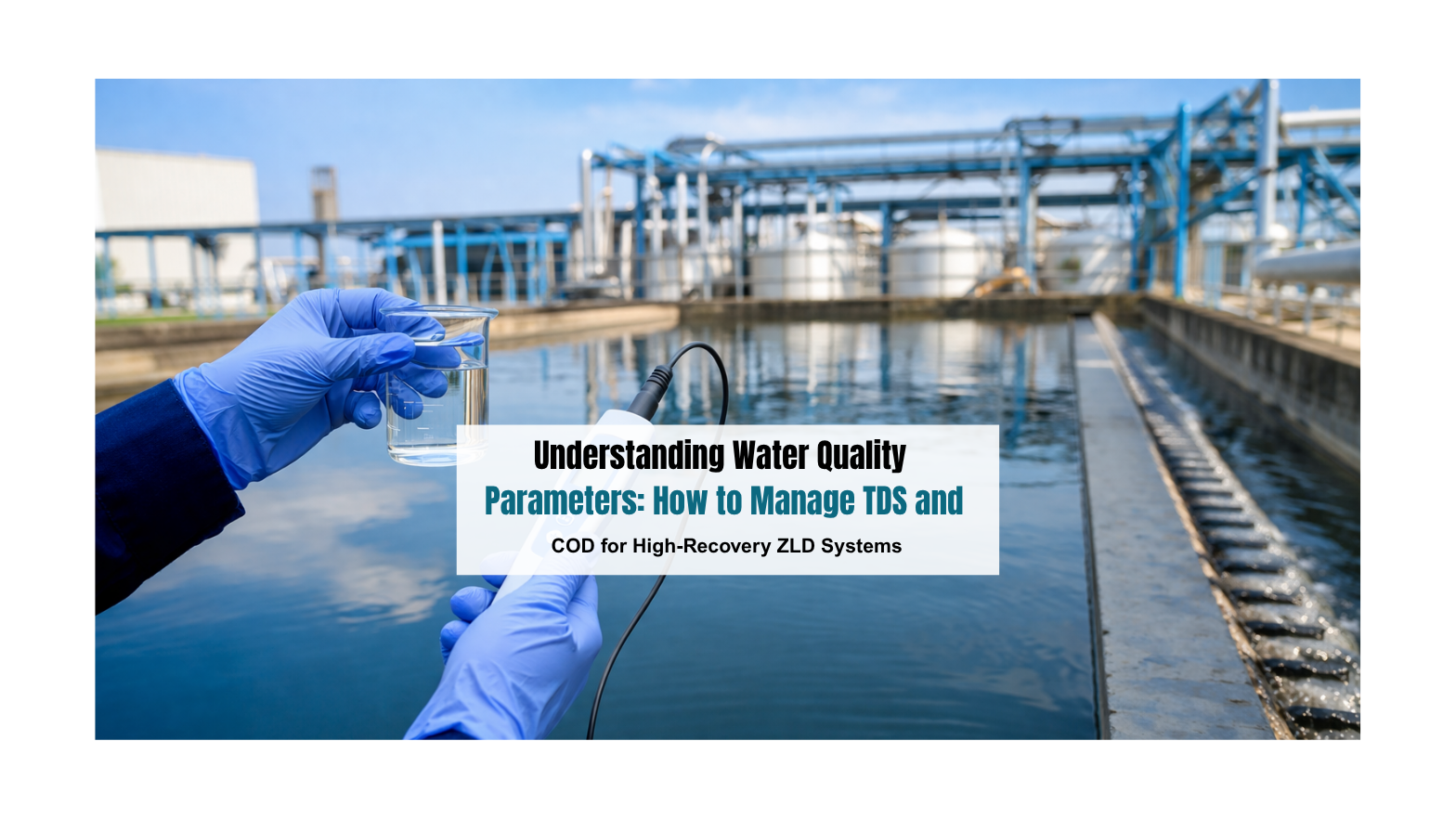
Understanding Water Quality Parameters: How to Manage TDS and COD for High-Recovery ZLD Systems

Walk into any large textile plant in Surat or a distillery on the outskirts of Lucknow, and you will find the same conversation happening in the plant manager’s office. It usually starts with a compliance notice pinned to a file, a membrane replacement quote that seems too high, and someone asking why the RO system is not delivering the recovery numbers it promised on paper.

The answer, almost always, comes back to two things: TDS and COD. Get those wrong, and nothing downstream works the way it should. By implementing efficient Zero Liquid Discharge (ZLD) Systems, these challenges are mitigated. Get them right, and a zero liquid discharge plant stops being a burden and starts behaving like an asset.

But before we get into the engineering of it, let us be honest about the situation Indian industry is actually operating in.

The Pressure Is Real, And It Is Not Going Away

Water scarcity in India is no longer a distant environmental concern. It is a present operational reality. Industries in Red Category classifications, textiles, pharma, chemicals, distilleries, are under closer CPCB and SPCB scrutiny than at any point in the last two decades. Consent renewals are being held up. Effluent discharge violations are triggering shutdowns, not just warnings. And in several industrial clusters, the message from regulators has shifted from “comply by this date” to “you should have complied already.”

For plant managers and sustainability heads navigating this environment, the stress is not just regulatory. It is financial. A shutdown costs more than a compliance upgrade. A membrane array replaced two years ahead of schedule costs more than the biological treatment that could have protected it. The economics of inaction, when you lay them out clearly, are far worse than the economics of investment.

This is the context in which Zero Liquid Discharge has to be understood, not as a government imposition, but as the smarter industrial strategy for anyone serious about long-term operations in India.

What ZLD Actually Demands From Your System

Zero Liquid Discharge means exactly what it says. No treated or untreated effluent crosses your plant boundary. Every drop of process water, cooling water, boiler blowdown, and wash water is captured, treated, and returned to your operations.

In practice, a ZLD water treatment system works in stages. Biological treatment in your ETP handles the bulk of the organic load. Advanced physico-chemical polishing follows. Then comes Reverse Osmosis for water recovery, and finally, thermal evaporation, Multi-Effect Evaporators or Mechanical Vapor Recompression systems, to manage the concentrated reject that RO cannot recover.

Each of these stages has a tolerance ceiling. Feed water that exceeds those tolerances does not just reduce efficiency. It degrades equipment, accelerates fouling cycles, and compresses the operational life of assets that cost crores to install.

And the two water quality parameters that most often push systems past those ceilings are Total Dissolved Solids and Chemical Oxygen Demand. They are distinct problems, but they share one consequence when mismanaged: they make every downstream stage of your ZLD system work harder, cost more, and fail sooner.

Total Dissolved Solids, What the Numbers Actually Mean for Your Plant

Total Dissolved Solids, What the Numbers Actually Mean for Your Plant

Understanding TDS in Industrial Effluent

Total dissolved solids in water is the aggregate of everything dissolved in your effluent, salts, minerals, ionic compounds, dissolved organics, trace metals. In a laboratory, it shows up as a single number. In an actual industrial plant, it is the cumulative signature of every chemical used, every salt addition made, and every process event that has touched the water before it reaches your ETP inlet.

The TDS profile varies sharply by industry. Textile dyeing units, particularly those processing reactive dyes, regularly generate raw effluent with TDS concentrations in the range of 8,000 to 25,000 mg/L. This is driven largely by the volumes of salt used in dye fixation, and it does not wash out easily. Pharmaceutical plants running multi-product batch operations typically see TDS in the range of 5,000 to 15,000 mg/L, with significant variation depending on which API is being synthesized at any given time. Distilleries sit at the most challenging end of the spectrum, spent wash streams can carry TDS concentrations ranging from 80,000 to 1,00,000 mg/L before any treatment has occurred.

These are not abstract figures. They are the incoming reality that your ZLD equipment has to handle.

Disclaimer: These values are general benchmarks and can vary significantly based on specific Effluent Treatment Plant (ETP) configurations and influent characteristics.

What High TDS Does to Your RO and Evaporation Assets

Here is where the engineering gets personal for anyone managing a zero liquid discharge plant.

Reverse Osmosis membranes operate within a defined osmotic pressure envelope. When TDS in the feed water climbs beyond the membrane’s design tolerance, typically somewhere in the 5,000 to 10,000 mg/L range for standard industrial RO configurations, the physics of the situation turns against you. The osmotic pressure required to push water through the membrane rises. You either reduce recovery rates to compensate, increase operating pressure and absorb the energy cost, or accept that your membranes will foul faster and need replacement sooner.

A TDS spike of 20% to 30% above design values can pull your membrane recovery down from a target band of 70% to 80% to somewhere between 50% and 60%. That gap in recovery represents water you are not reclaiming, and energy you are spending without return.

The effect carries through to your evaporation stage as well. When the RO reject entering your MEE or MVR unit carries a higher-than-designed TDS load, scaling on heat exchanger surfaces accelerates. Cleaning cycles become more frequent. Steam consumption rises. What was planned as a scheduled maintenance event becomes a reactive one, and reactive maintenance in a ZLD context is always more expensive than the problem it was supposed to prevent.

Most SPCBs mandate TDS limits in treated effluent as a condition of consent renewal, inland surface water discharge norms generally specify TDS not exceeding 2,100 mg/L, though many state boards apply tighter standards to specific industrial clusters. But within a ZLD framework, meeting the discharge limit is almost a secondary concern. The primary concern is protecting the recovery infrastructure you have invested in.

Disclaimer: These values are general benchmarks and can vary significantly based on specific Effluent Treatment Plant (ETP) configurations and influent characteristics.

Managing COD Through Bioremediation, The Case for Getting the Biology Right First

Managing COD Through Bioremediation, The Case for Getting the Biology Right First

Why COD Is Where ZLD Economics Are Won or Lost

Chemical Oxygen Demand tells you how much oxygen it would take to chemically oxidize all the organic and inorganic matter in your effluent. In the context of a ZLD water treatment system, COD is the single most consequential parameter upstream of your membrane stage.

The reason is straightforward. Most industrial RO systems are designed to receive feed water with COD in the range of 100 to 250 mg/L. Raw effluent from textile, chemical, and pharmaceutical operations regularly arrives at the ETP inlet at 2,000 to 15,000 mg/L. Distillery spent wash, in untreated form, can present COD concentrations of 80,000 to 1,20,000 mg/L.

When COD is not adequately reduced before the RO stage, what follows is predictable and expensive. Organic fouling takes hold on membrane surfaces. Biofilm establishes itself. Chemical precipitation events become more frequent. Membranes that should last several years are being pulled and replaced in under two. And each replacement cycle adds to an operating cost burden that was never part of the original ZLD business case.

Disclaimer: These values are general benchmarks and can vary significantly based on specific Effluent Treatment Plant (ETP) configurations and influent characteristics.

What Bioremediation Actually Does, and Why Generic Products Fail in Indian Plants

This is where biological treatment, and specifically bioremediation, enters the picture. The principle is not complicated: you deploy specialized microbial consortia, naturally occurring bacteria and enzyme complexes, or bio-augmented cultures developed for specific effluent profiles, to break down complex organic molecules before they reach your expensive downstream equipment.

What makes bioremediation genuinely valuable in a ZLD context is not just that it reduces COD. It is that it reduces COD at a fraction of the cost of thermal or chemical intervention. Every kilogram of COD that a well-configured biological system eliminates in the ETP stage is a kilogram that does not need to be managed by your RO membranes, your evaporators, or your chemical dosing systems. In a well-functioning biological treatment stage, COD reduction can range between 70% to 92%, depending on effluent composition, hydraulic retention time, and the specificity of the microbial cultures deployed.

But here is where a lot of Indian plants fall short, and it is worth being direct about this. Generic microbial products purchased off a catalogue and applied without any real understanding of the plant’s specific effluent matrix rarely deliver consistent results. Indian industrial environments are genuinely complex. Effluent quality shifts with seasonal variation in raw materials. Production schedules are irregular. Multi-product facilities create effluent compositions that can look completely different from one week to the next. A biological treatment strategy that does not account for this variability will underperform precisely when you need it most, during a high-load period, a product changeover, or a regulatory inspection cycle.

If your RO membranes are fouling faster than their design life, or if COD is breaking through into your membrane feed despite what looks like adequate ETP operation, the answer is almost certainly in the biology, and the biology needs to be understood at the site level, not guessed at from a product datasheet.

This is exactly what Team One Biotech’s site-specific bioremediation audits are designed to address. Our environmental engineers work alongside your ETP operators, analyze your actual effluent matrix, and develop microbial intervention strategies that are calibrated to your plant’s real operating conditions, not a theoretical average. Reach out to Team One Biotech to schedule an audit and find out where your biological treatment is leaving performance on the table.

How Managing Both Parameters Builds a High-Recovery System

The most effective zero liquid discharge plant configurations operating in Indian industry today are not the ones with the most expensive equipment. They are the ones where each treatment stage is configured to protect the one that follows it.

When TDS and COD are both managed deliberately, a cascade of operational benefits follows:

  • Biological Treatment Stage: A well-augmented ETP reduces COD from inlet concentrations of 3,000 to 10,000 mg/L down to the 200 to 500 mg/L range, while TSS reduction through settling reduces the suspended load carried forward. TDS is not significantly changed at this stage, but the organic fouling potential of the water drops substantially.
  • Physico-Chemical Polishing: Coagulation, flocculation, pH correction, and media filtration refine what the biological stage has already improved. This stage is cheaper and more reliable to operate when the upstream biology has done its job.
  • RO Membrane Stage: With COD managed upstream and TDS within the membrane’s design tolerance, recovery rates hold in the 70% to 85% range. Membrane life extends toward design specifications. Energy consumption stays within the operating budget rather than creeping above it.
  • Thermal Evaporation (MEE/MVR): The concentrate arriving at the evaporator carries a predictable TDS load. Scaling is controlled. Cleaning cycles are planned events rather than emergency interventions. The system delivers consistent ZLD compliance without the operational firefighting that characterizes poorly integrated plants.

None of this happens by accident. It happens because someone took the time to understand each water quality parameter and its downstream consequences, and then built a treatment strategy around that understanding rather than around the lowest upfront cost.

Disclaimer: These values are general benchmarks and can vary significantly based on specific Effluent Treatment Plant (ETP) configurations and influent characteristics.

Water Independence Is a Strategy, Not Just a Compliance Target

The industries that will be in the strongest operational position five years from now are not those that installed a ZLD system to satisfy a regulatory condition and moved on. They are the ones that understood what their ZLD water treatment system actually needed to perform well, and invested in managing total dissolved solids in water and COD upstream, so the expensive hardware downstream could do its job reliably.

The compliance pressure from CPCB and state boards is real, and it is intensifying. But the smarter frame for this conversation is not “how do we avoid a shutdown.” It is “how do we build a water treatment architecture that gives us operational continuity, cost predictability, and genuine water independence.”

That architecture starts with getting the biology right.

Team One Biotech works with large-scale Indian industries, textile, pharma, chemical, distilleries, to deliver site-specific bioremediation strategies that protect ZLD infrastructure, reduce operating costs, and strengthen compliance standing. If your plant is navigating the challenges of TDS management, COD reduction, or ZLD system optimization, our team is ready to conduct a detailed on-site audit and help you build a treatment approach grounded in your actual operating conditions. Get in touch with Team One Biotech and take the first step toward water independence that is engineered, not improvised.

Looking to improve your ETP/STP efficiency with the right bioculture?
Talk to our experts at Team One Biotech for customised microbial solutions.

Contact+91 8855050575

Email:  sales@teamonebiotech.com

Visit: www.teamonebiotech.com

Discover More on YouTube – Watch our latest insights & innovations!-

Connect with Us on LinkedIn – Stay updated with expert content & trends!
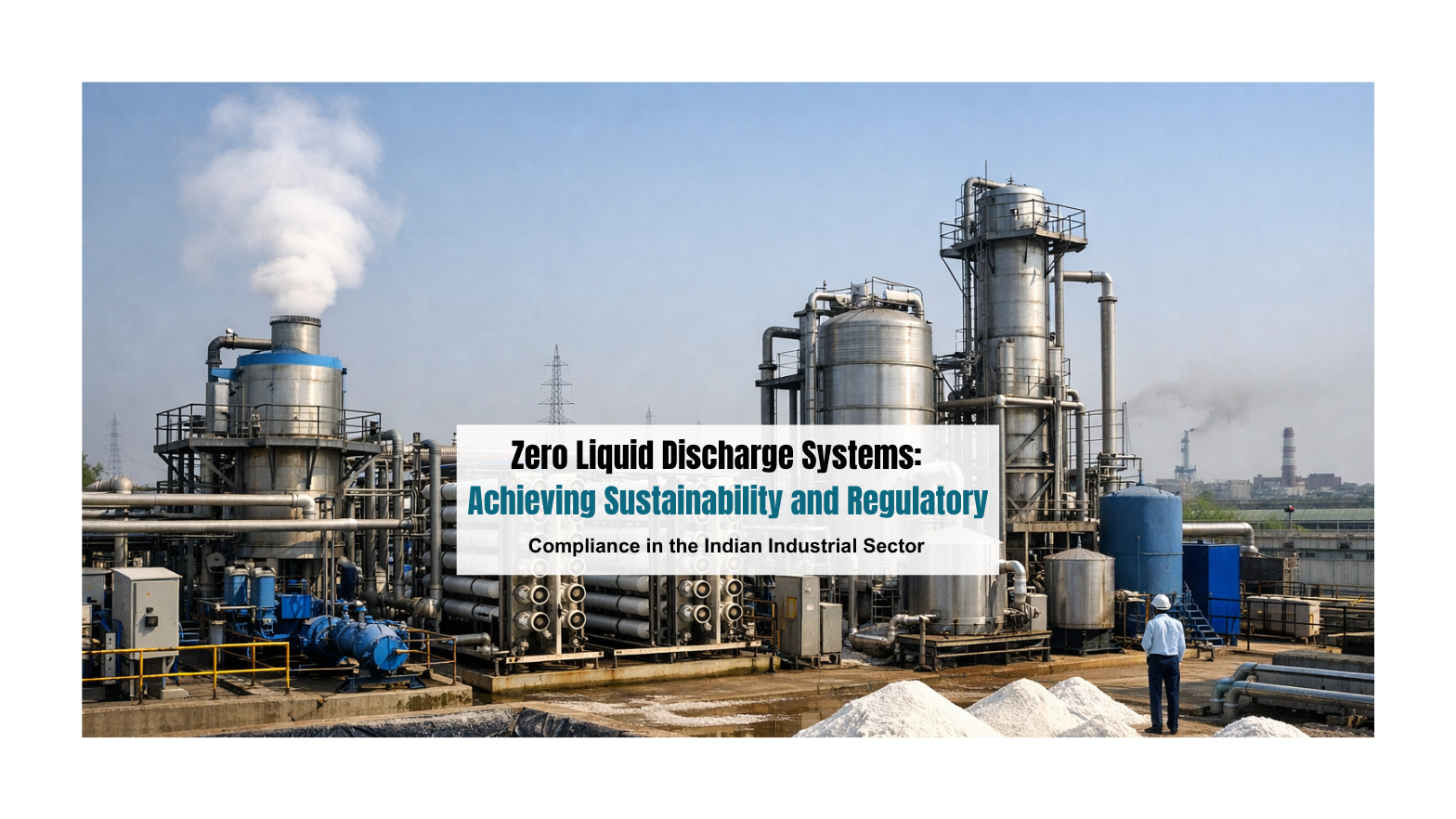
Zero Liquid Discharge Systems: Achieving Sustainability and Regulatory Compliance

There is a particular kind of pressure that plant managers in Ahmedabad, Ludhiana, Vapi, and Ankleshwar know intimately. It is not the pressure of a quarterly review or a supply chain delay. It is the pressure of standing at the edge of a genuine environmental reckoning, knowing that the decisions made in your facility today will determine whether your business exists a decade from now.

India’s industrial groundwater crisis is not a projection. It is a present-tense emergency. Textile dyeing clusters in Gujarat and Punjab collectively discharge millions of litres of high-TDS, chemical-laden effluent daily. The pharmaceutical corridor of Hyderabad generates wastewater streams so complex in their chemical signatures that conventional ETPs have routinely struggled to achieve consent standards. Chemical manufacturing clusters in Maharashtra and Rajasthan face escalating CPCB show-cause notices, NGT orders, and the looming reality of forced operational shutdowns. The question is no longer whether Indian industry must adopt Zero Liquid Discharge. The question is how to do it intelligently, cost-effectively, and in a way that creates genuine long-term competitive advantage.

This guide is written for those responsible for that decision.

What Zero Liquid Discharge Actually Means, Beyond the Regulatory Checkbox

The phrase “Zero Liquid Discharge plant” has become so common in compliance conversations that it risks losing its meaning. Strip away the regulatory context for a moment, and what ZLD water treatment actually represents is a fundamental reimagining of how industrial facilities relate to water as a resource.

In a conventional effluent treatment workflow, treated water is discharged into a water body or municipal drain after meeting prescribed quality norms. Even in well-managed facilities, this means a net loss of water from the industrial ecosystem. In a Zero Liquid Discharge system, no treated effluent leaves the plant boundary in liquid form. Every litre of wastewater generated by the production process is recovered, concentrated, and either recycled back into operations or converted into a solid or semi-solid residue for safe disposal. The water recovery rates achieved by well-engineered ZLD systems typically fall in the range of 90% to 98%, depending on influent quality and system configuration. Please note that these are general values and performance metrics vary significantly based on the specific ETP configuration and influent characteristics.

For a large-scale textile dyeing unit consuming 2 to 3 million litres of water per day, that recovery rate translates into tangible balance sheet impact. But beyond economics, it means achieving something that compliance documents rarely capture: true stewardship of a resource that is becoming structurally scarce across industrial India.

The Science of ZLD, Membrane Technology vs. Thermal Evaporation

Understanding why ZLD systems succeed or fail requires a working knowledge of the two dominant technology pathways available to Indian plant operators: membrane-based separation and thermal evaporation. The majority of modern ZLD installations combine both, but the design decisions around sequencing and sizing define the economics and performance of the entire system.

Membrane-Based ZLD Processes

Membrane technology forms the front end of most ZLD water treatment configurations because it is energy-efficient relative to thermal processes and capable of handling high volumes. The typical sequence involves ultrafiltration (UF) followed by reverse osmosis (RO), often with a second or third-pass RO stage for high-TDS applications.

Ultrafiltration removes suspended solids, colloidal matter, and larger organic molecules through a pressure-driven membrane with pore sizes in the 0.01 to 0.1 micron range. This stage is critical because it protects the downstream RO membranes from fouling, a failure mode that is responsible for the majority of ZLD plant operational disruptions in Indian industrial facilities.

Reverse osmosis then handles the bulk of dissolved solids rejection. A single-pass RO stage at a well-operated ZLD plant will typically achieve water recovery in the range of 50% to 75% of the feed volume, producing a concentrated reject stream with significantly elevated TDS levels. Please note that these are general values and performance metrics vary significantly based on the specific ETP configuration and influent characteristics.

This concentrate, sometimes called brine, cannot simply be discharged. In a ZLD configuration, it must be further processed. This is where the thermal stage begins.

Thermal Evaporation and Crystallisation

The concentrate stream from the RO stage enters the thermal section of the ZLD plant, which typically comprises a multiple-effect evaporator (MEE) and, in full ZLD configurations, a crystalliser downstream.

Multiple-effect evaporators work by using the steam generated in one effect to heat the feed in the next, recovering energy across several stages. This cascading approach reduces the specific energy consumption of the evaporation process, a critical consideration given that thermal processes remain significantly more energy-intensive than membrane processes. MEE systems operating on industrial brine streams typically achieve evaporation efficiencies in the range of 30% to 45% steam economy, meaning each kilogram of primary steam drives evaporation of 30 to 45 kilograms of water across the effects. Please note that these are general values and performance metrics vary significantly based on the specific ETP configuration and influent characteristics.

The crystalliser handles the final concentration step, forcing dissolved salts out of solution into a crystalline solid. Depending on the feed chemistry, the resulting salt may have commercial recovery value, a point we will return to in the economic analysis section, or may require regulated disposal as solid hazardous waste under the Hazardous Waste Management Rules, 2016.

The total specific energy consumption of a combined membrane-thermal ZLD system varies considerably by application and influent TDS, but typically falls in the range of 15 to 35 kWh per kilolitre of feed processed. Please note that these are general values and performance metrics vary significantly based on the specific ETP configuration and influent characteristics.

Total Dissolved Solids in Water, The Industrial Damage You Cannot Always See

Total Dissolved Solids in Water, The Industrial Damage You Cannot Always See

One of the most underappreciated aspects of industrial water quality management is the cumulative, progressive damage caused by elevated TDS in water, both to production equipment and to the receiving environment. Plant managers often focus on visible pollution indicators, colour, COD, BOD, while TDS builds silently until it manifests as capital equipment failure or regulatory action.

Total dissolved solids in water is a composite measurement of all inorganic and organic matter dissolved in a water sample, expressed in milligrams per litre (mg/L) or parts per million (ppm). In industrial contexts, the TDS profile of a water source includes a complex matrix of calcium, magnesium, sodium, potassium, chloride, sulphate, bicarbonate, and a range of process-specific dissolved solids depending on the industry.

Equipment Degradation and Production Losses

High-TDS process water accelerates scaling in boilers, heat exchangers, cooling towers, and pipelines. Calcium carbonate and calcium sulphate scale deposits in boilers reduce heat transfer efficiency, increase fuel consumption, and create hot spots that contribute to premature tube failure. Scaling in cooling tower fill media and distribution systems reduces thermal efficiency and increases biological fouling risk.

The economic cost of unmanaged TDS in industrial cooling and steam generation systems, when expressed as increased energy consumption, maintenance expenditure, and unplanned downtime, typically ranges between 8% to 18% of total utility costs in affected facilities. Please note that these are general values and performance metrics vary significantly based on the specific ETP configuration and influent characteristics.

In textile processing, high-TDS process water directly degrades dyeing outcomes. Elevated calcium and magnesium concentrations interfere with dye uptake, leading to inconsistent colour yield, increased dye and chemical consumption, and quality rejections, none of which show up in an effluent compliance report, but all of which represent real production costs.

Environmental and Regulatory Dimensions of TDS

From a regulatory standpoint, the CPCB has prescribed TDS limits for treated effluent discharge to inland surface waters, with general standards typically setting a threshold that many high-intensity industrial effluents significantly exceed prior to treatment. State Pollution Control Boards in Gujarat, Maharashtra, Tamil Nadu, and Telangana have issued sector-specific consent conditions with TDS limits that reflect the cumulative carrying capacity of local water bodies.

The NGT has repeatedly intervened on TDS-related environmental harm, particularly in cases where high-TDS industrial discharge has resulted in soil salinity damage to agricultural land downstream of industrial clusters. Penalties in such cases have ranged from facility closures to compensation orders running into crores of rupees.

Monitoring and controlling TDS is therefore both an equipment protection imperative and a core water quality parameter in the regulatory compliance framework governing Indian industry.

Where Bioremediation Fits, Team One Biotech’s Role in the ZLD Ecosystem

Where Bioremediation Fits, Team One Biotech's Role in the ZLD Ecosystem

A critical and often misunderstood aspect of ZLD plant design is that membrane and thermal technologies work best when the organic load in the influent has been substantially reduced before the feed stream reaches the ZLD train. High COD and BOD in the ZLD feed stream causes accelerated membrane fouling, reduces flux rates, increases cleaning frequency, and shortens membrane life, all of which translate directly into higher operating costs and reduced system availability.

This is where biological pre-treatment, and specifically bioremediation using specialised microbial consortia, plays a decisive upstream role.

Team One Biotech’s bio-augmentation solutions are designed to address precisely this challenge. By deploying high-performance, application-specific microbial consortia into the ETP biological treatment stage, organic degradation efficiency is substantially enhanced before the effluent stream approaches the ZLD feed header. The result is a lower-COD, lower-TSS feed to the membrane stage, with measurable downstream benefits across the entire ZLD system.

In industrial ETP configurations where bio-augmentation has been applied prior to the ZLD train, facilities have reported reductions in RO membrane cleaning frequency, extended membrane replacement intervals, and lower specific chemical consumption in the CIP (Clean-In-Place) process. Organic load reduction at the biological stage translates into a cleaner, more consistent ZLD feed, which is the single most important controllable variable in long-term ZLD system performance.

For plant managers operating in textile, pharma, or chemical manufacturing, integrating bio-augmentation into the ETP prior to the ZLD investment is not a supplementary consideration. It is a foundational design decision that affects the capital cost, operating cost, and operational reliability of the entire ZLD installation.

If you are in the pre-engineering or FEED phase of a ZLD investment, consult with our compliance specialists to future-proof your facility, and ensure that your biological pre-treatment strategy is designed to support, rather than compromise, your ZLD performance targets.

The Regulatory Roadmap, What Indian Law Actually Requires, and What Non-Compliance Costs

The regulatory framework governing industrial effluent management in India has become substantially more stringent in the past decade, driven by a combination of NGT activism, CPCB enforcement, and a series of Supreme Court interventions that have fundamentally changed the risk calculus for industrial polluters.

CPCB and SPCB Mandate Overview

The Environment (Protection) Act, 1986 and the Water (Prevention and Control of Pollution) Act, 1974 form the legislative backbone of industrial effluent regulation in India. The CPCB issues general standards for effluent discharge under the Environment (Protection) Rules, 1986, while State Pollution Control Boards issue facility-specific Consent to Operate (CTO) conditions that translate these general standards into site-specific obligations.

The CPCB has progressively tightened effluent standards across highly polluting industries, a category that includes large-scale textile processing, pharmaceuticals, dyes and dye intermediates, chlor-alkali, and tanneries, among others. For textile dyeing and printing units, the CPCB’s sector-specific standards prescribe not only COD, BOD, and TSS limits but also colour and TDS benchmarks that are effectively unachievable without a ZLD or near-ZLD configuration.

NGT Mandates and Their Implications

The National Green Tribunal has been an active enforcement actor, particularly in relation to industrial clusters. The NGT’s orders on the Pali textile cluster in Rajasthan, the Tirupur dyeing cluster in Tamil Nadu, and the CETP-linked industries in Vapi have established a clear judicial posture: industries that fail to achieve prescribed effluent quality standards face closure orders that the Tribunal has shown willingness to enforce. The NGT has also directed that industries within specified distances of sensitive water bodies must achieve ZLD, regardless of whether their effluent technically meets individual discharge norms.

The True Cost of Non-Compliance

The financial risk of non-compliance extends significantly beyond the direct penalty amounts prescribed under environmental statutes, which themselves have been enhanced in recent years. Facilities facing enforcement action under the Water Act or the Environment Protection Act risk suspension of Consent to Operate, which triggers immediate production stoppage. In industries where CTO suspension affects export-linked operations, the consequential losses from order cancellations, customer penalties, and bank covenant breaches can dwarf the original environmental fine by orders of magnitude.

Beyond immediate financial exposure, unresolved compliance failures increasingly affect access to institutional credit. Several scheduled banks and development finance institutions now incorporate environmental compliance status into credit appraisal frameworks, particularly for loans above certain thresholds. Facilities with pending SPCB notices or NGT orders are encountering difficulties in loan renewals and capacity expansion financing.

The question, for any serious industrial leader, is not whether the cost of ZLD investment is justified. It is whether the business can afford the compounding cost of deferring it.

The Economic Case for ZLD, Turning Waste Streams Into Working Capital

The Economic Case for ZLD, Turning Waste Streams Into Working Capital

The financial argument for ZLD water treatment has shifted materially over the past five years, for two reasons. First, freshwater costs have risen across Indian industrial belts as groundwater depletion has forced industry toward tanker supply, Common Effluent Treatment Plant charges, and municipal industrial supply, all more expensive per kilolitre than the groundwater sources they replace. Second, ZLD technology costs, particularly on the membrane side, have declined meaningfully as the Indian market for UF and RO membranes has deepened.

Water Recovery as Cost Avoidance

For a large-scale industrial facility consuming between 1 and 5 million litres of process water per day, ZLD water recovery at 90% to 95% recovery efficiency effectively replaces 9 to 9.5 of every 10 litres with recycled water. Expressed as cost avoidance at current industrial water supply costs in water-stressed states like Gujarat, Rajasthan, and Maharashtra, this represents a significant annual saving. Plants that have transitioned from tanker-dependent fresh water supply to ZLD-recovered water have reported reductions in freshwater procurement costs in the range of 55% to 75% of their pre-ZLD water expenditure. Please note that these are general values and performance metrics vary significantly based on the specific ETP configuration and influent characteristics.

Salt Recovery and Secondary Revenue

Pharmaceutical and chemical sector ZLD installations that generate high-purity crystallised sodium chloride, sodium sulphate, or ammonium sulphate from their crystalliser output have explored the potential for secondary revenue through salt recovery. Where the recovered salt stream is sufficiently pure and consistent, it may be saleable to commercial salt processors or industrial users, partially offsetting the operating cost of the crystallisation stage. The commercial viability of this depends on the specific salt type, purity, and available off-take arrangements in the local market.

The Payback Period Question

ZLD systems carry significant capital investment, and it would be misleading to present this as a low-cost option. However, the payback period calculation must include the avoided cost of regulatory penalties, the insurance value against forced production shutdowns, the freshwater cost savings, and, where applicable, the value of recovered salt or heat. When these factors are aggregated, well-structured ZLD investments in high-water-intensity industries have demonstrated payback periods in the range of 5 to 9 years in Indian industrial contexts. Please note that these are general values and performance metrics vary significantly based on the specific ETP configuration and influent characteristics.

For high-value manufacturing, speciality chemicals, pharmaceutical APIs, technical textiles, where a single production shutdown carries costs that can exceed the entire ZLD capital investment, the insurance logic alone may justify the expenditure independent of the operating economics.

Request a technical audit of your recovery cycle to develop a facility-specific ROI model before making a capital commitment.

Maintenance, Failure Modes, and Operational Discipline in ZLD Plants

The most common reason ZLD plants fail to deliver on their design performance in Indian industrial settings is not a technology deficiency. It is a gap between the operational discipline required to run a ZLD system and the institutional capability of the facility managing it.

Membrane Fouling, The Primary Failure Mode

RO membrane fouling is the single most common cause of underperformance and premature failure in ZLD installations. Fouling occurs when dissolved or suspended matter accumulates on or within the membrane matrix, reducing flux and increasing trans-membrane pressure. In Indian industrial applications, the leading foulants are calcium carbonate scale, silica scale, biological fouling, and organic matter.

Prevention requires consistent monitoring of the Silt Density Index (SDI) of the UF permeate, rigorous adherence to CIP protocols at defined intervals, antiscalant dosing at correctly calibrated rates, and temperature monitoring of the feed stream. Membrane life in well-operated ZLD plants typically falls in the range of 5 to 8 years per module. In poorly maintained systems, premature failure at 2 to 3 years is not uncommon. Please note that these are general values and performance metrics vary significantly based on the specific ETP configuration and influent characteristics.

Evaporator Scaling and Corrosion

In the thermal section, scaling on heat exchanger surfaces and corrosion of wetted materials are the primary maintenance concerns. Evaporators handling high-chloride brine streams require careful materials selection, typically duplex stainless steel or titanium, and regular descaling to maintain heat transfer efficiency. Facilities that undersize their descaling budget invariably face higher long-term operating costs than those that invest in preventive maintenance at the prescribed intervals.

Instrumentation and Control Systems

ZLD plants are highly instrumented systems, and the failure of online analysers, particularly TDS, pH, and flow meters, frequently cascades into process deviations that compromise effluent quality or damage equipment. Maintaining a calibrated spare instrument inventory and conducting scheduled calibration checks on all critical online instruments is a non-negotiable operational discipline for ZLD plants that consistently perform to design.

For facilities experiencing persistent performance gaps in their existing ZLD or ETP systems, a structured root-cause diagnostic is typically more cost-effective than a capital investment in additional treatment stages. Request a technical audit of your recovery cycle to identify where your current system is losing performance, and what it will take to recover it.

Building a Compliance-Ready Industrial Operation for the Next Decade

The Indian regulatory trajectory on industrial water management is unambiguous. The CPCB’s online continuous effluent monitoring mandates, the NGT’s willingness to impose closure orders, and the integration of environmental compliance into credit and insurance frameworks all point in the same direction: facilities that treat environmental compliance as a fixed cost to be minimised will find that cost rising dramatically. Facilities that treat water stewardship as a strategic investment will find it creates competitive insulation.

ZLD water treatment is not a small undertaking. It requires significant capital, genuine operational capability, and a willingness to maintain system discipline over years rather than quarters. But for industries in India’s most water-stressed and regulatory-scrutinised sectors, it is increasingly not a choice. It is the price of continued operation.

The question is not whether to make this transition. The question is whether to make it on your own terms, with a technology and pre-treatment configuration that maximises recovery and minimises long-term operating cost, or to make it reactively, under enforcement pressure, with the timeline and cost structure determined by a regulator rather than a business case.

Team One Biotech works with plant managers and facility heads to ensure that the biological pre-treatment foundation supporting your ZLD investment is engineered to deliver the feed quality your membrane and thermal systems need to perform. If you are planning a ZLD investment, expanding an existing ETP, or facing compliance challenges that require a technical response rather than a regulatory one, consult with our compliance specialists to future-proof your facility.

The water is not coming back on its own. But with the right systems in place, you can make sure your facility never has to depend on it from outside again.

Looking to improve your ETP/STP efficiency with the right bioculture?
Talk to our experts at Team One Biotech for customised microbial solutions.

Contact+91 8855050575

Email:  sales@teamonebiotech.com

Visit: www.teamonebiotech.com

Discover More on YouTube – Watch our latest insights & innovations!-

Connect with Us on LinkedIn – Stay updated with expert content & trends!
Wastewater treatment plant for integrated textile industry
Effective Wastewater Treatment Plant for an Integrated Textile Industry in India
Introduction:

The Integrated Textile Industry is a leading cloth manufacturing company that involves denim production, cotton apparel manufacturing, and is also involved in the pulping of raw materials and paper manufacturing. With a strong commitment to environmental sustainability, the Integrated Textile Industry operates a waste water treatment plant (WWTP) at its textile manufacturing facility to treat the industrial effluent generated during its textile production processes.

However, the industry faced challenges in meeting the effluent discharge limits for certain pollutants, including the presence of components from reactive dyes, high chemical oxygen demand (COD), elevated biochemical oxygen demand (BOD), higher levels of color, and effluent temperature reaching up to 50°C. To address these challenges, the industry implemented a bioaugmentation program at its effluent treatment plant (ETP), which resulted in significant improvements in the wastewater treatment process and compliance with regulatory standards for industrial effluents.

Effluent Treatment Plant (ETP) Details:

The industry had primary treatment, biological treatment, and then a tertiary treatment.

Flow 500-600 KLD
Type of process MBBR
No. of aeration tanks 2 (in parallel)
Capacity of aeration tanks 650 KL each
Total RT hours
Challenges:
Parameters Inlet parameters  Outlet parameters (Secondary System)
COD 13,000 to 10000 8500 to 6800 
BOD 4000 to 2500 2800 to 1650
Colour 750 to 900 Hazen 560 to 700 Hazen
  • The primary treatment system was working at 20-30% efficiency in terms of COD reduction.
  • The biological treatment was working at an average of 10-15% efficiency combined in terms of COD removal.
  • The system was struggling to effectively treat pollutants originating from reactive dyes and to reduce color contamination in the textile effluent.
  • The mixed liquor suspended solids (MLSS) were very low, and the microbial population in the biological treatment tanks could not develop due to the high wastewater temperature of 50°C.
  • The conventional MBBR waste water treatment plant was not efficient enough to consistently meet the stringent effluent discharge standards set by local environmental regulatory agencies.

As a result, the textile manufacturing company faced the risk of non-compliance, which could lead to regulatory fines, reputational damage, and environmental pollution.

The Bioaugmentation Approach:

The Integrated Textile Industry partnered with us to enhance the efficiency of their biological units. They had two aeration tanks in parallel, equipped with diffusers, handling a daily wastewater flow of 500-600 KLD.

Bioaugmentation is a biological wastewater treatment technique that involves adding specifically selected microorganisms, such as bacteria and enzymes, to improve the biological degradation of pollutants in a waste water treatment plant. The team conducted a comprehensive wastewater assessment to analyze the industrial effluent characteristics and the WWTP’s operational parameters, identifying the best bioaugmentation strategy for this textile effluent treatment plant.

Based on the assessment, a customized bioaugmentation program was designed and implemented. The microbial cultures were carefully selected to target organic pollutants, particularly contaminants from reactive dyes in the industrial effluent stream. Thermophilic bacteria were introduced to withstand high-temperature wastewater conditions and enhance the biological treatment process.

The bioaugmentation process was seamlessly integrated into the existing wastewater treatment process, and the performance of the WWTP was monitored over the next three months.

Improved Effluent Quality After Bioaugmentation:

Parameters

Inlet Parameters (ppm)

Outlet Parameters (After Bioaugmentation) (ppm)

COD (Chemical Oxygen Demand) 13,000 to 10,000 2,500 to 1,800
BOD (Biochemical Oxygen Demand) 4,000 to 2,500 800 to 650
Color (Hazen Units) 750 to 900 150 to 300
Results and Benefits of Bioaugmentation in Wastewater Treatment:

The implementation of the bioaugmentation program resulted in significant improvements in the performance of biological units at the wastewater treatment plant:

Achieved around 80-84% reduction in COD & BOD levels in the treated industrial effluent.
Attained 80-85% color removal efficiency, demonstrating visible improvement in effluent clarity.
Enhanced microbial population growth in biological tanks, even at higher wastewater temperatures.
The biological treatment system became more stable, reducing process fluctuations caused by influents variability.
Increased plant reliability, ensuring consistent compliance with regulatory discharge limits.
Reduced operational costs through optimized biological treatment efficiency.

The successful bioaugmentation application has helped the Integrated Textile Industry maintain regulatory compliance, improve wastewater treatment plant performance, and support their commitment to sustainable textile manufacturing.

Discover More on YouTube – Watch our latest insights & innovations!

Connect with Us on LinkedIn – Stay updated with expert content & trends!
Scan the code