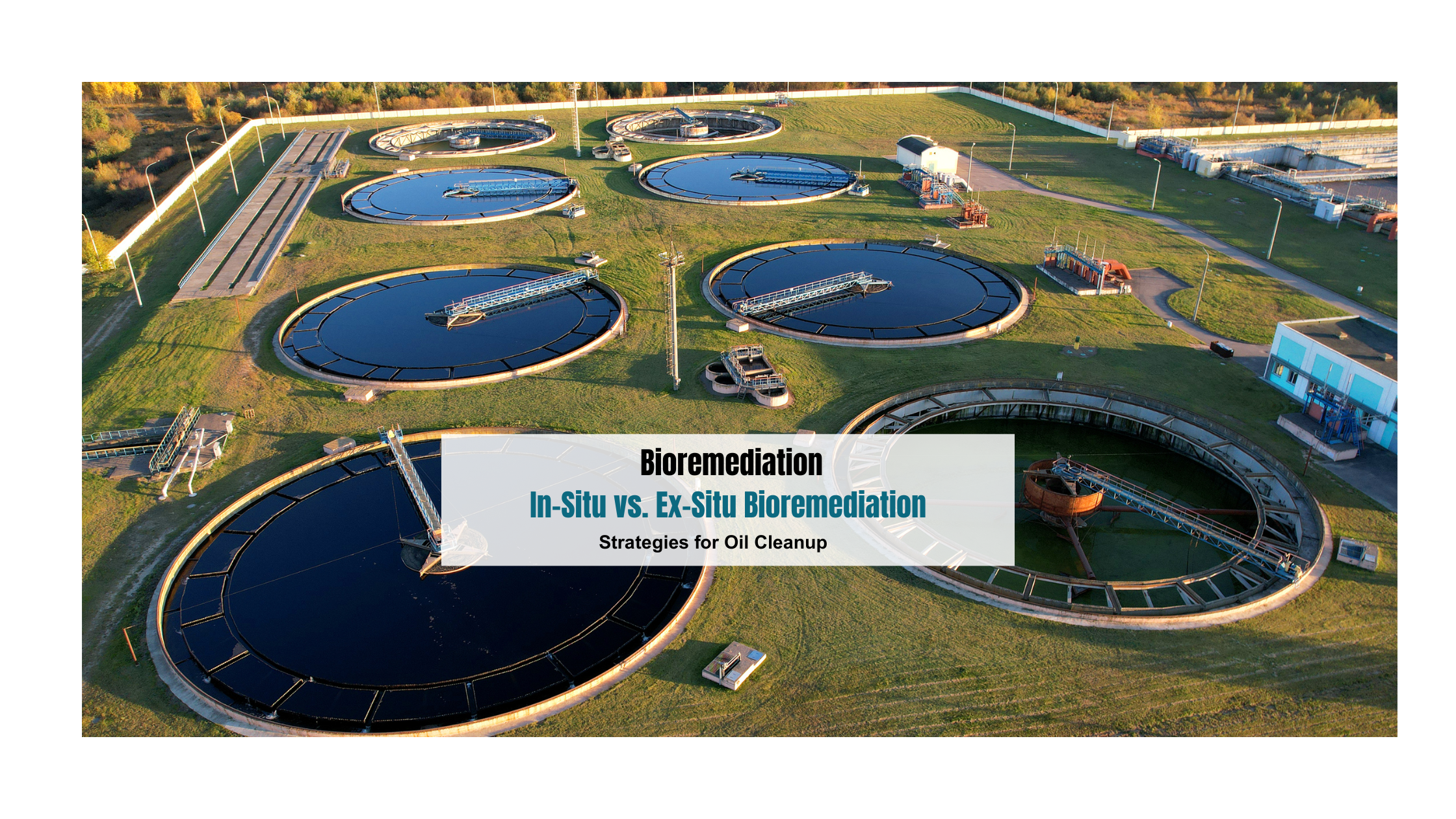
Marine Oil Spill Response: Using Indigenous UAE Bacteria for Rapid Hydrocarbon Degradation
The Arabian Gulf Is Not Just Any Body of Water
For generations, the waters of the Arabian Gulf have sustained life in ways that extend far beyond commerce. The same coastlines that now support some of the world’s most ambitious port infrastructure, Jebel Ali, Khalifa Port, Mina Zayed, once nurtured pearl divers whose trade defined Emirati identity for centuries. The mangroves of Abu Dhabi’s Eastern Corniche and the seagrass beds off Ras Al Khaimah are not geological footnotes. They are living archives of a maritime culture that predates the modern UAE by thousands of years.
Today, that heritage faces a calculated risk. The UAE’s position as a global industrial and marine sustainability hub, processing, refining, and transporting millions of barrels of hydrocarbons annually, means that the probability of accidental marine oil spills is not hypothetical. It is statistical. And when those spills occur, the response strategy deployed in the first 72 hours determines whether an ecosystem recovers or collapses.
This is where the science of bioremediation, and specifically, the innovation behind T1B OS by Team One Biotech, a robust microbial bioculture becomes not just commercially relevant, but environmentally essential.
Understanding Oil Spills: A Global Environmental Hazard
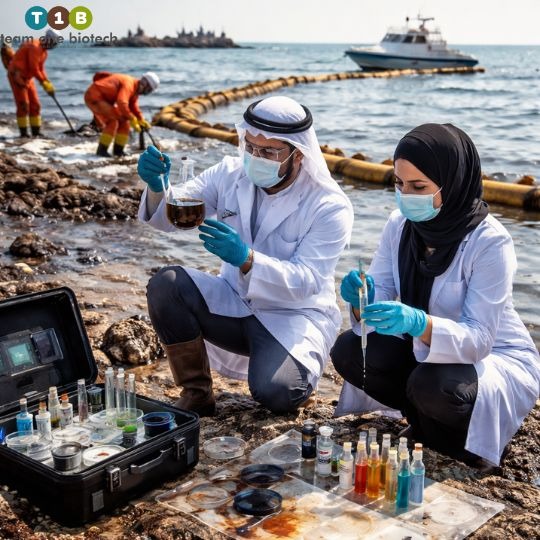
Oil spills are the accidental release of liquid petroleum or hydrocarbon products into the environment. They occur most commonly as a result of maritime transportation accidents, oil well blowouts, or pipeline leaks, all scenarios that are statistically relevant along the UAE’s heavily trafficked Gulf shipping lanes and its extensive offshore production infrastructure.
Oil spills are widely regarded as one of the most severe environmental hazards humanity creates, and for good reason. Hydrocarbons are chemically complex, structurally stable, and extraordinarily difficult to treat once dispersed in a marine or terrestrial environment. The consequences extend across three critical dimensions:
- Ecological devastation: Widespread damage to marine ecosystems and wildlife, from microscopic phytoplankton to large marine mammals, disrupting food webs that took millennia to establish.
- Human health risk: Long-term contamination of drinking water sources and the food chain, with hydrocarbon bioaccumulation in fish tissue presenting direct public health consequences for coastal communities.
- Economic destruction: Oil spills inflict severe economic damage on coastal communities, crippling the fishing and tourism industries that many UAE communities depend upon for their livelihoods.
In the UAE context, these consequences are amplified by the unique hydrological characteristics of the Arabian Gulf, making rapid, effective bioremediation not simply desirable, but operationally critical.
The Problem With Oil Spills in the Gulf: It’s More Complex Than It Looks

Why the Arabian Gulf Is Uniquely Vulnerable
The Arabian Gulf is one of the most hydrologically stressed marine environments on the planet. It is semi-enclosed, shallow, averaging just 35 meters in depth, and subject to extreme seasonal temperatures that routinely exceed 35°C at the surface. Salinity levels average between 38 and 45 parts per thousand, significantly higher than the global ocean average of 35 ppt. Water residence time, the period before Gulf water is flushed into the Indian Ocean, is estimated at between three and five years.
For HSE managers and port authorities overseeing marine oil spill response in UAE waters, these figures represent an operational reality: pollutants introduced into the Gulf do not simply wash away. They concentrate, they settle into sediment, and they persist.
The Triple Impact: Desalination, Fisheries, and Mangroves
An oil spill event in Gulf waters triggers a cascade of consequences that are uniquely severe in the UAE context.
Desalination Infrastructure: The UAE produces approximately 14% of the world’s desalinated water. A significant proportion of the nation’s desalination plants, including the massive Jebel Ali facility and Abu Dhabi’s Taweelah complex, draw intake water directly from the Gulf.
Hydrocarbon contamination of intake zones does not just disrupt operations. It forces costly shutdowns, requires emergency membrane replacement, and creates a direct threat to national water security. When drinking water sources become contaminated with petroleum compounds, the impact extends far beyond infrastructure, it infiltrates the food chain, with long-term public health consequences that are difficult to quantify and harder still to reverse.
- Local Fishing Industries: Artisanal fishing communities, particularly in Umm Al Quwain, Ras Al Khaimah, and the eastern coast of Fujairah, depend directly on healthy inshore fisheries. Polycyclic aromatic hydrocarbons (PAHs) released during spill events bioaccumulate in fish tissue, rendering catches commercially unviable and presenting genuine public health risks. The economic and cultural damage to these communities is rarely captured in incident cost assessments, yet it can persist for years after a spill is declared ‘contained.’
- Mangrove Ecosystems: The UAE hosts an estimated 50 million mangrove trees, with Abu Dhabi committed to planting a further 30 million under its national climate agenda. Mangroves serve as critical carbon sinks, coastal stabilizers, and nursery habitats for commercially important fish species. Crude oil and refined petroleum products penetrate the anaerobic sediment layers where mangrove root systems operate, causing root suffocation and leaving toxic residues that persist for decades without active intervention.
Why Mechanical Recovery Is Not Enough
Traditional mechanical oil spill response, booms, skimmers, vacuum tankers, and sorbent materials, is necessary but structurally insufficient. These methods address the visible surface slick. They do not address dissolved hydrocarbons in the water column, oil that has emulsified, or PAHs that have sedimented on the seabed. Studies consistently show that mechanically ‘cleaned’ sites retain toxic hydrocarbon fractions in sediment for five to twenty years post-incident, continuing to suppress marine biodiversity long after the headlines have faded.
Chemical dispersants, the other conventional tool, carry their own toxicity profile. Several dispersant compounds approved in other jurisdictions are explicitly restricted under Dubai Municipality (DM) environmental standards and are incompatible with ADSSC (Abu Dhabi Sewerage Services Company) industrial discharge guidelines for facilities with marine adjacency.
The regulatory and ecological gap between mechanical recovery and genuine remediation is precisely where bioremediation enters, and where T1B OS delivers a measurable advantage.
T1B OS: Indigenous Bacteria, Engineered for Gulf Conditions

What Is T1B OS? A Product Built for Real-World Gulf Conditions
Bioremediation of oil spills is a natural, eco-friendly approach to treating environments contaminated with hydrocarbons, and it represents the most scientifically defensible solution available for the Arabian Gulf’s specific environmental parameters. T1B OS, a dedicated product from Team One Biotech’s environmental solutions portfolio, is a robust microbial bioculture designed to accelerate the breakdown of oil and petroleum-based contaminants in both soil and water environments.
T1B OS is classified as a non-pathogenic biological product, meaning it poses no risk to human health, marine fauna, or operational personnel during application. It is a GRAS-equivalent (Generally Recognized As Safe) formulation, and its biological composition is fully transparent and documentable for regulatory submission purposes under both DM and ADSSC compliance frameworks.
The core distinction of T1B OS lies in its microbial provenance. The bacterial strains within T1B OS are indigenous to the Arabian Gulf and UAE coastal environments. They were isolated, identified, and cultured from the very sediment and water columns they are designed to treat. This is not a marginal technical detail. It is the factor that determines whether a bioremediation product performs under real Gulf conditions or underperforms against the laboratory data sheets of a European or North American supplier.
Is your facility’s spill response plan aligned with current bioremediation provisions under Dubai Municipality and ADSSC regulations?
Contact Team One Biotech today to schedule a no-obligation technical consultation with our Gulf-region environmental specialists.
The Science of Rapid Hydrocarbon Degradation, Made Accessible
Hydrocarbon degradation is a natural process. Certain bacteria have evolved, over geological timescales, to metabolize petroleum compounds as a carbon and energy source. The limitation of natural attenuation, the unassisted version of this process, is time. Natural microbial populations in a spill zone are often insufficient in density and diversity to address a large hydrocarbon load within ecologically acceptable timeframes.
T1B OS accelerates this process through bioaugmentation: the targeted introduction of a high-density, pre-adapted microbial consortium directly into the contaminated zone. The consortium includes strains from genera such as Alcanivorax, Marinobacter, Rhodococcus, and Pseudomonas, organisms with documented alkane hydroxylase and aromatic ring-cleaving enzyme systems. In practice, the degradation pathway operates as follows:
- Aliphatic hydrocarbons (alkanes, the dominant fraction in crude oil) are oxidized by bacterial enzymes into fatty acids, which are then mineralized to carbon dioxide and water, both environmentally benign end products.
- Polycyclic aromatic hydrocarbons (PAHs), the fraction most toxic to marine organisms and most persistent in sediment, are targeted by ring-cleavage dioxygenases, breaking the aromatic structure into compounds the microbial community can fully metabolize.
- Biosurfactant production by strains within the T1B OS consortium increases hydrocarbon bioavailability, effectively making oil droplets accessible to bacteria that would otherwise be unable to penetrate the hydrocarbon-water interface.
Because T1B OS bacteria are indigenous to high-salinity, high-temperature Gulf environments, they remain metabolically active at salinities above 40 ppt and water temperatures between 28°C and 42°C. Generic imported cultures, optimized for temperate European or North American waters, demonstrate dramatically reduced metabolic rates under these precise conditions, conditions that are standard, not exceptional, in the Gulf.
Regulatory Alignment: Dubai Municipality and ADSSC Compliance
For compliance officers and HSE managers navigating UAE environmental frameworks, T1B OS offers a bioremediation pathway that is structurally aligned with current regulatory expectations.
Dubai Municipality’s Technical Guideline TG-002 for Environmental Protection explicitly encourages the use of biologically based remediation technologies for
hydrocarbon-contaminated sites where chemical intervention poses secondary ecological risk.
T1B OS, as a non-toxic, non-pathogenic, non-GMO biological product, satisfies these criteria without requiring the exceptional use permits that chemical dispersants typically demand.
For Abu Dhabi facilities subject to ADSSC’s Industrial Waste Management Regulations, T1B OS can be integrated into facility spill response plans as a compliant secondary treatment following initial mechanical recovery, addressing both the regulatory documentation requirement and the practical residual contamination challenge that mechanical methods leave unresolved.
T1B OS in the Field: Application and Scale
T1B OS is formulated for flexible deployment across the operational scales that UAE port authorities and oil facility managers actually encounter:
- Nearshore and harbour spills: Direct liquid application to the water surface, compatible with existing boom containment protocols.
- Sediment treatment: Slurry-phase application for contaminated seabed sediment and mangrove floor remediation.
- Industrial site runoff and stormwater interceptors: T1B OS functions effectively in land-adjacent hydrocarbon contamination scenarios governed by DM stormwater quality standards.
- Bilge water and produced water treatment: Applicable in controlled onshore treatment systems for marine vessel operators.
Dosage and application protocols are provided with full technical documentation, and Team One Biotech’s regional team offers on-site deployment support for large-scale incidents.
Port authorities and terminal operators managing active spill scenarios are encouraged to contact Team One Biotech’s emergency response line for same-day technical guidance.
Preserving the Gulf for the Next Generation
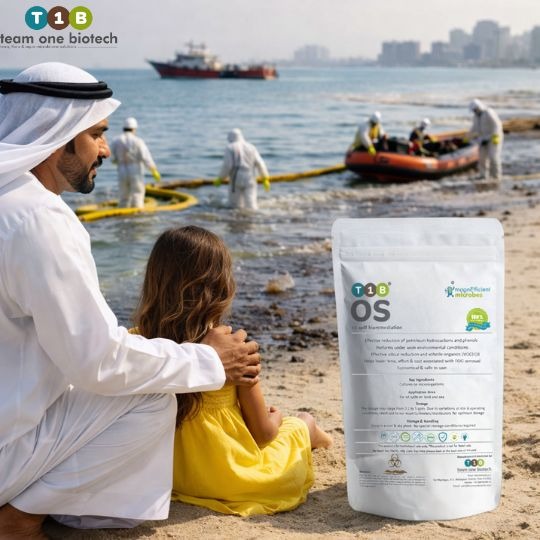
There is a version of the Arabian Gulf that our children should inherit, one where sea turtles still nest on Ras Al Khor beaches, where kingfish still run the inshore reefs of Fujairah, and where the mangroves of Abu Dhabi’s coastline continue to store carbon and shelter biodiversity. That version of the Gulf does not happen by accident. It happens because the industries operating within this environment choose response solutions that treat ecological recovery as a genuine operational objective, not simply a public relations obligation.
Oil spills, left inadequately treated, leave a legacy of contaminated sediment, collapsed fisheries, and degraded coastlines that can persist for a generation. The choice of bioremediation, and specifically the choice of an indigenous, Gulf-adapted bioculture like T1B OS, is a choice to honour both the science and the cultural heritage that the Arabian Gulf represents for millions of UAE residents and citizens.
T1B OS exists because the science of bioremediation is mature enough, and the indigenous microbial diversity of the Gulf is rich enough, to make genuine recovery achievable. The question is whether that science is deployed rapidly enough and at sufficient scale when incidents occur.
Team One Biotech invites oil and gas executives, HSE managers, and government compliance officers to engage with us before an incident occurs, not after. A proactive technical consultation costs nothing. An unprepared response to a Gulf oil spill can cost everything.
Global Procurement, Local Expertise: T1B OS on the Official Alibaba Store
Team One Biotech understands that procurement timelines are a genuine operational constraint, particularly for large-scale remediation projects where lead times directly affect environmental outcomes.
To address this, T1B OS is available through the Team One Biotech Official Alibaba Store, providing verified global and regional buyers with direct access to authentic product, transparent technical specifications, and consolidated logistics for bulk orders. Whether you are a port authority procuring emergency response stock, an EPC contractor building a spill response inventory ahead of a major offshore project, or a government environmental agency establishing a national bioremediation reserve, the Alibaba platform offers the procurement infrastructure to support your requirements.
The Alibaba store provides full product documentation, certification records, and direct messaging access to Team One Biotech’s technical sales team for pre-purchase consultation. International shipping to GCC ports is fully supported, with customs-compatible documentation prepared as standard.
Visit the Team One Biotech Official Alibaba Store to review product specifications, request a sample, or initiate a bulk procurement inquiry. For UAE-based clients seeking local technical support alongside product delivery, our regional team in Dubai is available for facility visits and integration planning.
The Arabian Gulf has absorbed the consequences of industrial development for decades. It is capable of recovery, but only with the right intervention, deployed by the right partner. Team One Biotech is that partner. T1B OS is that intervention.
Contact Team One Biotech today to protect what cannot be replaced.
Looking to improve your ETP/STP efficiency with the right bioculture?
Talk to our experts at Team One Biotech for customised microbial solutions.
Contact: +91 8855050575
Email: sales@teamonebiotech.com
Visit: www.teamonebiotech.com
Discover More on YouTube – Watch our latest insights & innovations!-
Connect with Us on LinkedIn – Stay updated with expert content & trends!