
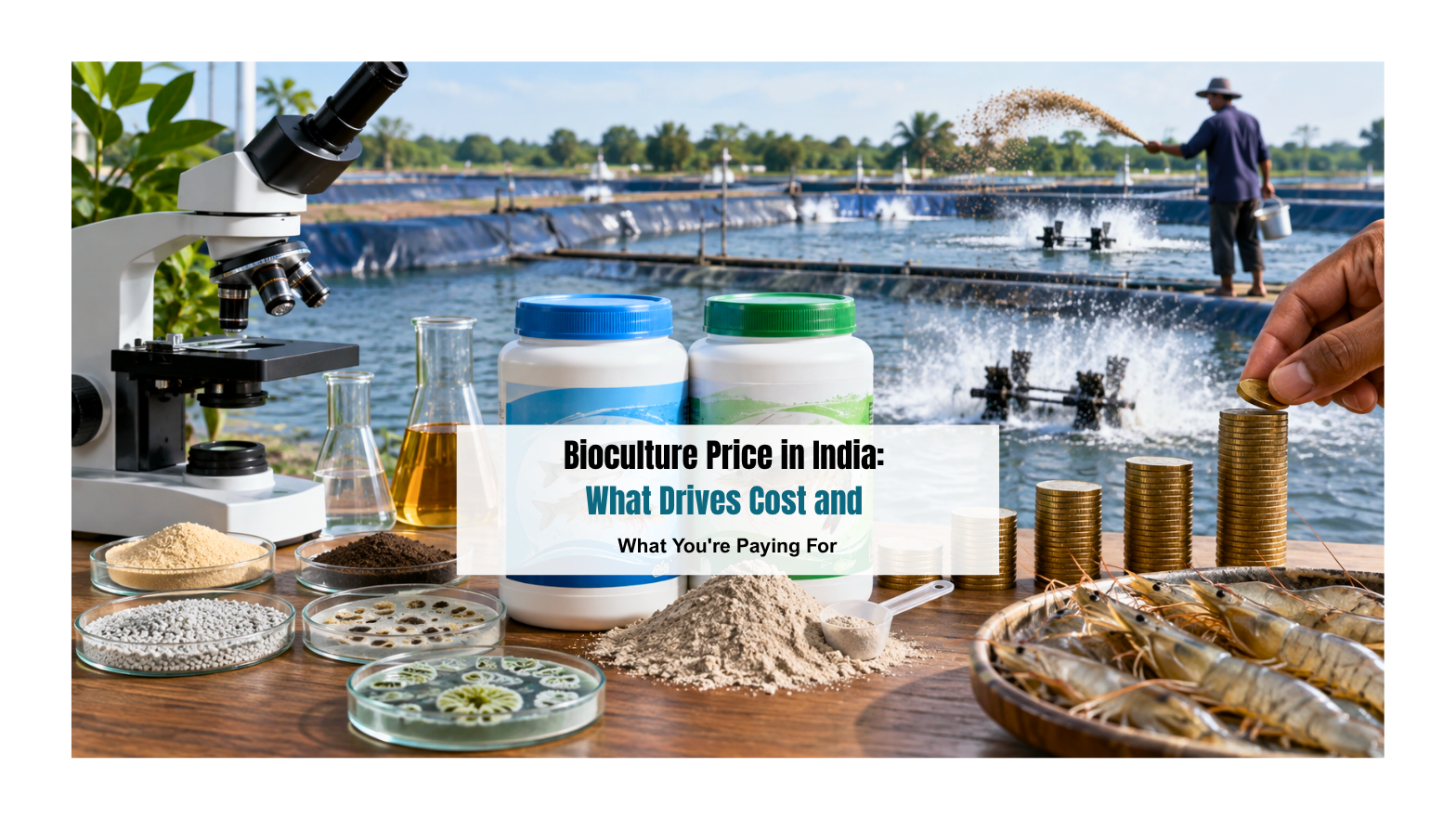
Bioculture Price in India: What Drives Cost and What You’re Paying For
A plant manager at a mid-sized textile processing unit in Gujarat selects a bioculture supplier based primarily on price. The rate per kilogram is attractive, the lead time is short, and the procurement team signs off. Three months later, the effluent treatment plant is struggling to meet BOD and COD discharge norms. A CPCB inspection follows. The consent-to-operate is at risk. The cost of that “savings”, in regulatory penalties, emergency re-seeding, and operational downtime, dwarfs the original difference in bioculture pricing.
This is not a rare scenario. It plays out across industrial clusters in Maharashtra, Tamil Nadu, Telangana, and Uttar Pradesh more often than most environmental managers care to admit. Procurement teams, under pressure to reduce input costs, treat bioculture as a commodity line item. The result is a market where the cheapest option gets selected, and compliance becomes a quarterly gamble.
The problem is not negligence. It is a lack of pricing transparency. Most suppliers in the Indian bioculture market do not explain what their price reflects, what you are actually buying when you place an order. This guide is built to change that, giving ETP and STP operators the information needed to evaluate bioculture price in India with the same rigor applied to any critical process input.
If you are currently evaluating bioculture suppliers in India, speak with our technical team before finalizing your order. A 15-minute call can prevent months of underperformance.
What Is Bioculture and Why Does Its Price Vary So Widely?
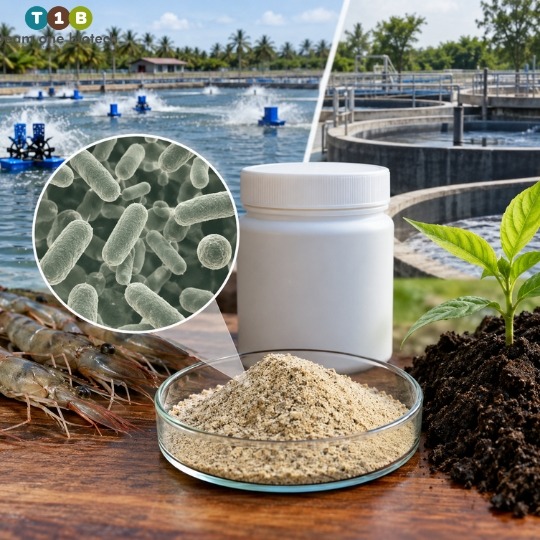
Bioculture, sometimes referred to as bacterial culture for ETP or microbial culture for STP, is a formulated consortium of live, beneficial microorganisms, primarily bacteria and in some cases fungi, developed specifically to accelerate the biological degradation of organic waste in effluent and sewage treatment systems. When introduced into a treatment plant, these microorganisms establish themselves in the reactor environment and begin breaking down BOD, COD, suspended solids, and other organic pollutants that would otherwise exceed CPCB and SPCB discharge norms.
The critical point that most procurement decisions overlook is this: bioculture is not a generic product. A microbial consortium developed for pharmaceutical effluent, where compounds may include antibiotic residues, solvents, and biorecalcitrant molecules, behaves fundamentally differently from one designed for a dairy processing plant or a municipal sewage treatment facility. The strains are different, the CFU concentration requirements are different, and the formulation considerations are different. Treating all of them as equivalent based on price per kilogram is the root of most bioculture procurement failures.
The variation in bioculture price in India is not arbitrary. It is a direct reflection of formulation complexity, live cell concentration, strain selection methodology, shelf stability engineering, and the quality assurance infrastructure behind every batch. Liquid, powder, and granular formulations each carry distinct cost structures, tied to their shelf lives, dosing requirements, and performance profiles under real operating conditions. Understanding these differences is the prerequisite to making a procurement decision that actually serves your plant.
Disclaimer: All cost ranges and performance benchmarks referenced in this article are general industry estimates. Actual bioculture price in India, dosing requirements, and treatment outcomes vary significantly based on effluent characteristics, plant design, organic load, and operational conditions. Always consult a qualified bioculture supplier or environmental engineer for site-specific recommendations.
The Real Cost Drivers Behind Bioculture Pricing in India

When you compare two bioculture products and find a significant price difference, that gap is not a negotiating artifact. It reflects real differences in what is inside the product, how it was made, and what it will do under the conditions of your ETP or STP. Here is what is actually driving the numbers.
Colony-Forming Unit (CFU) Count, The Measure That Matters Most
CFU, or colony-forming unit count, is the measure of viable, active microorganisms present per gram or milliliter of a bioculture product. It is, in practical terms, the most important specification on any bioculture datasheet, and it is the one most frequently omitted or misrepresented in low-cost offerings.
Higher CFU concentrations mean faster colonization of your treatment system after seeding. The biological community establishes itself more quickly, BOD and COD reduction begins sooner, and the effective dosing volume required to maintain performance is lower. Products with verified, guaranteed CFU counts cost more to manufacture and test. That cost is passed on in the price, and it is entirely justified.
What budget biocultures often offer is either no guaranteed CFU count at all or a count that is accurate at the manufacturing date but degrades rapidly under Indian storage and transport conditions. By the time a product reaches a plant in Rajasthan or Assam after sitting in an unrefrigerated warehouse, the viable microbial count may be a fraction of what was stated. The bioculture rate per kilogram may look attractive. The actual microbial density delivered to your reactor is another matter entirely.
Strain Specialization, Generic vs. Application-Specific Consortia
Generic biocultures contain broad-spectrum bacterial strains that perform adequately in low-complexity wastewater environments, municipal sewage, general organic loads, and straightforward BOD reduction scenarios. For many applications, this is sufficient. For many others, it is not.
Industry-specific consortia are formulated with bacterial strains pre-adapted, through selective cultivation and process conditioning, to degrade specific toxic, inhibitory, or recalcitrant compounds found in particular effluent streams. A tannery ETP carries chromium-tolerant organic loads. A pharmaceutical plant may have antibiotic residues that suppress conventional bacterial populations. A distillery produces high-strength, low-pH effluent that demands acid-tolerant degraders. In each case, deploying a generic consortium is not just suboptimal, it may produce no meaningful treatment effect at all.
Specialized consortia command a higher bioculture rate in the market. That premium reflects years of strain development, application testing, and field validation. It justifies itself through measurably faster COD reduction timelines, more stable treatment performance during organic load fluctuations, and significantly better compliance outcomes under CPCB and SPCB audit conditions.
Formulation Type, Liquid, Powder, and Granular
The physical form of a bioculture product has a direct bearing on both its cost and its performance characteristics, and plant managers should understand these differences before committing to a procurement decision.
Liquid biocultures carry the highest immediate microbial viability. The bacteria are active, in suspension, and ready for rapid integration into the treatment system. Activation time is short, and the product performs quickly after dosing. The trade-off is shelf life and logistics sensitivity. Liquid formulations require careful temperature management through the supply chain. In India’s climate, particularly during summer months, improper cold-chain handling can degrade product quality before it reaches your plant.
Powder and dry bioculture formulations offer extended shelf stability and are significantly more tolerant of the ambient storage conditions found across Indian industrial sites. They are the more practical choice for plants with longer procurement cycles or remote locations. The requirement is proper rehydration, a step that, if skipped or done incorrectly, compromises viability and performance.
Granular formulations are slower-release by design, suited to specific reactor configurations and longer-duration seeding programs. Each formulation type carries a different manufacturing cost, a different logistics cost, and a different effective-use profile. The price you see reflects all of these factors, not just the raw microbial material inside.
Quality Assurance, Certifications, and Regulatory Compliance
A bioculture manufacturer operating under documented quality assurance protocols, with batch-level testing, COA generation, traceability records, and validated production processes, carries a higher cost of manufacturing. This is not overhead that should be squeezed out through competitive pricing pressure. It is the infrastructure that protects your plant’s compliance position.
When a bioculture batch underperforms, the first thing a regulatory auditor, or your own troubleshooting team, needs is documentation. What was the CFU count? What strains were present? What were the manufacturing and storage conditions? A supplier who cannot answer these questions with batch-specific records cannot be a reliable compliance partner. The higher bioculture price associated with quality-assured manufacturers is, in direct terms, the cost of your compliance confidence.
CPCB and SPCB discharge norms for BOD, COD, and suspended solids are non-negotiable. The bioculture you select must perform well enough to consistently keep your effluent within permissible limits, not occasionally, not on average, but reliably and verifiably.
What Does Bioculture Cost Per Kg in India, And What Should You Expect?
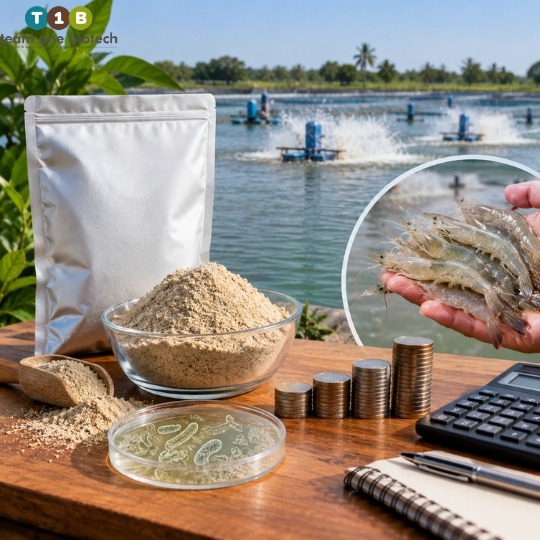
Bioculture cost per kg in India varies across a wide range, and any supplier who quotes a single standard rate without asking about your application, effluent type, and organic load is almost certainly selling a generic, undifferentiated product. Understanding the market in tiers is more useful than looking for a benchmark number.
At the entry tier, you find lower bioculture cost per kg, typically paired with unverified or unstable CFU counts, generic bacterial strains with no application matching, and minimal to no QA documentation. These products are not inherently fraudulent, but they are appropriate only for low-load, low-risk applications where compliance pressure is limited and biological treatment is supplementary rather than primary.
At the mid-tier, pricing reflects application-matched strains, basic batch-level testing, and reasonable shelf stability. For most industrial ETP requirements, food processing, general manufacturing, moderate-strength municipal-type effluent, mid-tier products from reputable manufacturers offer a reliable performance-to-cost balance when properly dosed and maintained.
At the premium tier, bioculture cost per kg is higher, but the product carries guaranteed CFU concentrations, specialized strain consortia validated for specific industries, comprehensive QA traceability, and typically full technical support from the manufacturer. For pharmaceutical, chemical, tannery, or any CPCB-monitored high-scrutiny facility, this tier is not a luxury, it is an operational requirement.
The core message here is one that experienced environmental engineers understand intuitively: the cheapest bioculture rate per kg almost always results in the highest total cost of treatment. Higher dosing volumes to compensate for low CFU density, repeated seeding cycles when the biological population fails to establish, and the compliance costs of effluent discharge violations all accumulate quickly. The savings at the point of purchase are rarely savings at all.
Disclaimer: Bioculture cost per kg figures vary by supplier, formulation type, order volume, and application. The above tiers are general market observations and should not be treated as fixed price benchmarks.
Want a transparent price quote based on your actual effluent profile? Contact Team One Biotech’s technical sales team, we assess your plant’s requirements before recommending a formulation.
What You Are Actually Paying For, And What You Should Not Compromise On
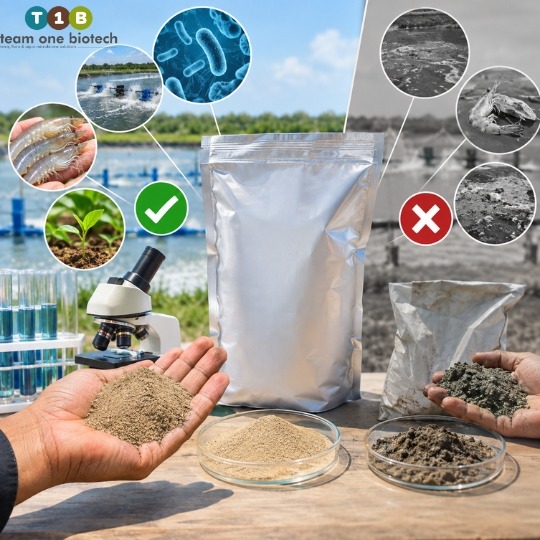
Reframing the bioculture price discussion in terms of what you are receiving, rather than what you are spending, is the perspective shift that separates experienced plant managers from procurement teams making first-time mistakes.
When you buy bioculture in India from a credible, quality-committed manufacturer, you are paying for live, viable, application-matched bacterial consortia that will actually colonize your reactor and perform biological treatment under your specific effluent conditions. You are paying for a verified CFU density supported by batch documentation that you can present at any audit. You are paying for packaging and logistics designed to maintain microbial viability through Indian supply chain conditions, not just to the warehouse, but to your dosing point.
You are also paying for technical dosing support. A supplier who manufactures for real ETP and STP operating environments, not just for laboratory benchmarks, will provide seeding protocols, maintenance dosing schedules, and troubleshooting guidance when your plant faces upset conditions from load fluctuations, toxic influent events, or seasonal temperature changes. That post-sale technical relationship is part of what a higher bioculture rate covers.
What you lose when price is the sole selection criterion is more costly: predictability of treatment performance, confidence during CPCB and SPCB inspections, protection against discharge violations, and the operator hours spent troubleshooting a biological system that never properly established. Manufacturers who understand wastewater biology, not just microbiology in a controlled laboratory setting, design bioculture products for the variability, stress, and imperfection of real-world industrial ETPs. That expertise does not come at commodity pricing.
How to Evaluate Bioculture Suppliers Before You Buy
Before finalizing any bioculture procurement decision, the following questions should be put directly to any supplier you are considering. The quality of their responses will tell you more than their price list.
Can you provide a batch-level Certificate of Analysis with a verified CFU count?
A legitimate manufacturer can answer yes immediately. A reseller or low-quality producer will typically offer only a general product specification.
Is this formulation tested on effluent types similar to mine?
Application validation matters. A supplier who has tested their bacterial culture for ETP performance in your sector, pharmaceutical, textile, food processing, dairy, distillery, can speak with specificity about expected outcomes.
What is the guaranteed shelf life under Indian ambient storage conditions?
This is particularly important for powder formulations. The shelf life must reflect Indian climate realities, not laboratory conditions.
Do you provide a technical dosing protocol and seeding schedule?
Dosing bioculture is not a matter of adding a fixed quantity per day. Seeding protocols must account for your reactor volume, hydraulic retention time, current biomass health, and organic load. A supplier who cannot provide this is selling product, not solutions.
Post-sale technical support is a differentiating factor that the price-only buyer never considers until they need it urgently.
Are you able to share references from operating ETP or STP plants in my industry sector?
Field references from comparable applications are the most credible performance validation available.
A supplier who cannot answer the majority of these questions clearly and specifically is not positioned to be a partner for a compliance-critical operation, regardless of their pricing.
Team One Biotech provides complete technical documentation, application-matched formulations, and post-seeding support. Reach out to our team to evaluate whether our bioculture is the right fit for your plant.
Frequently Asked Questions, Bioculture Price and Procurement in India
What is the typical bioculture price in India for industrial ETP use?
Pricing varies significantly based on CFU concentration, strain specialization, and formulation type. Rather than a single rate, expect a range tied to your specific application, pharmaceutical ETPs, for instance, require specialized consortia that carry different pricing from generic municipal-grade products. Always request a quote against your actual effluent profile rather than relying on general market averages.
Is cheaper bioculture a viable option for meeting CPCB discharge norms?
It depends entirely on the CFU count, strain match, and documented quality of the product in question. Budget biocultures with unverified microbial counts frequently underperform, requiring repeat dosing that eliminates the initial cost saving while still risking effluent discharge violations during CPCB or SPCB compliance inspections. For high-scrutiny applications, the risk rarely justifies the saving.
How do I calculate how much bioculture I need for my plant?
Dosing requirements are determined by your plant’s hydraulic retention time, organic load expressed as BOD and COD levels, reactor volume, and the current health of your existing biomass. An accurate initial seeding and maintenance dosing schedule requires a technical assessment, contact a bioculture specialist who can calculate requirements against your actual operating parameters rather than using generic volume-based estimates.
What is the difference between liquid and powder bioculture in terms of cost and performance?
Liquid biocultures carry higher immediate viability and activate faster, making them effective for rapid seeding scenarios, but their shorter shelf life creates logistics sensitivity, particularly in warm Indian climates. Powder formulations offer significantly longer shelf stability and are better suited to Indian ambient storage conditions, though proper rehydration protocol is essential for maintaining viability. Both the bioculture cost per kg and the performance profile differ meaningfully between these formats, and the right choice depends on your plant’s procurement cycle and storage infrastructure.
Where can I buy bioculture in India with reliable quality assurance?
Look for manufacturers, not resellers, who provide batch-level COAs, application-specific formulations, and documented field performance across comparable industrial sites. Team One Biotech manufactures bioculture for a range of industrial and municipal applications across India, with full technical support from initial assessment through post-seeding performance monitoring.
Price Is a Starting Point, Not the Decision
Bioculture price in India spans a wide range because the products themselves are fundamentally different in microbial viability, strain suitability, formulation stability, and quality assurance infrastructure. That range is not a market inefficiency to be exploited by finding the lowest number, it is a signal that demands understanding before any procurement decision is made.
For ETP and STP operators functioning under CPCB and SPCB compliance mandates, the cost of bioculture failure, measured in regulatory penalties, emergency re-seeding, operational disruption, and the time your environmental team spends managing a compliance crisis, far exceeds any savings from selecting the cheapest available bioculture rate. The math is rarely close.
Choosing the right bioculture is a technical decision. It depends on your effluent characteristics, your organic load, your reactor design, your compliance obligations, and the realistic operating conditions your treatment plant faces through seasonal and production variations. It deserves a technical conversation, not a purchase order driven by per-kilogram pricing alone.
Team One Biotech’s technical team works directly with plant managers and environmental engineers to recommend the right bioculture for your effluent type, organic load, and compliance requirements. Get in touch today, and buy bioculture in India with confidence.
Looking to improve your ETP/STP efficiency with the right bioculture?
Talk to our experts at Team One Biotech for customised microbial solutions.
Contact: +91 8855050575
Email: sales@teamonebiotech.com
Visit: www.teamonebiotech.com
Discover More on YouTube – Watch our latest insights & innovations!-
Connect with Us on LinkedIn – Stay updated with expert content & trends!