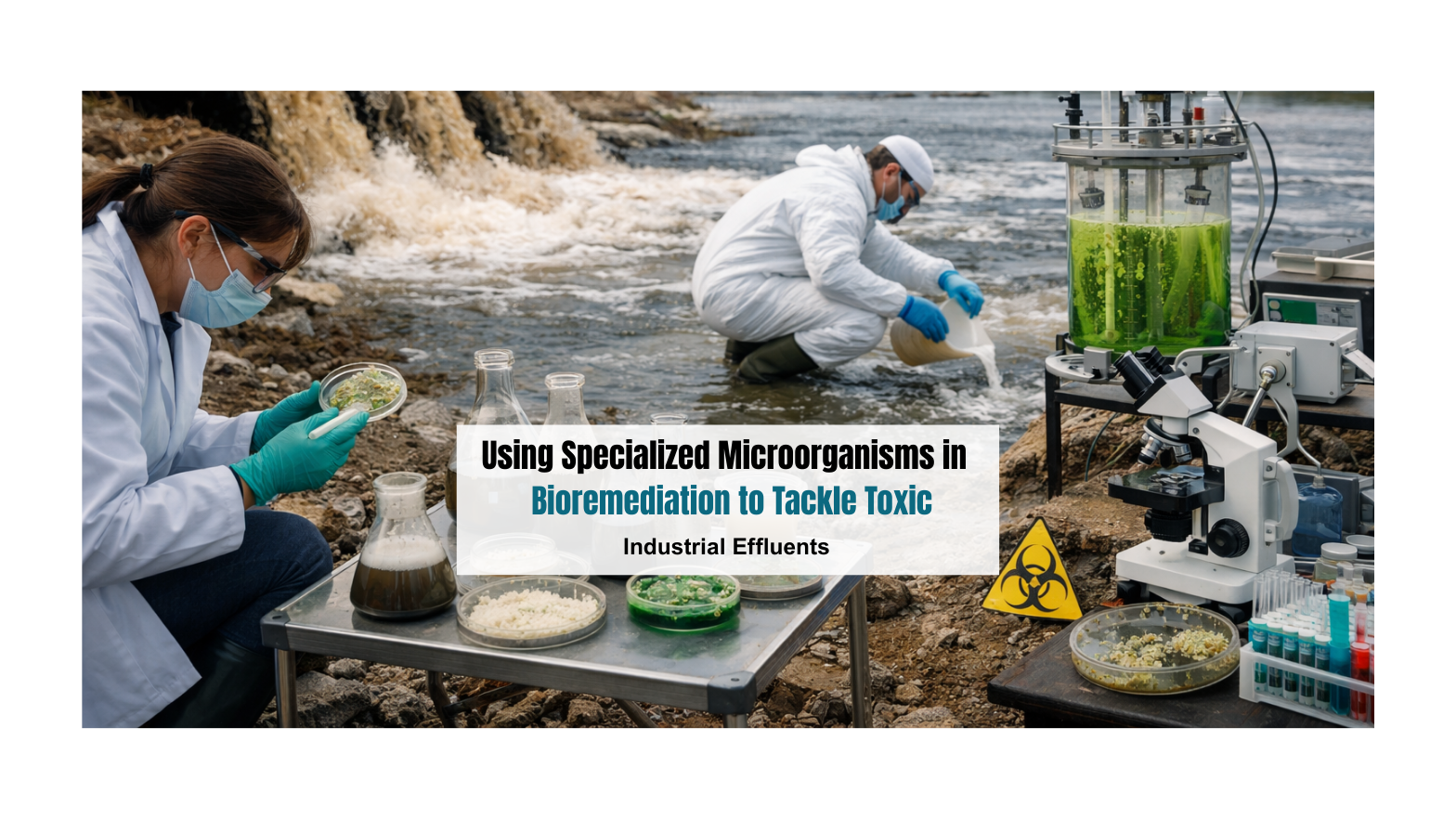
Using Specialized Microorganisms in Bioremediation to Tackle Toxic Industrial Effluents

It is a Tuesday morning. You have a production deadline, your procurement team is chasing a chemical supplier for a delayed coagulant shipment, and sitting in your inbox is a show-cause notice from the State Pollution Control Board. Your ETP is running. The logbook says so. But somewhere between the inlet and the discharge point, something is not working the way it should, and you already know that another round of chemical dosing is not going to fix it permanently.

If this feels familiar, you are not alone.

Across industrial clusters in Gujarat, Maharashtra, Tamil Nadu, Punjab, and Uttar Pradesh, plant managers and ETP operators are navigating exactly this tension every single day. The pressure is real, tightening CPCB and SPCB discharge norms, escalating chemical input costs, mounting etp sludge that needs licensed disposal, and a treatment system that was designed for a different era of compliance expectations.

The hard truth is this: most conventional industrial ETPs in India were not built to handle what is being asked of them today. They were built around chemical dosing and physical separation, coagulants, flocculants, pH correction, approaches that do not eliminate pollution so much as relocate it. You are converting dissolved contaminants into solid sludge, and then the sludge becomes your next problem.

Here is what that cycle is quietly costing you:

  • Recurring, month-on-month chemical procurement costs that scale with production volume and never come down
  • Hazardous etp sludge disposal costs that are rising alongside stricter waste handling regulations
  • Round-the-clock energy consumption from aerobic blower systems running whether they need to or not
  • The invisible cost of your ETP team operating in permanent firefighting mode instead of managing a system that works

And then there is the regulatory dimension. The Central Pollution Control Board and State Pollution Control Boards are not easing up. If anything, the direction of travel is clear, stricter discharge limits, more frequent inspections, and an industry-wide push toward zero liquid discharge in water-stressed regions. The cost of non-compliance today is not just a fine. It is production stoppages, legal exposure, damaged relationships with regulators, and a reputational problem that follows your brand.

The question worth asking is not “how do we manage this better?” The real question is: “Are we solving the right problem?”

Because there is a fundamentally different approach available, one that works with biology instead of chemistry, that reduces sludge instead of creating it, and that gets more efficient over time instead of more expensive. This shift toward Advanced Bioremediation: Using Microbial Cultures to Solve Complex Industrial Waste is transforming how plants meet these strict standards.

It starts with understanding what microorganisms in bioremediation can actually do when they are the right organisms for the right job.

Specialized Microbes: Why Generic Bio-Cultures Are Leaving Results on the Table
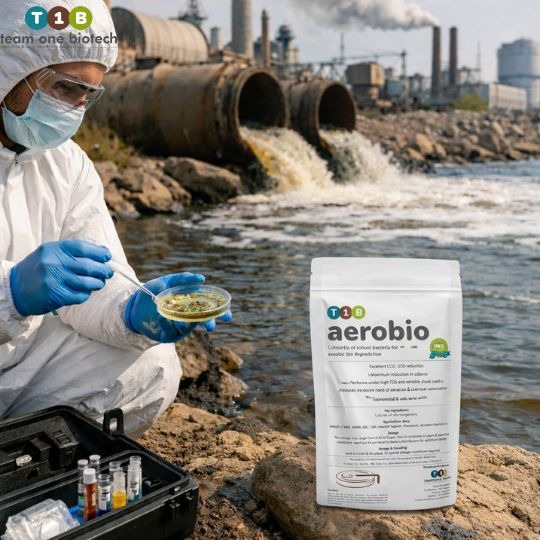
Specialized Microbes: Why Generic Bio-Cultures Are Leaving Results on the Table

Walk into any industrial chemical distributor in Vapi, Ludhiana, or Coimbatore, and you will find bio-culture products on the shelf. They are easy to source, reasonably priced, and come with broad-spectrum claims. For lightly loaded, relatively simple wastewater, they offer something.

But here is the honest reality that most vendors will not say to your face: a generic bio-culture applied to a complex industrial effluent is like prescribing a general painkiller for a condition that requires targeted treatment. It takes the edge off. It does not fix the problem.

The effluent coming out of a reactive dye unit in Surat is not the same problem as the effluent from a pharmaceutical fermentation plant in Hyderabad or a chromium-heavy tannery operation in Kanpur. Each of these streams carries specific recalcitrant compounds, azo dyes, chlorinated solvents, heavy metals, pharmaceutical active ingredients, sulfides, cyanides, that have chemical structures evolved to resist degradation. A generalist bacterial blend is not equipped to break them down efficiently. Not because the biology is wrong in principle, but because the wrong organisms are being deployed for the job.

This is the distinction that defines Team One Biotech’s approach.

Strain-Specific Deployment

Certain bacterial genera have evolved, over millions of years, with enzymatic pathways specifically designed to metabolize particular classes of compounds. Pseudomonas species carry oxygenase enzymes capable of degrading aromatic hydrocarbons. Rhodococcus strains can break down chlorinated compounds that most organisms cannot touch. Sulfate-reducing bacteria are indispensable in high-sulfide industrial effluents. Dehalococcoides species are among the few organisms that can reductively dechlorinate the most persistent chlorinated solvents.

Deploying these organisms is not guesswork. It is precision microbiology, matching the metabolic capability of the organism to the specific chemistry of your effluent.

Consortia Engineering, The Team Behind the Result

In a well-designed bioremediation system, no single organism carries the full load. What Team One Biotech engineers is a microbial consortium, a structured community where each member plays a specific metabolic role, and where the output of one organism feeds the input of the next. This creates a degradation cascade far more powerful and resilient than any single strain working alone.

Think of it like a production line. Each station in the line handles a specific conversion. The product from Station A becomes the raw material for Station B. The result at the end of the line is complete, not partial, not conditional.

Acclimatization to Indian Field Conditions

This is something that rarely appears in product datasheets but matters enormously on the ground: microbial performance is temperature-sensitive, and India’s industrial geography spans an extraordinary range of thermal conditions.

A bio-culture performing well in a bio-park in Chennai at 38 degrees Celsius may become sluggish or partially inactive in a facility in Himachal Pradesh or Uttarakhand during winter, where temperatures can drop close to 15 degrees Celsius. Team One Biotech’s specialized strains are selected and acclimatized to function across the realistic operating temperature range of Indian industrial facilities, not the controlled conditions of a European laboratory.Heavy Metal Tolerance, A Non-Negotiable in Many Indian Industrial Hubs

In electroplating corridors, leather processing clusters, and battery manufacturing zones, heavy metals are not just a contaminant, they are an active inhibitor of biological treatment. High concentrations of chromium, lead, cadmium, or nickel can suppress or kill poorly selected microbial populations, effectively shutting down your biological treatment stage without warning.

Specific metal-tolerant strains, and organisms with the capacity to biosorb and sequester heavy metals, are essential in these environments. This is not optional complexity. It is a basic requirement for reliable performance in the sectors where it is most needed.

The bottom line: if your ETP’s biological treatment stage is inconsistent, the answer is rarely more chemical dosing or more aeration. More often, it is the wrong biology, or too little of the right kind.

Anaerobic vs. Aerobic: Getting the Biological Treatment Chain Right
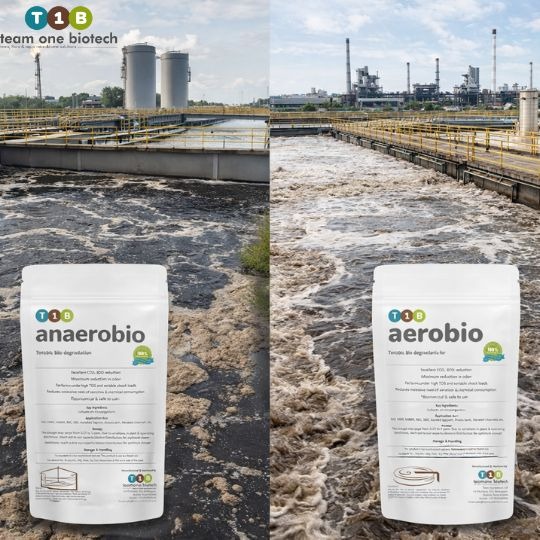
Anaerobic vs. Aerobic: Getting the Biological Treatment Chain Right

Here is a question worth sitting with for a moment: how many industrial ETPs in India are running exclusively aerobic treatment on high-strength effluents and wondering why their operating costs are so high?

The answer, if you spend time in Indian industrial facilities, is: quite a few. And it is an expensive habit.

Understanding the difference between anaerobic processes and aerobic biological treatment, and more importantly, when and how to use each, is one of the highest-leverage decisions in ETP management.

Aerobic Biological Treatment, Effective, But Energy-Hungry

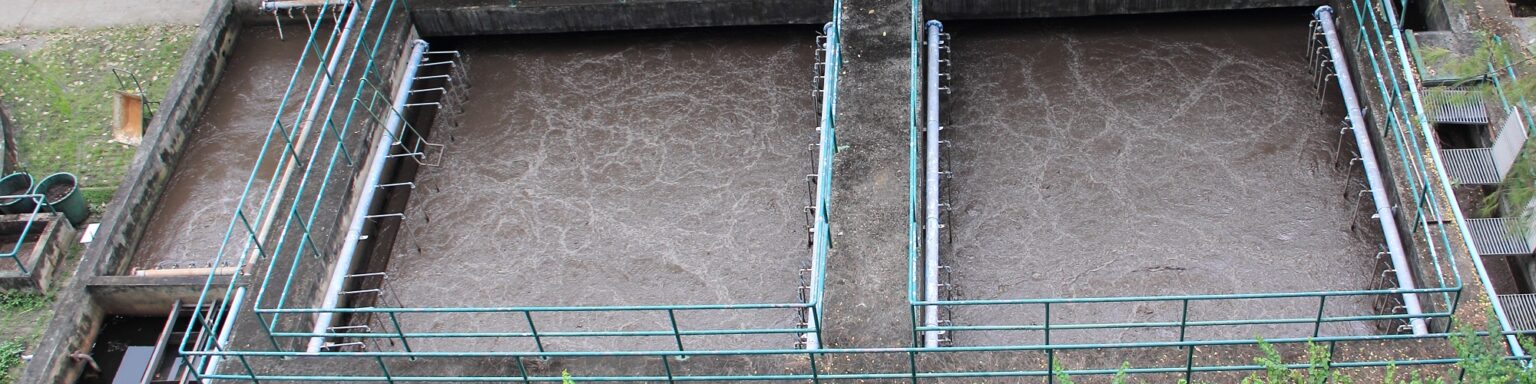
Aerobic systems, activated sludge, MBBRs, SBRs, work by using oxygen-dependent bacteria to oxidize biodegradable organic matter. They are well-understood, widely deployed, and effective at reducing BOD in moderately loaded effluents. They are also energy-intensive. Running blowers and aerators continuously to maintain dissolved oxygen is a significant power cost, and in high-strength effluents, the organic load can overwhelm aerobic systems before they deliver compliant output.

Anaerobic Processes, The Underused Workhorse of Industrial Wastewater Treatment

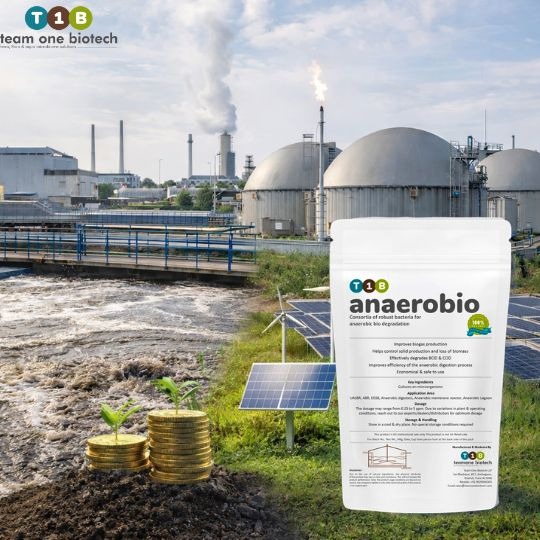
Anaerobic processes work in the complete absence of oxygen, relying on complex, layered microbial communities, hydrolytic bacteria, acetogens, and methanogens, to break down organic compounds through a staged fermentation pathway. The end products are biogas and a dramatically reduced volume of stabilized sludge.

For high-strength industrial effluents, distillery spent wash, paper mill black liquor, pharmaceutical fermentation waste, high-COD textile effluent, anaerobic pre-treatment is not just beneficial, it is transformative. It can reduce organic load by a range of 50% to 80% before the effluent even reaches an aerobic polishing stage. That means your aerobic system is handling a fraction of the load it would otherwise face, which means lower energy consumption, lower sludge generation, and longer system stability.

And the biogas? That is recoverable energy. In high-organic-load applications, biogas capture can offset a meaningful portion, in the range of 15% to 40%, of the facility’s energy consumption. That is a direct reduction in your power bill, funded by the waste you are already generating.

Choosing between aerobic and anaerobic processes isn’t just a technical preference; it is a strategic financial decision. For industries dealing with high-strength organic waste, such as distilleries, paper mills, or food processing, an anaerobic-first approach is often the most viable way to break down complex COD loads without a massive energy bill. Conversely, for finishing stages or lower-strength effluents typical of light manufacturing, aerobic treatment provides the precision needed to meet stringent “polishing” standards for final discharge.

The “right” process is rarely one or the other, but rather a calculated sequence. By understanding the metabolic strengths of each, anaerobic for heavy lifting and energy recovery, aerobic for final compliance, industries can stop over-engineering their chemical dosing and start leveraging the natural efficiency of a dual-stage biological system.

The Optimal Treatment Architecture for Indian Industrial ETPs

For most high-to-medium strength industrial effluents, the most defensible and cost-effective biological treatment chain looks something like this:

  • Equalization and pre-treatment: Balancing flow, correcting pH, removing gross solids and oils that would inhibit biological stages
  • High-rate anaerobic digestion: UASB reactors or anaerobic filters, seeded with specialized granular biomass tailored to your specific effluent chemistry, this is where the heavy lifting happens
  • Aerobic polishing: Activated sludge or MBBR systems to bring BOD, ammonia, and suspended solids to discharge consent levels
  • Tertiary treatment if required: Coagulation-flocculation, advanced oxidation, or filtration for specific parameters like colour, residual COD, or heavy metals

The critical variable at every stage is the microbiology. The UASB is only as effective as the methanogenic consortia seeded into it. The aerobic stage is only as consistent as the nitrifying and heterotrophic bacteria maintaining it. The science of sludge treatment and reduction runs through every stage, and it runs on the right organisms being present, active, and maintained.

Economic Impact: What Happens When Your ETP Starts Working For You
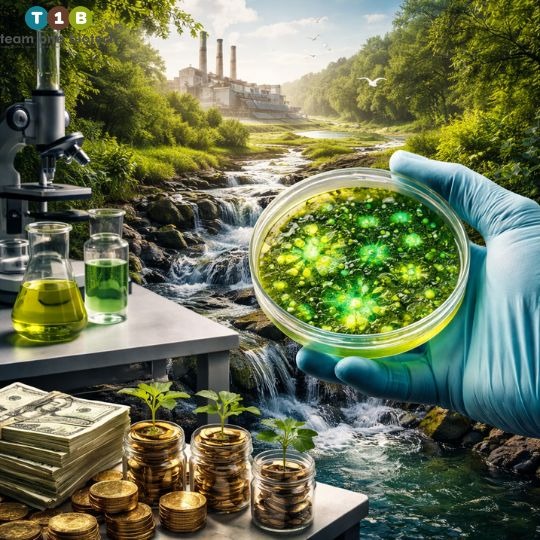
Economic Impact: What Happens When Your ETP Starts Working For You

The boardroom conversation about switching to specialized biological treatment almost always hits the same wall: “Biology is unpredictable. What is the ROI?”

It is a fair question. And it deserves a straight answer.

The ROI on a well-designed and properly implemented biological treatment programme, using specialized organisms tuned to your specific effluent, is not theoretical. It shows up in four places, and it compounds over time.

Where the Economics Show Up:

1. Chemical Cost Reduction Facilities that transition from heavy chemical dosing to optimized biological treatment typically see reductions in coagulant and flocculant consumption in the range of 30% to 60%. That is a recurring annual saving that does not require renegotiating with your chemical supplier, it simply stops being a cost.

2. Sludge Volume and Disposal Cost Reduction This is often the largest single saving. The combination of anaerobic pre-treatment and optimized aerobic digestion can reduce total etp sludge generation by a range of 40% to 65% compared to purely physico-chemical systems. Multiply that reduction against your current licensed hazardous waste disposal rates, which are not cheap and are not going down, and the number is significant.

3. Energy Recovery from Biogas In the right application, your waste stream generates fuel. Biogas recovery in the range of 15% to 40% energy offset is a real possibility for facilities with high organic load, distilleries, food processing, pharmaceuticals, paper mills.

4. Compliance Stability This is harder to put a number on, but every plant manager understands its value. A properly maintained biological system, seeded correctly, managed with the right culture maintenance programme, produces consistent effluent quality. That consistency is what keeps your monitoring data clean, your consent conditions met, and SPCB inspectors finding nothing to act on.

The payback period for transitioning to or retrofitting with specialized biological treatment, when calculated against these four savings categories, typically falls in the range of 12 to 36 months for mid-to-large industrial facilities. After that, the savings are structural, built into your operating model, not dependent on favourable chemical prices or regulatory tolerance.

Your ETP should not be a liability on your balance sheet. With the right biology, it does not have to be.

Real-World Applications: What This Looks Like in Practice
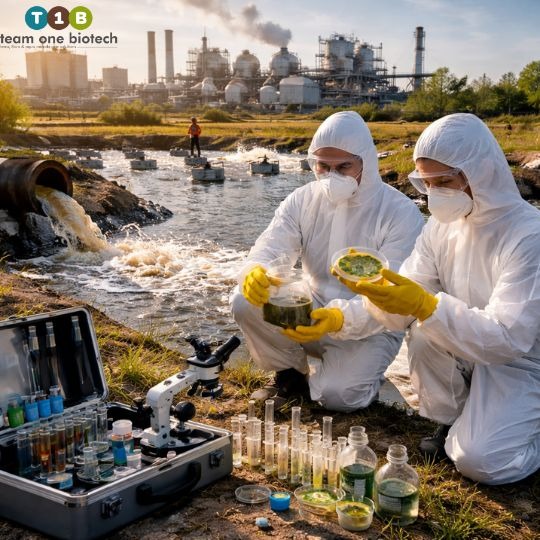
Real-World Applications: What This Looks Like in Practice

Textile Dyeing Facility, Western India

A reactive dye processing unit in a Gujarat industrial estate was struggling with persistently high COD, well above consent limits, and visible colour in its final discharge. The ETP was technically operational. The problem was the biology: generic cultures with no capacity to degrade azo dye compounds, combined with a purely aerobic treatment chain overwhelmed by the organic load.

After a site audit and introduction of specialized decolourizing bacterial consortia alongside an anaerobic pre-treatment upgrade, the results were material. COD in final discharge came within consent limits. Colour was reduced to acceptable levels. Chemical coagulant usage dropped substantially. Sludge treatment requirements fell in line with reduced sludge generation from the revised treatment chain.

Pharmaceutical Formulations Plant, Southern India

A formulations facility in Telangana was seeing inconsistent BOD reduction in its activated sludge system, performing reasonably in cooler months, struggling badly during summer when tank temperatures climbed well above the tolerance range of its generic bio-culture.

Introduction of temperature-tolerant, solvent-degrading aerobic cultures, combined with revised organic loading protocols, stabilized treatment performance across the seasonal cycle. The plant stopped dreading its summer monitoring data.

Distillery/Fermentation Unit, Central India

Among the most challenging effluent streams in the Indian industry, high BOD, high suspended solids, dark colouration, strongly acidic. A high-rate UASB system seeded with specialized methanogenic consortia was introduced as a primary treatment stage. Organic load on the downstream aerobic system was reduced substantially. Biogas recovery began contributing meaningfully to on-site energy use. Total etp sludge generation came down significantly, directly reducing disposal costs.

The Future of Bioremediation in India: This Is Not a Trend, It Is a Transition

The direction of industrial environmental regulation in India is not ambiguous. Discharge norms will tighten. Water stress in industrial regions will accelerate the push toward zero liquid discharge. The cost trajectory of chemical inputs is upward and will remain there.

The industries that navigate this confidently will not necessarily be the ones with the largest ETPs or the most expensive instrumentation. They will be the ones that made a deliberate decision to build the right biology into their treatment systems, and committed to maintaining it.

Microorganisms in bioremediation are not a quick fix or a passing industry fad. When the right organisms are selected for the right application, maintained correctly, and integrated into a coherent biological treatment architecture, they outperform chemical alternatives on every metric that matters: total cost of treatment, sludge output, compliance consistency, and long-term operational stability.

The science is established. The economics are demonstrable. The regulatory imperative is clear.

What is missing, in many facilities, is simply the right partner to translate the science into a site-specific solution that works, reliably, affordably, and within your existing infrastructure wherever possible.

That is exactly what Team One Biotech is here to do.

Is Your ETP Ready for a Better Approach? Let Us Find Out Together.

If any of the following describes where you are right now, it is worth having a direct conversation:

  • Your chemical costs are growing and you cannot see a path to reducing them within your current treatment model
  • Your sludge disposal is becoming a compliance and cost burden that is difficult to manage
  • Your ETP performance is inconsistent, good in some months, problematic in others, especially during temperature extremes or peak production periods
  • You are facing regulatory scrutiny or anticipate it based on your current discharge data
  • You are planning an ETP upgrade or new installation and want to design the biological treatment chain correctly from the outset

Team One Biotech offers a structured, no-obligation Site Audit and ETP Assessment, a practical, ground-level evaluation of your current effluent profile, existing microbiology, and treatment chain performance. From that audit, we provide specific, actionable recommendations on where specialized biological treatment can reduce your costs, reduce your sludge, and bring your compliance position from marginal to solid.

We do not sell generic solutions. We do not pitch biology as a magic answer. We do the diagnostic work first, because that is the only way to recommend something that will actually perform in your specific conditions.

Your SPCB consent conditions have a timeline. Your sludge costs are already accumulating. And the right microbial solution, the one built around your effluent, your infrastructure, and your operational reality, starts with one conversation.

Reach out to Team One Biotech today. Let us audit your ETP, understand your challenges, and show you what the right biology can do for your facility.

Please note that all numerical values and performance metrics mentioned are general ranges provided for educational purposes; actual results vary based on specific ETP conditions, effluent characteristics, and environmental factors.

Looking to improve your ETP/STP efficiency with the right bioculture?
Talk to our experts at Team One Biotech for customised microbial solutions.

Contact+91 8855050575

Email:  sales@teamonebiotech.com

Visit: www.teamonebiotech.com

Discover More on YouTube – Watch our latest insights & innovations!-

Connect with Us on LinkedIn – Stay updated with expert content & trends!

Aerobic vs. Anaerobic Treatment: Which Biological Process is Right for Your Industry?

The Sludge Crisis Nobody Wants to Talk About

There is a conversation happening in plant manager offices across Vapi, Ludhiana, and Ankleshwar. It does not happen in board meetings or annual reports. It happens quietly, between the ETP operator and the plant head, usually when another disposal invoice lands on the desk.

The ETP is running. The compliance reports are being submitted. And yet the sludge keeps building up, the costs keep climbing, and nobody quite knows how to make it stop.

If that sounds familiar, you are not alone. Across pharma, textile, food and beverage, and chemical manufacturing units in India, wastewater treatment has quietly become one of the most expensive operational headaches that nobody budgeted for properly. CPCB and SPCB regulations are not getting looser. Disposal fees are not coming down. And the biological systems that were installed years ago, often by contractors who designed for compliance on paper, were never really built to perform under the pressure your plant is under today.

Many facilities are now looking toward Advanced Bioremediation, Using Microbial Cultures to Solve Complex Industrial Waste as a way to bridge the gap between outdated infrastructure and modern discharge standards.

What most manufacturers are running right now is not a bad system. It is the wrong system, or more precisely, a system running the wrong biology. And that distinction is costing serious money every single month.

This blog post is an attempt to cut through the technical jargon and give you a clear, honest comparison of the two primary biological treatment approaches, aerobic and anaerobic, and help you figure out which one actually makes sense for your plant.

Understanding Biological Treatment in 2026

Here is something worth saying plainly: biological treatment is not a machine. It is a living process.

When wastewater enters your ETP, it does not encounter a chemical reactor or a filter press. It encounters billions of microorganisms, bacteria, archaea, and fungi, that have been conditioned over time to consume the organic matter in your effluent. They eat the BOD and COD. They break down complex molecules. And in doing so, they clean the water.

The reason this matters is that a machine can be tuned once and left alone. A living ecosystem cannot. It responds to temperature changes, seasonal fluctuations, toxic shocks, and shifts in your effluent composition. When your biology is healthy and well-matched to your specific wastewater, the system runs efficiently and costs stay manageable. When it is not, you generate excess sludge, miss discharge standards, and spend money trying to compensate for a problem you cannot quite identify.

There are two fundamentally different ways to run biological treatment:

  • Aerobic treatment, where oxygen-dependent microorganisms break down organic matter quickly and reliably.
  • The anaerobic process, where a more complex community of microorganisms works without oxygen, digesting waste slowly and producing biogas in the process.

Both approaches use microorganisms in bioremediation. Both can achieve meaningful COD and BOD reduction. But they are not interchangeable, and choosing the wrong one for your effluent type is one of the most expensive mistakes an industrial plant can make.

The Aerobic Engine, Microbes, Oxygen, and Speed

The Aerobic Engine, Microbes, Oxygen, and Speed

What Is Actually Happening in Your Aeration Tank

In a well-run aerobic system, the biology is surprisingly active. Species like Pseudomonas, Nitrosomonas, and various Bacillus strains form dense microbial communities in the mixed liquor. They consume dissolved organic carbon as a food source, using oxygen as the electron acceptor, and they multiply rapidly as they do so.

The result is fast, predictable BOD and COD removal. A healthy aerobic system can achieve BOD removal in the range of 85% to 95% under typical operating conditions. Please note that these are general values and performance metrics differ across every ETP based on influent characteristics and operational parameters.

For industries with moderate-strength wastewater and strict discharge deadlines, that speed and reliability is genuinely valuable.

But Here Is What the Sales Pitch Leaves Out

Running an aerobic system is expensive, and not in ways that always show up on a single line item.

The blowers and aerators that keep your mixed liquor oxygenated run around the clock. In peak summer months, when ambient temperatures rise and oxygen transfer efficiency drops, those systems work even harder. For many plants, aeration alone accounts for a significant share of total ETP electricity consumption. It is a cost that is easy to accept because it is built into the baseline, but it is worth questioning whether you are spending more than you need to.

The bigger issue, and the one that tends to create the most sustained financial pain, is sludge. Aerobic systems produce a lot of it. Because the microorganisms are growing rapidly and continuously, a large volume of excess biological sludge accumulates in the system and must be removed, thickened, dewatered, and disposed of. For pharma or chemical units whose sludge is classified as hazardous under the Hazardous Waste Management Rules, that disposal cost can be substantial and recurring.

It does not feel like a crisis on any given day. But over a year, it adds up in ways that deserve serious scrutiny.

When Aerobic Treatment Is the Right Call

  • Your effluent COD is in the lower range, roughly below 2,000 to 3,000 mg/L.
  • You need rapid startup capability and operational flexibility.
  • Your discharge standards are stringent and you cannot afford variability in effluent quality.
  • Your plant is located in a cooler climate where maintaining the temperatures needed for stable anaerobic performance would require additional energy input.

The Anaerobic Process, Energy Recovery and Low Footprint

The Slower, Smarter Approach to Degradation

The anaerobic process tends to get underestimated because it is slower and less intuitive than aerobic treatment. But for the right effluent type, it is arguably the more intelligent system to run.

Here is what happens inside an anaerobic reactor. Complex organic molecules are broken down in stages by a remarkably coordinated chain of microbial communities. Hydrolytic bacteria go first, breaking apart large polymers. Acidogenic bacteria convert those fragments into volatile fatty acids. Acetogenic bacteria process those further. And finally, methanogens, a group of archaea that are among the oldest forms of life on earth, convert acetate and hydrogen into methane.

This is microorganisms in bioremediation operating at its most sophisticated. Every stage depends on the one before it. When the community is healthy and balanced, the system runs with a quiet efficiency that aerobic processes simply cannot match for high-strength wastewater.

And the methane that comes out at the end? That is not waste. That is fuel.

The Case for High-COD Industries

If your plant generates wastewater with COD loads in the range of 5,000 mg/L to 50,000 mg/L or higher, as is common in distilleries, food processing units, and many chemical manufacturers, the anaerobic process starts making a compelling economic argument.

Consider what you gain:

  • Drastically lower sludge production. Anaerobic systems typically generate somewhere between 60% to 80% less excess biomass per unit of COD removed compared to aerobic treatment. Please note that these are general values and performance metrics differ across every ETP based on influent characteristics and operational parameters. Less sludge means lower disposal costs, fewer press hours, and less polymer consumption.
  • Biogas that can be captured and used to offset heating or electricity costs elsewhere in your facility. For some high-COD industries, this is genuinely meaningful energy recovery.
  • A smaller physical footprint per unit of COD treated. In industrial clusters where land is expensive, this matters more than many plant managers initially expect.

What You Cannot Ignore

Anaerobic systems ask more of their operators. Start-up is slow, often taking anywhere from 4 to 12 weeks to build a stable and effective microbial consortium. The biology is sensitive to toxic compounds, which is a real concern if your effluent contains antibiotic residues, heavy metals, or certain solvents. And methanogens, in particular, are temperature-sensitive. Below approximately 25 degrees Celsius, their activity drops noticeably.

In northern Indian industrial clusters, winters are not something you can engineer around with wishful thinking. Maintaining reactor temperature during the colder months requires deliberate design choices and sometimes additional operational input.

None of this makes anaerobic treatment a bad choice. It makes it a choice that requires more thought, more planning, and the right operational expertise behind it.

Wondering whether your current system is actually suited to your effluent? Team One Biotech’s engineers offer a complimentary waste audit that gives you a process-specific answer, not a generic recommendation. Book yours today.

The Sludge Factor, Comparing ETP Sludge Yields

The Number on Your Disposal Invoice That Should Bother You

Ask most plant managers where their biggest ETP cost sits, and they will point to power consumption or chemical dosing. Ask them about sludge treatment and disposal, and you often get a resigned shrug. It is expensive. It has always been expensive. What can you do?

Quite a lot, as it turns out.

ETP sludge in India is governed under the Hazardous Waste Management and Transboundary Movement Rules, and depending on your industry and sludge characterization, disposal can involve transportation logistics, manifest documentation, laboratory analysis, and per-tonne fees at Common Hazardous Waste Treatment Storage and Disposal Facilities. These costs have been moving in one direction for years.

For a mid-sized pharma or textile unit, the annual cumulative cost of sludge treatment and disposal is often higher than plant managers realize when they look at it as a single annual figure rather than a monthly line item.

Where the Two Systems Diverge Most

This is the comparison that matters most when you are trying to control costs.

Aerobic systems generate significant excess biomass. Because the microorganisms are actively growing, the system continuously produces new cells, a large portion of which must be wasted and handled as ETP sludge. Even with good sludge thickening and dewatering equipment, you are dealing with a high-volume output problem.

Anaerobic systems operate at much lower microbial growth rates. The microorganisms are not proliferating rapidly; they are conserving energy and metabolizing slowly. The sludge that is produced tends to be denser and better conditioned for dewatering, which means less time on the filter press and less polymer usage. The total volume differential between a well-operated anaerobic system and a comparable aerobic system can fall in the range of 50% to 75% reduction in sludge volume generated. Please note that these are general values and performance metrics differ across every ETP based on influent characteristics and operational parameters.

That is not a marginal improvement. For many plants, that kind of reduction represents a meaningful shift in annual operating costs.

The Microbial Augmentation Angle Most Plants Are Missing

There is a third lever that very few Indian industrial plants are pulling, and it may be the most cost-effective one available: deliberately enhancing your existing biological system with specialized microbial cultures.

Whether your ETP is aerobic or anaerobic, the biology driving it is a community of microorganisms. In most plants, that community is a generalist population, capable of handling broadly typical effluent but not specifically optimized for the molecular complexity of your wastewater. Reactive dye compounds in textile effluent, pharmaceutical intermediates, food-processing fats and greases, all of these place demands on microbial communities that standard activated sludge populations are not always equipped to meet efficiently.

Augmenting your system with industry-specific microbial cultures, the kind of cultures that have been selected and concentrated for your specific degradation challenges, can produce measurable results:

  • Improved removal of recalcitrant COD compounds that standard biology struggles with.
  • Reduced excess sludge generation through higher endogenous respiration rates within the microbial community.
  • Greater system stability during shock loads, which are a daily reality in many Indian industrial ETPs.
  • Faster recovery when the system is disturbed by a toxic event or an unexpected shift in influent quality.

At Team One Biotech, this is where a significant part of our work sits. Not just recommending a process, but putting the right biology into your system and supporting it through to stable, measurable performance.

Decision Matrix, Which Process Is Right for Your Industry?

Decision Matrix, Which Process Is Right for Your Industry?

There is no universal answer here, and anyone who gives you one without looking at your effluent data is guessing. But there are patterns worth knowing.

Pharma

Pharmaceutical wastewater is among the hardest to treat biologically. Antibiotic residues can suppress or destroy anaerobic microbial communities. Solvent carry-overs create toxicity spikes. High TDS loads interfere with biological activity across both systems.

For most pharma ETPs, the practical answer tends to be a robust aerobic system, often an MBBR or SBR configuration, paired with specialized microbial cultures that have been selected for tolerance to pharmaceutical compounds. Sludge treatment is a priority given the hazardous classification that typically applies, and every percentage point of sludge volume reduction matters.

Textile

Textile effluent is high in colour, salinity, and COD, and it punishes underpowered biological systems. The approach that is gaining traction in Indian textile clusters, particularly in Gujarat and Tamil Nadu, is anaerobic pre-treatment followed by aerobic polishing. The anaerobic stage takes on the bulk COD load while generating useful biogas. The aerobic stage then handles colour reduction and final BOD polishing to meet discharge norms. It is a logical split of labour between two biological processes.

Food and Beverage

High BOD, readily biodegradable organics, and significant fats, oils, and greases make food processing wastewater a strong candidate for anaerobic treatment. UASB reactors have a solid track record in this sector across India. The biogas generated can meaningfully offset boiler fuel costs, which in food processing facilities are often substantial. The economics here can be genuinely attractive.

Chemical Manufacturing

Chemical effluent resists generalization because the variability between facilities is so wide. What holds true across most chemical manufacturing ETPs is the need for biological resilience, communities of microorganisms that can handle COD spikes, handle some level of chemical toxicity, and recover quickly from upsets. This is precisely where augmented microbial bioremediation cultures add operational value that standard community biology cannot consistently provide.

If you are not sure where your plant falls in this picture, or if your ETP has evolved over the years into something of a hybrid that nobody quite designed deliberately, reach out to Team One Biotech. Our process review starts from your actual data, not from a template.

The Cost of Leaving Things As They Are

Indian industry is moving into a phase of environmental compliance that has less room for approximation than it once did. Real-time effluent monitoring mandates from the CPCB, increasing enforcement activity from SPCBs in major industrial clusters, and the rising cost of sludge disposal are combining to turn what was once a background operational concern into a front-line financial issue.

The decision between aerobic and anaerobic biological treatment is not a technical footnote. It is a choice with real consequences for your operating costs, your compliance posture, and your ability to scale your operations without your ETP becoming the bottleneck.

Getting that choice right, and then backing it up with the right microbial biology, is not complicated. But it does require an honest assessment of where your current system falls short, and a willingness to move past the thinking of “this is how we have always done it.”

That is the conversation Team One Biotech exists to have. Not to sell you something off a shelf, but to look at your actual effluent, your actual sludge numbers, and your actual operating constraints, and tell you what we honestly think will work.

The first step is a waste audit. It costs you nothing and gives you a clear picture of what your ETP is actually doing versus what it should be doing.

Book that conversation with our engineers today. Because every month you wait is another month of paying for a system that is not performing as well as it could be.

Looking to improve your ETP/STP efficiency with the right bioculture?
Talk to our experts at Team One Biotech for customised microbial solutions.

Contact+91 8855050575

Email:  sales@teamonebiotech.com

Visit: www.teamonebiotech.com

Discover More on YouTube – Watch our latest insights & innovations!-

Connect with Us on LinkedIn – Stay updated with expert content & trends!
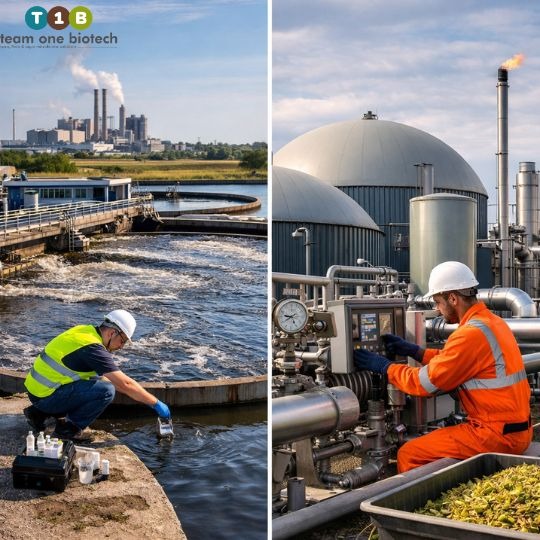
Aerobio – Microbial Cultures, Bio Product, Bacteria with Enzymes, Bacterial Culture, Digester Treatment

Since aerobic digestion is an integral and important step in wastewater treatment, the health status of activated sludge becomes a fundamental concern for any industrial WWTP or ETP management.

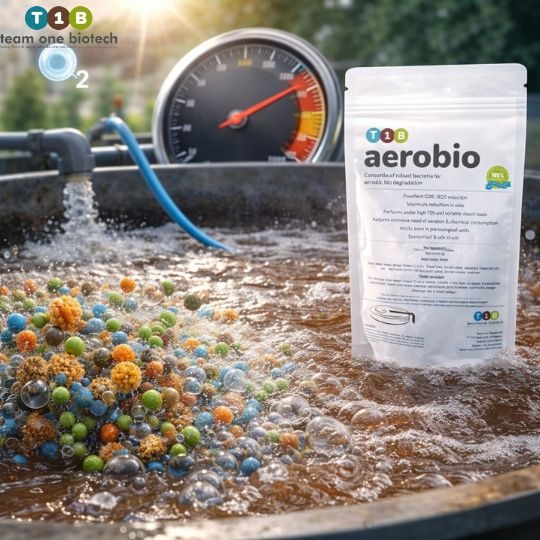
T1B Aerobio is a trustworthy aid to maintain the functionality and productiveness of any wastewater treatment process. T1B Aerobio is tenacious in breaking down organic matter and reducing the biological oxygen demand (BOD) or chemical oxygen demand (COD) levels in wastewater.

With its exceptional tendency to remain conducive even with fluctuating temperature ranges, unstable pH levels, and escalated levels of total dissolved solids or TDS, the T1B Aerobio is a quintessential addition to a wastewater treatment process.

Recalcitrant compounds are hard to degrade chemical substances. Adding T1B Aerobio in sludge waste fortifies the degradation of these harmful compounds. T1B Aerobio is also a robust bioproduct that decomposes xenobiotic compounds effectively. Use of T1B Aerobio will definitely improve the efficiency of various biological process and units like, ASP, MBR, MBBR, SBR, RBC, Trickling Filter. etc. It works under suspension mode as well as attached mode systems.

T1B Aerobio | Microbiome Solution For Aerobic Digestion – Efficient For Reduction Of BOD and COD in wastewater for reclacitrant and xenobiotic compounds

Aerobic Microbial Cultures – Aerobic Bio Product – Aerobic Bacteria With Enzymes – Aerobic Bacterial Cultures – Aerobic Digester Treatment – Wastewater Bioremediation – Bioremediation – Bioaugmentation – Bio Product – High COD/BOD – High Ammoniacal Nitrogen – High TDS – Tough To Biodegrade Efflunet – Xenobiotic Compounds – Reclacitrants – Oil & Grease – Activated Sludge Process – ASP – Microbial Process – Oxygenation – Carbon Dioxide – Nutrient Removal – Aerobic Microorganisms – Sludge Reduction – Secondary Treatment – Respiration – Oxidation – Air Supply – Energy Efficiency – Carbon Footprint – Environmental Benefits – BOD (Biochemical Oxygen Demand) – COD (Chemical Oxygen Demand) – Aeration Tank – Activated Sludge – Activated Sludge Process – SBR (Sequential Batch Reactor) Process – MBR (Membrane BioReactor) Process – MBBR (Moving Bed Biofilm Reactor) process – RBC (Rotating Biological Contactor) Process – MBR-IFAS (Integrated Fixed-film Activated Sludge) Process – ASP (Aeration Stabilization Process) – Extended Aeration Process – Oxidation Ditch Process – Trickling Filter Process – High-Rate Trickling Filter Process – Submerged Aerated Filter Process – Membrane Aerated Biofilm Reactor (MABR) – Biofilm Reactors – Effective Microbes – Effective Microorganisms – High Strength CFU Per Gram – Industrial Wastewater Treatment – ETP – Efflunet Treatment Plant – CETP – Common Effluent Treatment Plant – Improve MLSS – Reduce Aeration – Plant Stability – Enhance Nitrogen And Phosphorus Removal – Commissioning Time of ETP – Rapid Growth Of MLSS and MLVSS – Shock load Stabilization – Overall Cost Of Operation – Faster Commissioning – Reduce COD BOD Ammoniacal Nitrogen – Improved Setteling – Colour Reduction – Aromatic Compounds Cellulose Proteins lignin lipids – High TDS Tolerant – Food Industry Effluent – Beverage Industry Wastewater – Dairy Industry Effluent – Meat Processing Industry – Paper Industry Effluent – Pharmaceutical Industry Effluent – Effluent From Textile Units – Effluent From Chemical Manufacturing Units – Dyes and Colorants Effluent – Detergents Effluent – Active Bioremediation

Scan the code