

Green Energy from Wastewater: How Anaerobic Biocultures Drive Biogas Production
Every ETP operator knows the feeling. You are standing at the edge of a treatment tank, watching thousands of litres of processed wastewater being discharged, thinking about the electricity bill that arrived this morning, the sludge disposal vendor who just raised his rates, and the PCB inspection scheduled for next month.
What if that wastewater was not a liability at all? What if it was a fuel source you have been unknowingly discarding for years?
Biogas from wastewater is not a futuristic concept. It is happening right now in food processing units in Punjab, textile dyeing clusters in Surat, and distilleries across Uttar Pradesh. Forward-thinking facility heads are capturing methane from their digesters, piping it directly to their boilers, and cutting their natural gas procurement costs by margins that make their CFOs take notice.
The shift in mindset is simple but transformative: stop treating your ETP as a compliance cost centre and start treating it as a renewable energy asset. The organic load in your effluent is not waste. It is feedstock.
Why Most Indian Industrial Digesters Are Leaving Energy on the Table
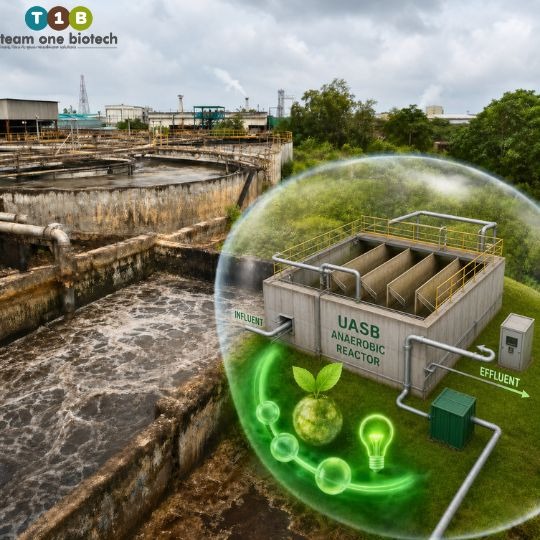
Here is an uncomfortable truth. A large number of anaerobic digesters installed in Indian industrial ETPs are operating at a fraction of their theoretical biogas potential. Some are barely functional. The reasons are well understood by anyone who has spent time troubleshooting in the field, but they rarely get discussed openly.
Inhibitor accumulation is one of the biggest culprits. Industries dealing with pharmaceuticals, specialty chemicals, and agro-processing often have effluents laced with sulphates, heavy metals, or residual antibiotics. These compounds do not just slow down microbial activity. At certain concentrations, they wipe out entire microbial populations that have taken months to establish.
Shock loads are another persistent problem. Indian industries, particularly those in seasonal agro-processing or batch-process manufacturing, experience violent swings in COD and BOD levels. A digester running smoothly on Monday can be acidified and crashing by Thursday if the influent quality shifts dramatically without adequate buffering.
Poor microbial seeding during commissioning creates a third category of failure. Many digesters are started up with inadequate inoculum, relying on ambient microbial populations to self-establish. In Indian climatic conditions, where summer temperatures can push tank temperatures above optimal mesophilic ranges and winter months can suppress microbial activity significantly, this approach is a gamble. The result is prolonged lag phases, unstable volatile fatty acid profiles, and disappointing biogas from wastewater that simply does not meet design projections.
The good news is that all of these problems have solutions rooted in microbiology.
The Science Behind Turning Waste Into Energy

Anaerobic digestion is a four-stage biological process. Understanding these stages is not just academic. It is operationally essential if you want to optimise your digester for consistent biogas from wastewater generation.
Stage 1: Hydrolysis. Complex organic molecules like fats, proteins, and carbohydrates are broken down by hydrolytic bacteria into simpler soluble compounds. This is often the rate-limiting step in industrial effluents with high particulate loads.
Stage 2: Acidogenesis. Acidogenic bacteria ferment these simpler compounds into volatile fatty acids (VFAs), carbon dioxide, and hydrogen. This stage is robust and fast, which is precisely why it can cause problems. If the downstream stages cannot keep pace, VFA accumulation drops the pH and crashes the system.
Stage 3: Acetogenesis. Acetogenic bacteria convert VFAs into acetic acid, hydrogen, and carbon dioxide, the direct precursors to methane. These organisms are slower and more sensitive than acidogens. Maintaining the right balance between these populations is where most digester management effort should be concentrated.
Stage 4: Methanogenesis. Methanogenic archaea convert acetic acid and hydrogen into methane (CH4) and carbon dioxide. Methanogens are the most environmentally sensitive organisms in the entire chain. They are vulnerable to pH drops, temperature fluctuations, oxygen ingress, and toxic compounds. Protecting and enriching methanogenic populations is the single most impactful lever for increasing biogas from wastewater yield.
This is exactly where specialised anaerobic biocultures change the equation. Rather than waiting for natural microbial succession to establish a functional community, you introduce a pre-adapted, high-density consortium of all four functional groups simultaneously. The digester reaches stable, high-productivity operation in a fraction of the time.
If you are unsure whether your current digester setup is optimised for maximum biogas recovery, a professional site audit can provide clarity fast. Contact Team One Biotech’s technical team today to schedule a no-obligation ETP Site Audit. Our engineers will assess your influent characteristics, digester design, and current microbial health to identify exactly where you are losing yield.
The Tangible Benefits: What Operators Actually See on the Ground
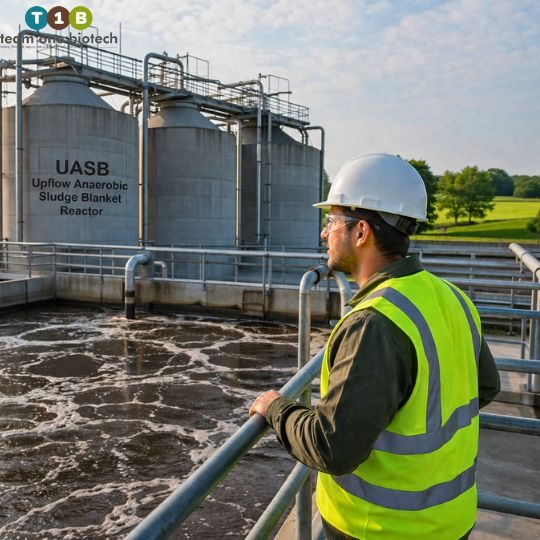
When anaerobic digestion is properly managed with high-performance biocultures, the improvements are measurable across multiple operational parameters.
- Enhanced Methane Concentration: Biogas from wastewater treated with enriched anaerobic consortia typically shows methane concentrations in the range of 60% to 75% by volume, compared to 45% to 55% in poorly seeded or stressed systems. Higher methane concentration means higher calorific value and better combustion efficiency in boilers or gensets.
- Reduction in Sludge Volume: Efficient methanogenesis converts a greater fraction of organic solids into gas rather than biomass. This directly translates to reductions in sludge generation in the range of 30% to 50%, lowering your sludge disposal costs and the associated compliance headaches around bio-sludge characterisation and disposal norms under the Hazardous Waste Management Rules.
- Stability Against pH Fluctuations: A well-balanced microbial community, particularly one with robust acetogenic and methanogenic populations, provides inherent buffering against influent COD spikes. Systems augmented with specialised biocultures show measurably narrower pH variance during shock load events.
- Faster Commissioning of New Digesters: A new digester seeded with Team One Biotech’s anaerobic biocultures can reach stable biogas production within 3 to 6 weeks, compared to the 3 to 6 months typically required for natural microbial establishment. This alone has significant economic value when you are calculating the payback period on capital investment.
- Support for ETP Optimization and Regulatory Compliance: Stable anaerobic digestion contributes to better overall effluent quality entering downstream aerobic stages, reducing the risk of final discharge exceeding PCB-mandated COD and BOD limits.
Practical Guidance for ETP Operators: Getting More from Your Digester

If you are already running an anaerobic system and want to improve your biogas from wastewater yield without major capital expenditure, these operational levers are worth examining systematically.
Monitor and control your Volatile Fatty Acid to Alkalinity ratio. This single parameter is the most reliable early warning indicator of digester instability. A ratio below 0.4 generally indicates a healthy system. When it climbs above 0.8, corrective action is needed before a full crash occurs.
Temperature management matters more than most operators realise. Mesophilic methanogens operate optimally between 35 degrees Celsius and 42 degrees Celsius. In North and Central Indian winters, uninsulated digesters can see tank temperatures drop by 10 to 15 degrees Celsius, causing significant methanogenic suppression. Even modest insulation investments can protect biogas yield during the cooler months.
Do not overlook the mixing regime. Inadequate mixing creates dead zones with localised VFA accumulation, short-circuits flow, and prevents substrate from reaching active microbial populations. Many underperforming digesters in Indian facilities are simply under-mixed.
Assess your influent for inhibitors before adding biocultures. If your effluent contains sulphates above approximately 500 mg/L or heavy metal concentrations that are likely to interfere with microbial activity, pre-treatment steps should be considered first. Biocultures are powerful tools, but they require a reasonably habitable environment to deliver results.
Bioaugmentation with specialised anaerobic biocultures is the most direct way to recover a stressed digester or dramatically accelerate a new one. This is not a theoretical recommendation. It is what experienced bioremediation solutions providers have been doing in Indian industry for decades.
The Team One Biotech Difference: More Than 30 Years of Microbial Engineering
Team One Biotech has been working with Indian industrial effluent treatment systems since the early 1990s. That experience is not marketing language. It means our technical team has encountered and resolved digester failure scenarios across pharmaceutical manufacturing, distillery operations, food and beverage processing, paper and pulp, and textile processing.
Our T1B Anaerobio product line is the outcome of decades of strain selection, adaptation, and field validation. These are not generic anaerobic sludge preparations. They are purpose-formulated consortia containing hydrolytic bacteria, acidogens, acetogens, and methanogens in ratios that reflect how high-performing digesters actually function.
The strains within T1B Anaerobio have been selected specifically for tolerance to the inhibitor profiles and influent variability common in Indian industrial effluents. When you introduce these cultures into a struggling or newly commissioned digester, you are not experimenting. You are applying thirty years of collective microbial intelligence.
Our approach to bioremediation solutions is always site-specific. We do not recommend a blanket dosing protocol without first understanding your effluent chemistry, HRT, digester geometry, and biogas utilisation setup. This is why our field technocrats work closely with ETP operators rather than simply supplying a product and stepping away.
The renewable energy from waste opportunity in India is only going to grow. With the government’s push under the National Bioenergy Programme and increasing pressure on industries to demonstrate ESG commitments to international buyers and domestic regulators alike, the ability to produce and document biogas from wastewater is moving from a “nice to have” to a competitive differentiator.
Your ETP Can Do More Than Treat Wastewater
The organic load in your effluent is energy. The question is whether you are capturing it or discharging it.
With the right anaerobic biocultures, disciplined operational management, and a clear understanding of the four-stage digestion process, biogas from wastewater can offset meaningful portions of your facility’s energy costs, reduce your sludge disposal burden, and contribute to a credible, measurable ESG narrative.
The technology is proven. The microbiology is available. The financial case, particularly in the current Indian energy cost environment, is compelling.
Team One Biotech’s technocrats are available to work through the specifics of your operation with you, whether you are looking to revive an underperforming digester, commission a new anaerobic system, or build a business case for biogas from wastewater recovery at your facility.
Schedule a consultation with our technical team today. Bring your ETP data. We will bring thirty years of applied microbiology and a frank assessment of what is possible at your site.
Disclaimer: All numerical values, performance ranges, and operational estimates presented in this article are general indicative figures based on published literature and field observations across a range of industrial ETP settings. Actual results, including biogas yields, methane concentrations, sludge volume reductions, and commissioning timelines, will vary based on site-specific factors including influent composition, organic loading rates, digester design, hydraulic retention time, ambient temperature conditions, and existing microbial populations. Team One Biotech recommends a thorough technical assessment of individual plant conditions before making operational or investment decisions.
Looking to improve your ETP/STP efficiency with the right bioculture?
Talk to our experts at Team One Biotech for customised microbial solutions.
Contact: +91 8855050575
Email: sales@teamonebiotech.com
Visit: www.teamonebiotech.com
Discover More on YouTube – Watch our latest insights & innovations!-
Connect with Us on LinkedIn – Stay updated with expert content & trends!


