
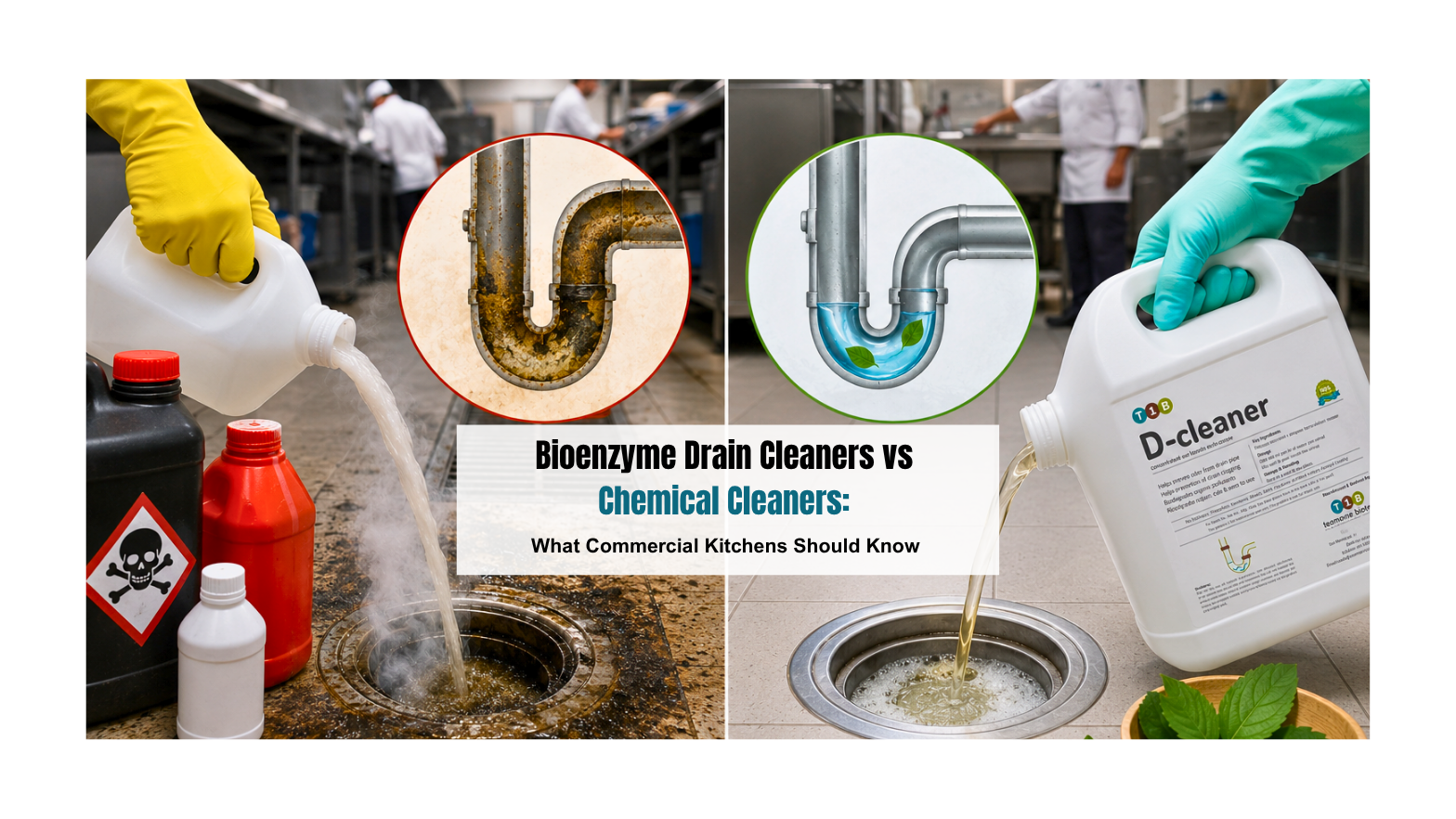

Bioenzyme Drain Cleaners vs Chemical Cleaners: What Commercial Kitchens Should Know
It is 10:45 in the morning. Your lunch service starts in an hour. And the drain at your main prep station is backing up.
Not slowly, backing up. Water pooling around the floor grate, a grease-thick smell rising from the trap, and your kitchen team already looking at you for answers. You reach for what you have always reached for: a bottle of chemical drain cleaner. Pour it in, wait, flush it through. Problem solved, for now.
But here is the question commercial kitchen operators across India are starting to ask more seriously: is it actually solved? Or has the chemical simply pushed the problem somewhere else, somewhere that shows up later as a blocked interceptor line, a failed compliance inspection, or an infrastructure repair bill that nobody budgeted for?
For years, chemical drain cleaners have been the default answer in commercial kitchens. They are fast, they are available at any hardware shop, and they feel decisive. But the evidence, operational, regulatory, and scientific, is increasingly pointing in a different direction. Bio enzyme cleaning solutions are changing how serious kitchen operators think about drain maintenance, grease trap management, and long-term compliance.
By the end of this article, you will understand exactly how these two approaches differ, why that difference matters for your kitchen’s infrastructure and regulatory obligations, and what to look for if you are ready to make a more informed decision.
The Problem with Chemical Drain Cleaners in Commercial Kitchens
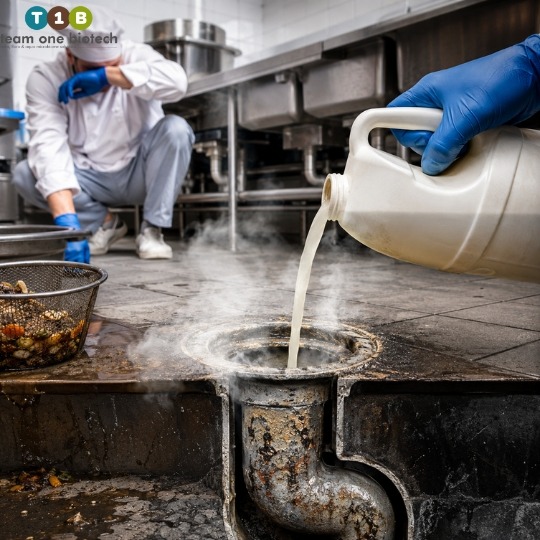
Let us be honest about why chemical cleaners became so widespread. They work quickly. You pour them in, they cut through a blockage, and the drain flows again. For a kitchen operating under time pressure, that immediate result carries real appeal. The problem is not what chemical cleaners do in the short term, it is what they fail to do over time, and what they quietly cause along the way.
Corrosion Damage that Accumulates Slowly
Most commercial-grade chemical drain cleaners are either strongly caustic (sodium hydroxide-based) or strongly acidic. These formulations are aggressive enough to dissolve organic matter, but they do not stop there. Over repeated use, they degrade pipe walls, attack gaskets, and weaken the material integrity of drain fittings. PVC lines, older galvanised metal pipes, and cast iron drainage infrastructure are all vulnerable. The damage does not show up overnight. It builds over months and years until you are looking at a pipe replacement cost rather than a routine maintenance expense.
FOG displacement, Not Elimination
This is the most important thing to understand about chemical drain cleaners in a commercial kitchen context. They do not break down fats, oils, and grease at a molecular level. They emulsify or disperse it, temporarily. The FOG appears to clear from the immediate drain area, but it reforms further downstream. It re-deposits in grease trap chambers, accumulates in interceptor lines, and eventually pushes non-compliant FOG loads into the municipal sewer connection. You have not eliminated the grease. You have relocated it.
Compliance and Regulatory Exposure
CPCB and state SPCB wastewater discharge standards require that effluent leaving commercial premises meets defined thresholds for BOD (Biochemical Oxygen Demand), COD, and FOG content. When chemical dispersal sends high-FOG, high-BOD effluent downstream rather than digesting it at the source, your kitchen is at higher risk of discharging non-compliant wastewater. Penalties and corrective compliance costs can be significant and vary by municipal body and state regulation, and as urban sewage infrastructure faces increasing load across Indian cities, grease trap inspections and effluent testing are becoming more routine, not less.
Staff Safety and Handling Complexity
Concentrated caustic chemicals require PPE, proper ventilation, and careful handling protocols. In the environment of a commercial kitchen, where staff are moving fast, surfaces are wet, and attention is split, adding a chemical hazard to the routine creates real operational risk. Burns, fume exposure, and improper disposal are not theoretical concerns. They happen in working kitchens.
Environmental Persistence
Chemical residues that pass through drain systems do not biodegrade. They persist in water systems, disrupt biological treatment processes at downstream ETPs and STPs, and contribute to the broader wastewater quality problem that Indian environmental regulation is increasingly focused on addressing. For kitchen operators thinking about positioning their operation as responsible and sustainable, especially in the context of eco friendly drain cleaner India standards, chemical drain maintenance runs directly counter to that direction.
How Bio Enzyme Cleaners Work, and Why That Difference Matters
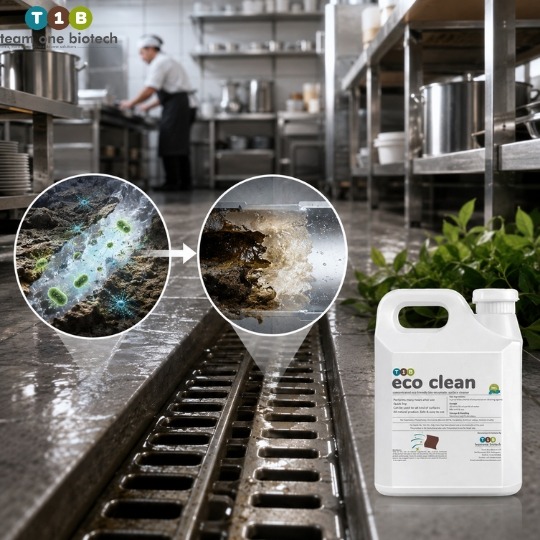
The distinction between chemical and biological drain treatment is not just a matter of ingredient preference. It is a fundamentally different mechanism of action, and understanding that mechanism is what makes the switch make sense.
A bio enzyme cleaner contains naturally occurring microbial cultures combined with specific enzyme blends. The key enzyme types are lipases (which target fats and oils), proteases (which break down proteins), and amylases (which address starch residues). These are not synthetic chemicals, they are biological agents cultivated specifically for their ability to digest the organic compounds that commercial kitchens produce in large quantities every day.
Where a chemical drain cleaner works by force, creating a temporary passage through a blockage, a bioenzyme cleaner works through biology. The microbial cultures introduced into the drain or grease trap identify FOG and organic matter as a food source. They begin enzymatic digestion, breaking down fats, proteins, and starches at a molecular level. The end products of this process are primarily water and carbon dioxide, no toxic residues, no chemical persistence, no downstream FOG surge.
The other critical difference is duration of effect. A chemical cleaner’s action ends when the product flushes through. A bioenzyme cleaner establishes a biological colony within the drain environment. With regular application, that colony sustains itself, continuously digesting incoming FOG rather than allowing it to accumulate. This is what makes enzyme drain cleaner for kitchen systems genuinely different, not just a cleaner, but a maintenance ecosystem.
For kitchen operators using grease trap cleaner biological solutions, this sustained biological activity means grease traps accumulate significantly less solid FOG between cleanouts. Pumping frequency reduction is indicative and will vary based on kitchen output, trap design, and municipal requirements, but the directional benefit is consistent: less FOG accumulation means lower maintenance frequency and lower servicing costs over time.
Bioenzyme cleaners are also pH-neutral or near-neutral, which makes them safe for the full range of pipe materials found in commercial kitchen infrastructure, including older galvanised systems, PVC, and cast iron. There is no corrosive action, no degradation of pipe walls or gaskets, no long-term infrastructure risk from repeated use. For a kitchen that has been relying on chemical cleaners for years, switching to bioenzyme cleaner for pipes is also a form of infrastructure protection.
How Bioenzyme Cleaners Break Down FOG, Step by Step
- Microbial cultures in the bioenzyme solution are introduced into the drain channel, trap inlet, or grease interceptor as part of a regular maintenance schedule
- The microbes recognise FOG and organic residues as a nutrient source and begin enzymatic activity, this process starts within hours of application
- Lipase enzymes target fats and oils directly; protease enzymes address protein residues from food solids; amylase enzymes break down starch accumulations common in kitchen drainage
- The biological digestion process converts FOG and organic matter into water and carbon dioxide, no toxic residue remains, and no downstream FOG displacement occurs
- With consistent, scheduled application, the microbial colony sustains its activity between dosing cycles, providing continuous rather than single-use protection
Values and figures referenced are general industry estimates and will vary based on kitchen volume, drain system design, local regulatory standards, and ETP/STP configuration. Always consult a qualified bioremediation specialist or your local regulatory authority for site-specific guidance.
The Compliance Case, Why Indian Commercial Kitchens Cannot Ignore This
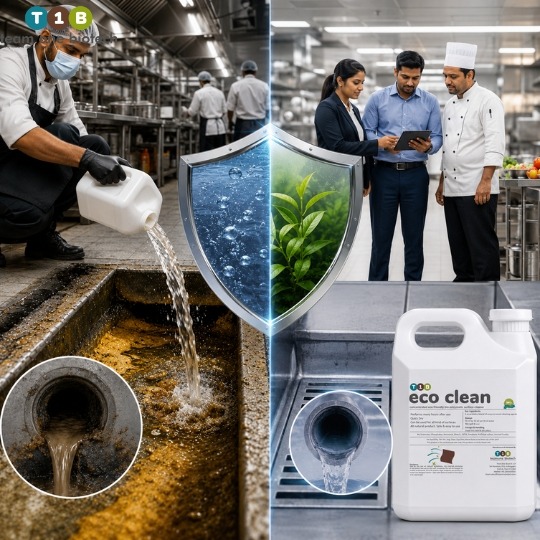
The regulatory environment for commercial kitchen wastewater in India is not getting looser. It is moving in the opposite direction, and kitchen operators who are still treating drain maintenance as a purely operational concern, rather than a compliance obligation, are taking on a risk they may not fully recognise.
CPCB and state SPCB discharge standards require that effluent from commercial premises meets defined BOD, COD, and FOG thresholds before it enters municipal drainage. Permissible BOD, COD, and FOG levels vary under state-specific SPCB guidelines and should be verified with your local regulatory authority or a certified ETP consultant, but the principle is consistent across jurisdictions: you are responsible for the quality of what leaves your premises.
The challenge with chemical drain maintenance is that it creates the appearance of compliance without the substance. The drain flows. The kitchen looks clean. But the FOG has been dispersed, not digested, and it is now accumulating in your grease trap, building in your interceptor line, and periodically surging into the municipal sewer network in concentrations that exceed permissible discharge standards. When an inspection happens or effluent testing is conducted, that is when the gap between appearance and reality becomes expensive.
Biological treatments, including bio enzyme cleaners used as part of a documented kitchen maintenance programme, align with the regulatory intent behind India’s wastewater standards. CPCB-approved bioremediation approaches are consistent with the direction Indian environmental regulation is moving. Using a natural drain cleaner commercial kitchen programme built on bioenzyme technology positions your operation ahead of tightening compliance requirements rather than scrambling to catch up with them.
There is also a documentation advantage. Commercial kitchens that maintain a structured bioenzyme dosing programme have a clearer, more demonstrable compliance trail. Records of regular biological treatment, product specifications, and application schedules provide evidence of proactive FOG management, evidence that carries weight in the event of an inspection or compliance inquiry.
Want to understand whether your current drain maintenance approach meets local CPCB/SPCB discharge norms? Talk to our bioremediation specialists at Team One Biotech, we work with commercial kitchens across India to build compliant, cost-effective FOG management programmes.
Chemical vs Bioenzyme Cleaners, Side-by-Side for Commercial Kitchens
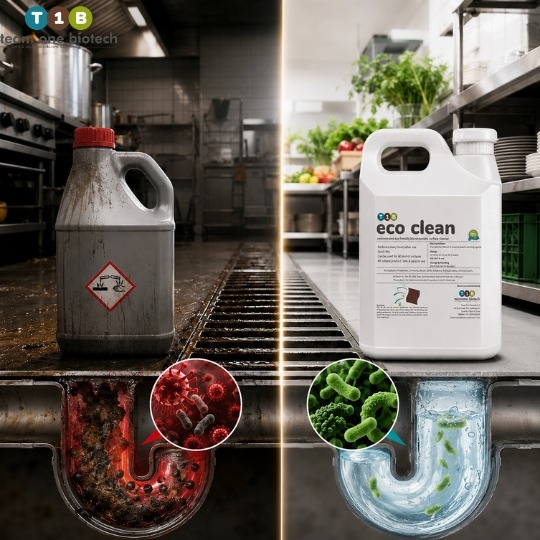
The comparison between these two approaches becomes very clear when you look at them across the dimensions that actually matter to a kitchen operator.
FOG Treatment: Chemical cleaners disperse and emulsify grease temporarily. Bioenzyme cleaners digest FOG at a molecular level, eliminating it rather than relocating it downstream.
Effect on Pipes: Chemical cleaners corrode pipe walls, gaskets, and fittings over repeated use, a long-term infrastructure risk that accumulates quietly. Bioenzyme cleaners are pH-neutral and pipe-safe, compatible with all common drain materials including older systems.
Grease Trap Impact: Chemical treatment pushes FOG further into the system, where it re-deposits in grease trap chambers and interceptor lines. Biological treatment reduces FOG accumulation in traps, supporting longer service intervals and lower pumping costs.
Compliance Support: Chemical dispersal does not reduce BOD or FOG load in effluent, it shifts it. Bioenzyme treatment directly reduces the organic load in outgoing effluent, supporting compliance with CPCB/SPCB discharge standards and grease interceptor regulations.
Residual Effect: Chemical cleaners provide single-use action with no ongoing benefit. Bioenzyme cleaners establish a microbial colony that sustains biological activity between dosing cycles, providing continuous FOG management rather than emergency response.
Staff Safety: Chemical drain cleaners require PPE, ventilation precautions, and careful handling in a high-risk kitchen environment. Bioenzyme cleaners are non-hazardous, safe for routine application, and require no special protective measures.
Environmental Profile: Chemical residues persist in water systems and disrupt downstream biological treatment. Bioenzyme products are fully biodegradable, producing no toxic byproducts, consistent with the direction eco friendly drain cleaner India standards and municipal environmental guidelines are moving.
What to Look for in a Bio Enzyme Cleaner for Commercial Use
Not all bioenzyme products are equivalent. If you are evaluating a switch from chemical to biological drain maintenance, here is what genuinely matters for commercial kitchen application.
Microbial strain diversity: A commercial kitchen drain environment contains fats, oils, proteins, and starches in combination. An effective enzyme drain cleaner for kitchen systems must contain multiple enzyme strains, lipase for fat digestion, protease for protein breakdown, amylase for starch residues. Single-enzyme or narrow-spectrum products will not perform adequately in the complex FOG environment of a working commercial kitchen.
Viable microbial count: The concentration of live, active microbial cultures, measured in CFU (Colony Forming Units) per gram or per millilitre, needs to be within a commercially effective range for the application. CFU specifications vary significantly by product formulation and application context, always verify with the manufacturer for your specific use case. Higher is not automatically better; the right concentration depends on your drain volume, FOG load, and dosing schedule.
Shelf stability and storage requirements: Biological products are living formulations. They require appropriate storage conditions to remain viable. When evaluating a product, confirm shelf life under realistic storage conditions and ensure your kitchen team understands the usage protocol, including temperature storage requirements and shelf life post-opening.
Compatibility with ETP or STP infrastructure: If your kitchen is connected to an Effluent Treatment Plant or Sewage Treatment Plant, verify that your chosen bioenzyme cleaner for pipes is compatible with the biological processes running in that downstream system. Quality manufacturers will be able to confirm compatibility and provide technical documentation.
Regulatory traceability: Prefer products from manufacturers who can provide clear documentation of product composition, microbial safety classification, and alignment with applicable Indian standards. This documentation matters both for your own compliance programme and for any regulatory inquiry.
Team One Biotech’s bio enzyme cleaner formulations are engineered specifically for high-FOG commercial environments, developed with the Indian regulatory landscape in mind. Get in touch to find the right solution for your kitchen’s drain and grease trap system.
Frequently Asked Questions
Can a bio enzyme cleaner fully replace chemical drain cleaners in a commercial kitchen?
For routine maintenance and ongoing FOG management, yes, bioenzyme cleaners are highly effective as a primary solution and a natural drain cleaner commercial kitchens can integrate into their regular maintenance schedule without operational disruption. For acute, severe blockages, mechanical intervention may still be required. Once the blockage is cleared, bioenzyme treatment can resume immediately as the maintenance baseline, rebuilding the biological colony and preventing recurrence.
How often should enzyme drain cleaner for kitchen drains be applied?
Application frequency depends on kitchen volume, menu type (a high-frying operation produces far more FOG than a predominantly vegetarian kitchen), and the complexity of your drain system. Most commercial kitchen programmes operate on a weekly scheduled dosing routine, though some high-volume operations benefit from more frequent application. Values and figures referenced are general industry estimates and will vary based on kitchen volume, drain system design, and ETP/STP configuration, recommended dosing intervals should be calibrated to your specific kitchen output and drain system design.
Are bioenzyme cleaners safe for septic tank systems connected to commercial kitchen drainage?
Yes, bioenzyme cleaners are generally compatible with and beneficial for septic tank environments. The microbial activity in the product supports the biological digestion processes already occurring within a well-functioning septic system, rather than disrupting them. Always verify compatibility with your septic system operator or ETP consultant for site-specific confirmation.
Does a bioenzyme cleaner for pipes work on older plumbing systems?
One of the significant practical advantages of bioenzyme drain cleaners is their material compatibility. Because they are pH-neutral and non-corrosive, they are safe for older galvanised pipe systems, PVC, cast iron, and mixed-material drainage infrastructure, precisely the kinds of systems found in many established commercial kitchen buildings where chemical cleaners have been causing slow degradation for years.
How does grease trap cleaner biological treatment help with compliance in India?
By digesting FOG rather than dispersing it, grease trap cleaner biological treatment reduces the BOD and FOG concentration in the effluent that exits your kitchen drainage system. This directly supports compliance with CPCB/SPCB discharge standards and reduces the risk of high-FOG surges entering the municipal sewer network, the scenario that triggers compliance notices and corrective action requirements.
Right Choice for Your Kitchen and Your Compliance
Come back to where we started: the backed-up drain, the approaching lunch rush, the reach for a chemical solution that clears the immediate problem while quietly building the next one.
Chemical drain cleaners have had their moment in commercial kitchens, and for emergency situations, mechanical tools and temporary interventions will always have a role. But as a maintenance strategy, chemical-first drain management creates a cycle that serves no one well: repeated applications that damage infrastructure, FOG displacement that builds compliance risk downstream, and single-use action that requires constant repetition without addressing the underlying accumulation.
Bioenzyme cleaners address FOG at the source. They digest it biologically, they reduce the organic load in your outgoing effluent, they protect your pipe and grease trap infrastructure, and they position your kitchen on the right side of India’s tightening environmental regulations, not through workarounds or dispersal, but through genuine elimination of the problem.
The switch from chemical to biological drain maintenance is not an operational disruption. It is a strategic upgrade. It pays for itself through reduced emergency maintenance calls, more predictable grease trap service intervals, lower long-term infrastructure replacement costs, and a stronger, more documentable compliance posture in an environment where inspections are becoming routine rather than exceptional.
For commercial kitchen managers, restaurant operators, and facilities directors who are accountable for both the operational performance and the regulatory standing of their kitchens, this is not a marginal decision. It is the kind of change that makes the next compliance inspection something you are prepared for, rather than something you are hoping to pass.
Team One Biotech manufactures bioremediation solutions purpose-built for the demands of commercial kitchens across India. If you are ready to move beyond chemical drain maintenance and build a grease management programme that is compliant, cost-effective, and built to last, speak to our team today. We will assess your kitchen’s drainage system, your current compliance obligations, and recommend the right bioenzyme programme for your operation.
Looking to improve your ETP/STP efficiency with the right bioculture?
Talk to our experts at Team One Biotech for customised microbial solutions.
Contact: +91 8855050575
Email: sales@teamonebiotech.com
Visit: www.teamonebiotech.com
Discover More on YouTube – Watch our latest insights & innovations!-
Connect with Us on LinkedIn – Stay updated with expert content & trends!