


Bio Septic Tank Treatment: How Bacteria Powder Works and How Often to Dose
There is a particular kind of dread that comes with it. The smell arrives first, faint, then impossible to ignore. By the time guests have noticed, or the drain in the bathroom starts gurgling back at you, or you spot that suspicious wet patch spreading across the garden near the tank, the problem has already been building for weeks, possibly months. Suddenly, the phone is out and you are scrambling to find a desludging truck on a Sunday afternoon, hoping the situation does not get worse before help arrives.
This is how most homeowners and housing society managing committees experience their septic system, in moments of crisis, never in calm planning sessions. The tank sits underground, out of sight, and so it stays out of mind until it absolutely cannot be ignored anymore. It is one of the most common sanitation challenges across Indian homes, townships, and residential societies, and yet it remains one of the least discussed, because nobody wants to be the person raising the topic at the committee meeting.
The good news is that this entire cycle of neglect and emergency response is preventable. It starts with understanding what is actually happening inside that tank, and how the right septic tank treatment can turn a reactive headache into a routine, low-effort maintenance task. Bio septic tank cleaner products, specifically bacterial formulations in powder form, have changed the way homeowners and facility managers approach septic tank cleaning in India. This guide explains exactly how they work and what a sensible dosing schedule looks like.
What Is a Bio Septic Tank Cleaner and Why Does It Work Better Than Chemicals?
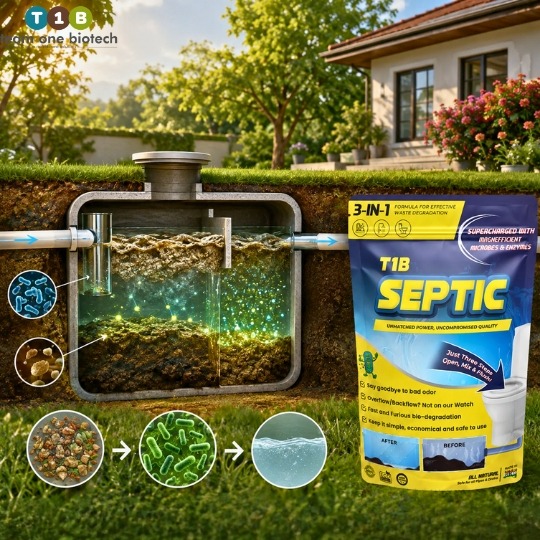
A bio septic tank cleaner is a formulation of carefully selected, naturally occurring bacterial strains, and in many cases, enzyme activators, that are introduced directly into the septic system to accelerate the biological breakdown of organic waste. Unlike chemical treatments, which may suppress odors temporarily by masking them, a biological cleaner addresses the actual root cause of the problem: the accumulation of undigested organic matter in the form of sludge at the tank base and a floating scum layer at the surface.
Chemical treatments do not digest waste. They interrupt it, and sometimes they make the situation harder to manage in the long run by disrupting the microbial environment inside the tank. Beneficial bacteria that were naturally present, however modest their population, get wiped out, and the tank is left biologically depleted. The sludge continues to accumulate. The smell returns, often within weeks.
Bio septic tank cleaner products work differently because they work with the tank’s biology, not against it. The bacterial strains in these formulations are selected specifically for their ability to thrive in the anaerobic and facultative conditions inside a septic tank and to produce the enzymes necessary to break down fats, proteins, cellulose, and human waste at a much faster rate than naturally occurring bacteria alone.
There is also a climatic advantage worth noting. India’s heat and humidity, conditions that many people associate with worsening sanitation problems, actually create highly favorable conditions for bacterial activity. The warm temperatures across most Indian states accelerate microbial metabolism, which means that properly seeded septic bacteria can establish and maintain an active colony more readily here than in colder climates. This makes bioremediation a particularly well-suited solution for septic system maintenance across India’s residential and institutional settings.
From a regulatory standpoint, the relevance is clear. Foul odors, overflow events, and untreated effluent seepage are not only a nuisance, they can constitute violations of local municipal sanitation bylaws and the National Faecal Sludge and Septage Management (FSSSM) guidelines. Bio septic tank cleaner products help homeowners, housing society managers, and facility heads maintain compliant systems without expensive infrastructure upgrades or frequent emergency interventions.
How Bacteria Powder Works Inside Your Septic Tank
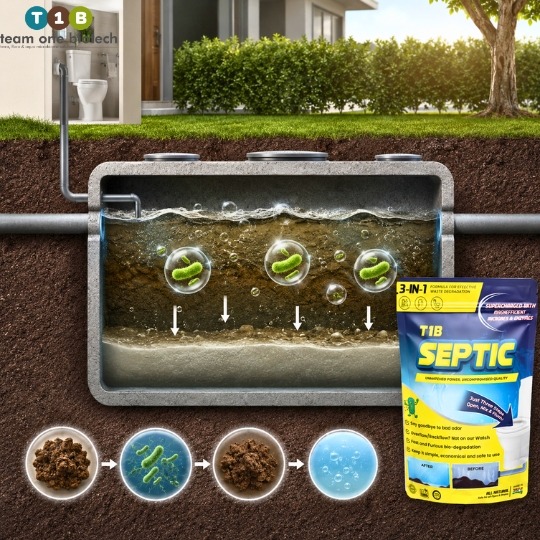
Understanding this process does not require a microbiology degree. The mechanism is straightforward, and knowing it makes it much easier to appreciate why consistent treatment delivers results while irregular or absent treatment allows problems to compound.
When bacteria powder is introduced into the septic tank, typically through a toilet flush or directly through the inspection port, the following sequence occurs:
- Rehydration: The dormant bacterial strains in the powder rehydrate on contact with the liquid environment inside the tank and begin to revive within hours of introduction.
- Activation: The bacteria begin multiplying rapidly in the warm, nutrient-rich environment, establishing an active colony calibrated to the waste load present.
- Enzymatic breakdown: The active bacteria produce enzymes, lipases, proteases, cellulases, and amylases, that target and break down complex organic compounds: fats and greases, proteins, cellulose from paper and plant matter, and human waste.
- Sludge digestion: As organic matter is broken down into simpler molecules, the accumulation of solid sludge at the base of the tank slows and, with consistent treatment, begins to reduce. The floating scum layer at the surface is similarly addressed.
- Effluent clarification: The liquid effluent that eventually flows into the drain field or soak pit is significantly cleaner, with lower organic load and reduced harmful content, reducing the risk of soil clogging and groundwater contamination.
Two categories of bacteria handle different zones inside the tank. Anaerobic bacteria dominate the lower, oxygen-depleted layers where the heaviest organic load settles. Facultative bacteria operate in the mid-liquid zone, where oxygen availability is inconsistent. Together, they address the tank as a complete environment rather than a single-condition system.
One of the most immediate and noticeable effects of consistent bacterial treatment is odor reduction. The characteristic foul smell associated with septic tanks, the rotten egg odor, comes from hydrogen sulfide gas, a byproduct of undigested organic matter breaking down through the wrong biological pathways. When the right septic tank bacteria are present in sufficient numbers and actively digesting waste through the correct enzymatic processes, hydrogen sulfide production drops significantly. The smell that many people accept as an inevitable part of having a septic system is, in most cases, a sign that the biology inside the tank is out of balance, and it is a correctable condition.
Consistently maintaining a healthy bacterial colony through regular dosing of bacteria powder is what keeps the tank in this balanced state. It is the difference between a septic system that functions quietly in the background and one that demands emergency attention every few months.
How Often Should You Add Bacteria to Your Septic Tank?
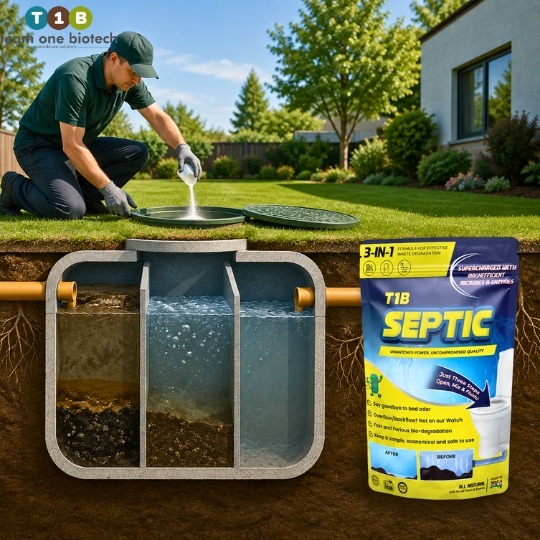
This is the question most homeowners and facility managers come to first, and it deserves a direct, structured answer. The honest response is that the ideal dosing frequency depends on tank size, the number of daily users, the type of waste load, and the specific bacterial product being used. That said, there are three scenarios that cover the vast majority of situations, and understanding them makes it straightforward to build a practical routine.
Disclaimer: The dosing scenarios described below are general guidance only. Actual recommended dosages vary based on tank capacity, usage patterns, the presence of household chemicals, and the specific bacterial formulation being used. Always refer to the product label or consult a bioremediation specialist for precise dosing instructions tailored to your system.
Scenario One: Initial or Shock Dose (First-Time Treatment or After Desludging)
When biological treatment is being introduced to a septic tank for the first time, or immediately after the tank has been professionally pumped out and desludged, a higher initial dose is required. Think of this as seeding, the goal is to rapidly establish a healthy, active bacterial colony in an environment that currently has little to no biological activity. A higher concentration of bacteria powder is introduced at the outset to give the colony the population density it needs to get to work quickly. Without this initial seeding dose, a standard maintenance quantity would take much longer to build up to an effective population, and the window during which the tank is biologically underperforming extends unnecessarily.
Scenario Two: Routine Monthly Maintenance Dose
Once a bacterial colony has been established, a regular monthly maintenance dose is what sustains it. This is not about fixing a problem, it is about preventing one from developing. The monthly dose replenishes any bacteria that have been lost to natural die-off, flushed out with effluent, or killed by incidental exposure to household cleaning products. For most residential systems, whether a single household or a medium-sized housing society, a monthly dosing schedule is the standard practice that experienced sanitation managers and bioremediation specialists recommend for ongoing septic tank maintenance.
The timing of dosing matters. Introducing bacteria powder at a period of lower water usage, overnight, for example, or at the start of a weekend when water flow through the system is reduced, gives the bacteria time to rehydrate, activate, and begin establishing themselves before the next surge of water usage flows through the tank. Dosing during peak usage hours means the bacterial inoculant may be flushed through the system before it has had time to colonize.
Scenario Three: Re-Seeding After Antibiotic Use or Harsh Cleaning Products
This is a scenario many households encounter without realizing its significance. Antibiotics prescribed for illness are passed through the body and into the septic system, where they can suppress or kill a substantial portion of the beneficial bacterial colony. Similarly, bleach-heavy drain cleaners, disinfectants, and some industrial cleaning products used in kitchens or bathrooms can reach the tank in concentrations sufficient to damage the microbial population. After any significant exposure of this kind, a re-seeding dose, equivalent to or approaching the initial shock dose, is advisable to restore biological activity before the tank’s organic load begins to accumulate unchecked.
For housing societies and facility managers overseeing multiple units, it is worth considering whether common-area cleaning contractors are using products compatible with the building’s septic infrastructure. The cumulative impact of bleach-heavy cleaning across multiple units can significantly disrupt septic tank bacteria, even when individual household usage would be manageable.
Signs Your Septic System Is Telling You It Needs Attention
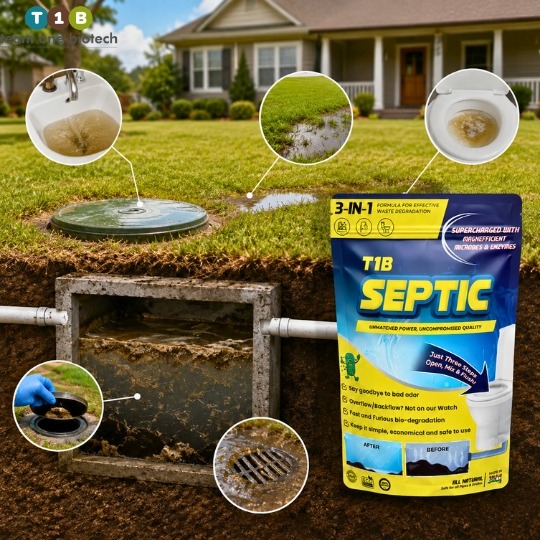
A well-maintained septic system is largely silent. When it begins signaling for attention, the signs are usually unmistakable to anyone who knows what to look for:
- Persistent foul odors near the tank area, in the garden above the drain field, or inside the home near floor drains and bathroom fixtures
- Slow-draining sinks, toilets, or floor drains that were previously functioning normally
- Gurgling or bubbling sounds from plumbing fixtures when water drains elsewhere in the building
- Waterlogged ground or unusually lush, dark green patches of grass above the drain field or soak pit area, a sign that effluent is surfacing into the soil layer
- More frequent need for desludging or pump-out than the expected interval for the household size
- Visible sewage or effluent surfacing near the tank inspection port, the soak pit perimeter, or garden areas
None of these are signs to note and revisit later. Each one indicates that the biological balance inside the tank has been compromised and organic accumulation is advancing. Catching these signs early and responding with an appropriately dosed bio septic tank cleaner treatment is substantially less disruptive and less expensive than waiting until structural remediation of the drain field is necessary, or until an overflow event creates a health hazard on the property.
If any of these warning signs are present, it is not too late to restore balance. Contact Team One Biotech to identify the right bacterial treatment for the specific system and usage load.
Best Practices for Maintaining a Septic Tank the Right Way
Biological treatment works best as part of a broader maintenance approach. These practices, taken together, give septic tank bacteria the conditions they need to perform effectively and extend the time between desludging cycles:
- Avoid flushing non-biodegradable items into the system, wet wipes (including those labelled “flushable”), sanitary products, cooking grease, and thick paper products all contribute to blockages and scum layers that bacteria cannot break down efficiently
- Space out high-volume water usage, running the washing machine, dishwasher, and multiple showers in close succession creates a hydraulic surge through the tank that can flush out bacteria and disturb the stratified layers of settled sludge
- Use septic-safe, low-phosphate cleaning products wherever possible, particularly for bathroom and kitchen surfaces, to minimise chemical interference with the microbial environment
- Schedule professional desludging inspections at intervals appropriate to tank capacity and household size, do not wait for an overflow event to prompt this; proactive scheduling is invariably less disruptive and less costly
- Keep heavy vehicles, construction equipment, and compacted material away from the area above the tank and drain field, as ground pressure can damage tank walls and disrupt the percolation of the soak pit
- Maintain a simple dosing log, particularly valuable for housing society managing committees and facility managers overseeing larger systems, so that treatment cycles are tracked and no monthly dose is missed inadvertently
Disclaimer: Recommended maintenance intervals and professional inspection schedules vary depending on tank size, number of users, local soil conditions, and applicable regulatory requirements. Consult the FSSSM guidelines applicable to your region or a certified sanitation professional for site-specific advice.
Why Bioremediation Is the Sustainable Choice for India’s Sanitation Challenges
India’s sanitation infrastructure relies heavily on decentralised septic systems, across urban housing societies, peri-urban townships, gated communities, schools, hospitals, and rural homes. The scale of this decentralised network is vast, and the pressure it places on municipal desludging services and sewage treatment infrastructure is significant. Bioremediation offers a sustainable path forward that reduces dependence on those services, protects groundwater and soil from untreated effluent seepage, and dramatically reduces the frequency with which mechanical intervention is needed.
This aligns directly with the goals of the FSSSM framework, to improve the quality of faecal sludge management at the point of generation, not just at the point of disposal. When homeowners and facility managers invest in regular bio septic tank cleaner treatment, they are not only solving a practical problem for their own property. They are contributing to a measurable reduction in the public health burden associated with poorly managed septic systems across the country.
Team One Biotech’s bacterial formulations are engineered specifically for Indian septic conditions, the waste loads, the tank designs, the climatic environment, and the regulatory context that facility managers and homeowners are working within. Reach out to the team to learn which product is right for your tank size and usage load.
Frequently Asked Questions
What is a bio septic tank cleaner?
A bio septic tank cleaner is a formulation of beneficial bacterial strains, most commonly delivered as a powder or liquid concentrate, that are introduced into a septic tank to accelerate the natural biological breakdown of organic waste, reduce sludge accumulation, and control foul odors.
How often should bacteria be added to a septic tank?
For most residential systems, a monthly maintenance dose is recommended once an initial seeding dose has established the bacterial colony. Exact frequency depends on tank size, number of users, and the specific product formulation. Always follow the manufacturer’s dosing guidance for the product being used.
Can bacteria powder damage a septic tank or pipes?
No. Bacteria powder contains naturally occurring microorganisms that are safe for tank walls, pipe materials, and the broader environment. They do not corrode or chemically degrade any component of a standard septic system.
Is bio septic treatment compliant with Indian sanitation regulations?
Yes. Bioremediation-based treatment supports compliance with FSSSM guidelines by reducing foul odors, controlling overflow risk, and improving the quality of effluent reaching the drain field, outcomes that align with municipal sanitation and environmental health standards.
What should be done after significant bleach or antibiotic exposure?
Harsh chemicals and antibiotics can reduce or eliminate the beneficial bacterial population inside a septic tank. After significant exposure, a re-seeding dose of bacteria powder is recommended to re-establish a healthy, active microbial colony before organic load begins to accumulate unchecked.
A Healthier Septic System Starts With the Right Biology
A septic system that is working as it should is one of the most unobtrusive parts of any home or facility. It operates quietly, handles its load efficiently, and asks very little of the people it serves, as long as it is given the biological conditions it needs to function. The problems that make septic systems a recurring source of stress and expense are, in the vast majority of cases, not structural failures. They are biological ones. They happen when the microbial environment inside the tank is depleted, disrupted, or never properly established to begin with.
Bio septic tank cleaner products, used consistently and at the right intervals, are what restore and maintain that biological balance. The bacteria powder works with the natural processes already designed into the system, accelerating them, sustaining them, and preventing the accumulation of organic matter that leads to odor, overflow, and expensive remediation. This is not a complicated intervention. It is a straightforward, sustainable form of septic tank treatment that costs far less than the alternatives and delivers results that are measurable in the absence of problems.
Team One Biotech has been developing bioremediation solutions trusted by homeowners, housing societies, and sanitation project managers across India. If the goal is to stop reacting to septic problems and start preventing them, the team is ready to help identify the right bio septic tank cleaner formulation and dosing schedule for any specific system, residential, institutional, or commercial. Get in touch today.
Looking to improve your ETP/STP efficiency with the right bioculture?
Talk to our experts at Team One Biotech for customised microbial solutions.
Contact: +91 8855050575
Email: sales@teamonebiotech.com
Visit: www.teamonebiotech.com
Discover More on YouTube – Watch our latest insights & innovations!-
Connect with Us on LinkedIn – Stay updated with expert content & trends!