


Treating the most common menace of Lakes: Algal deposition by bioremediation
Lakes are one of the important and prominent water sources that serve as an integral part of the ecological richness. These natural water reservoirs, which were and are lifelines of many cities and villages, are now facing the threat of pollution and extinction. Rapid urbanisation and uncontrolled growth, especially in and around cities like Bengaluru, Hyderabad, Pune, and Delhi making the deterioration of lakes very rapid, which is triggered by sewage inflow, excessive nutrient loading and uncontrolled urban development.
The most common and visible symptom of lake ecosystem collapse is Algal Deposition. Appearing like green sheets or mattresses that cover the lake’s surface and disturb the entire ecological world.
Why do lakes turn green?
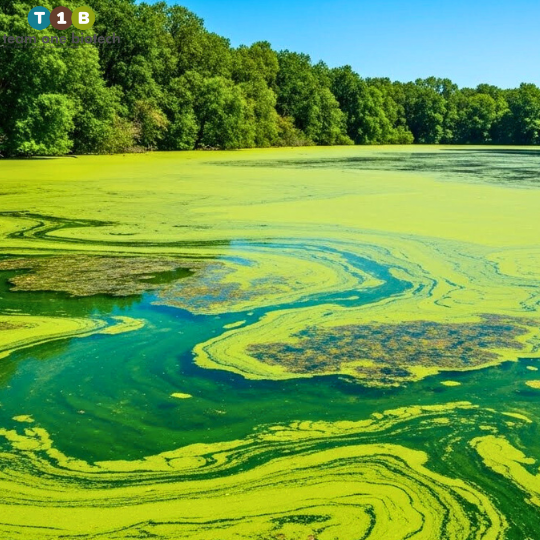
Lakes turn green basically because of algal deposition and especially blue-green algae (cyanobacteria)- on the lake surface, forming a thick mass. These mats reduce light penetration, reduce oxygen levels, and produce toxins that harm aquatic life.
The general perception says that algal growth is natural; however, it is a direct consequence of eutrophication. A condition in which lakes receive more nutrients than they can naturally handle.
Phosphates are one of the major culprits. How?
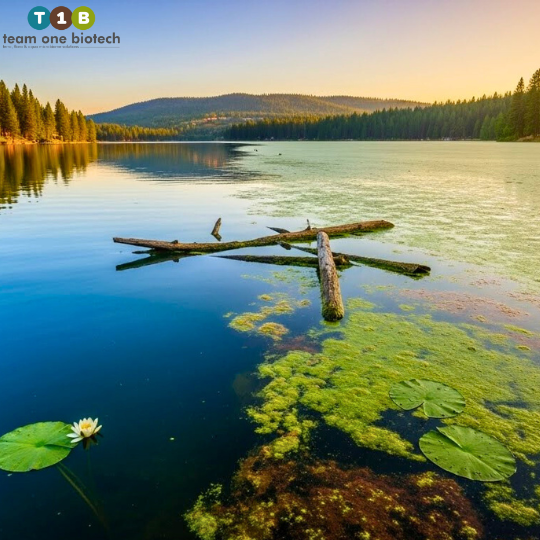
Phosphates act as fertiliser for algae even in tiny concentrations. Continuous inflow of sewage, detergents, food waste, and industrial discharge enters the lake, and phosphate levels rise sharply, surpassing the permissible limits by 40-50%.
One of the major concerns with phosphates is that they stay in the sediment for years and are then released back into the lake. This makes algal deposition prolonged and consistent. Often, people try to remove algae physically or to be precise, superficially, ignoring the root causes.
Key Sources of Phosphate Include:
- Household detergents rich in phosphates
- Untreated or partially treated sewage
- Decaying organic matter and sludge
- Fertiliser runoff from gardens & agricultural zones
- Industrial effluents containing phosphorus
Algal deposition makes Lakes suffer:
Most of the time, algae are considered natural, but when present in large quantities, they trigger a chain of ecological damages that are sometimes hard to tackle and reverse:
- Oxygen Depletion (Hypoxia)
DO levels drop dangerously low, as when algae die, the indigenous bacteria consume more oxygen to decompose it, hence, causing the levels of oxygen to drop.
- Dead flora and fauna:
The cyanobacteria release toxins in low oxygen conditions. These toxins, when combined with low oxygen levels, kill fish, plankton, insects and aquatic plants. Also, Alginate in algae creates a slimy layer that blocks sunlight and disrupts aquatic life.
- Accelerated Sedimentation:
Dead algal biomass eventually settles at the bottom of the lake, thereby increasing the sludge layer thickness. The lake slowly transitions into a dead, stagnant waterbody.
Why does conventional treatment fail?
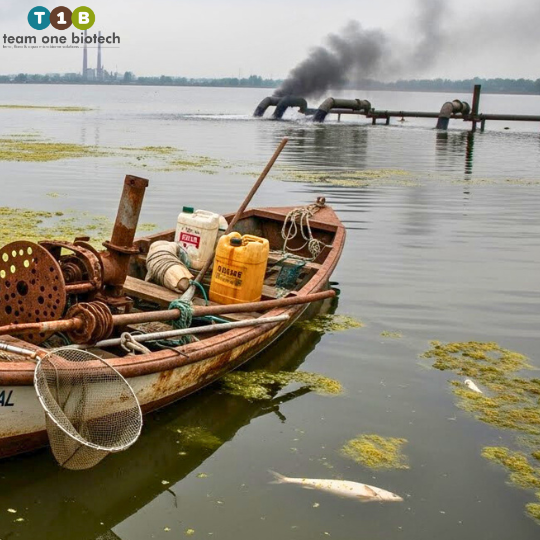
In order to solve any issue permanently, one needs to eliminate the source of the problem. But unfortunately, in this case, municipalities or institutions opt for temporary solutions and try shortcuts such as:
- Adding bleaching powder
- Increasing aeration temporarily
- Mechanical algae removal
- Surface-level cleaning drives
- Chemical coagulants like alum
To get rid of the algae problem permanently, the internal nutrient cycle must be broken, or to sum up, phosphate deposition must be reduced.
What is the real solution?
The answer to this lies in the most effective mechanism nature has, i.e. bioremediation. Bioremediation is the use of specific types of microbes to restore the ecological balance of a lake. Bioremediation is the only mechanism that addresses the root causes rather than merely suppressing symptoms.
How Bioremediation Works
- Microbial Consortia Application
Specialized bacteria break down organic pollutants and digest sludge. - Enzymatic Breakdown of FOG & Organic Waste
Enzymes convert complex organic molecules into simpler forms. - Phosphate Reduction
Certain bacteria immobilize phosphates by converting them into insoluble forms. - Enhancing DO and Water Clarity
Beneficial microbes improve oxygen cycling and reduce turbidity. - Sludge Reduction
Microbial treatment targets anaerobic pockets in sediment, reducing sludge height.
Tackling Phosphate: The Bioremediation Way
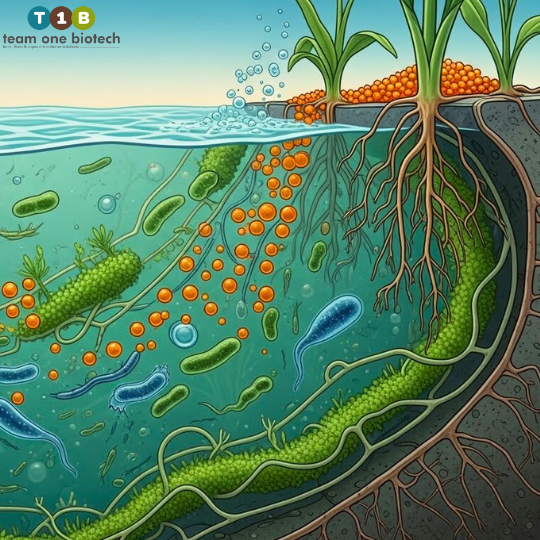
Internal Phosphate Control
Phosphates can’t be directly reduced or degraded by microbes. They are absorbed by microbes called as Phosphate Accumulating Organisms (PAOs), also called as phosphate-locking microbes. The PAOs convert soluble bioavailable phosphate into stable, bound forms that can’t fuel algal growth. These specialised microbes trap phosphate within the sediment matrix, effectively sealing it off and controlling nutrient recycling, ultimately preventing the recurrence of algal blooms.
Sediment Bio-augmentation:
This included the application of microbial strain directly into the sediment or the lake bed to stimulate natural biological processes that degrade organic matter and reduce nutrient accumulation. This approach enhances sediment health, lowers oxygen demand, and disrupts the nutrient reservoirs—especially phosphorus—that algae rely on for rapid proliferation.
Reducing phosphorus release from sediments:
Healthy sediments act as a buffer, but degraded ones leak phosphorus back into the water during low-oxygen events. By restoring sediment balance through microbial intervention, oxygenation strategies, and organic load reduction, phosphorus release is minimised. This stabilises the pond ecosystem and cuts off one of the most persistent nutrient sources driving algal blooms.
External Phosphate Control
- Greywater diversion
- Constructed wetlands before inlet
- Avoiding phosphate-based detergents
- Household-level awareness
- Installing decentralized sewage treatment units upstream
Only when phosphate inflow and phosphate stored in sediments are both addressed can algal deposition be permanently stopped.
Bioremediation Strategy and Execution:
-
Assessment:
This step involves:
- Analysis of parameters, viz. DO, COD, BOD. Phosphates, Nitrated, ORP.
- Lake Depth and Sludge Depth Measurement.
- Area measurement of the lake.
- Assessment of sewage ingress
-
Physical Cleaning:
It involves the removal of inorganic wastes, floating debris, algal deposition or water hyacinth physically to improve the condition of the top layer of the lake and improve oxygenation.
Enhancing DO:
Atmospheric oxygen can’t be enough alone to make up the required volume of dissolved oxygen for the eradication of algae and enhancing the performance of microbes. The best way to do it is to install aerators rather than relying on conventional methods such as fountains.
The latest and best technology available today is nano-bubble generators. They generate bubbles in nano-meter size, which remain in the lake for about a week and can be easily absorbed by the microbes.
-
Installation of biocultures:
Customised biocultures infused with strains for phosphate reduction, alage degradation and facultative microbes are installed in the lake via dosing. Initially, for 60-90 days, the dosing is weekly, broadcasted at multiple points in the lake which is called a loading dose.
After loading, the stabilization or maintenance dose starts which involves fortnightly or weekly dosing.
Conclusion – Bioremediation is the Future of Lake Restoration
Algal deposition, phosphate overload, and organic sludge accumulation are not signs of a dying lake—they are signs of a lake in need of intervention. Chemical treatments fail because they treat symptoms, not causes. Bioremediation, on the other hand, taps into the power of nature to restore waterbodies from within.
With rising urbanization and sewage inflow, India needs sustainable, cost-effective, and long-term lake rejuvenation models. Bioremediation offers exactly that: a solution that reduces nutrient overload, restores oxygen balance, controls algae, and returns lakes to ecological health without causing harm.
Healthy lakes mean healthier cities, groundwater recharge, biodiversity revival, and improved public health. The path forward is clear — bioremediation is not just an option; it is the only scalable solution for lake restoration in the decades to come.
Looking to improve your ETP/STP efficiency with the right bioculture?
Talk to our experts at Team One Biotech for customised microbial solutions.
Contact: +91 8855050575
Email: sales@teamonebiotech.com
Visit: www.teamonebiotech.com
Discover More on YouTube – Watch our latest insights & innovations!-
Connect with Us on LinkedIn – Stay updated with expert content & trends!