
UASB Reactors and Biological Augmentation: A Guide for High-BOD Industrial Effluents
Walk into any effluent treatment plant attached to a distillery, dairy processing unit, or textile dyeing facility in India, and you will find the same story playing out in different languages. The influent BOD is spiking. The reactor is underperforming. The SPCB inspection notice is sitting on the plant manager’s desk. And the energy bill just climbed another notch.
For ETP operators across Maharashtra, Uttar Pradesh, Gujarat, and Tamil Nadu, the regulatory environment has shifted from cautionary to punitive. The Central Pollution Control Board and its state counterparts are no longer issuing warnings as a first response, they are issuing closures. Zero Liquid Discharge mandates are tightening. The tolerance for effluent that breaches prescribed BOD, COD, and TSS discharge limits has effectively evaporated.
Meanwhile, the operational reality is brutal. High-strength industrial wastewater, whether it is spent wash from a molasses-based distillery, whey permeate from a cheese plant, or sizing effluent from a textile unit, arrives at the ETP with organic loads that can overwhelm even well-designed systems. When the reactor struggles, the downstream aerobic stage cannot compensate. The whole treatment chain suffers.
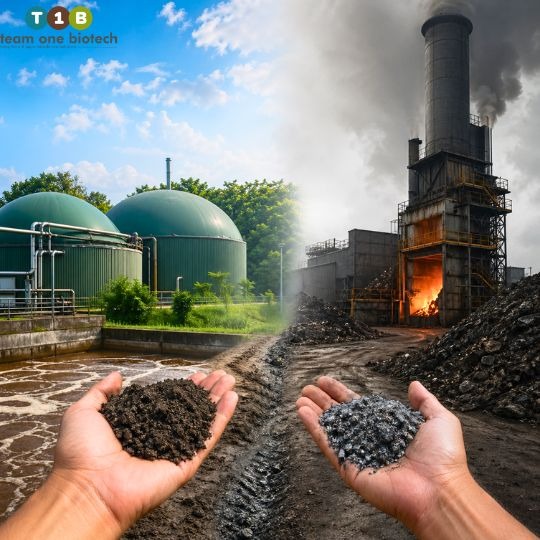
But here is what many plant operators do not yet fully recognize: that same high-BOD wastewater they are fighting to treat is also a substantial energy resource waiting to be unlocked. The technology that makes this possible, the Upflow Anaerobic Sludge Blanket reactor, has been quietly transforming industrial wastewater management for decades. The challenge is making it work reliably in the demanding, variable conditions of Indian industry. That is precisely where the science of bio-augmentation enters the picture.
What Is a UASB Reactor, and Why Does It Matter for High-BOD Wastewater?
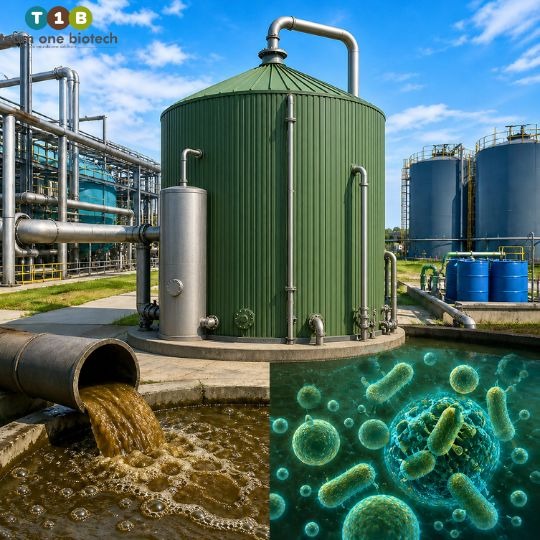
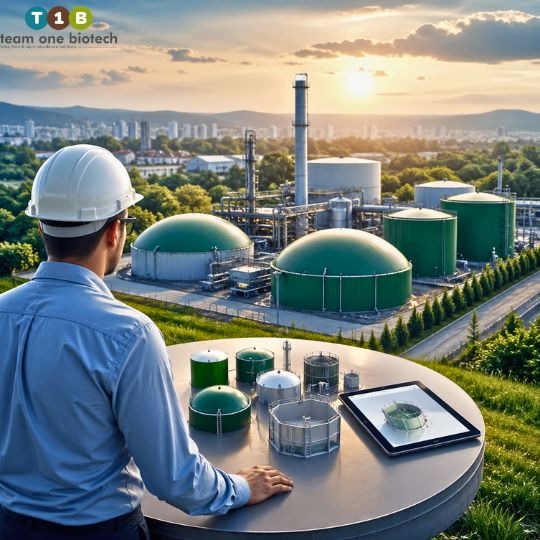
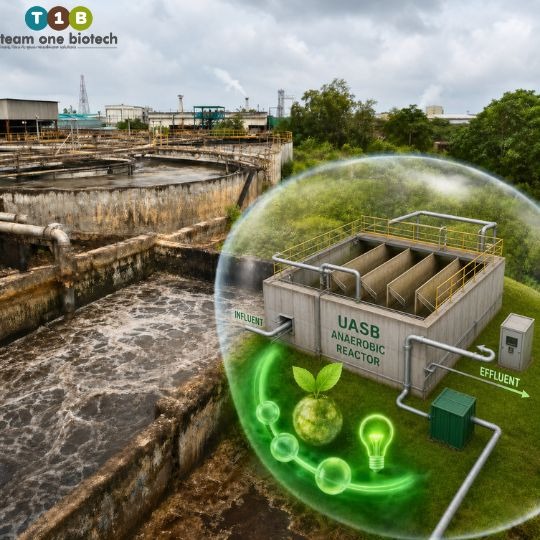
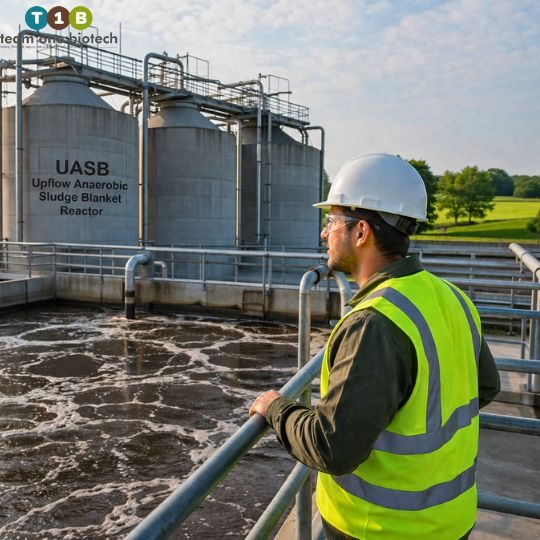
The Upflow Anaerobic Sludge Blanket, universally referred to as the UASB reactor, is an anaerobic biological treatment system designed to handle wastewater with high organic loading rates. Unlike conventional aerobic treatment, which consumes energy to aerate the effluent, the UASB operates without oxygen. It degrades organic matter through the metabolic activity of anaerobic microbial consortia, producing biogas, primarily methane, as a recoverable byproduct.
The defining feature of UASB reactor wastewater processing is its sludge blanket, a dense, biologically active layer of granular or flocculent biomass suspended in the lower section of the reactor. As wastewater flows upward through this blanket, the microorganisms within it aggressively break down complex organic molecules: carbohydrates, proteins, fats, and volatile fatty acids.
The three-phase separator at the top of the reactor, sometimes called the gas-liquid-solid separator, plays a critical structural role. It separates the rising biogas bubbles from the treated effluent and the settling sludge, allowing the system to maintain its biomass inventory while producing a continuous stream of methane-rich gas.
Why does this matter specifically for Indian ETPs?
Because high-BOD effluents, the kind generated by distilleries (spent wash BOD can reach 40,000–80,000 mg/L), dairy plants, starch processing units, and pharmaceutical fermentation facilities, are actually ideal feedstocks for anaerobic digestion. The higher the organic load, the greater the potential for biogas generation. A system that handles this load efficiently is not just treating waste; it is generating a fuel source that can offset significant energy expenditures.
The UASB, when operating at peak performance, can reduce BOD by ranges typically cited between 70% and 90%, depending on organic loading rates, temperature, and wastewater composition. These performance windows make it the primary treatment workhorse for high-strength effluent before polishing in the aerobic stage.
The Startup Problem Nobody Talks About Openly
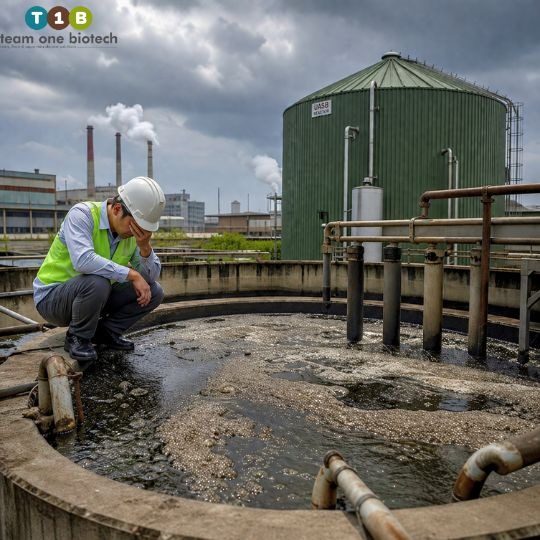
Here is the uncomfortable truth that plant operators already know but rarely see addressed in vendor literature: getting a UASB to perform reliably is significantly harder than the engineering drawings suggest.
The granulation process, the natural formation of dense, compact microbial granules that give a mature UASB its exceptional performance, typically takes months under conventional conditions. During this period, the reactor operates below its designed efficiency. It is sensitive to pH swings, temperature fluctuations, toxic influent, and shock loads from production surges.
In the Indian context, these challenges are amplified. Seasonal variations in raw material quality affect effluent composition. Festive shutdowns followed by abrupt restarts create shock conditions. Power outages disrupt recirculation and pH control. And the microbial seed sludge used at startup may carry insufficient populations of the specific methanogenic archaea required for robust methane production.
The result is a reactor that takes far longer to reach steady-state performance than projected, an operator team under pressure to meet discharge norms with a system that is still biologically immature, and a management team questioning whether the capital investment is delivering returns.
This is the gap that bio-augmentation is specifically engineered to close.
Bio-Augmentation: Accelerating Biology Where It Matters Most

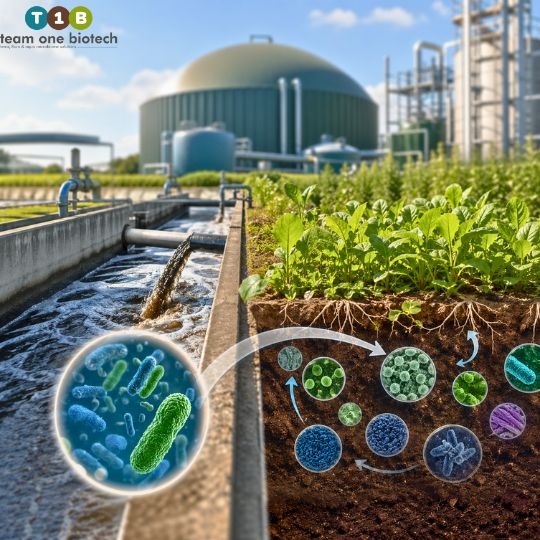
Bio-augmentation is not a chemical additive. It is not a magic fix. It is a precision microbiology intervention, the deliberate introduction of concentrated, pre-adapted microbial consortia into an underperforming or newly commissioned anaerobic system.
Team One Biotech develops custom microbial formulations that target the specific biological bottlenecks in UASB reactor wastewater treatment. These formulations are assembled from strains selected for their performance in high-BOD, high-temperature, and variable-pH environments, conditions that are standard, not exceptional, in Indian industrial ETPs.
The practical outcomes of a well-executed bio-augmentation program include:
- Accelerated granulation: Dense, settable granules form significantly faster than with conventional seeding, reducing the startup lag from months to weeks in many documented industrial applications.
- Improved shock load tolerance: Established, diverse microbial communities recover more rapidly after pH excursions, temperature spikes, or toxic influent events.
- Enhanced methane yield: When the complete anaerobic syntrophic community is present, acetogens, hydrogenogens, and methanogens in functional balance, methane content in biogas typically rises, improving energy recovery value.
- Sustained BOD reduction: A biologically robust reactor maintains consistent organic removal even as influent quality fluctuates across production cycles.
For sectors like sugarcane-based ethanol distilleries, where spent wash composition shifts with the crushing season, or for dairy cooperatives handling seasonal milk flush, this resilience is operationally critical.
If your UASB is chronically underperforming, producing biogas volumes well below design estimates, failing to achieve target BOD reductions, or struggling to recover after a shutdown, contact Team One Biotech for a diagnostic assessment of your reactor’s microbial health. A targeted bio-augmentation protocol can often deliver measurable improvement within weeks of application.
Turning Wastewater Into an Energy Asset

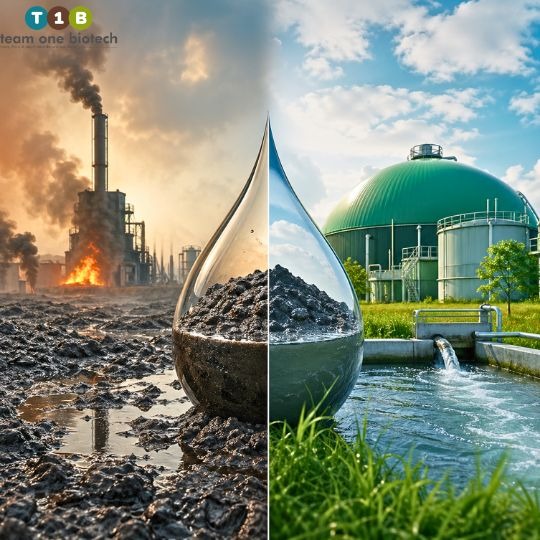
The conversation in Indian industry has been too narrowly focused on compliance. It is time to reframe UASB reactor wastewater treatment as an energy recovery infrastructure investment, not merely a regulatory obligation.
A well-functioning UASB processing high-BOD wastewater generates biogas with methane content typically ranging between 60% and 75%. This gas can be:
- Used directly as boiler fuel, displacing furnace oil or natural gas and delivering measurable reductions in fuel procurement costs.
- Converted to electricity via gas engines or biogas gensets, providing captive power generation for the plant.
- Processed and upgraded to compressed biogas (CBG) under India’s SATAT scheme, creating an additional revenue stream.
For a medium-scale distillery processing several thousand kiloliters of effluent daily, or a large dairy cooperative managing substantial whey volumes, the energy value locked in that wastewater is not trivial. It can meaningfully offset ETP operational costs, reduce dependence on grid power, and contribute to the facility’s sustainability reporting and ESG commitments.
Team One Biotech’s approach is to optimize the biological core of the UASB so that operators capture the maximum possible methane fraction from their effluent. When the microbial community is functioning at its designed potential, the energy math improves significantly. Schedule a consultation with Team One Biotech to model the biogas potential of your specific effluent stream and understand what energy recovery is realistically achievable at your site.
Regulatory Alignment: CPCB, SPCB, and the Cost of Getting It Wrong
India’s environmental regulatory framework has progressively tightened its standards for industrial discharge. CPCB norms for industries like distilleries, tanneries, and paper mills specify BOD discharge limits that can only be consistently met with a fully functional primary anaerobic stage followed by adequate secondary treatment.
State Pollution Control Boards in states with high industrial effluent discharge, Maharashtra, Gujarat, Punjab, Haryana, Uttar Pradesh, have demonstrated increased willingness to enforce consent conditions. Directions under Section 33A of the Water Act are no longer hypothetical threats. For operators who have received show-cause notices or are operating under court-monitored compliance orders, the margin for reactor underperformance is effectively zero.
Bio-augmentation, when integrated into a comprehensive ETP management strategy, directly supports regulatory compliance by:
- Reducing the risk of BOD breakthrough events that trigger notices.
- Shortening reactor recovery time after upsets, minimizing periods of non-compliant discharge.
- Generating documented evidence of biological system health for regulatory submissions.
A Partnership, Not Just a Product
Team One Biotech’s work with Indian industrial clients across the distillery, dairy, pharmaceutical fermentation, and agro-processing sectors reflects a consistent philosophy: every ETP is biologically unique. Influent characteristics, reactor geometry, sludge age, temperature profile, and operating schedule all shape what a specific microbial formulation needs to achieve.
This is why a site audit is always the starting point. Not a generic product recommendation, a genuine assessment of your reactor’s current microbial community, its limitations, and the targeted intervention that addresses those limitations specifically.
Reach out to Team One Biotech today to arrange a site visit or submit your effluent characterization data for a customized bio-augmentation recommendation. Whether you are commissioning a new UASB, rehabilitating an underperforming reactor, or seeking to maximize biogas recovery from an existing system, the biology can be improved, and the results can be measured.
Disclaimer
All numerical ranges referenced in this article, including BOD reduction percentages, biogas methane content, and treatment performance figures, are general estimates drawn from published literature and broad industry experience. Actual results at any individual facility will vary based on site-specific factors including influent composition, organic loading rates, reactor design, operating temperature, sludge characteristics, and process management practices. Team One Biotech recommends a thorough site assessment and effluent characterization before projecting performance outcomes for any specific installation.
Looking to improve your ETP/STP efficiency with the right bioculture?
Talk to our experts at Team One Biotech for customised microbial solutions.
Contact: +91 8855050575
Email: sales@teamonebiotech.com
Visit: www.teamonebiotech.com
Discover More on YouTube – Watch our latest insights & innovations!-
Connect with Us on LinkedIn – Stay updated with expert content & trends!