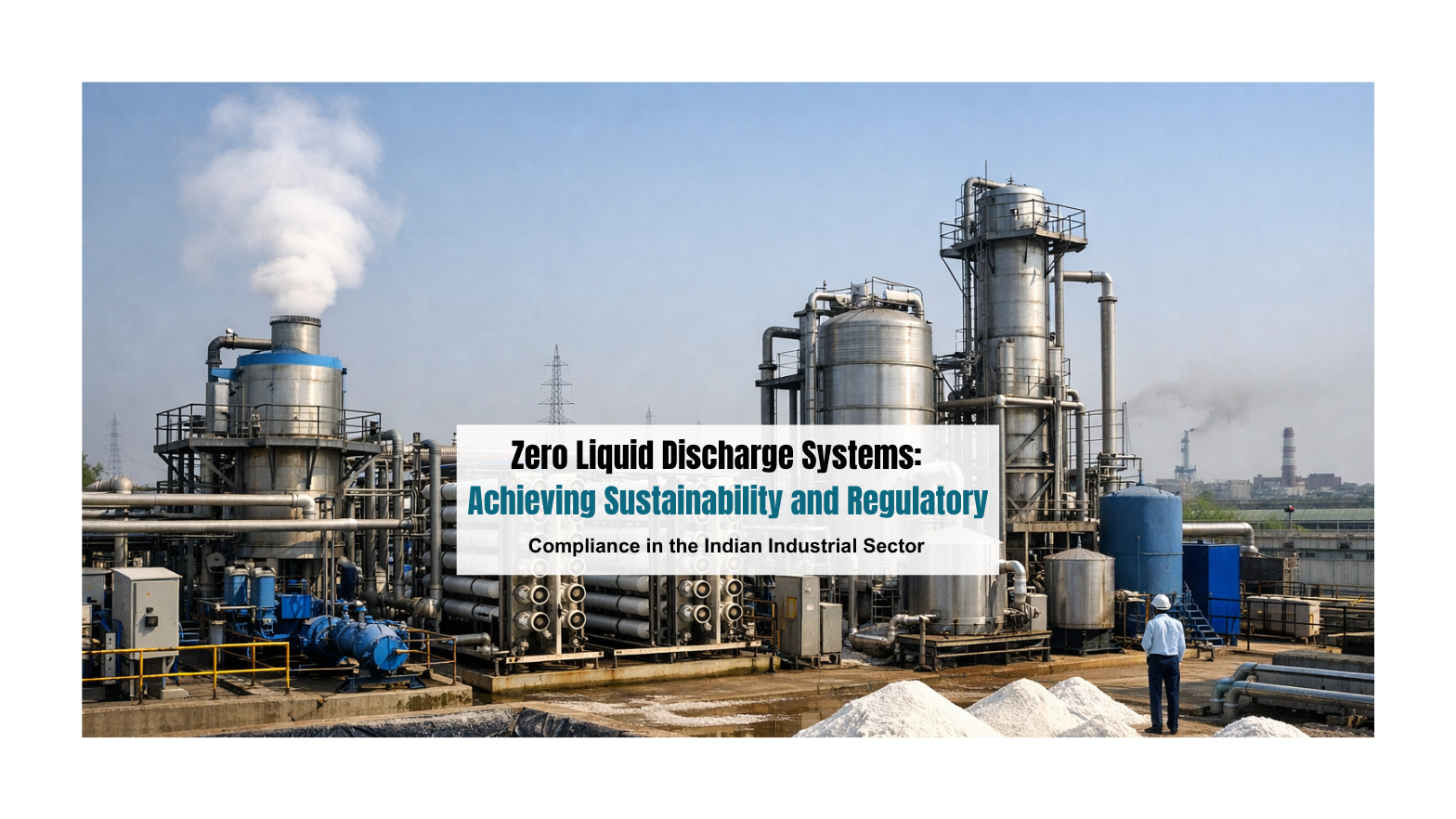
Zero Liquid Discharge Systems: Achieving Sustainability and Regulatory Compliance
There is a particular kind of pressure that plant managers in Ahmedabad, Ludhiana, Vapi, and Ankleshwar know intimately. It is not the pressure of a quarterly review or a supply chain delay. It is the pressure of standing at the edge of a genuine environmental reckoning, knowing that the decisions made in your facility today will determine whether your business exists a decade from now.
India’s industrial groundwater crisis is not a projection. It is a present-tense emergency. Textile dyeing clusters in Gujarat and Punjab collectively discharge millions of litres of high-TDS, chemical-laden effluent daily. The pharmaceutical corridor of Hyderabad generates wastewater streams so complex in their chemical signatures that conventional ETPs have routinely struggled to achieve consent standards. Chemical manufacturing clusters in Maharashtra and Rajasthan face escalating CPCB show-cause notices, NGT orders, and the looming reality of forced operational shutdowns. The question is no longer whether Indian industry must adopt Zero Liquid Discharge. The question is how to do it intelligently, cost-effectively, and in a way that creates genuine long-term competitive advantage.
This guide is written for those responsible for that decision.
What Zero Liquid Discharge Actually Means, Beyond the Regulatory Checkbox
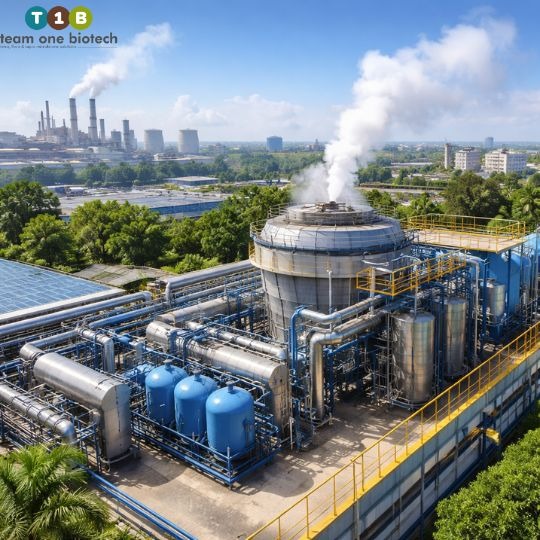
The phrase “Zero Liquid Discharge plant” has become so common in compliance conversations that it risks losing its meaning. Strip away the regulatory context for a moment, and what ZLD water treatment actually represents is a fundamental reimagining of how industrial facilities relate to water as a resource.
In a conventional effluent treatment workflow, treated water is discharged into a water body or municipal drain after meeting prescribed quality norms. Even in well-managed facilities, this means a net loss of water from the industrial ecosystem. In a Zero Liquid Discharge system, no treated effluent leaves the plant boundary in liquid form. Every litre of wastewater generated by the production process is recovered, concentrated, and either recycled back into operations or converted into a solid or semi-solid residue for safe disposal. The water recovery rates achieved by well-engineered ZLD systems typically fall in the range of 90% to 98%, depending on influent quality and system configuration. Please note that these are general values and performance metrics vary significantly based on the specific ETP configuration and influent characteristics.
For a large-scale textile dyeing unit consuming 2 to 3 million litres of water per day, that recovery rate translates into tangible balance sheet impact. But beyond economics, it means achieving something that compliance documents rarely capture: true stewardship of a resource that is becoming structurally scarce across industrial India.
The Science of ZLD, Membrane Technology vs. Thermal Evaporation
Understanding why ZLD systems succeed or fail requires a working knowledge of the two dominant technology pathways available to Indian plant operators: membrane-based separation and thermal evaporation. The majority of modern ZLD installations combine both, but the design decisions around sequencing and sizing define the economics and performance of the entire system.
Membrane-Based ZLD Processes
Membrane technology forms the front end of most ZLD water treatment configurations because it is energy-efficient relative to thermal processes and capable of handling high volumes. The typical sequence involves ultrafiltration (UF) followed by reverse osmosis (RO), often with a second or third-pass RO stage for high-TDS applications.
Ultrafiltration removes suspended solids, colloidal matter, and larger organic molecules through a pressure-driven membrane with pore sizes in the 0.01 to 0.1 micron range. This stage is critical because it protects the downstream RO membranes from fouling, a failure mode that is responsible for the majority of ZLD plant operational disruptions in Indian industrial facilities.
Reverse osmosis then handles the bulk of dissolved solids rejection. A single-pass RO stage at a well-operated ZLD plant will typically achieve water recovery in the range of 50% to 75% of the feed volume, producing a concentrated reject stream with significantly elevated TDS levels. Please note that these are general values and performance metrics vary significantly based on the specific ETP configuration and influent characteristics.
This concentrate, sometimes called brine, cannot simply be discharged. In a ZLD configuration, it must be further processed. This is where the thermal stage begins.
Thermal Evaporation and Crystallisation
The concentrate stream from the RO stage enters the thermal section of the ZLD plant, which typically comprises a multiple-effect evaporator (MEE) and, in full ZLD configurations, a crystalliser downstream.
Multiple-effect evaporators work by using the steam generated in one effect to heat the feed in the next, recovering energy across several stages. This cascading approach reduces the specific energy consumption of the evaporation process, a critical consideration given that thermal processes remain significantly more energy-intensive than membrane processes. MEE systems operating on industrial brine streams typically achieve evaporation efficiencies in the range of 30% to 45% steam economy, meaning each kilogram of primary steam drives evaporation of 30 to 45 kilograms of water across the effects. Please note that these are general values and performance metrics vary significantly based on the specific ETP configuration and influent characteristics.
The crystalliser handles the final concentration step, forcing dissolved salts out of solution into a crystalline solid. Depending on the feed chemistry, the resulting salt may have commercial recovery value, a point we will return to in the economic analysis section, or may require regulated disposal as solid hazardous waste under the Hazardous Waste Management Rules, 2016.
The total specific energy consumption of a combined membrane-thermal ZLD system varies considerably by application and influent TDS, but typically falls in the range of 15 to 35 kWh per kilolitre of feed processed. Please note that these are general values and performance metrics vary significantly based on the specific ETP configuration and influent characteristics.
Total Dissolved Solids in Water, The Industrial Damage You Cannot Always See
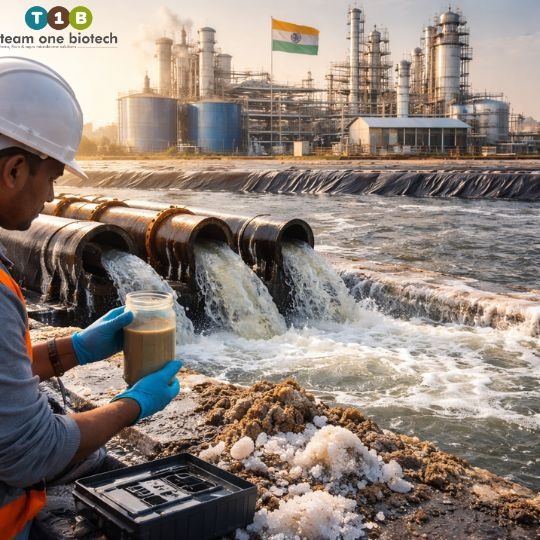
One of the most underappreciated aspects of industrial water quality management is the cumulative, progressive damage caused by elevated TDS in water, both to production equipment and to the receiving environment. Plant managers often focus on visible pollution indicators, colour, COD, BOD, while TDS builds silently until it manifests as capital equipment failure or regulatory action.
Total dissolved solids in water is a composite measurement of all inorganic and organic matter dissolved in a water sample, expressed in milligrams per litre (mg/L) or parts per million (ppm). In industrial contexts, the TDS profile of a water source includes a complex matrix of calcium, magnesium, sodium, potassium, chloride, sulphate, bicarbonate, and a range of process-specific dissolved solids depending on the industry.
Equipment Degradation and Production Losses
High-TDS process water accelerates scaling in boilers, heat exchangers, cooling towers, and pipelines. Calcium carbonate and calcium sulphate scale deposits in boilers reduce heat transfer efficiency, increase fuel consumption, and create hot spots that contribute to premature tube failure. Scaling in cooling tower fill media and distribution systems reduces thermal efficiency and increases biological fouling risk.
The economic cost of unmanaged TDS in industrial cooling and steam generation systems, when expressed as increased energy consumption, maintenance expenditure, and unplanned downtime, typically ranges between 8% to 18% of total utility costs in affected facilities. Please note that these are general values and performance metrics vary significantly based on the specific ETP configuration and influent characteristics.
In textile processing, high-TDS process water directly degrades dyeing outcomes. Elevated calcium and magnesium concentrations interfere with dye uptake, leading to inconsistent colour yield, increased dye and chemical consumption, and quality rejections, none of which show up in an effluent compliance report, but all of which represent real production costs.
Environmental and Regulatory Dimensions of TDS
From a regulatory standpoint, the CPCB has prescribed TDS limits for treated effluent discharge to inland surface waters, with general standards typically setting a threshold that many high-intensity industrial effluents significantly exceed prior to treatment. State Pollution Control Boards in Gujarat, Maharashtra, Tamil Nadu, and Telangana have issued sector-specific consent conditions with TDS limits that reflect the cumulative carrying capacity of local water bodies.
The NGT has repeatedly intervened on TDS-related environmental harm, particularly in cases where high-TDS industrial discharge has resulted in soil salinity damage to agricultural land downstream of industrial clusters. Penalties in such cases have ranged from facility closures to compensation orders running into crores of rupees.
Monitoring and controlling TDS is therefore both an equipment protection imperative and a core water quality parameter in the regulatory compliance framework governing Indian industry.
Where Bioremediation Fits, Team One Biotech’s Role in the ZLD Ecosystem
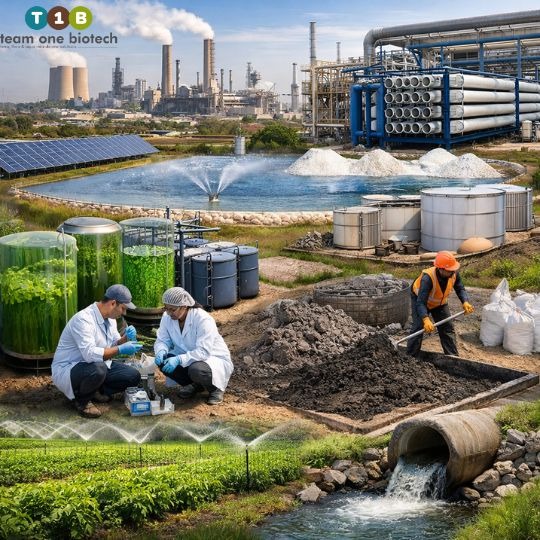
A critical and often misunderstood aspect of ZLD plant design is that membrane and thermal technologies work best when the organic load in the influent has been substantially reduced before the feed stream reaches the ZLD train. High COD and BOD in the ZLD feed stream causes accelerated membrane fouling, reduces flux rates, increases cleaning frequency, and shortens membrane life, all of which translate directly into higher operating costs and reduced system availability.
This is where biological pre-treatment, and specifically bioremediation using specialised microbial consortia, plays a decisive upstream role.
Team One Biotech’s bio-augmentation solutions are designed to address precisely this challenge. By deploying high-performance, application-specific microbial consortia into the ETP biological treatment stage, organic degradation efficiency is substantially enhanced before the effluent stream approaches the ZLD feed header. The result is a lower-COD, lower-TSS feed to the membrane stage, with measurable downstream benefits across the entire ZLD system.
In industrial ETP configurations where bio-augmentation has been applied prior to the ZLD train, facilities have reported reductions in RO membrane cleaning frequency, extended membrane replacement intervals, and lower specific chemical consumption in the CIP (Clean-In-Place) process. Organic load reduction at the biological stage translates into a cleaner, more consistent ZLD feed, which is the single most important controllable variable in long-term ZLD system performance.
For plant managers operating in textile, pharma, or chemical manufacturing, integrating bio-augmentation into the ETP prior to the ZLD investment is not a supplementary consideration. It is a foundational design decision that affects the capital cost, operating cost, and operational reliability of the entire ZLD installation.
If you are in the pre-engineering or FEED phase of a ZLD investment, consult with our compliance specialists to future-proof your facility, and ensure that your biological pre-treatment strategy is designed to support, rather than compromise, your ZLD performance targets.
The Regulatory Roadmap, What Indian Law Actually Requires, and What Non-Compliance Costs
The regulatory framework governing industrial effluent management in India has become substantially more stringent in the past decade, driven by a combination of NGT activism, CPCB enforcement, and a series of Supreme Court interventions that have fundamentally changed the risk calculus for industrial polluters.
CPCB and SPCB Mandate Overview
The Environment (Protection) Act, 1986 and the Water (Prevention and Control of Pollution) Act, 1974 form the legislative backbone of industrial effluent regulation in India. The CPCB issues general standards for effluent discharge under the Environment (Protection) Rules, 1986, while State Pollution Control Boards issue facility-specific Consent to Operate (CTO) conditions that translate these general standards into site-specific obligations.
The CPCB has progressively tightened effluent standards across highly polluting industries, a category that includes large-scale textile processing, pharmaceuticals, dyes and dye intermediates, chlor-alkali, and tanneries, among others. For textile dyeing and printing units, the CPCB’s sector-specific standards prescribe not only COD, BOD, and TSS limits but also colour and TDS benchmarks that are effectively unachievable without a ZLD or near-ZLD configuration.
NGT Mandates and Their Implications
The National Green Tribunal has been an active enforcement actor, particularly in relation to industrial clusters. The NGT’s orders on the Pali textile cluster in Rajasthan, the Tirupur dyeing cluster in Tamil Nadu, and the CETP-linked industries in Vapi have established a clear judicial posture: industries that fail to achieve prescribed effluent quality standards face closure orders that the Tribunal has shown willingness to enforce. The NGT has also directed that industries within specified distances of sensitive water bodies must achieve ZLD, regardless of whether their effluent technically meets individual discharge norms.
The True Cost of Non-Compliance
The financial risk of non-compliance extends significantly beyond the direct penalty amounts prescribed under environmental statutes, which themselves have been enhanced in recent years. Facilities facing enforcement action under the Water Act or the Environment Protection Act risk suspension of Consent to Operate, which triggers immediate production stoppage. In industries where CTO suspension affects export-linked operations, the consequential losses from order cancellations, customer penalties, and bank covenant breaches can dwarf the original environmental fine by orders of magnitude.
Beyond immediate financial exposure, unresolved compliance failures increasingly affect access to institutional credit. Several scheduled banks and development finance institutions now incorporate environmental compliance status into credit appraisal frameworks, particularly for loans above certain thresholds. Facilities with pending SPCB notices or NGT orders are encountering difficulties in loan renewals and capacity expansion financing.
The question, for any serious industrial leader, is not whether the cost of ZLD investment is justified. It is whether the business can afford the compounding cost of deferring it.
The Economic Case for ZLD, Turning Waste Streams Into Working Capital
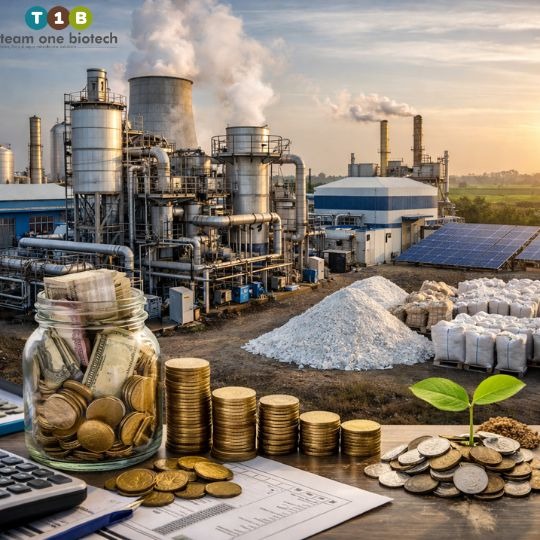
The financial argument for ZLD water treatment has shifted materially over the past five years, for two reasons. First, freshwater costs have risen across Indian industrial belts as groundwater depletion has forced industry toward tanker supply, Common Effluent Treatment Plant charges, and municipal industrial supply, all more expensive per kilolitre than the groundwater sources they replace. Second, ZLD technology costs, particularly on the membrane side, have declined meaningfully as the Indian market for UF and RO membranes has deepened.
Water Recovery as Cost Avoidance
For a large-scale industrial facility consuming between 1 and 5 million litres of process water per day, ZLD water recovery at 90% to 95% recovery efficiency effectively replaces 9 to 9.5 of every 10 litres with recycled water. Expressed as cost avoidance at current industrial water supply costs in water-stressed states like Gujarat, Rajasthan, and Maharashtra, this represents a significant annual saving. Plants that have transitioned from tanker-dependent fresh water supply to ZLD-recovered water have reported reductions in freshwater procurement costs in the range of 55% to 75% of their pre-ZLD water expenditure. Please note that these are general values and performance metrics vary significantly based on the specific ETP configuration and influent characteristics.
Salt Recovery and Secondary Revenue
Pharmaceutical and chemical sector ZLD installations that generate high-purity crystallised sodium chloride, sodium sulphate, or ammonium sulphate from their crystalliser output have explored the potential for secondary revenue through salt recovery. Where the recovered salt stream is sufficiently pure and consistent, it may be saleable to commercial salt processors or industrial users, partially offsetting the operating cost of the crystallisation stage. The commercial viability of this depends on the specific salt type, purity, and available off-take arrangements in the local market.
The Payback Period Question
ZLD systems carry significant capital investment, and it would be misleading to present this as a low-cost option. However, the payback period calculation must include the avoided cost of regulatory penalties, the insurance value against forced production shutdowns, the freshwater cost savings, and, where applicable, the value of recovered salt or heat. When these factors are aggregated, well-structured ZLD investments in high-water-intensity industries have demonstrated payback periods in the range of 5 to 9 years in Indian industrial contexts. Please note that these are general values and performance metrics vary significantly based on the specific ETP configuration and influent characteristics.
For high-value manufacturing, speciality chemicals, pharmaceutical APIs, technical textiles, where a single production shutdown carries costs that can exceed the entire ZLD capital investment, the insurance logic alone may justify the expenditure independent of the operating economics.
Request a technical audit of your recovery cycle to develop a facility-specific ROI model before making a capital commitment.
Maintenance, Failure Modes, and Operational Discipline in ZLD Plants
The most common reason ZLD plants fail to deliver on their design performance in Indian industrial settings is not a technology deficiency. It is a gap between the operational discipline required to run a ZLD system and the institutional capability of the facility managing it.
Membrane Fouling, The Primary Failure Mode
RO membrane fouling is the single most common cause of underperformance and premature failure in ZLD installations. Fouling occurs when dissolved or suspended matter accumulates on or within the membrane matrix, reducing flux and increasing trans-membrane pressure. In Indian industrial applications, the leading foulants are calcium carbonate scale, silica scale, biological fouling, and organic matter.
Prevention requires consistent monitoring of the Silt Density Index (SDI) of the UF permeate, rigorous adherence to CIP protocols at defined intervals, antiscalant dosing at correctly calibrated rates, and temperature monitoring of the feed stream. Membrane life in well-operated ZLD plants typically falls in the range of 5 to 8 years per module. In poorly maintained systems, premature failure at 2 to 3 years is not uncommon. Please note that these are general values and performance metrics vary significantly based on the specific ETP configuration and influent characteristics.
Evaporator Scaling and Corrosion
In the thermal section, scaling on heat exchanger surfaces and corrosion of wetted materials are the primary maintenance concerns. Evaporators handling high-chloride brine streams require careful materials selection, typically duplex stainless steel or titanium, and regular descaling to maintain heat transfer efficiency. Facilities that undersize their descaling budget invariably face higher long-term operating costs than those that invest in preventive maintenance at the prescribed intervals.
Instrumentation and Control Systems
ZLD plants are highly instrumented systems, and the failure of online analysers, particularly TDS, pH, and flow meters, frequently cascades into process deviations that compromise effluent quality or damage equipment. Maintaining a calibrated spare instrument inventory and conducting scheduled calibration checks on all critical online instruments is a non-negotiable operational discipline for ZLD plants that consistently perform to design.
For facilities experiencing persistent performance gaps in their existing ZLD or ETP systems, a structured root-cause diagnostic is typically more cost-effective than a capital investment in additional treatment stages. Request a technical audit of your recovery cycle to identify where your current system is losing performance, and what it will take to recover it.
Building a Compliance-Ready Industrial Operation for the Next Decade
The Indian regulatory trajectory on industrial water management is unambiguous. The CPCB’s online continuous effluent monitoring mandates, the NGT’s willingness to impose closure orders, and the integration of environmental compliance into credit and insurance frameworks all point in the same direction: facilities that treat environmental compliance as a fixed cost to be minimised will find that cost rising dramatically. Facilities that treat water stewardship as a strategic investment will find it creates competitive insulation.
ZLD water treatment is not a small undertaking. It requires significant capital, genuine operational capability, and a willingness to maintain system discipline over years rather than quarters. But for industries in India’s most water-stressed and regulatory-scrutinised sectors, it is increasingly not a choice. It is the price of continued operation.
The question is not whether to make this transition. The question is whether to make it on your own terms, with a technology and pre-treatment configuration that maximises recovery and minimises long-term operating cost, or to make it reactively, under enforcement pressure, with the timeline and cost structure determined by a regulator rather than a business case.
Team One Biotech works with plant managers and facility heads to ensure that the biological pre-treatment foundation supporting your ZLD investment is engineered to deliver the feed quality your membrane and thermal systems need to perform. If you are planning a ZLD investment, expanding an existing ETP, or facing compliance challenges that require a technical response rather than a regulatory one, consult with our compliance specialists to future-proof your facility.
The water is not coming back on its own. But with the right systems in place, you can make sure your facility never has to depend on it from outside again.
Looking to improve your ETP/STP efficiency with the right bioculture?
Talk to our experts at Team One Biotech for customised microbial solutions.
Contact: +91 8855050575
Email: sales@teamonebiotech.com
Visit: www.teamonebiotech.com
Discover More on YouTube – Watch our latest insights & innovations!-
Connect with Us on LinkedIn – Stay updated with expert content & trends!