High COD-High TDS effluent treatment and Elimination of MEE
Background
With the head office located at Ankleshwar, this prominent chemical manufacturing company was spending heavily to treat its high COD effluent with high TDS. Their current ETP also did not have any biological system. The company connected us and gave us the challenge not only to treat the High COD effluent with TDS up to, but also to eliminate the use of MEE in order to save cost.
1st Phase: Scrutiny
Our team of experts visited the factory to introspect to identify the scope of improvements.
ETP details:
| Flow (current) | 400 KLD |
| Type of process | Primary + Tertiary (no Biology) |
| No of spare tanks | 4 |
| Capacity of neutral tank 1 | 130 KL |
| Capacity of neutral tank 2 | 625 KL |
| Capacity of neutral tank 3 | 130 KL |
| Capacity of neutral tank 4 | 60 KL |
Parameters:
Effluent Treated by MEE:
| Parameters | Avg. Inlet parameters (PPM) |
| COD | 30000-40000 |
| TDS | 150000-180000 |
Effluent Treated in ETP:
| Parameters | Avg. Inlet parameters (PPM) |
| COD | 30000-40000 |
| TDS | 20000 |
Current Scenario
ETP Process:
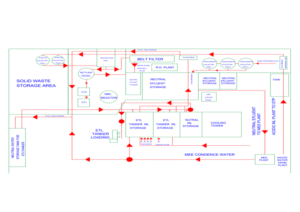
- Batch process is followed till neutral effluent storage tank 1.
- 60 HP pumps are present with a capacity of 80 KL/hr.
- Both the streams are equalized, while the acidic stream is neutralized at the neutralization tank with lime (400-1500 kg).
- The supernatant passes through the belt filter while the sludge is passed to the settling tank and then to CF1 and CF2
- The supernatant is passed to 4 neutral effluent storage tanks one by one through gravity, with capacities 130 Kl, 625 KL, 130 KL, and 60 Kl respectively.
- No Aeration in Neutral effluent storage tanks.
Challenges
Treating high COD was not the actual challenge, but treating the effluent with such high TDS up to 160000 ppm was near impossible, as:
- Conventional biological wastewater treatment struggles at high Total Dissolved Solids (TDS) levels, especially above 10,000–20,000 ppm.
- High TDS creates osmotic stress, impairs enzyme function, and can rupture microbial cell membranes.
- At 160,000 ppm TDS, most microbial communities collapse, making biological COD degradation nearly impossible.
- T1B Aerobio contains specialised, scientifically selected bio cultures that naturally survive and thrive under extreme salinity and high organic loading.
2nd Phase: The Blueprint
After scrutiny and brainstorming with our R&D, we concluded and agreed to transform the existing ETP setup into a fully-functional ASP-based ETP that can treat high COD of effluent with High TDS.
ETP process optimization:
Action Plan:
- Conversion of current tanks into biological tanks for COD reduction
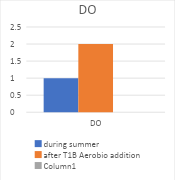
- The Neutral storage tanks of 130 KL AND 625 KL were converted into a biological tank, for which fine bubble diffusers were installed.
- The third neutral effluent storage tank of capacity 130 KL to be used as a clarifier with the provision of recirculation back to the tank of 625 KL through pumps
- Elimination of MEE gradually
- We started with 125 kld flow and eventually took the daily flow to 400 kld.
3rd Phase: Technology and Execution
- Selecting biocultures:
T1B Aerobio
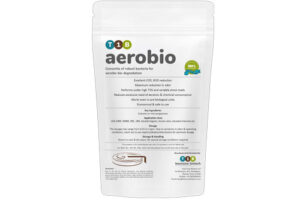
Team One Biotech’s unique microbial preparation “T1B Aerobio” consists of blends of several strains of microorganisms, usually bacteria. These organisms are isolated from nature and are not genetically altered in any way. They are selected based on accelerated reproduction rates and their ability to perform specific functions, such as good floc-forming capabilities, ability to degrade xenobiotic compounds, ability to survive in high TDS, degrade ammonia, sodium acetate, and other nutrients, ability to perform under variable pH & temperature, ability to secrete various enzymes, etc.
T1B SustainX
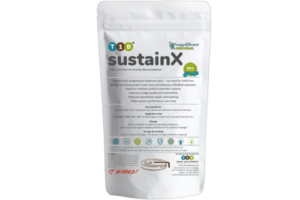
- Our product T1B SustainX is a 100 % replacement of UREA-DAP and other conventional nutrients. It consists:
-
- Organic Carbon → Primary electron donor and carbon source for microbial growth and co-metabolic degradation.
- Total Nitrogen → Essential for amino acids, nucleic acids, and enzyme production, driving biomass formation.
- Phosphate → Supports ATP synthesis, genetic material integrity, and membrane stability.
- Calcium → Strengthens cell walls, stabilizes enzymes, and enhances bio flocculation and sludge settling.
- Magnesium → Key cofactor for ribosomes, ATP handling, and enzyme regulation.
- Sulfur → Needed for sulfur-containing amino acids, coenzymes, and redox balance.
Essential Micronutrient Metal Cofactors + Organic Micronutrient Coenzyme Precursors + Nitrogenous Organic Monomers and Metabolic Precursors
2. Process optimization:
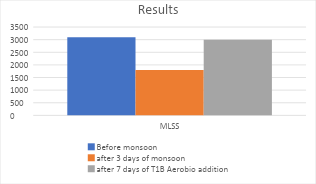
Our target was to achieve MLSS of 3500-4000 in the first 15 days. After that, the WAS was wasted at 15 KLD, and RAS was recirculated at 5 KLD.
Results:
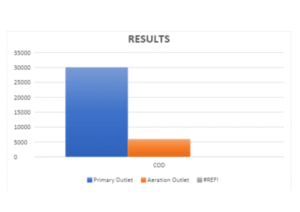
After 60 days of implementation:
| Parameters | Primary Outlet) | Neutral (aeration) tank 2 Outlet | Clarifier Outlet |
| COD (PPM) | 30000 | 6000 | >3500 |
| COD Reduction | – | ~ 80 % | ~ 88 % |
| TDS (PPM) | 160000 | 160000 | 160000 |
MEE elimination:
In 90 days, the MEE was completely eliminated, thereby reducing overall wastewater treatment cost by 62%.
Conclusion
With the combined effect of T1B Aerobio bio culture and T1B SustainX – nutrient source and process optimization, the client achieved an 85-90 % COD reduction efficiency in ETP through the biological system, which further increased after the tertiary system. This translated into:
- Improved microbial activity and settleability.
- Stable effluent quality, meeting compliance standards.
- Bio cultures are effective in high TDS effluents.
This case demonstrates how biology-driven solutions, coupled with system know-how, can deliver tangible performance and cost benefits in industrial wastewater treatment.
Looking to improve your ETP/STP efficiency with the right bioculture?
Talk to our experts at Team One Biotech for customised microbial solutions.
Contact: +91 8855050575
Email: sales@teamonebiotech.com
Visit: www.teamonebiotech.com
Discover More on YouTube – Watch our latest insights & innovations!-
Connect with Us on LinkedIn – Stay updated with expert content & trends!