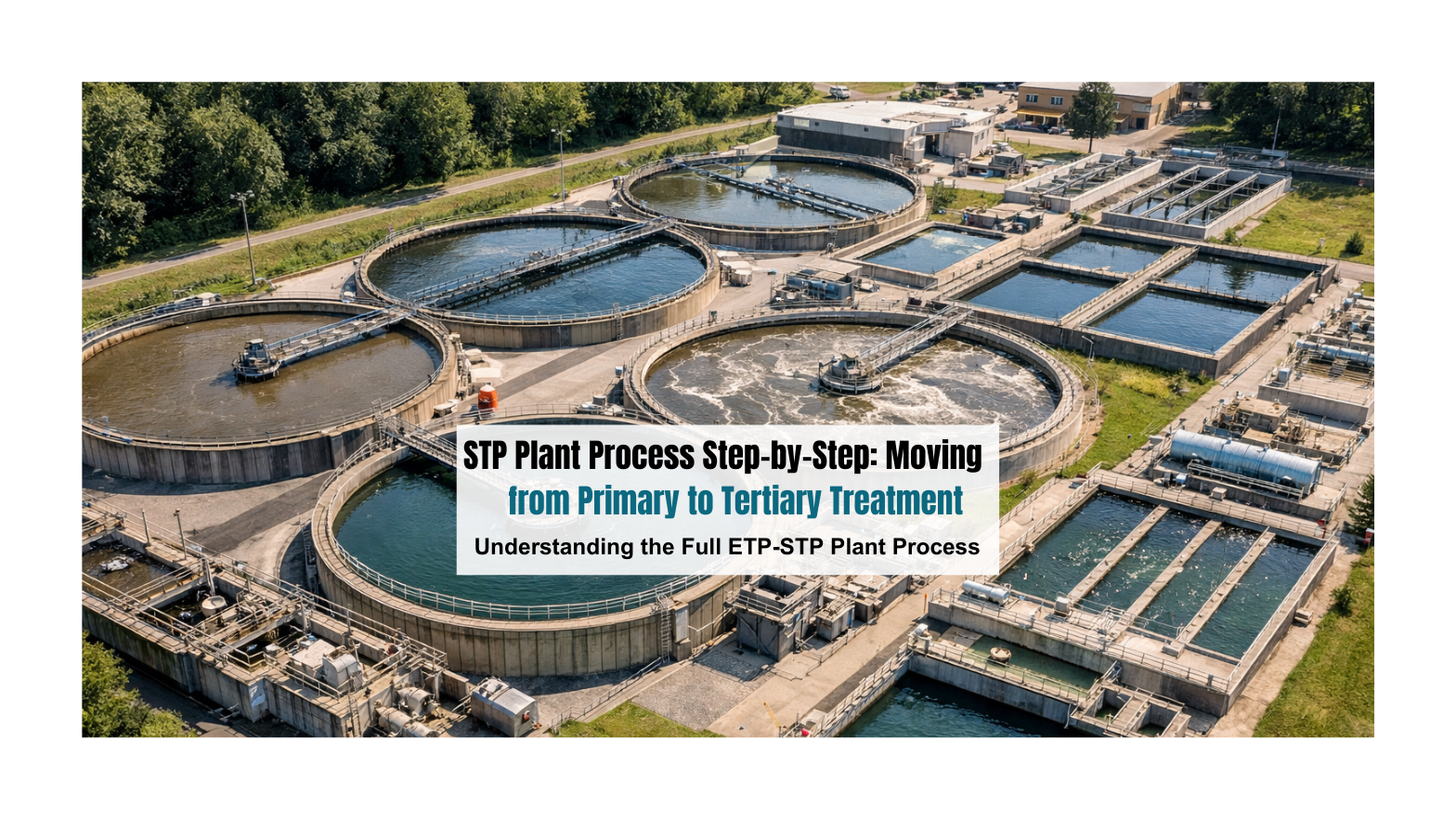
STP Plant Process Step-by-Step: Moving from Primary to Tertiary Treatment
The Stakes Are Higher Than You Think
Most factory managers treat their sewage treatment plant the way they treat a fire extinguisher, essential to have, barely worth thinking about until something goes wrong. That mindset is changing fast, and the reasons are both regulatory and reputational.
CPCB and SPCB inspections have grown sharper. Discharge norms under the Environment Protection Act have tightened. And in water-scarce industrial corridors from Rajasthan to Tamil Nadu, the question isn’t just “are we compliant?” It’s “are we doing this right?” There’s a difference, and that difference now shows up in your operating costs, your audit reports, and eventually, your license renewals.
The best-run plants in India today don’t treat wastewater management as an obligation. They treat it as operational infrastructure. The STP and ETP plant process is as central to their facility as power supply or raw material logistics. When it’s engineered well, it runs silently in the background, protecting margins, protecting permits, and protecting water resources for the communities around them.
You can Read more at The Comprehensive Guide to ETP & STP Design, Process, and Efficiency in India.This article breaks down that process, stage by stage, without oversimplification, and explains where precision biology and smart chemistry can dramatically change your outcomes.
Understanding the Full ETP-STP Plant Process
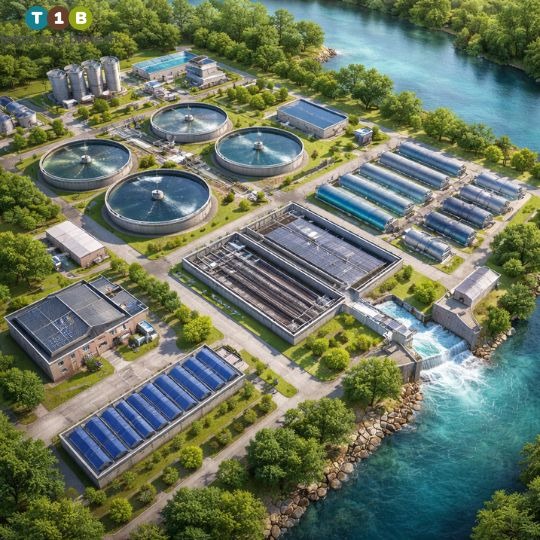
A sewage treatment plant and an effluent treatment plant serve related but distinct purposes. An STP is designed to treat domestic or mixed sewage, primarily organic waste, suspended solids, and pathogens. An ETP is built to handle industrial effluent, which may carry heavy metals, chemical oxygen demand (COD) loads, dyes, or industry-specific contaminants.
For many industrial operators, ETP simply expands to Effluent Treatment Plant, but in practice, the full form explains only a fraction of what the system is expected to do inside a regulated factory environment.
If you want to know more, understand here. ETP Plant Full Form & Functions: A Guide for “Red Category” Industries
In Central Pollution Control Board classification, industries listed under Red Category are those with the highest pollution potential. This includes sectors such as:
- Textile Industry dyeing and processing units
- Pharmaceutical Industry manufacturing plants
- Chemical Industry process facilities
- Paper Industry mills
- Tannery operations
- food processing plants with high organic discharge
For these facilities, an ETP is not just installed for wastewater disposal. It performs four critical operational functions:
Core Functions of an Industrial ETP
- Equalization: Industrial discharge rarely arrives at stable flow or stable chemistry. Equalization tanks absorb production shocks, balancing pH, temperature, COD load, and hydraulic volume before treatment begins.
- Chemical Correction: Unlike domestic sewage, industrial wastewater often requires pH correction, coagulation, flocculation, or oxidation before biological stages can even function properly.
- Toxic Load Reduction: Heavy metals, oils, dyes, solvents, and inhibitory compounds must be reduced before the biological process, otherwise microbial systems collapse.
- Biological Compatibility Creation: In many Red Category plants, the first job of the ETP is not full purification, but making wastewater biologically treatable before it enters downstream secondary systems.
This is where many facilities misunderstand plant design: an STP removes biodegradable sewage efficiently, but an ETP first makes industrial wastewater safe enough to become biologically manageable.
That difference is why Red Category industries cannot rely on sewage-treatment logic alone. Their treatment architecture must be built around effluent chemistry first, biology second.
In most industrial settings, you’re running both. The combined ETP-STP plant process typically flows through three defined treatment stages: primary, secondary, and tertiary. Each stage has a specific job. Skipping or underperforming at any one stage creates compounding problems downstream.
Stage One, Primary Treatment: The Physical Barrier
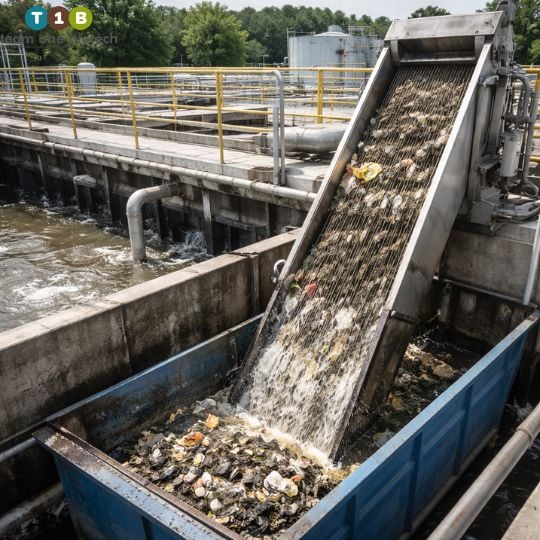
What happens here: The incoming wastewater first passes through a series of physical separation processes. No chemistry, no biology, just mechanical force and gravity doing the work.
The primary stage typically includes:
- Screening and bar screens to remove large debris, rags, plastics, and coarse solids that would otherwise damage pumps and clog downstream equipment
- Grit chambers where flow velocity is deliberately reduced so that sand, gravel, and heavy inorganic particles settle out
- Primary clarifiers or settling tanks where suspended organic solids (called primary sludge) settle to the bottom under gravity, while oils and greases float to the surface and are skimmed off
What it achieves: A well-designed primary stage will remove 50–70% of total suspended solids and 25–35% of BOD (Biochemical Oxygen Demand) before the water even reaches biological treatment.
The Indian context: Plants operating in cities with combined sewer systems, where stormwater and sewage mix, face sudden surge loads during monsoon months. Primary infrastructure needs to be sized with this variability in mind. Under-designed screening systems fail precisely when they’re needed most.
Primary treatment sets the table. The secondary stage is where the real work begins.
Stage Two, Secondary Treatment: Biological Processing and the Activated Sludge Process
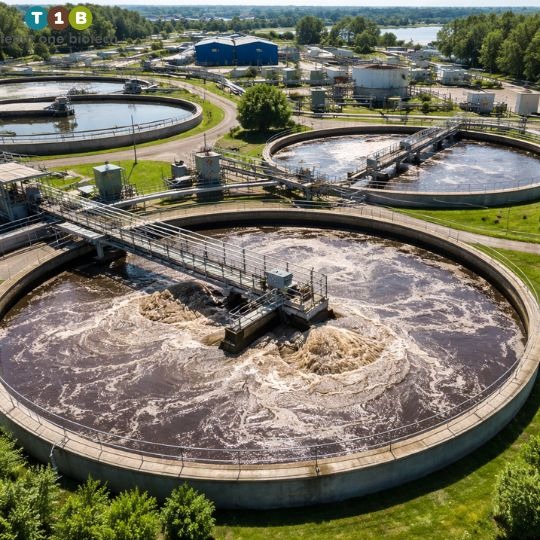
This is the engine of the entire system. Secondary treatment is biological in nature, and its effectiveness depends entirely on maintaining a healthy, active microbial ecosystem inside your treatment tanks.
How the Activated Sludge Process Works
The activated sludge process is the most widely used secondary treatment method in Indian industrial and municipal plants. Here’s the mechanics:
Effluent from the primary stage flows into an aeration tank, where it’s mixed with a concentrated mass of microorganisms, the “activated sludge.” Air is continuously pumped through diffusers at the bottom of the tank, serving two purposes: supplying oxygen for aerobic bacterial metabolism, and keeping the sludge in suspension so microbes stay in contact with incoming organic matter.
The bacteria consume dissolved organics, breaking down BOD and ammonia as their food source. This mixture then flows into a secondary clarifier, where the sludge (now heavier, having fed and multiplied) settles out. A portion of this settled sludge is returned to the aeration tank (Return Activated Sludge or RAS) to maintain microbial population density. The rest is wasted (Waste Activated Sludge or WAS) to control sludge age.
The Variables That Determine Success or Failure
This is where most plants lose control. The activated sludge process is sensitive. It responds to:
- Temperature fluctuations, Microbial activity drops sharply below 15°C. In northern Indian winters, particularly in Haryana, Punjab, and UP industrial belts, unmanaged temperature drops can crash biological performance within days.
- Organic loading variability, A sudden spike in COD or BOD, common when production schedules shift, can overwhelm microbial capacity and cause effluent quality to slip.
- Sludge bulking, When filamentous bacteria overgrow, sludge settles poorly in the clarifier, and you lose your microbial mass through the overflow. This is one of the most common operational crises in Indian STPs.
- Nutrient imbalance, Microbes need a balanced C:N:P ratio. Industrial effluents that are heavy on COD but low in nitrogen or phosphorus will produce a stressed, underperforming biomass.
Managing these variables requires more than a monitoring sheet. It requires active biological management, which brings us to where Team One Biotech’s technology enters the equation.
The Bioremediation Edge: How Team One Biotech Strengthens Your Activated Sludge System
There’s a persistent misconception that biological treatment systems are static, that you install them, seed them, and walk away. Experienced plant operators know better. A biological system is a living infrastructure. It needs the right microbial strains, maintained at the right concentrations, adapted to your specific effluent chemistry.
Team One Biotech’s bioremediation solutions are engineered to do exactly that.
Our proprietary microbial consortia are formulated specifically for Indian industrial conditions, not imported solutions designed for European climates and wastewater chemistry. The strains we deploy are:
- Selected for thermal resilience, maintaining metabolic activity across the temperature ranges typical in Indian plant environments
- Capable of accelerated COD and BOD reduction, shortening hydraulic retention times and improving throughput
- Designed to suppress filamentous bulking organisms, directly addressing one of the most disruptive failure modes in activated sludge systems
- Proven to reduce excess sludge generation by 25–40%, which translates directly into lower dewatering costs, reduced disposal frequency, and less pressure on sludge handling infrastructure
When integrated into your aeration tank as part of a structured bioaugmentation program, these cultures don’t compete with your native biomass, they reinforce it. The result is a more stable, more resilient biological stage that holds its performance even under load variations.
If your plant is struggling with sludge volume, inconsistent effluent quality, or seasonal performance dips, this is the conversation worth having.
Talk to our technical team about a plant-specific bioaugmentation assessment. We’ll review your current activated sludge data and identify the intervention points that will deliver the highest operational return.
Stage Three, Tertiary Treatment: Advanced Filtration and Compliance-Grade Output
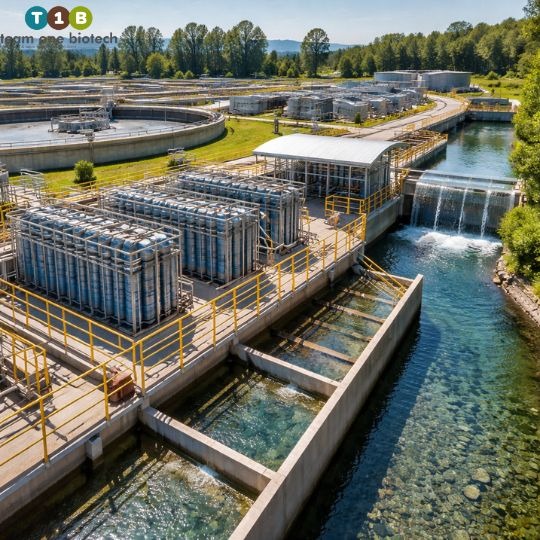
Once secondary treatment is complete, the effluent has been biologically cleaned but still carries residual suspended solids, trace organics, nutrients, and microbial content. Tertiary treatment is where you take it the rest of the way.
What Tertiary Treatment Includes
Filtration: Sand filters, multimedia filters, or membrane-based ultrafiltration remove fine suspended particles that passed through secondary clarification. For plants targeting Zero Liquid Discharge compliance, ultrafiltration becomes the bridge to the membrane bioreactor (MBR) or reverse osmosis (RO) stages.
Nutrient removal: Biological or chemical denitrification and phosphorus removal are increasingly mandated by SPCB for effluent being discharged into sensitive water bodies. Plants located near rivers or lakes in ecologically sensitive zones face these requirements directly.
Disinfection: Chlorination, UV disinfection, or ozonation eliminates residual pathogens. For STP operators targeting reuse of treated water, for cooling towers, horticulture, or toilet flushing, disinfection quality determines reuse eligibility under CPCB recycled water norms.
ZLD Integration: In water-stressed industrial regions, Kutch, Rajasthan’s industrial estates, parts of Maharashtra’s Vidarbha belt, Zero Liquid Discharge is no longer optional. It’s a business continuity requirement. A properly sequenced tertiary treatment train, followed by evaporation and crystallization, allows plants to recover and reuse nearly all process water. Team One Biotech designs tertiary programs that integrate with ZLD targets from the ground up, not as afterthoughts.
Compliance Is the Floor. Performance Is the Goal.
CPCB and SPCB compliance sets your minimum. But the plants that are building operational advantage right now are the ones treating their STP and ETP as strategic assets, engineering them to produce consistent, reusable, high-quality treated water rather than barely-acceptable discharge.
The difference between a compliant plant and a high-performing plant often comes down to biological health in the secondary stage and the quality of tertiary polishing. Both are areas where the right technical partnership changes the math significantly.
Explore how Team One Biotech’s bioremediation products can be integrated into your existing activated sludge system. Whether you’re retrofitting an aging plant, scaling up to meet new production volumes, or building from scratch, our technical team can define the right biological strategy for your effluent profile.
Partner With India’s STP and ETP Industrial Powerhouse
Team One Biotech has built its reputation on one principle: wastewater treatment should work as reliably as any other piece of your plant infrastructure. Not seasonally, not approximately, not on paper. Reliably.
From primary screening to ZLD-ready tertiary treatment, from activated sludge stabilization to sludge volume reduction, we bring 15 years of Indian industrial field experience to every plant design, optimization, and audit we undertake.
Your facility deserves a system that doesn’t just meet standards, it sets them.
Contact Team One Biotech today to schedule a plant assessment, discuss a bioremediation integration plan, or explore full ETP-STP design services. The conversation costs you nothing. The operational clarity it delivers is worth considerably more.
Looking to improve your ETP/STP efficiency with the right bioculture?
Talk to our experts at Team One Biotech for customised microbial solutions.
Contact: +91 8855050575
Email: sales@teamonebiotech.com
Visit: www.teamonebiotech.com
Discover More on YouTube – Watch our latest insights & innovations!-
Connect with Us on LinkedIn – Stay updated with expert content & trends!