

PGPR for Farmers: Practical Application and Crop Yield Guide
Every season, the numbers tell a harder story. Input costs climb. Soil that once responded generously to fertilizer now demands more and gives back less. Yields plateau even as you spend more per acre. If this sounds familiar, you are not alone, progressive farmers across India are facing the same quiet crisis: a soil that has been pushed too hard for too long.
The dependency on synthetic chemical fertilizers built over decades has delivered short-term results at a long-term cost. Soil biology, the invisible, living engine beneath your crops, has slowly been depleted. The microorganisms that once made nutrients available, protected roots from disease, and kept soil structure healthy have been crowded out by chemicals that do the job fast but leave nothing behind.
This is where nature offers a quiet answer that science has now made reliable and accessible. Plant growth promoting rhizobacteria, commonly known as PGPR, are beneficial soil bacteria that have existed in agricultural ecosystems for thousands of years. They live at the root zone, work with your crops, and deliver measurable benefits without the long-term soil damage that comes with chemical over-dependence.
This guide will walk you through everything you need to know: the PGPR full form and what it means, how these bacteria actually work inside your soil, how to apply PGPR biofertilizer correctly across different crops, and what results you can realistically expect. Whether you are a farmer looking to lower input costs, an agronomist advising on integrated nutrition, or an agri-input dealer building your biological product portfolio, this is your practical, ground-level guide.
What Is PGPR?, PGPR Full Form and Definition

PGPR full form is Plant Growth Promoting Rhizobacteria. Breaking that name down tells you almost everything: these are bacteria (rhizobacteria) that live in the rhizosphere, the narrow zone of soil surrounding and directly influenced by plant roots, and that actively promote plant growth through a range of biological mechanisms.
These are not engineered organisms or synthetic compounds. Plant growth promoting rhizobacteria are naturally occurring microbes that have co-evolved with crops over millennia. What modern agriculture has done is identify the most effective strains, culture them at industrial scale, and deliver them to your farm in a stable, field-ready format.
PGPR falls squarely in the category of bio inputs, biological products for agriculture that work with the soil ecosystem rather than overriding it. In India, PGPR biofertilizers are regulated under the Fertilizer Control Order (FCO), which sets quality standards for microbial count, safety from pathogens, and shelf life. This matters for you as a buyer: FCO-compliant products have been tested and must meet minimum standards before reaching your hands.
It is worth stating clearly, PGPR is not a chemical fertilizer substitute that simply replaces one bag with another. It is a living biological product that, once established in your soil, continues to work through the growing season and beyond, building a healthier soil ecosystem over time.
Key terms to understand:
- Rhizosphere, the soil zone immediately around plant roots, where most microbial activity happens
- Bio inputs, biological products for agriculture including biofertilizers, biopesticides, and microbial inoculants
- Inoculant, a product containing live beneficial microorganisms applied to seeds, soil, or roots
How PGPR Works, The Science Behind the Soil, Simplified
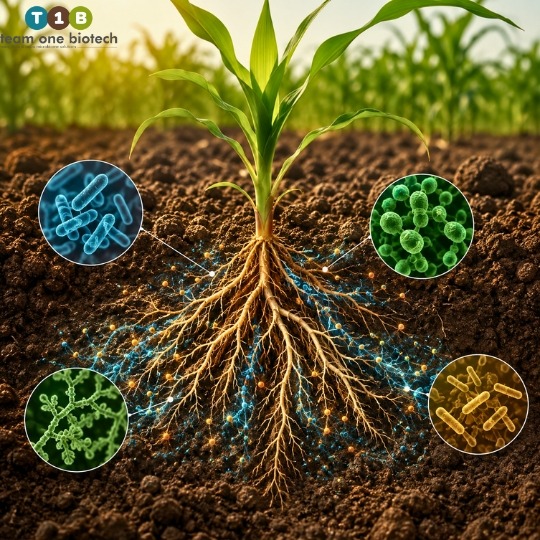
Understanding how PGPR works does not require a microbiology degree. What matters to you as a farmer is what changes on your farm, in your roots, your soil, your yield, and your input bill. Here are the four primary ways that plant growth promoting rhizobacteria deliver results.
Nitrogen Fixation
Nitrogen is the nutrient your crops demand most, and synthetic nitrogen fertilizers are typically your single largest input cost. Certain PGPR strains have the biological ability to fix atmospheric nitrogen, pulling N₂ from the air (which makes up about 78% of the atmosphere) and converting it into a form your plants can actually absorb.
When these bacteria colonize your root zone effectively, they supplement the nitrogen supply your crops need from the soil itself. Over time, consistent PGPR application can meaningfully reduce your synthetic nitrogen requirement. Lower nitrogen input means lower cost per acre, less soil acidification, and reduced risk of nutrient runoff into waterways. For pulse and legume crops especially, nitrogen-fixing PGPR strains work in powerful synergy with existing root nodule bacteria to maximize this effect.
Phosphate Solubilization
Phosphorus is a nutrient that plays a critical role in root development, flowering, and grain formation. The challenge is that in many Indian soils, particularly those with a long history of fertilizer use, large quantities of phosphorus have accumulated over the years, but in forms that are chemically locked and unavailable to plant roots.
PGPR strains with phosphate-solubilizing ability produce organic acids that break these locked phosphate compounds apart, releasing phosphorus in a plant-available form. This effectively unlocks a nutrient reserve that already exists in your soil but has been sitting there unused. Farmers who apply phosphate-solubilizing PGPR often find they can reduce applied phosphatic fertilizer while maintaining or improving root development and crop formation.
Phytohormone Production
PGPR produces natural plant growth hormones, including auxins, gibberellins, and cytokinins, that directly influence how your crops grow at the cellular level. Auxins, in particular, stimulate root elongation and branching, meaning treated plants develop a larger, more extensive root system early in the growing season.
Why does root architecture matter? More roots mean greater access to soil volume, which translates directly into better water uptake during dry spells, more efficient nutrient absorption throughout the crop’s life, and greater overall resilience under stress. Crops with stronger root systems established early in the season tend to perform more consistently, especially important when rains are unpredictable or soil moisture varies across your field.
Biocontrol, Natural Disease Suppression at the Root Zone
A number of PGPR strains produce natural antibiotic and antifungal compounds that create a protective biological environment around plant roots. This is known as induced systemic resistance, the plant itself is primed to resist pathogen attack, and the bacterial community around its roots acts as a first line of biological defense.
This does not mean PGPR replaces your crop protection program entirely, but in many situations it can reduce the disease pressure at the root zone, particularly from soil-borne fungal pathogens that cause damping-off, root rot, and wilt. For crops grown in soils with a history of these issues, a biocontrol-active PGPR strain can be a meaningful part of your integrated crop management approach.
PGPR Biofertilizer Application, A Practical Step-by-Step Guide for Farmers
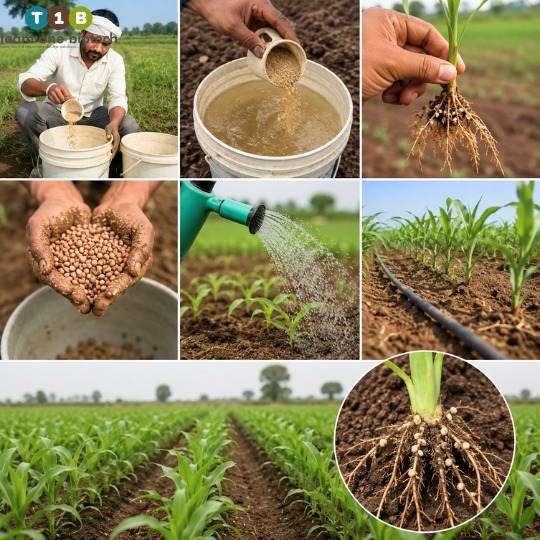
This is the section most farmers bookmark. Knowing what PGPR does is valuable, knowing how to apply it correctly is what determines whether you see results. PGPR biofertilizer application is straightforward, but a few key steps make the difference between bacteria that thrive and establish versus bacteria that never get the chance to work.
Disclaimer: Application rates, dilution ratios, and timing guidelines mentioned here are general in nature. Actual values may vary significantly depending on soil type, crop variety, climatic conditions, product formulation, and manufacturer recommendations. Always refer to the product label and consult a certified agronomist or agricultural extension officer before application.
Step 1: Choose the Right PGPR Strain for Your Crop
Not all PGPR strains are equal, and not every strain delivers every benefit for every crop. Before you buy, understand what you are trying to achieve: Do you need nitrogen fixation for a cereal crop? Phosphate solubilization for a vegetable crop with phosphorus-rich soil? Biocontrol activity for a field with wilt history?
Talk to your agri-input supplier, consult your agricultural extension officer, or reach out to the manufacturer’s technical team. Strain selection aligned to your crop type and local soil conditions is the foundation of effective PGPR biofertilizer application.
Step 2: Seed Treatment, The Most Common and Effective Method
Seed treatment ensures that beneficial bacteria are placed exactly where they need to be from the moment germination begins, right at the emerging root tip.
To treat seeds: mix your PGPR biofertilizer product with a small quantity of clean water to create a slurry of the consistency required by the product label. Coat your seeds evenly, making sure every seed surface makes contact with the inoculant. Spread treated seeds in a shaded area and allow them to air-dry before sowing, do not expose them to direct sunlight or high temperatures.
One critical point: avoid mixing PGPR seed treatment with chemical fungicide seed treatments at the same time. Chemical seed dressings can significantly reduce bacterial viability, which defeats the purpose of the application. If you must use both, apply them at separate stages or consult your supplier about compatible combinations.
Step 3: Soil Application, Drench or Band Placement
For crops where seed treatment is not practical, or for additional soil-level inoculation, PGPR can be applied as a soil drench near the root zone. This method works well at planting time or during the early vegetative growth stage when root systems are actively expanding.
Apply in moist soil conditions, bacteria need moisture to move through the soil and colonize root surfaces. Avoid applying during peak heat hours when soil surface temperatures are high; early morning or late afternoon application preserves bacterial viability. For best results, incorporate the applied PGPR into the top few inches of soil rather than leaving it exposed on the surface.
Step 4: Root Dipping for Transplanted Crops
If you are growing transplanted crops, paddy seedlings, vegetable seedlings, sugarcane setts, root dipping is one of the most efficient delivery methods available. Before transplanting, dip the roots of your seedlings into a diluted PGPR solution for the duration recommended on the product label.
This places live bacteria directly at the root-soil interface at the exact moment transplanting creates a new root-soil relationship. Establishment is faster, stress from transplant shock is often reduced, and the bacteria have the best possible start in their new environment.
Step 5: Storage, Timing, and Shelf Life
PGPR products contain live organisms. Their viability, and therefore their effectiveness, depends on correct storage and timely use. Store products in cool, dry conditions away from direct sunlight and heat. Check the product’s manufacturing date and shelf life before purchase and before use.
Apply PGPR before or at the time of sowing wherever possible. Early inoculation gives bacteria the maximum time to establish in the root zone before crop nutrient demand peaks. Do not stockpile PGPR products across seasons, fresh product with a verified viable count gives you the results you are paying for.
Which Crops Benefit Most from PGPR?
One of the most common questions farmers ask is whether PGPR will work for their specific crop. The honest answer is that plant growth promoting rhizobacteria have demonstrated benefits across a wide range of crop categories, though the magnitude of benefit depends on the PGPR strain selected, soil type, and local growing conditions.
Crop categories where PGPR has shown consistent positive results include:
- Cereals and grains, paddy, wheat, and maize respond well to nitrogen-fixing and phytohormone-producing strains, often showing improved tillering and root biomass
- Pulses and legumes, soybean, chickpea, moong, lentils, and other legumes show particularly strong synergy with nitrogen-fixing PGPR, working alongside native root nodule bacteria to maximize biological nitrogen contribution
- Vegetables and horticulture crops, phosphate-solubilizing strains often deliver visible improvements in root development and fruit set in vegetable crops
- Cash crops, sugarcane and cotton benefit from the combination of improved nutrient availability and natural root zone protection that PGPR strains deliver
- Orchard and plantation crops, longer-cycle crops like mango, pomegranate, and banana respond to PGPR’s soil biology-building effect over multiple seasons
It is reasonable to set expectations appropriately: PGPR’s effects are cumulative and build over seasons. First-season benefits are real but often most visible in root development and plant health. Yield improvements tend to compound as soil biology strengthens over successive applications.
PGPR vs. Chemical Fertilizers, Why Bio Inputs Are the Smarter Long-Term Choice

This is not a debate about eliminating chemical fertilizers overnight. For most farming systems, the transition to bio-input reliance is gradual and strategic. What matters is understanding what each input does to your soil over time, and making decisions accordingly.
| Factor | Chemical Fertilizers | PGPR Bio Inputs |
| Speed of effect | Fast, nutrient delivery within days | Moderate, establishes over weeks |
| Long-term soil health | Depletes soil biology with repeated use | Builds living soil ecosystem |
| Cost over time | Rising as soil dependency increases | Reduces synthetic fertilizer requirement |
| Residue compliance | Chemical residue risk in produce | Clean label, residue-free produce |
| Organic certification | Not compatible | Supports certification pathway |
| Soil biology | Disrupts microbial communities | Actively rebuilds microbial diversity |
The real competitive advantage of PGPR lies in what chemical fertilizers cannot deliver: a living soil that works for your crops independently. As regulatory frameworks tighten, export market buyers increasingly demand residue-free produce, and organic premium prices continue to grow, PGPR adoption is increasingly a business decision, not just an environmental philosophy.
Biological products for agriculture like PGPR are also FCO-compliant and compatible with organic certification pathways, which opens your produce to premium market segments that chemical-input farming simply cannot access.
Regulatory Compliance, What Farmers and Agri-Input Dealers Should Know
If you are purchasing PGPR biofertilizer products in India, the Fertilizer Control Order (FCO) is the regulatory framework that governs their quality and safety. FCO-registered biofertilizer products must meet minimum standards for viable microbial count, be free from pathogenic organisms, and carry accurate labeling that includes strain information, shelf life, and application guidance.
As a buyer, whether you are a farmer purchasing for your own fields or a dealer building your biological product portfolio, FCO compliance on the label is your first and most important verification step. It tells you that the product has been manufactured to a defined quality standard and has been tested for safety.
For agri-input dealers, stocking FCO-compliant biological products for agriculture also protects your business from liability and builds trust with the progressive farming communities you serve. Demand for quality bio inputs is growing rapidly, and verified, compliant products are the foundation of a credible biological portfolio.
Team One Biotech’s PGPR products are manufactured in compliance with applicable agricultural bio-input standards, giving both farmers and dealer partners the confidence of regulatory alignment.
Frequently Asked Questions About PGPR
Q1: What is the full form of PGPR?
PGPR full form is Plant Growth Promoting Rhizobacteria. These are naturally occurring beneficial bacteria that colonize the root zone of plants and promote growth through nitrogen fixation, phosphate solubilization, phytohormone production, and biocontrol activity.
Q2: Is PGPR safe for all crops and soils?
PGPR is generally safe across a wide range of crops and soil types, but the effectiveness of a specific product depends significantly on strain selection. Different strains perform better in different soil conditions and with different crops. It is always advisable to consult an agricultural extension officer or the manufacturer’s technical team to match the right strain to your specific situation.
Q3: Can PGPR replace chemical fertilizers completely?
In most farming situations, PGPR works best as part of an integrated nutrient management approach rather than as a complete replacement for synthetic fertilizers. Whether full replacement is possible depends on your soil’s existing biology, crop nutrient demand, and growing season conditions. Over multiple seasons of consistent PGPR application combined with reduced chemical inputs, many farmers find their dependence on synthetic fertilizers decreasing significantly.
Q4: How long does it take to see results from PGPR application?
Early-season benefits, particularly in root development, seedling vigor, and early vegetative growth, are often visible within the first few weeks of the growing season. Yield improvements tend to be cumulative, with more pronounced results appearing across multiple seasons as soil biology strengthens and bacterial populations establish more effectively. PGPR is a long-term investment in soil health, not a single-season quick fix.
Q5: Where can farmers buy quality PGPR biofertilizer?
Quality PGPR biofertilizer is available through certified agri-input dealers and directly from manufacturers like Team One Biotech. Always verify FCO compliance on the product label before purchase, and confirm that the product is within its shelf life with a viable microbial count that meets the minimum standard. Buying from a known, compliant manufacturer protects your investment and your crops.
Give Your Soil the Biology It Deserves
Farming has always been about working with nature. Chemical fertilizers gave us a powerful tool to override nature’s pace, but that speed came at a cost that is now visible in compacted, biologically depleted soils that demand more inputs every season just to maintain the same output.
PGPR gives you a path back to farming with the soil rather than against it. Three things are worth taking away from this guide. First, plant growth promoting rhizobacteria is a science-backed, FCO-compliant bio input that belongs in your integrated nutrient management strategy, not as a last resort, but as a deliberate, forward-thinking choice. Second, PGPR improves nutrient availability, builds root health, and provides natural disease resistance at the root zone in ways that synthetic fertilizers simply cannot replicate. Third, proper application method, strain selection, and timing are what determine whether you see real results, take those steps seriously, consult the label, and bring in expert guidance when needed.
The soil beneath your fields is not a dead medium for chemical delivery. It is a living ecosystem that, when supported correctly, works for your crops around the clock through every growing season.
Ready to bring the power of plant growth promoting rhizobacteria to your fields? Connect with Team One Biotech today and discover PGPR biofertilizer solutions built for Indian farming conditions. Talk to Our Agri-Input Experts
Are you an agri-input dealer or distributor looking to add high-demand biological products for agriculture to your portfolio? Partner with Team One Biotech and give your customers the bio inputs the market is asking for. Enquire About Bulk Supply
Disclaimer: The values, ranges, and application guidelines mentioned in this article are indicative and general in nature. Actual results, dosage requirements, and application protocols may vary based on soil type, crop variety, agro-climatic conditions, and specific product formulation. Always refer to the manufacturer’s product label and consult a certified agronomist or agricultural extension officer before use. Team One Biotech’s products are manufactured in compliance with applicable agricultural bio-input regulations.
Looking to improve your ETP/STP efficiency with the right bioculture?
Talk to our experts at Team One Biotech for customised microbial solutions.
Contact: +91 8855050575
Email: sales@teamonebiotech.com
Visit: www.teamonebiotech.com
Discover More on YouTube – Watch our latest insights & innovations!-
Connect with Us on LinkedIn – Stay updated with expert content & trends!