
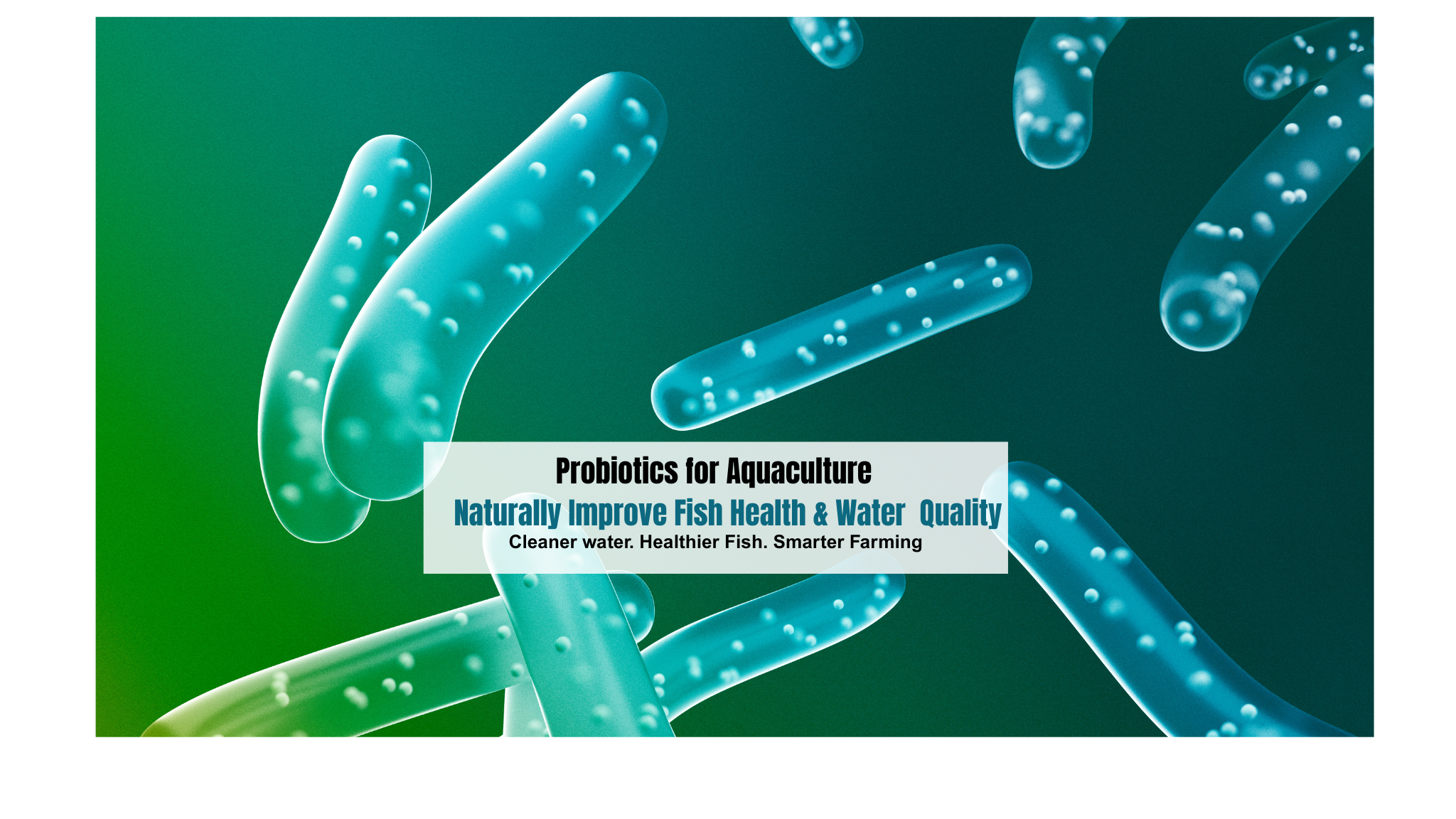
Probiotics for Aquaculture: A Natural Way to Improve Fish Health and Water Quality
Looking to enhance your aquaculture productivity and water quality naturally? Contact Team One Biotech today for expert guidance and high-performance microbial products.
Team One Biotech – a leading biotech company in India – explains how probiotics and bioculture for wastewater treatment are transforming aquaculture farming into a more sustainable and eco-friendly system.
Aquaculture, or fish farming, has rapidly grown into one of the world’s most important food-producing sectors. Yet, maintaining healthy aquatic environments remains a challenge for many farmers. Excess feed, poor water circulation, and disease outbreaks can severely affect production.
Earlier, antibiotics and chemical treatments were widely used to combat these problems — but they often led to antibiotic resistance, toxic residues, and long-term ecological harm. That’s why modern aquaculture is moving toward probiotic-based bioculture systems — a natural, safe, and sustainable solution.
What Are Probiotics in Aquaculture?
Probiotics are live beneficial microorganisms (mostly bacteria and yeast) that, when introduced into water or feed, help maintain a healthy microbial balance in aquaculture systems.
They:
- Break down organic waste and excess feed
- Reduce toxic gases like ammonia and hydrogen sulfide
- Improve fish digestion and nutrient absorption
- Enhance immunity and disease resistance naturally
At Team One Biotech, these probiotics are developed using naturally selected bacterial strains that are safe, highly active, and effective under Indian climatic conditions. They can be applied in fish ponds, shrimp farms, hatcheries, and biofloc systems for optimal results.
How Do Probiotics Work in Aquaculture Farming?
- Improving Water Quality
Probiotics degrade organic matter, uneaten feed, and sludge at the pond bottom — keeping water clear and balanced. They lower BOD (Biochemical Oxygen Demand) and COD (Chemical Oxygen Demand) while maintaining healthy oxygen levels.
- Enhancing Fish Immunity
Beneficial bacteria colonize the gut of fish and shrimp, outcompeting harmful pathogens. This strengthens the immune system and reduces dependence on antibiotics.
- Better Feed Conversion
By improving gut health, probiotics enable fish to absorb nutrients more efficiently, resulting in faster growth and better Feed Conversion Ratio (FCR).
- Reducing Odour and Sludge
Microbial activity helps remove foul odours and reduce sludge buildup at the pond bottom, promoting healthier pond conditions and reducing pollution impact.
Team One Biotech’s Probiotic Range for Aquaculture
Team One Biotech’s probiotic formulations are designed to improve both water quality and gut ecosystems. Each product serves a unique purpose depending on the aquaculture setup.
| Product Name | Use Case | Key Benefits |
| T1B™ Acqua S | Shrimp (P. vannamei, P. monodon) | Reduces ammonia, nitrite, phosphate; lowers BOD/COD; controls harmful bacteria and boosts survival rates. |
| T1B™ Acqua F | Fish farming | Improves nutrient cycling, water quality, and supports healthier, faster fish growth. |
| T1B™ Feed Pro | Feed additive | Enhances digestion, immunity, and nutrient assimilation in fish and shrimp. |
| T1B™ Bio Floc | Biofloc systems | Stimulates beneficial microbial flocs, stabilizes pond microbiome, and optimizes feed conversion. |
| T1B™ MacMi Aqua | General aquaculture | Broad-spectrum probiotic that maintains microbial balance in both water and feed. |
Explore full range: Probiotics for Aquaculture by Team One Biotech.
How to Use Team One Biotech Probiotics
- Water Application: Dissolve the probiotic in clean water and spread evenly across the pond.
- Feed Application: Mix Feed Pro or MacMi Aqua with feed to seed beneficial gut microbes.
- Biofloc Setup: Use Bio Floc regularly to maintain active microbial communities.
- Combined Usage: Use both water and feed probiotics for complete pond management.
Best Practices for Maximum Effectiveness
- Begin probiotic application early — ideally before or right after stocking.
- Avoid applying disinfectants within 24 hours of probiotic use.
- Maintain proper aeration for optimal microbial activity.
- Monitor water parameters (ammonia, nitrite, DO, pH).
- Use consistently to maintain a balanced ecosystem.
Benefits of Using Probiotics for Aquaculture
- Improved water clarity and quality
- Reduced disease outbreaks
- Better growth rate and survival
- Lower feed cost and sludge management
- Safe for fish, humans, and the environment
- Supports bioculture for wastewater treatment and sustainable aquaculture
Why Choose Team One Biotech?
Team One Biotech is a trusted Indian biotech company specializing in bioculture for wastewater treatment, agriculture, and aquaculture.
Their products are R&D-driven, eco-safe, and deliver measurable results — ensuring farmers achieve long-term sustainability and profitability.
Frequently Asked Questions (FAQs)
- How often should I apply probiotics in fish ponds?
Ideally, probiotics should be applied once every 3–5 days, depending on the water condition and stocking density. - Can probiotics replace aeration systems?
No, probiotics work best alongside aeration. Oxygen helps beneficial microbes thrive and function efficiently. - Are probiotics safe for shrimp larvae and hatcheries?
Yes, Team One Biotech probiotics are formulated for all life stages — from hatchery to harvest — and are completely non-toxic. - Will probiotics reduce the need for antibiotics?
Yes. Regular use builds a healthy microbial environment and strong fish immunity, minimizing disease outbreaks naturally. - Can I use multiple probiotic products together?
Yes, products like T1B Acqua S and T1B Feed Pro can be used together for comprehensive water and gut management. - Do probiotics work in saline or brackish water?
Team One Biotech probiotics are effective across different salinity levels, making them ideal for both freshwater and marine systems. - How long do probiotics take to show results?
Visible improvements in water clarity and odour are usually observed within 3–5 days of consistent application.
As one of the leading biotech companies in India and trusted bioremediation companies in India, Team One Biotech continues to deliver solutions that redefine sustainability across wastewater treatment, agriculture, aquaculture, and hygiene management.
Email: sales@teamonebiotech.com
Visit: www.teamonebiotech.com
Discover More on YouTube – Watch our latest insights & innovations!-
Connect with Us on LinkedIn – Stay updated with expert content & trends!


