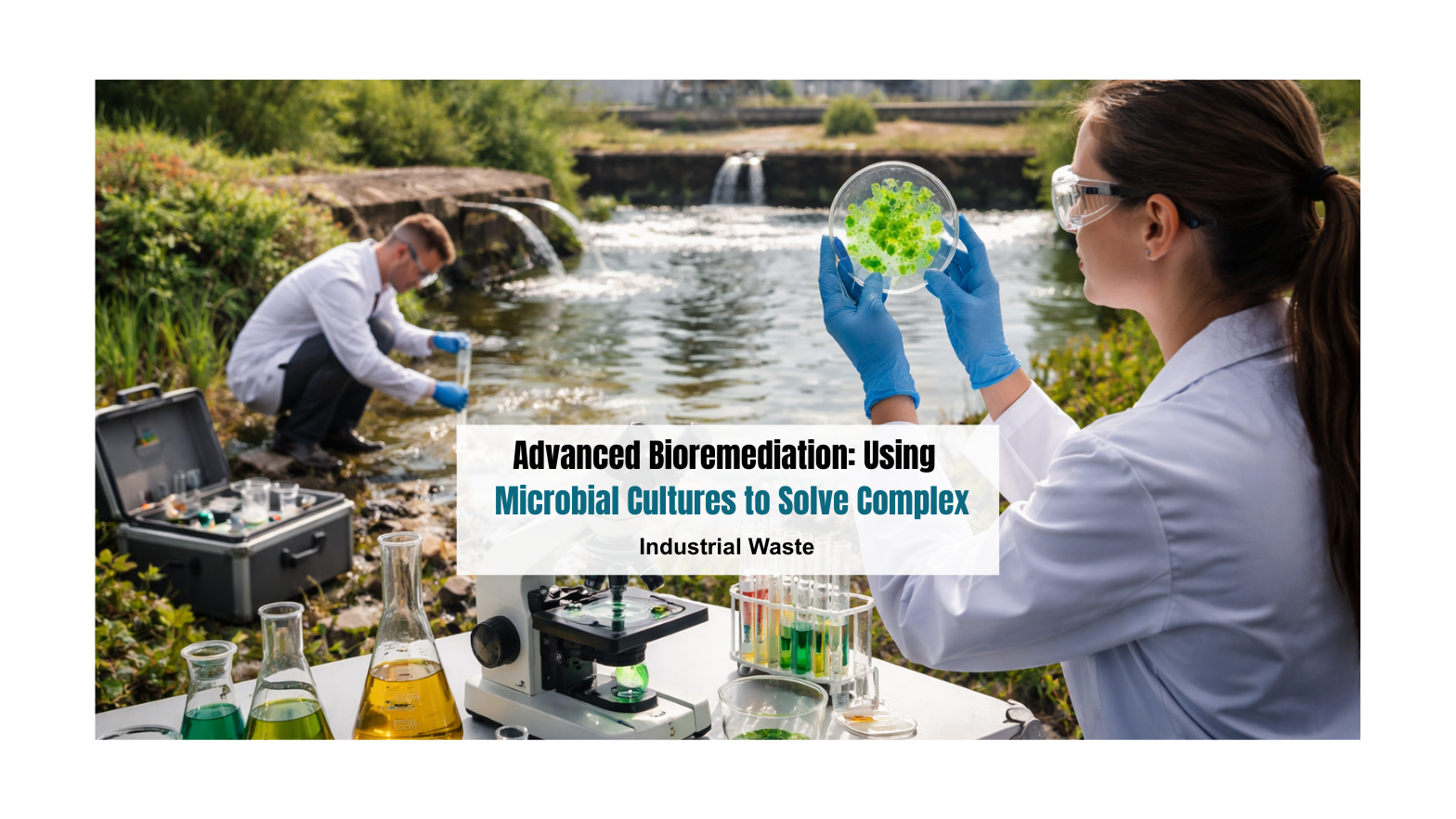
Advanced Bioremediation: Using Microbial Cultures to Solve Complex Industrial Waste

The Pressure Is Real, And It Is Getting Worse

It is 11 PM on a Tuesday, and the plant manager of a textile dyeing unit in Tirupur is staring at a compliance notice from the Tamil Nadu Pollution Control Board. The ETP is struggling. Sludge disposal costs have doubled in the past eighteen months. The tanker contractors are demanding more money. The landfill sites that used to accept industrial sludge without much paperwork are now suddenly asking for detailed hazardous waste manifests.

And somewhere in the back of his mind, he is wondering, is there a better way?

If you are reading this, you probably know that feeling. Whether you are running a pharma manufacturing plant in Hyderabad’s Genome Valley, managing a tannery operation in Kanpur’s Jajmau industrial belt, or overseeing a chemicals unit in Ankleshwar, the story is disturbingly familiar. Industrial effluent management in India is no longer a background operational task. It has become a front-line business risk.

The Central Pollution Control Board and State Pollution Control Boards across the country have significantly tightened discharge norms over the past several years. The zero liquid discharge mandate, the push for real-time online monitoring of ETPs, and the rising cost of sludge transportation and disposal have collectively made the old approach, pump it through a conventional ETP, pay someone to haul away the sludge, and hope for the best, both economically unsustainable and legally dangerous.

At Team One Biotech, we have been working directly inside these industrial environments for years. What we consistently observe is that most plants are treating their biological treatment systems as an afterthought, a box to tick, rather than as an engineered solution that can actively reduce costs, reduce risk, and transform waste into a manageable output. One such engineered approach involves using Microbial Cultures to Solve Complex Industrial Waste, which targets the root cause of treatment inefficiency. The problem is not just the effluent. It is the thinking around it.

This post is our attempt to change that thinking.

The Science of Microbial Bioremediation: What Is Actually Happening in Your ETP
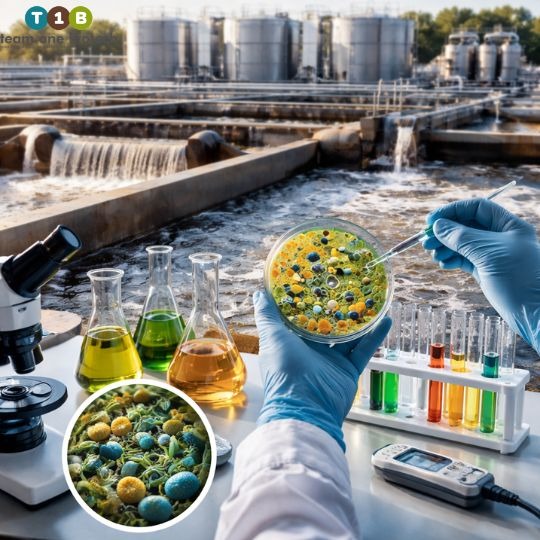
Most plant managers and even many ETP operators think of their biological treatment stage in simple terms: bacteria eat the waste, the BOD drops, the water looks cleaner. That is not wrong, exactly, but it misses the extraordinary complexity, and the extraordinary opportunity, that exists within a properly engineered microbial system.

How Microorganisms in Bioremediation Break Down Complex Compounds

Microorganisms in bioremediation are not a homogenous group. They are a carefully assembled consortium of bacterial species, fungi, and in some advanced applications, archaea, each performing a specific biochemical function in a metabolic relay race.

Consider what happens when a textile effluent from a reactive dyeing process enters a biological treatment stage. The effluent contains not just colour, it contains long-chain azo compounds, surfactants, sizing agents, and residual fixatives. These are complex organic polymers, and no single microbial species can break all of them down.

Here is how a well-engineered consortium handles it:

  • Hydrolytic bacteria attack the large polymer chains first, producing smaller, soluble organic molecules through enzymatic hydrolysis. Think of them as the initial demolition crew.
  • Acidogenic bacteria then convert those smaller molecules into volatile fatty acids, alcohols, and gases. The effluent’s chemistry is shifting at this stage.
  • Acetogenic bacteria further convert these intermediates into acetic acid, hydrogen, and carbon dioxide, the primary feedstocks for the final stage.
  • Methanogenic archaea (in anaerobic systems) or aerobic heterotrophs (in aerobic systems) then complete the mineralisation, converting organic carbon into carbon dioxide, water, and, in anaerobic systems, biogas.

What makes this process remarkable is its adaptability. A properly cultured and acclimated microbial consortium can be trained, over time, to handle the specific chemical fingerprint of your effluent. This is not a generic commodity product, it is a living, adaptive system.

The Role of Enzymatic Activity in Complex Polymer Breakdown

One of the most underappreciated aspects of microbial bioremediation is the enzymatic component. Microorganisms secrete extracellular enzymes, laccases, peroxidases, azoreductases, that can degrade specific molecular structures before the organisms even ingest them. In textile effluents, laccase-producing organisms have been shown to achieve colour degradation that no chemical coagulant can match, and at a fraction of the cost.

In pharmaceutical effluents, particularly the antibiotic and API manufacturing clusters around Hyderabad, enzymatic breakdown is critical because many active pharmaceutical ingredients are specifically designed to resist biological degradation. Specialised microbial cultures with enhanced hydrolase and oxygenase activity are required, and standard wastewater treatment bacteria simply do not have these enzymatic pathways.

This is the difference between deploying a generic biological treatment product and deploying a targeted microbial solution engineered for your specific effluent matrix.

Anaerobic Process vs. Aerobic Process: Choosing the Right Biological Treatment
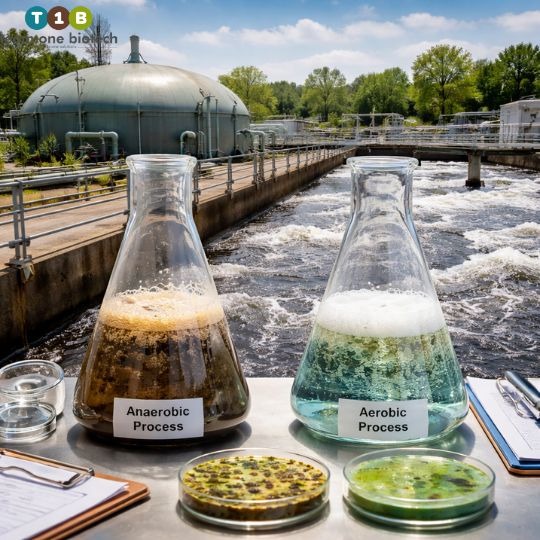
This is perhaps the most consequential technical decision in industrial ETP design, and it is one that is frequently made incorrectly, either at the design stage or in the ongoing operation of an existing plant.

The short answer: for high-strength industrial effluents, a staged combination of anaerobic followed by aerobic treatment is almost always the most effective and cost-efficient approach. But the details matter enormously.

Understanding the Anaerobic Process for High-Load Industrial Effluents

The anaerobic process excels when the incoming effluent has a very high organic load, typically expressed as Chemical Oxygen Demand (COD). For industries like distilleries (where spent wash COD can be extraordinarily high), paper and pulp mills, food processing units, and certain pharmaceutical effluents, a standalone aerobic system would require enormous aeration energy to handle the load. This is both technically inefficient and operationally expensive.

An anaerobic reactor, whether an Upflow Anaerobic Sludge Blanket (UASB) reactor, an anaerobic baffled reactor, or a covered anaerobic lagoon, works in the absence of oxygen. The microbial consortium in these systems, dominated by methanogens and other strict anaerobes, can achieve COD reductions in the range of 60% to 85% on high-strength effluents before the stream even reaches the aerobic stage. (Note: These are general performance ranges; actual values vary based on specific ETP configurations and effluent characteristics.)

The strategic advantage of the anaerobic process goes beyond COD reduction:

  • Energy recovery: Biogas produced during anaerobic digestion, primarily methane, can be captured and used for thermal energy generation within the plant. For a mid-sized distillery or food processing unit, this can meaningfully offset fuel costs.
  • Lower sludge yield: Anaerobic systems generate significantly less biological sludge per unit of COD removed compared to aerobic systems. For a plant struggling with ETP sludge volumes, this is a major operational relief.
  • Lower energy input: No aeration is required, making the operating cost per kg of COD removed considerably lower than aerobic alternatives.

The challenge with anaerobic systems, particularly in the Indian context, is stability. Methanogenic organisms are sensitive to temperature fluctuations, pH swings, and shock loads from process upsets. During the winter months in North India, in industrial belts like Ludhiana, Panipat, or Kanpur, falling ambient temperatures can significantly suppress methanogenic activity, leading to incomplete treatment and effluent quality failures.

This is where microbial augmentation becomes critical. By regularly dosing with cold-adapted, pre-acclimatised anaerobic consortia, plant operators can maintain treatment efficiency even during seasonal temperature drops without costly reactor heating investments.

The Aerobic Stage: Polishing, Nitrification, and Final BOD Removal

The aerobic biological treatment stage that follows anaerobic pre-treatment is responsible for polishing the effluent to discharge standards. Here, aerobic heterotrophs consume the residual dissolved organics, while nitrifying bacteria convert ammonia nitrogen, a critical parameter for many pharma and fertilizer industry effluents, into nitrate.

Aerobic systems, particularly Activated Sludge Process (ASP) and Sequential Batch Reactors (SBR), are well established in Indian industrial ETPs. The challenge is that they are frequently under-performing not because of design flaws but because of microbial ecosystem collapse, caused by toxic shock loads, antibiotic carry-through in pharmaceutical effluents, excessive chemical dosing upstream, or simply ageing sludge that has lost microbial diversity.

A bioaugmentation approach, introducing targeted aerobic consortia with specific metabolic capabilities, can restore a struggling aerobic stage within days rather than weeks. We have worked with plants in Surat’s textile cluster where aerobic SBR systems had essentially stopped functioning after a production change introduced a new dye chemistry. Conventional approaches would have required weeks of re-seeding and gradual re-acclimation. Targeted microbial cultures, matched to the new dye matrix, restored performance in a fraction of that time.

ETP Sludge Management: The Transition from Disposal Mindset to Digestion Strategy
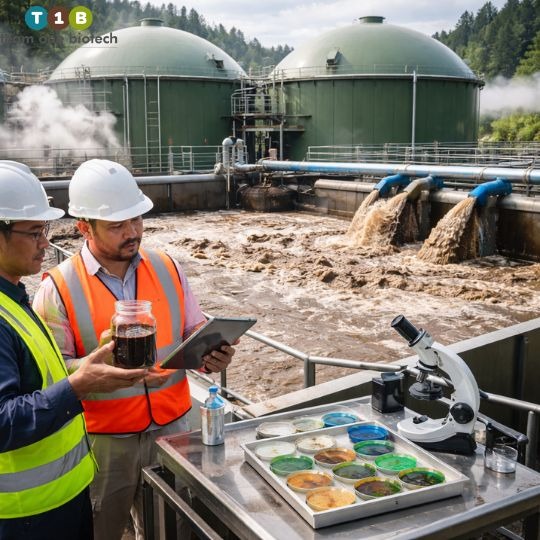
ETP Sludge Management: The Transition from Disposal Mindset to Digestion Strategy

Let us talk about sludge, the topic that makes most plant managers quietly uncomfortable.

ETP sludge is the concentrated residue of everything your wastewater treatment system has removed from your effluent. In a conventional chemical-physical ETP, this sludge is chemical in nature: it contains metal hydroxides from coagulation, precipitated salts, and whatever organic matter was not biologically treated. This sludge is expensive to dewater, expensive to transport, and increasingly expensive to dispose of, since many traditional disposal routes are being restricted or eliminated by regulatory action.

Why Conventional Sludge Disposal Is Becoming Untenable

Consider the cost structure of sludge disposal for a mid-sized industrial plant in India today:

  • Filter press or centrifuge operation (electricity, maintenance, consumables)
  • Transportation to a Common Hazardous Waste Treatment, Storage, and Disposal Facility (TSDF)
  • TSDF tipping fees, which have risen sharply
  • Internal manpower for handling, documentation, and manifesting
  • Compliance and record-keeping under the Hazardous and Other Wastes Rules

For plants generating several tonnes of wet sludge per day, these combined costs can represent a significant proportion of total wastewater treatment OPEX, often in the range of 30% to 50% of total ETP operating expenditure. (Note: These are general performance ranges; actual values vary based on specific ETP configurations and effluent characteristics.)

And here is the regulatory reality: the CPCB is actively tightening oversight of TSDF facilities, and the days of inexpensive, undocumented sludge disposal are definitively over. For industries that have been implicitly relying on low-cost sludge dump arrangements, the risk exposure is now substantial.

Microbial Digestion: A Fundamental Rethink of ETP Sludge

The biological alternative to mechanical-chemical sludge management is microbial digestion, the use of specialised sludge-digesting microbial consortia to actively break down and reduce sludge volume within the ETP itself.

Here is the mechanism: sludge, both primary and secondary (biological), is largely composed of organic matter, bacterial cell mass, adsorbed organics, and residual food substrates. Targeted sludge-digesting microorganisms, primarily hydrolytic and fermentative bacteria capable of consuming bacterial cell walls and complex organics, can be dosed directly into sludge holding tanks, sludge digesters, or even back into the aeration tank of an ASP to achieve what is called “sludge bulking reduction” or “in-situ sludge digestion.”

The results, when properly implemented:

  • Wet sludge volume reduction in the range of 25% to 50%, reducing dewatering load and transportation frequency. 
  • Improved sludge settleability, which can directly improve the performance of secondary clarifiers and reduce the incidence of sludge bulking, a chronic problem in many Indian ASP-based ETPs.
  • Reduction in the Sludge Volume Index (SVI), improving effluent quality from clarifiers.
  • In systems with dedicated sludge digesters, potential for biogas capture and energy recovery.

(Note: These are general performance ranges; actual values vary based on specific ETP configurations and effluent characteristics.)

For a tannery in Kanpur’s Jajmau area, one of India’s most environmentally scrutinised industrial clusters, a significant reduction in sludge output is not just an OPEX issue. It is an existential compliance issue. The same applies to the pharmaceutical formulation and API clusters around Hyderabad, where effluent treatment performance is directly tied to export certifications and global regulatory audits.

Sludge Treatment ROI: The Business Case for Biological Intervention

Let us move from science to economics, because ultimately, every decision in an industrial plant comes back to the balance sheet.

Comparing OPEX: Biological Treatment vs. Chemical-Dominated Treatment

A conventional chemical treatment approach to industrial effluent, relying primarily on coagulants, flocculants, pH adjustment chemicals, and oxidising agents, works. It can produce compliant effluent. But it is expensive, it is chemical-input dependent, and it generates large volumes of chemical sludge that require disposal.

Biological treatment, particularly when it incorporates targeted microbial augmentation, fundamentally changes the cost structure:

Chemical inputs: Properly functioning biological treatment systems require less coagulant and flocculant, because a significant proportion of the dissolved organics have already been consumed by microorganisms rather than precipitated as chemical floc. Plants that have transitioned from chemical-dominant to biology-first treatment approaches have typically seen chemical input costs reduce in the range of 20% to 45% over a 12-month operating period. (Note: These are general performance ranges; actual values vary based on specific ETP configurations and effluent characteristics.)

Energy costs: This is nuanced. Aerobic biological treatment requires aeration energy. However, when paired with an upstream anaerobic process that reduces COD load before the aerobic stage, the net aeration energy required is substantially lower than an aerobic-only system treating the full load. Additionally, biogas recovery from anaerobic digesters can offset significant energy costs.

Sludge disposal costs: This is often where the most dramatic OPEX reduction occurs. A well-managed biological ETP, with active sludge digestion, can reduce sludge output volumes sufficiently to meaningfully reduce TSDF disposal trips, transportation costs, and tipping fees. When sludge disposal was costing a plant a significant monthly sum, even a 30% reduction in sludge volume translates directly to substantial savings.

Compliance risk costs: This is the cost that does not appear on most OPEX spreadsheets but is arguably the most significant. A non-compliant ETP means the risk of closure notices, production shutdowns, penalty orders, and reputational damage that affects customer and banking relationships. A reliable, biologically stable ETP reduces this risk substantially.

The Microbial Augmentation Investment: Putting It in Perspective

Plant managers sometimes hesitate at the cost of specialised microbial cultures. This is understandable, they are not a commodity like lime or polyelectrolyte, and their mode of action is less immediately visible.

Here is the framing we offer to every CXO we speak with: microbial augmentation is not a cost. It is an insurance premium with a positive return. When the alternative is a shutdown notice, an emergency chemical dosing spike, or a sludge disposal crisis, the cost of a monthly microbial culture programme is, in most cases, a fraction of the risk it is mitigating.

The Indian Climate Challenge: Managing Microbial Performance in Variable Conditions

This is a dimension of bioremediation that does not receive enough attention in standard technical literature, most of which is written in temperate climates.

India’s industrial geography spans dramatically different climatic conditions. A paper mill in Bhadrachalam operates in humid, tropical conditions. A textile unit in Ludhiana faces freezing winter temperatures. A chemicals plant in Rajasthan manages extreme dry heat. Each of these conditions affects microbial activity in different ways.

High temperatures (above 40 degrees Celsius, common in Indian summers) can actually accelerate biological treatment rates, but they can also push mesophilic organisms past their optimal range and cause oxygen depletion in aerobic tanks, particularly when dissolved oxygen control systems are inadequate.

Low temperatures (common in North Indian winters) suppress microbial enzyme activity, slow metabolic rates, and can cause an apparent “crash” in biological treatment performance, COD removal drops, sludge settleability worsens, and plant managers see deteriorating effluent quality that does not respond to the usual operational adjustments.

Monsoon season brings dilution effects, hydraulic surges that wash biomass out of reactors, and sudden changes in effluent composition as production patterns shift.

At Team One Biotech, we formulate and supply microbial cultures that are specifically adapted to Indian climatic conditions, including thermotolerant strains for high-temperature applications and cold-adapted consortia for winter resilience. This local adaptation is not a marketing claim. It is an engineering requirement.

Sector-Specific Insights: What Works Where

Textile Industry (Tirupur, Surat, Panipat)

Textile effluents are among the most challenging for biological treatment, high colour, high TDS, variable COD, and frequently toxic dye intermediates. The key is a consortium approach: azoreductase-producing anaerobes for colour removal in the first stage, followed by aerobic polishing for residual COD and BOD.

Common industry pain point: Colour pass-through in the final effluent, even when COD is compliant. A targeted microbial approach specifically addresses the colour-bearing molecular fraction that conventional treatment misses.

Pharmaceutical Industry (Hyderabad, Baddi, Ahmednagar)

API and formulation effluents often contain trace antibiotics and active compounds that are acutely toxic to standard wastewater organisms. Bioaugmentation with resistant, specially adapted consortia that can tolerate and degrade these compounds is essential. Standard activated sludge systems in pharma ETPs are chronically underperforming because their microbial populations have been repeatedly stressed by toxic slug loads.

Tanneries (Kanpur, Vellore, Jalandhar)

High chromium, high sulphide, and high protein loads make tannery effluent one of the most complex treatment challenges in Indian industry. Sulphide-oxidising bacteria, chromium-tolerant heterotrophs, and collagen-degrading enzymes are all part of a tannery-specific biological treatment protocol. ETP sludge from tanneries also carries specific regulatory burdens, making sludge volume reduction particularly valuable.

What a Transition to Advanced Bioremediation Looks Like in Practice
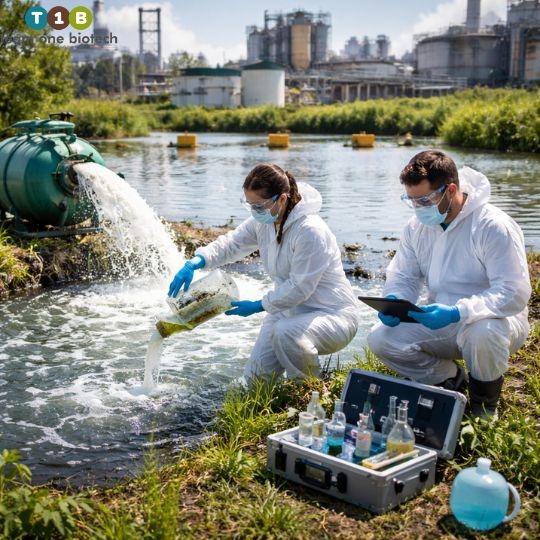
We want to be realistic about this. Transitioning from a chemical-heavy ETP operation to a biology-first approach does not happen overnight, and it requires genuine operational commitment. Here is a realistic outline of how we approach it with clients:

  • Baseline ETP audit: Detailed characterisation of the existing system, reactor volumes, hydraulic retention times, existing microbial health (if any), effluent variability, and current OPEX breakdown.
  • Effluent characterisation: Comprehensive lab analysis of the specific effluent matrix, not just standard parameters but molecular-level characterisation of the organic load.
  • Culture selection and formulation: Based on the audit and effluent analysis, selection or custom formulation of the appropriate microbial consortium, anaerobic, aerobic, or combined, with specific strain selection for the industry type and climate zone.
  • Staged implementation: Introduction of microbial cultures in a controlled, phased manner, with continuous monitoring of key performance indicators, COD, BOD, SVI, DO levels, and effluent quality.
  • Performance optimisation: Ongoing monitoring, culture top-up, and protocol adjustment over a 90-day to 180-day optimisation period.
  • Sustainable maintenance programme: A long-term culture maintenance and monitoring protocol that keeps the biological system in peak condition across seasonal changes and production variations.

The Compliance Dimension: CPCB and SPCB in a Tightening Regulatory Environment

We would be doing a disservice to our readers if we did not address the regulatory context directly.

The CPCB’s recent emphasis on real-time ETP monitoring for large industries, combined with state-level enforcement actions that have resulted in plant closures in sectors from textiles to pharma, means that ETP performance is no longer just an operational metric. It is a boardroom issue.

The industries most exposed are those with large ETP footprints that have historically relied on dilution, chemical treatment shortcuts, or irregular monitoring rather than genuine treatment performance. As online monitoring becomes mandatory for more categories of industries, the margin for underperformance shrinks to zero.

A biologically stable, properly augmented ETP is inherently more resilient, it self-corrects to some degree, it does not have the batch-to-batch variability of chemical dosing, and it generates a continuous biological data record of treatment performance that can support compliance documentation.

Three Ways to Start Working With Team One Biotech

You have read this far, which tells us something: you are taking your ETP’s biological performance seriously. That is the right instinct. Here is how we can help you move from reading to action.

Our team of environmental engineers and microbiologists will visit your facility, assess your existing ETP configuration, review your current effluent data and compliance status, and provide a detailed assessment of where biological treatment optimisation can deliver the greatest operational and financial benefit. There is no obligation, and the insights alone are worth the conversation.

Contact Team One Biotech today to schedule your site audit. Mention this article and we will prioritise your slot.

We have compiled a detailed technical reference document covering microbial consortia selection, anaerobic and aerobic system design principles, ETP sludge reduction strategies, and sector-specific case study data from Indian industrial applications. It is the document we wish had existed when we started doing this work.

Request the whitepaper from our team at Team One Biotech, it is available to ETP operators and industrial decision-makers at no cost.

Book a Technical Consultation With Our Engineers

If you have a specific, urgent challenge, a struggling ETP, a compliance notice, a sludge disposal crisis, or a production change that has thrown your biological treatment system out of balance, book a direct consultation with one of our senior engineers. We will review your data, ask the right questions, and give you a frank assessment of what is happening and what can be done about it.

Reach out to Team One Biotech directly. Our engineers are on the ground across India and can engage with your team quickly.

The Organisms Are Already on Your Side

Here is something worth sitting with: the microbial world is not your adversary in waste management. Billions of years of evolution have produced organisms capable of breaking down nearly every organic compound that industrial processes generate. The question is not whether biology can handle your effluent. The question is whether you have the right organisms, in the right configuration, in the right conditions, doing the right work.

That is what advanced bioremediation is. It is not magic. It is not a shortcut. It is applied microbiology, rigorous, measurable, and when done right, transformative for both your operations and your environmental legacy.

We are ready to help you get there.

Looking to improve your ETP/STP efficiency with the right bioculture?
Talk to our experts at Team One Biotech for customised microbial solutions.

Contact+91 8855050575

Email:  sales@teamonebiotech.com

Visit: www.teamonebiotech.com

Discover More on YouTube – Watch our latest insights & innovations!-

Connect with Us on LinkedIn – Stay updated with expert content & trends!
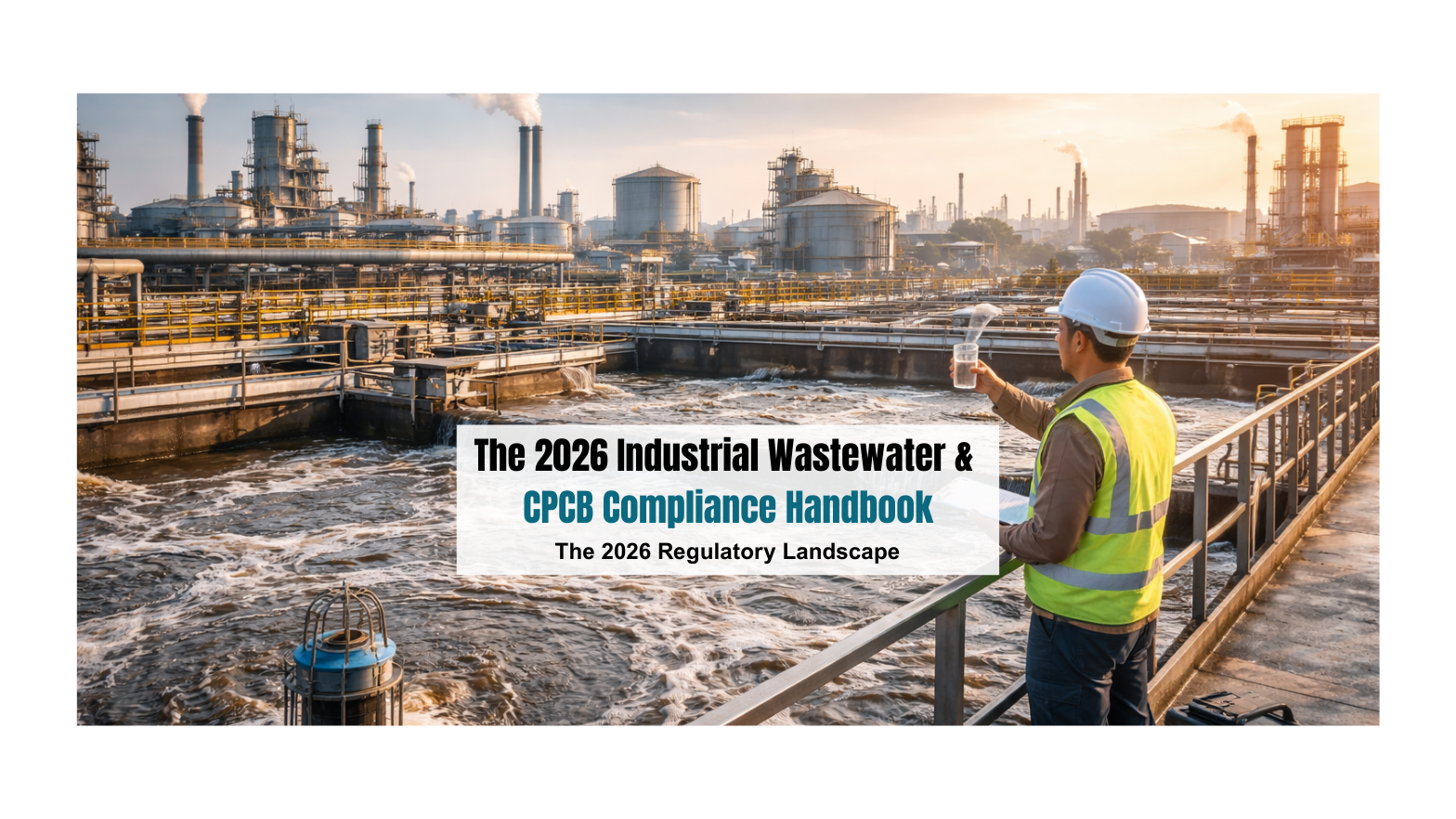
The 2026 Industrial Wastewater & CPCB Compliance Handbook

On a Tuesday. Your phone vibrates with a message from your night shift supervisor: “SPCB team at gate. Surprise inspection. ETP discharge sample taken.”

Your heart sinks. You know the effluent quality has been inconsistent lately. The chemical dosing hasn’t been optimized. Your COD readings have been hovering dangerously close to the consent limits. Tomorrow morning, you might be explaining to your MD why production could halt, why legal notices are arriving, or worse, why the factory faces a closure order.

This scenario plays out across hundreds of Indian manufacturing facilities every month. The difference between factories that survive regulatory scrutiny and those that face crippling penalties often comes down to one thing: understanding and implementing proper wastewater compliance strategies before the inspection happens.

If your ETP is struggling with COD limits or chemical optimization, explore our proven Wastewater Treatment Solutions. Don’t wait for the next surprise inspection to secure your production’s future.

This handbook exists because India’s environmental enforcement landscape has fundamentally changed. The days of lenient inspections and negotiable standards are over. Real-time monitoring mandates, stricter discharge limits, public interest litigations, and National Green Tribunal interventions have created an environment where compliance is not optional, it’s existential.

Whether you manage a textile dyeing unit in Tiruppur, a pharmaceutical facility in Hyderabad, or a food processing plant in Punjab, this guide will walk you through everything you need to know about industrial wastewater compliance in 2026, the hidden costs draining your profitability, and the proven solutions that are helping Indian manufacturers stay ahead of regulations while cutting operational expenses.

The 2026 Regulatory Landscape, What Has Changed and Why It Matters

The 2026 Regulatory Landscape, What Has Changed and Why It Matters

The New Normal: Stricter Standards Across the Board

The Central Pollution Control Board (CPCB) and State Pollution Control Boards have implemented the most stringent industrial effluent discharge standards in India’s regulatory history. These changes reflect both environmental necessity and legal pressure from courts and tribunals.

Latest Key Parameters for 2026

ParameterPrevious Limit (General)Impact
BOD (Biochemical Oxygen Demand)30 mg/L67% reduction required
COD (Chemical Oxygen Demand)250 mg/LUp to 80% reduction
Total Suspended Solids (TSS)100 mg/L80% reduction required
pH Range5.5–9.0Tighter control needed
Heavy Metals (varies)Sector-specificAdvanced treatment essential

These numbers represent more than regulatory targets. They represent the difference between receiving your annual Consent to Operate (CTO) renewal and facing immediate shutdown orders.

Real-Time Monitoring: The Game Changer

Perhaps the most transformative change is the mandatory installation of Continuous Effluent Monitoring Systems (CEMS) for Red and Orange category industries. This requirement has eliminated the buffer that many facilities previously relied upon.

Under the new regime:

  • Your effluent parameters are transmitted to SPCB servers every 15 minutes
  • Deviations trigger automatic alerts to regulatory authorities
  • Historical data is permanently stored and can be audited retroactively
  • Manual tampering or data manipulation carries severe criminal penalties

For factory managers, this means your ETP performance is under constant surveillance. A single upset condition that previously might have gone unnoticed can now generate an automatic violation notice.

State-Level Variations: Know Your SPCB

While CPCB sets national standards, implementation varies significantly across states. Understanding your specific SPCB’s enforcement style is critical:

Maharashtra Pollution Control Board (MPCB): Known for aggressive enforcement in industrial clusters like Pune and Thane-Belapur. Frequent unannounced inspections, strict interpretation of discharge standards, and quick escalation to closure orders for repeat violations.

Gujarat Pollution Control Board (GPCB): Focus on industrial estates and SEZs. Mandatory quarterly self-monitoring reports. Strong emphasis on zero liquid discharge (ZLD) for water-stressed regions like Saurashtra.

Tamil Nadu Pollution Control Board (TNPCB): Particularly stringent in textile hubs like Tiruppur and dyeing clusters near Erode. History of court-mandated closures. Emphasis on groundwater protection.

Karnataka State Pollution Control Board (KSPCB): Bangalore industrial area faces special scrutiny. Lake pollution concerns drive stricter enforcement. Technology adoption encouraged with faster clearances.

Delhi Pollution Control Committee (DPCC): Yamuna pollution is a political flashpoint. Industries near the river face maximum scrutiny. Frequent PIL-driven interventions.

The NGT Factor: Environmental Justice Moves Faster

The National Green Tribunal has become the most feared entity in Indian environmental compliance. Unlike traditional courts, NGT operates with:

  • Expedited hearing schedules (often within weeks, not years)
  • Authority to order immediate closures without lengthy appeals
  • Power to impose environmental compensation running into crores
  • Suo moto cognizance of pollution incidents based on media reports or complaints

Recent NGT interventions have resulted in:

  • Closure of entire industrial clusters in UP and Haryana
  • Personal liability imposed on directors and CEOs
  • Environmental compensation orders exceeding original penalties by 10-20x
  • Criminal prosecution referrals for willful non-compliance

The lesson is clear: by the time your case reaches NGT, you have already lost. Prevention is the only viable strategy.

The Hidden Drain on Profits, Why Your ETP is Bleeding Money

Why Your ETP is Bleeding Money

The Chemical Dependency Trap

Most Indian ETPs operate on a chemical-intensive treatment model inherited from Western engineering practices developed in the 1970s and 80s. While these systems can achieve compliance, they do so at an extraordinary hidden cost that most factory managers have never properly calculated.

The True Cost of Chemical-Dependent Treatment:

A typical 500 KLD (kiloliters per day) ETP in a medium-scale textile or pharmaceutical facility spends approximately:

  • Coagulants (Alum, Ferric Chloride): ₹1.2-1.8 lakhs per month
  • Flocculants (Polyelectrolytes): ₹80,000-1.2 lakhs per month
  • pH Adjusters (Caustic Soda, Sulfuric Acid): ₹60,000-90,000 per month
  • Disinfectants (Chlorine, Hypochlorite): ₹40,000-60,000 per month
  • Specialty Chemicals (Defoamers, etc.): ₹30,000-50,000 per month

Annual Chemical Expenditure: ₹36-50 lakhs

But the actual cost extends far beyond chemical procurement:

Hidden Cost #1: Sludge Generation and Disposal
Chemical coagulation generates 3-5 times more sludge than biological treatment. For every ton of chemicals added, you create approximately 1.2-1.8 tons of additional sludge that must be:

  • Dewatered (energy cost)
  • Transported to authorized disposal facilities (₹2,500-4,500 per ton)
  • Disposed with proper manifests (regulatory burden)

Annual sludge disposal cost for the same 500 KLD facility: ₹18-28 lakhs

Hidden Cost #2: Energy Consumption
Chemical treatment requires:

  • Continuous mixing for coagulation and flocculation
  • High-pressure pumping for clarifiers and filter presses
  • Extended aeration to compensate for reduced biological activity

The energy footprint of a chemical-dependent ETP is typically 40-60% higher than an optimized biological system. At industrial power tariffs (₹6-8 per unit in most states), this translates to an additional ₹8-15 lakhs annually.

Hidden Cost #3: Equipment Degradation
Harsh chemicals accelerate corrosion and wear on:

  • Pumps and piping (requiring replacement every 3-5 years instead of 7-10)
  • Sensors and monitoring equipment (calibration drift, sensor poisoning)
  • Concrete structures (acid/alkali attack on clarifier tanks)

Replacement and maintenance costs: ₹5-8 lakhs annually

Hidden Cost #4: Inconsistent Performance
Perhaps the most expensive hidden cost is variability. Chemical treatment is highly sensitive to:

  • Influent flow rate fluctuations (shift changes, batch production)
  • Temperature variations (monsoon vs summer, day vs night)
  • Influent composition changes (different raw materials, product lines)

This variability leads to:

  • Over-dosing (wasting chemicals to ensure compliance)
  • Under-dosing (risking violations)
  • Constant operator intervention (labor inefficiency)
  • Unpredictable discharge quality (regulatory risk)

The Compliance Anxiety Premium

There’s another cost that never appears on balance sheets but affects every factory manager dealing with a chemically-dependent ETP: stress and uncertainty.

When your compliance depends on precise chemical dosing that must be manually adjusted throughout the day, you carry constant anxiety about:

  • Will the morning shift operator remember to increase polymer dose when the cooling water blowdown increases?
  • Did the night shift properly account for the pH spike from the cleaning chemicals in the wastewater?
  • Is the recent increase in COD due to a process change or chemical underdosing?

This operational uncertainty translates into:

  • Over-conservative chemical dosing (wasting money to buy peace of mind)
  • Excessive monitoring and testing (labor and lab costs)
  • Deferred production decisions (waiting to confirm ETP can handle load changes)

The Bottom Line:
The same 500 KLD facility spending ₹50 lakhs on chemicals is actually spending ₹80-100 lakhs annually on total ETP operations when all hidden costs are included. For many SMEs, this represents 2-4% of total revenue, a material impact on profitability that compounds year after year.

The Bioremediation Solution, Why Microbes Outperform Chemicals in Indian Conditions

Why Microbes Outperform Chemicals in Indian Conditions

Understanding Bioremediation: Nature’s Treatment Engineers

Bioremediation is the process of using naturally occurring or specially cultivated microorganisms to break down pollutants in wastewater. Unlike chemical treatment that physically separates contaminants, bioremediation actually consumes and converts organic pollutants into harmless byproducts: primarily carbon dioxide, water, and biomass.

The concept is simple, but the execution requires sophisticated understanding of microbial ecology, wastewater characteristics, and operational parameters.

How Bioremediation Works in an Industrial ETP:

Specialized bacterial consortia are introduced into the biological treatment stages of your ETP. These microbes include:

  • Heterotrophic bacteria: Rapidly consume simple organic compounds (sugars, starches, proteins)
  • Nitrifying bacteria: Convert ammonia to nitrites and nitrates (critical for nitrogen removal)
  • Denitrifying bacteria: Convert nitrates back to nitrogen gas (completing nitrogen cycle)
  • Phosphate-accumulating organisms: Remove phosphorus through cellular uptake
  • Specialty degraders: Target specific industrial contaminants (phenols, surfactants, dyes, heavy metals)

When properly established, these microbial communities create a self-sustaining ecosystem that:

  • Adapts to influent variations automatically
  • Increases in population when organic load increases (self-regulating capacity)
  • Produces minimal excess sludge (only microbial growth)
  • Operates across a wide range of temperatures and pH levels

Why Bioremediation Excels in Indian Industrial Conditions

India’s industrial wastewater presents unique challenges that make bioremediation particularly effective:

Challenge #1: High Organic Load Variability
Indian manufacturing often involves batch production with significant load variations. A dyeing unit might process heavy cotton batches in the morning and light synthetics in the afternoon. A food processing unit experiences seasonal variations with different crops.

Chemical treatment struggles with variability because dosing must be constantly adjusted. Bioremediation naturally adapts because microbial populations increase when food (pollutants) is abundant and decrease when it’s scarce. This biological buffering creates stable discharge quality despite influent fluctuations.

Challenge #2: Tropical Climate Advantages
India’s warm climate (except in winter months in northern regions) is ideal for biological treatment. Microbial metabolic rates approximately double for every 10°C temperature increase up to optimal ranges.

While European and North American facilities struggle to maintain biological treatment efficiency during cold winters, Indian facilities operate in the optimal temperature range (25-40°C) for most of the year. This natural advantage is wasted in chemical-dependent systems but fully leveraged in bioremediation.

Challenge #3: Complex Industrial Pollutant Mixtures
Indian industrial effluent often contains complex mixtures that are difficult to treat chemically:

  • Textile effluent: Azo dyes, surfactants, sizing agents, mercerizing chemicals
  • Pharmaceutical effluent: Active pharmaceutical ingredients, solvents, high-salt content
  • Food processing: High BOD from sugars, proteins, fats, seasonal composition changes

Specialized microbial consortia can be tailored to target these specific pollutant profiles. Certain bacteria strains excel at breaking down azo dyes. Others specialize in degrading pharmaceutical residues. A properly designed bioremediation program assembles the right team of microbes for your specific wastewater signature.

Challenge #4: Water Scarcity and Reuse Requirements
Many Indian industrial regions face acute water stress. Groundwater depletion in areas like Tiruppur, Ludhiana, and Surat has made water recycling a business necessity, not just an environmental preference.

Bioremediation produces treated water of significantly higher quality than chemical treatment, making it more suitable for recycling in cooling towers, gardening, or even certain process applications. The lower dissolved solids and minimal chemical contamination mean less scaling, corrosion, and fouling in recycled water systems.

The Economics of Bioremediation: Real Numbers from Indian Facilities

Let’s return to our 500 KLD facility example and compare actual operational costs:

Annual Operating Costs Comparison:

Cost ComponentChemical TreatmentBioremediationSavings
Primary treatment chemicals₹48 lakhs₹12 lakhs₹36 lakhs
Microbial cultures₹8 lakhs
Sludge disposal₹25 lakhs₹8 lakhs₹17 lakhs
Energy consumption₹18 lakhs₹12 lakhs₹6 lakhs
Maintenance & equipment₹8 lakhs₹4 lakhs₹4 lakhs
Total Annual Cost₹99 lakhs₹44 lakhs₹55 lakhs

Payback Period: Most bioremediation implementations in Indian facilities achieve full payback within 8-14 months, even accounting for any necessary equipment modifications or initial consulting costs.

Case Study: Textile Dyeing Unit in Tamil Nadu
A 750 KLD facility treating complex dye effluent was struggling with:

  • Monthly chemical costs of ₹6.8 lakhs
  • Inconsistent COD removal (discharge frequently 180-220 mg/L against limit of 160 mg/L)
  • Two TNPCB violation notices in 18 months
  • Considering ZLD installation (estimated cost ₹4.2 crores)

After implementing a tailored bioremediation program:

  • Month 3: Chemical costs reduced to ₹2.1 lakhs (70% reduction)
  • Month 6: Consistent discharge COD of 45-65 mg/L (well below limits)
  • Month 9: Sludge generation reduced from 15 tons/month to 6 tons/month
  • Month 12: ZLD project shelved as water recycling from ETP became viable
  • Total first-year savings: ₹68 lakhs (against implementation cost of ₹12 lakhs)

Implementation Considerations: Getting Bioremediation Right

Successful bioremediation requires more than just adding bacteria to your ETP. Critical success factors include:

Factor #1: Baseline Assessment
Understanding your current wastewater characteristics, flow patterns, and ETP configuration. This involves:

  • 7-day influent characterization (not just grab samples)
  • ETP process audit (hydraulic retention times, aeration capacity, settling efficiency)
  • Identifying shock load sources and frequency

Factor #2: Right Microbial Selection
Not all bacterial products are created equal. Industrial-grade consortia should be:

  • Viable (living cells, not dormant spores that take weeks to activate)
  • Proven in similar industrial applications (lab results don’t always translate to field performance)
  • Adapted to Indian conditions (temperature ranges, typical pollutant profiles)
  • Shelf-stable (proper packaging and storage requirements)

Factor #3: Proper Acclimatization Protocol
Introducing microbes into an ETP that has been chemically shocked for years requires a phased approach:

  • Gradual reduction of chemical dosing while simultaneously building microbial population
  • Monitoring of key indicators (MLSS, SVI, microscopic examination)
  • Patience during the 4-6 week establishment period

Factor #4: Operational Support
The transition from chemical to biological treatment requires operator training:

  • Understanding biological indicators (foam characteristics, sludge settling, odor)
  • Adjusting aeration and nutrient supplementation
  • Recognizing and responding to toxic shock events

Avoiding the Red Category Trap, Actionable Steps to Stay Compliant and Operational

Understanding Industry Categorization: Red, Orange, Green, White

The CPCB classifies industries based on Pollution Index scores that consider:

  • Type and volume of pollutants generated
  • Environmental impact potential
  • Resource consumption intensity

Red Category (Pollution Index ≥60):
Highest scrutiny industries including pharmaceuticals, dye intermediates, pesticides, petroleum refining, tanneries, cement. These facilities face:

  • Mandatory CEMS installation
  • Quarterly SPCB inspections (minimum)
  • Stringent consent conditions
  • First targets for closure during pollution emergencies

Orange Category (Pollution Index 41-59):
Moderate polluters including many textile operations, food processing, chemicals manufacturing. Requirements include:

  • Annual consent renewals
  • Regular self-monitoring with certified labs
  • Growing pressure to install real-time monitoring

Green Category (Pollution Index ≤40):
Lower-impact industries with less stringent requirements but still subject to inspections and enforcement.

If your industry falls in Red or Orange categories, the compliance burden is substantial and growing. Here’s how to stay ahead of enforcement.

The Compliance Checklist: Ten Non-Negotiable Requirements

Requirement #1: Consent to Establish (CTE) and Consent to Operate (CTO)
These are your license to operate. Operating without valid consent carries:

  • Immediate closure orders
  • Fines up to ₹1 lakh per day
  • Criminal prosecution under Environmental Protection Act

Action Items:

  • Set calendar reminders 90 days before CTO expiry
  • Maintain organized files with all previous consents, amendments, and correspondence
  • Never operate even one day without valid consent

Requirement #2: Functional ETP with Design Capacity
Your ETP must be:

  • Designed by a qualified environmental engineer
  • Sized for actual wastewater generation (not underestimated)
  • Properly maintained with documented service records

Common Pitfall: Many facilities report lower wastewater volumes in their CTO applications to reduce compliance burden, then struggle when actual discharge exceeds consented capacity during inspections.

Requirement #3: Certified Laboratory Testing
Self-monitoring reports must come from NABL-accredited or CPCB-recognized labs. Using in-house testing or non-certified labs invalidates compliance documentation.

Best Practice: Establish relationships with 2-3 certified labs to ensure capacity during busy inspection seasons.

Requirement #4: Proper Record Maintenance
SPCBs require meticulous documentation:

  • Daily ETP operation logs (operator signatures, chemical consumption, flow rates)
  • Monthly discharge monitoring reports
  • Sludge disposal manifests (tracking from generation to authorized disposal)
  • Equipment maintenance records
  • Chemical purchase invoices (to cross-verify consumption claims)

These records must be maintained for a minimum of three years and produced during inspections.

Requirement #5: Trained Operators
Red category industries must have operators with formal ETP training certification. Even for other categories, demonstrated competence is expected.

Recommendation: Send operators for CPCB-recognized training programs. Document all training with certificates on file.

Requirement #6: Emergency Response Preparedness
You must have documented procedures for:

  • ETP breakdown scenarios (backup plans, emergency storage)
  • Chemical spill response (containment, cleanup, reporting)
  • Toxic shock recovery (rapid response protocols)

SPCB inspectors increasingly verify these procedures during audits.

Requirement #7: Groundwater Monitoring
Facilities in water-stressed regions or those using groundwater must install monitoring wells and conduct quarterly analysis for:

  • Water table levels
  • Groundwater quality parameters
  • Evidence of contamination migration

Requirement #8: Air Emission Compliance (if applicable) Many industrial facilities have air emissions from ETP operations:

  • Odor from biological treatment
  • VOCs from aeration tanks
  • Scrubber emissions

These require separate consents and monitoring.

Requirement #9: Hazardous Waste Management
ETP sludge is often classified as hazardous waste requiring:

  • Storage in designated areas with proper signage
  • Disposal through CPCB-authorized facilities only
  • Annual returns filing on CPCB portal
  • Maintenance of waste disposal manifests

Requirement #10: Online Compliance Portals
Most SPCBs now require electronic filing through state portals:

  • Annual Environmental Statements
  • Consent applications and renewals
  • Self-monitoring data uploads
  • Hazardous waste annual returns

Failure to file electronically on time results in automatic delays in consent processing.

The Inspection Survival Guide: What Happens and How to Respond

Despite best efforts, surprise inspections will occur. Here’s how to navigate them professionally:

During the Inspection:

Do’s:

  • Immediately inform senior management
  • Assign a knowledgeable escort (preferably ETP in-charge or compliance officer)
  • Provide requested documents promptly
  • Allow sampling but request duplicate samples for your own testing
  • Note down sample collection time, location, and inspector details
  • Remain professional and cooperative

Don’ts:

  • Never deny entry to inspectors with valid authorization
  • Don’t volunteer information beyond what’s asked
  • Avoid making admissions of non-compliance
  • Never offer or suggest anything that could be construed as bribery
  • Don’t obstruct sampling or photography

Post-Inspection Protocol:

  • Immediately test your own samples at a certified lab (use the duplicate samples)
  • Document everything: who was present, what was inspected, what was sampled, what was discussed
  • If a show cause notice is issued, respond within the specified timeframe (typically 7-15 days)
  • Engage an environmental consultant or lawyer if violations are serious
  • Implement immediate corrective actions and document them

When Things Go Wrong: Responding to Notices and Violations

Show Cause Notice (SCN):
This is your opportunity to explain. Your response should:

  • Acknowledge receipt immediately
  • Provide a detailed technical explanation (not excuses)
  • Document corrective actions already taken
  • Propose a timeline for additional improvements
  • Include supporting evidence (lab reports, photographs, purchase orders)

Direction for Improvement:
Typically gives 30-90 days to rectify issues. Your response should:

  • Submit a detailed action plan with milestones
  • Provide weekly progress updates
  • Engage qualified consultants to oversee improvements
  • Request extension if needed (with justification) before deadline expires

Closure Notice:
This is the most serious. Immediate actions:

  • Engage legal counsel experienced in environmental law
  • Apply for interim stay if grounds exist
  • Implement maximum corrective measures immediately
  • Consider approaching NGT for appeal if closure is unjustified

Financial Penalties:
Pay promptly. Delayed payment increases amounts and makes future appeals difficult.

The Path Forward, Building a Sustainable Compliance Framework

The Path Forward, Building a Sustainable Compliance Framework

Beyond Compliance: The Business Case for Environmental Excellence

The factories that thrive in India’s evolving regulatory landscape don’t view compliance as a burden, they recognize it as a competitive advantage.

Advantage #1: Operational Resilience
Facilities with robust ETPs and consistent compliance records experience:

  • Uninterrupted production (no shutdown risks)
  • Predictable operating costs (no emergency chemical purchases or expedited sludge disposal)
  • Better employee morale (operators aren’t constantly stressed about violations)

Advantage #2: Market Access
International buyers increasingly require environmental compliance documentation. ISO 14001 certification, sustainability reports, and clean compliance records are becoming prerequisites for export contracts. Textile exporters to EU and US markets find that strong environmental credentials can command 3-5% price premiums.

Advantage #3: Financial Benefits
Banks and financial institutions consider environmental compliance in lending decisions. Facilities with clean records access:

  • Lower interest rates on working capital
  • Faster approvals for expansion financing
  • Eligibility for green financing schemes with subsidized rates

Advantage #4: Community Relations
Facilities in industrial clusters with poor overall environmental records face community opposition to expansions. Being the “clean factory” in a polluted area provides social license to operate and grow.

Technology Roadmap: Where Indian ETP Technology is Heading

The next five years will see rapid adoption of:

Advanced Biological Treatment:

  • MBBR (Moving Bed Biofilm Reactor) systems becoming standard for space-constrained facilities
  • MBR (Membrane Bioreactor) for facilities requiring high-quality treated water for reuse
  • Anaerobic treatment for high-COD waste streams (recovering biogas as energy source)

Automation and Control:

  • AI-driven dosing optimization systems
  • Predictive maintenance using IoT sensors
  • Mobile apps for remote ETP monitoring

Resource Recovery:

  • Phosphorus recovery from sludge (as fertilizer)
  • Metal recovery from specific industrial waste streams
  • Energy generation from biogas and waste heat

Facilities planning major ETP upgrades should consider these technologies now to future-proof investments.

Building Internal Capacity: The Human Element

Technology alone doesn’t ensure compliance. Successful facilities invest in:

Operator Development:

  • Regular training programs (minimum quarterly)
  • Exposure visits to best-practice facilities
  • Certification programs for career advancement
  • Performance incentives tied to compliance metrics

Cross-Functional Integration:

  • Production teams understanding how process changes impact ETP
  • Purchase teams sourcing raw materials with lower environmental impact
  • Maintenance teams prioritizing ETP equipment
  • Top management reviewing environmental performance monthly

Documentation Culture:

  • Standard operating procedures for all ETP operations
  • Digital record-keeping systems
  • Regular internal audits
  • Continuous improvement mindset

The Compliance Calendar: Monthly Action Items

A systematic approach prevents last-minute scrambles:

Monthly:

  • Review ETP operation logs
  • Analyze discharge monitoring data for trends
  • Verify chemical inventory and consumption rates
  • Inspect critical equipment (pumps, aerators, sensors)
  • Update compliance dashboard

Quarterly:

  • Certified lab testing of discharge
  • SPCB portal uploads (where required)
  • Operator training refresher
  • Sludge disposal verification
  • External consultant review (recommended)

Annually:

  • CTO renewal application (start 90 days before expiry)
  • Environmental statement filing
  • Hazardous waste annual returns
  • Comprehensive ETP audit
  • Budget planning for next year’s compliance costs

Scaling Your Compliance, Team One Biotech as Your Partner

Why Specialized Bioremediation Expertise Matters

Transitioning from chemical-dependent treatment to bioremediation isn’t a simple product purchase, it’s a transformation that requires:

  • Deep understanding of microbial ecology in industrial wastewater
  • Experience with Indian industrial conditions and regulatory requirements
  • Ability to troubleshoot and optimize during the critical acclimatization period
  • Long-term support as your operations evolve

This is where Team One Biotech (T1B) has established itself as India’s leading bioremediation partner for industrial facilities.

The T1B Difference: Proven Results Across Indian Industries

Team One Biotech brings over a decade of specialized experience in industrial wastewater bioremediation across India’s most challenging sectors:

Textile and Dyeing: Successful implementations in Tiruppur, Surat, and Ludhiana treating complex dye chemistry with consistent COD reductions exceeding 85%.

Pharmaceutical and Chemical: Expertise handling high-salt effluent, antibiotic residues, and solvent-laden waste streams in Hyderabad, Vadodara, and Bangalore facilities.

Food Processing: Seasonal load management for sugar mills, dairy facilities, and beverage plants across Maharashtra, Punjab, and Tamil Nadu.

Pulp and Paper: Lignin and color removal in paper mills with significant reduction in chemical consumption and sludge generation.

Our Approach: Customized Solutions, Not Off-the-Shelf Products

T1B doesn’t believe in one-size-fits-all solutions. Our process includes:

Phase 1: Comprehensive Assessment (Week 1-2)

  • Site visit and ETP audit by qualified microbiologist
  • Wastewater characterization and load profiling
  • Operator interviews to understand operational challenges
  • Preliminary feasibility report with cost-benefit analysis

Phase 2: Customized Program Design (Week 3-4)

  • Selection of microbial consortia specific to your waste profile
  • Dosing protocol development
  • Operational parameter optimization (aeration, retention time, nutrient supplementation)
  • Training program design for your operators

Phase 3: Implementation and Acclimatization (Month 2-3)

  • Phased introduction of bioremediation cultures
  • Weekly monitoring of biological indicators
  • Progressive reduction of chemical dependency
  • Real-time troubleshooting support

Phase 4: Performance Validation (Month 4-6)

  • Discharge quality verification through certified labs
  • Cost savings documentation
  • Operational stability confirmation
  • Handover to routine maintenance mode

Phase 5: Ongoing Support

  • Monthly supply of microbial cultures
  • Quarterly performance reviews
  • Annual refresher training for operators
  • Emergency support for shock load events or upsets

Quality Assurance: What Sets T1B Products Apart

High Viable Cell Counts: Minimum 10^9 CFU/gram (most competitors provide 10^6-10^7)

Rapid Activation: Proprietary packaging maintains cell viability; cultures activate within 48 hours (not 2-3 weeks like spore-based products)

Proven Strains: All organisms isolated from Indian industrial environments, not imported strains that may not adapt to local conditions

Shelf Stability: Guaranteed 12-month shelf life with proper storage; no refrigeration required

Technical Documentation: Complete characterization data, safety data sheets, and application guidelines with every order

Third-Party Validation: Performance verified by NABL-accredited laboratories in customer facilities

Accessing T1B Products: Introducing Our Alibaba Store

Understanding that modern procurement requires flexibility and transparency, Team One Biotech has launched our official presence on Alibaba.com, the world’s largest B2B marketplace.

Why T1B on Alibaba Benefits You:

Global Standard Pricing: Transparent pricing accessible to facilities of all sizes, from small SMEs to large industrial groups.

Bulk Procurement Convenience: Order anything from trial quantities (5 kg) to bulk shipments (500+ kg) through a single, streamlined platform.

Secure Transactions: Alibaba’s Trade Assurance protects your payment until delivery confirmation.

Verified Supplier Status: T1B maintains Alibaba’s Gold Supplier certification with verified business credentials and quality assessments.

International Reach: For corporate groups with manufacturing facilities across South Asia, Middle East, or Africa, unified procurement through one trusted partner.

Documentation and Support: Every order includes complete technical documentation, application guidelines, and access to our technical support team.

Beyond Products: T1B’s Commitment to Your Success

Our relationship doesn’t end with product delivery. T1B provides:

24/7 Technical Helpline: WhatsApp support group connecting you directly to our microbiologists for urgent troubleshooting.

Knowledge Resources: Regular webinars on ETP optimization, compliance updates, and emerging technologies. Access to our technical library with application notes and case studies.

Compliance Assistance: While we’re not legal consultants, our team has extensive experience navigating SPCB requirements and can guide documentation for bioaugmentation programs.

Performance Guarantees: We stand behind our products. If discharge parameters don’t improve within the guaranteed timeframe under proper implementation, we’ll reformulate your consortium at no additional charge.

Compliance as Competitive Advantage in 2026

The industrial landscape in India has irrevocably changed. The regulatory environment that once allowed flexibility and negotiation has been replaced by automated monitoring, strict enforcement, and severe consequences for non-compliance.

But this transformation, while challenging, also presents unprecedented opportunities for forward-thinking manufacturers. The gap between compliant and non-compliant facilities has never been wider, and that gap represents competitive advantage for those who embrace environmental excellence.

The facilities that will lead Indian manufacturing in the next decade are those that:

  • View compliance as investment, not expense: Every rupee spent on proper ETP operations returns multiples in avoided fines, uninterrupted production, and market access.
  • Adopt proven, efficient technologies: Bioremediation isn’t experimental, it’s the established standard in advanced economies and increasingly in India’s best-performing facilities.
  • Build institutional knowledge: Training operators, documenting processes, and creating organizational memory around environmental management.
  • Partner with specialists: Just as you wouldn’t handle complex taxation without a qualified CA or legal matters without counsel, environmental compliance deserves specialized expertise.

The choice before every factory manager, ETP operator, and CEO is clear: manage compliance reactively with chemical band-aids and constant anxiety about the next inspection, or invest in sustainable systems that deliver both regulatory certainty and operational savings.

Team One Biotech exists to make that second path accessible, affordable, and achievable for Indian manufacturers of all sizes. Whether you’re a small-scale unit taking the first steps toward reliable compliance or a large industrial group optimizing multiple facilities, our expertise in bioremediation combined with our commitment to your operational success makes us the partner of choice.

Secure Your CTO Status Today. Reduce Your ETP Costs Tomorrow. Build Sustainable Operations for the Future.

Looking to improve your ETP/STP efficiency with the right bioculture?
Talk to our experts at Team One Biotech for customised microbial solutions.

Contact+91 8855050575

Email:  sales@teamonebiotech.com

Visit: www.teamonebiotech.com

Discover More on YouTube – Watch our latest insights & innovations!-

Connect with Us on LinkedIn – Stay updated with expert content & trends!
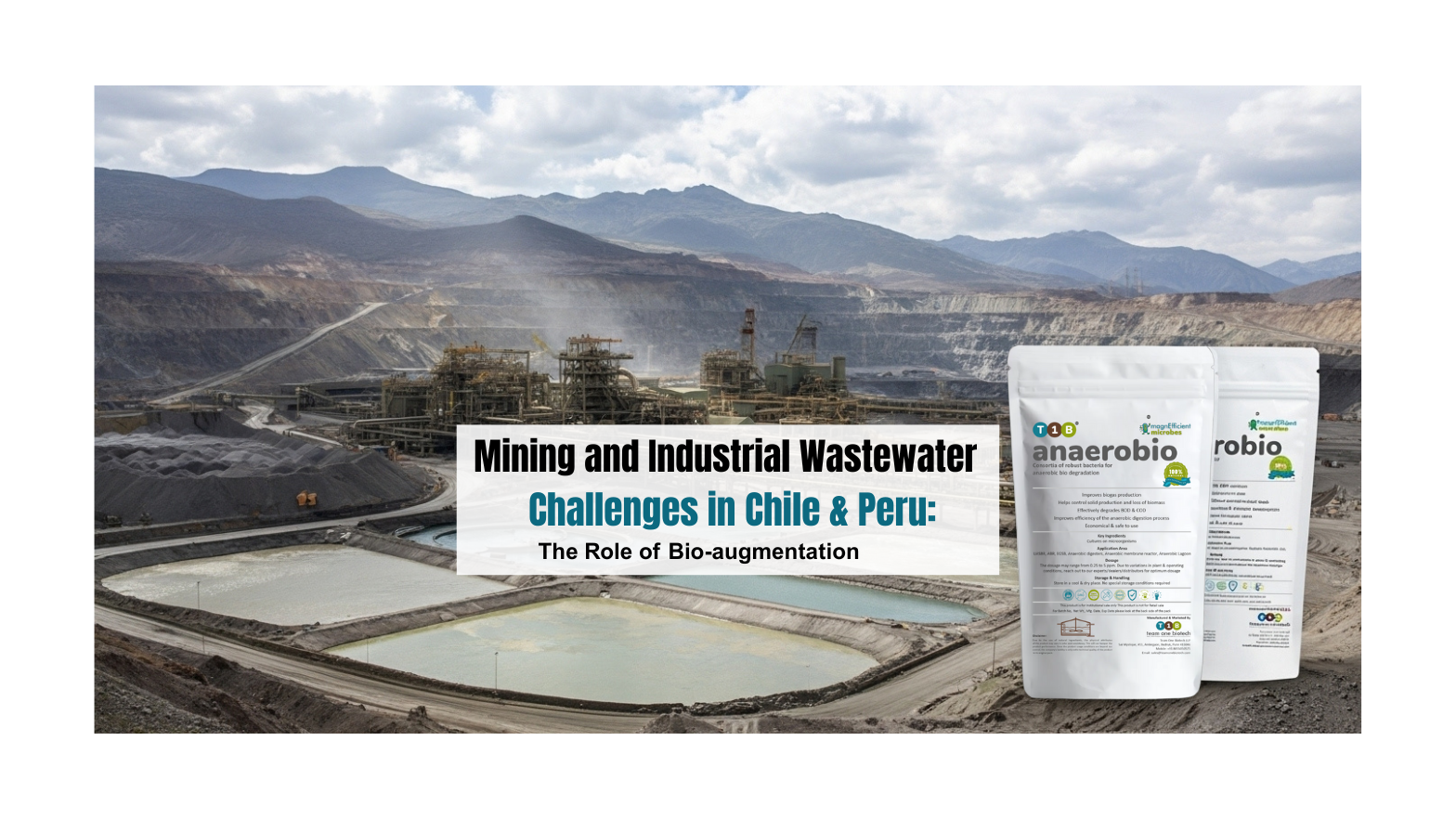
Mining and Industrial Wastewater Challenges in Chile & Peru: The Role of Bio-augmentation

The Atacama Desert holds a paradox that defines the environmental challenge facing South America’s industrial corridor. Here, in the driest place on Earth, copper mines extract billions of dollars in mineral wealth while communities ration water by the liter. In Peru’s coastal textile hubs and Chile’s high-altitude mining camps, the same story repeats: extraordinary productivity built on the knife’s edge of water scarcity. Every drop matters. Every contaminant threatens not just compliance metrics but the survival of ecosystems and communities that have adapted to extremes for millennia.

This is the blue water frontier, a term that encompasses far more than regulatory compliance. It represents the fundamental reckoning between industrial expansion and environmental limits. For operations managers overseeing mining camps at 4,000 meters above sea level, for environmental officers managing fishmeal processing plants along the Peruvian coast, and for agricultural exporters whose berries and asparagus feed European and North American markets, water quality isn’t an abstract concern. It’s the operational reality that determines whether your facility operates next quarter or faces shutdown.

Traditional wastewater management, the settling ponds, the chemical precipitation, the basic filtration, no longer meets the moment. The legislative environment has shifted. Community expectations have evolved. International buyers demand verifiable environmental credentials. This convergence has created an urgent need for advanced biological solutions that don’t just treat water but fundamentally transform industrial effluent into a resource rather than a liability.

The Water Crisis Nobody Talks About: Industrial Reality in the Andes

When mining executives discuss the Andes, conversations typically center on ore grades, extraction costs, and commodity prices. What receives less attention is the hydrological reality that makes every operation a high-wire act. The Atacama receives less than one millimeter of rainfall annually in some areas. Peru’s coastal regions, despite proximity to the Pacific, remain arid due to the Humboldt Current. Glacial melt that historically supplied highland communities now diminishes yearly due to climate shifts.

Against this backdrop, industrial operations consume and contaminate water at scales that strain already depleted aquifers. A mid-sized copper mine might use 20,000 cubic meters of water daily. Textile operations generating export-quality fabric discharge effluent with chemical oxygen demand (COD) levels exceeding 2,000 mg/L, far beyond natural ecosystem tolerance. Fishmeal processing, concentrated in Peru’s northern ports, produces nutrient-rich wastewater that can trigger coastal eutrophication if poorly managed.

The communities surrounding these operations aren’t abstract stakeholders. They’re farmers trying to maintain quinoa harvests, fishing families dependent on unpolluted coastal waters, and towns where arsenic contamination from mining runoff has already forced well closures. The social license to operate, that intangible but crucial permission from local populations, increasingly hinges on demonstrable water stewardship.

Recent protests in southern Peru over mining water use, and the sustained community opposition to projects perceived as water threats in Chile’s Norte Grande, signal a shift. Industrial operations can no longer externalize water costs. The question isn’t whether to invest in advanced wastewater treatment but which technology can deliver results in environments where conventional systems fail.

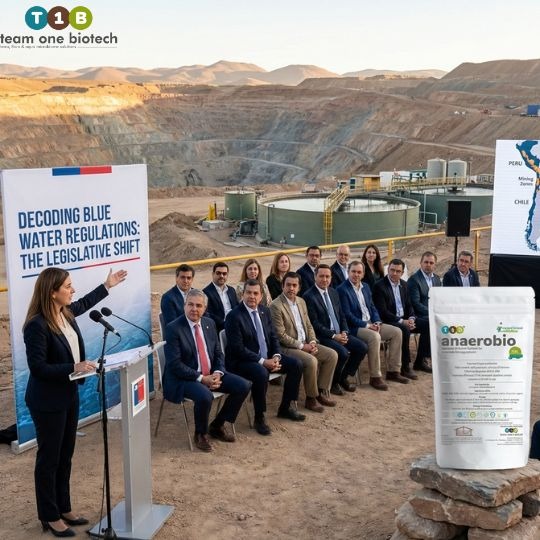
Decoding Blue Water Regulations: The Legislative Shift

Decoding Blue Water Regulations: The Legislative Shift

Chile and Peru have both enacted increasingly stringent water quality standards that reflect international best practices while addressing regional vulnerabilities. Chile’s General Water Services Law and subsequent amendments have progressively tightened discharge standards, particularly for heavy metals and persistent organic compounds. Peru’s Supreme Decree 004-2017-MINAM established Environmental Quality Standards (ECA) for water that categorize receiving bodies by use, drinking water sources face the strictest limits, but even industrial discharge zones now require significant treatment.

The term “Blue Water” encompasses this regulatory evolution. It signals water quality approaching potability standards or suitable for agricultural reuse, far exceeding basic industrial discharge requirements. For mining operations, this means reducing total dissolved solids (TDS), eliminating heavy metal contamination below detection thresholds, and managing pH within narrow bands. For textile operations, it requires breaking down complex synthetic dyes into non-toxic components and reducing COD to levels that won’t overwhelm receiving water bodies.

Traditional chemical treatment approaches face inherent limitations in these contexts. Chemical precipitation of heavy metals generates toxic sludge requiring specialized disposal. Coagulation and flocculation for solids removal consume significant reagent volumes and struggle with certain organic compounds. Oxidation processes using chlorine or ozone can create harmful disinfection byproducts. Each method addresses symptoms without fundamentally transforming contaminants.

Regulatory agencies increasingly recognize these limitations. The shift toward biological treatment reflects both environmental science and economic pragmatism. Microbes don’t just remove contaminants; they metabolize them, breaking complex molecules into harmless constituents. The process generates minimal secondary waste, operates at lower cost than chemical alternatives, and adapts to varying influent conditions, crucial in industries where wastewater composition fluctuates daily.

Compliance officers familiar with the challenges of meeting Environmental Impact Assessment (EIA) conditions understand the stakes. Non-compliance triggers operational shutdowns, substantial fines, and reputational damage that can terminate projects. Conversely, exceeding baseline requirements, achieving true Blue Water standards, creates competitive advantages. It enables water recycling that reduces freshwater intake, improves community relations, and future-proofs operations against inevitable regulatory tightening.

Mining Sector: Heavy Metal Choreography at Altitude

Mining Sector: Heavy Metal Choreography at Altitude

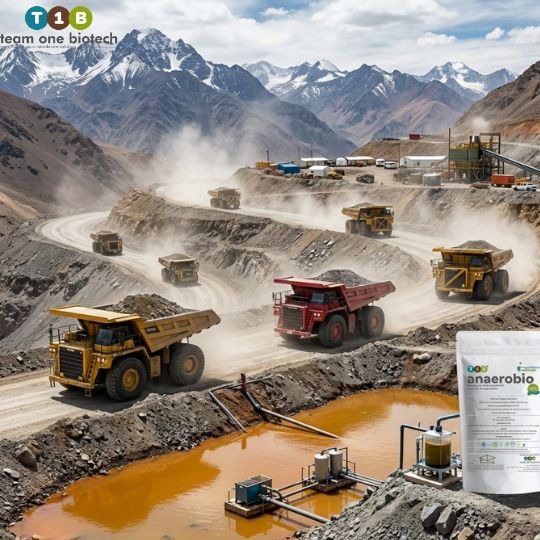
Mining wastewater presents unique biological challenges. The chemical cocktail varies by mineral being extracted and processing method employed. Copper mining generates effluent contaminated with copper ions, sulfates, and residual processing chemicals. Gold mining introduces cyanide and xanthate collectors used in flotation. Silver operations may add mercury concerns. All of this occurs in environments where altitude, temperature extremes, and low atmospheric pressure create hostile conditions for conventional biological systems.

The microbial solution requires specificity. Generic wastewater bacteria, the workhorses of municipal treatment plants, cannot tolerate heavy metal concentrations or oxidize cyanide compounds effectively. Advanced bio-augmentation for mining applications employs specialized consortia engineered or selected for extreme environment performance.

Acidithiobacillus species, for instance, thrive in acidic conditions and metabolize sulfur compounds, addressing acid mine drainage, a persistent challenge where sulfide minerals oxidize upon exposure to water and oxygen. These bacteria convert sulfur into sulfate while lowering pH, which sounds counterproductive until you understand the process enables subsequent metal precipitation in controlled stages.

For cyanide degradation, Pseudomonas strains demonstrate remarkable efficiency. These bacteria produce enzymes that hydrolyze cyanide into ammonia and formate, both easily managed in secondary treatment. The process occurs even at the modest temperatures typical of high-altitude operations, though bacterial metabolism slows considerably below 10°C. Maintaining bioreactor temperatures through passive solar heating or utilizing waste heat from mining operations becomes crucial for consistent performance.

Heavy metal biosorption and bioaccumulation represent another frontier. Certain bacterial species accumulate metals within cellular structures or bind them to extracellular polymers. Bacillus species show particular promise for copper, lead, and cadmium removal. The metals remain sequestered in bacterial biomass, which can be harvested and processed for metal recovery, transforming a waste stream into a potential revenue source. This circular economy approach aligns perfectly with corporate sustainability narratives while delivering tangible cost benefits.

The operational implementation at mining camps requires adapting biological systems to rugged conditions. Power availability may be intermittent. Skilled operators are scarce at remote locations. Ambient temperatures swing from freezing nights to intense daytime sun. These constraints demand robust, low-maintenance systems. Sequential batch reactors (SBR) offer advantages here, they operate in discrete cycles rather than continuously, tolerating influent variations better than conventional activated sludge systems. Biofilm-based reactors, where bacteria colonize fixed media rather than remaining in suspension, provide stability and reduce sludge management requirements.

A mid-sized copper operation in Chile’s Antofagasta Region recently implemented such a system. Previously, the mine relied on lime addition for pH adjustment and settling ponds for metal precipitation, a process generating approximately 50 tons monthly of hazardous sludge requiring off-site disposal at $800 per ton. The bio-augmentation system reduced copper concentrations from 15 mg/L to below 0.5 mg/L, well under discharge limits, while cutting sludge generation by 70%. The payback period on the installation cost came in under eighteen months, not accounting for reduced regulatory risk and improved community relations.

Textile Industry: Breaking the Color Barrier

Peru’s textile sector, concentrated in Lima and Arequipa, serves as a critical link in global fashion supply chains. The industry generates approximately $1.5 billion annually in exports, with pima cotton garments and alpaca textiles commanding premium prices in international markets. This success carries an environmental cost. Textile dyeing and finishing operations discharge wastewater containing synthetic dyes, sizing agents, surfactants, and finishing chemicals, a complex mixture that resists conventional treatment.

The visual impact of textile effluent, streams running purple, red, or blue depending on current production, makes public perception challenges immediate and visceral. More concerning than aesthetics is the chemical reality. Azo dyes, which constitute approximately 70% of commercial textile colorants, contain nitrogen-nitrogen double bonds that resist breakdown in natural environments. Many release aromatic amines during degradation, compounds with carcinogenic potential. High COD levels deplete oxygen in receiving waters, triggering fish kills and ecosystem collapse.

Chemical treatment struggles with these compounds. Coagulation removes some dye particles but doesn’t break down dissolved colorants. Advanced oxidation processes using hydrogen peroxide or ozone can degrade dyes but at substantial operating cost and with significant energy input. Adsorption onto activated carbon shifts the problem rather than solving it, generating contaminated carbon requiring disposal or regeneration.

Biological treatment, specifically targeted bio-augmentation, offers a different pathway. Specialized bacterial and fungal consortia produce enzymes that cleave the azo bonds, breaking down dye molecules into simpler compounds that subsequent microbial populations can metabolize completely. Pseudomonas and Bacillus species again feature prominently, alongside Aspergillus and Phanerochaete fungi capable of producing lignin peroxidase and laccase enzymes, powerful oxidizers that attack aromatic ring structures common in synthetic dyes.

The process requires staged treatment. Initial anaerobic digestion under low-oxygen conditions facilitates azo bond cleavage. This step produces colorless but still toxic aromatic amines. A subsequent aerobic stage with high dissolved oxygen allows different bacterial populations to completely mineralize these intermediates into carbon dioxide, water, and nitrogen gas. The color removal achieved through this approach typically exceeds 95%, with COD reduction reaching 80-90%, transforming dark, oxygen-depleted effluent into clear water suitable for landscape irrigation or process reuse.

A textile finishing operation in Arequipa implemented such a system eighteen months ago. The facility processes approximately 5,000 kilograms of fabric daily, generating 200 cubic meters of wastewater. Prior treatment consisted of equalization, chemical coagulation, and discharge to municipal sewers, an arrangement that cost $15,000 monthly in municipal surcharges for high-strength waste. The bio-augmentation retrofit, utilizing a fixed-film bioreactor with specialized microbial inoculant, reduced COD by 85% and eliminated color completely. Municipal discharge fees dropped to $3,000 monthly, while 40% of treated water now recycles into cooling systems and equipment washing, reducing freshwater intake by 80 cubic meters daily in a region where water scarcity drives costs upward annually.

The system’s elegance lies in its adaptability. Dye formulations change seasonally based on fashion trends. Production rates fluctuate. A biological system, properly managed, adapts to these variations. Chemical dosing for conventional treatment requires constant adjustment and extensive operator training. Microbial populations, once established, self-regulate within broad parameters, requiring primarily pH monitoring and nutrient supplementation, manageable for facilities without specialized environmental staff.

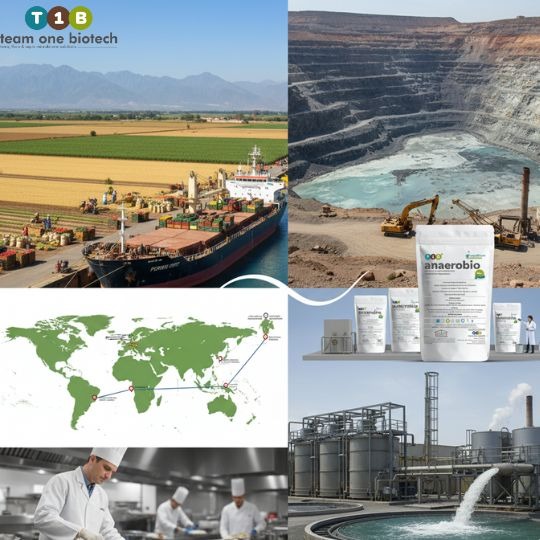
The Peruvian Export Connection: From Field to Fork

The Peruvian Export Connection: From Field to Fork

Peru ranks among the world’s leading exporters of fresh berries, asparagus, avocados, and grapes. The agricultural sector generates over $7 billion annually in export revenue, with coastal valleys producing crops destined for retailers in the United States, Europe, and Asia. This success depends entirely on water quality. International buyers impose stringent testing protocols. The detection of heavy metals, pesticides, or pathogenic bacteria in irrigation water triggers shipment rejection, loss of premium pricing, and potential delisting from major retail programs.

The irrigation water feeding these operations originates from river systems that also receive industrial discharge. A textile plant or fishmeal processor releasing inadequately treated effluent upstream can contaminate groundwater recharge zones or surface water diversions serving agricultural areas kilometers away. The connection between industrial wastewater management and agricultural export security becomes direct and immediate.

Bio-augmentation addresses this linkage at the source. Industrial operations that implement advanced biological treatment protect the watershed for downstream users. For agricultural operations themselves, especially those processing crops on-site or managing livestock waste, targeted microbial solutions prevent contamination entering irrigation systems.

Consider asparagus production in the Ica Valley, Peru’s asparagus capital. The vegetable requires substantial water input during growing phases. Drip irrigation using groundwater represents the norm, but aquifer depletion raises salinity concerns while industrial activities in the region introduce contamination risk. Several large agricultural operations have implemented bio-augmentation systems treating both their own wash water and managing small-scale wastewater from worker housing. The treated water undergoes testing confirming elimination of coliforms and reduction of total organic carbon (TOC) below levels that might affect produce safety.

The economic calculation for agricultural exporters becomes straightforward. A single container of premium berries bound for European markets might represent $60,000 in revenue. Shipment rejection due to irrigation water contamination doesn’t just eliminate that revenue, it jeopardizes future contracts and brand reputation. Investing $40,000 in biological treatment infrastructure that protects against this outcome delivers obvious value.

The microbiology deployed for agricultural applications emphasizes pathogen elimination and nutrient management. Nitrifying bacteria convert ammonia (toxic to many crops and a water quality concern) through nitrite to nitrate, a form plants readily absorb. Denitrifying bacteria in low-oxygen zones convert excess nitrate into nitrogen gas, preventing groundwater contamination. Bacteriophages targeting specific waterborne pathogens like E. coli provide an additional safety layer without chemical disinfectant residues that might affect beneficial soil microbiomes.

The Indian Connection: Lessons from Zero Liquid Discharge

India’s industrial environmental journey offers instructive parallels for South American operations. The country’s rapid industrialization created severe water pollution challenges, particularly in textile clusters like Tirupur, chemical manufacturing belts in Gujarat, and tannery operations in Tamil Nadu. Regulatory response came through increasingly strict enforcement of Zero Liquid Discharge (ZLD) mandates, requiring facilities to recycle all wastewater rather than discharging into surface or groundwater.

ZLD drives innovation by necessity. Chemical-only approaches to achieve true ZLD face prohibitive costs. Evaporation and crystallization systems consume massive energy. Reverse osmosis generates concentrated brine requiring disposal. The economics only work when biological treatment provides extensive pre-treatment, reducing contaminant loads before physical-chemical polishing.

Team One Biotech’s emergence from India’s environmental crucible provides crucial context for their South American solutions. The company developed its microbial consortia and treatment protocols under conditions analogous to Andean challenges: water scarcity, high-strength industrial waste, limited infrastructure, cost sensitivity, and stringent regulatory oversight. The systems that succeeded in Tirupur’s textile operations, managing dye-laden wastewater in hot, water-scarce conditions, translate directly to similar challenges in Peru’s textile hubs.

The Indian leather industry presents another relevant case study. Tanneries generate extremely high-strength wastewater containing chromium salts, sulfides, lime, and organic matter from hides. Chromium presents particular challenges, it exists in two oxidation states with different toxicity profiles and treatment requirements. Indian tanneries utilizing bio-augmentation systems demonstrated that specialized bacterial strains could reduce hexavalent chromium (highly toxic) to trivalent chromium (less toxic and easier to precipitate) while simultaneously degrading organic pollutants. These same principles apply to mining operations managing multiple heavy metal species in complex effluent matrices.

The climate parallels matter more than they might initially appear. India’s industrial regions experience extreme heat, intense UV exposure, and dramatic seasonal variation, conditions that stress biological systems. South American operations, whether in Peru’s coastal desert or Chilean high-altitude sites, face similar extremes. Microbes selected for thermotolerance, UV resistance, and metabolic flexibility in Indian conditions perform reliably in Andean environments where temperature swings from near-freezing to intense midday heat occur daily.

Perhaps most relevant is the business model evolution. Indian environmental regulations created demand not just for treatment systems but for ongoing microbial inoculant supply as facilities scale operations or address varying influent conditions. This generated the toll manufacturing and private labeling model that Team One Biotech now offers to South American partners, an approach proven across hundreds of installations in India’s diverse industrial landscape.

White Labeling and Strategic Partnerships: Your Brand, Our Science

Environmental consultancy firms throughout Chile and Peru face a common challenge: clients demand locally relevant solutions backed by international expertise. Importing finished products from distant suppliers creates lead time issues, inventory challenges, and pricing concerns. Developing proprietary microbial solutions requires investment in R&D infrastructure most consulting firms cannot justify.

Private labeling and toll manufacturing resolve this dilemma. Team One Biotech provides formulated microbial products that environmental consultants and local distributors can brand as their own. The science, quality control, and technical support originate from proven Indian manufacturing facilities with ISO certification and documented performance across thousands of industrial sites. The customer-facing brand and local support come from South American partners who understand regional regulatory requirements, speak clients’ languages, and provide responsive service.

This model works because it aligns incentives. Consultancy firms gain product lines that differentiate their offerings and generate recurring revenue as clients require ongoing inoculant supply. Local distributors access high-margin specialty products without R&D costs. End users receive solutions “made for the Andes” with technical backing from a supplier proven in similar challenging environments.

The manufacturing flexibility enables customization. A mining operation dealing primarily with copper and sulfate contamination requires a different microbial formulation than a gold mine managing cyanide and mercury. A coastal textile operation facing high temperatures needs a different consortium than a highland facility where cold temperatures slow biological activity. Team One Biotech’s production capabilities accommodate these variations, formulating specific consortia optimized for client conditions while maintaining consistent quality standards.

The business case for partners involves straightforward calculations. A consultancy firm that secures a contract for biological treatment at a mid-sized textile operation might sell $30,000 annually in inoculant and technical support services. Manufacturing margins on private-labeled products typically exceed those on engineering services or equipment supply. Across a portfolio of ten client sites, the recurring revenue stream becomes substantial while strengthening client relationships through successful outcomes.

Documentation and regulatory support within the partnership model addresses a critical pain point. Obtaining environmental permits in Chile and Peru requires extensive technical documentation, microorganism safety data, performance validation, operator training protocols. Team One Biotech provides these materials, adapted for South American regulatory frameworks, reducing the burden on local partners while ensuring compliance with Ministry of Environment requirements.

Logistics, Trust, and the Alibaba Advantage

International procurement for industrial operations involves inherent anxieties, particularly when dealing with biological products requiring specific handling and storage conditions. Microbial inoculants lose viability if exposed to temperature extremes or delayed in transit. Quality assurance at the source matters more than for inert chemicals.

Team One Biotech’s Alibaba Gold Supplier status addresses these concerns through verified credentials and trade assurance programs. The Gold Supplier designation requires third-party verification of manufacturing capabilities, business licensing, and quality management systems. For South American buyers unfamiliar with Indian suppliers, this verification reduces uncertainty.

Trade Assurance provides 100% protection on qualifying orders. Payment releases to the supplier only after shipment confirmation and quality verification at destination. If products arrive damaged or fail to meet specifications, dispute resolution through Alibaba’s platform protects the buyer’s financial interests. This framework enables operations managers to make initial trial orders with limited risk before committing to larger inventory positions.

The logistics chain for microbial products requires specific handling. Freeze-dried formulations tolerate ambient temperatures during shipping but require reconstitution protocols that preserve bacterial viability. Liquid formulations demand cold chain management, challenging for shipments crossing multiple climate zones and customs checkpoints. Team One Biotech’s packaging protocols account for these realities, using insulated containers with temperature loggers and documentation that facilitates customs clearance for biological products.

Lead times for trans-Pacific shipping typically range from 25-35 days port-to-port, with additional time for inland transportation to mining camps or industrial sites. Operations managers must forecast inoculant requirements sufficiently in advance to maintain treatment system performance. The supplier’s technical support extends to calculating usage rates based on wastewater characteristics and recommending appropriate inventory levels to buffer against supply chain disruptions.

The cost structure for international procurement includes more than product price. Freight, insurance, customs duties, and inland transportation accumulate. For bulk orders, typically 500 kilograms minimum for economic shipping, landed costs decrease substantially per unit. A mining operation might establish quarterly delivery schedules, accepting upfront inventory carrying costs in exchange for reduced per-unit acquisition expense and supply security.

Currency fluctuation adds another variable. Both Chile and Peru have experienced significant currency movements against the dollar and Indian rupee in recent years. Long-term supply agreements with fixed pricing clauses, subject to minimum order commitments, provide budget certainty for multi-year environmental management contracts. These arrangements benefit both parties: suppliers gain predictable order flow; buyers lock in pricing and secure supply continuity.

Technical Deep Dive: Microbial Mechanisms and System Design

Understanding how biological treatment achieves outcomes that elude chemical approaches requires examining the microbial processes at work. Advanced bio-augmentation isn’t simply adding bacteria to wastewater, it’s creating optimized environments where specific metabolic pathways degrade target contaminants efficiently.

Microbial degradation of organic pollutants proceeds through enzymatic oxidation. Bacteria and fungi produce extracellular enzymes, proteins that catalyze specific chemical reactions. Oxidoreductase enzymes, including peroxidases and laccases, attach oxygen to aromatic ring structures found in dyes and petroleum compounds, initiating breakdown. Hydrolase enzymes cleave ester and amide bonds in surfactants and sizing agents. Each contaminant class requires specific enzymatic activity, which necessitates carefully assembled microbial consortia rather than monocultures.

Heavy metal bioremediation employs multiple mechanisms. Biosorption involves passive binding of metal ions to bacterial cell walls and extracellular polymers, a rapid process not requiring cellular metabolism but with limited capacity. Bioaccumulation represents active metal uptake and concentration within cellular structures, slower but achieving higher metal removal percentages. Biotransformation changes metal oxidation states, rendering them less toxic and more easily precipitated. Chromium reduction from hexavalent to trivalent form exemplifies this mechanism.

System design determines whether these metabolic capabilities translate into practical wastewater treatment. Hydraulic retention time, how long wastewater remains in contact with microbial populations, must match contaminant degradation rates. Complex molecules like azo dyes require 24-48 hours for complete breakdown, while simpler organic acids might metabolize in 6-8 hours. Undersizing treatment systems to reduce capital cost inevitably produces inadequate treatment.

Oxygen management represents another critical parameter. Aerobic bacteria require dissolved oxygen for metabolism, typically 2-4 mg/L minimum. Achieving this in industrial wastewater, which often arrives oxygen-depleted due to high organic content, requires mechanical aeration or pure oxygen injection. Anaerobic processes, conversely, require excluding oxygen, accomplished through sealed reactor designs and sometimes positive pressure with inert gases. Many advanced systems employ multiple stages: initial anaerobic treatment for specific reactions like azo bond cleavage, followed by aerobic polishing for complete mineralization.

Nutrient ratios profoundly affect biological treatment performance. Bacteria require carbon (from pollutants or supplemental sources), nitrogen, phosphorus, and trace elements in specific ratios, approximately 100:5:1 carbon:nitrogen:phosphorus for balanced growth. Industrial wastewater often deviates from these ratios. Textile effluent might contain excess carbon but insufficient nitrogen. Mining wastewater could be carbon-deficient. Supplementing deficient nutrients through controlled addition of urea, ammonium salts, or phosphates optimizes microbial activity.

Temperature control, while challenging in remote locations, dramatically impacts treatment rates. Microbial metabolism approximately doubles for every 10°C increase up to optimal temperatures around 30-37°C for most species. High-altitude mining sites where ambient temperatures hover near 5-10°C require either heated reactors or psychrophilic (cold-adapted) strains. Conversely, textile operations in Lima’s summer may face temperatures exceeding 30°C, necessitating thermotolerant organisms or evaporative cooling systems.

pH stability within ranges suitable for microbial growth (typically 6.5-8.5, though acidophiles and alkaliphiles extend these bounds) requires monitoring and automatic adjustment. Mining effluent tends acidic; textile wastewater often alkaline due to caustic soda used in processing. Automated pH control systems using acid or base injection maintain optimal conditions without constant operator intervention, crucial for facilities lacking skilled personnel.

Case Applications: Real-World Results

A Chilean copper mining operation in the Atacama region faced persistent issues meeting discharge standards for selenium and molybdenum, trace elements in ore that concentrate during processing. Chemical precipitation proved ineffective at the low concentrations present but still above regulatory limits. A bio-augmentation system utilizing selenium-reducing bacteria (Bacillus selenitireducens) and molybdenum-accumulating strains reduced both contaminants below detection thresholds. The biological approach proved more cost-effective than reverse osmosis, which the operation had considered as an alternative. Annual operating costs decreased from projected $240,000 for RO to $85,000 for the biological system, including microbial inoculant, nutrients, and monitoring.

A Peruvian fishmeal processing plant in Chimbote confronted extremely high COD levels (12,000-15,000 mg/L) and ammonia concentrations approaching 400 mg/L, far exceeding municipal treatment plant acceptance criteria. Prior disposal relied on truck haulage to designated industrial wastewater facilities at $45 per cubic meter. An aerobic biological treatment system with specialized proteolytic (protein-degrading) bacteria reduced COD by 92% and ammonia by 95%. Treated water met municipal discharge standards, eliminating trucking costs entirely. The system paid for itself in eleven months purely through avoided disposal fees, before accounting for regulatory compliance benefits.

These examples share common elements: substantial cost savings, regulatory compliance achieved or exceeded, reduced operational complexity, and enhanced corporate environmental credentials. The operations employing these systems can now cite specific performance data when engaging with communities, regulators, and international stakeholders, quantified evidence of environmental stewardship rather than vague commitments.

Looking Forward: The Trajectory of Biological Solutions

Environmental regulations will continue tightening. Community expectations will rise. Water scarcity will intensify across the Andean region. These trends make advanced biological treatment not an optional enhancement but an operational necessity. The facilities that implement these solutions now gain first-mover advantages: accumulated operational experience, established regulatory compliance records, stronger community relationships, and lower costs as water pricing inevitably increases.

The technology trajectory favors biological approaches. Advances in microbial genetics enable engineering of strains with enhanced capabilities, bacteria producing higher enzyme concentrations, tolerating more extreme conditions, or degrading previously recalcitrant compounds. Real-time monitoring using biosensors embedded in treatment systems will enable predictive maintenance and optimized inoculant dosing. Integration with renewable energy, solar panels powering aeration systems in sun-drenched Atacama operations, addresses both cost and carbon footprint concerns.

For South American industrial operations, the question shifts from “whether” to “when” and “with whom.” The partnership model reduces risk, accelerates implementation, and creates opportunities for local environmental service providers to differentiate their offerings. Operations managers who investigate these solutions now position their facilities ahead of competitors still relying on chemical-only approaches that face inevitable obsolescence.

Next Steps for Your Operation

The complexity of biological wastewater treatment might seem daunting, but implementation support transforms sophisticated science into reliable operations. Team One Biotech offers technical consultations addressing your specific wastewater characteristics, regulatory requirements, and operational constraints. These consultations, conducted via video conference or on-site if needed, analyze your current treatment approach, identify opportunities for biological enhancement, and develop implementation roadmaps with cost-benefit projections.

For operations managers: Request a wastewater characterization analysis. Provide basic parameters, flow rates, major contaminants, current treatment costs, and receive a preliminary assessment of biological treatment feasibility and projected outcomes. This evaluation comes without obligation and helps determine whether the technology aligns with your specific needs.

For environmental consultancy firms: Explore the white labeling and partnership program. A brief conversation can outline how private-labeled biological products enhance your service portfolio, create recurring revenue streams, and differentiate your firm in competitive markets. Reference implementations in India and emerging South American case studies demonstrate the model’s viability.

For procurement teams: Visit the Team One Biotech Alibaba storefront. Review product specifications, read verified buyer testimonials, and initiate trade-assured orders that protect your investment. The platform facilitates secure international transactions while providing access to technical support throughout the purchasing and implementation process.

The blue water frontier demands action. Industrial operations that view wastewater treatment as merely regulatory compliance miss the strategic opportunity. Water scarcity transforms treated effluent from a disposal problem into a valuable resource. Biological recovery systems enable water recycling, reduce freshwater intake, protect surrounding ecosystems, and position operations as environmental leaders rather than polluters requiring tolerance.

The Atacama paradox, mineral wealth amid water poverty, need not define the region’s future. Advanced bio-augmentation technology, proven in India’s similarly challenging environments and now adapted for Andean conditions, offers a pathway forward. The science works. The economics justify investment. The regulatory and social imperatives create urgency.

Your next step is simple: reach out. Whether you’re managing a mine, operating a textile facility, exporting agricultural products, or consulting for firms facing these challenges, the conversation begins with understanding your specific situation and how biological solutions apply. The blue water frontier represents both challenge and opportunity. Those who navigate it successfully will define the region’s industrial future while protecting the communities and ecosystems that depend on every precious drop.

Contact Team One Biotech for technical consultation: Discuss your wastewater challenges with specialists experienced in mining, textile, and agricultural applications across challenging environments.

Explore partnership opportunities: Environmental consultants and distributors can learn about private labeling programs that add biological treatment capabilities to your service portfolio.

Visit our Alibaba Gold Supplier storefront: Access trade-assured ordering, verified product specifications, and secure international transactions at Alibaba Team One Biotech Store.

The solutions exist. The technology works. The time to implement is now, before the next regulatory tightening, the next community protest, the next water shortage that threatens operations. Begin the conversation today.

Looking to improve your ETP/STP efficiency with the right bioculture?
Talk to our experts at Team One Biotech for customised microbial solutions.

Contact+91 8855050575

Email:  sales@teamonebiotech.com

Visit: www.teamonebiotech.com

Discover More on YouTube – Watch our latest insights & innovations!-

Connect with Us on LinkedIn – Stay updated with expert content & trends!
Scan the code