
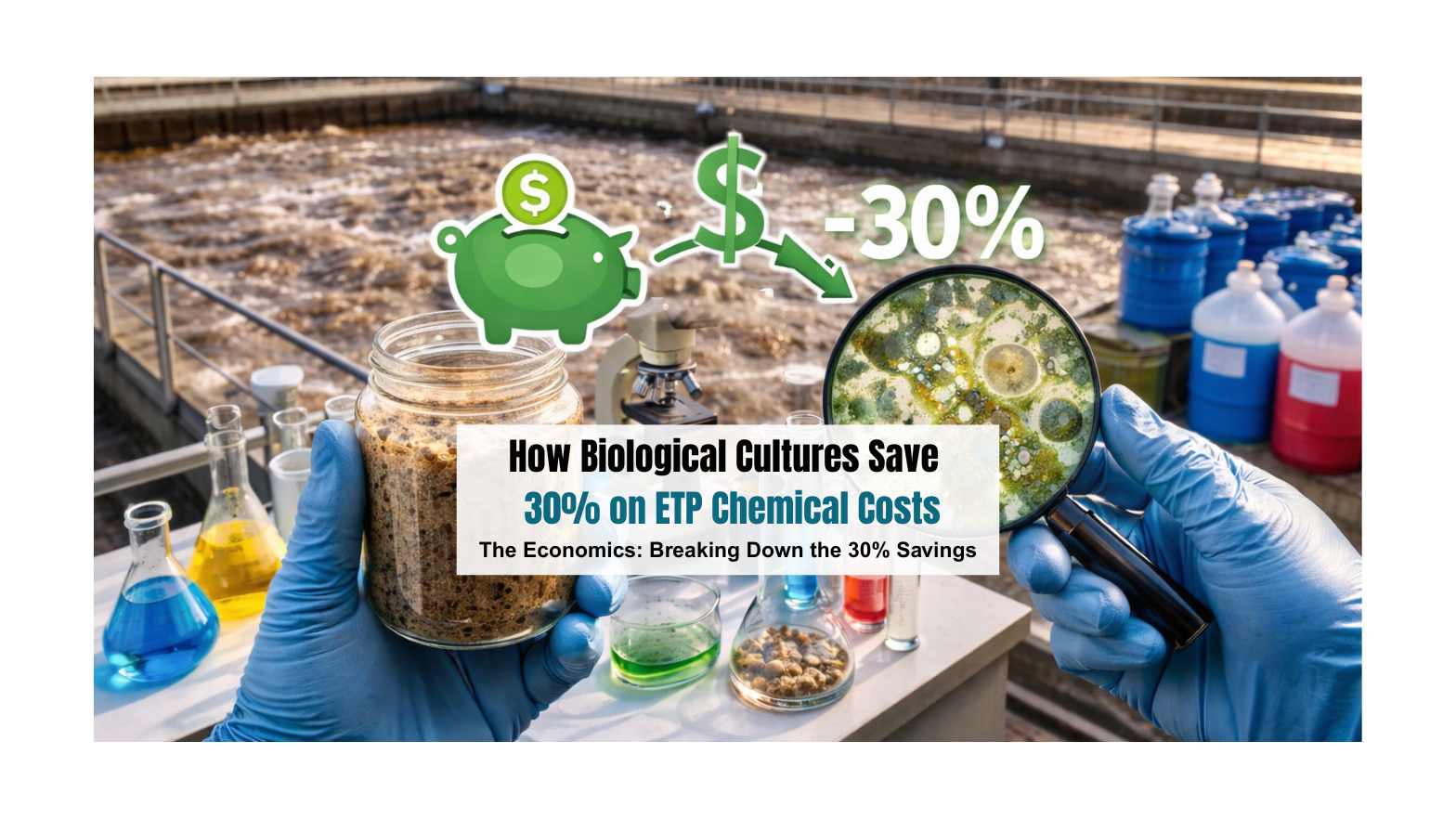
Case Study: How Biological Cultures Save 30% on ETP Chemical Costs
The email from the State Pollution Control Board landed in Rajesh Kumar’s inbox at 9:47 AM on a Tuesday. As the Environmental Manager of a mid-sized pharmaceutical manufacturing unit in Vapi, Gujarat, he’d been expecting it, but that didn’t make it any easier to read. The SPCB’s latest inspection report flagged elevated COD levels in three consecutive samples. A show-cause notice would follow if the next quarterly audit showed similar results.
Rajesh’s dilemma wasn’t unique. Across India’s industrial clusters, from Tirupur’s textile belt to Kanpur’s tanneries, from Maharashtra’s MIDC zones to Rajasthan’s RIICO estates, ETP managers face the same impossible equation: discharge parameters are getting stricter, chemical costs are rising relentlessly, and the margin for error is shrinking to zero.
[Read: The Ultimate Guide to Industrial Wastewater Treatment and Compliance in India.]
The conventional response? Increase the dosing of Polyaluminium Chloride (PAC), add more lime for pH adjustment, pump in extra coagulants and flocculants. But this approach creates its own trap. Chemical costs spiral upward, consuming 40-60% of operational ETP budgets, while sludge generation doubles, creating secondary disposal headaches. It’s a costly treadmill that never stops.
There’s a different path, one that replaces brute-force chemistry with biological intelligence. This is the story of how one manufacturing facility broke free from chemical dependency and discovered that nature, when properly harnessed, offers a more effective and economical solution.
Is your chemical spend eating into margins while compliance remains uncertain? Let’s audit your current approach, the first step costs nothing but could save lakhs annually.
The Breaking Point: When Chemical Dosing Stops Working
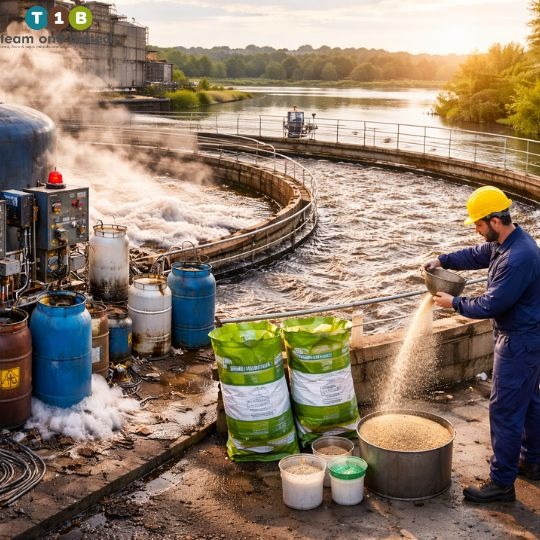
The pharmaceutical unit in our case study had been operational for twelve years. Their Effluent Treatment Plant was designed for 250 KLD (kiloliters per day) and had served them adequately, until it didn’t.
The problems began accumulating slowly, then suddenly:
Rising Chemical Costs: Between 2022 and 2024, their monthly chemical procurement jumped from Rs. 2.8 lakhs to Rs. 4.3 lakhs, a 54% increase driven by volatile alum and PAC prices.
Inconsistent Performance: Despite higher dosing, COD levels remained stubbornly above 100 mg/L during peak production cycles, well above the CPCB’s target of 50 mg/L for pharmaceutical effluents.
Monsoon Failures: Gujarat’s monsoon brought hydraulic shocks that overwhelmed the system. Diluted effluent meant recalibrating chemical doses daily, an expensive guessing game.
Sludge Crisis: The facility was generating 8-10 tons of chemical sludge monthly. Disposal costs through TSDF (Treatment, Storage, and Disposal Facilities) added another Rs. 80,000 to monthly expenses.
The plant manager’s frustration was palpable: “We’re pouring more chemicals in, but the numbers aren’t improving proportionally. It’s like trying to mop a floor while the tap is still running.”
This is the reality across Indian manufacturing: chemical treatment has inherent limitations. It doesn’t eliminate organic pollutants, it merely coagulates and separates them. The fundamental biological oxygen demand remains, requiring ever-higher doses as effluent complexity increases.
The Biological Alternative: Understanding Bio-Augmentation
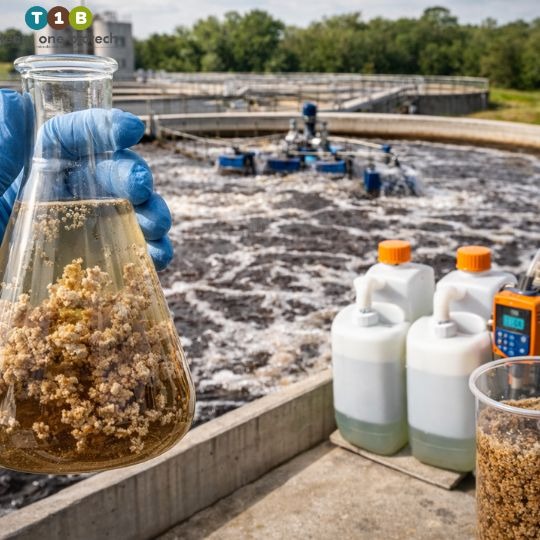
The breakthrough came after consultation with Team One Biotech’s technical team. Their assessment was straightforward: the plant’s existing activated sludge process was underperforming because the indigenous bacterial population couldn’t handle the pharmaceutical intermediates in the wastewater stream.
The solution wasn’t to abandon biological treatment, it was to enhance it with specialized microbial cultures specifically selected for pharmaceutical effluent characteristics.
How Biological Cultures Work in ETP Systems:
Bioremediation through bio-augmentation introduces concentrated, specialized bacterial consortia into the treatment system. These cultures are:
Substrate-Specific: Selected strains target specific organic compounds, phenols, aromatics, nitrogenous compounds, that conventional biomass struggles with.
High Cell Density: Delivered at concentrations of 10^9 to 10^11 CFU/gram, they rapidly establish dominance in the treatment tank.
Metabolically Versatile: Capable of breaking down complex molecules into simpler compounds (CO2, H2O, biomass) through enzymatic pathways.
Resilient: Engineered to withstand pH fluctuations, temperature variations, and toxic shock loads common in Indian industrial settings.
The science is elegantly simple: rather than using chemicals to physically separate pollutants, biological cultures metabolize them. COD and BOD reduction happens at the molecular level through oxidation, not through coagulation.
The Implementation: A Three-Phase Transformation
Phase 1: Baseline Assessment and Culture Selection (Weeks 1-2)
Team One Biotech’s field engineers conducted a comprehensive effluent characterization:
- COD: 850-1,200 mg/L (inlet)
- BOD: 450-600 mg/L (inlet)
- pH: 6.2-8.9 (variable)
- Temperature: 28-38°C
- Presence of recalcitrant compounds from pharmaceutical synthesis
Based on this profile, a customized microbial consortium was formulated, combining:
- Bacillus species for general organic degradation
- Pseudomonas strains for aromatic compound breakdown
- Specialized facultative anaerobes for pre-treatment of high-strength effluent
Phase 2: Gradual Introduction and Acclimatization (Weeks 3-6)
Rather than shocking the system, the biological cultures were introduced gradually:
- Initial seeding at 50 ppm in the aeration tank
- Daily monitoring of MLSS (Mixed Liquor Suspended Solids) and SVI (Sludge Volume Index)
- Progressive reduction in chemical dosing, first coagulants, then flocculants
- Maintenance dosing of cultures at 10-15 ppm during acclimatization
The transition wasn’t without challenges. During week four, a production batch containing higher-than-normal solvent residues temporarily disrupted the biological balance. Team One Biotech’s technical support responded with a booster dose and adjusted aeration parameters, a reminder that biological systems require active management, not just passive addition.
Phase 3: Stabilization and Optimization (Weeks 7-12)
By the third month, the transformation was measurable:
Effluent Quality: COD consistently below 45 mg/L, BOD under 8 mg/L, both well within CPCB norms.
Chemical Reduction: PAC consumption dropped from 850 kg/month to 280 kg/month. Lime usage decreased by 40%. Overall chemical spend fell from Rs. 4.3 lakhs to Rs. 2.9 lakhs monthly, a 32.5% reduction.
Sludge Management: Monthly sludge generation decreased to 4-5 tons, cutting disposal costs by nearly 50%.
Operational Stability: The system proved more resilient to hydraulic and organic shock loads. Monsoon season, previously a compliance nightmare, passed without incident.
The Economics: Breaking Down the 30% Savings

Let’s examine the financial transformation with precision:
Pre-Bioremediation Monthly Costs:
- Alum/PAC: Rs. 1,85,000
- Lime: Rs. 45,000
- Coagulant aids: Rs. 38,000
- Polymer (flocculant): Rs. 62,000
- Sludge disposal: Rs. 80,000
- Labour for chemical handling: Rs. 22,000
- Total: Rs. 4,32,000
Post-Bioremediation Monthly Costs:
- Alum/PAC (reduced): Rs. 58,000
- Lime (reduced): Rs. 27,000
- Biological cultures (maintenance dose): Rs. 65,000
- Polymer (minimal): Rs. 12,000
- Sludge disposal: Rs. 42,000
- Labour (reduced): Rs. 15,000
- Total: Rs. 2,19,000
Monthly Savings: Rs. 2,13,000 (49.3% reduction)
Even accounting for the conservative 30% savings claim, the annual impact is substantial: Rs. 25-30 lakhs saved, with improved compliance certainty and reduced environmental liability.
But the benefits extend beyond direct cost reduction:
Reduced Carbon Footprint: Lower chemical production and transportation emissions align with ESG commitments increasingly required by international buyers.
Improved SPCB Relations: Consistent compliance creates goodwill with regulatory authorities, reducing inspection frequency and penalty risk.
Operational Simplification: Biological systems require less manual intervention than complex chemical dosing schedules.
Navigating Indian Industrial Realities: Why Location Matters

India’s industrial wastewater landscape presents unique challenges that biological solutions are particularly suited to address:
Industrial Cluster Dynamics:
In estates like Gujarat’s GIDC (Gujarat Industrial Development Corporation) or Maharashtra’s MIDC (Maharashtra Industrial Development Corporation), multiple industries share common effluent treatment infrastructure. Effluent characteristics vary wildly, today’s inlet might be textile-heavy, tomorrow’s pharmaceutical-dominant. Biological cultures with broad substrate tolerance handle this variability better than fixed chemical dosing regimes.
Monsoon Hydraulic Shocks:
India’s monsoon season brings 70-80% of annual rainfall in 3-4 months. Sudden dilution can destabilize chemical treatment processes. Robust microbial populations, however, adapt to varying organic loads without complete process failure. The pharmaceutical unit in our case study reported zero compliance failures during the 2024 monsoon, a first in their operational history.
ZLD Compliance Pressures:
States like Tamil Nadu and Karnataka increasingly mandate Zero Liquid Discharge for water-stressed regions. ZLD systems concentrate pollutants, making them harder to treat with chemicals alone. Biological pre-treatment reduces the organic load entering expensive RO (Reverse Osmosis) and evaporator systems, extending membrane life and reducing scaling, a critical advantage in Tirupur’s textile clusters where ZLD is now mandatory.
Temperature Extremes:
Indian summers push effluent temperatures to 38-42°C in unshaded treatment tanks. Many chemical reactions become less efficient at elevated temperatures. Thermotolerant bacterial strains, by contrast, can be selected specifically for high-temperature performance, critical for units in Rajasthan’s RIICO estates or Gujarat’s coastal zones.
Beyond Cost Savings: The Compliance Confidence Factor
Six months after implementation, Rajesh Kumar’s quarterly SPCB inspection results told the story better than any spreadsheet. All parameters were green, not borderline compliant, but comfortably within limits with consistent margin.
“The difference isn’t just financial,” Rajesh explained. “It’s peace of mind. I’m not constantly adjusting chemical doses, not panicking when production increases, not dreading the monsoon. The system is self-regulating within reasonable bounds.”
This confidence has strategic value. With environmental compliance assured, the management has approved a 20% production capacity expansion, growth that would have been impossible under the previous chemical-dependent regime where ETP capacity was already maxed out.
Implementation Considerations: What You Need to Know
Biological treatment isn’t a magic solution that works everywhere without thought. Success requires understanding both the potential and the prerequisites:
When Biological Cultures Work Best:
- Organic pollutant-dominated effluent (COD/BOD ratio between 1.5:1 and 3:1)
- Adequate retention time in treatment tanks (minimum 18-24 hours)
- pH range of 6.5-8.5 (adjustable if needed)
- Absence of extreme toxicity (heavy metals, biocides at inhibitory concentrations)
- Committed operational staff willing to monitor biological parameters
When to Exercise Caution:
- Highly variable effluent with extreme daily fluctuations
- Dominant inorganic pollutant load (heavy metals, cyanides)
- Very small treatment systems (below 10 KLD) where economies may not justify transition
- Operations with frequent extended shutdowns (biological cultures need continuous feeding)
The pharmaceutical unit’s success was partly due to good baseline conditions: a functional activated sludge system, trained operators, and management support for a 90-day transition period.
The Path Forward: Making the Transition
For ETP managers, plant heads, and environmental consultants evaluating this approach, the decision framework is straightforward:
Step 1: Conduct a Chemical Cost Audit
Calculate your current annual spend on coagulants, flocculants, pH adjusters, and sludge disposal. If this exceeds Rs. 30 lakhs annually, you’re in the optimal range for cost-effective biological intervention.
Step 2: Evaluate Your Effluent Profile
High organic loads (COD above 500 mg/L) with moderate biodegradability respond best. A simple lab test, the BOD/COD ratio, tells you if biological treatment can dominate your process.
Step 3: Assess Infrastructure Readiness
Existing aeration systems, adequate retention time, and basic monitoring capability (dissolved oxygen, pH) are essential. Most Indian ETPs built post-2010 already have these.
Step 4: Partner with Specialists
Biological treatment requires technical support during transition. Team One Biotech’s approach includes initial seeding, performance monitoring, troubleshooting support, and culture optimization, not just product supply.
Step 5: Plan for a 90-Day Transition
Budget three months for full stabilization. Early improvements appear within 3-4 weeks, but robust, shock-resistant performance requires establishing a mature, diverse microbial ecosystem.
Chemistry Versus Biology in the New Compliance Era
The 2026 CPCB discharge norms represent the most stringent environmental standards Indian industry has faced. BOD limits of 10 mg/L, COD under 50 mg/L, and increasingly strict heavy metal thresholds cannot be met through chemical brute force alone, not economically, not sustainably.
Biological treatment isn’t replacing chemicals entirely; it’s optimizing their use. In the pharmaceutical unit’s case, they still use some PAC for final polishing and lime for pH adjustment. But these chemicals now play supporting roles in a biologically-driven process, not the starring role in an expensive, inefficient drama.
The 30% cost savings are real and replicable across industries, textiles in Tirupur, food processing in Punjab, chemicals in Vapi, tanneries in Tamil Nadu. But the deeper value lies in transforming wastewater treatment from a compliance burden into a manageable, predictable process.
Every month Rajesh Kumar now saves Rs. 2+ lakhs in chemical costs. Every quarter he passes SPCB inspections without anxiety. Every year his company avoids the risk of production shutdowns that have shuttered competitors in the same industrial estate.
That’s not just cost reduction. That’s competitive advantage.
Looking to improve your ETP/STP efficiency with the right bioculture?
Talk to our experts at Team One Biotech for customised microbial solutions.
Contact: +91 8855050575
Email: sales@teamonebiotech.com
Visit: www.teamonebiotech.com
Discover More on YouTube – Watch our latest insights & innovations!-
Connect with Us on LinkedIn – Stay updated with expert content & trends!