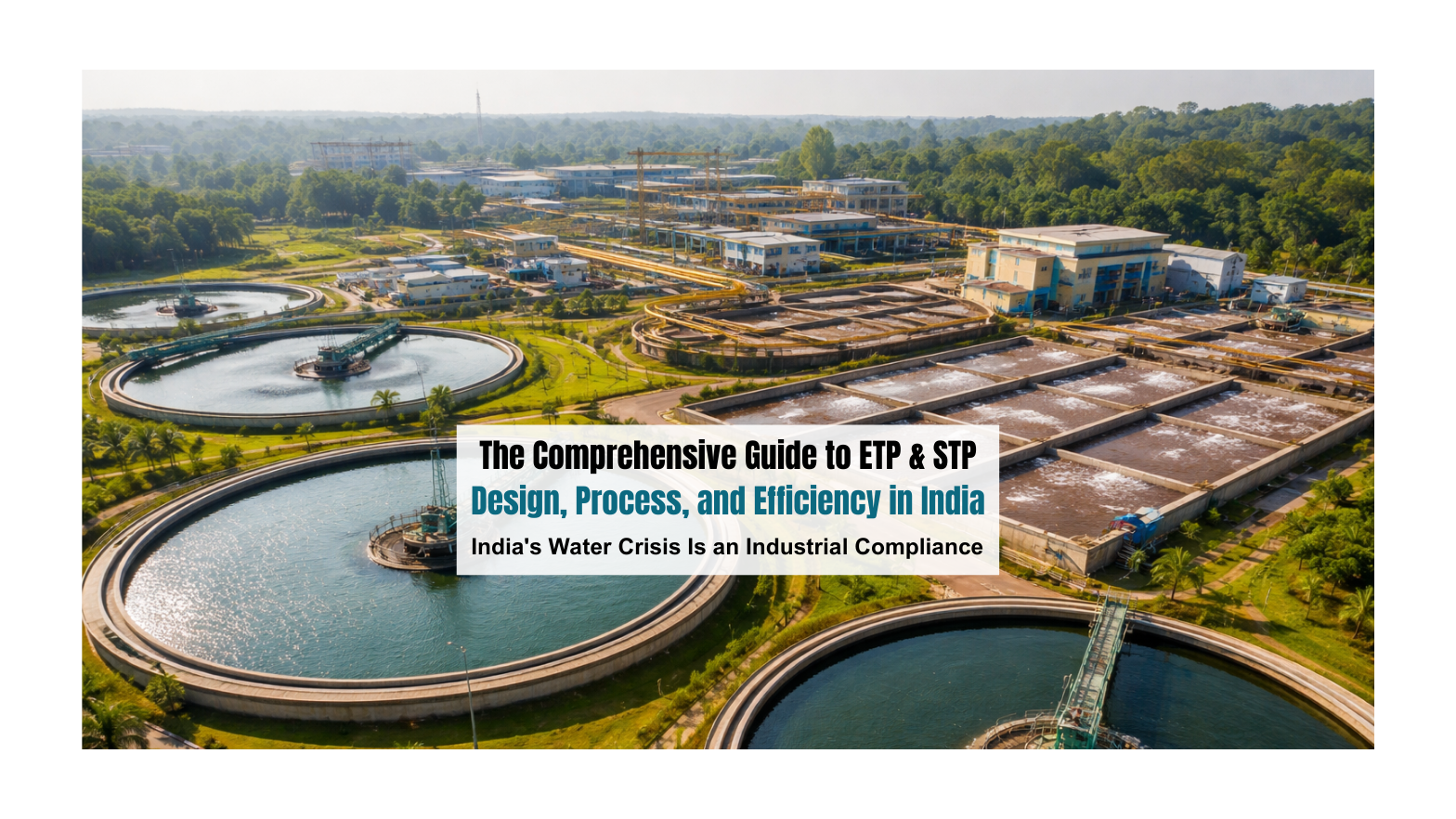
The Comprehensive Guide to ETP & STP Design, Process, and Efficiency in India
India’s Water Crisis Is an Industrial Compliance Crisis in Disguise
Walk into any industrial cluster in Pune, Surat, Ludhiana, or Vapi, and you will find the same uncomfortable reality: factories running at full throttle, production targets being met, and somewhere downstream, a water body paying the price. India generates an estimated 62,000 million litres per day (MLD) of sewage, and industrial effluent adds a separate, far more toxic layer to that burden. The Central Pollution Control Board (CPCB) estimates that less than 30 percent of this wastewater is actually treated before it re-enters the environment.
The tension is real. India’s manufacturing sector, emboldened by PLI schemes, Make in India commitments, and surging export demand, is expanding faster than its environmental infrastructure. The National Green Tribunal (NGT) is not waiting. Penalty orders, plant shutdowns, and consent-to-operate rejections have become routine for industries that treat wastewater compliance as an afterthought. In 2023 alone, the NGT issued closure notices to over 1,400 industrial units across multiple states for non-compliance with discharge norms.
Here is the paradox: the same industrial growth that positions India as a global manufacturing powerhouse is also accelerating the depletion of its freshwater reserves. Per capita water availability has dropped from over 5,000 cubic meters in 1951 to under 1,500 cubic meters today, dangerously close to the “water stress” threshold defined by international standards.
The solution is not to slow down industrial growth. The solution is to build the infrastructure that makes that growth sustainable. That is where Effluent Treatment Plants (ETPs), Sewage Treatment Plants (STPs), and the implementation of Biocultures for Wastewater Treatment become not just regulatory requirements, but strategic industrial assets. And that is exactly where Team One Biotech’s bioremediation expertise changes the equation for Indian facility operators.
ETP Plant Full Form, STP Plant Full Form, and Why the Distinction Matters
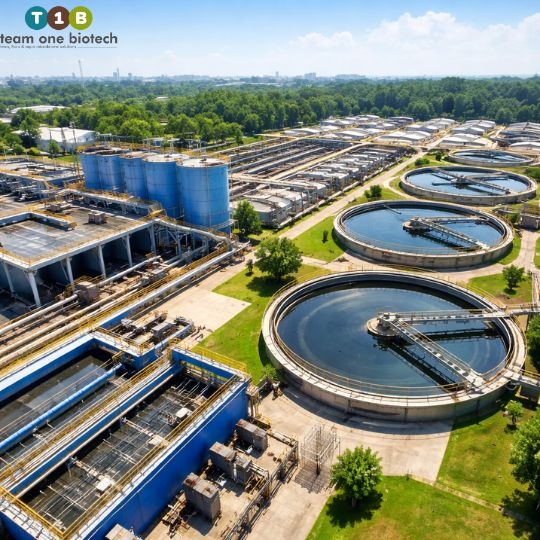
Before diving into process design and optimization, let us establish the fundamentals clearly, because in practice, these two systems are frequently conflated, and that confusion leads to costly design errors.
ETP plant full form: Effluent Treatment Plant. An ETP is designed specifically to treat industrial wastewater, the liquid waste generated by manufacturing, chemical processing, food production, textile dyeing, pharmaceuticals, and other industrial operations. This wastewater typically contains high concentrations of toxic chemicals, heavy metals, synthetic dyes, oils, and organic compounds. The pollutant profile is highly variable depending on the industry.
STP plant full form: Sewage Treatment Plant. An STP is designed to treat domestic sewage, the wastewater generated by human habitation, including residential complexes, commercial buildings, hospitals, and mixed-use townships. This wastewater contains organic waste, pathogens, nutrients (nitrogen and phosphorus), and suspended solids, but is generally free from industrial chemicals and heavy metals.
Think of it this way: if a factory’s production floor generates the waste, it goes to an ETP. If the employees’ toilets and canteen generate the waste, it goes to an STP. Many large industrial campuses operate both systems in parallel, sometimes combining treated streams before final discharge.
The analogy that resonates best with plant operators is this, an ETP and STP are the kidneys of an industrial facility. Just as kidneys filter toxins from blood and return clean fluid to the body, these plants filter contaminants from wastewater and return compliant, often reusable, water to the environment or back into the production cycle. When the kidneys fail, the entire system suffers. When an ETP or STP underperforms, the consequences range from regulatory penalties to irreversible environmental damage and, increasingly, criminal liability for plant managers.
STP vs. ETP: A Comparison at a Glance
| Parameter | STP | ETP |
| Wastewater Source | Domestic/municipal sewage | Industrial process wastewater |
| Primary Pollutants | BOD, pathogens, nutrients | COD, heavy metals, toxic compounds, dyes |
| Treatment Complexity | Moderate | High to Very High |
| Regulatory Authority | CPCB / State PCBs / RERA | CPCB / State PCBs / NGT |
| Typical BOD Inlet | 200–350 mg/L | 500–10,000+ mg/L |
| Reuse Potential | High (landscaping, flushing) | Conditional (after tertiary treatment) |
| Sludge Hazard | Non-hazardous (generally) | Often hazardous |
The STP & ETP Plant Process: A Stage-by-Stage Technical Breakdown

Whether you are designing a new system or auditing an existing one, understanding the treatment train is non-negotiable. Both ETPs and STPs follow a broadly similar multi-stage process architecture, though the specific technologies, chemical dosing, and retention times vary significantly based on the influent characteristics.
Stage 1: Preliminary Treatment
This is the first line of defense, the stage that protects downstream equipment from damage and clogging.
Key unit operations include:
- Screening: Bar screens and fine screens remove large solids, rags, plastics, debris, from the incoming wastewater stream. For industrial ETPs handling textile or paper mill effluent, this stage is critical to preventing pump damage.
- Grit Removal: Grit chambers allow sand, gravel, and inorganic particles to settle by reducing flow velocity. Unremoved grit accelerates wear on pumps, pipes, and aeration equipment.
- Equalization: Industrial effluent flow rates and pollutant concentrations fluctuate dramatically across production shifts. An equalization tank buffers these variations, ensuring a consistent, manageable feed to downstream treatment units. In Indian industrial contexts, where plants often run 8-hour shifts with significantly varying discharge volumes, equalization is not optional; it is essential.
- Oil and Grease Traps: Critical for food processing, edible oil, and petrochemical industries, where free-floating oils must be skimmed before biological treatment.
Preliminary treatment is where most cost-saving mistakes are made. Undersizing the equalization tank or skipping adequate screening leads to cascading failures across all downstream stages.
Stage 2: Primary Treatment
Primary treatment relies on physical and chemical processes to remove settleable and floatable matter before biological treatment begins.
- Primary Clarifiers (Sedimentation Tanks): Wastewater is held in large tanks where gravity causes suspended solids to settle as primary sludge. This stage typically removes 50–70 percent of TSS (Total Suspended Solids) and 25–40 percent of BOD.
- Chemical Coagulation and Flocculation: For high-turbidity industrial effluent, coagulants (alum, ferric chloride, PAC) and flocculants (polyelectrolytes) are dosed to aggregate fine colloidal particles into larger, settleable flocs. This is particularly important for textile dye effluents and pharmaceutical wastewater where colloidal solids resist natural settling.
- Dissolved Air Flotation (DAF): In applications where solids and oils are too light to settle, DAF units use micro-bubbles to float contaminants to the surface for skimming. Widely used in dairy, food processing, and paper industries.
At this stage, your ETP or STP has removed the bulk of the physical load. What remains is the dissolved organic and chemical contamination, and that is where biological treatment becomes the heart of the process.
Stage 3: Secondary (Biological) Treatment, The Core of the System
Secondary treatment is where the chemistry becomes biology. Microorganisms, bacteria, protozoa, and fungi, are harnessed to consume dissolved organic matter, dramatically reducing BOD and COD to levels approaching discharge standards.
This stage is where the design expertise of your engineering partner matters most, because biological systems are living ecosystems. They respond to temperature, pH, toxic shock loads, and nutrient availability. Getting this stage wrong means the entire plant underperforms, regardless of how well preliminary and primary treatment are designed.
The Activated Sludge Process: India’s Gold Standard in Biological Treatment
Of all the biological treatment technologies available, Moving Bed Biofilm Reactor (MBBR), Sequencing Batch Reactor (SBR), Trickling Filters, Anaerobic Digesters, the Activated Sludge Process (ASP) remains the most widely implemented in Indian ETPs and STPs. Understanding why requires understanding how it works.
How the Activated Sludge Process Works
The ASP is a suspended-growth biological treatment system built around a continuous loop of microbial activity and separation.
The core components are:
- Aeration Tank: Pre-settled wastewater enters a large aeration tank where it is mixed with a high concentration of active microorganisms, the “activated sludge.” Mechanical aerators or diffused air systems continuously pump oxygen into the tank, sustaining aerobic conditions that allow bacteria to break down organic matter at high rates.
- Mixed Liquor Suspended Solids (MLSS): The concentration of microorganisms maintained in the aeration tank is measured as MLSS, typically maintained between 2,000–4,000 mg/L for municipal STPs and up to 6,000 mg/L for high-strength industrial ETPs. MLSS is the single most important operational parameter in ASP management.
- Secondary Clarifier: The mixed liquor (aeration tank effluent) flows to a secondary clarifier where the activated sludge settles by gravity. Clear, treated effluent overflows from the top.
- Return Activated Sludge (RAS): A critical portion of the settled sludge, typically 25–100 percent of influent flow, is returned to the aeration tank to maintain the microbial population. Without adequate RAS, the microbial concentration collapses and treatment efficiency crashes.
- Waste Activated Sludge (WAS): Excess sludge, representing the net growth of microorganisms, is continuously removed and directed to sludge handling systems. Managing WAS disposal correctly is a major compliance requirement under CPCB guidelines.
Why ASP Remains the Preferred Choice in India
- Proven reliability at scale: ASP can handle flows ranging from 10 KLD (kilolitres per day) for a small industrial unit to thousands of MLD for municipal applications.
- Adaptability: Process variants, Extended Aeration ASP, Step Aeration ASP, Tapered Aeration ASP, allow engineers to optimize for specific influent characteristics and space constraints.
- Operator familiarity: India’s pool of trained STP/ETP operators has decades of hands-on experience with ASP systems, reducing operational risk.
- Cost-effectiveness: For BOD removal from moderate-strength wastewater, ASP delivers the best cost-per-kg-BOD-removed ratio of any aerobic technology.
The activated sludge process is not a legacy technology, it is a mature, continuously refined platform. The difference between a well-run ASP and a failing one is not the civil structure; it is the biological management expertise behind the aeration tank.
This is precisely where Team One Biotech’s bioremediation solutions create a measurable operational advantage. By engineering custom microbial consortia, specialized bacterial communities adapted to specific industrial wastewater profiles, Team One Biotech accelerates biological treatment efficiency, reduces aeration energy consumption, and provides resilience against toxic shock loads that would otherwise crash a conventional ASP system.
Ready to optimize your existing biological treatment system? Request a process audit from Team One Biotech’s engineers today and get a baseline assessment of your current MLSS health, sludge age, and BOD removal efficiency.
Stage 4: Tertiary Treatment, Achieving Zero Liquid Discharge and Reuse Standards
Tertiary treatment is the polishing stage, it takes secondary-treated effluent and refines it to the level required for either stringent discharge standards or direct water reuse.
Common tertiary treatment technologies include:
- Sand Filtration and Activated Carbon Filtration (ACF): Removes residual TSS and traces of organic compounds. ACF is particularly effective for color removal in textile ETP applications.
- Membrane Bioreactor (MBR): Combines biological treatment with ultrafiltration membranes in a single unit, producing extremely high-quality effluent suitable for reuse applications. Capital-intensive but highly efficient for space-constrained sites.
- Reverse Osmosis (RO): The final barrier for achieving near-pure water quality. Mandatory in Zero Liquid Discharge (ZLD) systems, which are now required for highly polluting industries under CPCB guidelines, including sugar, pulp and paper, textile (wet processing), distilleries, and tanneries.
- UV Disinfection and Chlorination: The final step in STP treatment trains, eliminating pathogens before treated water is discharged to water bodies or reused for non-potable applications.
- Nutrient Removal: Advanced STP designs incorporate biological nutrient removal (BNR) for nitrogen and phosphorus, preventing eutrophication in receiving water bodies.
Challenges That Standard Textbooks Don’t Address
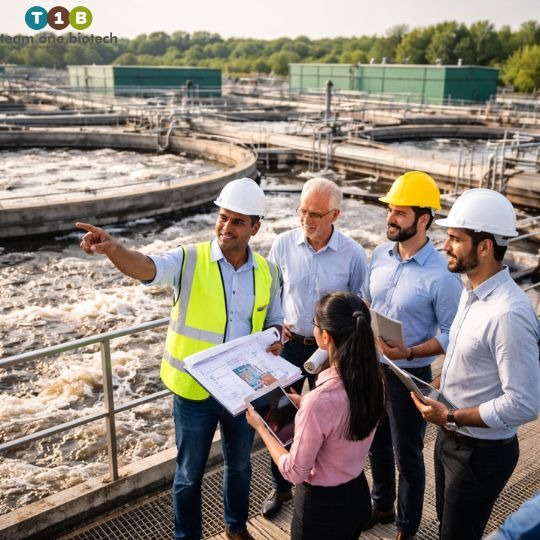
Designing an ETP or STP for a factory in Germany is a fundamentally different engineering exercise from designing one for a plant in Tamil Nadu, Gujarat, or Uttar Pradesh. The Indian industrial environment presents a distinct set of challenges that demand localized expertise.
Monsoon Load Management
India’s monsoon season creates a hydraulic load problem that no other region in the world faces at the same intensity. During the southwest monsoon, stormwater infiltration into sewer networks can cause STP inflows to surge 3–5 times their design capacity within hours. An STP designed for average dry-weather flow without monsoon surge management provisions will either bypass untreated sewage or suffer catastrophic biological washout, destroying years of microbial culture development.
Design responses include:
- Oversized equalization tanks with high-level alarms and automated bypass controls
- Stormwater segregation at source wherever infrastructure permits
- Robust return sludge systems capable of rapid biomass recovery post-dilution events
High-BOD Industrial Discharge
Indian industries, particularly distilleries, sugar mills, and food processing units, generate some of the highest-BOD effluents globally. Distillery spent wash can carry BOD values exceeding 50,000 mg/L. Standard aerobic ASP systems cannot handle such concentrations economically or efficiently without upstream anaerobic pre-treatment.
A correctly engineered treatment train for high-BOD Indian industrial effluent typically looks like this:
- Anaerobic digestion (biogas generation as a bonus)
- Aerobic polishing via ASP or MBBR
- Tertiary treatment / ZLD as required
Bioremediation Solutions for Indian Soil and Water Conditions
India’s tropical climate, high ambient temperatures, variable monsoon humidity, actually creates favorable conditions for certain bioremediation applications. Thermophilic and mesophilic microbial populations thrive in Indian industrial settings, but generic microbial products imported from temperate climates frequently underperform because the microbial strains are not adapted to local conditions.
Team One Biotech’s approach is fundamentally different. Their bioremediation solutions are developed and validated against actual Indian industrial effluent samples, textile dye effluents from Tirupur, pharmaceutical wastewater from Baddi, and food processing discharge from Pune’s agro-industrial belt. The microbial consortia are acclimatized to Indian temperature ranges, pH variability, and the specific organic loading profiles of Indian industries. This localization produces measurably superior outcomes compared to off-the-shelf biological products.
Specific applications include:
- Accelerated start-up of new ETP/STP biological systems (reducing commissioning time from months to weeks)
- Bioremediation of contaminated industrial soil and groundwater around legacy manufacturing sites
- Emergency bioaugmentation for plants suffering from toxic shock events or sludge bulking
- Odor control through targeted biological suppression of hydrogen sulfide and mercaptan-producing bacteria
Is your industrial site carrying the burden of legacy contamination? Contact Team One Biotech’s bioremediation specialists for a confidential site assessment and soil/groundwater characterization study.
CPCB Guidelines India: What Compliance Actually Requires
Compliance is not a single threshold, it is a dynamic, multi-layered regulatory framework that varies by industry type, scale of operation, discharge destination, and state-level environmental standards.
Core Discharge Standards Under CPCB Guidelines
The CPCB’s General Standards for Discharge of Environmental Pollutants (under the Environment Protection Rules, 1986) specify the following limits for discharge into inland surface water:
- BOD (Biochemical Oxygen Demand): ≤ 30 mg/L
- COD (Chemical Oxygen Demand): ≤ 250 mg/L
- TSS (Total Suspended Solids): ≤ 100 mg/L
- pH: 6.5 – 8.5
- Oil and Grease: ≤ 10 mg/L
- Total Dissolved Solids (TDS): ≤ 2,100 mg/L
For discharge to a sewage treatment facility, standards are slightly relaxed. For disposal on land for irrigation, separate standards apply. Industry-specific standards, for distilleries, tanneries, pulp and paper, sugar, textiles, carry additional parameters and stricter limits.
Critical Compliance Checkpoints
Consent to Establish (CTE) and Consent to Operate (CTO): Before constructing or operating an ETP/STP, industries must obtain consent from their respective State Pollution Control Board. The design documents, treatment capacity, and expected effluent quality must be submitted and approved.
Online Continuous Effluent Monitoring (OCEM): Highly polluting industries (Red category under CPCB classification) are now required to install real-time online monitoring systems connected to the CPCB’s central server. This means compliance is no longer a quarterly lab report, it is a continuous digital audit.
ZLD Mandate: Red-category industries in water-stressed areas, and all units in critically polluted areas (as designated by CPCB), are required to achieve Zero Liquid Discharge. This is non-negotiable and enforced through surprise inspections by both CPCB and NGT-appointed monitoring committees.
Sludge Management: Hazardous sludge from ETPs must be disposed of at authorized Treatment, Storage, and Disposal Facilities (TSDFs). Improper sludge disposal is increasingly the primary basis for NGT penalty orders.
Efficiency & Optimization: Reducing OpEx Without Compromising Compliance

A well-designed ETP or STP is not just a compliance asset, it can be a significant cost center if operated inefficiently. For most mid-sized industrial facilities, ETP/STP operational expenditure runs between Rs. 15 and Rs. 60 per kilolitre of treated water, depending on effluent complexity. Energy, chemicals, and sludge disposal typically account for 70–80 percent of that cost. Here is where optimization delivers real financial returns.
Energy Optimization
Aeration is the single largest energy consumer in any aerobic treatment system, accounting for 50–70 percent of total ETP/STP electrical consumption. Optimization strategies include:
- Fine Bubble Diffuser Upgrades: Replacing coarse bubble aerators with fine bubble membrane diffusers can reduce aeration energy consumption by 30–40 percent with no compromise in treatment efficiency.
- Dissolved Oxygen (DO) Control: Installing DO sensors with automated aeration control prevents over-aeration, one of the most common and costly operational errors in Indian ETPs.
- Variable Frequency Drives (VFDs): Installing VFDs on blowers and pumps allows energy draw to track actual load, rather than running at constant full capacity regardless of influent flow.
Chemical Optimization Through Bioremediation
Coagulants, flocculants, and pH correction chemicals represent a significant recurring cost. Team One Biotech’s bioaugmentation programs reduce chemical dependency by:
- Enhancing biological phosphorus removal, reducing chemical phosphorus precipitation requirements
- Improving settleability of activated sludge (reducing or eliminating polyelectrolyte requirements in secondary clarifiers)
- Accelerating organic degradation in the aeration tank, allowing operators to reduce HRT (Hydraulic Retention Time) and thereby increase effective plant capacity
Sludge Reduction
Excess sludge disposal is an operational headache and a growing cost. Biological sludge reduction technologies, including targeted microbial products that enhance endogenous respiration, can reduce sludge production by 20–35 percent in well-managed systems. This translates directly to reduced sludge hauling frequency, lower TSDF disposal costs, and reduced dewatering chemical consumption.
Water Reuse and Revenue Recovery
Tertiary-treated STP effluent, when properly polished, can replace fresh water for:
- Cooling tower makeup water
- Garden irrigation and dust suppression
- Toilet flushing in industrial campuses
- Process water for low-sensitivity manufacturing steps
At current freshwater purchase rates in water-stressed Indian industrial zones (Rs. 40–120 per KL for tanker water in some regions), every kilolitre of treated water reused internally represents a direct cost saving.
How Team One Biotech Delivers End-to-End ETP and STP Excellence
Team One Biotech operates at the intersection of environmental engineering, applied microbiology, and industrial compliance management. The company’s approach to ETP and STP projects is built on four integrated capabilities that most conventional engineering firms cannot replicate.
Process Design and Engineering: From concept to commissioning, Team One Biotech’s engineers design treatment systems that are right-sized for actual Indian industrial conditions, not theoretical textbook parameters. This means proper equalization capacity for monsoon surges, biological systems designed for high-BOD tropical industrial effluents, and ZLD trains engineered for long-term operational reliability, not just initial compliance demonstration.
Proprietary Bioremediation Solutions: The company’s in-house bioremediation product line comprises microbial consortia specifically adapted to the pollutant profiles and environmental conditions of Indian industry. These are not generic imported biologicals repackaged for the Indian market, they are formulations developed from microorganisms isolated and cultivated in Indian industrial environments.
Operational Support and Performance Contracts: Designing a compliant ETP is step one. Keeping it compliant through shift changes, monsoon surges, production expansions, and aging equipment is the harder, longer challenge. Team One Biotech offers structured operational support programs, including remote monitoring, monthly biological health assessments, and on-call emergency response for treatment upsets.
Regulatory Navigation: The Indian environmental regulatory landscape, CPCB, State PCBs, NGT orders, ZLD notifications, changes continuously. Team One Biotech’s team tracks regulatory developments and helps clients proactively adapt their systems and documentation before inspections, not after penalty orders.
Take the first step toward a fully compliant, operationally optimized industrial water management system. Schedule a site consultation with Team One Biotech’s senior engineers and receive a customized treatment performance roadmap within 10 working days.
Building India’s Industrial Future on a Foundation of Clean Water
India’s industrial ambition is not in question. The country will continue to grow, manufacture, and export at scale. The question, and the opportunity, is whether that growth will be built on a foundation of sustainable water management or on the fragile assumption that environmental compliance can be deferred.
The regulatory environment has made the answer clear. The NGT, CPCB, and an increasingly active judiciary have demonstrated that non-compliance is not a calculated risk, it is an operational liability with real financial, legal, and reputational consequences.
But the more compelling case for investing in high-performance ETP and STP infrastructure is not regulatory, it is economic. Water-efficient industries are more resilient, more competitive, and increasingly more attractive to global buyers and institutional investors who apply ESG criteria to their supply chain decisions.
The factory that treats its wastewater as a resource to be recovered, rather than a problem to be discharged, is the factory that will operate profitably through the water constraints of the next decade.
Team One Biotech exists to make that factory yours.
Team One Biotech is a leading provider of bioremediation solutions, ETP and STP design, and industrial wastewater management services across India. To speak with an engineer about your facility’s specific compliance and operational challenges, visit the Team One Biotech contact page or call our industrial helpline.
Looking to improve your ETP/STP efficiency with the right bioculture?
Talk to our experts at Team One Biotech for customised microbial solutions.
Contact: +91 8855050575
Email: sales@teamonebiotech.com
Visit: www.teamonebiotech.com
Discover More on YouTube – Watch our latest insights & innovations!-
Connect with Us on LinkedIn – Stay updated with expert content & trends!